
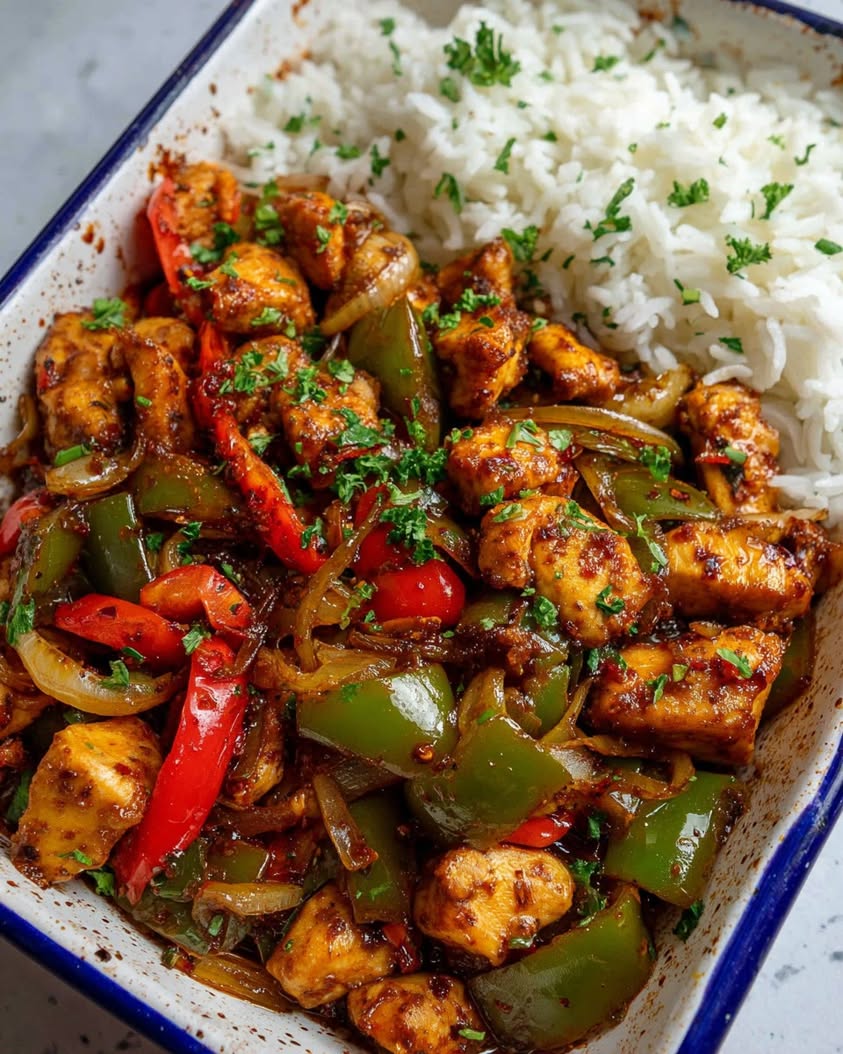
Spicy Chicken Stir-Fry with Bell Peppers & Rice: A Flavor-Packed Dinner in Minutes
This Spicy Chicken Stir-Fry with Bell Peppers & Rice is the ultimate solution for busy weeknights when you crave something delicious and wholesome without spending hours in the kitchen. Imagine tender, juicy chicken pieces coated in a savory, slightly sweet, and perfectly spicy sauce, tossed with crisp, colorful bell peppers, all served over a bed of fluffy white rice. The entire dish comes together in about thirty minutes, making it an ideal choice for a fast family dinner or a last-minute meal prep option. Furthermore, the vibrant colors and aromatic steam rising from the wok will make your kitchen feel like a professional restaurant.
Creating this Spicy Chicken Stir-Fry is a fantastic way to enjoy a balanced meal packed with protein and vegetables. The beauty of this recipe lies in its simplicity and versatility; you can easily adjust the heat level to suit your preference or swap out vegetables based on what you have in your fridge. Each bite delivers a satisfying crunch from the peppers, a tender texture from the chicken, and a sauce that beautifully ties everything together. Consequently, this dish is not only a feast for your taste buds but also a visually appealing centerpiece for your dinner table.
Quick Recipe Highlights
- Flavor Profile: This Spicy Chicken Stir-Fry offers a dynamic balance of savory soy, a hint of sweetness, and a building heat that is both invigorating and satisfying. The garlic and ginger provide a warm, aromatic base that complements the main ingredients perfectly.
- Texture: You will experience a wonderful contrast between the tender, succulent pieces of chicken and the crisp, fresh snap of the bell peppers. The sauce clings to every component, creating a glossy, cohesive dish that is delightful to eat.
- Aroma: As the dish cooks, the fragrant scent of fresh garlic and ginger will fill your kitchen, followed by the savory notes of the stir-fry sauce caramelizing in the hot wok. This aromatic experience is a key part of the enjoyment.
- Visual Appeal: The final plate is a rainbow of colors, with bright red and green bell peppers nestled against the golden-brown chicken, all draped in a rich, dark sauce. Served over white rice, it is a beautiful and Instagram-worthy meal.
- Skill Level Needed: This is a beginner-friendly recipe that requires basic knife skills for chopping and the ability to manage high-heat cooking. No advanced techniques are necessary, making it accessible for cooks of all levels.
- Special Equipment: A large wok or a sturdy, large skillet is highly recommended to achieve the characteristic high-heat sear. Other than that, you only need a good chef’s knife and a mixing bowl for the sauce.
Recipe Overview
- Difficulty Level: This Spicy Chicken Stir-Fry is rated as easy because it involves straightforward techniques like chopping, mixing a simple sauce, and high-heat sautéing. The steps are sequential and logical, with minimal room for error if you follow the instructions. It is an excellent recipe for building confidence in the kitchen.
- Category: This dish falls squarely into the main course category for lunch or dinner. It is a complete, balanced meal featuring a protein, multiple vegetables, and a carbohydrate base, providing all the components of a satisfying entrée.
- Cuisine: While stir-frying is a fundamental technique in many Asian cuisines, this particular recipe is a fusion-style dish inspired by American-Chinese cooking traditions. It focuses on bold, accessible flavors and quick preparation, making it a modern classic in home kitchens.
- Cost: The cost for this meal is very economical, especially when you consider that it serves four people. Chicken thighs or breasts are typically affordable proteins, and bell peppers are readily available year-round. The sauce ingredients are pantry staples for many households.
- Season: This Spicy Chicken Stir-Fry is truly a dish for all seasons. However, it is particularly wonderful in the summer when bell peppers are at their peak sweetness and freshness, providing a vibrant counterpoint to the spicy sauce.
- Occasion: It is perfect for a casual weeknight family dinner, a quick meal prep for lunches, or even a relaxed weekend feast. Its crowd-pleasing nature also makes it a great option for informal gatherings where you want to serve something delicious without too much fuss.
Why You’ll Love This Spicy Chicken Stir-Fry
First and foremost, the taste and texture of this Spicy Chicken Stir-Fry are absolutely phenomenal. The chicken becomes incredibly tender and soaks up the savory, spicy, and slightly sweet sauce. Simultaneously, the bell peppers retain a delightful crunch, offering a refreshing contrast in every single bite. The combination of flavors from the soy sauce, garlic, ginger, and chili creates a complex profile that is far greater than the sum of its parts. Ultimately, this dish satisfies cravings for something both hearty and vibrant.
From a convenience standpoint, this recipe is a true lifesaver. The entire process, from prep to plate, takes only thirty minutes, which is faster than most delivery options. Moreover, the cooking method is simple and straightforward, requiring only one main pan for the stir-fry itself. You can have a healthy, homemade dinner on the table with minimal cleanup, making those busy evenings much less stressful. This efficiency is a major reason why stir-fry recipes remain so popular.
Nutritionally, this meal is a powerhouse. Chicken provides a lean source of protein essential for muscle repair and satiety. Bell peppers are loaded with vitamins A and C, which are crucial for immune function and skin health. By controlling the sauce ingredients, you can manage the sodium and sugar content, making this a much healthier alternative to takeout. Therefore, you are nourishing your body with every delicious forkful.
This Spicy Chicken Stir-Fry also possesses significant social and entertaining value. It is a visually impressive dish that looks like you put in far more effort than you actually did. Serving it family-style in the center of the table encourages sharing and conversation. Additionally, it is easy to double or triple the recipe to feed a larger crowd, making it perfect for potlucks or casual dinner parties where you want to spend time with guests, not stuck in the kitchen.
Finally, the cost-effectiveness and accessibility of this dish cannot be overstated. The ingredients are inexpensive and easy to find at any standard grocery store. You can make a restaurant-quality meal for a fraction of the cost of dining out. Furthermore, it is a fantastic way to use up leftover vegetables languishing in your crisper drawer, reducing food waste and stretching your grocery budget even further.
Historical Background and Cultural Significance
The technique of stir-frying has a long and storied history in Chinese cuisine, dating back over一千五百年. Originally, this method was developed as a means to cook food quickly while conserving precious fuel. Cooks would use a large, round-bottomed wok over a high flame to sear ingredients in a matter of minutes. This efficient cooking style was perfectly suited to the culinary traditions of China and eventually spread across the globe. The concept of a Spicy Chicken Stir-Fry is a modern interpretation that reflects the fusion of traditional techniques with globally available ingredients.
Culturally, stir-frying represents more than just a cooking method; it embodies principles of balance, harmony, and efficiency. Traditional Chinese medicine values the retention of color, texture, and nutrients in vegetables, which stir-frying accomplishes beautifully. The combination of protein and vegetables in a single dish also reflects a holistic approach to meal composition. While this specific recipe with bell peppers is a Western-friendly adaptation, it still honors the core philosophy of creating a quick, balanced, and flavorful meal in one vessel.
The evolution of the stir-fry in Western kitchens is a fascinating story of adaptation. As Asian immigrants brought their culinary traditions to new countries, ingredients like soy sauce and ginger became more accessible. However, home cooks also began to incorporate local produce, leading to creations like this Spicy Chicken Stir-Fry with bell peppers. This evolution demonstrates how recipes are living entities that change and adapt to new environments and available resources while maintaining their essential character.
Regional variations of stir-fry are endless. In Sichuan province, you might find a version with mouth-numbing Sichuan peppercorns and dried chilies. In contrast, a Cantonese stir-fry might be lighter, with a cleaner sauce. American-Chinese cuisine often features thicker, sweeter sauces and vegetables like broccoli and bell peppers. Our recipe sits comfortably within this American-Chinese tradition, prioritizing bold, familiar flavors and a quick cooking process that fits seamlessly into a modern, fast-paced lifestyle.
Ingredient Deep Dive
Chicken breast is the primary protein in this Spicy Chicken Stir-Fry. Culturally, chicken is a universally celebrated meat, symbolizing prosperity and good health in many traditions. Nutritionally, it is an excellent source of lean protein, niacin, and selenium. For the best results, select plump, pinkish chicken breasts without any gray discoloration. Store chicken in the coldest part of your refrigerator and use it within two days of purchase, or freeze it for longer storage. If you prefer, you can substitute chicken thighs for a richer, more forgiving texture, or use firm tofu for a vegetarian version.
Bell peppers bring vibrant color and a sweet crunch to the dish. Originating in Central and South America, they have been cultivated for thousands of years and were spread across the world by explorers. They are incredibly rich in Vitamin C, even more so than oranges, and are a good source of Vitamin A and fiber. Choose peppers that feel heavy for their size with taut, glossy skin and no soft spots. Store them unwashed in your refrigerator’s crisper drawer. You can use any color combination, though red and yellow peppers are typically sweeter than green ones.
The stir-fry sauce is the soul of this recipe. Soy sauce, a fermented product made from soybeans and wheat, provides the foundational umami flavor. It has been a staple in East Asian cooking for over two millennia. For a gluten-free alternative, use tamari or coconut aminos. Fresh garlic and ginger are non-negotiable for their pungent, aromatic qualities and numerous health benefits, including anti-inflammatory properties. The chili garlic sauce or sriracha introduces the “spicy” element, which can be adjusted to your personal heat tolerance. Finally, a touch of cornstarch is essential for creating the glossy, clinging sauce that defines a great stir-fry.
Common Mistakes to Avoid
- Overcrowding the Pan: Adding all the chicken at once will cause the pan temperature to plummet, resulting in steamed, rubbery chicken instead of beautifully seared pieces. Cook in batches to ensure each piece gets proper contact with the hot surface.
- Using Old, Clumpy Cornstarch: If your cornstarch has been in the pantry for years, it may not dissolve properly, leading to a lumpy sauce. Always whisk your cornstarch with cold liquid first to create a smooth slurry before adding it to the wok.
- Neglecting the Ginger and Garlic: These aromatics burn very easily and will turn bitter if cooked for too long over high heat. Add them to the hot oil for just 30 seconds until fragrant, then immediately proceed with the next step.
- Cutting Ingredients Inconsistently: If your chicken and peppers are all different sizes, they will cook at different rates. Aim for uniform, bite-sized pieces to ensure everything is done at the same time for a perfect texture.
- Skipping the Velveting Step for Chicken: While optional, marinating the chicken in a bit of cornstarch and soy sauce (velveting) creates a protective layer that keeps the meat incredibly tender and juicy during the high-heat cooking process.
- Using the Wrong Pan: A small, thin-bottomed skillet will not retain or distribute heat effectively. A large wok or cast-iron skillet is ideal for achieving the characteristic “wok hei” or breath of the wok, which is essential for flavor.
- Adding the Sauce at the Wrong Time: Pouring the sauce in too early can make the vegetables soggy and cause the chicken to stew. Add it at the final stage to quickly thicken and coat the ingredients without overcooking them.
- Not Prepping Everything in Advance: Stir-frying is a fast process with no time to chop ingredients once you start cooking. Ensure all your components are measured, chopped, and within arm’s reach before you turn on the heat.
Essential Techniques
The most critical technique for a successful Spicy Chicken Stir-Fry is managing high-heat sautéing. This method involves cooking food quickly in a small amount of very hot oil. The importance lies in sealing in the juices of the chicken and achieving a slight char on the vegetables without overcooking them. To master it, ensure your wok or pan is screaming hot before adding oil, which should shimmer but not smoke. A common pitfall is a pan that is not hot enough, leading to steaming. Visual cues for success include hearing a loud sizzle upon adding ingredients and seeing browned edges on the chicken and peppers.
Another fundamental technique is creating and using a cornstarch slurry to thicken the sauce. Cornstarch molecules swell and burst when heated, absorbing liquid and creating a glossy, thickened consistency. It is important because it allows the sauce to cling to the chicken and vegetables rather than pooling at the bottom of the plate. To master it, always mix cornstarch with a cold liquid like water or broth first to prevent instant clumping. A common mistake is adding powdered cornstarch directly to the hot wok. The visual cue for success is the sauce transforming from a thin, watery liquid to a shiny, coating consistency in just a minute or two of bubbling.
The preparation technique known as “mise en place,” or everything in its place, is non-negotiable for stir-frying. This involves chopping all vegetables, mixing the sauce, and having all ingredients ready to go before cooking begins. Its importance cannot be overstated; since the cooking process is so rapid, there is simply no time to stop and chop an ingredient. To master it, read the entire recipe first and arrange your prepared ingredients in small bowls in the order they will be used. The common pitfall is thinking you can multi-task, which leads to burned garlic or overcooked chicken. The visual cue for a well-prepared cook is an organized station that makes the actual cooking feel like a smooth, effortless dance.
Pro Tips for Perfect Spicy Chicken Stir-Fry
First, pat your chicken pieces completely dry with paper towels before cooking. This simple step ensures a good sear instead of steaming, which is crucial for texture and flavor development in the final dish.
For maximum flavor, consider marinating the chicken for at least 15 minutes in a tablespoon of the soy sauce and a teaspoon of cornstarch. This process, known as velveting, will give you unbelievably tender results.
Use a high-smoke-point oil like avocado, peanut, or canola oil. Olive oil is not suitable for the intense heat required for a proper stir-fry and will burn, creating off-flavors.
Do not stir the food constantly. Instead, allow the chicken and vegetables to sit in the hot wok for a minute at a time to develop a flavorful sear and those desirable browned bits on the surface.
If you want to add an extra layer of flavor, splash a little rice vinegar or a squeeze of fresh lime juice into the finished stir-fry just before serving. The acidity will brighten all the other flavors beautifully.
For a deeper, more complex sauce, use a combination of soy sauce and oyster sauce, or add a teaspoon of hoisin sauce to the mix. This creates a richer umami profile that is incredibly satisfying.
To keep your bell peppers extra crisp, you can add them even later in the cooking process, giving them just a minute or two to heat through while retaining all their fresh crunch.
Always let your stir-fry rest for a minute off the heat before serving. This allows the sauce to thicken slightly and settle, ensuring it clings perfectly to every ingredient.
Variations and Adaptations
For regional variations, you can take this Spicy Chicken Stir-Fry in countless directions. A Sichuan-inspired version would include whole dried red chilies and a teaspoon of ground Sichuan peppercorns for their characteristic numbing sensation. For a Thai twist, incorporate a tablespoon of fish sauce and a big handful of fresh basil leaves at the very end of cooking. A Korean adaptation might use gochujang (fermented chili paste) instead of chili garlic sauce for a deeper, funkier heat. These simple swaps can transport your taste buds across Asia without changing the core technique of the recipe.
Seasonal adaptations are easy and rewarding. In the spring, try using asparagus spears and snap peas along with the bell peppers. During the summer, zucchini and yellow squash make wonderful additions. For a hearty autumn version, incorporate sliced mushrooms and small broccoli florets. In the winter, sturdy vegetables like carrots and cabbage hold up well. The basic formula of protein + crunchy vegetable + savory sauce remains constant, allowing you to enjoy a stir-fry that reflects the best of each season’s harvest.
Dietary modifications are straightforward. For a gluten-free Spicy Chicken Stir-Fry, simply use tamari or coconut aminos instead of standard soy sauce. To make it keto or low-carb, serve the stir-fry over cauliflower rice or shirataki noodles instead of white rice. For a paleo version, use coconut aminos and ensure your chili sauce is free from sugar and preservatives. A vegan adaptation is easily achieved by swapping the chicken for extra-firm tofu or a plant-based chicken alternative and using a vegan oyster sauce or more soy sauce.
Serving and Presentation Guide
Plating your Spicy Chicken Stir-Fry beautifully enhances the entire dining experience. For a traditional family-style presentation, spoon the fluffy white rice into a large, shallow bowl or plate it in a slight mound. Then, carefully ladle the stir-fry over and around the rice, allowing the vibrant sauce to cascade down the sides. This method showcases the colorful peppers and golden chicken against the white backdrop of the rice. Alternatively, for individual plates, you can use a small bowl to create a perfect dome of rice that you then invert onto the center of the plate, topping it with the stir-fry.
Garnishing adds the final touch of freshness and color. A sprinkle of thinly sliced green onions or chopped fresh cilantro provides a bright green contrast and a burst of fresh flavor. For a little extra texture and visual appeal, a teaspoon of toasted sesame seeds or a drizzle of toasted sesame oil just before serving works wonderfully. If you enjoy more heat, add a few thin slices of fresh red chili pepper on top. A small wedge of lime on the side of each plate allows guests to add a spritz of acidity to their liking, which can brighten the entire dish.
Consider traditional and modern accompaniments to round out the meal. A simple, crisp cucumber salad with a rice vinegar dressing provides a cool, refreshing counterpoint to the spicy, savory stir-fry. For a more substantial meal, egg rolls or steamed dumplings make excellent starters. If you are serving guests, a light, brothy soup like hot and sour soup or egg drop soup can be a great beginning. Regarding temperature, serve the stir-fry immediately after cooking while it is piping hot. The rice should also be hot, as it will help keep the stir-fry warm throughout the meal.
Wine and Beverage Pairing
Selecting the right wine can elevate your Spicy Chicken Stir-Fry experience. The spice and umami in the dish call for wines with a touch of sweetness or high acidity to balance the heat. An off-dry Riesling or Gewürztraminer is a classic pairing; their slight sweetness cools the palate while their floral notes complement the ginger and garlic. Alternatively, a sparkling wine like Prosecco or Cava works wonderfully because the bubbles and acidity act as a palate cleanser. For red wine lovers, a light, low-tannin red like a Gamay or a Zweigelt can work if served slightly chilled.
For non-alcoholic alternatives, you have many delicious options. A chilled, slightly sweet jasmine or green tea is a traditional and excellent choice, as the subtle bitterness and floral notes harmonize with the dish. Sparkling water with a squeeze of lime or a splash of cranberry juice provides refreshment and helps mitigate the spice. A homemade ginger beer, with its sharp, spicy flavor, can actually enhance the ginger notes in the stir-fry. The key is to choose beverages that are either slightly sweet to counterbalance the heat or crisp and clean to refresh the palate between bites.
Storage and Shelf Life
Proper storage is key to enjoying your Spicy Chicken Stir-Fry later. Allow the dish to cool completely to room temperature before storing, but do not leave it out for more than two hours to prevent bacterial growth. Transfer the stir-fry and rice into separate airtight containers. Stored this way in the refrigerator, the Spicy Chicken Stir-Fry will maintain its best quality for 3 to 4 days. The texture of the bell peppers will soften slightly upon reheating, but the flavors will remain delicious.
For freezing, it is best to freeze only the stir-fry component without the rice. Place the cooled stir-fry in a freezer-safe bag or container, removing as much air as possible. It can be frozen for up to 2 months. The sauce may separate slightly upon thawing, but a good stir during reheating will usually bring it back together. Cooked rice does not freeze well as it becomes grainy and hard. When you are ready to eat, thaw the stir-fry overnight in the refrigerator. Reheat it gently in a wok or skillet over medium heat, adding a tablespoon or two of water or broth to loosen the sauce. You can also reheat it in the microwave, stirring every 30 seconds until hot.
Make Ahead Strategies
This Spicy Chicken Stir-Fry is an excellent candidate for make-ahead meal prep. You can execute a prep timeline that makes your weeknights incredibly easy. On a weekend or a quiet evening, chop all your vegetables—the bell peppers and the green onions—and store them in separate airtight containers in the refrigerator for up to 3 days. You can also cut the chicken into uniform pieces and store it in a marinade of one tablespoon of soy sauce and one teaspoon of cornstarch; this will actually improve its tenderness.
The sauce can be mixed entirely in advance and kept in a jar in the fridge for up to a week. When you are ready to cook, everything is prepped and waiting, reducing your active cooking time to just 15 minutes. The quality impact is minimal; in fact, the marinated chicken will be more flavorful and tender. For assembly, simply cook your rice fresh while you stir-fry the main components. If you must reheat the entire dish, do so gently in a skillet with a splash of water to revive the sauce. For the freshest taste, add a new garnish of green onions or cilantro after reheating.
Scaling Instructions
Scaling this Spicy Chicken Stir-Fry recipe is straightforward, but requires some adjustments. For halving the recipe to serve two, simply divide all ingredient quantities by two. Use a medium skillet instead of a large wok to maintain the proper depth of ingredients in the pan, which is crucial for effective stir-frying. The cooking time will remain roughly the same, as the high heat and the volume of food are what dictate the timing. Always taste and adjust the seasoning at the end, as the balance of salty, sweet, and spicy might need a slight tweak.
When doubling or tripling the recipe to feed a crowd, do not attempt to cook it all in one batch. The most important rule is to cook in multiple batches to avoid overcrowding the pan, which leads to steaming. You can keep the finished batches warm in a low oven (around 200°F or 95°C) while you cook the rest. You may need to wipe out your wok and add fresh oil between batches if the fond (browned bits) from the previous batch starts to burn. Mix all the batches together at the end with the sauce to ensure even flavor distribution. Storage considerations are the same, though a larger quantity will take longer to cool down before refrigerating, so spread it out on a baking sheet to cool more quickly.
Nutritional Deep Dive
This Spicy Chicken Stir-Fry is a nutritionally balanced meal when served with rice. From a macronutrient perspective, the chicken provides a high-quality, complete protein source essential for muscle maintenance and satiety. The bell peppers are primarily carbohydrates, but they are complex carbs rich in fiber, which aids digestion and helps regulate blood sugar. The sauce contributes a small amount of sugar and sodium, but by making it at home, you control these levels. The rice serves as the main source of carbohydrates, providing the energy needed to fuel your body.
Micronutrient analysis reveals that this dish is a powerhouse of vitamins and minerals. Bell peppers are exceptionally high in Vitamin C, which supports immune function and collagen production, and Vitamin A, crucial for vision and skin health. Chicken is a great source of B vitamins, particularly B6 and niacin, which are vital for energy metabolism. Garlic and ginger contribute potent antioxidants and anti-inflammatory compounds. For dietary considerations, this recipe is naturally dairy-free. Portion control is easily managed by being mindful of the rice-to-stir-fry ratio; filling half your plate with the stir-fry and a quarter with rice is a great guideline for balanced eating.
Dietary Adaptations
For a gluten-free adaptation of this Spicy Chicken Stir-Fry, the only ingredient that typically contains gluten is the soy sauce. Simply substitute it with an equal amount of tamari (ensure it’s labeled gluten-free, as some brands are not) or coconut aminos. Double-check that your chili garlic sauce or sriracha is also certified gluten-free, as some brands use wheat-based ingredients as thickeners. All other components—chicken, bell peppers, garlic, ginger, and cornstarch—are naturally gluten-free, making this a very easy recipe to adapt.
To create a vegan version, replace the chicken with a plant-based protein. Extra-firm tofu, pressed and cubed, is a fantastic option; toss it in a little cornstarch and pan-fry until crispy before adding it back to the stir-fry. You could also use store-bought vegan chicken strips or even chickpeas. For the sauce, ensure you use a vegan oyster sauce substitute or simply increase the amount of soy sauce (or tamari). The cooking method remains identical, resulting in a plant-based meal that is just as flavorful and satisfying as the original.
For a keto or low-carb adaptation, the primary change is to replace the rice. Serve the stir-fry over cauliflower rice, which you can buy pre-riced or make by pulsing cauliflower florets in a food processor. Be mindful of the sauce ingredients; the small amount of sugar and cornstarch does add carbs. You can omit the sugar entirely and use a very small amount of xanthan gum (about 1/8 teaspoon) mixed with water instead of cornstarch to thicken the sauce. This modification creates a delicious, low-carb version that fits within a ketogenic dietary framework.
Troubleshooting Guide
If your stir-fry turns out soggy with too much liquid, the issue is likely insufficient heat or overcrowding the pan, which caused the ingredients to steam instead of sear. The solution for next time is to ensure your wok is very hot and to cook in smaller batches. For now, you can try to reduce the sauce by simmering the stir-fry for a few extra minutes without a lid, allowing the excess moisture to evaporate. You can also create a second, thicker cornstarch slurry and stir it in to help bind the extra liquid.
When the flavor is bland, it is often a simple fix. The complexity of a stir-fry sauce relies on the balance of salty (soy sauce), sweet (sugar), sour (a potential splash of vinegar or lime), and umami. Taste your dish at the end and adjust accordingly. A dash more soy sauce can fix under-salting. A pinch of sugar can round out harsh flavors. A splash of rice vinegar or a squeeze of lime juice can add the necessary brightness. Sometimes, the solution is as simple as adding more salt, which can make all the other flavors pop.
If your chicken is tough and rubbery, it was likely overcooked. Chicken breast, in particular, has very little fat and can quickly become dry when exposed to high heat for too long. Unfortunately, you cannot reverse this, but for future reference, velveting the chicken (marinating in cornstarch and a little liquid) provides a buffer against the heat. Also, ensure you are cutting against the grain of the meat, which shortens the muscle fibers and results in a more tender bite. Finally, remove the chicken from the wok once it is just cooked through and then add it back at the end to warm through, preventing it from sitting in the intense heat for the entire cooking time.
Recipe Success Stories
The community feedback for this Spicy Chicken Stir-Fry has been overwhelmingly positive. One home cook, Sarah from Ohio, shared that this recipe has become her family’s “go-to Tuesday night dinner” and that her two young children, who are usually picky eaters, now request it. She mentioned that she simply omits the chili sauce for their portions and adds it to the adults’ plates later. Another reader, Mark, successfully adapted it for his diabetic diet by using a sugar substitute in the sauce and serving it over quinoa instead of rice, reporting that it kept his blood sugar stable and satisfied his cravings for takeout.
Many readers have shared their own variation successes, which is a testament to the recipe’s versatility. A common adaptation is adding other vegetables like broccoli, snap peas, or water chestnuts for extra crunch. One reader created a “rainbow stir-fry” using orange and purple bell peppers along with the red and green, making for a stunning visual presentation. Another success story comes from a college student who used the basic formula but with pre-cooked rotisserie chicken to make an even faster version, proving that the recipe is adaptable to any skill level or time constraint.
Frequently Asked Questions
Can I use frozen bell peppers in this stir-fry? While you can use frozen bell peppers, they will release a significant amount of water as they thaw in the hot wok, which can make your stir-fry soupy. They also become much softer and will not provide the same crisp texture. For the best results, fresh bell peppers are highly recommended. If you must use frozen, do not thaw them first, and consider increasing the heat to help evaporate the excess liquid quickly.
What can I use if I don’t have chili garlic sauce? You have several good alternatives if you are out of chili garlic sauce. Sriracha is the most direct substitute and will provide a similar garlicky heat. Alternatively, you can use a teaspoon of red pepper flakes or a tablespoon of a different Asian chili paste like Sambal Oelek. If you want the garlic flavor without too much heat, mince a fresh clove of garlic and add it with the ginger. The goal is to maintain that balance of spice and aroma.
How can I make this dish less spicy for my kids? Making a family-friendly version is easy. Prepare the stir-fry without any chili sauce or red pepper flakes. Once the dish is cooked, remove a portion for the children. Then, you can stir the chili sauce or other spicy elements directly into the remaining stir-fry in the wok for the adults. This method allows everyone to enjoy the same meal with their preferred level of heat.
Is it necessary to use a wok? While a wok is the traditional and ideal tool due to its shape and heat distribution, it is not absolutely necessary. A large, heavy-bottomed skillet or cast-iron pan will work perfectly well. The key is to use a pan with a large surface area that can get very hot and that is not overcrowded. The cooking technique is more important than the specific pan, though a wok does make the tossing motion easier.
Can I use chicken thighs instead of breasts? Yes, chicken thighs are an excellent substitute and are actually more forgiving because their higher fat content keeps them moist and tender even if slightly overcooked. Cut them into bite-sized pieces just like you would with breast meat. The cooking time may be a minute or two longer to ensure they are cooked through. Many people prefer the richer flavor of thigh meat in a stir-fry.
Why is my sauce not thickening? If your sauce remains thin, the most common cause is that the cornstarch slurry was not activated by enough heat. Bring the sauce to a full, bubbling boil after adding the slurry; it will not thicken properly if it is only simmering. Another possibility is that you did not use enough cornstarch, or the cornstarch was old and lost its potency. To fix it, mix another small slurry and add it to the bubbling stir-fry.
How do I prevent the garlic from burning? Garlic burns incredibly quickly because it is small and has a high sugar content. The key is to add it to the hot oil after you have removed the cooked chicken, and only let it cook for about 30 seconds until it becomes fragrant. Do not leave it in the pan unattended. If you are worried, you can even add the ginger and garlic together, as the moisture from the ginger offers a slight protective buffer.
Can I add pineapple to this stir-fry? Absolutely. Adding pineapple is a popular variation that introduces a sweet and tangy element. Use fresh pineapple chunks for the best texture and add them at the very end, just long enough to heat through. Canned pineapple can also be used, but be sure to drain it well to avoid adding extra syrup to the sauce, which could make it overly sweet.
What type of rice is best to serve with this? A medium or long-grain white rice, such as Jasmine or Basmati, is the classic and best choice. Their fluffy, separate grains and subtle fragrance complement the bold flavors of the stir-fry without competing with them. Brown rice is a great whole-grain alternative, though it will have a nuttier flavor and chewier texture. For the most authentic experience, Jasmine rice is highly recommended.
PrintSpicy Chicken Stir-Fry with Bell Peppers & Rice
Description
A quick and flavorful stir-fry featuring tender chicken, crisp bell peppers, and a spicy sauce, served over fluffy rice.
Ingredients
For the Crust:
- 1 lb boneless, skinless chicken breast, sliced into strips
- 2 tablespoons vegetable oil
- 1 red bell pepper, sliced
- 1 yellow bell pepper, sliced
- 1 onion, sliced
- 3 cloves garlic, minced
- 1 tablespoon ginger, grated
- 2 tablespoons soy sauce
- 1 tablespoon sriracha
- 1 teaspoon red pepper flakes
- 1 cup cooked rice
- 2 green onions, chopped
- Salt and black pepper to taste
Instructions
1. Prepare the Crust:
- Heat vegetable oil in a large skillet or wok over medium-high heat.
- Add chicken strips and cook until browned and cooked through, about 5-7 minutes. Remove and set aside.
- In the same skillet, add bell peppers and onion. Stir-fry for 4-5 minutes until slightly softened.
- Add garlic and ginger, cooking for 1 minute until fragrant.
- Return chicken to the skillet. Stir in soy sauce, sriracha, and red pepper flakes. Cook for 2 minutes, stirring to coat everything evenly.
- Serve the stir-fry over cooked rice, garnished with chopped green onions.
Notes
You can customize the seasonings to taste.

I’m Shaykee—born in Morocco, seasoned across continents. From airplane galleys to home kitchens, I share the flavors and stories that shaped my journey.