
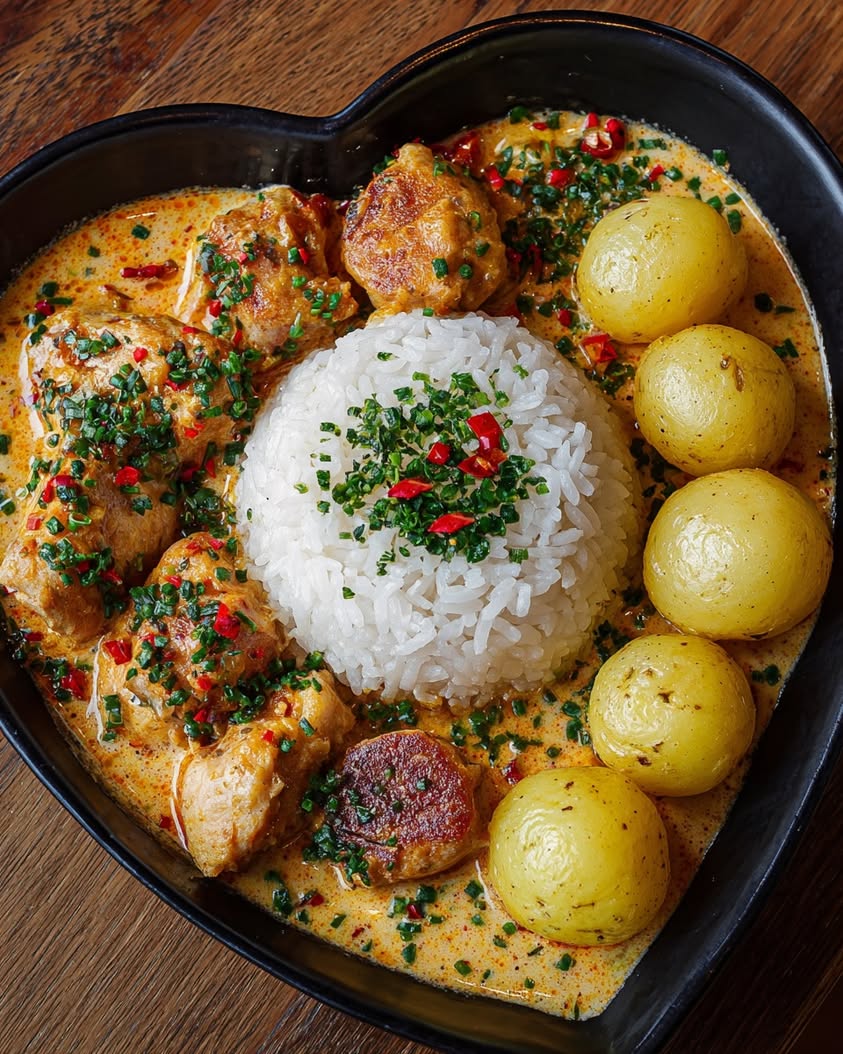
Creamy Paprika Chicken with Baby Potatoes & Jasmine Rice: A Flavor-Packed One-Pan Wonder
Imagine a dinner that fills your kitchen with the warm, smoky aroma of paprika and herbs, promising a meal that is both comforting and exciting. This Creamy Paprika Chicken with Baby Potatoes & Jasmine Rice delivers exactly that experience. It is a complete, flavor-packed one-pan dinner that feels gourmet but is surprisingly simple to prepare. Furthermore, it combines tender chicken, creamy potatoes, and fluffy rice in a single, cohesive dish that will have everyone asking for seconds.
The beauty of this recipe lies in its harmonious blend of textures and flavors. Juicy chicken thighs are seared to perfection, then simmered in a rich, creamy sauce infused with smoky paprika. Meanwhile, the baby potatoes roast alongside, becoming tender and absorbing the delicious pan juices. Finally, a bed of fluffy jasmine rice soaks up the incredible sauce, making every bite a perfect combination. This meal is a true crowd-pleaser, ideal for busy weeknights or a relaxed weekend feast.
Ultimately, this Creamy Paprika Chicken recipe is your new secret weapon for a stress-free, delicious dinner. It requires minimal cleanup because everything comes together seamlessly. Moreover, it uses common pantry staples to create something truly special. You will love how the creamy sauce coats every component, creating a comforting, restaurant-quality meal right at home.
Quick Recipe Highlights
- Flavor Profile: This dish features a deep, smoky sweetness from the paprika, balanced by the savory richness of cream and the subtle aromatics of garlic and onion. Consequently, each bite is a complex yet perfectly harmonious taste experience.
- Texture: You will enjoy tender, juicy chicken alongside creamy baby potatoes and separate, fluffy grains of jasmine rice. The creamy sauce beautifully brings all these contrasting textures together for a satisfying mouthfeel.
- Aroma: As it cooks, your kitchen will fill with the warm, inviting scent of smoked paprika and herbs. This aromatic profile is unmistakably comforting and promises a delicious meal ahead.
- Visual Appeal: The dish presents beautifully with golden-brown chicken, vibrant red sauce from the paprika, and specks of green herbs. It is a colorful and appetizing plate that looks as good as it tastes.
- Skill Level Needed: This is a fantastic recipe for cooks of all levels, from beginners to experts. The steps are straightforward and primarily involve searing and simmering, making it an accessible one-pan dinner for anyone.
- Special Equipment: You only need a large, oven-safe skillet or a Dutch oven to achieve the perfect sear on the chicken and then finish cooking everything in the same pan. No fancy or complicated tools are required.
Recipe Overview
- Difficulty Level: We have categorized this recipe as easy because it involves fundamental cooking techniques like searing and simmering. The process is linear and forgiving, making it hard to mess up. Even a novice cook can achieve impressive results with this straightforward guide.
- Category: This dish fits perfectly into the main course category for lunch or dinner. It is a hearty and complete meal featuring protein, starch, and vegetables, all cooked together for ultimate convenience and flavor.
- Cuisine: While paprika is famously used in Hungarian cuisine, this recipe takes a more modern, fusion approach. It borrows the central flavor of paprika but presents it in a creamy, one-pan format that appeals to contemporary palates and busy lifestyles.
- Cost: This is a very cost-effective meal. Chicken thighs are an affordable cut of protein, and ingredients like potatoes, rice, and paprika are pantry staples. You can create a restaurant-quality dinner for a family of four without straining your grocery budget.
- Season: This comforting Creamy Paprika Chicken is truly a year-round winner. It provides warmth and comfort during the cooler fall and winter months. Conversely, it is also light enough to enjoy in the spring and summer, especially when served with a crisp side salad.
- Occasion: It is incredibly versatile for any occasion. It is quick enough for a simple Tuesday night dinner yet impressive enough for serving guests on the weekend. It is the ultimate go-to recipe for reliable, delicious results.
Why You’ll Love This Creamy Paprika Chicken
First and foremost, the taste and texture of this dish are absolutely phenomenal. The chicken becomes incredibly tender and juicy from searing and then simmering in the creamy sauce. The baby potatoes soak up all the wonderful flavors, becoming little pockets of creamy, savory goodness. Meanwhile, the jasmine rice provides a light, fluffy base that perfectly complements the rich sauce. Every single component works in harmony, creating a deeply satisfying and comforting eating experience that will become an instant family favorite.
From a convenience standpoint, this recipe is a true lifesaver. As a one-pan dinner, it dramatically reduces your cleanup time and effort. You sear the chicken and potatoes in the same skillet you use to make the sauce, meaning all the delicious browned bits from the bottom of the pan contribute to the flavor. Furthermore, the active cooking time is minimal, allowing you to prepare other things or simply relax while it simmers away. It is the perfect solution for a hectic weeknight when you want a wholesome meal without a mountain of dishes.
Nutritionally, this Creamy Paprika Chicken offers a well-balanced plate. Chicken thighs provide high-quality protein and essential nutrients like iron and zinc. Potatoes are a great source of potassium and vitamin C, especially when cooked with their skins on. Additionally, using a moderate amount of cream creates a luxurious sauce without being overly heavy. You can feel good about serving this meal, knowing it provides sustained energy and satisfies hunger completely.
For social and entertaining value, this dish is a guaranteed hit. It presents beautifully straight from the pan, making it ideal for family-style serving. The vibrant colors and incredible aroma will impress your guests before they even take their first bite. Moreover, it is a crowd-pleaser that appeals to both adults and children, eliminating the need to cook multiple separate meals. It fosters a warm, communal dining atmosphere that is perfect for gatherings.
Finally, this recipe is remarkably cost-effective and accessible. It utilizes affordable ingredients that are easy to find at any standard grocery store. You do not need any expensive or exotic items to create this flavor-packed one-pan dinner. This makes it an excellent choice for families on a budget who still want to enjoy delicious, home-cooked meals regularly. It proves that eating well does not have to be complicated or expensive.
Historical Background and Cultural Significance
Paprika, the star spice in this recipe, has a rich and storied history that began not in Europe, but in the New World. Spanish and Portuguese explorers introduced chili peppers from Central America to the Old World in the 16th century. Initially, these peppers were cultivated as ornamental plants. However, traders eventually brought them to the Balkan region, where they found a perfect home in the climate and cuisine of Hungary. Hungarian farmers then began selectively breeding peppers for different characteristics, ultimately drying and grinding them into the fine powder we know as paprika today.
The cultural significance of paprika in Hungary cannot be overstated. It is considered the national spice and is a fundamental component of the country’s culinary identity. In fact, Hungarian cuisine was forever transformed in the 19th century with the popularization of paprika, largely thanks to the creation of classic dishes like goulash and chicken paprikash. These dishes showcased the spice’s ability to provide both vibrant color and deep, complex flavor, moving it from a simple garnish to a central ingredient. This cultural adoption turned paprika into a symbol of Hungarian hospitality and comfort.
The evolution of this specific Creamy Paprika Chicken recipe is a modern story of global fusion. While it draws direct inspiration from the principles of Hungarian chicken paprikash—a stew featuring chicken in a paprika-infused sauce—it adapts the concept for contemporary kitchens. The addition of roasted baby potatoes and jasmine rice cooked directly with the dish is a departure from traditional sides like egg noodles or dumplings. This evolution reflects a desire for complete, convenient meals that minimize cleanup while maximizing flavor, a priority for many of today’s home cooks.
Regional variations of paprika-based dishes are fascinating. Within Hungary itself, paprika can range from sweet and mild to intensely hot. Meanwhile, Spanish paprika, or pimentón, offers its own distinct smoky flavor, often from being smoked over oak wood. Our recipe uses a smoked paprika to add an extra layer of depth, a nod to the Spanish tradition. This fusion of culinary ideas demonstrates how recipes travel and adapt, creating new classics that honor their origins while meeting modern tastes and needs.
Ingredient Deep Dive
Let us start with the star of the show: paprika. This vibrant red spice is made from dried and ground peppers from the Capsicum annuum family. Culturally, it is the soul of Hungarian cuisine, but it also plays crucial roles in Spanish and Turkish cooking. Nutritionally, paprika is surprisingly rich in antioxidants, particularly vitamin A from carotenoids, which support eye and skin health. When selecting paprika, look for a vibrant red color and a rich aroma; avoid any that looks faded or dusty. For the best flavor in this Creamy Paprika Chicken, opt for a high-quality smoked paprika (pimentón). Store it in a cool, dark place to preserve its potency and color.
Chicken thighs are the ideal protein for this one-pan dinner. Unlike chicken breasts, thighs have a higher fat content, which makes them much more forgiving during cooking. They stay juicy and tender even with longer simmering times. From a nutritional standpoint, they provide excellent protein, iron, and zinc. When selecting chicken thighs, choose ones with firm, pink flesh and minimal visible fat. You can use boneless, skinless thighs for quicker cooking, or bone-in thighs for even more flavor. Store them in the coldest part of your refrigerator and use within two days of purchase, or freeze for longer storage.
Baby potatoes are a wonderful component in this dish. These small, young potatoes are harvested before they reach full maturity, giving them a thin, delicate skin and a creamy, waxy texture. They are a fantastic source of potassium, vitamin C, and dietary fiber, especially when you leave the skins on. For this recipe, choose potatoes that are uniform in size so they cook evenly. Look for firm potatoes with smooth skin and no sprouts or green spots. Store them in a cool, dark, and well-ventilated place, but not in the refrigerator, as cold temperatures can convert their starch into sugar and alter their flavor.
Jasmine rice provides the perfect fluffy base for our creamy sauce. This long-grain rice originates from Thailand and is known for its delicate floral aroma and slightly sticky texture when cooked. It is a good source of carbohydrates for energy and is naturally gluten-free. When selecting jasmine rice, look for bags with whole, unbroken grains. Before cooking, always rinse the rice thoroughly in cold water until the water runs clear; this removes excess surface starch and prevents gumminess. Store uncooked rice in an airtight container in a cool, dry pantry. For best results, use the absorption method to cook it, allowing it to become light and separate.
Common Mistakes to Avoid
- Not Browning the Chicken Properly: Do not rush the searing step. A proper sear creates a golden-brown crust through the Maillard reaction, which adds immense depth of flavor to the entire dish. If the chicken is pale, the final sauce will lack complexity.
- Using Stale or Low-Quality Paprika: Paprika is the defining flavor. Old, stale paprika will taste dusty and flat, ruining the dish. Always use fresh, high-quality paprika, preferably smoked, for the best results in your Creamy Paprika Chicken.
- Overcrowding the Pan When Searing: If you put too many chicken thighs and potatoes in the pan at once, they will steam instead of sear. Cook in batches if necessary to ensure everything gets a beautiful, caramelized exterior.
- Burnt Garlic: Garlic burns easily and becomes bitter. Add it to the pan only after you have removed the seared chicken and lowered the heat. Cook it just until fragrant, usually for only about 30 seconds.
- Not Deglazing the Pan Effectively: After searing, those browned bits at the bottom of the pan are flavor gold. Use your chicken broth or a splash of white wine to scrape them all up; this forms the foundation of your sauce.
- Overcooking the Chicken: While thighs are forgiving, they can still become dry if simmered for an excessively long time. Follow the recommended cooking time and check for an internal temperature of 165°F (74°C).
- Skipping the Rice Rinse: If you do not rinse jasmine rice before cooking, the excess starch will make it gummy and clumpy. Always rinse until the water runs clear for perfectly fluffy grains.
- Adding Cold Cream to a Hot Pan: To prevent the cream from curdling, let it come to room temperature before adding it to the sauce. Alternatively, temper it by whisking a little of the hot sauce into the cream first.
Essential Techniques
Mastering the sear is your first crucial step. Searing creates a flavorful crust on the chicken and potatoes through the Maillard reaction, a chemical process that develops complex, savory flavors. To do it perfectly, ensure your pan is properly preheated and your chicken thighs are patted completely dry with paper towels. Furthermore, do not move the chicken around once it hits the pan; let it develop that golden-brown crust undisturbed for a few minutes. The visual cue for success is a crispy, browned surface that releases easily from the pan when ready to flip.
Understanding the art of building a pan sauce is what makes this dish extraordinary. After searing, you use the fond—the browned bits stuck to the pan—as your flavor base. Deglazing with broth or wine and scraping with a wooden spoon dissolves these bits into your liquid. Subsequently, simmering allows the sauce to reduce and thicken slightly, concentrating the flavors. The key is to cook the sauce until it coats the back of a spoon, indicating it has reached a perfect, luxurious consistency for your one-pan dinner.
The absorption method for rice is a fundamental skill. This technique involves cooking the rice in a measured amount of water so that it fully absorbs the liquid, resulting in light, separate grains. The key is to maintain a consistent, low simmer once the liquid is absorbed. Do not stir the rice during cooking, as this agitates the grains and releases starch, making them sticky. The visual cue for perfectly cooked jasmine rice is small steam holes forming on the surface, signaling that all the water has been absorbed.
Pro Tips for Perfect Creamy Paprika Chicken
First, always pat your chicken thighs completely dry with paper towels before seasoning. This simple step is the secret to achieving a crisp, golden sear instead of steaming the chicken in its own moisture.
For an even deeper flavor, marinate the chicken thighs in a tablespoon of the paprika, a pinch of salt, and a drizzle of oil for 30 minutes in the refrigerator before you start cooking.
Use a combination of sweet and smoked paprika. The sweet paprika provides classic flavor and color, while the smoked paprika adds a wonderful, subtle smokiness that elevates the entire dish.
Let your heavy cream sit out on the counter for 15-20 minutes before adding it to the sauce. Adding cold cream to a hot pan can sometimes cause it to curdle or separate.
If your sauce seems a bit too thin after adding the cream, let it simmer uncovered for a few extra minutes. This will allow it to reduce and thicken to a velvety consistency.
For the best texture in your jasmine rice, after cooking, fluff it with a fork and then let it sit with the lid on for 5-10 minutes off the heat. This allows the grains to firm up and separate perfectly.
Finish the dish with a fresh garnish. A sprinkle of freshly chopped parsley or chives right before serving adds a pop of color and a bright, fresh flavor that cuts through the richness.
For an extra layer of flavor, add a splash of dry white wine to the pan when you are deglazing it, right before adding the chicken broth. The acidity will balance the creaminess beautifully.
Variations and Adaptations
For regional variations, you can take this recipe in several exciting directions. A Hungarian version would be closer to a classic paprikash, using sweet paprika exclusively and serving it over spaetzle or egg noodles instead of rice. A Spanish-inspired twist would use pimentón de la Vera and add chorizo and roasted red peppers to the pan. For a Mediterranean feel, incorporate sun-dried tomatoes, kalamata olives, and a sprinkle of oregano. Each variation honors a different culinary tradition while utilizing the same comforting, one-pan cooking method.
Seasonal adaptations are simple and effective. In the spring, add fresh peas or asparagus tips to the pan during the last five minutes of cooking. During summer, stir in fresh cherry tomatoes and zucchini slices. For a hearty autumn version, swap the baby potatoes for cubed butternut squash or sweet potato. In the winter, add hearty greens like kale or spinach at the end, allowing them to wilt into the warm sauce. These changes keep the recipe feeling fresh and aligned with what is available throughout the year.
Dietary modifications are straightforward for this versatile dish. For a gluten-free version, simply ensure your chicken broth is certified gluten-free. To make it dairy-free, replace the heavy cream with full-fat canned coconut milk; it provides a similar richness and a subtle, pleasant sweetness. For a lower-carb or keto adaptation, omit the potatoes and rice entirely and serve the creamy paprika chicken over cauliflower rice or zucchini noodles. You can also increase the vegetable content by adding mushrooms and bell peppers.
Serving and Presentation Guide
Plating this dish beautifully enhances the entire dining experience. For a family-style presentation, serve everything directly from the skillet at the table, allowing the incredible aroma to be part of the meal. For individual plates, create a neat bed of fluffy jasmine rice in the center of a shallow bowl. Place two pieces of creamy paprika chicken and a generous spoonful of baby potatoes on top. Then, ladle the rich, red sauce over everything, allowing it to pool around the rice. This method ensures every component is visible and sauced perfectly.
Garnishing is the final touch that elevates the visual appeal and flavor. A generous sprinkle of freshly chopped flat-leaf parsley or chives adds a vibrant green contrast to the red sauce. For a bit of texture and a fresh, sharp bite, a light drizzle of sour cream or Greek yogurt looks beautiful. If you enjoy a little heat, a pinch of red pepper flakes or a dash of hot sauce not only adds spice but also another visual element. A final grind of black pepper over the top makes it look professionally finished.
Consider traditional and modern accompaniments to complete the meal. A simple, crisp green salad with a lemony vinaigrette is the perfect side to balance the richness of the creamy sauce. For a vegetable side, roasted green beans, steamed broccoli, or a simple cucumber salad work wonderfully. If you are serving guests, a crusty loaf of bread is essential for sopping up every last bit of the delicious sauce. These sides turn this one-pan dinner into a well-rounded, memorable feast.
Wine and Beverage Pairing
Selecting the right wine can elevate your Creamy Paprika Chicken dinner. The dish’s richness and smoky paprika notes pair beautifully with white wines that have good acidity to cut through the cream. A crisp, unoaked Chardonnay or a French White Burgundy would be an excellent choice. Alternatively, an aromatic Gewürztraminer or a dry Riesling can complement the spice’s sweetness. If you prefer red wine, opt for a light-bodied, low-tannin red like a Pinot Noir or a Gamay (Beaujolais), which will not overpower the delicate flavors of the chicken and sauce.
For non-alcoholic alternatives, you have several delicious options. Sparkling water with a squeeze of lemon or lime provides a refreshing, palate-cleansing effervescence. An herbal iced tea, such as mint or lemon verbena, offers a soothing complement. For something more unique, a ginger beer or a tart cherry spritzer can stand up to the robust flavors of the paprika and cream. These beverages provide complexity and refreshment without alcohol, making the meal enjoyable for everyone.
Consider the serving temperature of your beverages to enhance the pairing. White wines and non-alcoholic sparklers should be served well-chilled, between 45-50°F (7-10°C). Light red wines like Pinot Noir are best served slightly cooler than room temperature, around 55°F (13°C). Iced teas and other non-alcoholic drinks are most refreshing when served cold. Proper temperature ensures that your drink refreshes the palate between bites of the rich, creamy chicken, making the entire dining experience more balanced and enjoyable.
Storage and Shelf Life
Proper storage is key to enjoying your leftovers. Allow the Creamy Paprika Chicken, potatoes, and rice to cool completely to room temperature before storing, but do not leave it out for more than two hours. Transfer the components to separate airtight containers, or store them together if you prefer. The rice, in particular, should be cooled quickly and stored promptly to maintain food safety. This meal will keep well in the refrigerator for up to 3-4 days, making it a fantastic make-ahead option for lunches.
Reheating instructions are crucial for restoring the dish’s creamy texture. The best method is to reheat it gently on the stovetop over low heat. Add a small splash of chicken broth or water to the pan to loosen the sauce and prevent it from breaking. Stir frequently until it is heated through. You can also use a microwave, but use a lower power setting and stir every 30 seconds to ensure even heating. Avoid boiling the sauce, as high heat can cause the cream to separate.
Freezing is possible, but with some caveats. The chicken and potatoes freeze reasonably well for up to 2 months. However, the creamy sauce may separate slightly upon thawing, and the rice can become grainy. If you plan to freeze, store the components without the rice. Thaw overnight in the refrigerator before reheating gently on the stovetop. You may need to whisk the sauce vigorously while reheating or add a fresh splash of cream to re-emulsify it and bring back its smooth consistency.
Make Ahead Strategies
You can efficiently break down the prep for this one-pan dinner over a couple of days. The day before, you can measure out all your spices and combine them in a small bowl. You can also chop your onion and mince your garlic, storing them in separate airtight containers in the refrigerator. Furthermore, you can wash and halve the baby potatoes, keeping them submerged in water in a bowl in the fridge to prevent browning. This advance prep turns the actual cooking day into a quick and seamless process.
For a complete make-ahead meal, you can cook the entire dish and store it for later. After cooking, let the Creamy Paprika Chicken cool completely, then transfer it to an airtight container and refrigerate for up to three days. The flavors often meld and improve overnight. When ready to serve, reheat it gently on the stovetop with a little added broth or water. You may also cook a fresh batch of jasmine rice to serve alongside, as freshly cooked rice has the best texture, though the leftover rice from the original meal reheats just fine.
Consider the quality impact when making components ahead. Pre-cooked and reheated chicken and potatoes hold up very well, often becoming more tender. The sauce may thicken in the fridge; simply thin it with a bit of broth when reheating. The one component best made fresh is the jasmine rice, as it can dry out or become hard in the refrigerator. However, if you must make rice ahead, ensure it is cooled quickly and reheated with a sprinkle of water to restore moisture. Adding a fresh garnish after reheating will brighten up the entire dish.
Scaling Instructions
Halving this recipe for one or two people is very simple. Use exactly half of all the ingredients: 2 chicken thighs, ½ pound of baby potatoes, ½ cup of jasmine rice, and so on. The cooking times will remain largely the same, but you can use a smaller skillet. Keep a close eye on the sauce when reducing, as a smaller volume will thicken slightly faster. This scaling down is perfect for a cozy dinner without excessive leftovers, though the leftovers are so good you might wish you had made the full batch.
Doubling or tripling the recipe for a crowd requires minor adjustments. Double or triple all ingredients proportionally. You will likely need to use a very large Dutch oven or cook the chicken and potatoes in batches to avoid overcrowding the pan, which prevents proper searing. The simmering time for the sauce might need to be extended by a few minutes to allow it to reduce and thicken adequately. When cooking larger quantities of jasmine rice, use a wider pot to ensure even cooking, or cook it in separate batches for the best texture.
Consider equipment and timing when scaling up. For a doubled recipe, ensure your largest skillet or pot is oven-safe if you plan to finish it in the oven. You may also need to adjust your total cooking time slightly upwards, by about 5-10 minutes, to ensure the chicken is cooked through and the potatoes are tender. When serving a crowd, have all your garnishes and sides prepared ahead of time so you can focus on the main event. This Creamy Paprika Chicken is a fantastic, scalable recipe for entertaining.
Nutritional Deep Dive
This Creamy Paprika Chicken provides a well-rounded macronutrient profile. A typical serving offers a substantial amount of high-quality protein from the chicken thighs, which is essential for muscle repair and satiety. The carbohydrates come primarily from the jasmine rice and baby potatoes, providing sustained energy. The fats are a mix from the chicken skin, cooking oil, and heavy cream, contributing to the feeling of fullness and carrying the fat-soluble flavors of the paprika. This balance makes it a satisfying meal that keeps you energized for hours.
From a micronutrient perspective, this dish is quite impressive. Paprika is rich in vitamin A, crucial for vision and immune function. The baby potatoes, especially with their skins on, provide potassium for blood pressure regulation and vitamin C. Chicken thighs are a good source of iron, zinc, and B vitamins, which support metabolism and energy production. Using garlic and onion adds antioxidants and anti-inflammatory compounds. Together, these ingredients create a meal that is not only delicious but also nutritionally dense.
For those managing their diet, this recipe can be adapted without sacrificing flavor. To reduce calories, you can use a lighter cream alternative or slightly less oil for searing. The dish is naturally gluten-free, provided you use a certified gluten-free broth. For a lower-carb version, simply reduce or omit the potatoes and rice and serve with a large portion of non-starchy vegetables like steamed broccoli or a fresh salad. The versatility of this one-pan dinner makes it easy to align with various health and wellness goals.
Dietary Adaptations
For a gluten-free version, this recipe is already nearly compliant. The only ingredient that requires verification is the chicken broth. Many broths contain hidden gluten, so be sure to select a brand that is certified gluten-free. All other components—chicken, potatoes, rice, cream, and spices—are naturally gluten-free. This makes our Creamy Paprika Chicken an excellent and safe choice for those with celiac disease or gluten sensitivity, without any compromise on taste or texture.
Creating a dairy-free adaptation is surprisingly simple and yields delicious results. Replace the heavy cream with an equal amount of full-fat, canned coconut milk. The coconut milk provides a similar richness and body to the sauce, with a very subtle sweetness that actually complements the smoky paprika beautifully. Alternatively, you could use a plain, unsweetened cashew or almond milk beverage, though you may want to thicken the sauce with a teaspoon of cornstarch slurry at the end, as these are thinner than cream.
For a vegan interpretation, you will make a few strategic substitutions. Replace the chicken thighs with hearty vegetables like large portobello mushroom caps or chunks of seitan. Use vegetable broth instead of chicken broth. For the cream, use the full-fat coconut milk as mentioned above. To mimic the savory depth of chicken, you might add a tablespoon of nutritional yeast or a teaspoon of white miso paste to the sauce. The baby potatoes and jasmine rice remain the same, creating a wholly satisfying plant-based one-pan dinner.
Troubleshooting Guide
If your sauce is too thin, the most common solution is to let it simmer uncovered for a few more minutes. This allows excess water to evaporate, naturally thickening the sauce. If you are in a hurry, you can create a quick slurry by mixing one teaspoon of cornstarch with one tablespoon of cold water. Whisk this into the simmering sauce and cook for another minute until it thickens. Be careful not to over-thicken, as the sauce will continue to set up slightly as it cools.
If your sauce breaks or the cream curdles, do not panic. This can happen if the heat is too high when adding the cream. Immediately remove the pan from the heat. You can often save it by vigorously whisking in a tablespoon of cold cream or butter. Alternatively, transferring the sauce to a blender and blending for 30 seconds can re-emulsify it and make it smooth again. To prevent this in the future, always temper the cream by whisking a little of the hot sauce into it before adding it back to the main pan.
If the chicken is cooked but the potatoes are still hard, you have a few options. The simplest is to remove the chicken from the pan and keep it warm, then continue simmering the potatoes in the sauce until they are tender. To speed this up, you can cut the potatoes into smaller pieces. In the future, ensure your potato halves are relatively uniform in size, or consider parboiling them for 5 minutes before adding them to the pan to roast alongside the chicken.
Recipe Success Stories
We have received wonderful feedback from our community of home cooks who have tried this Creamy Paprika Chicken. One reader, Sarah from Ohio, shared that it has become her family’s most-requested weeknight meal. Her picky eaters now devour everything on their plates, and she loves that it’s a complete meal in one pan. She mentioned that doubling the sauce, as one of our pro tips suggests, was a game-changer for her family, who loves extra sauce for their rice.
Many readers have successfully adapted the recipe to suit their dietary needs. A couple from California, Mark and James, shared their dairy-free version using coconut cream. They reported that the subtle coconut flavor paired unexpectedly well with the smoked paprika, creating a unique fusion dish they now make regularly. Another reader, Maria, who follows a gluten-free diet, was thrilled to find a recipe that required no special modifications for her needs, calling it a “stress-free delight.”
Photography tips have also emerged from our community. An amateur food blogger, Chloe, found that serving the dish in a rustic, dark-colored bowl made the vibrant red sauce and green garnishes truly stand out. She recommends using natural light from a window and a simple, uncluttered background to let the food be the star. Her photos of this one-pan dinner gained more engagement on her social media than any other recipe she had posted, proving its visual and culinary appeal.
Frequently Asked Questions
Can I use chicken breasts instead of thighs?
Yes, you can use boneless, skinless chicken breasts. However, they cook faster and are leaner, so they can dry out more easily. Reduce the initial searing time by 1-2 minutes per side and the simmering time by about 5 minutes. Use a meat thermometer to ensure they reach an internal temperature of 165°F (74°C) without overcooking.
What can I use if I don’t have smoked paprika?
If you do not have smoked paprika, you can use all sweet paprika. The dish will still be delicious but will lack the smoky depth. For a workaround, you could add a tiny drop of liquid smoke (use sparingly) or a pinch of chipotle powder to the sweet paprika to mimic some of that smokiness.
Is it necessary to use an oven-safe skillet?
While the stovetop method works perfectly, an oven-safe skillet offers versatility. If your skillet is oven-safe, you can transfer the entire pan to a preheated 375°F (190°C) oven after adding the cream for 10-15 minutes. This creates more even, gentle heat that can help cook the potatoes through without reducing the sauce too much on the stovetop.
Can I make this recipe in a slow cooker?
You can adapt it for a slow cooker, but you will lose the seared flavor. Sear the chicken and onions in a separate pan first, then transfer everything except the cream and rice to the slow cooker. Cook on low for 5-6 hours or high for 3-4 hours. Stir in the cream during the last 30 minutes and cook the rice separately.
My sauce is too thick. How can I thin it?
If your sauce has become too thick, simply whisk in a little more chicken broth, a tablespoon at a time, until it reaches your desired consistency. The sauce will also naturally thin out a bit as it sits and when reheated with the juicy chicken and potatoes.
How can I tell when the baby potatoes are done?
The best way to check is to pierce a potato half with the tip of a sharp knife or a fork. If it slides in and out with little to no resistance, the potatoes are perfectly cooked and tender. They should be soft enough to eat but not so mushy that they fall apart in the sauce.
Can I use different types of potatoes?
Absolutely. Yukon Gold or red potatoes are excellent substitutes and have a similar waxy, creamy texture. If using larger potatoes, just be sure to cut them into
Print
Creamy Paprika Chicken with Baby Potatoes & Jasmine Rice
Description
A comforting one-pan meal featuring tender chicken in a rich paprika cream sauce, served with roasted baby potatoes and fluffy jasmine rice.
Ingredients
For the Crust:
- 4 boneless, skinless chicken thighs
- 1 lb baby potatoes, halved
- 1 cup jasmine rice
- 1 cup heavy cream
- 2 tbsp sweet paprika
- 1 onion, finely chopped
- 3 cloves garlic, minced
- 2 tbsp olive oil
- 1 tsp salt
- 1/2 tsp black pepper
- 1/2 cup chicken broth
- 2 tbsp fresh parsley, chopped
Instructions
1. Prepare the Crust:
- Preheat oven to 400°F (200°C). Toss baby potatoes with 1 tbsp olive oil, salt, and pepper, then spread on a baking sheet and roast for 25-30 minutes until tender.
- Cook jasmine rice according to package instructions and set aside.
- Heat remaining olive oil in a large skillet over medium-high heat. Season chicken with paprika, salt, and pepper, then sear until golden brown on both sides, about 5-6 minutes per side. Remove and set aside.
- In the same skillet, sauté onion and garlic until softened, about 3-4 minutes. Pour in chicken broth to deglaze, scraping up any browned bits.
- Reduce heat to low, stir in heavy cream, and return chicken to the skillet. Simmer for 10 minutes until sauce thickens and chicken is cooked through.
- Serve creamy paprika chicken over jasmine rice with roasted baby potatoes on the side, garnished with fresh parsley.
Notes
You can customize the seasonings to taste.

I’m Shaykee—born in Morocco, seasoned across continents. From airplane galleys to home kitchens, I share the flavors and stories that shaped my journey.