
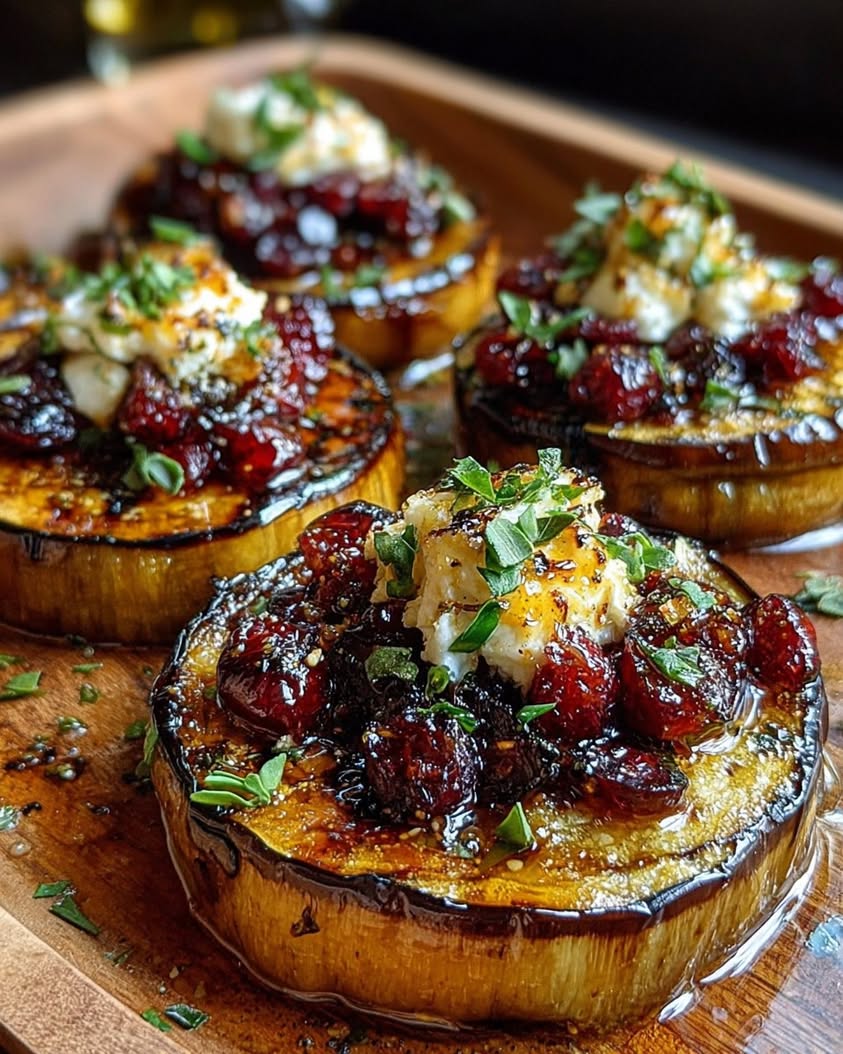
Roasted Eggplant Rounds: A Sweet and Savory Appetizer Sensation
These roasted eggplant rounds with honey and cranberries create an unforgettable appetizer that will impress your guests from the very first bite. Imagine tender, creamy eggplant slices caramelized to perfection, then generously drizzled with golden honey and studded with jewel-like cranberries. This dish masterfully balances savory, sweet, and tart flavors in every mouthful. Furthermore, it transforms simple, humble ingredients into an elegant presentation worthy of any special occasion or holiday table.
The magic of these roasted eggplant rounds lies in their beautiful simplicity and sophisticated flavor profile. As the eggplant roasts, it develops a rich, almost meaty texture that provides the perfect canvas for the sweet honey glaze. Meanwhile, the cranberries offer bursts of tartness that cut through the richness, creating a harmonious balance. Consequently, this dish feels both rustic and refined, making it ideal for everything from casual family dinners to formal entertaining. The vibrant colors and contrasting textures ensure it’s as visually stunning as it is delicious.
What truly sets these roasted eggplant rounds apart is their versatility and ease of preparation. You can easily adapt this recipe to suit different dietary needs or personal preferences. For instance, you might experiment with different herbs or swap the cranberries for other dried fruits. Despite its gourmet appearance, this appetizer requires minimal hands-on time and uses ingredients you likely already have in your pantry. Ultimately, it proves that creating impressive, restaurant-quality dishes at home doesn’t need to be complicated or time-consuming.
Quick Recipe Highlights
- Flavor Profile: These roasted eggplant rounds deliver a sophisticated balance of savory roasted vegetable, floral sweetness from the honey, and bright tartness from the cranberries. The combination creates a complex taste experience that evolves with each bite, starting with sweetness, moving to savory depth, and finishing with a refreshing tart note.
- Texture: The texture journey begins with a slightly crisp exterior giving way to a luxuriously creamy, almost silky interior. The cranberries provide delightful chewy bursts, while the honey glaze adds a subtle sticky quality that enhances the mouthfeel. This contrast between creamy eggplant and chewy fruit makes each bite interesting and satisfying.
- Aroma: As the eggplant rounds roast, they release an earthy, comforting scent that fills your kitchen with warmth. The honey caramelizes slightly in the oven, adding notes of floral sweetness to the air. When you add the cranberries, they contribute a faint fruity tartness that completes the aromatic profile.
- Visual Appeal: The presentation showcases beautiful golden-brown eggplant rounds arranged like edible coins. The glossy honey drizzle catches the light, while the vibrant red cranberries pop against the neutral background. This color contrast makes the dish photograph beautifully and look professionally plated with minimal effort.
- Skill Level Needed: This recipe requires only basic kitchen skills like slicing vegetables and using an oven. Even beginner cooks can achieve excellent results by following the simple steps. The technique focuses on proper roasting rather than complicated culinary methods, making it accessible to all experience levels.
- Special Equipment: You need just a baking sheet, parchment paper, a sharp knife, and a mixing bowl. A pastry brush helps evenly distribute the oil, but you can use a spoon instead. No specialized kitchen tools are necessary, which makes this recipe perfect for cooks with limited equipment.
Recipe Overview
- Difficulty Level: We classify these roasted eggplant rounds as easy because they involve straightforward techniques like slicing and roasting. The process doesn’t require advanced knife skills or complicated cooking methods. Additionally, the recipe forgives small mistakes in slicing thickness or roasting time. Even first-time eggplant cooks can achieve delicious results with basic kitchen confidence.
- Category: This dish fits perfectly into the appetizer category, ideal for starting meals or serving at parties. It also works well as a light vegetarian main course when paired with a simple salad. The recipe adapts easily to different meal contexts, from formal multi-course dinners to casual grazing platters. Its flexibility makes it a valuable addition to any cook’s repertoire.
- Cuisine: While eggplant appears prominently in Mediterranean and Middle Eastern cuisines, this preparation takes creative liberties with global flavors. The honey drizzle nods to North African tagines, while the cranberry addition brings a North American twist. This fusion approach creates something familiar yet novel that appeals to diverse palates. The result honors traditional eggplant preparations while offering a contemporary interpretation.
- Cost: This recipe represents excellent value, using affordable ingredients that deliver gourmet results. Eggplant provides substantial volume at low cost, while honey and cranberries offer big flavor impact in small quantities. The entire dish costs significantly less than comparable appetizers at restaurants. Budget-conscious entertainers will appreciate how it stretches expensive ingredients to serve multiple people.
- Season: Eggplant reaches peak flavor in late summer and early fall, making this ideal for harvest season entertaining. Meanwhile, the cranberries and honey provide warm, comforting notes that transition beautifully into holiday menus. The recipe works year-round thanks to reliable eggplant availability in most markets. However, it particularly shines during autumn when eggplants are at their sweetest and meatiest.
- Occasion: These roasted eggplant rounds elevate everyday meals while being special enough for celebrations. They work beautifully for holiday parties, especially Thanksgiving and Christmas gatherings. The vegetarian nature makes them inclusive for diverse dietary preferences. Furthermore, their make-ahead potential reduces stress when hosting larger events.
Why You’ll Love This Roasted Eggplant Rounds Recipe
The flavor combination in these roasted eggplant rounds will captivate your taste buds from the first bite. The savory, umami-rich eggplant provides a substantial base that carries the other flavors beautifully. Meanwhile, the honey adds floral sweetness that caramelizes during roasting, creating depth and complexity. The cranberries contribute necessary acidity that prevents the dish from becoming cloying. This balance of savory, sweet, and tart creates a sophisticated profile that feels both comforting and exciting. Each component enhances the others rather than competing, resulting in a harmonious culinary experience.
Preparation convenience makes these roasted eggplant rounds a go-to recipe for busy cooks. The entire process from start to finish takes just thirty minutes, with only ten minutes of active effort. You can slice the eggplant while the oven preheats, then simply arrange the rounds and pop them in to roast. The hands-off cooking time allows you to prepare other dishes or entertain guests. Additionally, the recipe uses minimal dishes, keeping cleanup quick and simple. This efficiency means you can create an impressive appetizer without spending hours in the kitchen.
Nutritional benefits provide another compelling reason to love these roasted eggplant rounds. Eggplant delivers fiber, antioxidants, and essential nutrients while being low in calories. Honey offers natural sweetness with trace enzymes and antioxidants, unlike refined sugar. Cranberries contribute vitamin C and unique plant compounds that support urinary tract health. The cooking method uses roasting rather than frying, minimizing added fats. This combination creates a dish that feels indulgent while providing substantive nutritional value. Health-conscious eaters can enjoy generous portions without guilt.
Entertaining value makes this recipe particularly valuable for hosts and hostesses. The beautiful presentation creates immediate visual impact on any appetizer spread. Vegetarian and gluten-free guests can enjoy them without modification, increasing their inclusivity. The recipe scales easily to accommodate small dinners or large parties without additional complexity. You can serve them warm, at room temperature, or even chilled, providing flexibility in timing. Furthermore, they pair well with various wines, cocktails, and non-alcoholic beverages. This versatility simplifies menu planning for diverse gatherings.
Accessibility and cost-effectiveness round out the reasons this recipe deserves a place in your rotation. Eggplant remains affordable year-round in most markets, making this dish budget-friendly. The other ingredients—honey, cranberries, oil, and basic seasonings—are pantry staples for many households. Even if you need to purchase everything specifically, the total cost remains reasonable compared to store-bought appetizers. The simple technique ensures success regardless of your cooking experience level. Ultimately, this recipe delivers maximum flavor and presentation impact with minimal investment of money, time, or skill.
Historical Background and Cultural Significance
Eggplant has a rich culinary history spanning continents and centuries, with origins in Southeast Asia over 2,000 years ago. Initially, ancient civilizations cultivated various eggplant varieties, with early forms bearing little resemblance to the large purple vegetables we know today. Through trade routes, eggplant traveled to the Middle East and Mediterranean regions, where cooks embraced its versatility. Interestingly, early European encounters with eggplant created suspicion, with some cultures believing it caused insanity. Fortunately, this misconception faded as culinary exploration demonstrated eggplant’s wonderful properties and adaptability.
Cultural significance of eggplant varies dramatically across different culinary traditions. In Italian cuisine, eggplant becomes the star of dishes like eggplant parmesan and caponata. Meanwhile, Middle Eastern cooks transform it into smoky baba ghanoush and various stuffed preparations. Asian cuisines incorporate eggplant into curries, stir-fries, and pickled preparations. The vegetable’s ability to absorb flavors while providing substantial texture makes it a culinary chameleon. This global appreciation demonstrates how one ingredient can inspire countless interpretations based on local ingredients and cooking styles.
The evolution of roasted eggplant preparations reflects broader culinary trends toward simpler, vegetable-forward dishes. Historically, many eggplant recipes involved multiple cooking steps like salting, frying, and simmering in complex sauces. Modern approaches often emphasize the vegetable’s natural qualities through techniques like roasting that concentrate flavor. The addition of sweet elements like honey connects to North African and Middle Eastern traditions where fruit and meat combinations are common. This particular recipe represents a contemporary fusion that honors traditional pairings while incorporating accessible ingredients.
Regional variations of similar dishes showcase how local ingredients influence eggplant preparation. In Greece, you might find eggplant rounds topped with honey and sesame seeds. Turkish cuisine features eggplant with pomegranate molasses, creating a similar sweet-tart profile. Persian cooks sometimes combine eggplant with dried barberries, which offer tartness comparable to cranberries. These global connections demonstrate how the fundamental concept of sweetened roasted eggplant appears across cultures. Our version with cranberries incorporates a North American ingredient while maintaining this international spirit of culinary adaptation.
Ingredient Deep Dive
Eggplant serves as the foundation of this dish, providing substance, texture, and a neutral canvas for other flavors. This versatile vegetable belongs to the nightshade family, related to tomatoes and peppers, with a history dating back millennia in Asian cultivation. Nutritionally, eggplant offers fiber, vitamins B1 and B6, and antioxidants like nasunin found in the skin. When selecting eggplants, choose firm, heavy specimens with smooth, shiny skin and fresh-looking green caps. Avoid those with soft spots, wrinkles, or brown patches. Store whole eggplants in the refrigerator crisper drawer for up to five days. For substitutions, zucchini or portobello mushroom caps can work, though the texture and cooking time will vary.
Honey provides the sweet component that caramelizes during roasting, creating depth and balancing the eggplant’s earthiness. This natural sweetener has been prized since ancient times, with evidence of honey collection dating back 8,000 years. Different honey varieties offer distinct flavor profiles—from light and floral to dark and robust. Nutritionally, honey contains antioxidants and trace enzymes, though it should still be used moderately due to its sugar content. When selecting honey, raw, unfiltered varieties provide the most complex flavor. Store honey at room temperature in a sealed container. For substitutions, maple syrup, agave nectar, or pomegranate molasses can create similar sweet-tart effects.
Cranberries contribute the essential tart element that cuts through the richness and adds visual appeal. These native North American berries have a long history of use by Indigenous peoples, both culinary and medicinal. They grow in bog environments and contain unique compounds that support urinary tract health. When selecting dried cranberries, check for plumpness and avoid packages with clumping, which indicates moisture issues. Store opened packages in airtight containers in a cool, dark place. For substitutions, dried cherries, chopped dried apricots, or even pomegranate seeds can provide similar tart-sweet contrast. If using fresh cranberries, adjust cooking time as they require more heat to soften.
Olive oil forms the cooking medium that facilitates roasting and enhances flavor absorption. This ancient staple of Mediterranean cooking comes from pressed olives and varies dramatically in flavor based on origin and processing. Extra virgin olive oil contains beneficial monounsaturated fats and antioxidants that support heart health. When selecting olive oil for roasting, a medium-quality extra virgin provides good flavor without wasting expensive finishing oils. Store olive oil in a dark, cool place to prevent rancidity. For substitutions, avocado oil or grapeseed oil work well for high-heat roasting, though they lack olive oil’s distinctive flavor.
Seasonings like salt, pepper, and optional herbs complete the flavor profile of these roasted eggplant rounds. Salt serves multiple purposes—enhancing natural flavors, drawing out moisture, and balancing sweetness. Black pepper adds subtle heat and complexity that elevates the other ingredients. Herbs like thyme or rosemary can introduce aromatic notes that bridge the savory and sweet elements. When selecting seasonings, fresh herbs provide brighter flavor, while dried herbs offer convenience and longer shelf life. Store spices in airtight containers away from heat and light. For substitutions, experiment with different herb combinations like oregano, sage, or even spice blends like za’atar for Middle Eastern flair.
Common Mistakes to Avoid
- Cutting uneven slices creates inconsistent cooking—some rounds burn while others remain undercooked. Use a sharp knife and aim for uniform ½-inch thickness. A mandoline slicer can help achieve perfect consistency if you have one available.
- Skipping the oil brushing step leads to dry, tough eggplant rather than creamy interiors. Ensure each round receives a light coating on both sides. Alternatively, you can toss the slices in a bowl with oil for more thorough coverage.
- Overcrowding the baking sheet prevents proper browning and caramelization. Arrange rounds in a single layer with space between them. Use two baking sheets if necessary rather than cramming them together.
- Under-salting fails to enhance the eggplant’s natural flavor and balance the sweetness. Season generously before roasting, remembering that some salt will be lost during cooking. Taste and adjust seasoning after cooking if needed.
- Using old, spongy eggplant results in bitter flavor and unpleasant texture. Select firm, heavy eggplants with taut, shiny skin. Male eggplants (those with round, smooth base indentations) typically have fewer seeds and less potential bitterness.
- Baking at too low temperature prevents proper caramelization and texture development. Ensure your oven is fully preheated before adding the eggplant. Use an oven thermometer to verify accuracy if your oven runs cool.
- Adding honey before roasting causes burning due to its sugar content. Always apply honey after the eggplant has cooked through and begun to caramelize. The residual heat will warm the honey perfectly without scorching.
- Neglecting to flip halfway through cooking creates uneven browning. Use tongs to carefully turn each round at the midway point. This simple step ensures both sides develop beautiful color and texture.
- Serving immediately without resting prevents flavor integration. Let the finished rounds sit for 5-10 minutes after adding toppings. This allows the honey to soak in slightly and flavors to meld.
- Using aluminum foil without parchment can sometimes cause sticking. Parchment paper provides more reliable non-stick properties and easier cleanup. The small investment prevents frustration and damaged eggplant rounds.
Essential Techniques
Proper slicing technique ensures even cooking and consistent texture throughout your roasted eggplant rounds. Begin by trimming off the stem end, creating a flat surface for stability. Using a sharp chef’s knife, slice straight down through the eggplant at consistent ½-inch intervals. Avoid sawing motions, which can create uneven thickness. The goal is uniform disks that will cook at the same rate. If some rounds seem significantly thicker, use additional pressure on those areas when brushing with oil to slightly compress them. This simple attention to detail transforms the final result from haphazard to professional.
Oil application method significantly impacts the texture and browning of your roasted eggplant rounds. Rather than pouring oil directly onto the baking sheet, brush each round individually on both sides. This ensures complete coverage without excess oil pooling beneath. Use a pastry brush or even a folded paper towel to distribute a thin, even layer. The oil conducts heat efficiently while preventing dryness and promoting caramelization. Properly oiled eggplant develops a beautiful golden-brown color while maintaining creamy interior texture. This technique separates mediocre roasted vegetables from exceptional ones.
Roasting temperature management creates the perfect environment for transforming eggplant rounds. Preheat your oven thoroughly to ensure immediate cooking action when the pan enters. The high heat quickly sears the exterior while slowly cooking the interior to creamy perfection. Position racks in the center of the oven for most even heat distribution. If using convection, reduce temperature by 25°F and watch carefully as cooking time may decrease. Understanding your oven’s hot spots helps with pan rotation for uniform browning. Mastering these temperature nuances elevates simple roasting to a precise culinary technique.
Timing and flipping represent the final crucial technique for perfect roasted eggplant rounds. Set a timer for the halfway point to ensure you don’t forget to flip. Use tongs for easy turning without piercing the tender flesh. The first side should show golden-brown coloring before flipping. The second side typically requires slightly less time than the first. Watch for visual cues like shrinkage and caramelization rather than relying solely on timer. This active engagement during cooking ensures you achieve optimal texture and color development. The simple act of flipping transforms one-sided steaming into proper two-sided roasting.
Pro Tips for Perfect Roasted Eggplant Rounds
Select smaller, firmer eggplants when possible, as they typically contain fewer seeds and have sweeter flesh. The seeds can contribute bitterness, especially in larger, overmature specimens. Younger eggplants also have thinner skins that become pleasantly tender when roasted. This careful selection improves both flavor and texture in the final dish.
Use an oil mister or cooking spray for the most even distribution with minimal oil. This technique prevents soggy spots while ensuring every surface receives coverage. The fine mist promotes uniform browning without pooling. This small adjustment can significantly improve your roasted vegetable results across all recipes.
Experiment with flavored oils for subtle background notes that complement the other ingredients. Garlic-infused olive oil adds savory depth, while chili oil introduces gentle heat. Lemon-infused oil provides brightness that enhances the cranberries. These variations let you customize the flavor profile without additional ingredients.
Consider a brief salting step if using larger eggplants or if you’re sensitive to bitterness. Sprinkle slices with salt and let rest for 30 minutes, then pat dry. This process draws out excess moisture and potentially bitter compounds. For most modern eggplant varieties, this step is optional rather than essential.
Arrange eggplant rounds from the center outward on your baking sheet for most even cooking. The center typically receives the most consistent heat in most ovens. Place larger rounds toward the edges where heat may be more intense. This strategic placement compensates for common oven hot spots.
Add a sprinkle of flaky sea salt after removing from the oven for texture and flavor contrast. The large crystals provide occasional salty bursts that enhance the sweet honey. This finishing touch adds professional flair with minimal effort. Maldon salt works particularly well for this purpose.
Try different honey varieties to customize the flavor profile of your finished dish. Darker honeys like buckwheat provide robust, almost molasses-like notes. Lighter honeys like acacia offer delicate floral qualities. Local wildflower honeys capture seasonal terroir that changes throughout the year.
Combine cranberries with other dried fruits for more complex flavor and visual interest. Golden raisins add different sweetness, while chopped apricots contribute chewy texture. Dried cherries offer similar tartness with deeper color. Mixed dried fruits create a more dynamic eating experience.
Variations and Adaptations
Regional variations allow you to travel the world through your roasted eggplant rounds. For a Mediterranean twist, substitute the cranberries with chopped Kalamata olives and add crumbled feta cheese after roasting. Middle Eastern inspiration might include swapping honey for pomegranate molasses and adding toasted pine nuts. Asian fusion could feature a glaze of miso and mirin instead of honey, with sesame seeds replacing cranberries. Southwestern style might use ancho chili powder in the oil and substitute honey with agave nectar. These global interpretations demonstrate the recipe’s incredible adaptability while maintaining the core technique.
Seasonal adaptations keep this recipe relevant throughout the year while highlighting peak ingredients. Spring versions might feature fresh peas and mint instead of cranberries with lemon-infused honey. Summer adaptations could include fresh cherry tomatoes and basil with a balsamic reduction drizzle. Autumn remains perfect for the original cranberry version, while winter might incorporate roasted walnuts and a touch of warming spices like cinnamon. Using seasonal produce ensures the best flavor while supporting local agriculture. This approach also keeps the recipe feeling fresh and exciting no matter when you prepare it.
Dietary modifications make these roasted eggplant rounds accessible to virtually everyone. Vegan versions simply replace honey with maple syrup or agave nectar. For nut-free requirements, ensure any garnishes comply and use approved oils. Low-carb adaptations might reduce the honey quantity and increase healthy fats through added avocado oil. Keto versions could use sugar-free sweeteners and focus on high-fat toppings like pepitas. Always communicate modifications when serving guests with dietary restrictions. These simple adjustments maintain the spirit of the dish while accommodating diverse needs.
Flavor variations let you customize the profile based on personal preference or menu requirements. Savory emphasis might include garlic powder in the oil and Parmesan cheese sprinkled after baking. Herb-forward versions could feature rosemary or thyme infused into the oil before brushing. Spicy adaptations might include red pepper flakes in the seasoning or a chili-infused honey drizzle. Umami-rich variations could incorporate a light brushing of soy sauce before roasting. Smoky versions might include a pinch of smoked paprika in the seasoning. These flavor roads let you guide the dish in different directions while maintaining the satisfying roasted eggplant base.
Texture modifications adjust the mouthfeel experience based on your preferences. Extra-crispy versions might involve a light dusting of breadcrumbs or cornmeal before roasting. Ultra-creamy adaptations could include selecting specific eggplant varieties known for their tender flesh. Added crunch might come from toasted nuts or seeds sprinkled over the finished rounds. Contrasting soft elements could include dollops of ricotta or goat cheese after baking. Understanding how to manipulate texture gives you greater control over the final eating experience. These adjustments can tailor the dish to specific occasions or personal tastes.
Presentation alternatives change how the dish looks and how people interact with it. Stacked presentation involves layering rounds with complementary ingredients in vertical towers. Deconstructed versions might serve the components separately for DIY assembly at the table. Skewer presentation involves stacking multiple small rounds on appetizer picks for easy handling. Canapé style uses the roasted rounds as bases for various toppings in bite-sized portions. Platter arrangements might alternate the eggplant rounds with other roasted vegetables for visual variety. These presentation options adapt the dish to different serving contexts from passed appetizers to buffet arrangements.
Serving and Presentation Guide
Plating techniques significantly impact how guests perceive these roasted eggplant rounds. For individual servings, arrange three to four rounds slightly overlapping in a crescent pattern on small plates. This creates intention and elegance for sit-down courses. For family-style presentation, create a circular pattern on a large platter with the cranberries distributed throughout. Alternatively, arrange in straight rows for a more modern, geometric look. Always consider the visual balance between the eggplant, cranberries, and any garnishes. The goal is artful arrangement that looks deliberate without being fussy.
Garnishing ideas elevate the visual appeal while adding complementary flavors and textures. Fresh herb sprigs like thyme, rosemary, or parsley provide color contrast and aromatic appeal. Toasted nuts such as pine nuts, slivered almonds, or chopped pistachios add crunch and visual interest. Edible flowers like nasturtiums or pansies create stunning special-occasion presentation. Citrus zest—particularly lemon or orange—adds bright color and fresh aroma. Cheese crumbles like feta, goat cheese, or ricotta salata provide creamy contrast. These garnishes should enhance rather than overwhelm the beautiful simplicity of the base dish.
Traditional accompaniments might include various dips and sauces that complement the flavor profile. A simple yogurt sauce with garlic and lemon provides cooling contrast to the sweet and savory rounds. Hummus offers Mediterranean continuity that many guests enjoy. Tahini sauce thinned with lemon juice echoes Middle Eastern influences. Baba ghanoush creates an eggplant-on-eggplant experience that highlights different preparation methods. Consider your overall menu when selecting accompaniments to ensure harmonious flavor progression. These additions can turn the appetizer into a more substantial offering when desired.
Modern serving suggestions adapt this traditional preparation to contemporary dining trends. For cocktail parties, serve on individual spoons or small plates for easy one-bite consumption. As part of a grazing board, combine with cheeses, fruits, and other vegetable preparations. In bento-box style lunches, include a few rounds alongside other small dishes. For brunch menus, present alongside egg dishes and breakfast meats. As a salad topping, arrange over bitter greens with a light vinaigrette. These creative applications demonstrate the recipe’s flexibility beyond standard appetizer contexts.
Temperature considerations affect both flavor and texture experience. Serving warm emphasizes the creamy interior and melted honey, creating comfort food appeal. Room temperature allows flavors to meld more completely and is practical for buffet service. Chilled versions offer refreshing qualities that work well for summer entertaining or as part of composed salads. Consider the season, occasion, and overall menu when deciding on serving temperature. You can also prepare ahead and bring to desired temperature before serving. This flexibility makes the dish adaptable to various entertaining scenarios.
Portion control tips help you plan appropriately for different types of gatherings. For passed appetizers at cocktail parties, plan two to three rounds per person per hour. For stationary appetizer displays, estimate three to four rounds per guest. As a first course for seated meals, four to five rounds make an appropriate portion. When serving as part of a larger mezze spread, two to three rounds per person suffice. Always consider what other foods you’re serving and the duration of the event. These guidelines prevent waste while ensuring all guests can enjoy the dish.
Wine and Beverage Pairing
Wine pairings should complement the sweet, savory, and tart elements of these roasted eggplant rounds. Off-dry Riesling or Gewürztraminer work beautifully, their slight sweetness echoing the honey while their acidity balances the dish. For red wine lovers, a light Pinot Noir with its red fruit notes complements the cranberries without overwhelming the eggplant. Rosé offers versatility with its fruit character and refreshing quality that cleanses the palate. Orange wines with their slight tannins and oxidative notes create interesting contrast with the creamy eggplant. Always consider the overall menu and guest preferences when selecting wine pairings.
Non-alcoholic alternatives provide sophisticated options for all guests regardless of drinking preferences. Sparkling water with a twist of lemon or lime cleanses the palate between bites. Craft sodas with herbal or floral notes mirror the complexity of wine pairings. Iced tea—particularly jasmine or Earl Grey—offers aromatic qualities that complement the dish. Fruit shrubs (drinking vinegars) provide tartness that echoes the cranberries while cutting through the richness. Kombucha with its slight acidity and effervescence creates a refreshing counterpoint. These thoughtful non-alcoholic options ensure all guests feel equally considered.
Coffee and tea pairings work particularly well when serving these roasted eggplant rounds as part of a brunch menu. Lightly roasted coffee with bright acidity complements without overwhelming the delicate flavors. Chai tea with its warming spices echoes any cinnamon or cardamom notes in the seasoning. Green tea provides clean, vegetal notes that highlight the eggplant’s natural qualities. Herbal teas like mint or lemongrass offer refreshing contrast to the rich components. Consider the time of day and overall menu context when exploring these pairings. The caffeine content might influence your selection based on when you’re serving the dish.
Temperature considerations for beverages enhance the overall dining experience. Chilled beverages provide refreshing contrast to warm eggplant rounds. Room temperature drinks allow more nuanced flavors to emerge that might complement the dish differently. Hot beverages create comforting contrast that works particularly well in cooler weather. Consider offering multiple temperature options to accommodate different preferences. The beverage temperature can also influence how guests perceive the dish’s flavors and textures. This attention to detail separates good hosting from exceptional entertaining.
Serving suggestions for beverages complete the presentation experience. For wines, proper glassware shows respect for the beverage and enhances aroma perception. For non-alcoholic options, beautiful glassware or ceramic vessels elevate them beyond everyday drinks. Garnishes like citrus twists, herb sprigs, or edible flowers make simple beverages feel special. Consider the visual harmony between your food presentation and beverage service. These finishing touches create a cohesive sensory experience that guests will remember long after the event.
Storage and Shelf Life
Storage methods vary based on how long you need to keep your roasted eggplant rounds. For short-term storage up to three days, place cooled rounds in an airtight container with parchment between layers. Refrigerate promptly and avoid stacking too high to prevent crushing. For longer storage, freezing works reasonably well though texture will soften upon thawing. Portion before freezing for easy use of smaller quantities. Always label containers with contents and date to ensure proper rotation. These practices maintain quality and food safety.
Temperature requirements depend on your planned storage duration. Room temperature storage should not exceed two hours for food safety reasons. Refrigeration at 40°F or below preserves quality for three to four days. Freezing at 0°F or below maintains safety for two to three months though quality diminishes over time. Avoid repeated temperature fluctuations which accelerate deterioration. When transporting, use insulated containers with cold packs if refrigeration isn’t immediately available. These temperature guidelines prevent spoilage and maintain eating quality.
Container recommendations impact how well your roasted eggplant rounds maintain texture during storage. Glass containers with tight-fitting lids prevent odor absorption and allow easy visibility. Plastic containers work well if they provide a secure seal and sufficient space to avoid compression. For freezing, heavy-duty freezer bags with air removed protect against freezer burn. Avoid aluminum foil alone as it can react with the acidic components. Always choose containers appropriate to your storage method and duration. Proper container selection significantly extends the usable life of your prepared food.
Signs of spoilage include visual changes, texture alterations, and odor development. Discard rounds that develop mold, unusual sliminess, or significant discoloration. Off odors—particularly sour or fermented smells—indicate spoilage. Texture changes beyond normal softening suggest quality deterioration. When in doubt, follow the principle: when in doubt, throw it out. Proper storage conditions minimize spoilage risks but cannot eliminate them entirely. These guidelines help you make safe decisions about stored food.
Reheating instructions help restore the enjoyable qualities of leftover roasted eggplant rounds. Oven reheating at 350°F for 10-15 minutes best preserves texture. Toaster ovens work well for small quantities without heating the full oven. Air fryers can restore some crispness to the exterior if desired. Microwave reheating works quickly but creates softer texture. Always add fresh garnishes after reheating to refresh the presentation. These methods help you enjoy leftovers nearly as much as the freshly prepared dish.
Freezing guidelines require some special considerations for best results. Cool completely before freezing to prevent ice crystal formation. Flash freeze on a parchment-lined baking sheet before transferring to containers. This prevents the rounds from sticking together. Expect texture changes upon thawing—the eggplant will become softer. Use frozen rounds within two months for best quality. Incorporate thawed rounds into dishes where soft texture is acceptable if necessary. These practices maximize success when freezing this particular preparation.
Make Ahead Strategies
Prep timeline options provide flexibility for different scheduling needs. For same-day preparation, you can slice and season the eggplant rounds up to four hours before cooking. Store them layered with parchment in the refrigerator until ready to roast. For one-day advance preparation, roast the rounds completely and store refrigerated. For several-day advance planning, consider preparing components separately and assembling before serving. Each approach has different impacts on final quality that you should consider. Choose the method that best fits your schedule while maintaining acceptable quality standards.
Storage between steps varies based on which components you prepare in advance. Uncooked sliced eggplant can be stored refrigerated in an airtight container for up to 24 hours. Cooked rounds maintain best quality for two to three days refrigerated. The honey-cranberry mixture can be prepared up to one week ahead and stored at room temperature. Herb garnishes should be prepared fresh or stored properly to prevent wilting. Understanding these different timelines helps you plan efficient preparation schedules. This knowledge reduces last-minute stress when entertaining.
Quality impact assessment helps you decide which make-ahead approaches work for your standards. Pre-sliced raw eggplant may develop slight browning that doesn’t affect flavor. Pre-roasted rounds lose some textural contrast but maintain good flavor. Assembled dishes with honey become softer as the moisture distributes. Herbs wilt and lose vibrancy when applied too far in advance. Consider which qualities matter most for your specific occasion. This honest assessment ensures you don’t sacrifice important elements for convenience.
Assembly tips for make-ahead preparation maximize final quality. For best results, roast the rounds and store separately from toppings. Add the honey and cranberries just before serving or up to one hour ahead for limited marinating. If you must assemble completely ahead, understand that textures will soften significantly. Consider preparing extra garnishes to refresh the appearance before serving. These assembly strategies help you balance convenience with quality preservation.
Reheating guidelines for make-ahead preparations depend on how you’ve stored the components. Pre-roasted rounds reheat best in a 350°F oven until warmed through. Add any honey after reheating to prevent burning. If rounds have been refrigerated with toppings already applied, reheating will create softer texture. For room temperature service, simply remove from refrigeration 30-60 minutes before serving. Choose the reheating method that aligns with your texture preferences and time constraints.
Fresh element additions can restore vibrancy to make-ahead preparations. A sprinkle of fresh herbs just before serving adds color and aroma. A drizzle of additional honey refreshes the glossy appearance. A light sprinkle of flaky salt enhances flavor perception. Additional cranberries provide visual pop and textural contrast. These last-minute touches can make pre-prepared food taste and look freshly made. This approach gives you the best of both worlds—convenience and quality.
Scaling Instructions
Halving the recipe works beautifully for smaller households or when testing the dish for the first time. Use one small eggplant (about ¾ pound) and reduce other ingredients proportionally. Maintain the same oven temperature and baking sheet size for proper heat distribution. Cooking time may decrease slightly due to less crowding on the pan. Check for doneness a few minutes earlier than the full recipe timing. This scaling approach lets you enjoy the dish without excessive leftovers while maintaining quality.
Doubling or tripling the recipe requires some adjustments for consistent results. Use multiple baking sheets rather than overcrowding a single sheet. Rotate pans halfway through cooking for even browning. You may need to extend cooking time by 5-10 minutes due to increased oven load. Consider
Print
Roasted Eggplant Rounds with Honey & Cranberries
Description
Tender roasted eggplant slices topped with sweet honey glaze and tart dried cranberries for a delightful appetizer or side dish.
Ingredients
For the Crust:
- 1 large eggplant, sliced into 1/2-inch rounds
- 2 tablespoons olive oil
- 1/2 teaspoon salt
- 1/4 teaspoon black pepper
- 2 tablespoons honey
- 1/4 cup dried cranberries
- 1 tablespoon fresh thyme leaves
Instructions
1. Prepare the Crust:
- Preheat oven to 400°F (200°C) and line a baking sheet with parchment paper.
- Arrange eggplant rounds on the baking sheet, brush both sides with olive oil, and season with salt and pepper.
- Roast for 20-25 minutes until tender and golden, flipping halfway through.
- Drizzle honey over the roasted eggplant and sprinkle with cranberries and thyme. Return to oven for 3-5 minutes until honey is bubbly.
- Serve warm as an appetizer or side dish.
Notes
You can customize the seasonings to taste.

I’m Shaykee—born in Morocco, seasoned across continents. From airplane galleys to home kitchens, I share the flavors and stories that shaped my journey.