
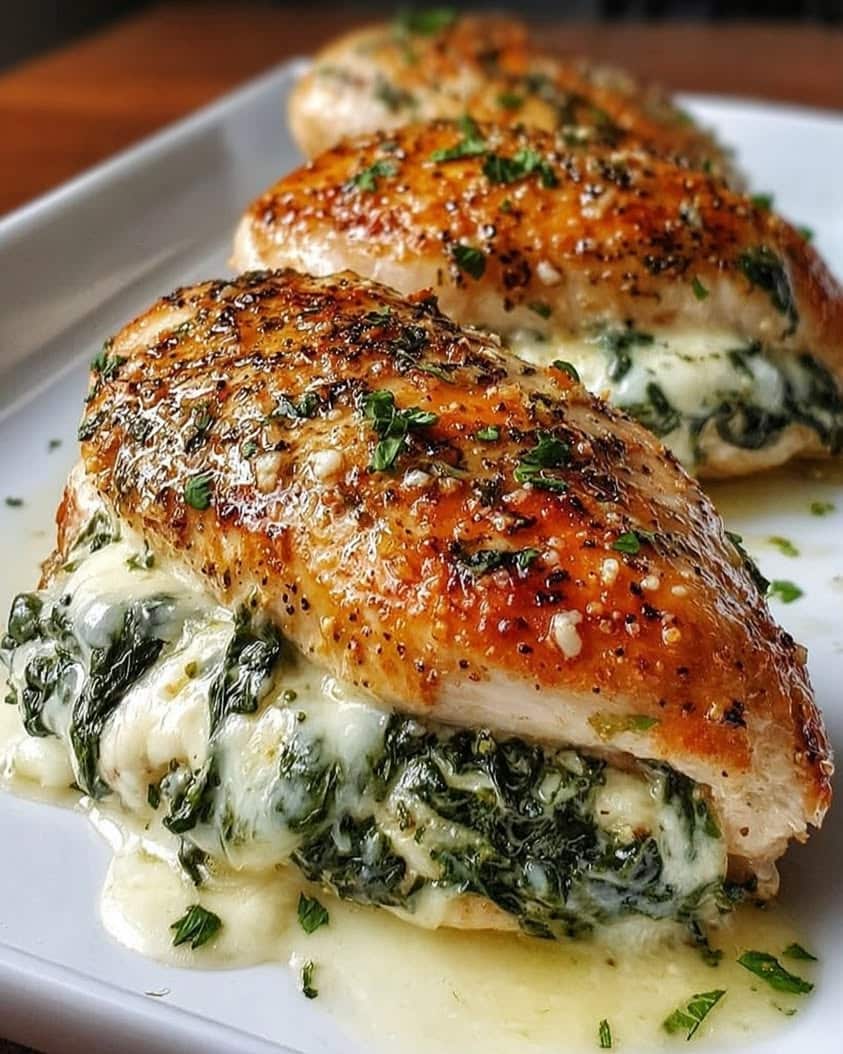
Creamy Spinach and Cheese Stuffed Chicken Breast: An Easy, Elegant, and Protein-Packed Keto Dinner
This creamy spinach and cheese stuffed chicken breast recipe transforms simple ingredients into a spectacular meal. Imagine tender, juicy chicken encasing a rich, savory filling of creamy spinach and melted cheese. The result is a restaurant-quality dish that feels incredibly luxurious yet remains surprisingly simple to prepare. Furthermore, this meal delivers impressive flavor and presentation without requiring advanced culinary skills. Consequently, it’s perfect for both weeknight dinners and special occasions when you want something extraordinary.
The beauty of this creamy spinach and cheese stuffed chicken breast lies in its perfect balance of textures and flavors. Each bite offers the satisfying firmness of the chicken, followed by the delightful burst of the warm, creamy interior. The garlic and herbs in the filling permeate the entire dish, creating an aromatic experience that will fill your kitchen with an irresistible scent. Moreover, the golden-brown sear on the outside provides a subtle crispness that contrasts beautifully with the soft interior. Ultimately, this dish proves that healthy, low-carb eating can be both delicious and deeply satisfying.
This protein-packed keto dinner recipe stands out because it manages to be elegant, nutritious, and convenient simultaneously. Unlike many complicated stuffed chicken recipes, this version uses straightforward techniques and common ingredients. The preparation process flows logically from one step to the next, making it accessible even for those with moderate kitchen experience. Additionally, the cooking method ensures the chicken stays moist while the filling becomes perfectly heated and creamy. Therefore, you can confidently serve this impressive dish to guests or enjoy it as a special family meal any day of the week.
Quick Recipe Highlights
- Flavor Profile: This creamy spinach and cheese stuffed chicken breast delivers a sophisticated savory experience with garlicky notes, rich dairy flavors, and subtle herbal undertones. The cream cheese provides a tangy base that complements the earthy spinach perfectly, while the Parmesan adds a salty, umami depth that enhances every component.
- Texture: The texture journey begins with a lightly crisp exterior that gives way to tender, juicy chicken breast. Subsequently, you encounter the surprisingly creamy, velvety filling that contrasts beautifully with the firm protein. The melted cheeses create a smooth, luxurious mouthfeel that makes each bite feel indulgent and satisfying.
- Aroma: As this creamy spinach and cheese stuffed chicken breast cooks, your kitchen will fill with the comforting scent of sautéed garlic and onions mingling with herbal notes. The roasting chicken adds a savory depth to the aroma profile, while the melting cheeses contribute a rich, inviting fragrance that promises a delicious meal.
- Visual Appeal: The finished dish presents beautifully with golden-brown chicken breasts revealing a vibrant green and white filling when sliced. The contrast between the seared exterior and the colorful interior makes for stunning plate presentation. Additionally, the fresh herb garnish adds a pop of color that elevates the visual appeal significantly.
- Skill Level Needed: This recipe requires basic knife skills for prepping vegetables and intermediate technique for properly butterflying and stuffing the chicken. While not beginner-level, most home cooks with some experience can successfully execute this creamy spinach and cheese stuffed chicken breast with careful attention to the instructions.
- Special Equipment: You’ll need a sharp chef’s knife for prepping, a meat mallet or heavy pan for pounding, an oven-safe skillet for searing and baking, and kitchen twine or toothpicks for securing the stuffed chicken breasts. These common kitchen tools ensure proper preparation and cooking of this impressive dish.
Recipe Overview
- Difficulty Level: This creamy spinach and cheese stuffed chicken breast recipe falls into the intermediate category because it involves multiple preparation techniques including butterflying, pounding, stuffing, and searing before finishing in the oven. While each step is straightforward, coordinating them requires some kitchen experience and organization. The challenge lies mainly in properly preparing the chicken pockets and securing the filling without leakage during cooking. However, with careful attention to the instructions, even relatively new cooks can achieve excellent results with this impressive dish.
- Category: This dish comfortably fits into multiple meal categories including main courses, special occasion dinners, and protein-focused entrees. It works beautifully for formal dinners yet remains approachable enough for family meals. As a centerpiece protein, it pairs well with various sides from simple steamed vegetables to more elaborate grain dishes. Furthermore, its macronutrient profile makes it ideal for low-carb, keto, and high-protein dietary approaches without sacrificing flavor or satisfaction.
- Cuisine: While stuffed chicken dishes appear across various culinary traditions, this creamy spinach and cheese stuffed chicken breast draws primarily from contemporary American and European influences. The technique of butterflying and stuffing meat has Italian roots, while the creamy spinach and cheese combination reflects French culinary principles. The result is a fusion dish that feels both familiar and sophisticated, borrowing techniques and flavor combinations from multiple traditions to create something uniquely delicious and accessible.
- Cost: Preparing this creamy spinach and cheese stuffed chicken breast represents excellent value considering its impressive presentation and restaurant-quality results. Chicken breasts remain one of the most affordable protein options, while the filling ingredients—spinach, cream cheese, and Parmesan—are reasonably priced pantry staples. The entire meal for four people typically costs less than what you’d pay for one similar entrée at a restaurant. Additionally, the recipe uses common herbs and seasonings that most home cooks already have available.
- Season: This comforting dish works well year-round but particularly shines during fall and winter when heartier, baked meals feel most appropriate. The warm, creamy filling provides comfort during colder months, while the bright green spinach adds a touch of freshness that prevents it from feeling too heavy. During spring and summer, you can lighten the dish by serving it with fresh salads or grilled vegetables, making it versatile enough for any season.
- Occasion: This creamy spinach and cheese stuffed chicken breast elevates everyday dinners while being special enough for celebrations. It’s perfect for date nights at home, impressing dinner guests, holiday meals, or simply treating your family to something extraordinary. The dish looks far more complicated than it actually is, making it ideal for occasions when you want to showcase your cooking skills without spending hours in the kitchen.
Why You’ll Love This Recipe
The taste and texture experience of this creamy spinach and cheese stuffed chicken breast will immediately win you over. Each component contributes something special—the seasoned chicken exterior provides savory depth, while the rich, garlicky filling delivers bursts of creamy goodness in every bite. The contrast between the firm protein and velvety interior creates a satisfying mouthfeel that feels both comforting and sophisticated. Additionally, the harmonious blend of flavors ensures that no single ingredient overpowers the others, resulting in a perfectly balanced dish that delights the palate from first bite to last.
From a convenience perspective, this recipe offers remarkable efficiency despite its impressive results. The preparation process flows logically from one step to the next, with most active work concentrated at the beginning. Once the chicken goes into the oven, you have hands-free time to prepare sides or simply relax. Furthermore, the entire meal comes together in under forty minutes, making it feasible for busy weeknights while still feeling special enough for weekends. The cleanup remains minimal, especially if you use the same skillet for both searing and baking.
Nutritionally, this creamy spinach and cheese stuffed chicken breast delivers substantial benefits, particularly for those following low-carb or high-protein diets. Chicken breast provides lean, high-quality protein essential for muscle maintenance and satiety. Spinach contributes iron, vitamins A, C, and K, along with beneficial antioxidants. The cheeses offer calcium and protein, while keeping carbohydrates minimal. This combination makes the dish both satisfying and nutrient-dense, supporting energy levels and overall health without compromising on flavor or indulgence.
For social and entertaining purposes, this dish performs exceptionally well. It presents beautifully on the plate, creating immediate visual appeal that suggests culinary expertise. The recipe scales easily to accommodate more guests without significantly increasing preparation time. Additionally, since the stuffed chicken breasts cook largely unattended in the oven, you can focus on your guests rather than last-minute kitchen tasks. The universal appeal of chicken, cheese, and spinach means it typically pleases diverse palates, including those with simpler tastes.
The cost-effectiveness of this creamy spinach and cheese stuffed chicken breast makes it accessible for regular rotation in your meal planning. Chicken breasts represent one of the most economical protein choices, especially when purchased in larger quantities. The filling ingredients—frozen spinach, cream cheese, and Parmesan—are inexpensive staples that keep well. Compared to restaurant versions that often cost $20-30 per plate, this homemade version delivers superior quality and quantity at a fraction of the price. This accessibility means you can enjoy gourmet-quality meals regularly rather than reserving them for special occasions.
Historical Background and Cultural Significance
The concept of stuffing meat dates back centuries across multiple culinary traditions, with evidence of stuffed poultry appearing in ancient Roman cookbooks. However, the specific combination of spinach and cheese as a filling has particularly strong roots in Italian cuisine, where dishes like involtini and braciole demonstrate similar preparation methods. The creamy spinach and cheese stuffed chicken breast represents a modern interpretation of these traditional techniques, adapting them for contemporary tastes and convenience. This evolution reflects how classic culinary concepts transform over time while maintaining their fundamental appeal.
Culturally, stuffed meat dishes often signify celebration and abundance across many societies. The act of enhancing a protein with a flavorful filling suggests generosity and extra effort in meal preparation. In French cuisine, similar dishes like chicken cordon bleu demonstrate how stuffing transforms simple ingredients into special occasion fare. The creamy spinach and cheese stuffed chicken breast continues this tradition, offering a way to elevate everyday chicken into something worthy of guests and celebrations. This cultural significance adds an extra layer of meaning to the cooking and sharing of this dish.
The evolution of this recipe specifically reflects broader dietary trends, particularly the rise of low-carb and keto approaches in recent decades. Traditional stuffed chicken recipes often included bread-based stuffings or flour-thickened sauces. The creamy spinach and cheese stuffed chicken breast adapts this concept for modern nutritional preferences by eliminating carbohydrates while maximizing protein and healthy fats. This evolution demonstrates how classic dishes transform to align with contemporary health understandings while preserving the comforting, satisfying qualities that made them popular originally.
Regional variations of stuffed chicken appear worldwide, each reflecting local ingredients and culinary traditions. In the American South, similar dishes might include Cajun seasoning and different cheese combinations. Mediterranean versions often incorporate sun-dried tomatoes, feta cheese, and olives. The creamy spinach and cheese stuffed chicken breast represents a more universal approach that borrows elements from various traditions while remaining accessible to diverse palates. This adaptability contributes to its widespread popularity and ensures it feels familiar yet special to people from different culinary backgrounds.
Ingredient Deep Dive
Chicken breast serves as the foundation of this dish, providing lean protein and a blank canvas for the flavorful filling. Nutritionally, chicken breast offers high-quality protein with minimal fat, supporting muscle maintenance and promoting satiety. When selecting chicken breasts, look for plump, evenly sized pieces with a pinkish hue and firm texture. For best results, choose breasts of similar size to ensure even cooking. You can store raw chicken in the coldest part of your refrigerator for 1-2 days or freeze for longer storage. For substitutions, chicken thighs offer more flavor and moisture though they contain more fat, while turkey cutlets provide a similar lean protein option.
Spinach contributes vibrant color, nutritional benefits, and earthy flavor to the filling. Historically, spinach gained popularity in Europe during the Renaissance and has since become a staple in numerous cuisines worldwide. This leafy green provides iron, vitamins A, C, and K, along with antioxidants that support overall health. When preparing this creamy spinach and cheese stuffed chicken breast, frozen spinach works exceptionally well since its reduced moisture content prevents a watery filling. Fresh spinach requires thorough wilting and squeezing to remove excess liquid. You can substitute kale or Swiss chard, though their stronger flavors will alter the final taste profile.
Cream cheese creates the luxurious, creamy texture that makes this filling so irresistible. Originally developed in America in the late 19th century, cream cheese has become a global ingredient valued for its mild tang and spreadable consistency. It provides richness and helps bind the other filling ingredients together. For best results, use full-fat cream cheese at room temperature for easy mixing. Low-fat versions may release more water during cooking. For dairy-free alternatives, cashew cream or commercial vegan cream cheeses can work, though the flavor profile will change slightly. Proper storage in the refrigerator maintains quality for several weeks.
Parmesan cheese adds salty, umami depth that enhances the overall flavor profile of the dish. This hard, aged cheese originated in Italy and has PDO (Protected Designation of Origin) status for Parmigiano-Reggiano from specific regions. Beyond its distinctive flavor, Parmesan contributes calcium and protein to the filling. For optimal results, grate Parmesan freshly rather than using pre-grated versions, which often contain anti-caking agents that affect melting quality. Asiago or Pecorino Romano make suitable substitutes if needed, though their sharper flavors will be more pronounced. Store Parmesan wrapped in parchment paper in the refrigerator to maintain its texture and prevent drying.
Common Mistakes to Avoid
- Overfilling the chicken breasts creates leakage during cooking and prevents proper sealing. The filling should be generous but not overflowing, allowing you to securely close the chicken around it. Additionally, overstuffed chicken takes longer to cook through, potentially resulting in dry exterior meat before the interior reaches safe temperature.
- Underseasoning the chicken and filling leads to bland results despite the impressive appearance. Season each component generously at multiple stages—the chicken inside and out, the spinach mixture, and even the exterior before searing. Remember that some seasoning will mellow during cooking, so don’t be shy with salt, pepper, and garlic.
- Skipping the searing step reduces flavor development and visual appeal. The Maillard reaction during searing creates complex flavors and an attractive golden crust. Furthermore, starting in a hot skillet helps render some fat and sets the exterior, preventing the filling from leaking out during the baking process.
- Inadequate securing of the stuffed chicken results in filling spillage during cooking. Use sufficient toothpicks or kitchen twine to firmly close the openings. If using toothpicks, insert them at an angle and ensure they penetrate both sides of the chicken breast to create an effective seal during cooking.
- Overcooking the chicken produces dry, tough texture instead of juicy tenderness. Use a meat thermometer to check for doneness at the thickest part, removing from oven at 165°F (74°C) since carryover cooking will increase the temperature slightly. Remember that stuffed items often require slightly longer cooking than plain chicken.
- Not properly preparing the spinach leads to watery filling. Frozen spinach must be thoroughly thawed and squeezed of excess moisture. Fresh spinach requires wilting and similar moisture removal. Excess water in the filling creates steam during cooking, potentially causing the chicken to burst open and making the filling less creamy.
- Using cold filling ingredients makes the stuffing process difficult and can affect cooking time. Ensure your cream cheese is at room temperature for easy mixing and spreading. Cold fillings straight from the refrigerator may prevent the chicken from cooking evenly, requiring extended oven time that risks drying out the meat.
- Cutting the chicken pockets too deep or creating holes compromises the structural integrity. When butterflying, stop cutting about ½ inch from the opposite edge to create a hinge rather than completely separating the halves. Any holes in the chicken pockets will allow filling to escape during the stuffing and cooking process.
- Uneven pounding results in inconsistent cooking. Chicken breasts should be uniformly about ½-inch thick throughout after pounding. Thicker areas will undercook while thinner sections overcook. Use a meat mallet or heavy pan and work from the center outward for even thickness that cooks uniformly.
- Rushing the resting period before slicing causes the filling to run out. Allow the cooked chicken to rest for 5-10 minutes after removing from the oven. This allows the proteins to relax and reabsorb juices, and gives the filling time to set slightly, resulting in cleaner slices when serving.
Essential Techniques
Butterflying chicken breasts creates the pocket needed for stuffing while maintaining structural integrity. This technique involves slicing horizontally through the thicker part of the breast while leaving one edge intact, essentially creating a hinge. Use a sharp knife and work slowly, keeping your free hand flat on top of the chicken to guide the knife and prevent accidents. The goal is an even thickness that will cook uniformly while providing sufficient space for filling. Common mistakes include cutting completely through the breast or creating uneven thickness, both of which compromise the final result. Perfect butterflying results in chicken that opens like a book with consistent thickness throughout.
Pounding the butterflied chicken ensures even cooking and easier rolling. Place the butterflied breast between two pieces of plastic wrap or in a zip-top bag to prevent mess and splattering. Using a meat mallet, heavy skillet, or rolling pin, gently pound from the center outward until the chicken is approximately ½-inch thick throughout. This step tenderizes the meat by breaking down muscle fibers while creating a uniform canvas for stuffing. Avoid pounding too thin, which can cause tearing, or too aggressively, which can destroy the meat’s texture. Properly pounded chicken will have consistent thickness and flexible structure that holds filling securely.
Searing before baking develops flavor through the Maillard reaction while helping seal the stuffed chicken. Heat your oven-safe skillet with oil until shimmering but not smoking. Carefully place the secured chicken breasts in the hot pan and resist moving them for 2-3 minutes to develop a proper crust. The sizzle should be immediate and vigorous when the chicken touches the pan. Flip once the first side achieves a golden-brown color and repeat on the second side. This technique creates complex flavors and attractive coloration while starting the cooking process. Proper searing requires adequate heat, patience, and avoiding overcrowding the pan, which causes steaming rather than browning.
Pro Tips for Perfect Creamy Spinach and Cheese Stuffed Chicken Breast
Thoroughly remove moisture from spinach before incorporating it into the filling. Excess water creates steam during cooking that can cause the chicken to burst open and make the filling watery. For frozen spinach, thaw completely then squeeze in a clean kitchen towel or cheesecloth until no more liquid releases. For fresh spinach, wilt in a pan first then apply the same squeezing technique. This crucial step ensures a creamy, concentrated filling that holds its shape during slicing.
Bring cream cheese to room temperature before mixing the filling. Softened cream cheese blends more easily with other ingredients, creating a smoother, more homogeneous mixture. Cold cream cheese remains lumpy when mixed and can tear the delicate pounded chicken during stuffing. Remove cream cheese from refrigeration at least 30 minutes before preparation. This simple step significantly improves both the texture of the filling and the ease of the stuffing process.
Season each component individually throughout the preparation process. Don’t rely solely on seasoning the exterior of the finished stuffed chicken. Instead, season the inside of the chicken pockets, the spinach mixture, and the exterior before searing. This layered seasoning approach ensures every element contributes to a well-balanced final flavor rather than just the surface tasting seasoned. Use salt, pepper, and garlic powder at minimum in each seasoning layer.
Use a digital meat thermometer to determine doneness accurately. Visual cues alone often mislead with stuffed meats since the filling affects cooking time. Insert the thermometer into the thickest part of the chicken, avoiding the filling if possible. Remove from oven when the chicken registers 165°F (74°C) since carryover cooking will continue raising the temperature slightly. This precision prevents both undercooked chicken and dry, overcooked results.
Allow proper resting time before slicing the cooked chicken. Resting permits the proteins to relax and reabsorb juices distributed during cooking. Additionally, the filling continues to set slightly during this period, reducing the likelihood of it running out when sliced. Tent loosely with foil to keep warm while resting for 5-10 minutes. This patience rewards you with juicier chicken and cleaner presentation when serving.
Create uniform chicken breasts for even cooking by selecting similar-sized pieces or trimming larger ones. If your chicken breasts vary significantly in size, consider cutting larger ones and pounding them to match smaller ones. Alternatively, you can butterfly larger breasts more extensively to create uniform thickness. Consistent sizing ensures all portions finish cooking simultaneously without some being overdone while others remain undercooked.
Variations and Adaptations
Regional variations allow you to customize this dish to different culinary traditions. For an Italian-inspired version, add sun-dried tomatoes, basil, and mozzarella to the filling. Mediterranean adaptation might include kalamata olives, feta cheese, and oregano. For a French twist, incorporate herbes de Provence and Gruyère cheese. Southwestern variation could feature pepper jack cheese, green chiles, and cumin. These regional adaptations demonstrate the versatility of the basic technique while introducing new flavor profiles that might better suit specific menus or preferences.
Seasonal adaptations keep this recipe exciting throughout the year. During spring, incorporate fresh herbs like chives, tarragon, and parsley into the filling. Summer versions might include roasted red peppers or artichoke hearts. Autumn adaptations could feature sautéed mushrooms and thyme. Winter variations might include roasted garlic and rosemary. Additionally, consider seasonal sides that complement the stuffed chicken—lighter salads in warmer months, heartier roasted vegetables when temperatures drop. These seasonal touches keep the dish feeling fresh and appropriate regardless of the time of year.
Dietary modifications make this recipe accessible to various eating approaches. For gluten-free needs, ensure all ingredients meet certification standards—particularly checking Parmesan cheese which sometimes contains anti-caking agents with gluten. Dairy-free adaptation requires vegan cream cheese and nutritional yeast or vegan Parmesan alternatives. Lower-fat versions can use reduced-fat cream cheese and increased spinach proportion. Keto followers can enjoy the standard recipe as written. Paleo adaptation would require omitting dairy and potentially using a cashew-based filling instead. These modifications ensure everyone can enjoy this delicious dish regardless of dietary restrictions.
Serving and Presentation Guide
Plating techniques significantly enhance the visual appeal of this already impressive dish. Slice the rested chicken breasts on a slight bias into 1-inch thick medallions that showcase the beautiful spiral of filling. Fan these slices slightly overlapping on the plate rather than stacking them. Place your starch or vegetable component beside rather than underneath to maintain the visual impact of the sliced chicken. Drizzle any pan sauces around rather than over the chicken to preserve the attractive sear on the exterior. This presentation approach highlights the technical achievement of the stuffed chicken while creating restaurant-quality plating.
Garnishing adds the final touches that elevate the dish from homemade to professional. Fresh herb sprigs like parsley, thyme, or rosemary provide color contrast and aromatic appeal. A light dusting of paprika or finely grated Parmesan adds visual interest to the golden-brown chicken exterior. For special occasions, edible flowers or microgreens create stunning presentation. Lemon wedges served on the side not only add brightness but also provide a functional garnish that guests can use to adjust acidity to their preference. Remember that garnishes should complement rather than overwhelm the main attraction.
Traditional accompaniments balance the rich, protein-focused main dish. Creamy mashed potatoes or cauliflower puree provide a neutral base that complements the flavorful chicken. Roasted vegetables like asparagus, broccoli, or carrots add color and texture variation. Simple starch options like rice pilaf or quinoa work well for soaking up any pan juices. Green salads with vinaigrette dressings cut through the richness of the cheesy filling. These classic pairings create balanced meals that allow the stuffed chicken to remain the star while providing complete nutritional profiles and satisfying combinations.
Wine and Beverage Pairing
Wine pairings should complement the rich, creamy elements while cutting through the dish’s substantial nature. For white wines, choose fuller-bodied options like Chardonnay, particularly those with some oak aging that stand up to the creamy filling. Viognier offers aromatic complexity that enhances the herbal notes in the chicken. For red wine lovers, medium-bodied options like Pinot Noir or Grenache provide sufficient structure without overwhelming the dish. Rosé, particularly drier styles from Provence, offers versatility that bridges the gap between white and red preferences. Ultimately, the best pairing depends on personal preference and which elements of the dish you want to highlight.
Non-alcoholic alternatives provide sophisticated options for those avoiding alcohol. Sparkling water with citrus twists cleanses the palate between bites of the rich chicken. Herbal teas like rosemary or thyme-infused varieties complement the herbal notes in the dish. Craft sodas with less sweetness, particularly ginger-based options, provide refreshing contrast. Virgin bloody marys offer savory complexity that stands up to the robust flavors. For creamy options, chai tea lattes or golden milk (turmeric latte) provide interesting flavor parallels. These non-alcoholic pairings ensure everyone enjoys a complete dining experience regardless of beverage preference.
Storage and Shelf Life
Proper storage maintains quality and ensures food safety for leftovers. Cool cooked stuffed chicken completely before refrigerating, but don’t leave at room temperature longer than two hours. Store in airtight containers in the refrigerator for up to 3-4 days. For longer storage, freeze individually wrapped portions for up to 3 months. When reheating, bring refrigerated portions to room temperature for 15-20 minutes before warming to prevent drying. Frozen portions should thaw in the refrigerator overnight before reheating. These storage practices preserve texture and flavor while ensuring food safety.
Reheating instructions focus on restoring moisture and preventing rubbery texture. Oven reheating at 325°F (163°C) for 15-20 minutes works best for maintaining texture. Cover with foil to prevent drying out during reheating. For quicker options, use an air fryer at 300°F (149°C) for 8-10 minutes until heated through. Microwave reheating tends to make the chicken rubbery and the filling separate, but if using this method, place in a microwave-safe dish with a tablespoon of water or broth and cover loosely. Always check that the internal temperature reaches 165°F (74°C) when reheating. These methods help restore the dish’s original quality as much as possible.
Make Ahead Strategies
Advanced preparation streamlines the cooking process for busy schedules or entertaining. You can prepare the filling up to 2 days in advance and store it tightly covered in the refrigerator. The chicken breasts can be butterflied, pounded, and refrigerated separately for 1 day ahead. For fullest preparation, you can completely assemble the stuffed chicken breasts, secure with toothpicks, and refrigerate for several hours before cooking. When making ahead, ensure all components are thoroughly chilled and bring to room temperature for 15-20 minutes before cooking. These make-ahead strategies distribute the work while ensuring fresh, optimal results when cooking.
Storage between preparation stages maintains quality and safety. Keep raw chicken strictly separated from other components until ready to assemble. Use airtight containers for the prepared filling to prevent absorption of other refrigerator odors. When storing assembled but uncooked stuffed chicken, place on a parchment-lined baking sheet and cover tightly with plastic wrap. Never leave prepared raw chicken at room temperature for extended periods. If making more than 4 hours in advance, keep refrigerated until ready to cook. These precautions prevent cross-contamination and maintain the quality of each component.
Scaling Instructions
Halving the recipe works well for smaller households while maintaining quality. Use two chicken breasts and precisely halve all filling ingredients. Cooking time may reduce slightly since smaller quantities in the oven heat more efficiently. Use a smaller oven-safe skillet or baking dish to maintain proper proximity between the chicken pieces for even cooking. All other techniques and temperatures remain the same. This scaling approach allows enjoyment of the dish without excessive leftovers while preserving the intended flavor balance and texture.
Doubling or tripling the recipe requires minor adjustments for optimal results. Use multiple skillets or work in batches for the searing step to avoid overcrowding, which causes steaming rather than browning. When baking, use a large baking sheet with raised edges instead of a skillet to accommodate more pieces with proper air circulation. Rotate the baking sheet halfway through cooking for even browning. Cooking time may increase slightly due to greater mass in the oven. These adjustments ensure that larger batches achieve the same quality as the standard recipe.
Nutritional Deep Dive
Macronutrient breakdown reveals why this dish satisfies so effectively while aligning with various dietary approaches. Each serving provides approximately 35-40 grams of high-quality protein from the chicken and cheeses, supporting muscle maintenance and promoting satiety. The fat content (approximately 20-25 grams) comes primarily from the cheese and cooking oil, providing energy and aiding absorption of fat-soluble vitamins. Carbohydrates remain minimal (3-5 grams per serving), making this dish ideal for low-carb and keto diets. This macronutrient profile creates balanced energy release while keeping you full for extended periods.
Micronutrient analysis highlights the nutritional density beyond basic macros. Spinach contributes significant vitamin K for bone health and blood clotting, plus vitamin A for vision and immune function. The chicken provides B vitamins, particularly niacin and B6, supporting energy metabolism. Parmesan cheese offers calcium for bone strength along with phosphorus. Garlic contains allicin with potential cardiovascular benefits. These micronutrients transform this from merely a tasty meal to a genuinely health-supportive one, providing essential vitamins and minerals in bioavailable forms.
Dietary Adaptations
Gluten-free adaptation requires minimal changes since the base recipe contains no gluten-containing ingredients. However, carefully check labels on processed ingredients like cream cheese and Parmesan, as some brands include stabilizers or anti-caking agents containing gluten. Use certified gluten-free versions of these products if serving those with celiac disease or severe sensitivity. All other components—chicken, spinach, herbs, and oils—are naturally gluten-free. This easy adaptation makes the dish accessible to those avoiding gluten without compromising flavor or texture.
Dairy-free modification replaces the cheese elements while maintaining creamy texture. For the cream cheese, use commercial vegan cream cheese alternatives based on nuts or soy. Instead of Parmesan, use nutritional yeast for savory flavor or commercial vegan Parmesan substitutes. The cooking method remains identical. The result will have slightly different flavor notes but similar rich, creamy texture. This adaptation allows those with dairy allergies or lactose intolerance to enjoy the dish while preserving its essential character.
Troubleshooting Guide
Texture issues often relate to moisture management or cooking time. If the chicken turns out dry, likely it was overcooked—use a thermometer next time and remove at 165°F (74°C). If the filling seems watery, the spinach probably contained too much moisture—squeeze more thoroughly next preparation. If the filling separates or becomes greasy, the cream cheese may have been too cold when mixed—bring to room temperature first. If the exterior isn’t crispy enough, ensure the skillet is properly preheated before searing and don’t overcrowd the pan. These adjustments address the most common texture problems.
Flavor balance problems typically stem from underseasoning or ingredient quality. If the dish tastes bland, season each component individually during preparation rather than just the exterior. If the cheese flavor overpowers, reduce Parmesan slightly and increase herbs. If the garlic tastes harsh, it may have burned during sautéing—cook it more gently next time. If the overall impact lacks depth, consider adding a pinch of nutmeg to the filling, which enhances creamy dishes remarkably. These tweaks fine-tune the flavor profile to your preference.
Frequently Asked Questions
Can I use frozen chicken breasts for this recipe? Yes, but thaw completely in the refrigerator first. Partially frozen chicken won’t pound evenly and may cook unevenly, potentially resulting in unsafe spots while other areas become overcooked. Additionally, frozen chicken releases more moisture during cooking, which can affect the searing process and potentially make the filling watery.
What can I substitute for cream cheese in the filling? Good alternatives include ricotta cheese, mascarpone, or even blended cottage cheese for similar creamy texture. For dairy-free options, commercial vegan cream cheeses work well. The substitution may slightly alter the flavor profile and richness, so consider adjusting seasonings accordingly to balance any differences in taste.
How do I know when the stuffed chicken is fully cooked? Use a meat thermometer inserted into the thickest part of the chicken (not the filling) to check for 165°F (74°C). Visual cues include firmness to touch and clear running juices when pierced. The filling should be hot and bubbly. Never serve undercooked poultry, as it poses food safety risks.
Can I prepare this dish entirely in advance? You can assemble the stuffed chicken breasts up to 24 hours ahead and refrigerate until ready to cook. For best results, bring to room temperature for 20-30 minutes before cooking to ensure even heating. The filling can be made 2-3 days in advance separately.
Why did my filling leak out during cooking? Common causes include overfilling, inadequate securing with toothpicks, holes in the chicken pockets, or skipping the searing step. Ensure you leave a border when stuffing, use enough toothpicks at angles to secure openings, check for holes before stuffing, and always sear to create initial seal.
What’s the best way to reheat leftovers? Oven reheating at 325°F (163°C) for 15-20 minutes preserves texture best. Air fryer at 300°F (149°C) for 8-10 minutes works well too. Microwave reheating tends to make the chicken rubbery, but if using, add a tablespoon of liquid and cover loosely.
Can I freeze the stuffed chicken before cooking? Yes, assemble completely, place on parchment-lined baking sheet to freeze individually, then transfer to airtight containers. Cook from frozen, adding 10-15 minutes to baking time and checking temperature carefully. The texture may be slightly less perfect but still very good.
What sides pair best with this dish? Classic pairings include mashed potatoes, roasted vegetables, rice pilaf, or simple green salads. Lighter options like steamed asparagus or broccoli balance the rich filling. Consider your dietary approach—cauliflower mash for low-carb, quinoa for whole grain, etc.
How can I make this recipe lower in fat? Use reduced-fat cream cheese, decrease Parmesan quantity, and use cooking spray instead of oil for searing. The chicken itself is lean, so most fat comes from the dairy components. These modifications reduce fat content while maintaining the essential character.
What if I don’t have an oven-safe skillet? Sear in a regular skillet then transfer to a baking dish for the oven portion. The presentation may be slightly less perfect, but the results will be similar. Ensure the baking dish isn’t overcrowded to allow proper air circulation during baking.
Additional Resources
Related recipes that use similar techniques include chicken cordon bleu, beef roulades, and stuffed pork tenderloin. These dishes apply the same butter
Print
Spinach Cream Cheese Stuffed Chicken Breast
Description
Tender chicken breasts stuffed with a creamy spinach and cream cheese filling, baked to perfection for a delicious and elegant meal.
Ingredients
For the Crust:
- 4 boneless, skinless chicken breasts
- 1 cup fresh spinach, chopped
- 4 oz cream cheese, softened
- 1/4 cup grated Parmesan cheese
- 2 cloves garlic, minced
- 1 tsp Italian seasoning
- Salt and black pepper to taste
- 1 tbsp olive oil
- 1/2 cup shredded mozzarella cheese
Instructions
1. Prepare the Crust:
- Preheat oven to 375°F (190°C).
- In a bowl, mix together spinach, cream cheese, Parmesan, garlic, Italian seasoning, salt, and pepper until well combined.
- Cut a pocket into the thickest part of each chicken breast, being careful not to cut all the way through.
- Stuff each chicken breast with the spinach and cream cheese mixture, then secure with toothpicks if needed.
- Heat olive oil in an oven-safe skillet over medium-high heat. Sear chicken for 2-3 minutes per side until golden brown.
- Sprinkle mozzarella cheese over the chicken, then transfer the skillet to the preheated oven.
- Bake for 20-25 minutes, or until chicken is cooked through and cheese is melted and bubbly.
Notes
You can customize the seasonings to taste.

I’m Shaykee—born in Morocco, seasoned across continents. From airplane galleys to home kitchens, I share the flavors and stories that shaped my journey.