
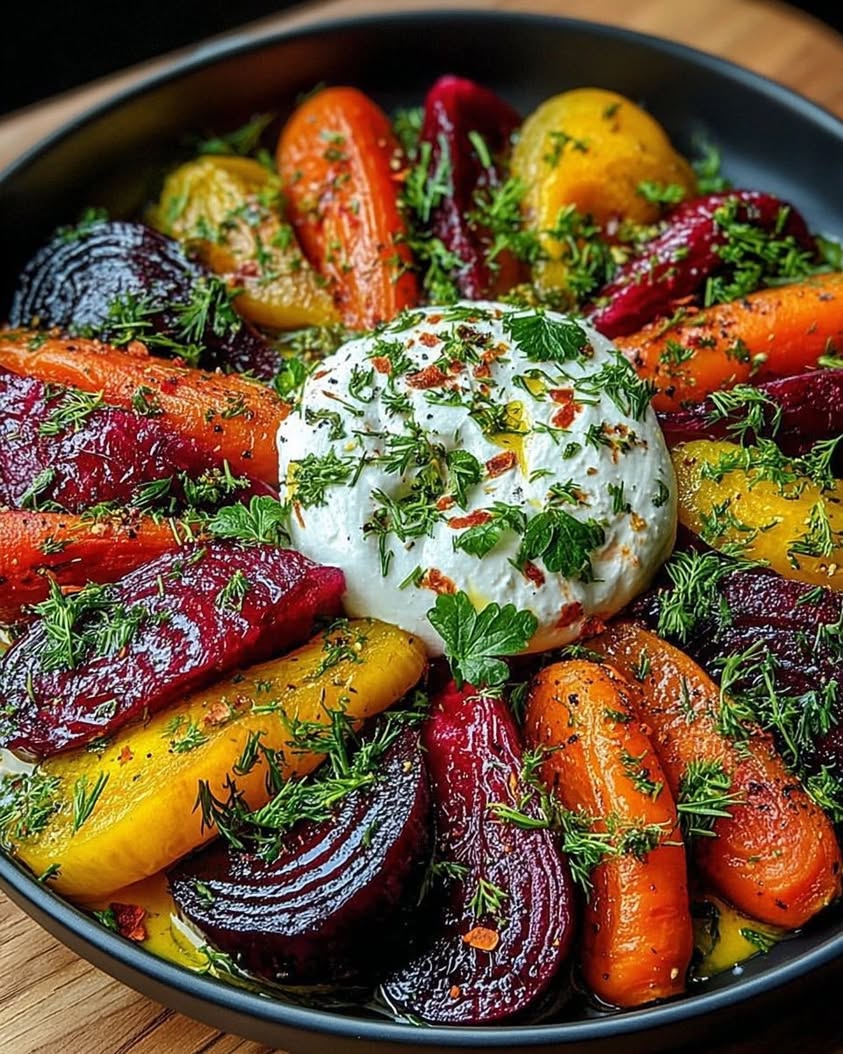
Vibrant Roasted Beets & Carrots with Creamy Burrata Salad: An Elegant Feast for the Senses
This vibrant roasted beets and carrots with creamy burrata salad recipe creates a stunning centerpiece for any table. The combination of sweet, earthy roasted root vegetables with the luxurious, creamy texture of fresh burrata cheese is nothing short of magical. Furthermore, the dramatic color contrast between the deep ruby beets, bright orange carrots, and snowy white cheese makes this dish a feast for the eyes before you even take the first bite.
Surprisingly, this elegant salad requires minimal effort for maximum impact. Roasting the beets and carrots caramelizes their natural sugars, intensifying their flavor and creating a wonderful tender texture. Meanwhile, the burrata provides a cool, rich counterpoint that melts in your mouth. Consequently, this dish feels special enough for a dinner party yet simple enough for a weeknight meal that elevates your everyday dining experience.
Ultimately, this vibrant roasted beets and carrots with creamy burrata salad celebrates seasonal produce at its finest. The recipe highlights how a few quality ingredients, treated with respect, can transform into something extraordinary. Each component brings its unique character to create a harmonious balance of flavors, textures, and colors that will impress even the most discerning palates.
Quick Recipe Highlights
- Flavor Profile: This salad delivers a sophisticated balance of sweet roasted root vegetables against the mild, milky flavor of burrata. The balsamic glaze adds a tangy sweetness that ties everything together beautifully. Earthy notes from the beets complement the brighter sweetness of the carrots perfectly.
- Texture: You will experience a wonderful contrast between the tender, caramelized roasted vegetables and the incredibly creamy interior of the burrata. The delicate outer shell of the cheese gives way to a luscious, soft center that creates a luxurious mouthfeel against the firm vegetables.
- Aroma: As the beets and carrots roast, your kitchen will fill with the warm, sweet scent of caramelizing vegetables. The final dish carries subtle earthy notes from the beets combined with the fresh aroma of quality olive oil and the tangy scent of balsamic reduction.
- Visual Appeal: The dramatic color presentation makes this salad truly Instagram-worthy. Deep crimson beets create a stunning contrast against vibrant orange carrots and the pure white burrata cheese. Fresh green arugula adds another layer of color and visual interest to the composition.
- Skill Level Needed: This recipe is perfect for beginner cooks looking to create something impressive. Basic knife skills for chopping vegetables and the ability to operate an oven are the primary requirements. The technique of roasting vegetables is straightforward and forgiving, making it accessible to all skill levels.
- Special Equipment: You will need a standard baking sheet for roasting the vegetables. Parchment paper is recommended for easy cleanup. A good chef’s knife and cutting board are essential for prepping the vegetables safely and efficiently.
Recipe Overview
- Difficulty Level: This vibrant roasted beets and carrots with creamy burrata salad earns its easy rating because it involves fundamental cooking techniques. The roasting process is largely hands-off, and assembly requires no special skills. Even novice cooks can achieve restaurant-quality results with this straightforward approach to combining beautiful ingredients.
- Category: This dish functions beautifully as either a substantial starter or a light main course. It fits perfectly into the salad category while blurring the lines with vegetable sides and even vegetarian entrees. The protein from the burrata makes it satisfying enough to stand alone as a meal.
- Cuisine: While burrata hails from Italian tradition, this preparation has modern American influences. The combination of roasted root vegetables with fresh cheese represents a contemporary approach to seasonal cooking that transcends specific culinary boundaries. It celebrates quality ingredients rather than adhering strictly to one cuisine’s rules.
- Cost: This vibrant roasted beets and carrots with creamy burrata salad offers excellent value considering its impressive presentation. Fresh burrata represents the biggest expense, while root vegetables remain affordable year-round. Overall, you can create this restaurant-quality dish for a fraction of what you would pay dining out.
- Season: This recipe shines brightest during fall and winter when root vegetables are at their peak sweetness. However, it transitions beautifully into spring with the addition of fresh greens. The hearty yet fresh qualities make it appropriate for any season when you want something both comforting and vibrant.
- Occasion: This salad elevates everyday meals while being special enough for entertaining. It makes an impressive first course for dinner parties and works beautifully for holiday meals. The stunning presentation particularly suits celebrations where you want to serve something visually dramatic and delicious.
Why You’ll Love This Recipe
First, the taste and texture experience will completely win you over. The sweet, concentrated flavor of roasted beets and carrots creates a beautiful foundation for the rich, creamy burrata. Each bite delivers multiple textural contrasts from the tender vegetables to the luscious cheese. The balsamic glaze adds a necessary acidic component that cuts through the richness and brings all the elements into perfect harmony. This combination of sweet, creamy, and tangy creates a complex flavor profile that feels both sophisticated and comforting simultaneously.
Additionally, the convenience factor makes this vibrant roasted beets and carrots with creamy burrata salad a go-to recipe. With just fifteen minutes of active prep time, you can have this impressive dish ready for the oven. The roasting process requires minimal attention, freeing you to prepare other components of your meal or simply relax. The simple assembly means you can put everything together quickly right before serving. This efficiency makes it perfect for busy cooks who still want to create something special without spending hours in the kitchen.
From a nutritional perspective, this salad delivers substantial health benefits alongside incredible flavor. Beets provide important nutrients like folate, potassium, and vitamin C while containing unique compounds called betalains that have antioxidant and anti-inflammatory properties. Carrots contribute significant beta-carotene, which converts to vitamin A in your body and supports vision, immunity, and skin health. The burrata offers quality protein and calcium, while the olive oil provides heart-healthy monounsaturated fats. This nutrient-dense combination makes the dish as good for your body as it is for your taste buds.
Furthermore, the social and entertaining value of this dish cannot be overstated. The dramatic presentation consistently draws compliments and makes guests feel special. The vibrant colors create an immediate visual impact that signals this is no ordinary salad. The combination of familiar ingredients in an elevated preparation makes it accessible yet impressive. Serving this vibrant roasted beets and carrots with creamy burrata salad demonstrates care and attention to your guests without requiring professional culinary skills. It naturally becomes a conversation starter and sets a celebratory tone for any meal.
Finally, the cost-effectiveness and accessibility of the ingredients make this recipe practical for regular rotation. While burrata feels luxurious, the other components are remarkably affordable. Root vegetables typically offer excellent value, especially when purchased in season. The simple preparation means you do not need expensive equipment or hard-to-find ingredients. This accessibility allows you to create a restaurant-quality dish with grocery store ingredients, making special meals possible any night of the week without breaking your food budget.
Historical Background and Cultural Significance
The individual components of this vibrant roasted beets and carrots with creamy burrata salad have rich histories that span different culinary traditions. Beets have been cultivated since ancient times, originally grown for their greens rather than their roots. Ancient Romans and Greeks valued them for both culinary and medicinal purposes. Meanwhile, carrots have an equally long history, with evidence of cultivation dating back thousands of years in Central Asia. The orange carrot we know today actually developed in the Netherlands during the 17th century as a tribute to the House of Orange.
Burrata cheese represents a more recent innovation in the world of dairy. This luxurious cheese originated in the Apulia region of Italy during the early 20th century as a clever way to use leftover mozzarella scraps. Cheesemakers would create a pouch from fresh mozzarella and fill it with soft stracciatella curds and cream. The name “burrata” literally means “buttered” in Italian, referring to its rich, creamy interior. Originally a regional specialty, burrata gained international popularity in the late 20th century as Italian cuisine spread globally.
The technique of roasting vegetables dates back to prehistoric times when people cooked food directly in the embers of fires. However, the modern approach to roasting vegetables with oil and seasonings developed alongside oven technology. Roasting root vegetables particularly gained popularity as a cooking method that enhances their natural sweetness through caramelization. This preparation style became prominent in American cooking during the farm-to-table movement that emphasized simple techniques to highlight quality seasonal ingredients.
The combination of roasted vegetables with fresh cheese represents a contemporary approach to salad construction that has gained popularity in recent decades. This style moves beyond traditional green salads to create more substantial dishes that function as complete meals. The particular pairing of sweet roasted beets with creamy cheese has roots in Italian insalata di barbabietola, though the addition of carrots and specific presentation reflects modern culinary innovation. This evolution demonstrates how traditional ingredients and techniques can be reimagined to create new classics that resonate with contemporary tastes.
Ingredient Deep Dive
Beets form the foundational flavor and visual anchor of this vibrant roasted beets and carrots with creamy burrata salad. These root vegetables have been cultivated since ancient times, with evidence of their consumption found in Mediterranean archaeological sites. Nutritionally, beets provide folate, manganese, potassium, iron, and vitamin C. Their deep red color comes from betalain pigments, which have antioxidant and anti-inflammatory properties. When selecting beets, choose firm, smooth specimens with vibrant greens still attached if possible. Store beets unwashed in the refrigerator for up to two weeks, keeping them in a perforated plastic bag to maintain humidity. For substitutions, try golden beets for a different color profile or roasted turnips for a similar earthy sweetness.
Carrots contribute sweetness and bright color to balance the earthier beets. Originally cultivated in Central Asia, carrots were initially purple and yellow before Dutch growers developed the orange varieties we know today. They are famously rich in beta-carotene, which converts to vitamin A in the body and supports vision, immune function, and skin health. Choose firm, smooth carrots with bright color and fresh-looking greens if attached. Avoid carrots with cracks or soft spots. Store them in the refrigerator in a plastic bag for up to three weeks. For variations, try rainbow carrots for visual drama or parsnips for a more complex, peppery sweetness.
Burrata cheese provides the luxurious creamy element that makes this salad special. This fresh Italian cheese consists of a mozzarella shell filled with soft stracciatella curds and cream. Its name means “buttered” in Italian, referencing its rich interior. Burrata offers protein, calcium, and phosphorus, though it is higher in fat than many other cheeses. Select burrata that feels heavy for its size and swims in its whey without leaking. Always check the expiration date as it is highly perishable. Store burrata in its liquid in the refrigerator and consume within a day or two of purchase. For substitutions, fresh mozzarella provides similar texture without the creamy center, while buffalo mozzarella offers more pronounced flavor.
Extra virgin olive oil serves multiple functions in this recipe, from roasting the vegetables to dressing the final dish. Olive oil has been central to Mediterranean cultures for thousands of years, valued for both culinary and medicinal properties. It contains monounsaturated fats and antioxidants that support heart health. Choose a quality extra virgin olive oil with fruity, peppery notes for the best flavor. Store it in a cool, dark place to prevent rancidity. For the roasting process, regular olive oil works fine, but use your best extra virgin for drizzling at the end. If substituting, avocado oil works well for roasting, while a quality walnut oil makes an interesting finishing alternative.
Balsamic glaze provides the sweet-tangy counterpoint that ties all the elements together. Traditional balsamic vinegar comes from Modena, Italy, where it undergoes years of aging in wooden barrels. The glaze form is reduced to a syrupy consistency that clings beautifully to the vegetables and cheese. Balsamic contains antioxidants and may help moderate blood sugar spikes. Select a quality glaze without added thickeners or excessive sweeteners. Store it in a cool, dark place. For substitutions, a reduction of good balsamic vinegar works perfectly, or try pomegranate molasses for a different fruity tang that complements the beets beautifully.
Common Mistakes to Avoid
- Overcrowding the baking sheet prevents proper caramelization. The vegetables need space around them for moisture to evaporate and for the edges to brown properly. If the pan is too crowded, the vegetables will steam rather than roast, resulting in softer texture and less developed flavor.
- Underseasoning the vegetables before roasting diminishes the final flavor impact. The roasting process intensifies seasonings, so what seems like enough salt before cooking may taste bland afterward. Be generous with salt and pepper before the vegetables go into the oven to ensure well-seasoned results.
- Using burrata that is too cold mutes its creamy texture and delicate flavor. Remove the burrata from the refrigerator about thirty minutes before serving to allow it to come closer to room temperature. This simple step dramatically improves both the texture and taste experience.
- Neglecting to toss the vegetables during roasting creates uneven cooking. The pieces closest to the oven walls may brown too quickly while others remain undercooked. Giving the vegetables a stir halfway through ensures even caramelization and consistent texture throughout the dish.
- Skipping the step of peeling the beets results in unpleasant texture in the final dish. While beet skins are edible, they become tough and bitter during roasting. Taking the time to peel them properly ensures the velvety texture that makes this salad so appealing.
- Cutting the vegetables unevenly leads to inconsistent cooking. Smaller pieces will burn before larger pieces cook through. Aim for uniform sizing, particularly paying attention to the density difference between beets and carrots to ensure everything finishes roasting at the same time.
- Using low-quality olive oil for finishing diminishes the final flavor impact. The finishing oil adds fresh, fruity notes that complement the roasted vegetables and creamy cheese. Reserve your best extra virgin olive oil for this final drizzle rather than using it for the roasting process.
- Assembling the salad too far in advance causes the arugula to wilt and the colors to bleed. The warm vegetables will quickly soften the delicate greens if left to sit. For best results, assemble just before serving to maintain optimal texture and visual appeal.
Essential Techniques
Proper vegetable roasting forms the foundation of this vibrant roasted beets and carrots with creamy burrata salad. This technique transforms raw, crunchy root vegetables into tender, caramelized delights through the application of dry heat. The high oven temperature causes the natural sugars in the vegetables to caramelize, creating complex flavor compounds and beautiful browning. To master this technique, ensure your oven is fully preheated before adding the vegetables and use a large enough baking sheet to allow proper air circulation. The most common pitfall is overcrowding the pan, which leads to steaming rather than roasting. Visual cues for success include golden-brown edges and slightly shrunken appearance with tender texture when pierced with a fork.
Knife skills for uniform cutting directly impact the cooking process and final presentation. Consistently sized pieces ensure even cooking, preventing some vegetables from burning while others remain undercooked. For this recipe, aim for 1-inch pieces that provide substantial presence while allowing efficient cooking. Use a sharp chef’s knife and employ the claw grip to protect your fingers while guiding the vegetables. The rock-chop motion works well for both beets and carrots, providing control and consistency. Common mistakes include rushing the process and creating uneven pieces that cook at different rates. Perfect execution results in pieces that roast uniformly and create a cohesive visual presentation in the final dish.
Proper seasoning technique elevates this dish from simple to spectacular. Seasoning occurs in layers throughout the preparation process rather than just at the end. Salt the vegetables before roasting to draw out moisture and enhance caramelization. Season again lightly after roasting if needed, and finally with flaky salt as a finishing touch. The difference between seasoning and flavoring is important here—salt and pepper enhance natural flavors while herbs and other additions create new flavor dimensions. Common mistakes include underseasoning at the beginning or overseasoning at the end. Perfect seasoning results in each component tasting fully of itself while contributing to a harmonious whole.
Composition and plating transform the individual components into a cohesive, visually stunning dish. The arrangement should highlight the beautiful colors and textures while ensuring each bite contains multiple elements. Start with a base of arugula to create visual separation from the plate, then artfully arrange the roasted vegetables. Tear the burrata rather than slicing it to create organic shapes and expose the creamy interior. Finally, drizzle the balsamic glaze and olive oil in a way that complements rather than obscures the other elements. Common pitfalls include overhandling the ingredients and creating a messy appearance. Successful plating creates height, contrast, and balance that makes the dish as beautiful to look at as it is to eat.
Pro Tips for Perfect Vibrant Roasted Beets and Carrots with Creamy Burrata Salad
Use separate cutting boards for beets and other ingredients to prevent color transfer. The vibrant pigments in beets can stain other foods and surfaces, so dedicate one board specifically to beet preparation. This simple precaution maintains the visual integrity of all components and makes cleanup much easier.
Consider roasting the beets and carrots on separate baking sheets if your oven has hot spots. Beets typically take slightly longer to cook than carrots, so separate sheets allow you to remove each vegetable at its perfect doneness. This attention to detail ensures ideal texture for both components.
Reserve some of the vibrant beet greens if they come attached to fresh beets. Sauté them quickly with garlic as a flavorful bed for the salad or as a nutritious side dish. This approach reduces food waste while adding another layer of flavor and texture to your meal.
Add fresh herbs just before serving to maintain their bright flavor and color. While rosemary works beautifully for roasting, delicate herbs like basil, mint, or chives should be added fresh at the end. Their vibrant green color and fresh aroma provide a beautiful contrast to the roasted elements.
Experiment with different vinegar reductions for varied flavor profiles. While balsamic glaze is classic, reductions made from red wine vinegar, sherry vinegar, or even pomegranate juice create interesting variations. Each alternative brings unique acidity and sweetness that can customize the dish to your preferences.
Toast the pine nuts lightly to enhance their flavor and add textural contrast. Place them in a dry skillet over medium heat for 2-3 minutes until fragrant and lightly golden. This simple step deepens their nutty flavor and provides a crunchy counterpoint to the creamy burrata and soft vegetables.
Allow the roasted vegetables to cool slightly before assembling the salad. While warm vegetables contrast beautifully with the cool burrata, piping hot vegetables will wilt the arugula too quickly. About five minutes of cooling time preserves the greens’ texture while maintaining the desirable temperature contrast.
Variations and Adaptations
Regional variations can transform this vibrant roasted beets and carrots with creamy burrata salad while maintaining its essential character. For a Mediterranean twist, add kalamata olives, cucumber, and cherry tomatoes with a lemon-oregano vinaigrette. Middle Eastern influences might include sumac, tahini drizzle, and pomegranate seeds. Asian fusion could incorporate ginger and sesame oil in the roasting process with a soy-honey glaze. Each regional adaptation respects the core concept of sweet roasted vegetables with creamy cheese while introducing flavors characteristic of different culinary traditions. These variations demonstrate the recipe’s versatility and ability to accommodate diverse flavor preferences.
Seasonal adaptations keep this salad exciting throughout the year. In spring, incorporate fresh peas, asparagus tips, and tender herbs like chervil and tarragon. Summer versions might include roasted corn, zucchini, and basil. Autumn adaptations could feature roasted squash, apples, and walnuts. Even winter offers opportunities for variation with the addition of roasted parsnips, turnips, and hearty kale. Each seasonal iteration highlights the best produce available while maintaining the satisfying contrast between sweet roasted elements and creamy cheese. This approach ensures the recipe remains relevant and delicious regardless of the season.
Dietary modifications make this dish accessible to various eating preferences without sacrificing flavor. For vegan versions, substitute the burrata with cashew cheese or marinated tofu. Nut-free adaptations might use roasted chickpeas or sunflower seeds instead of pine nuts. Lower-carb versions can increase the vegetable-to-carrot ratio or substitute lower-starch vegetables like cauliflower. Gluten-free needs require no adaptation as the recipe naturally contains no gluten. Each modification maintains the essential balance of textures and flavors while accommodating specific dietary requirements. Thoughtful substitutions ensure everyone can enjoy this beautiful dish regardless of restrictions.
Flavor variations allow for customization based on personal preference and ingredient availability. Herb-infused oils can replace standard olive oil for subtle flavor enhancements. Spice blends like za’atar, herbes de Provence, or garam masala added before roasting create completely different flavor profiles. Citrus zest incorporated at the end provides bright, fresh notes that cut through the richness. Different cheese options like feta, goat cheese, or smoked mozzarella offer alternatives to burrata while maintaining the creamy element. These flavor variations demonstrate the recipe’s adaptability and encourage experimentation in the kitchen.
Serving and Presentation Guide
Plating techniques significantly impact the visual appeal and eating experience of this vibrant roasted beets and carrots with creamy burrata salad. Start with a large platter or individual plates that provide enough surface area to showcase the beautiful components. Create a base with the arugula, then strategically place the roasted vegetables in groupings rather than scattering them randomly. This intentional arrangement creates visual interest and allows each ingredient to shine. Place the burrata off-center, tearing it open to reveal the creamy interior that becomes a focal point. The final composition should have balance, height, and clear intention that makes the dish look professionally composed.
Garnishing ideas should enhance rather than overwhelm the existing flavors and visual appeal. Fresh herb sprigs like basil, mint, or thyme add color and fragrance. Toasted nuts provide texture contrast and visual interest. Edible flowers create a dramatic, restaurant-quality presentation. Microgreens offer a delicate, sophisticated touch. Citrus zest provides bright color and fresh aroma. Flaky sea salt sprinkled just before serving adds visual texture and enhances flavors. Each garnish should serve a purpose beyond mere decoration, contributing either textural contrast, additional flavor, or visual enhancement to the overall composition.
Traditional accompaniments complement the flavors and create a more complete meal experience. Crusty bread is essential for soaking up the delicious juices and creamy burrata. A simple green salad provides freshness if serving this as part of a larger meal. Grilled proteins like chicken, fish, or steak turn the salad into a substantial entrée. Roasted potatoes make a satisfying starch component. Soup courses like minestrone or tomato basil create a cohesive Italian-inspired meal. These accompaniments should support rather than compete with the star dish, creating harmonious flavor progression throughout the meal.
Modern serving suggestions adapt this classic combination to contemporary dining trends. Deconstructed presentations allow guests to compose their own bites, creating an interactive dining experience. Family-style serving on a large board encourages sharing and conversation. Individual mason jar layers create portable portions for picnics or lunches. Appetizer-sized portions served on endive leaves or crostini work beautifully for parties. These modern approaches maintain the essential flavor combinations while presenting them in formats that suit different dining contexts and preferences.
Wine and Beverage Pairing
Wine pairings should complement both the earthy sweetness of the roasted vegetables and the rich creaminess of the burrata. A crisp, acidic white wine like Sauvignon Blanc cuts through the richness while complementing the earthy notes. Pinot Grigio offers neutral fruitiness that doesn’t compete with the dish’s delicate flavors. For red wine lovers, a light-bodied Pinot Noir with its bright acidity and red fruit notes stands up to the beets without overwhelming the burrata. Rosé provides the perfect middle ground with its refreshing quality and berry notes that harmonize with the roasted vegetables. Ultimately, the best wine pairing enhances rather than dominates the sophisticated flavor balance of the salad.
Non-alcoholic alternatives can provide equally sophisticated pairing experiences. Sparkling water with a twist of lemon or lime cleanses the palate between bites. Herbal iced teas like mint or hibiscus offer refreshing counterpoints to the rich cheese. Fruit spritzers made with pomegranate or blood orange juice provide sweetness and acidity that complement the dish. Ginger beer delivers spicy notes that cut through the creaminess. Each non-alcoholic option should provide either cleansing acidity, complementary fruit notes, or contrasting spice to create a balanced tasting experience alongside the salad.
Coffee and tea pairings work surprisingly well with this dish, particularly for brunch or lunch servings. Lightly roasted coffee with bright acidity complements the earthy notes without overwhelming the delicate flavors. Ethiopian coffees with their floral, tea-like characteristics create beautiful harmony. For tea, consider an oolong with its complex flavor profile that bridges green and black tea characteristics. Green teas like sencha provide clean, vegetal notes that echo the roasted vegetables. Herbal teas like rooibos offer sweetness without caffeine that doesn’t compete with the dish’s flavors. These pairings demonstrate the recipe’s versatility across different meal occasions.
Storage and Shelf Life
Storage methods vary for the different components of this vibrant roasted beets and carrots with creamy burrata salad. The roasted vegetables keep well in an airtight container in the refrigerator for 3-4 days. Store them separately from any dressing or greens to maintain optimal texture. Burrata should remain in its original liquid and be consumed within 1-2 days of opening. Assembled salad does not store well as the arugula wilts quickly and the vegetables make the greens soggy. For best results, store components separately and assemble just before serving. This approach preserves the quality of each element and ensures the best eating experience.
Temperature requirements are crucial for maintaining food safety and quality. Roasted vegetables should be cooled to room temperature before refrigeration to prevent condensation that creates sogginess. Burrata must remain refrigerated until shortly before serving. The assembled salad should not sit at room temperature for more than two hours to prevent bacterial growth. If making components ahead, ensure proper cooling and refrigeration procedures are followed. These temperature considerations protect both the flavor texture of the dish and the health of those who will enjoy it.
Container recommendations impact how well the components maintain their quality during storage. Glass containers with tight-fitting lids work best for roasted vegetables as they don’t absorb odors and allow easy visibility. Burrata should stay in its original container or be transferred to a similar liquid-tight vessel. Greens keep best in a breathable produce bag or a container lined with paper towels to absorb excess moisture. Proper container selection prevents cross-contamination of flavors and maintains the ideal environment for each component, extending their usable life and preserving quality.
Make Ahead Strategies
Prep timeline planning maximizes efficiency while ensuring optimal quality. The roasted vegetables can be prepared 2-3 days in advance and refrigerated in separate containers. The balsamic glaze can be made weeks ahead and stored at room temperature. Nuts can be toasted several days in advance and kept in an airtight container. On serving day, simply bring the roasted vegetables to room temperature or gently rewarm them, prepare the arugula, and assemble with the burrata. This strategic approach spreads the work over multiple days while ensuring the final dish tastes freshly made.
Storage between steps requires attention to maintain quality across components. Roasted vegetables should be cooled completely before refrigeration to prevent sogginess. If making the balsamic reduction ahead, ensure it’s stored in a clean, airtight container. Pre-washed arugula should be kept in its original packaging or transferred to a container with paper towels to absorb moisture. Each component has specific storage needs that, when respected, preserve their individual qualities until assembly. Proper between-step storage is the key to successful make-ahead preparation.
Quality impact assessment helps determine which elements benefit from advance preparation and which suffer. Roasted vegetables actually develop more complex flavors when made ahead, making them ideal for advance preparation. Balsamic reduction maintains its quality for extended periods. Burrata, however, should always be fresh and never made ahead. Arugula should be washed and dried just before using. Understanding how advance preparation affects each component allows you to strategize effectively, doing ahead what improves with time while reserving last-minute tasks for elements that suffer from advance preparation.
Scaling Instructions
Halving the recipe works beautifully for smaller households or when serving as a side dish rather than a main course. Reduce all ingredients by half, but note that roasting time may decrease slightly due to the smaller quantity on the baking sheet. Check for doneness 5-10 minutes earlier than the original recipe suggests. Use a smaller baking sheet to maintain proper vegetable spacing for optimal caramelization. The burrata can be replaced with a smaller ball or simply use half of a standard ball. This scaling approach maintains the proper ingredient ratios and cooking dynamics for a perfectly proportional smaller version.
Doubling or tripling the recipe requires some adjustments to ensure consistent results. Use multiple baking sheets rather than overcrowding a single sheet, and rotate them halfway through cooking for even browning. You may need to extend the roasting time by 5-10 minutes due to the increased volume in the oven. Consider preparing the vegetables in batches if oven space is limited. For large quantities, presentation may work better on a platter rather than individual plates. These adjustments maintain the quality and character of the dish even when prepared in larger quantities for crowds.
Equipment adjustments become necessary when scaling the recipe significantly. For doubled recipes, ensure you have adequate baking sheets and oven space. For very large batches, consider roasting in consecutive rounds rather than simultaneously if oven space is limited. Larger mixing bowls will be needed for tossing the vegetables with oil and seasonings. Serving platters should be appropriately sized for the quantity being prepared. These practical equipment considerations ensure the scaling process proceeds smoothly without compromising the quality of the final dish.
Nutritional Deep Dive
Macro breakdown reveals a balanced nutritional profile that satisfies without excessive calories. The roasted vegetables provide complex carbohydrates and fiber for sustained energy. Burrata contributes quality protein and healthy fats that promote satiety. Olive oil adds monounsaturated fats that support heart health. The overall balance between carbohydrates, proteins, and fats makes this dish nutritionally complete as a meal while remaining light enough to serve as a starter. This macro balance supports stable blood sugar levels and provides lasting energy without the heavy feeling that often follows richer meals.
Micronutrient analysis highlights the vitamin and mineral density of this vibrant dish. Beets provide folate, manganese, potassium, and iron alongside unique antioxidants called betalains. Carrots contribute massive amounts of vitamin A in the form of beta-carotene, plus vitamin K and potassium. Arugula offers vitamin K, vitamin C, and calcium. Burrata provides calcium and phosphorus for bone health. Olive oil contains vitamin E and various polyphenols. This diverse micronutrient profile supports multiple body systems including vision, bone health, immune function, and antioxidant protection.
Health benefits extend beyond basic nutrition to include specific functional advantages. The combination of fiber from vegetables and protein from cheese promotes digestive health and sustained satiety. Antioxidants from beets, carrots, and olive oil provide anti-inflammatory protection. The monounsaturated fats support cardiovascular health. Nitrates in beets may enhance athletic performance and blood pressure regulation. This collection of functional benefits makes the dish not just nourishing but actively supportive of overall health and wellness when consumed as part of a balanced diet.
Dietary Adaptations
Gluten-free adaptation requires no changes as the recipe naturally contains no gluten-containing ingredients. This makes it an excellent choice for those with celiac disease or gluten sensitivity. As always with gluten-free cooking, ensure all packaged ingredients like balsamic glaze are certified gluten-free if cross-contamination is a concern. The simplicity of whole food ingredients in this recipe makes it inherently safe for gluten-free diets without compromising flavor or presentation.
Dairy-free adaptation replaces the burrata with plant-based alternatives. Several companies now produce credible vegan burrata using cashews or other nuts. Alternatively, marinated tofu can provide a similar protein component with different but satisfying texture. For the creamy element, consider avocado or a cashew cream drizzle. These substitutions maintain the contrast between the roasted vegetables and a rich, creamy component while accommodating dairy restrictions. The resulting dish remains satisfying and visually appealing.
Vegan adaptation builds on the dairy-free approach while ensuring no animal products are used. Replace burrata with vegan cheese alternatives or seasoned tofu. Use maple syrup instead of honey in the balsamic reduction if making from scratch. Ensure the bread served alongside is vegan. These simple substitutions create a plant-based version that maintains the essential character of the dish—sweet roasted vegetables contrasted with a rich element, all brought together with a sweet-tangy glaze.
Troubleshooting Guide
Texture issues often arise from improper roasting techniques. If vegetables are soggy rather than caramelized, the oven temperature may be too low or the pan may be overcrowded. Solution: Ensure oven is fully preheated to 400°F and use a large enough baking sheet to allow space between pieces. If vegetables are burning before cooking through, the pieces may be cut too small. Solution: Cut vegetables into uniform 1-inch pieces and toss halfway through cooking for even browning. These adjustments typically resolve the most common texture problems.
Flavor balance problems can diminish the eating experience. If the salad tastes flat, it likely needs more salt or acid. Solution: Season in layers throughout the process and finish with flaky salt and a squeeze of lemon juice. If the burrata overpowers the vegetables, the ratio may be off. Solution: Use less cheese relative to vegetables or distribute it more evenly throughout the salad. Proper seasoning technique and balanced proportions ensure all elements work in harmony.
Equipment challenges can interfere with optimal results. If vegetables aren’t browning evenly, your oven may have hot spots. Solution: Rotate the baking sheet halfway through cooking or use convection setting if available. If you lack a proper baking sheet, a roasting pan works but may require stirring more frequently. Solution: Monitor closely and adjust positioning as needed. Understanding your specific equipment helps adapt the technique for consistent results regardless of your kitchen setup.
Recipe Success Stories
Community feedback consistently highlights how this vibrant roasted beets and carrots with creamy burrata salad impresses guests despite its simplicity. Many home cooks report receiving compliments that make them feel like professional chefs. One reader mentioned serving it at a dinner party where guests assumed it came from a high-end restaurant. Another shared that it became their signature dish for special occasions because it consistently delivers both visual drama and incredible flavor. These success stories demonstrate how accessible this recipe is for cooks of all experience levels.
Variation successes show the recipe’s adaptability to different tastes and ingredient availability. Several readers have shared their successful experiments with different vegetable combinations, including adding sweet potatoes or substituting golden beets. Others have found creative cheese substitutions when burrata wasn’t available, discovering new favorite combinations in the process. These adaptation stories highlight the recipe’s flexibility and
Print
Vibrant Roasted Beets & Carrots with Creamy Burrata Salad
Description
A colorful and elegant salad featuring sweet roasted beets and carrots paired with creamy burrata cheese, fresh arugula, and a zesty lemon vinaigrette.
Ingredients
For the Crust:
- 2 medium beets, peeled and cubed
- 3 large carrots, peeled and sliced
- 2 tbsp olive oil
- 1 tsp dried thyme
- Salt and black pepper to taste
- 4 cups fresh arugula
- 1 ball burrata cheese
- 2 tbsp lemon juice
- 1 tbsp honey
- 1/4 cup toasted walnuts
- Fresh basil leaves for garnish
Instructions
1. Prepare the Crust:
- Preheat oven to 400°F (200°C). Toss beets and carrots with olive oil, thyme, salt, and pepper. Spread on a baking sheet and roast for 25-30 minutes until tender.
- Whisk together lemon juice and honey to make the vinaigrette. Season with salt and pepper.
- Arrange arugula on a serving platter. Top with roasted beets and carrots, then tear the burrata over the salad.
- Drizzle with the lemon-honey vinaigrette and garnish with toasted walnuts and fresh basil. Serve immediately.
Notes
You can customize the seasonings to taste.

I’m Shaykee—born in Morocco, seasoned across continents. From airplane galleys to home kitchens, I share the flavors and stories that shaped my journey.