
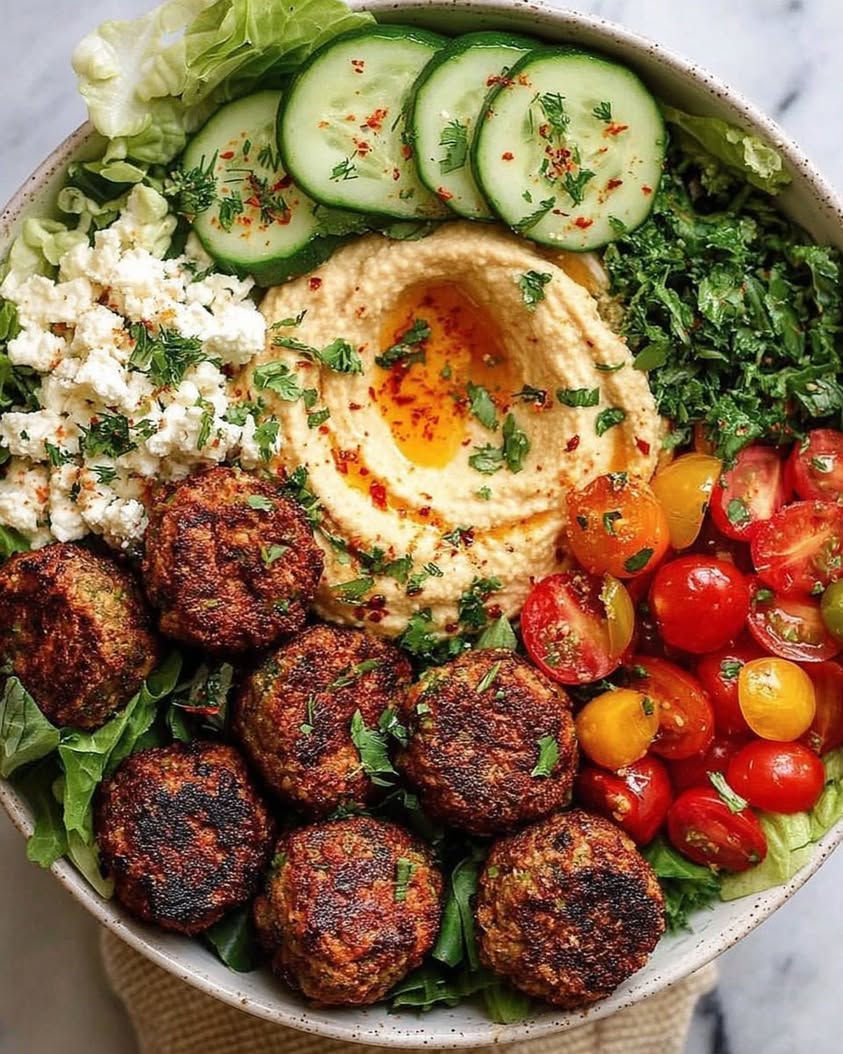
Ultimate Falafel Bowl with Creamy Hummus and Feta: A Mediterranean Feast in a Bowl
Imagine a vibrant bowl filled with golden-brown, crispy homemade falafel, creamy hummus, and tangy feta cheese. This ultimate falafel bowl recipe brings the authentic flavors of the Mediterranean straight to your kitchen. Furthermore, it combines textures and tastes that will transport your senses to a sunny street market. Each component works in harmony to create a truly satisfying meal.
This protein-packed bowl offers a perfect balance of nutrition and indulgence. Consequently, it makes an ideal lunch or dinner for anyone seeking a healthy yet delicious option. The combination of fresh vegetables, hearty chickpeas, and zesty sauces creates a symphony of flavors. Moreover, the visual appeal of this colorful dish makes it perfect for sharing on social media or serving to guests.
Creating this ultimate falafel bowl might seem complex, but the process is actually quite straightforward. With some simple preparation and a few key techniques, you can achieve restaurant-quality results at home. Additionally, many components can be prepared in advance, making this an excellent meal prep option. Ultimately, this recipe will become a staple in your healthy eating repertoire.
Quick Recipe Highlights
- Flavor Profile: This ultimate falafel bowl delivers a complex taste experience. The earthy, herbaceous falafel pairs beautifully with the creamy, nutty hummus. Meanwhile, the tangy feta cheese and bright lemon tahini sauce create a perfect balance of flavors.
- Texture: You will experience wonderful textural contrasts throughout this dish. The crispy exterior of the falafel gives way to a soft, fluffy interior. Additionally, the creamy hummus and crunchy fresh vegetables create a satisfying mouthfeel.
- Aroma: As you prepare this ultimate falafel bowl, your kitchen will fill with enticing scents. The fragrance of toasting cumin and coriander seeds blends with fresh parsley and garlic. Furthermore, the sizzling falafel releases an irresistible aroma that promises deliciousness.
- Visual Appeal: This bowl presents a stunning array of colors and textures. The golden-brown falafel sits alongside vibrant red tomatoes and green cucumbers. Moreover, the white feta cheese and pale hummus create beautiful visual contrast against the darker elements.
- Skill Level Needed: This recipe requires basic kitchen skills and some patience. You should feel comfortable with chopping, mixing, and shallow frying techniques. However, the steps are clearly explained and accessible for most home cooks.
- Special Equipment: You will need a food processor for the falafel mixture. Additionally, a skillet for frying and basic mixing bowls are essential. Fortunately, no unusual or expensive equipment is required for this recipe.
Recipe Overview
- Difficulty Level: This ultimate falafel bowl recipe falls into the medium difficulty category. The process involves multiple components that need coordination. However, each step is manageable with proper preparation. Furthermore, the instructions provide detailed guidance for success.
- Category: This dish fits perfectly into several meal categories. It works as a substantial main course for lunch or dinner. Additionally, it makes an impressive appetizer when served in smaller portions. The versatility of this recipe is one of its greatest strengths.
- Cuisine: This recipe draws inspiration from traditional Middle Eastern and Mediterranean cuisines. The falafel and hummus have roots in Egyptian and Levantine cooking. Meanwhile, the bowl presentation reflects modern global food trends. Consequently, it represents a beautiful fusion of tradition and innovation.
- Cost: Preparing this ultimate falafel bowl is surprisingly economical. The main ingredients like chickpeas and vegetables are budget-friendly. Furthermore, making components from scratch saves money compared to store-bought versions. Ultimately, you get restaurant-quality food at a fraction of the cost.
- Season: This dish shines particularly well during spring and summer months. The fresh vegetables and bright flavors complement warmer weather perfectly. However, it works year-round thanks to its satisfying nature. Moreover, the ingredients are typically available regardless of season.
- Occasion: This versatile recipe suits numerous occasions beautifully. It makes an excellent weeknight dinner for busy families. Additionally, it impresses guests at casual gatherings and potlucks. The beautiful presentation also makes it suitable for special occasions.
Why You’ll Love This Ultimate Falafel Bowl
First and foremost, the taste experience of this ultimate falafel bowl is truly exceptional. The combination of crispy, herb-infused falafel with creamy hummus creates a textural symphony. Meanwhile, the tangy feta cheese cuts through the richness perfectly. Additionally, the fresh vegetables provide brightness and crunch that balance the heartier elements. Every bite delivers complex flavors that will keep you coming back for more.
The convenience factor of this recipe cannot be overstated. Although it involves several components, many can be prepared in advance. For instance, you can make the falafel mixture and hummus a day ahead. Furthermore, the vegetables can be chopped and stored separately. Consequently, assembly becomes quick and effortless when you are ready to eat.
Nutritionally, this ultimate falafel bowl offers impressive benefits. The chickpeas in both the falafel and hummus provide substantial plant-based protein. Additionally, the fresh vegetables contribute essential vitamins and fiber. Moreover, the healthy fats from olive oil and tahini support nutrient absorption. This meal will leave you feeling satisfied and energized without heaviness.
From a social perspective, this dish makes entertaining remarkably easy. The beautiful presentation always impresses guests, making it perfect for gatherings. Furthermore, the recipe scales easily to accommodate larger groups. Additionally, most dietary preferences can be accommodated with simple modifications. Ultimately, it becomes a crowd-pleasing centerpiece for any casual meal.
The cost-effectiveness of this ultimate falafel bowl deserves special mention. Preparing restaurant-quality Mediterranean food at home saves significant money. Moreover, the ingredients are readily available and budget-friendly. Consequently, you can enjoy gourmet flavors without the gourmet price tag. This makes healthy eating accessible and sustainable for everyday enjoyment.
Historical Background and Cultural Significance
The story of falafel begins in Egypt, where it originally featured fava beans rather than chickpeas. Egyptian Christians, known as Copts, developed falafel as a protein-rich food during Lent. Subsequently, the recipe traveled throughout the Middle East, evolving along the way. Different regions adapted the recipe based on local ingredients and preferences.
Hummus has an even older history, with roots stretching back to ancient Egypt. The word “hummus” literally means “chickpea” in Arabic. Historically, this simple paste of chickpeas, tahini, and lemon provided sustenance across the region. Furthermore, it represented a perfect example of peasant food transformed into a culinary treasure.
The combination of falafel and hummus represents a natural pairing in Middle Eastern cuisine. Street vendors often serve falafel wrapped in pita with generous dollops of hummus. This practical combination provides complete nutrition in a convenient format. Moreover, the textures and flavors complement each other perfectly.
The modern bowl presentation reflects contemporary global food trends. While traditional Middle Eastern meals might feature these components separately, the bowl format offers convenience and visual appeal. This adaptation demonstrates how culinary traditions evolve while maintaining their essential character. Consequently, this ultimate falafel bowl honors tradition while embracing modern eating habits.
Ingredient Deep Dive
Chickpeas form the foundation of both the falafel and hummus in this ultimate falafel bowl. Historically, chickpeas have been cultivated in the Middle East for thousands of years. They provide excellent plant-based protein, fiber, and essential minerals like iron and magnesium. When selecting dried chickpeas for falafel, choose uniform, unbroken beans. Store them in airtight containers in a cool, dark place. For hummus, canned chickpeas work perfectly well if you are short on time.
Tahini, or sesame paste, contributes essential flavor and creaminess to the hummus. This ingredient has been used in Middle Eastern cooking since ancient times. Nutritionally, tahini provides healthy fats, calcium, and antioxidants. Look for tahini with a smooth, pourable consistency and no oil separation. Store it in the refrigerator after opening to prevent rancidity. If unavailable, you can substitute almond butter, though the flavor will differ.
Fresh herbs like parsley and cilantro are crucial for authentic falafel flavor. These herbs have been used in Mediterranean cooking for both flavor and medicinal properties. They provide vitamin K, vitamin C, and various antioxidants. Choose bunches with vibrant, perky leaves and no signs of wilting. Store them in the refrigerator with stems in water. If you dislike cilantro, simply increase the parsley quantity.
Feta cheese adds a tangy, salty element that balances the other flavors. Traditional Greek feta is made from sheep’s milk or a sheep-goat blend. It provides calcium and protein while being lower in fat than many cheeses. Select feta stored in brine for the best texture and flavor. Store it in its brine in the refrigerator. For a vegan version, use tofu feta or omit it entirely.
Common Mistakes to Avoid
- Using canned chickpeas for the falafel mixture will cause it to be too wet. The falafel will fall apart during frying and become dense. Always use dried chickpeas that have been soaked overnight but not cooked.
- Overprocessing the falafel mixture creates a paste-like texture. This results in dense, heavy falafel rather than light, fluffy ones. Pulse the ingredients briefly until just combined, with some texture remaining.
- Skipping the resting time for the falafel mixture affects the texture. The mixture needs time to hydrate and bind together properly. Resting for at least 30 minutes prevents crumbling during cooking.
- Frying at the wrong temperature causes oil absorption or burning. If the oil is too cool, the falafel absorbs excess oil. Conversely, if too hot, they brown before cooking through.
- Underseasoning the various components creates a bland final dish. Each element needs proper seasoning to contribute to the overall flavor profile. Taste and adjust seasoning at every stage of preparation.
- Overloading the food processor when making hummus prevents proper emulsification. The blades cannot circulate effectively with too many ingredients. Process in batches if necessary for smoothest results.
- Using stale spices diminishes the vibrant flavor profile. Ground spices lose potency quickly, so check their freshness. For best results, toast whole spices and grind them fresh.
- Rushing the tahini sauce emulsion results in separation. The tahini and lemon juice need thorough whisking to create a stable emulsion. Add water gradually while whisking constantly.
Essential Techniques
Soaking dried chickpeas properly is fundamental to successful falafel. The chickpeas need sufficient time to rehydrate without becoming mushy. Soak them in plenty of cold water for at least 12 hours. They should double in size and feel firm but not hard. Do not cook the chickpeas, as this would make the falafel mixture too wet.
Processing the falafel mixture requires a delicate touch. Pulse the ingredients until they form a coarse meal that holds together when pressed. The mixture should not become a smooth paste. Test the consistency by forming a small ball; it should hold its shape without cracking. If too dry, add a teaspoon of water; if too wet, add a tablespoon of chickpea flour.
Frying the falafel demands temperature control and patience. Heat oil to 350°F (175°C) for optimal results. The falafel should sizzle gently when added without violent splattering. Fry in batches to avoid overcrowding, which lowers the oil temperature. Turn them occasionally until golden brown on all sides. Drain on paper towels to remove excess oil.
Creating smooth, creamy hummus involves proper sequencing. Process the tahini and lemon juice first to create an emulsion. Then add the chickpeas gradually with ice water. The ice water helps create a lighter, fluffier texture. Process until completely smooth, which may take several minutes. Season carefully at the end for balanced flavor.
Pro Tips for Perfect Ultimate Falafel Bowl
Chill the falafel mixture before forming balls for easier handling. The cold mixture holds together better and fries more evenly. Additionally, use a small cookie scoop for uniformly sized falafel.
Add baking powder to the falafel mixture for lighter texture. This small addition creates air pockets that make the falafel fluffier. However, use it sparingly to avoid altering the flavor.
Toast your spices whole before grinding for maximum flavor. The heat releases essential oils that diminish over time in pre-ground spices. Cool completely before adding to the falafel mixture.
Use ice water when making hummus for superior texture. The cold water helps create a light, whipped consistency. Add it gradually while the food processor is running.
Peel the chickpeas for exceptionally smooth hummus. Though tedious, removing the skins eliminates graininess. Alternatively, process longer and strain through a fine-mesh sieve.
Let the assembled components rest before serving. This allows flavors to meld together beautifully. The falafel will retain some crispness while absorbing other flavors.
Prepare extra components for easy future meals. The falafel freezes well, and hummus keeps for several days. This makes quick assembly possible on busy days.
Variations and Adaptations
Regional variations offer exciting alternatives for your ultimate falafel bowl. Egyptian falafel uses fava beans instead of chickpeas for a distinct flavor. Lebanese versions often include more parsley and less cilantro. Meanwhile, Israeli falafel typically features more garlic and spices. Each variation brings unique character to the final dish.
Seasonal adaptations keep this recipe exciting year-round. In spring, incorporate fresh peas and mint into the falafel mixture. Summer versions might feature grilled vegetables like zucchini and eggplant. Autumn adaptations could include roasted root vegetables. Winter variations might incorporate preserved lemons and hearty greens.
Dietary modifications accommodate various eating preferences. For gluten-free needs, ensure your baking powder is gluten-free. Vegan versions can omit the feta or use a plant-based alternative. Lower-carb options might feature cauliflower rice instead of grains. Nut-free versions simply omit any nut-based garnishes.
Flavor variations allow for personal creativity. Add sun-dried tomatoes and basil for an Italian twist. Incorporate curry spices for an Indian-inspired version. Include chipotle peppers for a smoky, spicy variation. The basic template accommodates countless flavor profiles beautifully.
Serving and Presentation Guide
Plating techniques significantly enhance the visual appeal of your ultimate falafel bowl. Start with a base of grains or greens as your foundation. Arrange components in distinct sections rather than mixing everything together. Create height by stacking the falafel and vegetables strategically. Leave some negative space to prevent a cluttered appearance.
Garnishing adds the final touches that elevate your presentation. Fresh herb sprigs provide color and freshness. Toasted sesame seeds or pine nuts add texture contrast. A drizzle of high-quality olive oil creates visual shine. Paprika or sumac sprinkled over hummus adds color contrast.
Traditional accompaniments complete the authentic experience. Warm pita bread serves as the perfect scooping vehicle. Pickled vegetables provide acidity that cuts through the richness. Olives contribute briny notes that complement the other flavors. These elements create a balanced, complete meal experience.
Modern serving suggestions adapt the dish for contemporary tastes. Deconstructed versions in bento-style boxes work well for packed lunches. Mini falafel bowls make elegant appetizers for parties. Family-style platters encourage sharing and interaction. Each presentation style suits different occasions and preferences.
Wine and Beverage Pairing
Wine pairings should complement rather than overpower the complex flavors of your ultimate falafel bowl. Crisp white wines like Sauvignon Blanc or Pinot Grigio work beautifully. Their acidity cuts through the richness of the hummus and falafel. Light-bodied reds such as Pinot Noir can also pair well. Avoid heavily oaked wines that might clash with the herbal notes.
Non-alcoholic alternatives provide refreshing complements to the meal. Mint lemonade echoes the herbal notes in the falafel. Iced tea with lemon complements the dish’s brightness. Sparkling water with cucumber slices offers cleansing simplicity. These options refresh the palate between bites beautifully.
For coffee or tea pairings, consider lighter options that won’t overwhelm the flavors. Medium-roast coffee provides enough body without bitterness. Mint tea traditionally accompanies Middle Eastern meals perfectly. Green tea offers subtle complexity that complements the dish. Serve these beverages after the meal for complete satisfaction.
Storage and Shelf Life
Proper storage methods preserve the quality of your ultimate falafel bowl components. Store falafel, hummus, and vegetables separately in airtight containers. The falafel keeps best when not refrigerated immediately after cooling. Hummus should be transferred to containers with minimal air space. All components should be cooled completely before storage.
Temperature requirements vary for different elements. Falafel stores well at room temperature for several hours after cooking. For longer storage, refrigerate for up to three days. Hummus must always be refrigerated and consumed within five days. Fresh vegetables should be stored in the refrigerator’s crisper drawer.
Container recommendations ensure optimal preservation. Glass containers prevent odor transfer and maintain freshness best. For falafel, use containers that allow air circulation to preserve crispness. Hummus benefits from containers with tight-sealing lids. Always label containers with dates for proper rotation.
Make Ahead Strategies
Prep timeline planning makes ultimate falafel bowl assembly efficient. Soak chickpeas for falafel the night before preparation. Make hummus up to three days in advance for best flavor development. Prepare falafel mixture and shape balls one day ahead. Chop vegetables the same day for maximum freshness.
Storage between steps maintains quality throughout preparation. Keep falafel mixture covered in the refrigerator until ready to cook. Store hummus in an airtight container with plastic wrap pressed against the surface. Keep chopped vegetables in separate containers with damp paper towels. This prevents cross-contamination and texture changes.
Assembly tips ensure the final dish meets expectations. Reheat falafel in an oven or air fryer to restore crispness. Bring hummus to room temperature for optimal creaminess. Arrange components just before serving to maintain textural integrity. Add dressings and garnishes at the last moment for freshness.
Scaling Instructions
Halving the recipe works well for smaller households. Reduce all ingredient quantities precisely by half. Use a smaller food processor for the falafel mixture. Fry in smaller batches to maintain oil temperature. The cooking times remain approximately the same regardless of quantity.
Doubling or tripling accommodates larger gatherings successfully. Use multiple baking sheets for holding shaped falafel before frying. Fry in multiple batches, allowing oil temperature to recover between batches. Consider using two skillets simultaneously to speed up the process. Increase seasoning gradually, tasting as you go.
Equipment adjustments ensure success with scaled recipes. For larger quantities, use a stand mixer with paddle attachment for falafel mixture. A high-powered blender creates smoother hummus in larger batches. Additional sheet pans and cooling racks prevent overcrowding. These adjustments maintain quality regardless of quantity.
Nutritional Deep Dive
Macro breakdown reveals the balanced nature of this ultimate falafel bowl. Chickpeas provide substantial plant-based protein and complex carbohydrates. The olive oil and tahini contribute healthy monounsaturated fats. Fresh vegetables add fiber with minimal calories. This combination supports sustained energy and satisfaction.
Micronutrient analysis shows impressive vitamin and mineral content. Chickpeas provide iron, magnesium, and B vitamins. Fresh herbs offer vitamin K and various antioxidants. Vegetables contribute vitamin C and other essential nutrients. Together, they create a nutrient-dense meal option.
Health benefits extend beyond basic nutrition. The fiber content supports digestive health and blood sugar regulation. Anti-inflammatory compounds in herbs and spices provide protective effects. Plant-based proteins promote muscle maintenance without saturated fat. This makes the dish supportive of overall wellness goals.
Dietary Adaptations
Gluten-free adaptation requires minimal changes to this ultimate falafel bowl recipe. Ensure your baking powder is certified gluten-free. Use tamari instead of soy sauce in any dressings. Serve with gluten-free grains like quinoa or rice. These simple substitutions make the dish safe for gluten sensitivities.
Dairy-free modification creates a plant-based version without feta cheese. Omit the feta entirely or use a plant-based alternative. Ensure any plant-based cheese melts properly if heated. Increase tahini or avocado for creaminess without dairy. The result remains satisfying and flavorful.
Vegan adaptation builds on the dairy-free version with additional considerations. Use flax eggs or chickpea flour as binders in the falafel. Replace honey in dressings with maple syrup or agave. Ensure all components contain no animal products. The dish naturally lends itself to vegan preparation.
Troubleshooting Guide
Texture issues with falafel typically stem from moisture problems. If falafel falls apart during frying, the mixture is too dry. Add a teaspoon of water or aquafaba to improve binding. If falafel becomes dense, the mixture was overprocessed. Pulse more briefly next time for better texture.
Flavor balance problems often relate to seasoning timing. If the dish tastes bland, season components individually during preparation. Underseasoned hummus particularly affects the overall experience. Taste each element separately before assembly. Adjust with salt, lemon juice, or spices as needed.
Temperature problems usually involve oil temperature management. If falafel absorbs too much oil, the temperature was too low. Use a thermometer for accuracy between 350-375°F. If falafel burns outside before cooking inside, the temperature was too high. Maintain consistent heat for perfect results.
Frequently Asked Questions
Can I bake the falafel instead of frying? Yes, baking provides a healthier alternative to frying. Preheat your oven to 375°F and place falafel on a parchment-lined baking sheet. Brush lightly with oil and bake for 20-25 minutes, flipping halfway. The texture will be slightly different but still delicious.
How long does homemade hummus last? Properly stored homemade hummus maintains quality for about 5-7 days. Keep it in an airtight container with plastic wrap pressed directly on the surface. Always use clean utensils when scooping to prevent contamination. Discard if you notice any off smells or mold.
Can I use canned chickpeas for falafel? Using canned chickpeas for falafel typically produces poor results. The cooking process makes them too soft and moist. This leads to falafel that falls apart during cooking and has a mushy texture. Always use dried chickpeas soaked overnight for authentic falafel.
What can I substitute for tahini? While tahini provides authentic flavor, you can use alternatives if necessary. Unsweetened almond butter or sunflower seed butter work reasonably well. The flavor will be different but still complementary. For nut-free options, use sesame oil sparingly mixed with yogurt or avocado.
How can I make this recipe gluten-free? This recipe naturally contains no gluten ingredients except potential cross-contamination. Ensure your baking powder is certified gluten-free. Use tamari instead of soy sauce in any dressings. Serve with gluten-free grains like quinoa, rice, or millet instead of couscous or bulgur.
Can I freeze falafel? Falafel freezes exceptionally well for future meals. Cool cooked falafel completely before freezing in a single layer on a baking sheet. Once frozen solid, transfer to airtight containers or freezer bags. Reheat in an oven or air fryer to restore crispness without thawing first.
Why is my hummus grainy? Grainy hummus typically results from insufficient processing or unpeeled chickpeas. Process the hummus longer until completely smooth. For ultra-smooth results, peel the chickpeas before processing. Adding ice water during processing also helps create a creamier texture.
What’s the best way to shape falafel? Use a small cookie scoop or tablespoon to portion the mixture consistently. Roll between damp hands to form smooth balls. For traditional disk shapes, flatten the balls slightly. Damp hands prevent the mixture from sticking during shaping.
Can I make this recipe oil-free? You can create an oil-free version with some modifications. Bake the falafel instead of frying using parchment paper. For the hummus, increase the aquafaba or water instead of oil. The results will be different but still tasty and healthful.
How do I prevent falafel from falling apart? Proper mixture consistency is key to preventing falafel from falling apart. The mixture should hold together when pressed but not be too wet. Chilling the mixture before forming helps with structural integrity. Avoid overprocessing which breaks down the binding properties.
Additional Resources
Related recipes that complement this ultimate falafel bowl include various Middle Eastern dishes. Tabbouleh salad provides a fresh, herbaceous accompaniment. Baba ganoush offers another creamy dip option with smoky eggplant flavor. Fatoush salad adds crispy pita and sumac notes. These dishes create a complete Mediterranean feast experience.
Technique guides for perfecting Middle Eastern cooking are widely available. Look for resources on proper spice toasting and grinding methods. Guides to achieving ultra-smooth hummus texture provide valuable tips. Falafel shaping and frying tutorials help master this technique. These resources build confidence with this culinary tradition.
Ingredient information helps source authentic components for your ultimate falafel bowl. Learn to identify high-quality tahini by color and consistency. Understand the differences between various chickpea varieties. Discover where to find authentic Middle Eastern spices like sumac and za’atar. This knowledge elevates your results significantly.
PrintUltimate Falafel Bowl with Creamy Hummus and Feta
Description
A vibrant and satisfying Mediterranean-inspired bowl featuring crispy homemade falafel, creamy hummus, tangy feta, and fresh vegetables.
Ingredients
For the Crust:
- 1 can (15 oz) chickpeas, drained and rinsed
- 1/4 cup chopped fresh parsley
- 1/4 cup chopped fresh cilantro
- 3 cloves garlic, minced
- 1 small onion, chopped
- 1 tsp ground cumin
- 1 tsp ground coriander
- 1/2 tsp baking soda
- 2 tbsp all-purpose flour
- Salt and pepper to taste
- 1/2 cup hummus
- 1/2 cup crumbled feta cheese
- 2 cups mixed greens
- 1 cucumber, sliced
- 1 cup cherry tomatoes, halved
- 1/4 red onion, thinly sliced
- 2 tbsp olive oil
- Lemon wedges for serving
Instructions
1. Prepare the Crust:
- In a food processor, combine chickpeas, parsley, cilantro, garlic, onion, cumin, coriander, baking soda, flour, salt, and pepper. Pulse until mixture is coarse and holds together when pressed.
- Form the mixture into small patties, about 1.5 inches in diameter.
- Heat olive oil in a skillet over medium heat. Cook falafel patties for 3-4 minutes per side, until golden brown and crispy.
- Assemble bowls by dividing mixed greens, cucumber, cherry tomatoes, and red onion among four bowls.
- Top each bowl with falafel, a dollop of hummus, and crumbled feta cheese.
- Serve immediately with lemon wedges on the side.
Notes
You can customize the seasonings to taste.

I’m Shaykee—born in Morocco, seasoned across continents. From airplane galleys to home kitchens, I share the flavors and stories that shaped my journey.