
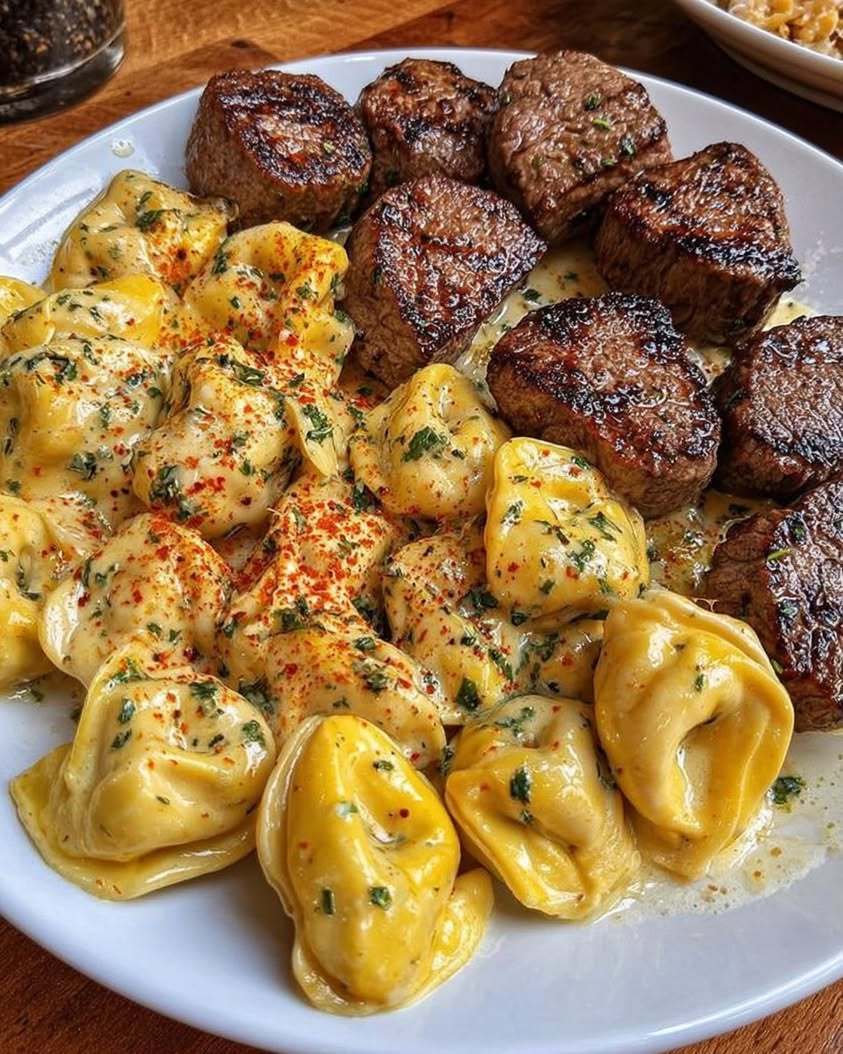
Garlic Butter Steak Tips with Penne in Creamy Parmesan Velveeta Sauce: A Decadent Weeknight Dinner
Imagine tender, juicy steak tips seared to perfection in a sizzling garlic butter bath, then tossed with al dente penne pasta all enveloped in a luxuriously creamy Parmesan Velveeta sauce. This Garlic Butter Steak Tips with Penne recipe is the ultimate comfort food experience that feels incredibly indulgent yet comes together with surprising ease. Furthermore, it transforms simple, accessible ingredients into a restaurant-quality meal that will have your entire family asking for seconds. The magic truly happens when the rich, velvety sauce clings to every groove of the penne and coats each savory piece of steak.
The beauty of this dish lies in its harmonious balance of flavors and textures. Firstly, the robust, savory notes from the steak tips provide a hearty foundation. Subsequently, the unmistakably smooth and cheesy Velveeta sauce, amplified by nutty Parmesan, creates a creamy dreamscape. Ultimately, this recipe is designed for the busy home cook who refuses to compromise on flavor. It is a guaranteed crowd-pleaser, perfect for a special weeknight dinner or a casual weekend feast.
Quick Recipe Highlights
- Flavor Profile: This dish delivers a powerful savory punch from the garlic butter steak tips, which is beautifully balanced by the rich, tangy, and supremely cheesy Velveeta sauce. The Parmesan adds a sharp, salty depth that elevates the entire experience.
- Texture: You get a fantastic contrast between the tender, slightly chewy penne pasta, the juicy, firm bite of the steak tips, and the unbelievably smooth, velvety sauce that coats every component perfectly.
- Aroma: As it cooks, your kitchen will fill with the irresistible scent of sizzling garlic and butter melding with the savory beef, followed by the warm, comforting aroma of melting cheese and cream.
- Visual Appeal: The finished dish is a masterpiece of golden-brown steak pieces nestled among creamy, pale yellow pasta, all speckled with fresh green parsley. It looks as decadent as it tastes.
- Skill Level Needed: This is a beginner-friendly recipe that requires basic skills like boiling pasta, searing meat, and making a simple stovetop sauce. No advanced techniques are necessary for success.
- Special Equipment: You only need a large pot for the pasta, a large skillet or cast-iron pan for achieving a perfect sear on the steak tips, and standard kitchen utensils like a wooden spoon and measuring cups.
Recipe Overview
- Difficulty Level: This recipe is confidently rated as easy because it involves straightforward cooking techniques. The steps are sequential and simple, from boiling pasta to searing meat and creating a one-pan sauce. Even a novice cook can achieve impressive results by following the clear instructions.
- Category: This dish falls squarely into the main course category for dinner. It is a complete, protein-packed meal that satisfies hunger. Additionally, it can be classified as a comfort food recipe due to its rich, creamy, and hearty nature.
- Cuisine: While its core components are inspired by Italian-American cuisine, particularly the use of pasta and Parmesan, the incorporation of Velveeta gives it a distinct American comfort food twist. It is a fusion dish that celebrates hearty, accessible flavors.
- Cost: The cost is moderately affordable, with the steak tips being the primary expense. Using sirloin tips or a similar cut keeps it budget-friendly. Meanwhile, the other ingredients like pasta, Velveeta, and basic pantry staples are very economical.
- Season: This is a fantastic year-round recipe. It provides warmth and comfort during the colder fall and winter months. Conversely, it is also satisfying enough for a summer meal when you are craving something hearty and cheesy.
- Occasion: It is incredibly versatile for any occasion. It is perfect for a fast and satisfying weeknight family dinner. Moreover, it is impressive enough to serve for a casual date night at home or when entertaining small groups of friends.
Why You’ll Love This Garlic Butter Steak Tips with Penne
First and foremost, the taste and texture appeal is undeniable. The combination of savory, garlicky steak with a creamy, cheesy pasta is a classic for a very good reason. Each forkful offers a symphony of flavors and a delightful contrast between the tender pasta, the juicy steak, and the velvety sauce. It is the kind of meal that feels like a warm hug, satisfying deep cravings and leaving you completely content. This dish consistently delivers on its promise of decadent comfort.
From a convenience standpoint, this recipe is a weeknight hero. It utilizes a simple cooking process and common ingredients. You can have a spectacular, home-cooked meal on the table in well under an hour. The steps are logical and easy to follow, minimizing stress and cleanup. Essentially, you get maximum flavor payoff for a very reasonable amount of effort, making it a go-to recipe for busy schedules.
While indulgent, this meal does offer some nutritional advantages. Steak is an excellent source of high-quality protein, iron, and vitamin B12, which are crucial for energy and muscle health. Using a lean cut like sirloin tips helps manage the fat content. Furthermore, you can easily incorporate a side salad or steamed vegetables to add fiber and vitamins, creating a more balanced plate without compromising the main dish’s appeal.
The social and entertaining value of this dish is high. It is a universally appealing recipe that pleases both adults and children alike. Serving a beautiful platter of steak and pasta feels special and generous, making your guests feel cared for. It is a conversation starter and a surefire way to create a joyful, communal dining experience. This is a meal meant for sharing and enjoying together.
Finally, this recipe is cost-effective and accessible. Compared to the price of a similar meal at a restaurant, cooking this at home saves a significant amount of money. The ingredients are readily available at any standard grocery store, with no hard-to-find specialty items. You can create a luxurious-tasting dinner without a luxurious budget, proving that fantastic food can be both affordable and achievable in your own kitchen.
Historical Background and Cultural Significance
The origin story of this dish is rooted in the beautiful fusion of Italian pasta traditions and American ingenuity. Pasta with meat has been a staple in Italian cooking for centuries, with dishes like pasta alla gricia featuring pork and cheese. The American twist came with the introduction of Velveeta, a processed cheese product invented in the early 20th century by Swiss immigrants in New York. Velveeta was celebrated for its smooth melting properties and long shelf life, making it a pantry staple during the Great Depression and World War II. Combining this accessible American cheese with the Italian concept of pasta and meat created a new category of comfort food.
Its cultural importance lies in its embodiment of midwestern and family-style American cooking. This type of recipe represents a practical, no-fuss approach to creating hearty, satisfying meals for families. It is a testament to home cooking that prioritizes flavor and convenience, often passed down through generations or shared among communities in church cookbooks and online forums. The dish symbolizes comfort, resourcefulness, and the joy of a shared meal.
The evolution of the recipe showcases how home cooks adapt and improve upon foundational ideas. The original concept might have been a simple hamburger helper or macaroni and cheese with beef. Over time, as palates became more adventurous and ingredients more available, the recipe was elevated. The addition of fresh garlic, using better cuts of steak like sirloin tips, and incorporating real Parmesan cheese alongside the Velveeta are all refinements that reflect a desire for more complex flavors while maintaining the ease of preparation.
Regional variations of this concept are plentiful. In the Philadelphia area, one might find a version with sliced cheesesteak meat. In the south, a dash of Cajun seasoning could be added for a kick. Some variations use different pasta shapes like rigatoni or fusilli to hold the sauce differently. Others might incorporate mushrooms, onions, or bell peppers for added vegetable content and flavor. This adaptability is key to the recipe’s enduring popularity, allowing it to be personalized to regional tastes and ingredient availability.
Ingredient Deep Dive
Let us start with the star: the steak tips. Typically sourced from sirloin or tenderloin trimmings, steak tips are prized for their flavor and tenderness when cooked correctly. Culturally, beef is a central protein in many American and Argentine diets, often associated with celebrations and hearty meals. Nutritionally, it is a powerhouse of complete protein, heme iron which is easily absorbed by the body, zinc for immune function, and B vitamins for energy metabolism. When selecting steak tips, look for pieces with good marbling for flavor but trim excess external fat. For storage, keep them in the coldest part of your refrigerator for up to three days or freeze for several months. As a substitution, you can use ribeye, strip steak, or even chicken breast cut into bite-sized pieces.
Velveeta is the secret weapon for the creamy Parmesan Velveeta sauce. Historically, it was developed as a way to utilize whey, a byproduct of cheese-making, and was originally sold in tins. Its smooth, meltable consistency revolutionized home cooking, especially for sauces and dips. While it is a processed cheese product, it provides a consistent, non-grainy melt that is difficult to achieve with natural cheeses alone. From a nutritional perspective, it is a good source of calcium and protein but is also high in sodium. For storage, keep it in its original wrapper in the refrigerator. If you need a substitute, a combination of American cheese and a splash of milk or sodium citrate with cheddar can mimic the texture, though the flavor profile will differ.
Parmesan cheese, specifically Parmigiano-Reggiano, brings a layer of umami and salty complexity. Hailing from Italy, it has a protected designation of origin and is aged for a minimum of 12 months, developing a crystalline, granular texture and a complex, nutty flavor. It is often called the “King of Cheeses.” Nutritionally, it is rich in protein, calcium, and phosphorus. Because it is so flavorful, a little goes a long way. Always opt for a block of Parmesan that you grate yourself, as pre-grated versions contain anti-caking agents that can affect the sauce’s smoothness. Store it wrapped in parchment paper in the cheese drawer of your fridge. For a substitution, Pecorino Romano offers a sharper, saltier alternative, while Asiago or a well-aged Gouda can provide a different but pleasant nuance.
The penne pasta serves as the perfect vehicle for the sauce. Its tubular shape and angled ends are designed to trap sauces, ensuring every bite is flavorful. Pasta, with its origins in Italy, has become a global staple due to its versatility, long shelf life, and satisfying nature. Made from durum wheat semolina, it provides complex carbohydrates for sustained energy, along with some protein and fiber, especially if you choose a whole-wheat variety. When selecting penne, look for a brand made from 100% durum wheat for the best texture and resistance to overcooking. Store dried pasta in a cool, dry pantry indefinitely. For substitutions, any short pasta like rigatoni, ziti, or fusilli will work well. For a gluten-free option, use a corn or rice-based penne.
Common Mistakes to Avoid
- Overcooking the Steak Tips: This is the most common error. Overcooked steak becomes tough and chewy. Always aim for a medium-rare to medium doneness for the most tender bite, and remember the steak will continue to cook slightly when added back to the hot sauce.
- Using Pre-Shredded Parmesan Cheese: Pre-shredded cheese contains cellulose to prevent clumping, which can prevent it from melting smoothly into your sauce. This can result in a slightly grainy texture. For a perfectly silky sauce, always grate your Parmesan fresh from a block.
- Crowding the Pan When Searing: If you add all the steak tips to the skillet at once, they will steam instead of sear. You will miss out on the flavorful, brown crust. Cook the steak in batches to ensure each piece has enough contact with the hot surface for a proper sear.
- Underseasoning the Dish: Be generous with seasoning at every stage. Season the steak tips before searing, and taste the sauce before combining everything. Pasta and creamy sauces can absorb a lot of salt, so do not be shy, but add gradually.
- Rinsing the Cooked Pasta: The starchy surface of freshly cooked pasta helps the sauce adhere to it. Rinsing the pasta washes away this starch, resulting in a sauce that slides right off. Simply drain the pasta and add it directly to the sauce.
- Using High Heat for the Sauce: Once you add the dairy components, you must maintain a low to medium-low heat. Boiling the cream or cheese sauce can cause it to break, becoming oily and grainy. A gentle simmer is all you need to melt the cheese and warm everything through.
- Not Letting the Steak Rest: After searing, let the steak tips rest for a few minutes before slicing or adding to the pasta. This allows the juices to redistribute throughout the meat, ensuring every piece is moist and flavorful.
- Adding Cold Ingredients to the Sauce: Adding cold heavy cream or cold cheese to a hot pan can shock the ingredients and lead to a broken sauce. Let your dairy ingredients sit out for 10-15 minutes to take the chill off before incorporating them.
Essential Techniques
Mastering the sear on your steak tips is crucial for developing deep, savory flavor. The goal is to create a caramelized, brown crust through the Maillard reaction, a chemical process that occurs when proteins and sugars are exposed to high heat. To achieve this, ensure your skillet is very hot before adding the steak and that the steak tips are thoroughly patted dry with paper towels. Any surface moisture will create steam, inhibiting browning. Do not move the steak around constantly; let it develop a crust before flipping. A proper sear is visually confirmed by a rich, brown color and should release from the pan easily when ready.
Creating a smooth, unbroken creamy sauce is another essential technique. The key is gentle, controlled heat. After making your garlic butter base, you will add the heavy cream. Bring it just to a simmer, never a rolling boil. When adding the Velveeta and Parmesan, reduce the heat to low. Stir constantly until the cheeses are fully melted and incorporated. If the heat is too high, the proteins in the dairy can tighten and squeeze out fat, resulting in a greasy, separated sauce. A successful sauce will be homogeneously smooth, velvety, and coat the back of a spoon evenly.
Pro Tips for Perfect Garlic Butter Steak Tips with Penne
Bring your steak tips to room temperature for about 20-30 minutes before cooking. This simple step promotes more even cooking from edge to center, preventing a overcooked exterior and a cold, undercooked interior.
After searing the steak, deglaze the pan with a splash of beef broth or white wine. Scrape up all the browned bits from the bottom of the pan; these “fond” are packed with immense flavor that will enrich your sauce.
Time your pasta so it finishes cooking just as your sauce is ready. This ensures the pasta is hot when it meets the sauce, allowing them to combine seamlessly. Furthermore, you can use a ladle of the starchy pasta water to adjust the sauce consistency if it becomes too thick.
For an extra layer of flavor, consider marinating your steak tips for an hour beforehand in a mixture of olive oil, a touch of soy sauce, black pepper, and minced garlic. This will tenderize the meat and add depth.
When combining everything at the end, do so off the heat. This prevents the steak from overcooking and the sauce from breaking. The residual heat is sufficient to warm everything through perfectly.
Finish the dish with a final flourish of fresh chopped parsley and an extra sprinkle of freshly grated Parmesan cheese just before serving. This adds a pop of color, freshness, and a final hit of salty flavor.
Variations and Adaptations
For regional variations, consider adding a Cajun twist by coating the steak tips in Cajun seasoning before searing. Alternatively, for a Philly-inspired version, sauté sliced bell peppers and onions in the garlic butter before adding the steak. You can also incorporate sliced mushrooms for an earthy flavor that pairs wonderfully with the beef and cream sauce.
Seasonal adaptations are simple. In the spring, stir in fresh peas or asparagus tips during the last few minutes of cooking. During the summer, serve the dish with a bright, acidic side salad to cut through the richness. In the fall, adding roasted cubed butternut squash can provide a sweet and savory element.
Dietary modifications are straightforward. For a gluten-free version, use your favorite gluten-free penne. To make it lower in carbs, substitute the pasta with zucchini noodles or cauliflower florets, adding them at the end to just warm through. For a dairy-free alternative, use a vegan butter substitute, unsweetened coconut cream, and dairy-free cheese slices that melt well.
Flavor variations can take this recipe in new directions. Add a teaspoon of Dijon mustard or a dash of Worcestershire sauce to the cream for a tangy kick. For a spicy version, include red pepper flakes with the garlic or a few dashes of your favorite hot sauce into the finished dish.
Serving and Presentation Guide
Plating techniques can elevate this homey dish. Instead of serving it family-style from the pot, use a large, shallow bowl or plate for individual servings. Twirl a portion of the pasta with a fork and spoon to create a neat nest in the center of the bowl. Artfully arrange the steak tips around and on top of the pasta, ensuring the beautiful sear on the meat is visible.
Garnishing is key for visual appeal and added flavor. A generous sprinkle of freshly chopped Italian parsley or chives adds a necessary pop of green color and fresh flavor. A final dusting of finely grated Parmesan cheese reinforces the cheesy theme. For a touch of luxury, you can even drizzle a tiny amount of high-quality olive oil over the top just before serving.
Traditional accompaniments include a simple green salad with a sharp vinaigrette to balance the richness of the pasta. Garlic bread or a crusty baguette is non-negotiable for many, perfect for sopping up every last bit of the creamy sauce. For a vegetable side, roasted broccoli or green beans with almonds would complement the flavors and textures beautifully.
Wine and Beverage Pairing
When selecting a wine, you need something that can stand up to the rich, creamy sauce and the savory steak. A medium-bodied red wine with good acidity is ideal. A Chianti Classico or a Sangiovese from Italy cuts through the fat beautifully with its bright cherry notes and tannic structure. Alternatively, a California Zinfandel with its jammy fruit flavors can complement the seared, savory notes of the steak.
For white wine lovers, choose a full-bodied white that will not be overwhelmed. An oaked Chardonnay with its buttery notes will mirror the sauce’s richness, while its acidity provides balance. A Viognier is another excellent choice, offering floral aromas and stone fruit flavors that pair well with the garlic and cream.
Non-alcoholic alternatives should also be considered. A sparkling water with a squeeze of lemon or lime helps cleanse the palate between bites. For a more substantial option, a tart cherry juice or a non-alcoholic sparkling cider provides the acidity and fruitiness needed to balance the dish’s decadence. Iced tea, especially an unsweetened black tea, is also a classic and refreshing pairing.
Storage and Shelf Life
Store any leftovers in an airtight container in the refrigerator for up to 3-4 days. The pasta will continue to absorb the sauce, so it will become thicker upon standing. The quality is best within the first 2 days. Ensure the food has cooled to room temperature before sealing and refrigerating to prevent condensation that can make the pasta soggy.
Reheating requires care to maintain the sauce’s texture. The best method is on the stovetop over low heat. Add a small splash of milk, cream, or broth to loosen the sauce as it reheats. Stir gently but frequently until heated through. You can also reheat in the microwave using short 30-second bursts, stirring between each interval, and adding a tablespoon of liquid to prevent the sauce from separating.
Freezing is not highly recommended for this particular dish. The dairy-based sauce is likely to separate and become grainy upon thawing and reheating. The pasta can also become mushy. If you must freeze it, expect a change in texture. Thaw overnight in the refrigerator and reheat very gently on the stovetop, vigorously whisking in a little fresh cream to help re-emulsify the sauce.
Make Ahead Strategies
You can significantly speed up dinner time by prepping components in advance. The steak tips can be trimmed and cut up to 24 hours ahead, stored in a sealed container in the fridge. You can also measure out your dry ingredients and grate your cheeses a day ahead. This mise en place makes the actual cooking process fluid and fast.
For a more advanced make-ahead approach, you can fully cook the steak tips and make the sauce, storing them separately in the refrigerator for up to two days. When ready to serve, cook fresh pasta. Gently reheat the sauce in a saucepan over low heat, adding a little cream if it has thickened too much. Warm the steak tips briefly in the microwave or a skillet, then combine everything. This method preserves the best texture for the pasta and steak.
Scaling Instructions
This recipe scales beautifully for a crowd. To double or triple it, use a very large pot for the pasta and cook the steak tips in multiple batches to avoid overcrowding. You may need to wipe out the skillet between batches if fond begins to burn. Use a Dutch oven or a very large skillet to make the sauce, as the volume will be substantial. Cooking times for the sauce may increase slightly as it takes longer for a larger quantity to heat through.
For halving the recipe, use a medium skillet for the steak and a smaller saucepan for the sauce. The cooking times for the steak will be slightly shorter due to the smaller batch size, so keep a close eye on it. The pasta can still be cooked in a large pot of water, just use half the amount of dry pasta. All other ingredient quantities should be precisely halved for perfect results.
Nutritional Deep Dive
This dish is a substantial source of energy, primarily from the carbohydrates in the pasta and the fats from the steak, butter, and cream sauce. The penne provides complex carbohydrates for sustained energy release. The steak tips are an excellent source of high-quality protein, essential for muscle repair and satiety. The dairy components contribute fat, which carries flavor and promotes a feeling of fullness, as well as calcium from the cheeses.
From a micronutrient perspective, the steak provides heme iron, which is highly bioavailable, along with zinc and B vitamins like B12. The Parmesan cheese is rich in calcium and phosphorus, crucial for bone health. Using fresh garlic adds allicin, a compound with noted antioxidant properties. To boost the nutritional profile, consider using whole-wheat penne for added fiber or stirring in spinach at the end for vitamins A and K.
Dietary Adaptations
For a gluten-free adaptation, simply substitute the regular penne with a high-quality gluten-free pasta made from brown rice, corn, or quinoa. Be sure to check that all other ingredients, like the beef broth, are certified gluten-free. Cook the gluten-free pasta according to package directions, as it can have a different texture and cooking time.
Creating a dairy-free version is entirely possible with modern substitutes. Use a plant-based butter alternative and unsweetened, full-fat coconut cream or a plain, creamy oat milk. For the cheese, seek out dairy-free cheese slices or shreds that are specifically designed to melt well. Nutritional yeast can be added to mimic the cheesy, umami flavor of Parmesan.
For a lower-carb or keto-friendly version, replace the penne with zucchini noodles (zoodles), shirataki noodles, or steamed cauliflower florets. Be sure to cook these alternatives lightly so they do not release too much water into the sauce. The sauce and steak tips themselves are already relatively low in carbs, making this a simple and effective swap.
Troubleshooting Guide
If your sauce breaks or looks oily, it means the emulsion of fat and water has separated. Do not panic. Immediately remove the pan from the heat. You can try whisking in a tablespoon of cold butter or a splash of cold cream vigorously. Alternatively, adding a spoonful of the starchy pasta water and whisking can sometimes help bring it back together. If it is beyond repair, it will still taste good, though the texture will be less ideal.
If the sauce is too thick, the pasta has likely absorbed too much liquid. The easiest fix is to thin it out with a small amount of warm milk, cream, or reserved pasta water. Add the liquid a tablespoon at a time, stirring until you reach your desired consistency. Remember, the sauce will thicken as it sits, so it is better to have it slightly looser in the pan.
If the sauce is too thin, allow it to simmer for a few more minutes over low heat to reduce and concentrate. You can also create a quick slurry by mixing a teaspoon of cornstarch with a tablespoon of cold water, then stirring it into the sauce. Heat for another minute until thickened. Another option is to stir in a bit more grated Parmesan cheese, which will help thicken the sauce as it melts.
Recipe Success Stories
This recipe has become a beloved staple for countless home cooks. One reader shared that it was the first “fancy” meal she successfully made for her now-husband, and it remains their anniversary dinner tradition. Another home cook reported that her notoriously picky children now request “the steak pasta” every week, and she loves that it is a complete meal in one bowl. The combination of familiar flavors and a stunning presentation makes it a reliable hit.
Many have found creative ways to adapt it. A college student shared that she uses pre-cut stew meat when it is on sale and it works perfectly. A busy parent mentioned that they often use leftover grilled steak from a weekend barbecue to make this on a Monday night, cutting the prep time in half. These stories highlight the recipe’s fantastic flexibility and its ability to fit into various lifestyles and budgets.
Frequently Asked Questions
Can I use a different cut of steak? Absolutely. While sirloin tips are ideal, you can use ribeye, strip steak, or even flat iron steak. Just be sure to trim any excess fat and cut it into uniform, bite-sized pieces for even cooking.
What can I use instead of Velveeta? If you prefer not to use Velveeta, you can substitute with 8 ounces of American cheese or a combination of cream cheese and extra shredded cheddar. The sauce may not be quite as silky, but it will still be delicious.
Can I make this dish spicy? Yes, easily. Add 1/2 to 1 teaspoon of red pepper flakes to the garlic butter when you sauté it. You can also stir in a few dashes of hot sauce like Frank’s RedHot or Sriracha into the finished sauce.
How do I know when the steak tips are done? The best way is to use an instant-read thermometer. For medium-rare, aim for 130-135°F; for medium, 135-145°F. Visually, the steak should be firm but still have a little give when pressed.
Why did my sauce become grainy? A grainy sauce is usually caused by overheating. Cheese sauces should be melted over low heat. If the sauce boils, the proteins can tighten and separate. Using pre-shredded cheese can also contribute to a grainy texture.
Can I add vegetables to this recipe? Definitely. Sliced mushrooms, onions, or bell peppers can be sautéed in the skillet after cooking the steak. Spinach can be wilted into the sauce at the very end. Broccoli florets can be steamed and added with the pasta.
Is it necessary to use heavy cream? The heavy cream provides richness and stability. You can use half-and-half for a slightly lighter version, but the sauce will be thinner and more prone to breaking. I do not recommend using milk.
Can I prepare this entirely ahead of time? You can, but the pasta may continue to absorb the sauce and become soft. For best results, prepare the steak and sauce ahead, store separately, and cook fresh pasta when ready to serve and combine.
Additional Resources
If you loved this creamy pasta dish, you might also enjoy our recipe for One-Pot Creamy Tuscan Chicken, which uses a similar technique with sun-dried tomatoes and spinach. For another steak and pasta combination, our Steak and Mushroom Stroganoff with Egg Noodles is a classic comfort food winner. Explore our full collection of easy dinner recipes for more weeknight inspiration that delivers on flavor without demanding hours in the kitchen.
To improve your foundational cooking skills, check out our guides on “How to Sear Meat Perfectly Every Time” and “The Science of a Smooth Cheese Sauce.” Understanding these core techniques will empower you to not only master this recipe but also to confidently create and adapt countless other dishes in your culinary repertoire.
PrintGarlic Butter Steak Tips with Penne in Creamy Parmesan Velveeta Sauce
Description
Tender steak tips and penne pasta tossed in a rich, creamy garlic butter sauce with Parmesan and Velveeta cheese.
Ingredients
For the Crust:
- 1 lb sirloin steak tips, cut into bite-sized pieces
- 8 oz penne pasta
- 4 tbsp unsalted butter
- 4 cloves garlic, minced
- 1 cup heavy cream
- 4 oz Velveeta cheese, cubed
- 1/2 cup grated Parmesan cheese
- 1 tsp Italian seasoning
- Salt and black pepper to taste
- 2 tbsp fresh parsley, chopped
Instructions
1. Prepare the Crust:
- Cook penne according to package directions until al dente. Drain and set aside.
- Season steak tips with salt and pepper. In a large skillet, melt 2 tbsp butter over medium-high heat. Cook steak tips until browned and cooked to desired doneness, about 5-7 minutes. Remove steak from skillet and set aside.
- In the same skillet, melt remaining 2 tbsp butter. Add minced garlic and cook until fragrant, about 1 minute.
- Reduce heat to medium-low. Stir in heavy cream, Velveeta, and Parmesan cheese. Cook, stirring constantly, until cheeses are melted and sauce is smooth.
- Return steak tips to the skillet, along with cooked penne and Italian seasoning. Stir to coat everything in the sauce and heat through.
- Garnish with fresh parsley and serve immediately.
Notes
You can customize the seasonings to taste.

I’m Shaykee—born in Morocco, seasoned across continents. From airplane galleys to home kitchens, I share the flavors and stories that shaped my journey.