
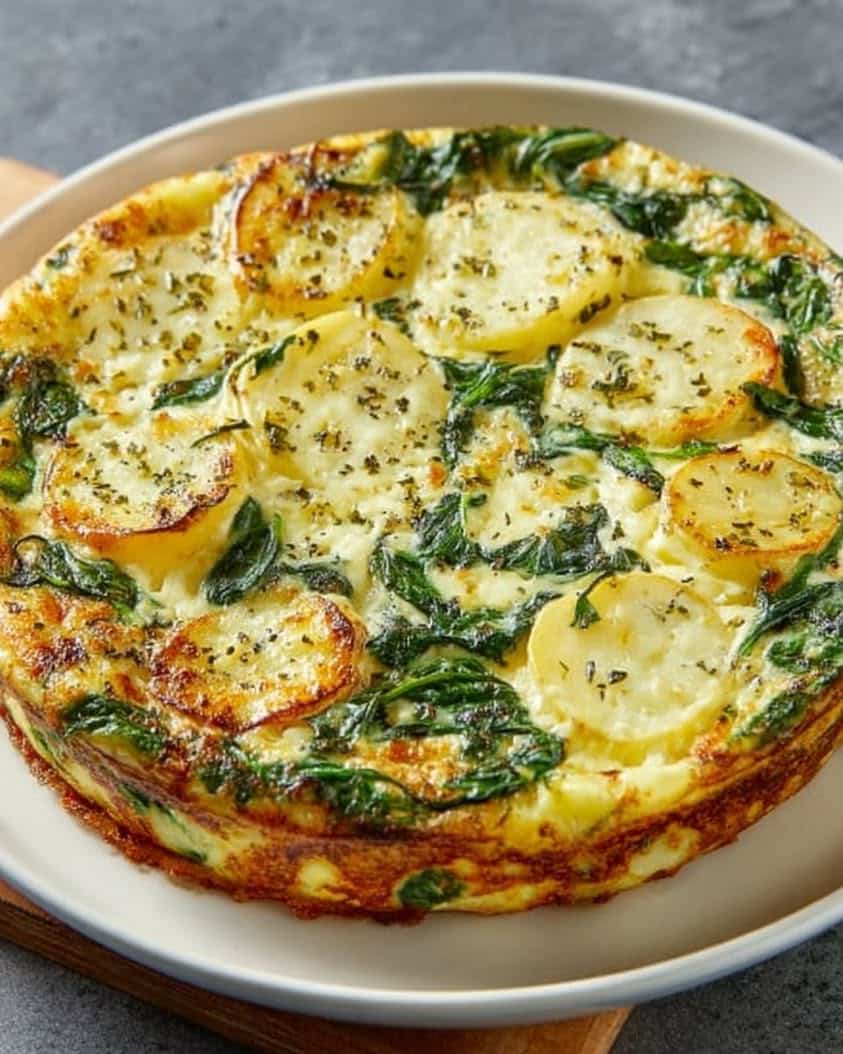
Cheesy Potato & Spinach Quiche (No Crust): Your New Go-To Easy Brunch
This Cheesy Potato & Spinach Quiche offers a deliciously simple solution for your next breakfast or brunch gathering. Moreover, its crustless design makes it a naturally gluten-free and low-carb option that doesn’t sacrifice an ounce of flavor. Imagine a golden-brown top giving way to a soft, savory interior packed with tender potatoes and vibrant spinach. Consequently, every bite delivers a comforting, satisfying experience that feels both indulgent and wholesome.
The beauty of this crustless quiche lies in its incredible versatility and straightforward preparation. You simply whisk together a rich, cheesy egg base, stir in your prepared fillings, and bake. Furthermore, the result is a stunning, puffed-up dish that looks impressive but requires minimal effort. Whether you are hosting a fancy brunch or need a make-ahead breakfast for busy mornings, this recipe consistently delivers. Ultimately, it is a foolproof dish that will have everyone asking for the recipe.
This quiche is a celebration of texture and taste, blending the heartiness of potatoes with the fresh, earthy notes of spinach. The sharp, melty cheese binds everything together in a creamy, custardy embrace. Additionally, the absence of a crust allows the flavors of the main ingredients to shine through brightly. Therefore, you get a pure, uncomplicated dish that is as nutritious as it is delicious, proving that healthy eating can be incredibly satisfying.
Quick Recipe Highlights
- Flavor Profile: This crustless quiche boasts a savory, cheesy base perfectly complemented by the earthy spinach and hearty potatoes. Furthermore, the subtle seasoning enhances the natural flavors without overpowering them. Consequently, each forkful is a balanced and comforting taste experience.
- Texture: The texture is wonderfully creamy and custardy from the egg mixture, with soft, tender potato pieces and wilted spinach throughout. Additionally, the top bakes to a beautiful, lightly golden finish that provides a subtle textural contrast to the soft interior.
- Aroma: As it bakes, your kitchen will fill with the irresistible, comforting aroma of melting cheese and baking eggs. Moreover, the savory scent of sautéed onions and garlic mingles beautifully, creating an anticipation that is wonderfully fulfilled upon the first bite.
- Visual Appeal: This quiche presents beautifully with a golden-yellow top speckled with green spinach and flecks of potato. Its simple, rustic appearance is elegant enough for a special occasion yet homey enough for a family meal.
- Skill Level Needed: This recipe is perfect for beginners, as it requires no special pastry skills for a crust. Basically, if you can whisk ingredients and operate an oven, you can successfully create this stunning dish.
- Special Equipment: You need only a standard 9-inch pie dish, a mixing bowl, and a whisk. A skillet is also helpful for quickly wilting the spinach and sautéing the onion, but it is a straightforward process.
Recipe Overview
- Difficulty Level: We classify this crustless quiche as easy because it eliminates the most technically challenging part of traditional quiche-making: the pastry crust. The filling involves simple mixing and requires no precision, making it very forgiving for cooks of all levels. Furthermore, the ingredient list is short and the steps are logical and sequential.
- Category: This dish fits perfectly into the breakfast and brunch categories, but it is also substantial enough for a light lunch or dinner. It is a versatile all-day meal that can be served hot, warm, or at room temperature, adapting effortlessly to your schedule.
- Cuisine: While quiche has its roots in French cuisine, this crustless version is a modern, health-conscious adaptation popular in American home cooking. It takes the classic concept of a baked egg custard and simplifies it for contemporary lifestyles and dietary preferences like gluten-free and low-carb.
- Cost: This is an incredibly cost-effective meal, utilizing affordable staples like eggs, potatoes, and frozen spinach. Cheese is the primary splurge, but a little goes a long way in terms of flavor. Overall, it is a budget-friendly way to feed a family or a group of guests.
- Season: This quiche is truly a year-round recipe. It feels hearty and comforting during the cooler fall and winter months, yet the fresh spinach and bright flavors also make it suitable for spring and summer brunches. It is a perennial favorite.
- Occasion: It is ideal for holiday brunches, Mother’s Day, casual weekend breakfasts, or as a make-ahead meal for busy weeks. Its elegant appearance makes it special, while its easy preparation keeps stress levels low for the host.
Why You’ll Love This Recipe
First and foremost, the taste and texture of this crustless quiche are utterly irresistible. The creamy, savory egg custard is the perfect vehicle for the soft potatoes and delicate spinach. Every bite is a harmonious blend of comforting flavors that feel both light and satisfying. The melted cheese adds a rich, salty depth that makes the dish feel indulgent, while the vegetables keep it grounded and nutritious. It is a flavor profile that appeals to both adults and children, making it a reliable family favorite.
From a convenience standpoint, this recipe is a true winner. Without a crust to make, you save a significant amount of time and effort. The preparation is essentially a simple mix-and-pour process. Furthermore, the quiche can be assembled ahead of time and refrigerated overnight, ready to pop in the oven in the morning. It also travels well and leftovers reheat beautifully, making it the ultimate convenient yet homemade meal solution for any busy schedule.
Nutritionally, this crustless quiche is a powerhouse. It is packed with protein from the eggs and cheese, which helps keep you full and energized throughout the morning. Spinach contributes iron, vitamins A, C, and K, while potatoes provide potassium and complex carbohydrates for sustained energy. By omitting the crust, you naturally reduce the carbohydrate and calorie count, creating a meal that aligns with low-carb and gluten-free lifestyles without any sacrifice.
For social and entertaining value, this quiche is a superstar. It looks impressive when brought to the table, puffed and golden. It slices beautifully, serving a crowd with ease. Because it is equally delicious at room temperature, it takes the pressure off timing everything perfectly for a brunch buffet. Guests will appreciate the homemade touch, and you will appreciate how little hands-on time it required, allowing you to enjoy the company.
Finally, its cost-effectiveness and accessibility cannot be overstated. The ingredients are humble, affordable, and readily available at any grocery store. You are creating a restaurant-quality dish with simple, pantry-staple ingredients. This makes it an excellent choice for feeding a group on a budget or for creating a satisfying family meal without a big trip to the store. It turns everyday ingredients into something extraordinary.
Historical Background and Cultural Significance
The story of quiche begins in the Lorraine region of France, with the classic Quiche Lorraine. Originally, this dish was a simple custard baked in a bread dough shell, made by German cooks in the medieval kingdom of Lothringen. The French later adopted and refined it, replacing the bread dough with a pastry crust and adding ingredients like lardons and cheese. The word “quiche” itself is derived from the German word “kuchen,” meaning cake. This humble beginning as a practical, peasant food laid the foundation for a culinary icon.
Quiche rose to international prominence in the mid-20th century, particularly in the United States and Britain. Its popularity soared in the 1970s and 80s as a staple of casual entertaining and ladies’ luncheons. It symbolized a certain sophistication and ease, a taste of French country living that was accessible to the home cook. The dish’s versatility allowed it to be adapted endlessly, with countless variations emerging that incorporated local ingredients and tastes, moving far beyond its Lorraine origins.
The evolution towards crustless quiche is a more recent development, largely driven by modern dietary trends. As low-carb and gluten-free diets gained popularity, cooks sought ways to enjoy classic dishes without traditional ingredients like flour. The crustless quiche, or “crustless custard bake,” was born from this innovation. It retains the essential character of a quiche—the creamy, savory egg custard with mix-ins—while making it more inclusive for various dietary needs and simplifying the preparation process even further.
Regional variations of quiche are now limitless. Our Cheesy Potato & Spinach version reflects a contemporary American sensibility, prioritizing convenience, nutrition, and flavor. It draws on the French tradition of incorporating greens and dairy but does so in a way that aligns with today’s health-conscious and time-pressed culture. This recipe is a testament to how classic dishes can evolve while maintaining their soul, providing a delicious bridge between culinary history and modern lifestyle.
Ingredient Deep Dive
Potatoes are a foundational ingredient in cuisines worldwide, originally domesticated in the Andes over 8,000 years ago. They were introduced to Europe in the 16th century and eventually became a crucial staple. Nutritionally, they are an excellent source of vitamin C, potassium, and vitamin B6, especially when the skin is left on. They provide complex carbohydrates for energy. For this recipe, select firm potatoes with no sprouts or green spots. Store them in a cool, dark, and well-ventilated place, but not in the refrigerator. You can substitute with sweet potatoes for a different flavor and nutrient profile, though the cooking time may vary slightly.
Spinach has a rich history, cultivated in ancient Persia and spread to China and Europe via trade routes. It gained pop culture fame through Popeye, who touted its strength-giving properties. It is a nutritional powerhouse, loaded with iron, calcium, magnesium, and vitamins A, C, and K. For the best flavor and texture in your crustless quiche, use fresh, crisp leaves. Ensure you thoroughly wilt and drain it to remove excess water that could make the quiche soggy. You can easily substitute with other greens like kale, Swiss chard, or arugula, though cooking times for wilting may differ.
Eggs have been a human food source for millennia, symbolizing life and rebirth in many cultures. They are the structural backbone of this quiche, providing the custard that holds everything together. Eggs are a complete protein, containing all nine essential amino acids, and are rich in choline, which is vital for brain health. Always choose the freshest eggs you can find. For a richer custard, some recipes use a combination of whole eggs and cream, but milk works perfectly for a lighter version. Store eggs in their original carton in the main body of the refrigerator, not the door.
Cheese, particularly cheddar, adds the essential creamy, salty, and umami flavor that defines this dish. The history of cheesemaking dates back over 7,000 years. Cheddar itself originated in the English village of Cheddar in the 12th century. Cheese is a great source of calcium and protein. For the best melting quality and flavor, grate your own cheese from a block, as pre-shredded cheese contains anti-caking agents that can affect texture. Sharp cheddar provides a robust flavor, but you can substitute with Gruyère for a more classic quiche taste, Monterey Jack for superior meltability, or a blend of your favorites.
Common Mistakes to Avoid
- Not properly draining the spinach. Using frozen spinach without thoroughly squeezing out all the liquid, or not wilting fresh spinach enough, will introduce excess water into the custard. This extra moisture can prevent the eggs from setting properly, resulting in a watery, loose quiche. Always take the time to squeeze spinach in a clean kitchen towel until it is very dry.
- Overmixing the egg custard. Vigorously whisking the egg mixture can incorporate too much air, leading to a puffy, soufflé-like texture that deflates unevenly as it cools. Instead, whisk the eggs, milk, and seasonings just until they are uniformly combined. A few small streaks of egg white are perfectly fine and will result in a denser, creamier custard.
- Using the wrong size baking dish. A dish that is too small will cause the quiche to overflow during baking, while a dish that is too large will result in a thin, overcooked layer. A standard 9-inch pie dish is ideal for this recipe. The filling should come up to about half an inch from the rim before baking to allow for some puffing.
- Skipping the sauté step for the onion. Adding raw onion to the quiche can result in a harsh flavor and a crunchy, undercooked texture that is unpleasant. Briefly sautéing the onion until it is soft and translucent sweetens its flavor and ensures it will be perfectly tender after baking, seamlessly integrating into the custard.
- Underseasoning the custard. The egg and milk mixture itself needs adequate seasoning, as it forms the base flavor for the entire dish. Do not rely solely on the saltiness of the cheese. Season the custard mixture well with salt and pepper before adding the other ingredients. Taste is subjective, so adjust to your preference.
- Overbaking the quiche. The goal is a creamy, set custard, not a dry, rubbery one. The quiche is done when the edges are fully set and the center still has a slight jiggle. The residual heat will continue to cook the center as it cools. An instant-read thermometer inserted into the center should read between 165°F and 170°F.
- Cutting into the quiche immediately after baking. Slicing a hot quiche will cause it to fall apart and lose its creamy texture. Allow it to rest on a wire rack for at least 15-20 minutes before serving. This resting period allows the proteins in the eggs to relax and firm up, making for clean, beautiful slices.
- Forgetting to grease the pie dish. Even though there is no pastry crust to stick, the egg and cheese can still bond to the sides of the dish. Generously grease your pie dish with butter or cooking spray to ensure easy removal and serving of every perfect slice.
Essential Techniques
Wilting and draining spinach is a critical technique for achieving the perfect quiche texture. This process removes the vast amount of water naturally contained within the spinach leaves. If skipped, this water will be released during baking, creating a soggy, separated custard. To master it, simply sauté fresh spinach in a pan over medium heat until it has completely wilted and reduced in volume. Then, transfer it to a clean kitchen towel or a strainer and squeeze firmly until no more liquid drips out. The spinach should feel quite dry to the touch before it is added to the quiche filling.
Creating a perfectly blended custard is the heart of any quiche. The goal is a homogeneous mixture of eggs and dairy that is not over-aerated. Whisk the eggs first until the yolks and whites are just broken down and combined. Then, slowly stream in your milk or cream while continuing to whisk gently. Over-whisking incorporates too many air bubbles, which can lead to an undesirable puffy texture and cause the top to dome and crack. Mix just until you see no visible streaks of egg white or yellow.
The “jiggle test” is the most reliable method for determining doneness without overbaking. About five minutes before the recipe’s suggested cook time is up, open the oven and gently shake the pie dish. You are looking for a specific visual cue: the edges of the quiche should look fully set and firm, while the center, about the size of a jar lid, should have a slight, gentle jiggle. It should not look liquid or sloshy. The residual heat will carry over cooking to perfectly set the center as the quiche rests, resulting in a creamy, not rubbery, texture.
Pro Tips for Perfect Cheesy Potato & Spinach Quiche
- Grate your own cheese from a block. Pre-shredded bagged cheese is coated with potato starch or cellulose to prevent clumping. These starches can inhibit melting and create a slightly grainy texture in your custard. Freshly grated cheese melts more smoothly and integrates better into the egg mixture.
- Let all your ingredients come to room temperature before mixing. Using cold eggs and milk straight from the refrigerator can make your custard mixture seize up and result in a longer, less even baking time. Room temperature ingredients blend more smoothly and bake more consistently.
- Season your custard base generously. Do not be shy with the salt and pepper in the egg and milk mixture. The custard itself is quite bland and needs a good foundation of seasoning to make the potatoes, spinach, and cheese truly sing. Taste the mixture and adjust as needed.
- Use a fork to prick the potato pieces after boiling. This simple step helps the custard mixture seep into the potatoes during baking, creating a more cohesive bite. It also allows any excess starch to release, ensuring the potatoes are perfectly tender.
- Place your pie dish on a preheated baking sheet. This technique helps to conduct heat directly to the bottom of the quiche, promoting a more even set and helping to cook the bottom layer thoroughly. It also catches any potential drips if the quiche puffs over the edge.
- Allow for a mandatory resting period after baking. The proteins in the eggs need time to relax and reabsorb moisture after the trauma of baking. Letting the quiche sit for 15-20 minutes ensures it will slice cleanly and have the ideal creamy, rather than watery, texture.
Variations and Adaptations
For regional variations, you can take this crustless quiche around the world. Give it a Mediterranean twist by adding sun-dried tomatoes, kalamata olives, and feta cheese. For a Southwest flair, incorporate diced green chiles, corn, black beans, and pepper jack cheese, topping it with a dollop of salsa and avocado after baking. An Italian-inspired version could include roasted red peppers, artichoke hearts, and a blend of mozzarella and parmesan cheeses with a sprinkle of Italian seasoning.
Seasonal adaptations make this recipe a year-round favorite. In the spring, try asparagus tips and fresh peas with leeks and goat cheese. Summer calls for zucchini, cherry tomatoes, and fresh basil. For a hearty autumn version, use roasted butternut squash or sweet potato and sage. In the winter, a combination of mushrooms and caramelized onions provides deep, comforting flavor. The basic custard recipe remains the same, simply swap the vegetables to match what is fresh and available.
Dietary modifications are straightforward with this versatile base. For a dairy-free version, use your favorite plant-based milk and a vegan cheese that melts well. To boost protein, add cooked, crumbled bacon, diced ham, or browned sausage. For a pescatarian option, flaked smoked salmon or canned tuna would be delicious. If you are watching your fat intake, use low-fat milk and reduce the cheese quantity, replacing it with nutritional yeast for a cheesy flavor.
Flavor variations can easily customize this quiche to your palate. Incorporate different herbs like dill, tarragon, or thyme for a sophisticated note. A teaspoon of Dijon mustard or a dash of hot sauce whisked into the custard adds a pleasant zing. For a richer, deeper flavor, sauté the onions with a pinch of smoked paprika. You can also experiment with different cheese blends; Gruyère and Swiss are classic, while a sharp white cheddar or gouda offers a more robust taste.
Serving and Presentation Guide
Plating this crustless quiche beautifully elevates it from a simple bake to a brunch centerpiece. Use a sharp, thin-bladed knife to slice clean portions. Wipe the knife clean between cuts for neat edges. Slide a pie server or small spatula underneath each slice to transfer it to individual plates. For a modern look, serve on plain white or neutral-colored plates that allow the golden color of the quiche to stand out. Alternatively, a rustic wooden board can create a charming, family-style presentation.
Garnishing adds the final touch of freshness and color. A simple sprinkle of freshly chopped chives or parsley provides a vibrant green contrast against the yellow custard. For a bit of elegance, a few microgreens or edible flowers placed delicately on top look stunning. A light dusting of paprika or a twist of freshly cracked black pepper also enhances the visual appeal. If you have added meat like bacon, a small, crispy piece on top of each slice makes for an attractive and tasty garnish.
Traditional accompaniments balance the rich, savory flavors of the quiche. A simple mixed green salad with a light vinaigrette is a classic pairing that cuts through the richness. Fresh fruit, such as a berry medley or sliced melon, provides a sweet and refreshing counterpoint. For a heartier brunch spread, consider serving it with roasted potatoes or breakfast sausages. Buttered toast or crusty bread is also a welcome addition for those not avoiding gluten.
Wine and Beverage Pairing
Selecting the right wine can enhance your crustless quiche experience beautifully. A crisp, dry white wine is typically the best choice. A Sauvignon Blanc, with its herbaceous and citrusy notes, complements the earthy spinach and sharp cheese wonderfully. Alternatively, an unoaked Chardonnay offers a rounder, creamier texture that mirrors the custard’s richness without overpowering it. For a rosé option, a dry Provencal rosé provides bright acidity and red fruit notes that lighten the dish’s richness. Serve white and rosé wines well chilled, around 45-50°F.
For non-alcoholic alternatives, consider options with brightness and complexity. A sparkling water with a squeeze of lemon or lime cleanses the palate between bites. Iced herbal tea, such as peppermint or lemongrass, offers a refreshing contrast. A virgin Bloody Mary with its savory, spiced profile can be a fantastic pairing. For a creamy option, a homemade chai latte provides warm spices that harmonize with the quiche’s comforting nature. These beverages ensure everyone at the table has a delightful pairing.
Coffee and tea are classic brunch companions that work exceptionally well. A medium-roast coffee with low acidity will complement the quiche without bitterness. The nutty and chocolatey notes in the coffee can highlight the savory elements of the dish. For tea drinkers, a robust English Breakfast or Earl Grey stands up well to the rich cheese and eggs. A green tea, with its more vegetal notes, can also pair nicely with the spinach. Serve coffee hot and fresh, and tea according to its specific brewing instructions for the best flavor.
Storage and Shelf Life
Proper storage is key to maintaining the quality and safety of your leftover crustless quiche. First, allow the quiche to cool completely to room temperature after baking, but do not leave it out for more than two hours. Then, cover the entire pie dish tightly with plastic wrap or aluminum foil. Alternatively, you can transfer individual slices to an airtight container. Store the quiche in the refrigerator, where it will keep for 3 to 4 days. The texture is best when consumed within the first 2-3 days.
Reheating instructions are crucial for restoring the quiche’s enjoyable texture. The microwave is quick but can make the eggs rubbery. For best results, reheat slices in a conventional or toaster oven. Preheat the oven to 325°F, place the quiche slice on a baking sheet, and warm for 10-15 minutes, or until heated through. You can also reheat it in a skillet over low heat with a lid to create a steamy environment that prevents drying out. The goal is to warm it gently without further cooking the eggs.
Freezing is an excellent option for longer-term storage. Wrap the completely cooled quiche (or individual slices) tightly in plastic wrap, followed by a layer of heavy-duty aluminum foil to prevent freezer burn. Label it with the date. Frozen quiche will maintain best quality for 1-2 months. To reheat, thaw it overnight in the refrigerator and then follow the standard reheating instructions. You can reheat from frozen, but it will take longer, about 30-40 minutes in a 325°F oven, and the texture may be slightly more watery.
Make Ahead Strategies
You can prepare this crustless quiche entirely the night before, making it a stress-free option for mornings. Simply assemble the quiche completely in the greased pie dish as directed in the recipe. Instead of baking it, cover the dish tightly with plastic wrap and refrigerate it overnight. The next morning, remove the quiche from the refrigerator while you preheat the oven. It may need a few extra minutes of baking time since it is starting from a cold state. This method is incredibly convenient for holiday mornings or busy schedules.
For a component-based make-ahead strategy, prepare the individual elements in advance. You can boil and dice the potatoes, wilt and drain the spinach, and shred the cheese up to two days ahead. Store each component in separate airtight containers in the refrigerator. The custard mixture (eggs, milk, seasoning) is best whisked together fresh on the day of baking to ensure the best texture. When ready to bake, simply combine the prepped ingredients with the fresh custard and proceed. This saves significant active prep time.
Assessing the quality impact of make-ahead methods is important. The fully assembled and refrigerated method may result in a slightly denser texture, as the potatoes and spinach can absorb some of the liquid from the custard. However, the difference is minimal and the convenience often outweighs this slight change. The component method preserves the ideal texture perfectly, as the final mixing and baking happen just before serving. Both strategies yield a delicious result, so choose based on your time and priority for absolute perfection.
Scaling Instructions
Halving this crustless quiche recipe is simple for smaller households. Use exactly half of each ingredient: 3 eggs, 1/2 cup of milk, 1 cup of diced potatoes, etc. The key adjustment is the baking dish; use a 7-inch pie dish or a similar small oven-safe dish. The cook time will likely be reduced, so start checking for doneness around the 25-minute mark. Keep a close eye on it, as smaller volumes cook faster. This is a perfect way to enjoy a fresh quiche without having leftovers for days.
Doubling or tripling the recipe is ideal for feeding a crowd or for meal prepping. Simply multiply all ingredient quantities by two or three. Do not attempt to bake a double batch in one pie dish, as it will overflow and not cook evenly. Instead, divide the mixture between two or three standard 9-inch pie dishes. You may need to rotate the dishes in the oven halfway through baking to ensure even cooking. The total bake time could increase by 5-10 minutes, so rely on the visual and jiggle tests for doneness.
Timing modifications are essential when scaling. While a single quiche takes about 45 minutes, a halved recipe may take only 30-35 minutes. A doubled recipe in multiple dishes might take the full 45 minutes or slightly longer. The best practice is to set your timer for the original time minus 10 minutes, then check every 5 minutes thereafter. Look for the golden-brown top and the set edges with a jiggly center. Using an instant-read thermometer to check for 165°F in the center is the most reliable method for any batch size.
Nutritional Deep Dive
This crustless quiche offers a favorable macronutrient breakdown, making it a balanced meal choice. It is high in protein, primarily from the eggs and cheese, which promotes satiety and muscle maintenance. The carbohydrates come mainly from the potatoes and milk, providing a source of energy. By omitting the traditional flour crust, the total carbohydrate and calorie count is significantly reduced compared to a standard quiche. The fat content is moderate, coming from the egg yolks, cheese, and any oil used for sautéing, contributing to the feeling of fullness and carrying fat-soluble vitamins.
A micronutrient analysis reveals that this dish is a nutrient-dense option. Eggs are a fantastic source of choline, essential for brain health, and selenium, a powerful antioxidant. Spinach contributes a wealth of vitamins, including Vitamin K for bone health and Vitamin A for vision. Potatoes provide more potassium than a banana, which is crucial for blood pressure regulation. The cheese adds a significant amount of calcium for strong bones and teeth. Together, these ingredients create a meal that supports overall health and well-being.
From a dietary consideration standpoint, this recipe is naturally gluten-free, making it suitable for those with celiac disease or gluten sensitivity. It is also vegetarian. For those on a low-carb or keto diet, the potatoes can be omitted or replaced with a lower-carb vegetable like broccoli or mushrooms. While it contains dairy, it can be adapted with plant-based alternatives. It is not suitable for a vegan diet as-is, but with significant substitutions like tofu scramble for the eggs, a vegan version is possible.
Dietary Adaptations
For a gluten-free adaptation, this recipe is already perfectly compliant. The absence of a wheat-flour crust makes it inherently safe for those avoiding gluten. Always double-check that any processed ingredients, like pre-shredded cheese, are certified gluten-free, as some anti-caking agents may contain gluten. This quiche is a wonderful, satisfying option for anyone following a gluten-free lifestyle without any modification needed.
Creating a dairy-free version requires simple substitutions. Replace the milk with an unsweetened, unflavored plant-based milk such as almond, soy, or oat milk. For the cheese, use a high-quality vegan cheddar-style shred that is known for its melting properties. You may also want to add a tablespoon of nutritional yeast to the custard mixture to impart a cheesy, umami flavor. Be sure to use oil instead of butter for greasing the pan and sautéing the vegetables.
A vegan adaptation is more involved but entirely possible. Replace the eggs with a tofu-based scramble. Blend one 14-ounce block of firm tofu (pressed and drained) with 1/4 cup of plant-based milk, 3 tablespoons of nutritional yeast, 1 tablespoon of cornstarch or arrowroot powder (as a binder), and seasonings until smooth. Fold in the cooked potatoes and spinach, then bake as directed. The texture will be different from an egg-based quiche but still delicious and satisfying, providing a plant-based protein source.
For a low-carb or keto adaptation, the main adjustment is replacing the potatoes. Potatoes are starchy and high in carbohydrates. Substitute them with an equal volume of low-carb vegetables such as chopped broccoli, cauliflower rice, sliced mushrooms, or diced bell peppers. Ensure these vegetables are cooked until tender before adding to the custard to release excess moisture. Use full-fat milk or cream and full-fat cheese to align with the high-fat requirements of a keto diet. This modification makes the dish suitable for very low-carb eating plans.
Troubleshooting Guide
If your quiche turns out watery, the most common culprit is excess moisture from the vegetables. Ensure your spinach is thoroughly wilted and squeezed dry. If using other vegetables like mushrooms or zucchini, sauté them first to drive off water. Another cause could be underbaking; the custard must reach a high enough internal temperature to set properly. Use a thermometer to confirm it has reached 165°F in the center. Finally, allow the quiche to rest fully before slicing, as this lets the proteins firm up and reabsorb liquid.
A rubbery texture typically indicates overbaking or cooking at too high a temperature. Eggs become tough and rubbery when they are overcooked. Next time, bake at the recommended temperature and rely on the jiggle test for doneness. Remove the quiche from the oven when the center still has a slight wobble. Also, ensure you are not overmixing the custard, as too much air incorporation can contribute to a less creamy texture. Using a combination of whole eggs and milk, rather than just egg whites, also helps maintain tenderness.
If the quiche is browning too quickly on top but is still liquid in the center, your oven temperature may be too high, or the rack may be positioned too high. Oven thermostats can be inaccurate. Use an oven thermometer to verify the temperature. If the top is browning too fast, loosely tent the quiche with a piece of aluminum foil for the remainder of the baking time. This will shield the top from direct heat, allowing the center to cook through without burning the surface.
Recipe Success Stories
Community feedback on this crustless quiche has been overwhelmingly positive. Many readers report that it has become their default brunch recipe for its reliability and crowd-pleasing nature. One home cook shared that she made it for a family gathering where dietary restrictions were a concern, and it was the one dish everyone could enjoy. Another mentioned that her children, who typically avoid spinach, devoured it without complaint, calling it “green eggs” and asking for it regularly. These stories highlight the recipe’s versatility and broad appeal.
Variation successes from our readers are inspiring. A reader from Colorado added roasted Hatch green chiles and pepper jack cheese for a spicy kick that was a huge hit. Another successfully adapted it for a keto diet by swapping the potatoes for cauliflower and adding bacon. A creative cook layered thin slices of tomato on top before baking for a beautiful presentation and extra flavor. These adaptations show how the basic formula is a perfect canvas for personalization, encouraging cooks to make the recipe their own.
Reader suggestions have also helped improve the recipe over time. One astute baker suggested placing the pie dish on a preheated baking sheet to ensure the bottom sets perfectly, a tip we now include. Another recommended letting the quiche cool for a full 20 minutes before slicing for the cleanest cuts. A common piece of feedback is about the make-ahead convenience, with many readers expressing gratitude for a dish that can be prepared the night before, making holiday mornings peaceful and enjoyable.
Frequently Asked Questions
Can I use frozen spinach instead of fresh?
Absolutely, frozen spinach works very well in this recipe. You will need one 10-ounce package. Thaw it completely according to the package directions, then place it in a clean kitchen towel and squeeze it firmly to remove as much liquid as possible. This step is crucial to prevent a watery quiche. Once thoroughly drained, you can use it just like the wilted fresh spinach.
Do I have to boil the potatoes first?
PrintCheesy Potato & Spinach Quiche (No Crust)
Description
A delicious and easy crustless quiche packed with tender potatoes, fresh spinach, and melty cheese, perfect for a hearty breakfast or brunch.
Ingredients
For the Crust:
- 4 large eggs
- 1 cup milk
- 1 cup shredded cheddar cheese
- 2 cups diced potatoes
- 2 cups fresh spinach, chopped
- 1/2 onion, diced
- 1 clove garlic, minced
- 1 tablespoon olive oil
- 1/2 teaspoon salt
- 1/4 teaspoon black pepper
- 1/4 teaspoon paprika
Instructions
1. Prepare the Crust:
- Preheat oven to 375°F (190°C). Grease a 9-inch pie dish.
- Heat olive oil in a skillet over medium heat. Add diced potatoes and onion, cook until potatoes are tender, about 8-10 minutes.
- Add garlic and spinach to the skillet, cook until spinach wilts, about 2 minutes. Remove from heat and let cool slightly.
- In a large bowl, whisk together eggs, milk, salt, pepper, and paprika.
- Stir in the potato-spinach mixture and shredded cheese into the egg mixture.
- Pour the mixture into the prepared pie dish and bake for 30-35 minutes, or until the center is set and the top is golden.
- Let cool for 5 minutes before slicing and serving.
Notes
You can customize the seasonings to taste.

I’m Shaykee—born in Morocco, seasoned across continents. From airplane galleys to home kitchens, I share the flavors and stories that shaped my journey.
I want to know what the round things are on top? They looked like sliced potatoes, but the recipe calls for diced potatoes.
Great question. Recipe states “Dice potatoes”
but the Picture shows Sliced potatoes. Shoukd be diced or sliced potatoes??