
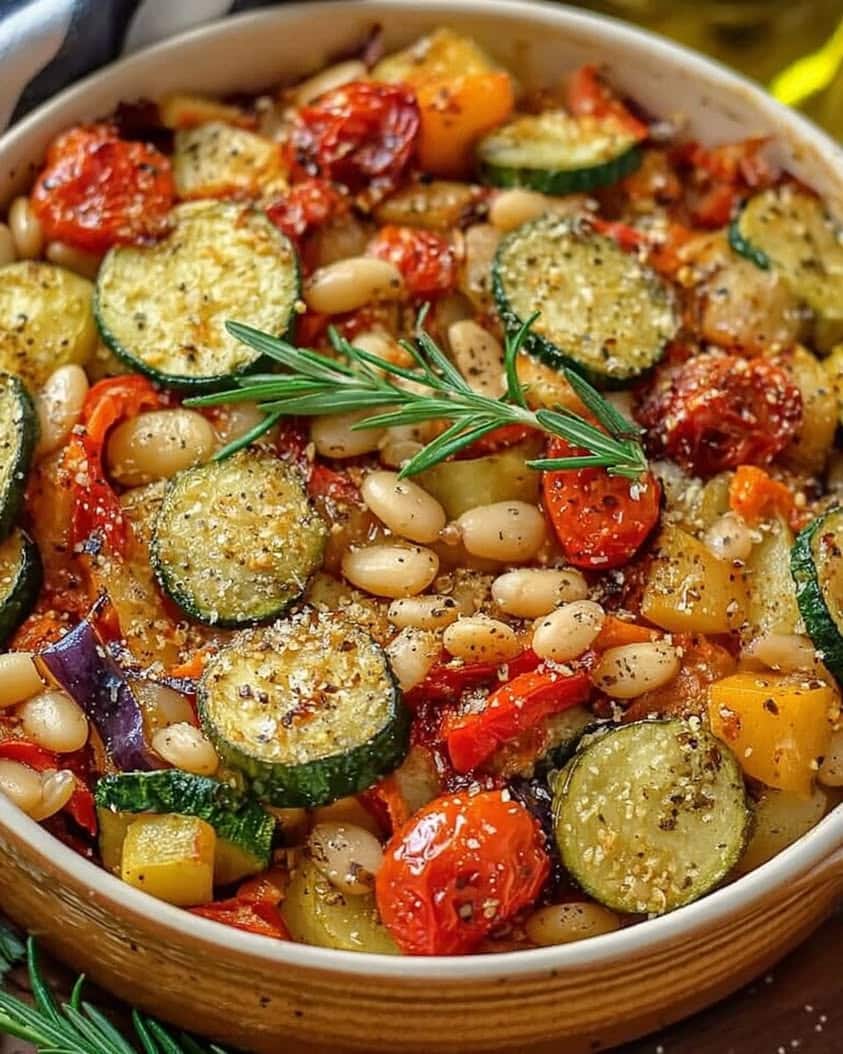
Rustic Roasted Vegetable Bake with Cannellini Beans: A Simple, Hearty, and Delicious Vegetarian Comfort Food!
Imagine pulling a sizzling, aromatic dish from your oven, filled with colorful roasted vegetables and creamy cannellini beans in a cozy, one-pan bake. This rustic roasted vegetable bake with cannellini beans is the ultimate vegetarian comfort food, offering a symphony of textures and flavors that will warm you from the inside out. Furthermore, it transforms simple, humble ingredients into a spectacular meal that feels both nourishing and indulgent. Consequently, this dish proves that healthy eating does not require sacrificing satisfaction or flavor.
This recipe celebrates the natural sweetness of roasted root vegetables paired with the velvety texture of cannellini beans. Each bite delivers a delightful contrast between the caramelized edges of the vegetables and the creamy, mild beans. Moreover, the herb-infused olive oil and garlic meld together to create a simple yet profound sauce that coats every component. Ultimately, this easy dinner solution brings restaurant-quality taste to your home kitchen with minimal effort and maximum reward.
Perfect for busy weeknights or leisurely weekend meals, this rustic roasted vegetable bake with cannellini beans adapts to your schedule and pantry. You can customize the vegetable selection based on seasonal availability or personal preference. Additionally, the hands-off roasting time allows you to attend to other tasks while dinner practically cooks itself. Therefore, this versatile bake becomes a reliable staple in your recipe collection, promising a delicious and wholesome meal every single time.
Quick Recipe Highlights
- Flavor Profile: This rustic roasted vegetable bake with cannellini beans features deep, caramelized notes from the roasted vegetables, balanced by the creamy, mild beans. Herbs like rosemary and thyme add an earthy fragrance, while garlic provides a subtle, aromatic kick. Ultimately, the flavors meld together into a harmonious and satisfying combination.
- Texture: You will experience a wonderful contrast between the tender, slightly crisp roasted vegetables and the velvety, soft cannellini beans. The edges of the vegetables become delightfully caramelized, offering a slight chew against the creamy bean base. Consequently, every mouthful provides a complex and enjoyable eating experience.
- Aroma: As this rustic roasted vegetable bake with cannellini beans cooks, your kitchen will fill with the comforting scent of roasting garlic, sweet onions, and earthy herbs. The aroma is warm and inviting, reminiscent of a cozy, home-cooked meal. Furthermore, the fragrant olive oil and herbs create an olfactory promise of the delicious food to come.
- Visual Appeal: This dish is a vibrant mosaic of colors, from the deep orange of sweet potatoes to the green of zucchini and red of bell peppers. The creamy white cannellini beans peek through the colorful vegetable medley, creating a rustic, hearty appearance. Therefore, it is as beautiful on the table as it is delicious on the palate.
- Skill Level Needed: This is an exceptionally beginner-friendly recipe requiring only basic knife skills for chopping vegetables. The technique involves simple tossing and roasting, with no complicated steps or special equipment. Consequently, even novice cooks can achieve spectacular results with this easy dinner recipe.
- Special Equipment: You need only a large baking sheet or roasting pan and basic kitchen tools like a knife and cutting board. A good quality baking sheet ensures even cooking and caramelization. Alternatively, a ceramic baking dish works perfectly for this cozy, one-pan bake.
Recipe Overview
- Difficulty Level: This rustic roasted vegetable bake with cannellini beans is classified as easy because it involves straightforward chopping, tossing, and roasting. There are no complex techniques or precise timings required for success. Moreover, the forgiving nature of roasting allows for flexibility, making it perfect for cooks of all levels. Consequently, you can confidently prepare this dish without any special culinary training.
- Category: This dish falls squarely into the categories of main dishes, vegetarian entrees, and healthy comfort food. It serves as a complete, protein-packed meal thanks to the cannellini beans. Furthermore, it fits beautifully into meal plans for easy dinners, meal prep, and family-friendly dining.
- Cuisine: This recipe draws inspiration from Mediterranean and rustic Italian culinary traditions, emphasizing fresh vegetables, beans, and herbs. The use of cannellini beans and olive oil is classic to Italian cooking, while the roasting technique is universally beloved. Additionally, the focus on plant-based, whole foods aligns with modern healthy eating trends across global cuisines.
- Cost: Preparing this rustic roasted vegetable bake with cannellini beans is remarkably budget-friendly, costing significantly less than a restaurant meal. Using seasonal vegetables and pantry staples like beans and dried herbs keeps the price low. Therefore, this dish delivers high value and nutrition without straining your grocery budget.
- Season: This cozy bake is particularly wonderful in the fall and winter when root vegetables are at their peak and comfort food is most desired. However, you can adapt it for spring and summer by using seasonal produce like zucchini and cherry tomatoes. Consequently, it remains a versatile option for healthy eating all year round.
- Occasion: This dish is perfect for casual weeknight dinners, potlucks, and family gatherings. It also makes an excellent option for meal prep, as it reheats beautifully. Furthermore, its impressive appearance and robust flavor make it suitable for entertaining guests who appreciate vegetarian comfort food.
Why You’ll Love This Recipe
You will adore the incredible taste and texture appeal of this rustic roasted vegetable bake with cannellini beans. The roasting process concentrates the natural sugars in the vegetables, creating deep, caramelized flavors that are both sweet and savory. Meanwhile, the cannellini beans become wonderfully creamy, providing a velvety contrast to the tender-crisp vegetables. Each forkful is a delightful experience, making this vegetarian comfort food deeply satisfying and utterly delicious. Furthermore, the melding of garlic and herbs creates a fragrant, flavorful sauce that ties the entire dish together perfectly.
The convenience and preparation benefits of this easy dinner cannot be overstated. With just fifteen minutes of active prep time, you can have this dish ready for the oven and then relax while it roasts. This one-pan method means minimal cleanup, a huge advantage on busy weeknights. Moreover, the recipe is incredibly forgiving; you can swap vegetables based on what you have available. Consequently, this rustic roasted vegetable bake with cannellini beans becomes a go-to solution for a stress-free, wholesome meal that fits seamlessly into any schedule.
From a nutritional standpoint, this bake is a powerhouse of vitamins, minerals, and fiber. The colorful array of vegetables provides a broad spectrum of antioxidants and phytonutrients essential for good health. Cannellini beans contribute a significant amount of plant-based protein and dietary fiber, promoting satiety and supporting digestive health. Additionally, using olive oil as the primary fat source adds heart-healthy monounsaturated fats. Therefore, this dish supports your healthy eating goals without compromising on flavor or satisfaction, making it a true win-win.
The social and entertaining value of this rustic roasted vegetable bake with cannellini beans is exceptional. It presents beautifully straight from the oven, making it impressive enough for guests. Serving a delicious, hearty vegetarian meal can be a wonderful conversation starter and a way to showcase how satisfying meatless options can be. Furthermore, it is easy to double the recipe for a crowd, and it holds well on a buffet table. Consequently, this bake is not just a meal but a centerpiece for gathering and sharing good food with loved ones.
Finally, the cost-effectiveness and accessibility of this recipe make it a practical choice for any household. The ingredients are inexpensive, easy to find at any grocery store, and often already in your pantry. You can create a restaurant-quality, nutritious meal for a fraction of the cost of dining out or ordering takeout. Moreover, its versatility means you can adapt it to use up leftover vegetables, reducing food waste. Ultimately, this rustic roasted vegetable bake with cannellini beans delivers incredible value, flavor, and nutrition in one simple, cozy package.
Historical Background and Cultural Significance
The tradition of roasting vegetables dates back to ancient cooking methods, where open fires and hot stones were used to cook gathered produce. This rustic roasted vegetable bake with cannellini beans carries the spirit of these humble, hearth-based dishes. Throughout Europe, and particularly in the Mediterranean, roasting seasonal vegetables with olive oil and wild herbs was a common practice for preserving and enjoying the harvest. Consequently, this dish connects us to a long history of simple, resourceful, and flavorful peasant cooking that celebrated the land’s bounty.
Culturally, the inclusion of cannellini beans roots this dish firmly in Italian culinary tradition, where these creamy white beans are a staple. In regions like Tuscany, beans are famously referred to as “the meat of the poor,” highlighting their role as a vital protein source. Combining beans with roasted vegetables creates a complete, nutritious meal that sustained generations. Furthermore, this practice of creating hearty, one-pan meals reflects a universal cultural wisdom: making the most of available ingredients to create something greater than the sum of its parts.
The evolution of this recipe mirrors modern dietary trends towards plant-based eating and healthy convenience. While the core technique is ancient, the specific combination in this rustic roasted vegetable bake with cannellini beans appeals to contemporary desires for meatless meals that are both satisfying and easy to prepare. The focus on whole foods and vibrant, colorful plates aligns with current nutritional guidance. Therefore, this dish represents a beautiful fusion of timeless cooking wisdom and modern healthy eating principles.
Regional variations of such vegetable and bean bakes are found across the globe, from French ratatouille to Spanish pisto. Each culture has its own version of combining local vegetables and legumes into a comforting, oven-baked dish. This particular recipe with cannellini beans leans into Italian flavors, but its versatility is its greatest strength. You can easily incorporate spices from other cuisines, such as smoked paprika or cumin, to create a different cultural profile. Ultimately, this rustic roasted vegetable bake with cannellini beans is a testament to the universal language of simple, good food.
Ingredient Deep Dive
Cannellini Beans: Also known as white kidney beans, cannellini beans are a cornerstone of Italian cuisine, prized for their creamy texture and mild, nutty flavor. They are an excellent source of plant-based protein, fiber, iron, and folate, contributing to heart health and stable blood sugar. For the best results in your rustic roasted vegetable bake, use canned beans for convenience, but be sure to rinse them thoroughly to remove excess sodium. If you have time, cooking dried beans from scratch will yield an even creamier texture and allow you to control the seasoning perfectly.
Sweet Potatoes: Sweet potatoes have a rich history, originating in Central or South America and later spreading across the globe through exploration. They are packed with beta-carotene, which converts to Vitamin A, supporting vision, immunity, and skin health. When selecting sweet potatoes for your cozy bake, choose firm ones with smooth, unblemished skin. Store them in a cool, dark, and well-ventilated place, but not in the refrigerator. For a variation, you can substitute with butternut squash or regular potatoes, though the flavor profile will shift slightly.
Zucchini: Zucchini, a type of summer squash, was first cultivated in Italy thousands of years after its ancestors were brought from the Americas. It is low in calories and a good source of vitamin C and manganese. Choose smaller, firm zucchini with bright green skin for the best flavor and texture in your rustic roasted vegetable bake. Store them in the refrigerator’s crisper drawer. If zucchini is unavailable, yellow squash makes an excellent and colorful substitute without altering the cooking time.
Bell Peppers: Bell peppers, native to Central and South America, come in a vibrant spectrum of colors, each adding a slightly different sweetness and visual appeal. They are an exceptional source of vitamins C and A, acting as powerful antioxidants in the body. Select peppers that feel heavy for their size with taut, glossy skin. Store them in the refrigerator. You can use any color in this easy dinner recipe, though a mix of red, yellow, and orange will provide the sweetest flavor and most vibrant presentation.
Red Onion: Red onions have been cultivated for thousands of years and are valued for their milder, sweeter flavor compared to other onion varieties, especially when roasted. They contain quercetin, a flavonoid with anti-inflammatory properties, and chromium, which aids in regulating blood sugar. Choose onions that are firm with a deep, purplish-red color and dry, papery skin. Store them in a cool, dark place. If you do not have red onion, a sweet yellow onion is a suitable substitute in this vegetarian comfort food dish.
Common Mistakes to Avoid
- Overcrowding the Pan: Crowding the vegetables traps steam, causing them to steam rather than roast. This prevents the desirable caramelization and crisp edges that define a great rustic roasted vegetable bake. Always use a large enough baking sheet to allow space between the vegetable pieces for proper air circulation and browning.
- Uneven Vegetable Cutting: Chopping vegetables into drastically different sizes leads to uneven cooking. Smaller pieces will burn before larger ones become tender. For consistent results, aim for a uniform, bite-sized dice, about 1 to 1.5 inches, so everything cooks at the same rate in your cozy, one-pan bake.
- Skipping the Bean Rinse: Failing to rinse canned cannellini beans leaves a starchy, salty liquid that can make the final dish gloopy and overly salty. Always drain and rinse the beans thoroughly under cold water. This simple step ensures a cleaner flavor and better texture in your healthy eating dish.
- Using Dull Herbs: Old, dried herbs lose their potency and will not contribute much flavor. If your dried rosemary or thyme has been in the cupboard for over a year, it is time to replace it. For the best flavor in this easy dinner, use fresh herbs if available, or ensure your dried herbs are fresh and fragrant.
- Neglecting to Preheat the Oven: Putting the pan into a cold oven drastically changes the cooking process, again leading to steaming rather than roasting. A properly preheated oven is essential for that initial blast of heat that seals in flavors and creates a beautiful caramelized exterior on the vegetables.
- Insufficient Oil: Using too little olive oil can result in dry, shriveled vegetables that stick to the pan. The oil helps conduct heat, promotes browning, and carries the flavors of the herbs and garlic. Do not drench the vegetables, but ensure each piece has a light, glossy coating for perfect roasting.
- Forgetting to Season in Layers: Adding salt and pepper only at the end means the seasoning will not penetrate the vegetables. Season the vegetables generously with salt and pepper after tossing them with oil. This foundational step builds depth of flavor throughout your vegetarian comfort food.
- Not Tossing Halfway Through: Roasting without turning or tossing the vegetables results in uneven browning. The pieces on the edge of the pan will burn while those in the center remain pale. For an evenly cooked rustic roasted vegetable bake, give the pan a good shake or use a spatula to toss everything halfway through the cooking time.
Essential Techniques
Uniform Chopping: Mastering uniform chopping is the most critical technique for a successful rustic roasted vegetable bake with canellini beans. Consistent size ensures that every piece of vegetable cooks at the same rate, preventing some from being undercooked while others burn. Use a sharp chef’s knife and aim for a steady, rocking motion to create even cubes. A common pitfall is rushing this step, which leads to irregular pieces. The visual cue for success is a baking sheet filled with vegetables that all look roughly the same size, promising synchronized cooking.
High-Heat Roasting: High-heat roasting, typically between 400°F and 425°F, is essential for achieving caramelization. This Maillard reaction creates complex, sweet, and savory flavors and gives the vegetables a desirable slightly crisp exterior. The technique is simple but requires a properly preheated oven to work effectively. A common mistake is roasting at too low a temperature, which steams the vegetables instead. You will know you have mastered it when you see deep golden-brown, caramelized spots on the vegetables and smell their sweet, nutty aroma.
Tossing with Oil and Seasonings: Thoroughly tossing the vegetables with oil and seasonings is not a step to be hurried. The goal is a light, even coating of oil on every surface to conduct heat and promote browning. Doing this in a large bowl gives you more control than trying to mix everything on the pan. The pitfall is uneven coating, which leads to patchy browning and seasoning. Success is visible when each vegetable piece glistens lightly and you can see a fine, even distribution of herbs and salt.
Pro Tips for Perfect Rustic Roasted Vegetable Bake
- For extra crispy edges, place the baking sheet in the oven while it preheats. Adding the vegetables to a hot pan gives them an immediate sear, enhancing browning and texture in your cozy bake.
- Add a splash of balsamic vinegar or a squeeze of lemon juice to the vegetables after roasting. The acidity will brighten all the flavors and cut through the richness of the olive oil and beans.
- If you have time, let the chopped vegetables sit tossed in salt and oil for 15-20 minutes before roasting. This draws out a bit of moisture, which results in a more concentrated flavor and better caramelization.
- For a flavor boost, add a Parmesan rind to the pan while roasting. It will melt slightly, infusing the entire dish with a subtle, savory, umami depth that elevates this vegetarian comfort food.
- Do not add the cannellini beans at the beginning. Stir them in during the last 10-15 minutes of cooking to warm them through without making them mushy or dry.
- Use a microplane to grate the garlic directly over the roasted vegetables when they come out of the oven. The residual heat will lightly cook the garlic, providing a fresher, more potent aroma and flavor.
- For a complete meal, top individual servings with a fried or poached egg. The runny yolk creates a luxurious sauce that brings the entire rustic roasted vegetable bake with cannellini beans together.
Variations and Adaptations
Regional Variations: You can easily transport the flavors of this bake to different culinary regions. For a Mediterranean twist, add kalamata olives, artichoke hearts, and a sprinkle of feta cheese after baking. To evoke the American Southwest, use black beans instead of cannellini, and season with chili powder, cumin, and a topping of fresh cilantro and avocado. These regional adaptations showcase the incredible versatility of the core recipe while keeping the method for this easy dinner exactly the same.
Seasonal Adaptations: This rustic roasted vegetable bake with cannellini beans shines year-round with simple ingredient swaps. In spring, use asparagus, peas, and new potatoes. Summer versions can feature eggplant, cherry tomatoes, and yellow squash. For a deep winter bake, focus on hardy root vegetables like parsnips, carrots, and turnips. Consequently, this dish becomes a reflection of the seasons, promoting healthy eating with the freshest available produce and keeping your meals exciting all year long.
Dietary Modifications: This recipe is naturally vegetarian and can be made vegan by ensuring no cheese is used as a garnish. For a gluten-free diet, it is already perfectly compliant. To boost the protein content further for a more substantial meal, add a cup of cooked quinoa or lentils to the mix before roasting. These simple modifications ensure that this cozy, one-pan bake can accommodate nearly any dietary need or preference without losing its essential character.
Flavor Variations: Experimenting with different herb and spice blends can completely transform the flavor profile of this dish. Try an Italian blend with oregano and basil, a French blend with herbes de Provence, or a Middle Eastern version with za’atar and sumac. For a smoky note, add a teaspoon of smoked paprika to the oil mixture. A spoonful of tomato paste mixed with the oil can add richness and depth, creating a new dimension in your vegetarian comfort food.
Texture Modifications: If you prefer different textures, consider these adjustments. For a crisper finish, spread the vegetables in a single layer and use the convection setting on your oven. For a softer, more stew-like consistency, cover the bake with foil for the first half of the cooking time. Adding a crunchy topping like panko breadcrumbs mixed with Parmesan or chopped nuts in the last five minutes of baking introduces a delightful contrast to the creamy beans and tender vegetables.
Presentation Alternatives: While serving this rustic roasted vegetable bake family-style from the pan is perfectly charming, you can also elevate its presentation. For individual portions, bake the mixture in small ramekins or cast-iron skillets. Alternatively, serve it over a bed of creamy polenta, fluffy couscous, or rustic mashed potatoes to make it even more hearty. Spooning it into hollowed-out bell peppers before baking creates a stunning and self-contained main course that is sure to impress.
Serving and Presentation Guide
Plating this rustic roasted vegetable bake with cannellini beans beautifully enhances the dining experience. For a family-style meal, bring the entire baking dish directly to the table, allowing the vibrant colors and aromas to make an immediate impact. To plate individual servings, use a wide, shallow bowl and spoon a generous portion, ensuring you get a mix of all the vegetables and creamy beans. Use a slotted spoon if there is excess liquid at the bottom of the pan. This method creates an inviting, restaurant-quality presentation for your easy dinner.
Garnishing is a simple yet effective way to add freshness, color, and texture. A sprinkle of freshly chopped parsley, basil, or chives adds a bright green contrast and a burst of fresh flavor. For a touch of richness, a drizzle of high-quality extra virgin olive oil or a balsamic glaze just before serving is excellent. If you are not strictly vegan, shavings of Parmesan cheese or crumbled feta add a salty, umami element that complements the sweet roasted vegetables perfectly.
Traditional accompaniments for this kind of vegetarian comfort food often include crusty, rustic bread to soak up the flavorful juices. A simple green salad with a lemony vinaigrette provides a refreshing, crisp counterpoint to the warm, roasted bake. For a more substantial meal, consider serving it alongside grilled chicken or fish, though it is perfectly satisfying on its own. These pairings round out the meal, offering variety in texture and flavor while keeping the focus on the star of the show.
Modern serving suggestions include using this bake as a versatile component in other dishes. Spoon it over quinoa or farro for a grain bowl, use it as a filling for wraps or pitas, or even top a pizza crust with it for a gourmet vegetable pizza. Letting it cool completely makes it an excellent component for meal-prepped lunches. Its versatility beyond the dinner plate makes this rustic roasted vegetable bake with cannellini beans a valuable asset for healthy eating throughout the week.
Temperature considerations are important for maximum enjoyment. This dish is best served hot directly from the oven, when the vegetables are at their most tender and the beans are creamy. However, it is also delicious at room temperature, making it ideal for picnics or potlucks. If you have leftovers, reheating them in the oven or a toaster oven will restore some of the crispness better than a microwave. Avoid serving it cold from the refrigerator, as the flavors are muted and the textures less appealing.
Portion control is naturally easy with this nutrient-dense dish. A good rule of thumb is to fill about one-quarter to one-third of your plate with this bake for a balanced meal. Because it is rich in fiber and protein, it is very satiating, so you will likely feel satisfied with a reasonable portion. If you are serving it as a side dish rather than a main, smaller portions are appropriate. Listening to your body’s hunger cues is the best guide, as this healthy eating option is designed to be both nourishing and fulfilling.
Wine and Beverage Pairing
Selecting the right wine can elevate your rustic roasted vegetable bake with cannellini beans from a simple meal to a gourmet experience. A medium-bodied white wine like a Pinot Grigio or Sauvignon Blanc works wonderfully; their crisp acidity and citrus notes cut through the richness of the roasted vegetables and olive oil. For red wine lovers, a light, low-tannin red such as a Gamay or Pinot Noir complements the earthy flavors without overpowering them. The key is to choose wines with good acidity to mirror the bright, savory notes of the dish.
Non-alcoholic alternatives provide just as much pairing pleasure. A sparkling water with a squeeze of lemon or lime offers a clean, palate-cleansing effervescence. For something more complex, an herbal iced tea, such as lemon verbena or mint, echoes the herbal notes in the bake. Alternatively, a tomato-based beverage like a Virgin Mary (non-alcoholic Bloody Mary) can be a surprisingly robust pairing, as the savory and spicy elements stand up well to the deep, roasted flavors of this vegetarian comfort food.
While not a traditional pairing for dinner, certain coffees and teas can be delightful after the meal. A light roast coffee with bright, fruity notes can complement the caramelized sweetness of the vegetables. For tea, an oolong with its complex, roasted yet floral character can be a sophisticated finish. Serve these beverages after a short rest following your meal to allow the flavors of the easy dinner to settle, creating a perfect transition to the end of your dining experience.
Temperature considerations are crucial for all beverage pairings. White wines and non-alcoholic sparklers should be served well-chilled, between 45-50°F, to provide a refreshing contrast to the warm bake. Red wines should be served slightly cooler than room temperature, around 55-60°F, to keep them lively. Iced teas and other cold drinks should be very cold. Serving your beverages at their ideal temperature ensures they perform their role of complementing and enhancing the flavors of your cozy, one-pan bake.
Beyond specific drinks, consider the overall serving ritual. Pouring a beautiful wine or crafting a special non-alcoholic cocktail signals that this is more than just a weeknight meal. Using nice glassware and perhaps even decanting the wine adds to the sense of occasion. This attention to detail transforms the act of enjoying this rustic roasted vegetable bake with cannellini beans into a holistic sensory experience, celebrating the joys of cooking, eating, and sharing.
Storage and Shelf Life
Proper storage is key to enjoying your rustic roasted vegetable bake with cannellini beans beyond the initial meal. Allow the bake to cool completely to room temperature before storing, but do not leave it out for more than two hours to prevent bacterial growth. Transfer the leftovers to an airtight container. Glass containers are ideal as they do not absorb odors and allow you to see the contents. Properly stored, this vegetarian comfort food will keep in the refrigerator for up to 4 days, maintaining its best quality and flavor.
Understanding the signs of spoilage is important for food safety. If you notice an off or sour smell, visible mold, or a significant change in texture becoming overly mushy or slimy, it is time to discard the bake. The vegetables may soften further upon storage, which is normal, but they should not become unpleasantly slimy. When in doubt, it is always safer to err on the side of caution and throw it out. This ensures your healthy eating habits are also safe eating habits.
Reheating instructions are simple but important for restoring texture and flavor. The oven or a toaster oven is the best method; reheat at 350°F for 10-15 minutes until warmed through. This method will help re-crisp the edges of the vegetables. If using a microwave, place the portion in a microwave-safe dish, cover loosely, and heat in 60-second intervals, stirring in between. The microwave will make the vegetables softer, but it is a quick and convenient option for an easy dinner revival.
Freezing is an option, though it will significantly alter the texture of the vegetables, making them much softer upon thawing. To freeze, place cooled portions in a freezer-safe airtight container or heavy-duty freezer bag, removing as much air as possible. Label with the date and freeze for up to 3 months. Thaw overnight in the refrigerator before reheating. Consider that zucchini and bell peppers become particularly watery after freezing, so the final texture will be more like a stew, which can still be delicious served over grains.
Make Ahead Strategies
You can significantly streamline your dinner preparation by employing make-ahead strategies for this rustic roasted vegetable bake with cannellini beans. The most effective approach is to prep all the vegetables a day in advance. Chop the sweet potatoes, zucchini, bell peppers, and onion, then store them in separate airtight containers or resealable bags in the refrigerator. This advance work reduces your active prep time on the day of cooking to just minutes, making this easy dinner even easier to get on the table during a busy week.
Storing the prepped components correctly between steps is crucial for maintaining quality. Do not toss the chopped vegetables with oil and salt until you are ready to roast them, as the salt will draw out moisture and make them soggy. The garlic can be minced ahead of time and stored in a small container in the fridge. The cannellini beans should remain drained and rinsed in their own container. Keeping everything separate until assembly ensures the final dish has the best possible texture and flavor for your healthy eating plan.
Assessing the quality impact of make-ahead prep is generally positive for this dish. The flavors remain robust, and the texture of the vegetables is largely unaffected if they are stored properly and not pre-oiled. The only potential issue is a slight loss of moisture from the cut surfaces, which can actually promote better caramelization. Therefore, making this rustic roasted vegetable bake ahead is a highly recommended strategy that saves time without compromising the delicious outcome of your vegetarian comfort food.
For the final assembly, simply take your pre-prepped ingredients from the refrigerator, toss the vegetables with the oil, herbs, and seasonings in a large bowl, and spread them on the baking sheet. Proceed with the roasting instructions as directed. If the vegetables are very cold from the fridge, you may need to add a few extra minutes to the roasting time. This seamless integration of prepped ingredients makes throwing together a wholesome, home-cooked meal feel effortless and efficient.
Scaling Instructions
Halving this rustic roasted vegetable bake with cannellini beans is straightforward for smaller households. Simply divide all the ingredient quantities by two. Use a smaller baking sheet or a quarter sheet pan to maintain the same depth of vegetables, which is crucial for proper roasting. The cooking time may be slightly reduced, so start checking for doneness around the 30-minute mark. This scaling down allows you to enjoy this cozy, one-pan bake without being overwhelmed by leftovers, though it is so delicious you might wish you had made more.
Doubling or tripling the recipe is perfect for meal prep or feeding a crowd. Multiply all ingredients by your desired factor and use two large baking sheets. It is vital to roast the vegetables in a single layer without overcrowding, so you must use multiple pans. Switch the pans’ positions on the upper and lower oven racks halfway through the cooking time to ensure even browning. The total cooking time might increase by 5-10 minutes due to the larger volume of food in the oven.
Equipment adjustments are necessary when scaling. For a double batch, two standard half-sheet pans are ideal. If you only have one large pan, you will need to roast the vegetables in consecutive batches, which is less efficient but still works. Do not be tempted to pile the vegetables deeper on one pan; this will steam them and ruin the texture. Investing in a second inexpensive baking sheet is worthwhile if you plan to make this easy dinner in large quantities regularly.
Consider storage implications when scaling up. A double batch will yield a significant amount of food, so ensure you have enough airtight containers for leftovers. The bake stores well for up to four days, making it an excellent component for weekly healthy eating. If you have made more than you can consume in that time, follow the freezing guidelines for a portion of it. Scaling this rustic roasted vegetable bake successfully means you can always have a satisfying, homemade meal ready when you need it.
Nutritional Deep Dive
This rustic roasted vegetable bake with cannellini beans offers an excellent macronutrient balance ideal for sustained energy. A single serving provides a healthy dose of complex carbohydrates from the sweet potatoes and other vegetables, which are digested slowly. The cannellini beans contribute a significant amount of plant-based protein and dietary fiber, promoting muscle repair and satiety. The olive oil provides heart-healthy monounsaturated fats, which are essential for absorbing fat-soluble vitamins. This combination makes the dish a complete and balanced meal that supports stable blood sugar levels and long-lasting fullness.
The micronutrient profile of this vegetarian comfort food is exceptionally diverse and potent. Sweet potatoes are loaded with beta-carotene (Vitamin A), crucial for vision and immune function. Bell peppers are one of the richest food sources of Vitamin C. Cannellini beans provide iron, magnesium, and potassium. The red onions and garlic contain antioxidants like quercetin and allicin, which have anti-inflammatory properties. Consuming a variety of colorful vegetables ensures you receive a broad spectrum of phytonutrients that protect against chronic disease.
From a dietary consideration standpoint, this dish is naturally vegetarian, vegan, and gluten-free, making it accessible to many people with dietary restrictions. It is high in fiber, which is beneficial for digestive health but may require a gradual introduction for those not used to a high-fiber diet. For individuals monitoring sodium intake, using no-salt-added canned beans and controlling the added salt makes this a low-sodium option. Its whole-food, plant-based composition aligns perfectly with recommendations from major health organizations for preventing heart disease and diabetes.
Dietary Adaptations
Gluten-Free: This rustic roasted vegetable bake with cannellini beans is naturally gluten-free, as none of the core ingredients contain gluten. Always double-check the labels on any pre-made spice blends to ensure no gluten-containing additives are present. This makes it a safe and delicious option for individuals with celiac disease or gluten sensitivity, allowing them to enjoy a hearty, comforting meal without concern.
Dairy A hearty and wholesome vegetarian bake featuring tender roasted vegetables and creamy cannellini beans, perfect for a comforting family meal. You can customize the seasonings to taste.
PrintRustic Roasted Vegetable Bake with Cannellini Beans
Description
Ingredients
For the Crust:
Instructions
1. Prepare the Crust:
Notes

I’m Shaykee—born in Morocco, seasoned across continents. From airplane galleys to home kitchens, I share the flavors and stories that shaped my journey.