
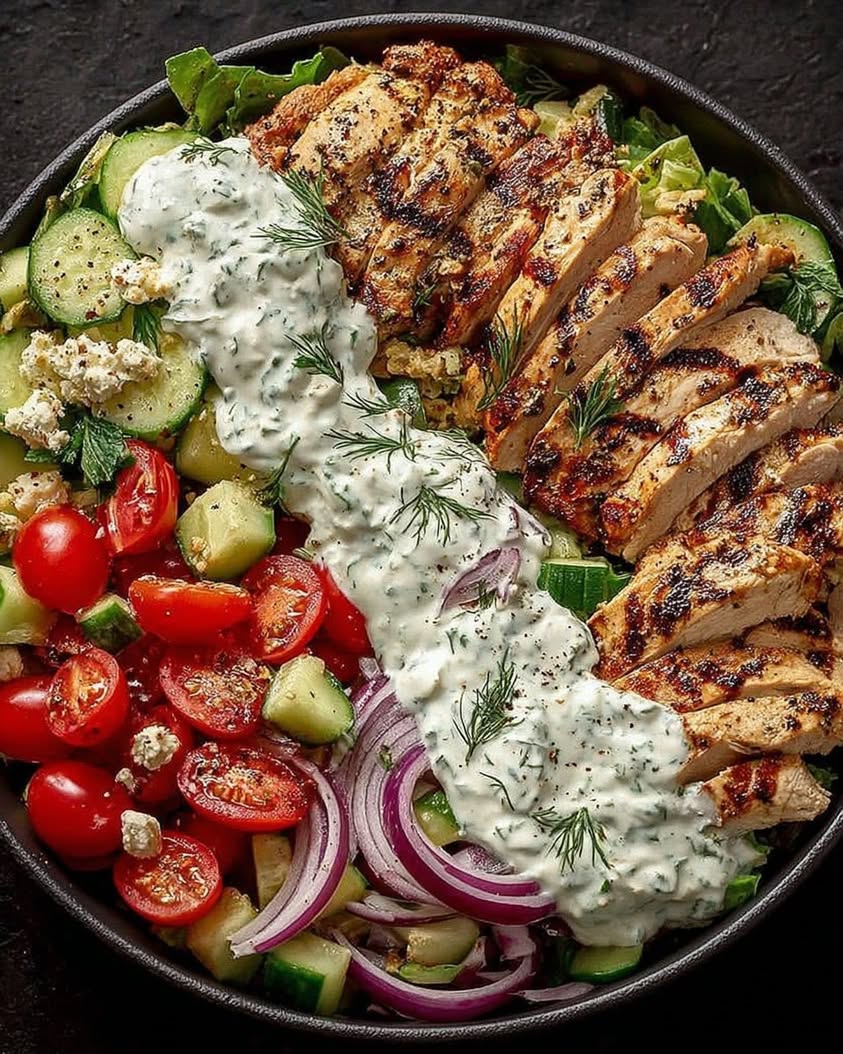
Epic Grilled Chicken Greek Salad Bowl with Tzatziki Magic: Your New Go-To Healthy Meal
Imagine a meal that bursts with the vibrant, sun-drenched flavors of the Mediterranean. This Epic Grilled Chicken Greek Salad Bowl with Tzatziki Magic is precisely that. It transforms simple, wholesome ingredients into a culinary masterpiece. Furthermore, it combines juicy, herb-marinated chicken with a chorus of crisp vegetables and briny feta. Ultimately, this dish delivers a satisfying and refreshing experience in every single bite.
This recipe is your ticket to a healthy, protein-packed lunch or dinner that feels anything but boring. The star of the show is undoubtedly the homemade tzatziki sauce. Its cool, creamy texture and tangy garlic flavor perfectly balance the smoky char of the grilled chicken. Consequently, this Grilled Chicken Greek Salad Bowl is a guaranteed crowd-pleaser. It is perfect for a quick weeknight dinner or for impressing guests at your next summer gathering.
Moreover, this bowl is a complete meal that checks all the boxes for flavor, nutrition, and visual appeal. The combination of textures from the crunchy cucumbers to the creamy avocado is simply irresistible. Additionally, it is incredibly versatile. You can easily customize it based on your dietary preferences or what you have available in your kitchen. This Epic Greek Salad Bowl is more than just a recipe; it is a fresh and healthy lifestyle choice.
Quick Recipe Highlights
- Flavor Profile: This Grilled Chicken Greek Salad Bowl offers a bright and zesty flavor journey. The lemon-oregano marinade on the chicken provides a herbaceous foundation. Meanwhile, the kalamata olives and red onion contribute a pleasant, sharp bite. Finally, the creamy tzatziki sauce ties everything together with its cool, garlicky tang.
- Texture: You will experience a wonderful symphony of textures in every forkful. The grilled chicken is satisfyingly tender and juicy. Conversely, the cucumbers and bell peppers offer a refreshing crunch. Additionally, the creamy avocado and soft feta cheese create a smooth contrast that makes this salad bowl incredibly satisfying.
- Aroma: The aroma is unmistakably Mediterranean and utterly intoxicating. As the chicken grills, the scents of garlic, lemon, and dried oregano will fill your kitchen. Furthermore, the fresh dill in the tzatziki sauce adds a light, grassy note. This combination creates an inviting fragrance that promises a delicious meal.
- Visual Appeal: This bowl is a feast for the eyes with its vibrant and colorful ingredients. The deep green spinach, bright red tomatoes, and purple onion create a stunning palette. Additionally, the golden-brown grilled chicken and white feta cheese provide beautiful contrast. Ultimately, the creamy white tzatziki drizzle makes the final presentation look professional and appetizing.
- Skill Level Needed: This is an exceptionally beginner-friendly recipe that requires only basic kitchen skills. You need to be comfortable chopping vegetables and managing a grill or stovetop pan. Furthermore, the tzatziki sauce is simply a matter of mixing ingredients. Consequently, even novice cooks can achieve restaurant-quality results with this straightforward guide.
- Special Equipment: The only special equipment you might need is a grill or grill pan for the chicken. Alternatively, a standard large skillet works perfectly well. You will also need a medium bowl for marinating and a small bowl for whisking the dressing. Basically, no fancy or expensive tools are required to create this epic meal.
Recipe Overview
- Difficulty Level: We have rated this Epic Grilled Chicken Greek Salad Bowl as easy for several good reasons. The steps are simple and sequential, with no complex techniques involved. Additionally, the ingredient list consists of common items that are easy to find. The most challenging part is grilling the chicken to perfection, which we guide you through with detailed instructions. Ultimately, this is a very approachable recipe for cooks of all experience levels.
- Category: This dish comfortably fits into multiple meal categories, making it incredibly versatile. It is a perfect main course for lunch or a light yet satisfying dinner. Furthermore, it excels as a meal prep option because the components store beautifully. You can also serve it as a substantial side salad at potlucks or barbecues. This adaptability is one of its greatest strengths.
- Cuisine: This recipe is firmly rooted in the vibrant and healthy traditions of Greek cuisine. It features classic Hellenic flavors like oregano, lemon, olive oil, and feta cheese. The concept of a salad bowl, or “horiatiki,” is a staple in Greek meals. We have stayed true to these principles while presenting them in a modern, deconstructed format that is easy to eat and customize.
- Cost: Preparing this Grilled Chicken Greek Salad Bowl is surprisingly cost-effective, especially when compared to eating out. The main expense is the chicken breast and the block of feta cheese. Fortunately, the vegetables are typically inexpensive, and the marinade and dressing use pantry staples. By making this at home, you get four generous, restaurant-quality servings for a fraction of the cost.
- Season: This is truly a year-round recipe, but it shines brightest during the spring and summer months. The fresh, crisp vegetables are at their peak flavor and most affordable during this time. Furthermore, the no-cook aspects and refreshing nature of the bowl are perfect for warm weather. However, it also provides a bright, healthy counterpoint to heavier winter meals.
- Occasion: This bowl is suitable for almost any occasion you can imagine. It is a quick and healthy weeknight dinner solution for busy families. Simultaneously, it is elegant enough to serve to guests at a casual lunch or dinner party. You can also pack it for picnics or take it to potlucks. Its universal appeal makes it a reliable go-to recipe.
Why You’ll Love This Epic Grilled Chicken Greek Salad Bowl
First and foremost, the taste and texture appeal of this bowl is absolutely phenomenal. The combination of smoky, savory grilled chicken with cool, crisp vegetables is a classic for a reason. Each component contributes its own unique flavor and mouthfeel, creating a complex and satisfying eating experience. The creamy tzatziki sauce acts as the perfect bridge, melding all the elements together seamlessly. You will love the way the salty feta, juicy tomatoes, and briny olives play off each other in every single bite.
From a convenience standpoint, this Grilled Chicken Greek Salad Bowl is a true winner. The preparation is straightforward, and the cooking time is minimal. Furthermore, it is an excellent candidate for meal prepping. You can easily chop the vegetables and marinate the chicken ahead of time. Then, when you are ready to eat, assembly takes just minutes. This makes healthy eating during a busy week not just possible, but effortless and enjoyable.
The nutritional advantages of this meal are another massive reason to fall in love with it. This is a perfectly balanced plate packed with lean protein, healthy fats, and a wide array of vitamins and minerals. The chicken provides high-quality protein to keep you full and support muscle repair. Meanwhile, the colorful vegetables are loaded with fiber, antioxidants, and essential micronutrients. The olive oil and avocado contribute heart-healthy monounsaturated fats. This bowl truly nourishes your body from the inside out.
This recipe also holds significant social and entertaining value. It is a visually stunning dish that looks impressive when served to family and friends. The vibrant colors and beautiful presentation are guaranteed to elicit compliments. Moreover, it is easy to scale up for a crowd. You can set up a “build-your-own-bowl” bar, allowing guests to customize their salads. This interactive element makes it a fantastic centerpiece for casual gatherings and promotes a fun, communal dining experience.
Finally, the cost-effectiveness and accessibility of this Epic Greek Salad Bowl cannot be overstated. Creating this meal at home is significantly cheaper than ordering a similar dish at a restaurant. The ingredients are common and easy to find at any standard grocery store. You also have complete control over the quality of the ingredients, such as using organic chicken or local produce. This recipe proves that eating well does not have to be complicated or expensive, making healthy living accessible to everyone.
Historical Background and Cultural Significance
The origin story of the Greek salad, or “horiatiki,” meaning “village” or “peasant” salad, is deeply rooted in the rural life of Greece. It was not originally conceived as a restaurant dish but as a practical, nourishing meal for farmers and laborers. Farmers would take these simple ingredients—tomatoes, cucumbers, onions, olives, and feta—into the fields for their midday meal. They would carry the components separately and combine them just before eating, often seasoning it with wild oregano and olive oil. This humble beginning is a testament to the Greek culinary philosophy of creating extraordinary food from simple, fresh, and local ingredients.
The cultural importance of this dish in Greece is profound. It is more than just a salad; it is a symbol of Greek identity and a staple on nearly every table. It represents the Mediterranean diet, which is renowned worldwide for its health benefits and delicious flavors. In Greece, the salad is typically served as a shared appetizer, not an individual side dish, encouraging a communal dining experience. The quality of a horiatiki is often used as a benchmark to judge a taverna’s overall standards. A great Greek salad signifies a kitchen that values freshness and tradition.
The evolution of the recipe from its rustic origins to the modern Grilled Chicken Greek Salad Bowl reflects global culinary trends. The traditional horiatiki never includes lettuce; it is a composition of chunky vegetables topped with a slab of feta. As Greek cuisine traveled the world, adaptations began to appear. The addition of grilled chicken transforms it from a shared starter into a protein-packed, standalone meal, catering to modern dietary preferences for high-protein lunches and dinners. The deconstructed “bowl” format is a contemporary presentation style that aligns with today’s fast-casual food trends, making an ancient dish feel fresh and relevant.
Regional variations of the Greek salad exist throughout Greece and the Mediterranean. On some islands, you might find capers added for an extra briny punch. In other regions, green bell peppers are a common inclusion. The type of oregano can vary, with many preferring the potent, wild-harvested Greek oregano. The concept of adding a protein like grilled chicken is a more international adaptation. Our Epic Grilled Chicken Greek Salad Bowl honors the soul of the traditional dish while embracing these modern, global interpretations. It is a celebration of both its rich history and its evolving, versatile nature.
Ingredient Deep Dive
Let us start with the chicken breast. As the primary protein, its quality is paramount. Chicken breast is an excellent source of lean protein, essential for muscle building and repair. It is also rich in nutrients like niacin, selenium, and vitamin B6. When selecting chicken, look for plump, pinkish flesh with no gray tones or unpleasant odor. For the best flavor and texture, we highly recommend marinating it for at least 30 minutes. If you need a substitution, boneless, skinless chicken thighs work wonderfully and offer a slightly richer flavor due to their higher fat content.
Next, consider the Greek yogurt for the tzatziki magic. This ingredient is central to the sauce’s creamy texture and tangy flavor. Greek yogurt is strained, removing much of the whey, which results in a thicker, protein-rich product. It is a fantastic source of probiotics, which support gut health, and calcium. Always opt for plain, full-fat Greek yogurt for the creamiest results and best flavor absorption. Low-fat versions can sometimes be watery. For a dairy-free alternative, thick, unsweetened coconut yogurt can be used, though it will impart a subtle coconut flavor.
The cucumber is a hydrating and crunchy cornerstone of both the salad and the tzatziki. Cucumbers are over 95% water, making them incredibly refreshing and low in calories. They also provide a good amount of vitamin K. For this recipe, English or Persian cucumbers are ideal because they have thinner skins and smaller, less bitter seeds. There is no need to peel them, which adds color and fiber. Before adding the cucumber to the tzatziki, it is crucial to grate and salt it, then squeeze out the excess water. This step prevents the sauce from becoming watery and diluting the magnificent flavors.
Finally, the feta cheese brings a signature salty, briny flavor that defines the Greek salad experience. Authentic Greek feta is made from at least 70% sheep’s milk, sometimes blended with goat’s milk, and is protected by a PDO (Protected Designation of Origin). It is a good source of calcium and phosphorus. When buying feta, try to find a block stored in brine, as it will be far superior in flavor and texture to pre-crumbled varieties. For those who are dairy-free, a firm tofu that has been marinated in a salty, lemon-herb brine can be crumbled as a surprisingly effective substitute.
Common Mistakes to Avoid
- Using Watery Tzatziki: The most common pitfall is not properly draining the cucumber. If you skip salting and squeezing the grated cucumber, you will end up with a thin, watery sauce that pools at the bottom of your bowl. This dilutes the flavor and ruins the creamy texture. Always take the extra five minutes to remove the excess moisture for a thick, perfect tzatziki.
- Overcooking the Chicken: Grilled chicken breast can quickly go from juicy to dry and tough. A reliable meat thermometer is your best friend here; cook the chicken to an internal temperature of 165°F (74°C) and then let it rest. The residual heat will finish the cooking process. Slicing the chicken against the grain after resting also ensures maximum tenderness in every bite.
- Skipping the Marinating Time: The marinade is not just for flavor; it also helps tenderize the chicken. While 30 minutes is good, marinating for a few hours (or even overnight) is significantly better. If you are short on time, even a 15-minute marinade is better than nothing. Do not rush this step, as it is key to developing the deep, herbaceous flavor profile.
- Chopping Vegetables Inconsistently: A salad bowl is most enjoyable when the vegetables are chopped into uniform, bite-sized pieces. Haphazard chopping leads to some pieces being too large and others too small, disrupting the harmony of the dish. Aim for a consistent dice or chop so that each forkful contains a perfect blend of all the ingredients.
- Dressing the Salad Too Early: If you toss the entire salad with the lemon-oregano vinaigrette and let it sit, the greens will wilt, and the vegetables will leach water. The salad will become soggy and unappealing. The best practice is to dress the salad components just before serving. Alternatively, serve the dressing on the side for individuals to add as they prefer.
- Using Pre-Crumbled Feta Cheese: Pre-crumbled feta is often coated with anti-caking agents that can affect its texture and ability to meld with the other ingredients. The flavor is also typically inferior. For a far superior result, always buy a solid block of feta cheese packed in brine and crumble it yourself just before serving.
- Not Letting the Tzatziki Rest: Tzatziki sauce tastes good immediately after making it, but it becomes magical after resting. The flavors of garlic, dill, and lemon need time to meld and deepen. If possible, make the tzatziki at least an hour ahead of time and let it chill in the refrigerator. This simple step makes a world of difference.
- Ignoring the Order of Assembly: How you build your bowl matters. Placing heavy, wet ingredients directly on top of delicate greens will cause them to wilt quickly. Start with a base of spinach or romaine, then add sturdier vegetables like cucumbers and peppers. Place the warm grilled chicken and creamy avocado on one side, and finally, drizzle with tzatziki and dressing.
Essential Techniques
Mastering the chicken marinade is your first essential technique. The purpose of a marinade is twofold: to impart flavor and to tenderize the meat. The acid in the lemon juice begins to break down the protein fibers, resulting in a more tender chicken. However, marinating for too long in a highly acidic mixture can make the texture mushy. For chicken breast, 30 minutes to 4 hours is the ideal window. Always marinate in a non-reactive container like glass or ceramic, and ensure the chicken is fully coated. This foundational step guarantees your Grilled Chicken Greek Salad Bowl starts with a flavor-packed protein.
Perfectly grilling the chicken is the next critical technique. The goal is to achieve a beautiful, smoky char on the outside while keeping the inside juicy. Preheat your grill or grill pan to medium-high heat to ensure a good sear. Oil the grates just before adding the chicken to prevent sticking. Do not move the chicken around constantly; let it cook for 5-7 minutes on the first side until it releases easily, then flip. Using a meat thermometer to check for an internal temperature of 165°F (74°C) is the only surefire way to avoid overcooking. Finally, let the chicken rest for at least 5 minutes before slicing to allow the juices to redistribute.
Creating a non-watery tzatziki is a simple but vital technique for sauce success. After grating the cucumber, toss it with a pinch of salt and let it sit in a colander for 10-15 minutes. The salt will draw out a significant amount of water. Then, using your hands, a clean kitchen towel, or a piece of cheesecloth, squeeze the grated cucumber firmly to remove as much liquid as possible. This step is non-negotiable. Skipping it is the primary reason for a runny sauce. A thick, drained cucumber base will allow the yogurt, garlic, and herbs to shine, creating the “magic” in your tzatziki.
Pro Tips for Perfect Epic Grilled Chicken Greek Salad Bowl
Bring your chicken to room temperature for about 15-20 minutes before grilling. Cooking cold chicken straight from the refrigerator often leads to an overcooked exterior and an undercooked interior. Letting it warm up slightly ensures more even cooking from edge to center, resulting in a perfectly juicy piece of meat for your salad bowl.
Score the chicken breasts lightly before marinating. Make a few shallow, diagonal cuts on each side of the chicken breast. This technique increases the surface area, allowing the marinade to penetrate deeper into the meat. Consequently, you get more flavor in every single bite and a more tender final texture after grilling.
Use the back of a spoon to create a well in your tzatziki sauce before serving. Pour a small amount of high-quality extra virgin olive oil into this well. This not only looks beautiful and professional but also adds a last-minute layer of rich, fruity flavor to the sauce when it is drizzled over the bowl.
Toast your dried oregano for a more robust flavor. Place the oregano you plan to use for the marinade and dressing in a dry skillet over low heat for 30-60 seconds until fragrant. This simple step wakes up the essential oils in the herb, releasing a deeper, more complex aroma and taste that elevates the entire dish.
Massage your kale or sturdy greens if you use them. If you substitute spinach with kale, add a drizzle of olive oil and a pinch of salt to the leaves. Then, use your hands to gently massage them for a minute or two. This process breaks down the tough cellulose structure, making the kale much more tender and palatable.
Create a flavor-packed “feta brine” dressing. Instead of just using olive oil and lemon, take a tablespoon of the liquid from your feta cheese container and whisk it into the vinaigrette. This brine is intensely salty and tangy, adding an incredible depth of authentic Greek flavor to your salad dressing.
Variations and Adaptations
For regional variations, you can take this bowl on a culinary tour of the Mediterranean. To give it a Cypriot twist, add a sprinkle of halloumi cheese, either grilled or pan-fried until golden. For an Italian-inspired version, replace the oregano with basil, use mozzarella instead of feta, and add a few tablespoons of pesto to the dressing. A Turkish adaptation might include a pinch of mint and sumac in the seasoning and a side of warm pita bread. These small changes demonstrate the incredible flexibility of the core recipe while introducing you to new flavor profiles from neighboring cultures.
Seasonal adaptations allow you to enjoy this bowl all year round with the freshest produce available. In the summer, use heirloom tomatoes and fresh sweet corn. During the fall, incorporate roasted sweet potatoes or butternut squash for a heartier feel. Winter versions can include roasted root vegetables like parsnips and carrots. In the spring, fresh peas, asparagus, and radishes make wonderful additions. The base of grilled chicken and tzatziki remains constant, providing a reliable foundation that you can customize with the best of each season’s bounty.
Dietary modifications are straightforward and ensure everyone can enjoy this meal. For a gluten-free version, simply ensure all your condiments are certified gluten-free. To make it dairy-free, use a plant-based yogurt for the tzatziki and a vegan feta alternative. A vegetarian adaptation can replace the chicken with grilled portobello mushrooms or chickpeas. For a keto or low-carb diet, increase the portion of chicken and avocado while reducing or omitting the red onion and tomatoes. This recipe’s structure is inherently adaptable to various dietary needs without sacrificing flavor or satisfaction.
Serving and Presentation Guide
Plating techniques are crucial for making your Grilled Chicken Greek Salad Bowl look as good as it tastes. Instead of tossing everything together, use a “composed” salad approach. Start with a wide, shallow bowl to showcase all the ingredients. Create a neat base of spinach or lettuce. Then, artfully arrange the other components in distinct sections around the bowl: cucumbers here, tomatoes there, onions in a pile. Place the sliced grilled chicken prominently on one side. This method allows the vibrant colors and textures to remain visible and appealing.
Garnishing adds the final touch of elegance and freshness. A final drizzle of high-quality extra virgin olive oil over the entire bowl gives it a beautiful sheen. Sprinkle with a few extra fresh dill fronds or oregano leaves. Add a light dusting of freshly cracked black pepper. You can also place a whole Kalamata olive and a small lemon wedge on the side for a professional, restaurant-style presentation. These small details elevate the dish from a simple meal to a culinary experience.
Consider your serving vessels and accompaniments. While the bowl is a complete meal, traditional accompaniments can enhance the experience. Serve with warm, toasted pita bread or pita chips on the side for scooping up the tzatziki and salad. For a more substantial meal, a side of lemon-herb rice or quinoa fits perfectly with the Mediterranean theme. If serving for a party, consider setting up a “build-your-own-bowl” bar with all the components separated, allowing guests to create their own perfect combination.
Wine and Beverage Pairing
Selecting the right wine can elevate your Epic Grilled Chicken Greek Salad Bowl into a special occasion meal. A crisp, dry white wine is the classic choice. A Greek Assyrtiko, with its high acidity and notes of citrus and minerality, is a perfect match that complements the lemon in the dish. Alternatively, a Sauvignon Blanc from New Zealand or a Pinot Grigio from Italy also pair beautifully. Their bright acidity cuts through the richness of the tzatziki and balances the salty feta. If you prefer red wine, opt for a light-bodied, low-tannin option like a Beaujolais or a Greek Xinomavro rosé, which will not overpower the delicate flavors of the salad.
For non-alcoholic alternatives, there are many refreshing options that complement the Mediterranean flavors. A classic homemade lemonade, perhaps infused with a few sprigs of fresh mint or basil, is a fantastic choice. Sparkling water with a squeeze of lemon or lime and a cucumber slice is another light and hydrating option. For something more unique, try a chilled mint tea or a pomegranate spritzer. These beverages provide a refreshing counterpoint to the savory and tangy elements of the salad without the addition of alcohol.
Consider the temperature and serving style of your beverages. All drinks, whether wine or non-alcoholic, should be served well-chilled. The coolness of the beverage contrasts wonderfully with the warm grilled chicken, creating a dynamic and satisfying mouthfeel. Serve white wines and sparkling waters in tall, slender glasses to maintain their chill. For a casual outdoor meal, a large pitcher of iced mint tea or lemonade allows guests to help themselves. Properly paired and presented beverages complete the dining experience, making your Greek salad bowl meal feel thoughtfully curated and exceptionally enjoyable.
Storage and Shelf Life
Proper storage methods are key to maintaining the quality of your Grilled Chicken Greek Salad Bowl components. The key is to store everything separately to prevent sogginess. Place the chopped vegetables (except the avocado) in an airtight container in the refrigerator. Store the cooked and sliced chicken in its own container. Keep the tzatziki sauce and the lemon-oregano vinaigrette in separate small jars or containers. The avocado should only be sliced immediately before serving. Stored this way, the prepped ingredients will stay fresh for 3-4 days, making your meal prep efficient and effective.
Understanding the signs of spoilage is crucial for food safety. The chicken should be consumed within 3-4 days and should be discarded if it develops any off odor or slimy texture. The vegetables will last about 4-5 days but will become limp over time. The tzatziki sauce is typically good for up to 5 days, but if you see any separation of liquid or an sour smell, it is time to discard it. Always use clean utensils when scooping out the tzatziki to prevent cross-contamination and extend its shelf life.
Reheating instructions apply only to the chicken. To reheat the grilled chicken without drying it out, gently warm it in a skillet over medium-low heat with a tiny splash of water or chicken broth to create steam. You can also reheat it in the microwave at 50% power in 30-second intervals. Do not reheat the entire assembled salad, as the greens will wilt and the vegetables will become mushy. For the best experience, assemble your bowl fresh with cold ingredients and warm chicken just before eating. The contrast in temperatures is part of what makes this dish so delightful.
Make Ahead Strategies
Creating a prep timeline can turn this recipe into a effortless weeknight dinner. The day before you plan to eat, you can complete several steps. Marinate the chicken breasts and store them in a sealed bag in the refrigerator—this actually improves the flavor. Chop all your vegetables (except the avocado) and store them in separate containers. Prepare the tzatziki sauce; it benefits greatly from resting overnight as the flavors meld. You can also whisk together the lemon-oregano vinaigrette. This advanced prep means that on the day of serving, you only need to grill the chicken, slice the avocado, and assemble the bowls.
Consider the quality impact of each make-ahead step. Marinating the chicken ahead of time is always beneficial. Chopping vegetables a day in advance is fine for cucumbers and bell peppers, but tomatoes may release some water, so pat them dry before assembling. The tzatziki sauce is arguably better after resting. The only element that must be absolutely fresh is the avocado, as it browns quickly. By understanding how each component holds up, you can plan your prep schedule to maximize flavor and minimize last-minute effort without sacrificing quality.
Assembly tips for make-ahead meals are crucial. If you are preparing these bowls for lunch throughout the week, use a multi-compartment meal prep container. Place the dressing and tzatziki in small separate cups within the container. Pack the sturdy vegetables and chicken in their own sections, and keep the delicate spinach or lettuce in the largest compartment. Keep the avocado whole and only slice it when you are ready to eat. This compartmentalized approach keeps everything fresh and crisp until you are ready to combine and enjoy your Epic Greek Salad Bowl.
Scaling Instructions
Halving the recipe is straightforward if you are cooking for one or two. Simply divide all the ingredient quantities by two. Use one large chicken breast, halved lengthwise to create two thinner cutlets, which will cook more quickly. You can still make the full batch of tzatziki sauce, as it keeps well and is delicious with other dishes. For the vegetables, half a cucumber, one tomato, and a quarter of a red onion will be sufficient. The cooking time for the chicken will be slightly reduced due to the smaller portion size, so keep a close eye on it.
Doubling or tripling the recipe for a crowd requires minor adjustments. When marinating a larger quantity of chicken, ensure it is in a single layer or marinate it in several large bags to guarantee even coating. You may need to grill the chicken in batches to avoid overcrowding the grill, which causes steaming instead of searing. Keep the cooked chicken warm in a low oven (around 200°F / 95°C) while you finish the rest. For the vegetables, consider using a large salad bowl for mixing. The dressing and tzatziki can be multiplied without issue; just use a very large bowl for whisking.
Equipment adjustments are necessary when scaling. For a double batch, your standard skillet or grill might be sufficient if you cook in two batches. For tripling or more, you might need to use both a grill and a grill pan simultaneously to manage the volume. Ensure you have a large enough platter or sheet pan to hold all the cooked chicken. For serving, a buffet-style setup with all the components in large bowls allows guests to build their own Epic Grilled Chicken Greek Salad Bowls, which is both practical and interactive for a party.
Nutritional Deep Dive
Let us break down the macronutrients in this well-balanced Grilled Chicken Greek Salad Bowl. A single serving provides approximately 35-40 grams of high-quality protein from the chicken and Greek yogurt, which is essential for satiety and muscle maintenance. The healthy fats, around 20-25 grams, come primarily from the olive oil, avocado, and feta cheese, offering sustained energy and supporting nutrient absorption. The carbohydrates, approximately 15-20 grams, are primarily from the vegetables, providing fiber for digestive health without spiking blood sugar. This macro profile makes the bowl an excellent choice for those managing weight, building muscle, or simply seeking a sustained energy release.
The micronutrient analysis reveals a powerhouse of vitamins and minerals. The colorful vegetables are rich in Vitamin C (from bell peppers and tomatoes), Vitamin K (from spinach and cucumbers), and potassium. The chicken provides B vitamins, crucial for energy metabolism. The olive oil and avocado contribute Vitamin E, a potent antioxidant. The feta cheese is a significant source of calcium and phosphorus for bone health. This diverse micronutrient profile supports everything from immune function and skin health to bone density and cardiovascular wellness, making this bowl a truly nourishing choice.
From a dietary consideration standpoint, this recipe is inherently versatile. It is naturally gluten-free, assuming all condiments are verified. It can be made lower in carbohydrates by reducing the red onion and tomatoes and increasing the chicken and avocado. For those on a Mediterranean diet, it is a textbook perfect meal. The high protein and fiber content promote a feeling of fullness, which can aid in portion control and weight management. The balance of nutrients helps stabilize blood sugar levels, preventing the energy crashes associated with more carbohydrate-heavy meals. This Epic Greek Salad Bowl is a nutritional champion that supports a wide range of health and wellness goals.
Dietary Adaptations
For a gluten-free version, this recipe is already nearly perfect. The primary concern is cross-contamination and hidden gluten in processed ingredients. Simply ensure that your chicken broth (if used in the marinade) and Greek yogurt are certified gluten-free. Most other ingredients—fresh vegetables, olive oil, lemon juice, and spices—are naturally gluten-free. This easy adaptation makes the Grilled Chicken Greek Salad Bowl a safe and delicious option for those with celiac disease or gluten sensitivity.
Creating a dairy-free version is simpler than you might think. For the tzatziki magic, substitute the Greek yogurt with an unsweetened, plain plant-based yogurt. Coconut yogurt provides the best creamy texture, though it may impart a slight coconut flavor. Cashew or almond-based yogurts are also excellent options. Replace the feta cheese with a store-bought vegan feta alternative, or make your own by marinating crumbled firm tofu in lemon juice, salt, and herbal seasonings. These swaps allow you to enjoy all the flavors and textures of the bowl without any dairy products.
A vegan adaptation requires replacing the chicken and dairy. For the protein, use grilled portobello mushroom caps, marinated chickpeas, or a plant-based chicken alternative. Marinate them in the same lemon-oregano mixture for authentic flavor. Use the dairy-free tzatziki and vegan feta substitutions mentioned above. You can also add other hearty vegetables like roasted eggplant or artichoke hearts to make the bowl more substantial. This version retains the vibrant, fresh essence of the Mediterranean diet while being entirely plant-based, proving that the Epic Greek Salad Bowl concept is truly for everyone.
Troubleshooting Guide
If your chicken turns out dry, the issue is likely overcooking or not resting. Invest in an instant-read thermometer to cook the chicken precisely to 165°F (74°C). Remember that the chicken will continue to cook slightly after being removed from the heat (carryover cooking). Always let it rest for at least 5 minutes before slicing to allow the juices to redistribute. For future attempts, you can also try brining the chicken in a saltwater solution for 30 minutes before marinating, which helps it retain moisture during cooking.
If your tzatziki sauce is too runny, the cause is almost always insufficiently drained cucumber. Unfortunately, you cannot remove water once it is mixed in. For your current batch, you can try straining it through a fine-mesh sieve or cheesecloth for a few hours. For your next batch, be meticulous about salting, waiting, and squeezing the grated cucumber. Another tip is to use a thicker, full-fat Greek yogurt, as low-fat versions tend to be more watery. A thick, creamy tzatziki is essential for the “magic” in this bowl.
If your salad becomes soggy quickly, you are likely dressing it too early or storing the components together. The acid in the
Print
Epic Grilled Chicken Greek Salad Bowl with Tzatziki Magic
Description
A vibrant and hearty Greek salad bowl featuring juicy grilled chicken, crisp vegetables, and a creamy homemade tzatziki sauce that brings it all together.
Ingredients
For the Crust:
- 1 lb boneless, skinless chicken breasts
- 2 tbsp olive oil
- 1 tsp dried oregano
- 1/2 tsp garlic powder
- Salt and black pepper to taste
- 4 cups chopped romaine lettuce
- 1 cup cherry tomatoes, halved
- 1 cucumber, diced
- 1/2 red onion, thinly sliced
- 1/2 cup Kalamata olives
- 4 oz feta cheese, crumbled
- 1 cup Greek yogurt
- 1/2 cucumber, grated and squeezed dry
- 1 tbsp lemon juice
- 1 tbsp fresh dill, chopped
- 1 clove garlic, minced
Instructions
1. Prepare the Crust:
- Season chicken with olive oil, oregano, garlic powder, salt, and pepper. Grill over medium-high heat for 6-7 minutes per side until cooked through. Let rest, then slice.
- In a bowl, combine Greek yogurt, grated cucumber, lemon juice, dill, and minced garlic. Mix well and refrigerate until ready to serve.
- Assemble bowls with romaine lettuce as the base. Top with cherry tomatoes, diced cucumber, red onion, Kalamata olives, and crumbled feta.
- Add sliced grilled chicken to each bowl and drizzle generously with tzatziki sauce. Serve immediately.
Notes
You can customize the seasonings to taste.

I’m Shaykee—born in Morocco, seasoned across continents. From airplane galleys to home kitchens, I share the flavors and stories that shaped my journey.