
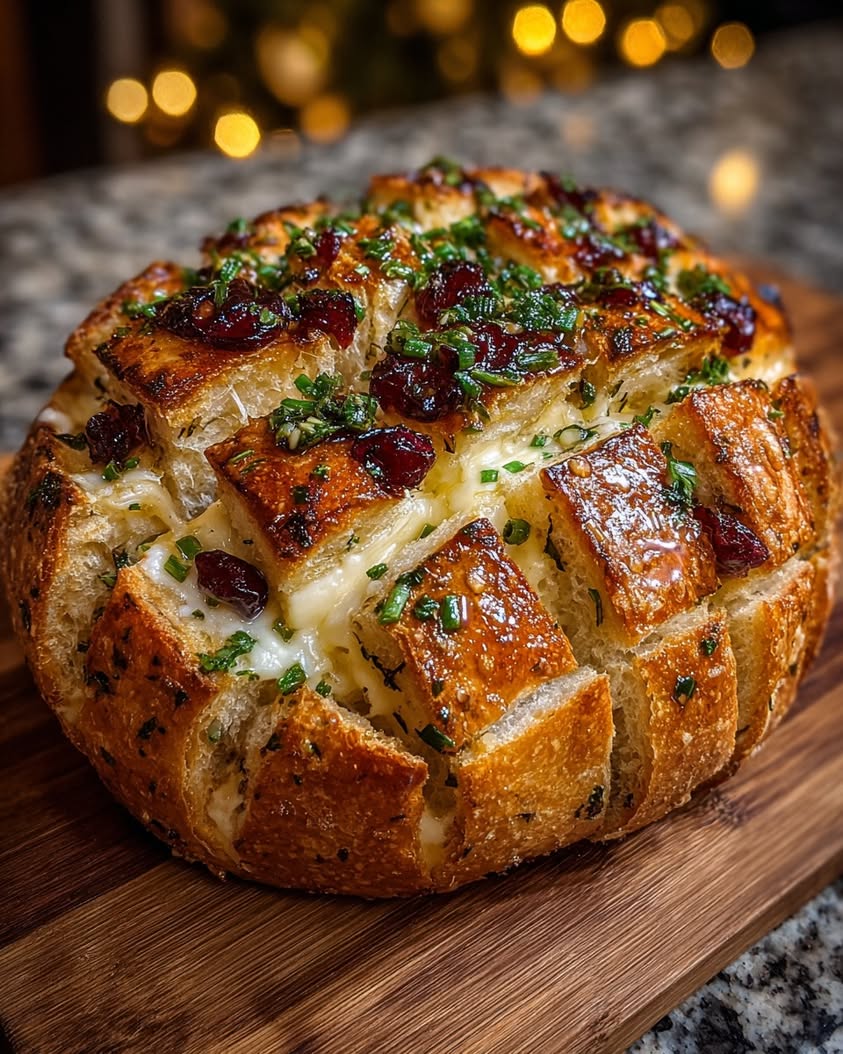
Garlic-Herb Sourdough Stuffed with Melted Brie and Cranberry Filling: The Ultimate Gourmet Pull-Apart Appetizer
Imagine pulling apart a warm, crusty loaf of sourdough to reveal a river of creamy melted brie and tangy cranberry filling. This garlic-herb sourdough stuffed with melted brie and cranberry filling is not just a recipe; it is a centerpiece, a conversation starter, and the star of any gathering. The combination of savory, sweet, and tangy flavors creates a symphony in your mouth that will have everyone reaching for more. This dish perfectly bridges the gap between rustic comfort food and elegant entertaining.
Furthermore, this recipe transforms simple, high-quality ingredients into something truly spectacular with minimal effort. The aroma of garlic and herbs baking with the sourdough will fill your kitchen with an irresistible scent that promises a delicious outcome. Each pull-apart piece offers a perfect bite of cheesy, fruity, and herby goodness. Consequently, this garlic-herb sourdough stuffed with melted brie and cranberry filling is guaranteed to become your new go-to appetizer for holidays, parties, or even a cozy night in.
Ultimately, the beauty of this dish lies in its impressive presentation and deceptively simple preparation. You can achieve a gourmet-level appetizer without any professional culinary skills. The contrast between the crispy sourdough crust and the gooey, molten center is a textural dream. This garlic-herb sourdough stuffed with melted brie and cranberry filling is the ultimate crowd-pleaser that looks like you spent hours in the kitchen, even though it comes together in under an hour.
Quick Recipe Highlights
- Flavor Profile: This dish features a masterful balance of savory, creamy, and tangy notes. The rich, buttery brie complements the sharp, sweet cranberry sauce, while the garlic and herb infusion adds a savory depth. Every bite is a complex and satisfying flavor experience that delights the palate.
- Texture: The texture journey begins with a crisp, chewy sourdough exterior. As you pull it apart, you discover an incredibly gooey, melted brie and cranberry filling that is both stringy and luxurious. The contrast between the firm bread and the soft, molten center is absolutely divine.
- Aroma: While baking, the scent of roasting garlic and fragrant herbs like rosemary and thyme will permeate your kitchen. This aromatic bouquet is followed by the warm, inviting smell of baking bread and melting cheese, creating an ambiance that is both comforting and anticipatory.
- Visual Appeal: The finished loaf presents a gorgeous, golden-brown crust scored with a crosshatch pattern. When you tear it open at the table, the dramatic reveal of the oozing white and red filling creates a stunning visual moment that is perfect for social media or impressing guests.
- Skill Level Needed: This recipe is remarkably accessible for cooks of all levels, from beginners to experts. The technique involves simple scoring, stuffing, and baking, requiring no advanced pastry or cooking skills. However, the final result appears sophisticated and chef-crafted.
- Special Equipment: You need only a sharp serrated knife for scoring the bread and a baking sheet lined with parchment paper. A pastry brush is helpful for applying the garlic-herb butter, but a spoon can work in a pinch. No fancy or specialized kitchen tools are required.
Recipe Overview
- Difficulty Level: We classify this recipe as easy because it involves straightforward techniques like mixing, stuffing, and baking. The primary skill is carefully scoring the sourdough loaf without cutting through the bottom. Otherwise, the process is largely assembly-based, making it hard to mess up. Even a first-time cook can achieve spectacular results with this guided approach.
- Category: This dish falls squarely into the appetizer and snack category, ideal for starting a meal or serving at a party. It can also function as a luxurious side dish for a soup or salad meal. Its shareable, pull-apart nature makes it perfect for communal dining and social events.
- Cuisine: While not tied to one specific tradition, this recipe draws inspiration from modern American gastropub fare and French bistro cooking. The use of sourdough, brie, and cranberry speaks to a fusion of rustic European baking with contemporary flavor pairings popular in North American cuisine.
- Cost: The cost is moderate, largely dependent on the price of your sourdough loaf and the quality of brie. A good sourdough boule and a wedge of brie are the main investments. The remaining ingredients like butter, garlic, herbs, and cranberry sauce are typically pantry staples or inexpensive to acquire.
- Season: This recipe shines brightest during the fall and winter holidays, particularly Thanksgiving and Christmas. The warm, comforting flavors and festive red and white colors are inherently seasonal. That said, its crowd-pleasing nature makes it suitable for any special occasion throughout the year.
- Occasion: It is perfect for holiday parties, game day gatherings, potlucks, or as an elegant starter for a dinner party. It also makes a fantastic indulgent snack for a cozy movie night. Its versatility allows it to fit seamlessly into both casual and formal settings.
Why You’ll Love This Garlic-Herb Sourdough Stuffed with Melted Brie and Cranberry Filling
First and foremost, the taste and texture appeal is undeniable. The initial crunch of the garlic-herb crust gives way to the soft, pillowy interior of the sourdough. Then, you hit the core of decadent, melted brie that is perfectly offset by the bright, tangy pop of the cranberry filling. This combination of savory, creamy, and sweet elements creates a complex flavor profile that is both sophisticated and deeply comforting. Every single bite delivers a perfect harmony of contrasting textures and tastes that is incredibly satisfying.
Another significant benefit is the sheer convenience and preparation ease. This entire gourmet appetizer comes together in about forty minutes with just fifteen minutes of active prep work. You do not need to make bread from scratch; you are artfully assembling and enhancing a quality store-bought loaf. This makes it an ideal solution for busy hosts who want to serve something impressive without being stuck in the kitchen all day. The process is straightforward, stress-free, and reliably produces a stunning result.
From a nutritional perspective, this dish offers more than just indulgence. Sourdough bread is known for being easier to digest than regular bread due to its fermentation process. Additionally, cranberries are packed with antioxidants and vitamin C. While brie is a rich cheese, it also provides a good source of protein and calcium. When enjoyed in moderation as part of a balanced diet, this appetizer can be a delightful and somewhat wholesome treat.
The social and entertaining value of this pull-apart bread cannot be overstated. It is inherently interactive, encouraging guests to gather around, tear off a piece, and engage with each other. This shared dining experience breaks the ice and creates a warm, communal atmosphere. Presenting a beautiful, oozing loaf in the center of the table makes a dramatic statement that shows your guests you care about creating a memorable experience. It is a guaranteed conversation starter.
Finally, considering cost-effectiveness and accessibility, this recipe is a winner. Compared to ordering a similar appetizer at a restaurant or buying pre-made gourmet snacks, making this at home is remarkably affordable. The ingredients are easy to find at any standard grocery store. You have full control over the quality of components, allowing you to splurge on an artisanal sourdough or save with a supermarket loaf. This accessibility ensures that anyone can recreate this taste of luxury in their own kitchen.
Historical Background and Cultural Significance
The concept of stuffed or filled bread has ancient roots across many cultures. From Eastern European kulich to Middle Eastern mana’eesh, communities have long enjoyed embedding flavorful ingredients inside dough. The modern “pull-apart” or “tear-and-share” bread trend, however, gained significant popularity in Western cuisine during the early 2000s. This garlic-herb sourdough stuffed with melted brie and cranberry filling is a direct descendant of this trend, combining the old-world comfort of baked bread with contemporary, upscale flavor combinations.
Culturally, this dish sits at the intersection of several culinary traditions. Sourdough bread itself boasts a rich history, with evidence of its production dating back to ancient Egypt. Brie cheese, known as “the Queen of Cheeses,” has been a celebrated French export since the 8th century. Cranberry sauce, while a staple of American Thanksgiving, was originally used by Native Americans for its preservative qualities and medicinal benefits. The fusion of these elements creates a recipe that is both timeless and modern.
The evolution of this specific recipe likely began in home kitchens and food blogs as cooks experimented with holiday flavor pairings. The classic combination of brie and cranberry is a well-established favorite, often seen in baked brie en croute. Innovative home cooks simply transferred this beloved duo into a different vessel—a hearty sourdough loaf—to create a more substantial, shareable dish. The addition of garlic and herbs elevated it from a simple snack to a gourmet appetizer, perfect for the modern era of social dining and food presentation.
Regional variations of this concept are endless. In the American South, you might find a similar pull-apart bread stuffed with pimento cheese and jalapeños. In Mediterranean regions, a version with feta, olives, and sun-dried tomatoes is common. The garlic-herb sourdough with brie and cranberry has a distinctly Northern feel, reminiscent of the flavors found in the Pacific Northwest and New England, where artisanal baking and local, tart cranberries are celebrated. This adaptability is a testament to the universal appeal of stuffed, shareable bread.
Ingredient Deep Dive
Sourdough Bread: Authentic sourdough is leavened naturally using a wild yeast starter, giving it a characteristic tangy flavor and chewy, open crumb. This fermentation process also pre-digests some of the grains, making the bread easier on the stomach and potentially increasing nutrient bioavailability. When selecting a loaf, choose a round boule that is firm to the touch with a crisp, flour-dusted crust. Avoid pre-sliced bread or loaves that feel soft or squishy. Store sourdough in a paper bag at room temperature for up to three days; for longer storage, freeze it whole. For a substitution, a sturdy country white or peasant bread can work, though it will lack the distinctive tang.
Brie Cheese: Brie is a soft, cow’s-milk cheese named after the French region from which it originated. It is characterized by an edible, fluffy white rind and a creamy, pale yellow interior that becomes irresistibly runny when heated. Nutritionally, brie provides a good source of protein, calcium, and vitamin B12. Always choose a ripe brie that feels soft when gently pressed; avoid any with an ammonia smell. Keep brie refrigerated in its original wrapping and bring it to room temperature before using for optimal flavor and meltability. If you cannot find brie, Camembert is the closest substitute, offering a similar texture and flavor profile.
Cranberry Sauce: For this recipe, a whole-berry cranberry sauce or a thick, homemade jam is ideal over the jellied, canned variety. The berries provide little bursts of tartness and a better textural contrast. Cranberries are renowned for their high antioxidant content, particularly proanthocyanidins, which are linked to urinary tract health. Look for sauces with a short ingredient list, ideally just cranberries, sugar, and water. You can store an opened jar of cranberry sauce in the refrigerator for up to two weeks. As an alternative, fig jam or a tart cherry preserves would create a similarly delightful sweet-and-savory balance.
Garlic and Fresh Herbs: Fresh garlic is non-negotiable for the potent, aromatic flavor it imparts to the butter baste. Garlic contains allicin, a compound with noted antimicrobial and potential cardiovascular benefits. Fresh herbs like rosemary and thyme offer volatile oils that are far more fragrant than their dried counterparts. Rosemary brings a piney, lemon-pinewood scent, while thyme offers a subtle, earthy mint flavor. Select herbs that look vibrant and green, not wilted. Store them in the refrigerator with their stems in a glass of water. In a pinch, you can use dried herbs, but use only one-third the amount as their flavor is more concentrated.
Common Mistakes to Avoid
- Cutting Through the Bottom of the Loaf: This is the most critical error. If you slice completely through the bottom crust, the filling will leak out during baking and burn on the pan. Always use a sharp serrated knife and cut deeply but carefully, stopping about half an inch from the bottom. Use your fingers to gently pry the cuts open to create pockets.
- Using Cold Brie: Cold brie is difficult to slice neatly and may not melt as evenly or quickly as room-temperature cheese. Take the brie out of the refrigerator at least 30 minutes before you begin prepping. This simple step makes slicing easier and ensures a perfectly gooey, melted center.
- Overstuffing the Bread: It is tempting to pack in as much cheese and cranberry as possible, but overstuffing can lead to a greasy, soggy loaf that fails to heat through properly. The filling should be nestled into the pockets, not overflowing. Remember, the cheese will expand as it melts.
- Skipping the Butter Brush: The garlic-herb butter is not just for flavor; it also helps the crust achieve a beautiful, golden-brown color and a delightful crispness. Do not skip brushing it generously over the entire surface, ensuring it drips down into some of the cracks for maximum flavor penetration.
- Underbaking the Loaf: An underbaked loaf will have a pale crust and cheese that is merely warm, not thrillingly molten. Bake until the top is deeply golden brown and you can see the cheese bubbling aggressively through some of the cracks. The visual cues are your best guide.
- Using the Wrong Bread: A soft, sandwich-style loaf will turn to mush under the weight of the filling and butter. You need a sturdy, crusty bread with a tight enough crumb to hold its structure. A classic sourdough boule is perfect because of its robust crust and chewy interior.
- Not Letting it Rest: Pulling the bread apart the second it comes out of the oven can cause severe burns from escaping steam and molten cheese. Let it rest on the pan for 5-10 minutes. This allows the filling to set slightly, making it easier and safer to handle while still being wonderfully gooey.
Essential Techniques
Scoring the Bread: Properly scoring the sourdough is the foundational technique for this recipe. Using a sharp serrated knife, cut a crosshatch pattern across the top of the loaf. The key is to apply confident, sawing motions without pressing down too hard, ensuring you stop about half an inch from the bottom. This creates deep pockets for the filling while keeping the base intact as a container. The common pitfall is timidity, resulting in shallow cuts that do not open up enough. Visual success is achieved when the loaf looks like a grid of deep, well-defined squares that you can easily pry apart with your fingers.
Infusing the Butter: Gently melting the butter with minced garlic and herbs is a simple but crucial step for building layers of flavor. The goal is to warm the butter just enough to melt it and allow the garlic and herbs to release their aromatic oils, without frying or browning the garlic. This is best done over low heat for just a few minutes. The common mistake is using high heat, which can cause the butter to separate and the garlic to burn, creating a bitter taste. Success is evident when the butter is fully liquid, fragrant, and speckled with herbs, with no signs of browned garlic bits.
Stuffing and Basting: The stuffing process requires a gentle touch. Use your fingers or a small spoon to widen the pockets you created, then tuck in pieces of brie and dollops of cranberry sauce. Avoid packing it too tightly. Subsequently, use a pastry brush to generously apply the garlic-herb butter over the entire surface, making sure to get some into the cracks. The common pitfall is rushing this step and not distributing the butter evenly. A well-basted loaf will glisten before going into the oven, promising a beautifully bronzed and flavorful crust.
Pro Tips for Perfect Garlic-Herb Sourdough Stuffed with Melted Brie and Cranberry Filling
- For an extra flavor boost, lightly toast the minced garlic in the butter until just fragrant before adding the herbs. This deepens the garlic’s flavor without risking bitterness.
- If your cranberry sauce is very runny, stir in a teaspoon of cornstarch to thicken it slightly. This prevents it from making the bread soggy and helps it hold its place within the pockets.
- Add a sprinkle of flaky sea salt over the loaf after applying the butter. This enhances all the other flavors and adds a delightful salty crunch to the finished crust.
- For a more herb-forward flavor, you can mix a tablespoon of finely chopped fresh herbs directly into the cranberry sauce before stuffing.
- Place the stuffed loaf on a parchment-lined baking sheet for easy cleanup. The cheese and cranberry will inevitably bubble over, and parchment paper prevents a sticky, burned-on mess.
- If the top of the bread is browning too quickly before the cheese is fully melted, tent it loosely with a piece of aluminum foil for the remainder of the baking time.
- For a professional touch, garnish the baked loaf with a few extra sprigs of fresh thyme or rosemary before serving to highlight the herbal notes.
Variations and Adaptations
Regional Variations: Across different regions, the fillings can be adapted to local tastes. For a Southern twist, use pimento cheese and crispy diced bacon. A Mediterranean version could feature crumbled feta, kalamata olives, and sun-dried tomatoes with oregano. In a nod to Italian cuisine, a filling of fresh mozzarella, marinara sauce, and pepperoni creates a stunning pizza bread. These variations demonstrate the incredible versatility of the stuffed sourdough concept.
Seasonal Adaptations: While perfect for fall and winter, this recipe can be modified for any season. In the spring, try a filling of herbed goat cheese and lemon zest with asparagus tips. For summer, a combination of fresh mozzarella, basil pesto, and cherry tomatoes is bright and refreshing. A autumn-inspired variation could include sharp cheddar, diced apples, and a sprinkle of walnuts. This ensures your pull-apart bread remains a year-round favorite.
Dietary Modifications: For a gluten-free version, use a sturdy, store-bought gluten-free sourdough boule. To make it dairy-free, substitute the brie with a high-quality vegan melting cheese and use vegan butter. For a lower-carb option, a large, hollowed-out zucchini or eggplant can be used as the vessel, though baking times will vary. These adaptations ensure everyone can enjoy the experience.
Flavor Variations: The flavor profile is easily customizable. For a sweeter take, use cream cheese, cinnamon, and a fruit jam like apricot or raspberry. A savory spin could involve blue cheese, caramelized onions, and walnuts. For a spicy kick, mix pepper jack cheese with diced jalapeños and a touch of chipotle powder. Experimenting with different cheeses and accompaniments can yield entirely new and exciting dishes.
Serving and Presentation Guide
Plating Techniques: Present the entire baked loaf on a wooden cutting board or a large, rustic ceramic platter. This enhances the homemade, artisanal feel of the dish. Place a sharp knife nearby for anyone who wants to cut a more precise slice, though the intention is to tear it apart with hands. Surround the loaf with small bowls of extra cranberry sauce or a drizzle of balsamic glaze for dipping, adding to the interactive experience.
Garnishing Ideas: A simple garnish can elevate the visual appeal immensely. Just before serving, scatter a handful of fresh whole cranberries and sprigs of rosemary around the base of the loaf. A light dusting of powdered sugar or a drizzle of honey over the top can highlight the sweet notes. For a festive touch during the holidays, add a few edible gold flakes or a sprinkle of pomegranate arils for a pop of color and elegance.
Traditional Accompaniments: This rich appetizer pairs beautifully with lighter, acidic foods that can cut through the fat. A simple arugula salad with a lemon vinaigrette is a classic choice. A bowl of tomato soup or a roasted butternut squash soup also makes for a perfect dipping companion. For a charcuterie-style spread, serve it alongside sliced prosciutto, cornichons, and assorted olives.
Wine and Beverage Pairing
Wine Pairings: The rich, creamy brie and tart cranberry create a complex flavor profile that pairs wonderfully with several wines. A crisp, acidic white wine like a Sauvignon Blanc or a French Sancerre cuts through the richness of the cheese beautifully. For red wine lovers, a light-bodied Pinot Noir with its red fruit notes complements the cranberry without overpowering the dish. A dry Rosé is another excellent option, offering the acidity of a white wine with the berry character of a red.
Non-Alcoholic Alternatives: For a non-alcoholic pairing, consider sparkling apple cider, which provides sweetness and effervescence to cleanse the palate. A tart cranberry spritzer made with club soda and a splash of lime juice mirrors the flavors in the bread. Iced herbal tea, such as peppermint or hibiscus, can also be a refreshing counterpoint to the savory, cheesy notes. These beverages ensure all guests have a delightful pairing option.
Storage and Shelf Life
Once baked, this pull-apart bread is best enjoyed immediately. However, if you have leftovers, allow them to cool completely to room temperature. Then, transfer the pieces to an airtight container and store them in the refrigerator for up to two days. The bread will lose its crispness, and the cheese will solidify, so reheating is essential. Signs of spoilage include an off smell, visible mold, or an excessively slimy texture on the bread surface.
To reheat, place individual portions on a baking sheet in a 350°F oven for 5-10 minutes, or until the cheese is melted and the bread is warm. You can also use an air fryer for a quicker result, reheating at 350°F for 3-4 minutes. Avoid using a microwave, as it will make the bread rubbery and the cheese greasy. For longer storage, you can freeze the unbaked, stuffed loaf. Wrap it tightly in plastic wrap and then foil, and freeze for up to one month. Bake from frozen, adding 10-15 minutes to the baking time.
Make Ahead Strategies
This recipe is excellent for prepping in advance to minimize day-of stress. You can fully assemble the stuffed loaf up to 24 hours before you plan to bake it. After stuffing and brushing with the garlic-herb butter, wrap the entire loaf tightly in plastic wrap and store it in the refrigerator. The cold temperature will firm up the butter and prevent the bread from getting soggy. When you are ready to bake, simply remove it from the refrigerator, let it sit on the counter for 20-30 minutes to take the chill off, and then bake as directed.
This make-ahead strategy has a minimal impact on quality. In fact, some argue that allowing the flavors to meld overnight enhances the final product. The bread may have a slightly denser texture than if baked immediately, but the difference is negligible, especially when weighed against the convenience. The key is to ensure the loaf is very well-wrapped to prevent it from drying out in the refrigerator. This approach is perfect for holiday hosting or party planning.
Scaling Instructions
This recipe scales beautifully, whether you are cooking for a smaller group or a large crowd. To halve the recipe, use a smaller sourdough loaf (about half a pound) and simply reduce all other ingredients by half. The baking time may be slightly less, so start checking for doneness around the 20-minute mark. For doubling or tripling, use multiple loaves and prepare them on separate baking sheets to ensure even air circulation and baking. You may need to rotate the sheets halfway through the cooking time.
When scaling up, the prep time will increase linearly, but the cook time will remain roughly the same per loaf. Ensure you have enough oven space to accommodate multiple baking sheets without overcrowding. If you are short on space, you can bake the loaves in succession, keeping the unbaked ones in the refrigerator until their turn in the oven. Storage considerations remain the same, though you will obviously have more leftovers, which reheat well for quick snacks.
Nutritional Deep Dive
A single serving of this garlic-herb sourdough stuffed with melted brie and cranberry filling provides a balance of macronutrients. It is a carbohydrate-rich dish due to the bread, providing energy. The brie cheese contributes a significant amount of fat and protein, which promotes satiety. The cranberries add a small amount of dietary fiber and natural sugars. From a micronutrient perspective, you benefit from B vitamins from the sourdough, calcium from the cheese, and vitamin C and antioxidants from the cranberries.
While this is an indulgent appetizer, you can enjoy it as part of a balanced diet. The key is portion control; one or two pull-apart pieces are sufficient as a starter. For those monitoring calorie intake, be mindful that the butter and cheese are calorie-dense. However, the dish also offers comfort and satisfaction, which can prevent overeating later. Pairing it with a large, leafy green salad can create a more rounded and nutritionally complete meal.
Dietary Adaptations
Gluten-Free: To make this recipe gluten-free, source a high-quality, sturdy gluten-free sourdough boule. Many artisanal bakeries and health food stores now offer excellent gluten-free options that mimic the texture of real sourdough. Be sure to check that all other ingredients, like the cranberry sauce, are certified gluten-free. The assembly and baking instructions remain identical.
Dairy-Free/Vegan: Creating a vegan version is entirely possible. Substitute the brie with a block of vegan cheese that melts well, such as those made from cashews or coconut oil. Use a high-quality vegan butter for the garlic-herb baste. Ensure your cranberry sauce is made without honey. The result will be a delicious plant-based pull-apart bread that everyone can enjoy.
Lower-Carb/Keto: For a lower-carb adaptation, forgo the bread entirely. You can create a similar concept by using large, hollowed-out portobello mushroom caps or bell pepper halves as your vessel. Fill them with the brie and cranberry mixture and bake until the “vessel” is tender and the cheese is melted. The flavor profile will be similar, but the carbohydrate count will be drastically reduced.
Troubleshooting Guide
Filling Leaking Out: If your filling is leaking excessively during baking, the most likely cause is that the bread was scored too deeply, cutting through the bottom crust. Unfortunately, you cannot fix this mid-bake. For future attempts, be more cautious with your knife. For now, simply scoop the escaped filling back onto the served portions. To prevent a mess, always use a parchment-lined baking sheet.
Bread is Soggy: A soggy loaf results from using a bread with too soft a crust, overstuffing with wet ingredients, or underbaking. To salvage it, you can return it to the oven for an additional 5-10 minutes to crisp up the exterior. If the bottom is soggy, you can carefully transfer it directly to the oven rack for the last few minutes of baking to dry it out from underneath.
Cheese Not Melting: If the cheese isn’t melting, the oven temperature may be too low, or the brie was too cold when it went in. Use an oven thermometer to verify your oven’s accuracy. If the bread is browned but the cheese isn’t molten, tent the top with foil to prevent burning and continue baking in 3-minute increments until the cheese bubbles.
Recipe Success Stories
Our community of home cooks has embraced this recipe with incredible creativity. One reader, Sarah from Colorado, reported that she made this for her book club and it was gone in minutes, with multiple requests for the recipe. She loved that she could assemble it ahead of time and just pop it in the oven when her guests arrived. Another home chef, Mark, shared that he added crispy pancetta to the filling for a salty, savory crunch, which his family now insists on for every holiday gathering.
Photography tips from our followers include shooting the loaf the moment it’s torn open, capturing the steam and the dramatic cheese pull. Natural, indirect light from a window works best to highlight the golden crust and the vibrant red of the cranberries. Many have found that a dark, rustic background, like a wooden table or a slate board, makes the colors of the dish truly pop, creating a stunning image worthy of any food blog or social media feed.
Frequently Asked Questions
Can I use a different type of cheese? Absolutely. While brie is classic for its creamy melt, other good melting cheeses like Camembert, Havarti, or Fontina work wonderfully. For a stronger flavor, you could use a combination of mozzarella for stretch and Gorgonzola for punch.
My cranberry sauce is very sweet. Will that work? Yes, a sweeter cranberry sauce will create a more pronounced sweet-and-savory contrast, which many people enjoy. If you prefer a less sweet result, you can look for a reduced-sugar cranberry sauce or stir a little lemon juice into your existing sauce to balance it.
Can I make this without garlic? You can omit the garlic if necessary. The herb butter will still be flavorful. To compensate, you might consider adding a teaspoon of Dijon mustard to the butter mixture or using a more robust herb like sage to carry the flavor profile.
How do I know when the bread is done baking? The bread is done when the top is a deep, golden brown, the crust is crisp to the touch, and you can see the cheese bubbling and melted through the cracks. An internal temperature check is not necessary; rely on these visual cues.
Can I use dried herbs instead of fresh? Yes, but use only one-third of the amount since dried herbs are more potent. For this recipe, that would be about one teaspoon each of dried rosemary and thyme. Crush the dried herbs between your fingers before adding to the butter to release their oils.
Is it possible to reheat the entire loaf? Reheating the whole loaf is possible but tricky, as the outside can over-brown before the center is warm. It’s best to reheat in smaller sections. If you must reheat the whole thing, wrap it loosely in foil and warm in a 325°F oven for 15-20 minutes.
What can I serve with this for a full meal? To make it a meal, serve it alongside a robust salad like a Caesar or a kale salad with a lemony vinaigrette. A creamy soup, such as roasted tomato or potato leek, also makes it a very satisfying and complete lunch or light dinner.
Can I add meat to this recipe? Certainly. Diced, cooked bacon, pancetta, or prosciutto are fantastic additions. Tuck the small pieces into the pockets along with the cheese and cranberry. For a chicken version, shredded rotisserie chicken mixed with the herbs would be delicious.
Additional Resources
If you loved this garlic-herb sourdough stuffed with melted brie and cranberry filling, you might enjoy exploring other recipes on our site. Our ultimate guide to sourdough bread baking can help you learn to make your own loaf from scratch. For more festive appetizer ideas, check out our recipes for baked brie in puff pastry with apricot jam or our savory cranberry and goat cheese tartlets. We also have a comprehensive guide to pairing cheeses and jams for any occasion.
For technique enthusiasts, we recommend our video tutorial on how to properly score bread for even baking and dramatic oven spring. If you are in the market for kitchen tools, a good quality serrated bread knife and a durable pastry brush are invaluable for this and many other recipes. Finally, explore our seasonal sections for variations on this theme throughout the year, ensuring you always have the perfect shareable dish for any gathering.
PrintGarlic-Herb Sourdough Stuffed with Melted Brie and Cranberry Filling
Description
A warm, savory-sweet appetizer featuring a hollowed sourdough loaf filled with garlic-herb butter, creamy brie, and tart cranberry sauce, baked until golden and gooey.
Ingredients
For the Crust:
- 1 large round sourdough loaf
- 8 oz brie cheese, rind removed and cubed
- 1/2 cup cranberry sauce
- 1/2 cup unsalted butter, softened
- 4 cloves garlic, minced
- 2 tbsp fresh parsley, chopped
- 1 tsp fresh thyme leaves
- 1/2 tsp salt
- 1/4 tsp black pepper
Instructions
1. Prepare the Crust:
- Preheat oven to 375°F (190°C). Slice off the top of the sourdough loaf and hollow out the center, leaving a 1-inch thick shell. Reserve removed bread for another use.
- In a bowl, mix softened butter, minced garlic, parsley, thyme, salt, and pepper until well combined.
- Spread the garlic-herb butter mixture evenly inside the hollowed loaf and over the top crust.
- Layer half the cubed brie in the bottom of the loaf, followed by the cranberry sauce, then the remaining brie.
- Place the top back on the loaf and wrap the entire loaf in aluminum foil. Bake for 25 minutes.
- Remove foil and bake for an additional 5-10 minutes, until the top is golden and the cheese is bubbly. Let cool for 5 minutes before slicing and serving.
Notes
You can customize the seasonings to taste.

I’m Shaykee—born in Morocco, seasoned across continents. From airplane galleys to home kitchens, I share the flavors and stories that shaped my journey.