
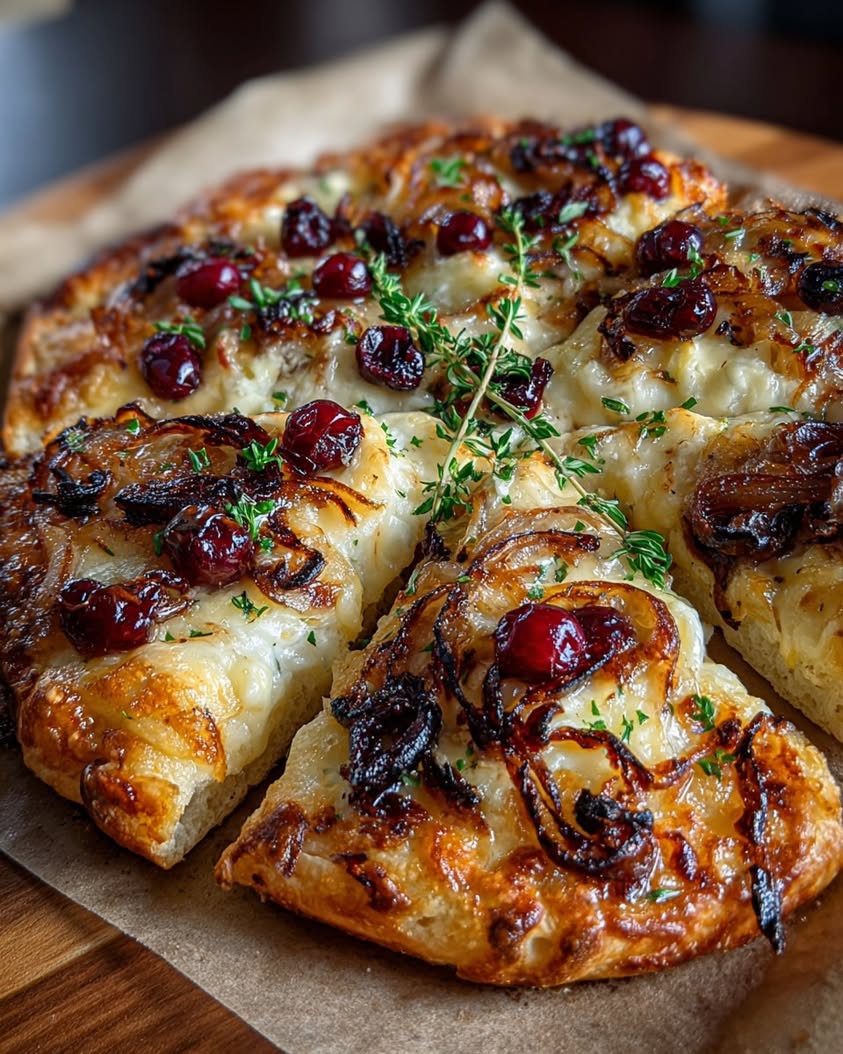
Cranberry & Brie Pizza with Caramelized Onions: A Gourmet Flatbread Masterpiece
This stunning Cranberry & Brie Pizza with Caramelized Onions redefines what a gourmet flatbread can be. Imagine a crispy, golden crust topped with sweet, jammy caramelized onions, creamy melted brie, and tart cranberries. This recipe creates a perfect balance of savory and sweet flavors that will impress even the most discerning palates. Consequently, it works beautifully as an elegant appetizer for holiday gatherings or a simple yet sophisticated weeknight dinner.
The magic of this Cranberry & Brie Pizza lies in its sophisticated flavor profile that belies its simple preparation. Each component brings something special to the table, from the rich, buttery brie to the vibrant, tangy cranberries. Furthermore, the caramelized onions add a deep, sweet complexity that ties everything together. This gourmet flatbread feels restaurant-quality but requires minimal effort, making it accessible for home cooks of all skill levels.
Visual appeal is another standout feature of this dish. The vibrant red cranberries against the creamy white brie and golden-brown crust create a beautiful color contrast that’s perfect for special occasions. Additionally, the aromatic herbs and glossy caramelized onions make this pizza as pleasing to the eye as it is to the palate. Whether you’re hosting a dinner party or simply treating yourself, this recipe delivers both style and substance in every bite.
Quick Recipe Highlights
- Flavor Profile: This Cranberry & Brie Pizza masterfully balances sweet and savory notes. The tart cranberries cut through the richness of the brie, while the caramelized onions provide a deep, sweet foundation. Finally, fresh herbs add an aromatic finish that elevates the entire experience.
- Texture: You’ll experience multiple satisfying textures in every bite. The crispy pizza crust provides a sturdy base for the soft, melted brie and juicy cranberries. Meanwhile, the caramelized onions contribute a silky, jam-like consistency that spreads beautifully across the surface.
- Aroma: As this gourmet flatbread bakes, your kitchen will fill with incredible aromas. The scent of melting cheese blends with the sweet fragrance of caramelizing onions and the earthy notes of fresh thyme. Additionally, the cranberries release a subtle tartness that cuts through the richness.
- Visual Appeal: The presentation is truly stunning with vibrant color contrasts. Ruby red cranberries pop against the creamy white brie and golden-brown crust. Furthermore, the glossy caramelized onions and fresh green herbs create a beautiful, restaurant-quality appearance that’s perfect for photography.
- Skill Level Needed: This recipe is surprisingly accessible for home cooks. While the flavors are sophisticated, the techniques are straightforward and forgiving. Therefore, even beginners can achieve impressive results with basic kitchen equipment and careful attention to the caramelization process.
- Special Equipment: You need only standard kitchen tools for this recipe. A baking sheet or pizza stone works perfectly, along with a skillet for caramelizing onions. Moreover, a rolling pin helps achieve the desired crust thickness, though you can also use store-bought flatbread to simplify the process.
Recipe Overview
- Difficulty Level: This Cranberry & Brie Pizza ranks as easy because it uses simple techniques with minimal specialized equipment. The most challenging aspect involves properly caramelizing the onions, which requires patience rather than advanced skill. Consequently, even novice cooks can create this impressive dish with confidence, following clear, step-by-step instructions.
- Category: This versatile recipe fits multiple meal categories beautifully. It functions perfectly as an elegant appetizer for parties and holiday gatherings. Alternatively, served with a simple green salad, it becomes a satisfying main course for lunch or dinner, appealing to various dining occasions.
- Cuisine: While pizza originates from Italy, this gourmet flatbread represents modern fusion cuisine. It combines French cheese elements with American cranberry traditions and Italian baking techniques. Therefore, it transcends specific culinary boundaries, creating a contemporary dish that celebrates global flavor combinations.
- Cost: This recipe offers excellent value considering its gourmet appearance and flavor profile. Using quality pre-made pizza dough keeps costs reasonable, while brie and fresh cranberries provide luxury without breaking the bank. Overall, you can create this impressive dish for significantly less than restaurant prices.
- Season: Although cranberries make this recipe particularly suitable for fall and winter holidays, it works year-round with simple adaptations. During summer, you might substitute fresh berries, while spring could inspire herb variations. Nevertheless, its cozy, comforting nature makes it especially appealing during cooler months.
- Occasion: This gourmet flatbread shines at numerous special events and everyday meals. It’s perfect for holiday entertaining, book club gatherings, date nights, and festive family dinners. Additionally, it makes ordinary weeknights feel special without requiring extensive preparation or cleanup time.
Why You’ll Love This Recipe
The exceptional flavor balance will immediately win you over. This Cranberry & Brie Pizza delivers a sophisticated taste experience that feels both comforting and elegant. Each component complements the others perfectly, creating a harmonious blend of sweet, savory, creamy, and tart notes. Furthermore, the contrasting textures from the crispy crust to the melted cheese provide satisfying mouthfeel that keeps you coming back for another slice.
Preparation convenience represents another major advantage of this recipe. Despite its gourmet appearance, this pizza comes together quickly with minimal fuss. Using store-bought pizza dough streamlines the process significantly, while the topping preparation involves simple techniques. Therefore, you can create an impressive dish without spending hours in the kitchen, making it perfect for busy schedules and last-minute entertaining.
Nutritional considerations add to this recipe’s appeal. Compared to traditional pizza, this version offers more complex flavors with potentially less processed ingredients. Cranberries provide antioxidants, while brie offers protein and calcium. Additionally, by controlling the ingredients yourself, you can adjust elements like salt content and crust thickness to meet your dietary preferences.
Entertaining value makes this Cranberry & Brie Pizza a standout choice. The beautiful presentation always impresses guests, while the familiar pizza format feels approachable and comforting. Moreover, the recipe scales easily for larger gatherings, and you can prepare components in advance. Consequently, you can spend more time with your guests rather than being stuck in the kitchen during parties.
Cost-effectiveness completes the compelling reasons to love this recipe. Restaurant-quality flatbread often comes with premium pricing, but making it yourself saves significantly. Quality ingredients remain affordable, especially when compared to dining out. Thus, you can enjoy gourmet flavors regularly without straining your food budget, making special meals accessible anytime the craving strikes.
Historical Background and Cultural Significance
The evolution of pizza provides fascinating context for this gourmet flatbread. Traditional pizza originated in Naples, Italy, as a simple food for working people. However, as pizza traveled globally, it transformed into countless variations that reflected local ingredients and culinary traditions. This Cranberry & Brie Pizza represents the modern era of pizza innovation, where chefs and home cooks experiment with unexpected flavor combinations that transcend cultural boundaries.
Cultural significance emerges from the ingredient stories within this recipe. Brie cheese carries French aristocratic heritage, historically associated with royalty and luxury dining. Meanwhile, cranberries have deep roots in American history, particularly Native American cuisine and colonial Thanksgiving traditions. The marriage of these elements on an Italian culinary platform demonstrates how global cuisine continues to evolve through cultural exchange and creative experimentation.
The recipe’s development reflects broader food trends toward gourmet flatbreads and artisanal combinations. Over recent decades, pizza has elevated from fast food to culinary canvas, with chefs using high-quality ingredients and innovative pairings. This Cranberry & Brie variation exemplifies how sweet and savory combinations have gained popularity, moving beyond traditional pizza boundaries to create new dining experiences that challenge conventional categories.
Regional variations of similar flavor profiles exist throughout culinary history. French cuisine has long paired fruit with cheese, from pear and brie to fig and goat cheese combinations. Meanwhile, American chefs have incorporated local cranberries into both sweet and savory applications. This recipe synthesizes these traditions into a convenient, approachable format that makes sophisticated flavor combinations accessible to home cooks everywhere.
Ingredient Deep Dive
Brie cheese serves as the creamy foundation of this gourmet flatbread. Originating from the Brie region of France, this soft cheese has been produced since the Middle Ages and was historically known as “The King of Cheeses.” Nutritionally, brie provides substantial protein, calcium, and phosphorus, though it’s also rich in fat. When selecting brie, look for a wheel that feels springy to the touch with a white, edible rind free from brown spots. Store brie in the refrigerator’s cheese drawer and bring to room temperature before using to maximize flavor and creaminess.
Fresh cranberries bring vibrant color and tart contrast to this pizza recipe. Native to North America, cranberries have been used by Indigenous peoples for centuries, both as food and medicine. These ruby-red berries are packed with vitamin C, fiber, and unique plant compounds called proanthocyanidins that support urinary tract health. Choose firm, bright red berries that bounce when dropped—a sign of freshness. Store fresh cranberries in the refrigerator for up to a month or freeze for longer storage. If fresh aren’t available, dried cranberries work with adjusted quantities.
Caramelized onions provide the sweet, savory foundation that balances this flavor profile. Onions have been cultivated for over 5,000 years and appear in virtually every world cuisine. The caramelization process transforms their sharp flavor into a sweet, complex depth through Maillard reactions. Nutritionally, onions offer quercetin, a powerful antioxidant, along with vitamin C and B vitamins. Select yellow onions for ideal caramelization, as they contain the right sugar content. Store onions in a cool, dark place with good air circulation to prevent sprouting.
Pizza dough forms the structural base for all these magnificent toppings. While you can use store-bought dough for convenience, understanding its composition enhances your results. Traditional pizza dough contains just four ingredients: flour, water, yeast, and salt. The gluten development creates the chewy texture, while fermentation contributes flavor complexity. For best results, bring refrigerated dough to room temperature before stretching, which makes it more pliable and easier to work with. If making from scratch, bread flour produces a chewier crust, while all-purpose creates a lighter texture.
Common Mistakes to Avoid
- Rushing the onion caramelization process represents the most common error. Proper caramelization requires low, slow cooking to develop the onions’ natural sugars without burning. If you cook them too quickly over high heat, they’ll brown without becoming sweet and tender, resulting in a harsh flavor that overwhelms the other ingredients.
- Overloading the pizza with toppings creates a soggy crust that fails to crisp properly. While it’s tempting to add generous amounts of each ingredient, too much moisture prevents the crust from achieving that desirable crispy texture. Instead, use moderate, even layers that allow heat to circulate and cook the crust thoroughly.
- Using cold cheese straight from the refrigerator leads to uneven melting. Brie needs to approach room temperature to spread and melt properly across the pizza surface. Cold brie won’t achieve that beautifully melted consistency and may cause the crust to overcook while waiting for the cheese to melt.
- Skipping the pre-bake for the crust often results in undercooked dough. Particularly with thicker crusts or moist toppings, par-baking ensures the base cooks through without burning the toppings. This step becomes especially important when using fresh ingredients that release moisture during baking.
- Neglecting to pat cranberries dry introduces excess moisture that can make the pizza soggy. If using frozen cranberries, thaw and drain them thoroughly before adding to the pizza. Even fresh berries benefit from a quick pat with paper towels to remove surface moisture.
- Cutting the pizza immediately after removing it from the oven causes the cheese to slide off. Allowing the pizza to rest for 3-5 minutes lets the cheese set slightly, making cleaner slices possible. This brief waiting period also allows the flavors to meld together more completely.
- Using the wrong baking surface affects crust texture significantly. A pizza stone or baking steel produces the crispiest crust, while a standard baking sheet works adequately. Avoid dark-colored pans that may cause the bottom to burn before the toppings cook thoroughly.
- Overhandling the dough results in a tough crust. When stretching pizza dough, use gentle pressure and avoid excessive kneading or rolling, which can develop too much gluten. The goal is to preserve air bubbles in the dough that create a light, airy crust with crisp exterior.
Essential Techniques
Caramelizing onions properly forms the flavor foundation of this gourmet flatbread. This technique transforms sharp, pungent onions into sweet, deeply flavorful strands through slow cooking. Begin by slicing onions uniformly to ensure even cooking, then cook them in butter or oil over medium-low heat. The process requires patience—typically 20-30 minutes—as the onions gradually soften, release moisture, and eventually develop a golden-brown color and rich sweetness. Stir occasionally to prevent burning, and if the onions start sticking, add a tablespoon of water to deglaze the pan. Properly caramelized onions should be soft, sweet, and golden, without any bitter or burnt notes.
Stretching pizza dough correctly ensures the ideal crust texture. Start with room-temperature dough, which is more pliable and less likely to spring back. Instead of using a rolling pin, which can compress the dough, gently stretch it with your hands. Use your knuckles to work from the center outward, rotating the dough to maintain an even thickness. The goal is to preserve air bubbles in the dough that create a light, airy crust. If the dough resists stretching, let it rest for 5-10 minutes to relax the gluten, then continue. The edges should be slightly thicker than the center to form a nice crust.
Cheese preparation significantly impacts the final presentation and texture. For brie, removing the rind is optional—it’s edible but some prefer its removal for better melting. If keeping the rind, score it lightly to help the cheese melt evenly. Cut the brie into thin slices or small chunks rather than large pieces, which ensures distribution throughout the pizza. Allow the cheese to come to room temperature before baking, as cold cheese doesn’t melt as smoothly or evenly. Arranging the brie in a single layer with slight gaps allows for beautiful pooling and browning during baking.
Pro Tips for Perfect Cranberry & Brie Pizza
Partially bake your crust before adding toppings to prevent sogginess. This technique, called par-baking, ensures the bottom crust cooks thoroughly despite the moist toppings. Simply bake the stretched dough for 5-7 minutes at the recipe temperature until it just begins to set but hasn’t browned. Then remove it, add your toppings, and return to the oven to finish baking.
Balance your sweet and savory elements thoughtfully across the pizza. Rather than mixing all ingredients together, create intentional distribution—a layer of caramelized onions first, followed by brie, then cranberries. This layering approach allows each component to cook properly while creating pockets of different flavors that surprise and delight with each bite.
Incorporate fresh herbs at different stages for maximum flavor impact. Add sturdy herbs like thyme or rosemary before baking to infuse their essence into the other ingredients. Then finish with delicate herbs like basil or parsley after baking for fresh aroma and visual appeal. This dual-herb approach creates complexity that elevates the entire dish.
Experiment with different cranberry forms based on season and availability. While fresh cranberries provide vibrant tartness, dried cranberries offer concentrated sweetness, and cranberry sauce creates a jammy layer. If using dried cranberries, rehydrate them briefly in warm water or orange juice to prevent them from becoming tough during baking.
Consider adding a flavor-enhancing base layer beneath the other toppings. A thin schmear of garlic-infused olive oil, fig jam, or even a light layer of cream cheese can add depth and prevent the crust from becoming soggy. These base layers create a barrier that protects the crust while contributing their own subtle flavors.
Utilize the broiler briefly at the end of cooking for perfect browning. After the pizza is nearly cooked through, switch to broil for 1-2 minutes to bubble and brown the cheese and lightly char the cranberries. Watch carefully during this stage, as the transition from perfectly browned to burnt happens quickly under the broiler’s intense heat.
Variations and Adaptations
Regional variations allow this recipe to reflect different culinary traditions. For a French-inspired version, add sautéed mushrooms and herbes de Provence alongside the brie. An American twist might include adding crispy bacon or pancetta and swapping the cranberries for apple slices. Mediterranean adaptation could feature kalamata olives, sun-dried tomatoes, and oregano instead of the original toppings. These regional interpretations demonstrate how the basic formula adapts to different flavor profiles while maintaining the gourmet flatbread concept.
Seasonal adaptations keep this recipe exciting throughout the year. During spring, substitute asparagus tips and fresh peas with lemon zest. Summer variations might feature fresh peaches or nectarines with prosciutto and arugula. Autumn inspires butternut squash and sage combinations, while winter welcomes roasted garlic and kale additions. These seasonal twists ensure the Cranberry & Brie Pizza concept remains relevant regardless of what’s fresh and available.
Dietary modifications make this gourmet flatbread accessible to various eating preferences. For gluten-free needs, use your favorite gluten-free pizza dough or cauliflower crust. Vegan adaptation replaces brie with vegan camembert or cashew cheese and uses maple syrup instead of honey. Lower-carb versions might employ a fathead dough base or portobello mushroom caps as the foundation. These modifications prove the recipe’s versatility across different dietary frameworks.
Serving and Presentation Guide
Plating techniques significantly enhance this pizza’s visual impact. Instead of slicing into traditional wedges, consider cutting the baked pizza into small squares or rectangles for easy handling as an appetizer. For main course presentation, larger wedges arranged slightly overlapping on the plate create an elegant restaurant-style appearance. Use a pizza wheel for clean cuts rather than a knife, which can drag the toppings. Transfer slices with a wide spatula that supports the entire piece to prevent toppings from sliding off.
Garnishing adds the final touches that elevate this dish from homemade to professional. Fresh herb sprigs like thyme or rosemary provide aroma and color contrast. A drizzle of reduced balsamic glaze adds both visual appeal and flavor complexity. For textural contrast, sprinkle with toasted nuts like walnuts or pecans after baking. Microgreens or arugula tossed lightly in lemon juice offer fresh, peppery notes that cut through the richness. These garnishes should complement rather than overwhelm the existing flavors.
Traditional accompaniments balance the rich, savory-sweet profile of this pizza. A simple green salad with vinaigrette dressing provides refreshing contrast to the pizza’s richness. For soup pairings, butternut squash or tomato basil soup work beautifully. If serving as an appetizer, consider complementing with other cheese-focused items like a cheese board or stuffed mushrooms. These pairings create a more complete meal experience while allowing the pizza to remain the star.
Wine and Beverage Pairing
Wine pairings should complement both the richness of the brie and the tartness of the cranberries. A dry Riesling or Gewürztraminer provides enough acidity to cut through the cheese while matching the fruit elements. For red wine lovers, Pinot Noir offers light tannins and berry notes that won’t overwhelm the delicate flavors. Rosé presents another excellent option with its versatility between red and white characteristics. Sparkling wines like Prosecco or Champagne cleanse the palate between rich bites beautifully.
Non-alcoholic alternatives can be equally sophisticated and complementary. Sparkling apple cider mirrors the effervescence of champagne with apple notes that pair well with the ingredients. Cranberry juice spritzers made with club soda and a squeeze of lime highlight the pizza’s berry component. Herbal teas like peppermint or chamomile served iced provide refreshing contrast. Even simple lemonade or limeade offers bright acidity that cuts through the richness effectively.
Craft beer selections should balance rather than compete with the complex flavors. Belgian-style witbiers or saisons provide citrusy notes that complement without overwhelming. Fruity IPAs with tropical notes can work if not too bitter, while brown ales offer maltiness that matches the caramelized onions. For something different, fruit lambics provide tartness that echoes the cranberries. The key is choosing beers with moderate alcohol and bitterness that won’t dominate the palate.
Storage and Shelf Life
Storage methods preserve quality and ensure food safety for leftovers. Cool the pizza completely before storing to prevent condensation that creates sogginess. Place slices in a single layer in an airtight container, separating layers with parchment paper if stacking is necessary. Refrigerate for up to 3 days, though the crust will gradually soften over time. For longer storage, freezing works surprisingly well for up to 2 months when properly wrapped.
Reheating instructions focus on restoring texture rather than simply warming. The oven method produces the best results—place slices on a baking sheet at 375°F for 5-8 minutes until heated through and crisp. The air fryer works excellently for single servings at 350°F for 3-4 minutes. Avoid microwaving, which makes the crust rubbery and the cheese greasy. If you must microwave, place a cup of water in the microwave to help prevent toughness.
Freezing guidelines maintain quality when planning ahead. Freeze individual slices on a parchment-lined baking sheet until solid, then transfer to freezer bags. This prevents them from sticking together and allows you to remove only what you need. When ready to eat, bake frozen slices directly at 400°F for 10-12 minutes until hot and crisp. Adding fresh herbs after reheating restores brightness that may fade during freezing.
Make Ahead Strategies
Prep timeline organization streamlines the cooking process for stress-free entertaining. Caramelized onions can be made up to 5 days in advance and stored in the refrigerator—their flavor often improves with time. The pizza dough can be prepared 1-2 days ahead and stored covered in the refrigerator, where slow fermentation develops more complex flavor. Cranberries can be washed and dried a day in advance, while brie should be sliced just before assembly to prevent drying.
Storage between steps maintains ingredient quality when preparing components in advance. Caramelized onions should be cooled completely before transferring to an airtight container with a thin layer of oil on top to prevent drying. Refrigerated pizza dough should be brought to room temperature for at least 30 minutes before stretching to restore pliability. Pre-measured herbs can be stored in damp paper towels inside sealed bags to maintain freshness.
Assembly tips for make-ahead preparation balance convenience with quality. For same-day serving, you can fully assemble the pizza 1-2 hours ahead and refrigerate until baking time. For longer advance preparation, partially bake the crust with just the caramelized onions, then cool and freeze. When ready to serve, add the remaining toppings to the frozen par-baked crust and bake until golden. This approach preserves texture while minimizing last-minute work.
Scaling Instructions
Halving the recipe works beautifully for smaller households or individual servings. Use half a pound of pizza dough stretched to a personal-size crust. Reduce all topping quantities proportionally, though you might use slightly more than half the brie for adequate coverage. Baking time may decrease by 2-3 minutes due to the smaller mass, so watch for visual doneness cues. This scaled-down version is perfect for testing the recipe or enjoying a special meal for one or two.
Doubling or tripling accommodates larger gatherings while maintaining quality. Use multiple baking sheets or rotate them between oven racks halfway through baking. Consider making one large rectangular pizza on a half-sheet pan instead of multiple rounds for easier serving. When multiplying the caramelized onions, cook them in batches rather than overcrowding the pan, which steams rather than caramelizes. For very large quantities, keep the assembled pizzas refrigerated until baking time to prevent the crust from becoming soggy.
Equipment adjustments ensure success when scaling the recipe. For multiple pizzas, invest in a pizza stone or steel that retains heat between batches. If using regular baking sheets, allow them to reheat between uses. For large-scale preparation, a commercial-style pizza peel makes transferring easier. When doubling the recipe, you might need to work in batches unless you have a convection oven that circulates heat more evenly around multiple pans.
Nutritional Deep Dive
Macro breakdown reveals a balanced profile with considerations for mindful eating. The pizza provides substantial carbohydrates from the crust, moderate protein from the cheese, and varying fat content depending on brie quantity. Using whole wheat pizza dough increases fiber content, while part-skim mozzarella mixed with brie reduces saturated fat without sacrificing creaminess. The cranberries contribute natural sugars and fiber, while caramelized onions add minimal calories despite their sweet flavor transformation.
Micronutrient analysis highlights the vitamin and mineral contributions of each component. Cranberries offer significant vitamin C and manganese, while onions provide quercetin and B vitamins. Brie contributes calcium and phosphorus for bone health, along with vitamin B12. Using herb-infused olive oil as a base adds vitamin E and healthy fats. These micronutrients work together to support various bodily functions while delivering exceptional flavor.
Health benefits extend beyond basic nutrition when considering the ingredient quality. The antioxidant compounds in cranberries and onions provide anti-inflammatory effects, while the fermentation in pizza dough may offer probiotic benefits. Using homemade dough allows control over sodium content, and the combination of protein, fat, and fiber promotes satiety. While not a low-calorie dish, its nutrient density and satisfaction factor support balanced eating patterns.
Dietary Adaptations
Gluten-free modification requires simple ingredient substitutions without compromising flavor. Use a high-quality gluten-free pizza dough mix or prepared crust, paying attention to baking instructions that often differ from traditional dough. For those with celiac disease, ensure all other ingredients are certified gluten-free, as cross-contamination can occur in facilities that process wheat products. The toppings naturally contain no gluten, making this an easy adaptation that delivers similar results to the original version.
Dairy-free adaptation creatively replaces brie while maintaining the creamy element. Vegan camembert-style cheeses made from cashews or almonds provide similar texture and mild flavor. For additional creaminess, a layer of vegan cream cheese beneath the other toppings adds richness. Nutritional yeast sprinkled over the finished pizza contributes a cheesy flavor note, while vegan parmesan alternatives offer salty complexity. These substitutions create a satisfying plant-based version that remains true to the original concept.
Low-carb and keto approaches transform this recipe into a diet-friendly option. Replace the traditional crust with a fathead dough made from almond flour, mozzarella, and cream cheese, or use pre-made cauliflower crust. Reduce the quantity of caramelized onions or use low-carb alternatives like caramelized radishes or cabbage. Increase the protein content by adding grilled chicken or shrimp, and balance the cranberries with extra herbs to maintain flavor complexity without excess carbohydrates.
Troubleshooting Guide
Texture issues commonly involve soggy crust or rubbery cheese. For soggy bottom crust, ensure your oven reaches full temperature before baking and consider using a pizza stone preheated for at least 30 minutes. If cheese becomes rubbery, it may be overcooked—reduce baking time or temperature slightly. Another solution involves placing the pizza on a lower oven rack to crisp the crust while protecting the toppings from excessive heat.
Flavor balance problems typically stem from ingredient proportions or preparation techniques. If the pizza tastes too sweet, reduce the caramelized onions or balance with salty additions like olives or bacon. For excessive tartness from cranberries, toss them with a teaspoon of honey before adding to the pizza. If flavors seem flat, a sprinkle of flaky sea salt after baking or a drizzle of quality olive oil can brighten the entire profile.
Temperature problems often relate to oven calibration or rack positioning. Use an oven thermometer to verify accurate temperature settings, as home ovens frequently run hot or cold. For even cooking, position the pizza in the center of the oven unless the recipe specifies otherwise. If the top browns before the crust cooks through, tent with foil and continue baking, or move to a lower rack for the remainder of cooking time.
Recipe Success Stories
Community feedback highlights the recipe’s versatility and crowd-pleasing nature. Many home cooks report receiving compliments from guests who assume the pizza came from a professional kitchen. Several readers have adapted the recipe for various dietary needs with excellent results, noting that the flavor profile remains compelling even with substitutions. The beautiful presentation consistently receives praise, with multiple cooks mentioning how photogenic the finished pizza appears on their social media feeds.
Variation successes demonstrate the recipe’s adaptability to different tastes and occasions. One cook created a Thanksgiving version with leftover turkey and cranberry sauce that became a new family tradition. Another used the basic formula for individual flatbreads at a wedding shower, customizing each with different herb combinations. A third reader developed a breakfast variation with the addition of a fried egg, proving the concept’s flexibility across meal times.
Reader suggestions have enriched the original recipe with creative enhancements. Several cooks recommend adding a thin layer of garlic-herb cream cheese beneath the other toppings for extra richness. Others suggest incorporating toasted walnuts or pecans for crunch. One creative reader developed a method for grilling the pizza during summer months, which adds smoky notes that complement the sweet and savory elements beautifully.
Frequently Asked Questions
Can I use dried cranberries instead of fresh? Yes, dried cranberries work well but require preparation adjustment. Soak them in warm water or orange juice for 10-15 minutes to plump before using, which prevents them from becoming tough during baking. Reduce the quantity slightly as dried cranberries have more concentrated sweetness, and pat them dry before scattering over the pizza to avoid excess moisture.
Should I remove the rind from the brie? This is personal preference as the rind is edible. Leaving it on provides structural integrity and additional flavor complexity, though some find its texture less appealing when melted. If you prefer removing it, the cheese will melt more uniformly across the pizza surface. For easiest rind removal, chill the brie briefly then use a sharp knife.
Can I make this pizza ahead of time? Yes, with proper planning you can prepare components in advance. Caramelized onions keep for 5 days refrigerated, and pizza dough can be made 1-2 days ahead. For best results, assemble the pizza just before baking, though you can fully prepare it 1-2 hours in advance and refrigerate until baking time.
What’s the best way to reheat leftovers? The oven or air fryer produces superior results compared to the microwave. Reheat at 375°F for 5-8 minutes until warmed through and crisp. If using an air fryer, 350°F for 3-4 minutes works perfectly. Avoid microwaving which makes the crust tough and the cheese greasy.
Can I freeze this pizza? Yes, both unbaked and baked versions freeze well. For unbaked, assemble completely then freeze solid on a baking sheet before wrapping tightly. Bake directly from frozen, adding 5-7 minutes to the cooking time. Baked pizza slices can be frozen and reheated in the oven for nearly fresh quality.
What other cheeses work well in this recipe? Camembert makes an excellent substitute for brie with similar characteristics. Goat cheese provides tangy contrast, while fontina offers excellent melting quality. For a more traditional pizza feel, combine mozzarella with a small amount of gorgonzola for complexity. The key is selecting cheeses that complement rather than overwhelm the other flavors.
How do I prevent the pizza from getting soggy? Several techniques help maintain crisp crust. Par-bake the crust before adding toppings, pat cranberries dry thoroughly, use moderate topping amounts, and ensure your oven reaches proper temperature before baking. A pizza stone or steel also helps by transferring heat more efficiently to the crust for better crisping.
Can I make this recipe vegan? Absolutely with a few substitutions. Use vegan pizza dough, substitute brie with vegan camembert or cashew cheese, and ensure any sweeteners are plant-based. For the caramelized onions, use oil instead of butter. The result will be different but equally delicious with the same sweet-savory balance.
What should I serve with this pizza? A simple green salad with vinaigrette provides refreshing contrast to the rich pizza. For heartier meals, soup pairings like tomato basil or butternut squash work beautifully. As an appetizer, it stands alone beautifully, perhaps accompanied by other cheese-focused items or vegetable crudités.
How thin should I stretch the dough? Aim for approximately ¼-inch thickness, with slightly thicker edges to form a crust. The exact thickness depends on personal preference—thinner creates a crisper result while thicker yields a chewier texture. Avoid stretching too thin, which can cause tearing, or too thick, which may not cook through properly.
Additional Resources
Related recipes that complement this gourmet flatbread include other fruit and cheese combinations that might appeal to similar tastes. A pear and gorgonzola flatbread offers another sophisticated sweet-savory option, while fig and prosciutto pizza provides Mediterranean inspiration. For those who enjoy the cranberry element, cranberry baked brie in puff pastry makes an excellent appetizer alternative. These related dishes expand your entertaining repertoire with flavors that harmonize with the original recipe.
Technique guides for fundamental skills enhance your overall cooking abilities. Mastering pizza dough from scratch gives complete control over texture and flavor, while learning proper cheese selection and handling improves all your cheesy creations. Caramelization techniques extend beyond onions to other vegetables, and herb pairing knowledge helps you customize recipes to your taste preferences. These fundamental skills transfer across countless recipes beyond this specific pizza.
Seasonal variation ideas help you adapt this concept throughout the year. Spring might inspire asparagus and lemon zest versions, while summer welcomes tomato and basil combinations. Autumn variations could feature squash and sage, and winter adaptations might include root vegetables and hardy herbs. Understanding seasonal produce availability ensures you can create impressive meals year-round while supporting local agriculture when possible.
PrintCranberry & Brie Pizza with Caramelized Onions
Description
A festive and savory pizza featuring creamy brie, sweet-tart cranberry sauce, and rich caramelized onions on a crispy crust.
Ingredients
For the Crust:
- 1 pre-made pizza crust or dough
- 1 large onion, thinly sliced
- 1 tbsp olive oil
- 1/2 cup cranberry sauce
- 8 oz brie cheese, rind removed and sliced
- 1 tsp fresh thyme leaves
- Salt and pepper to taste
Instructions
1. Prepare the Crust:
- Preheat oven to 425°F (220°C). Heat olive oil in a skillet over medium heat, add onions, and cook until caramelized, about 15-20 minutes. Season with salt and pepper.
- Roll out pizza dough on a baking sheet. Spread cranberry sauce evenly over the crust, leaving a border for the edges.
- Top with caramelized onions and sliced brie. Sprinkle with fresh thyme.
- Bake for 12-15 minutes, or until crust is golden and cheese is melted. Let cool slightly before slicing and serving.
Notes
You can customize the seasonings to taste.

I’m Shaykee—born in Morocco, seasoned across continents. From airplane galleys to home kitchens, I share the flavors and stories that shaped my journey.