
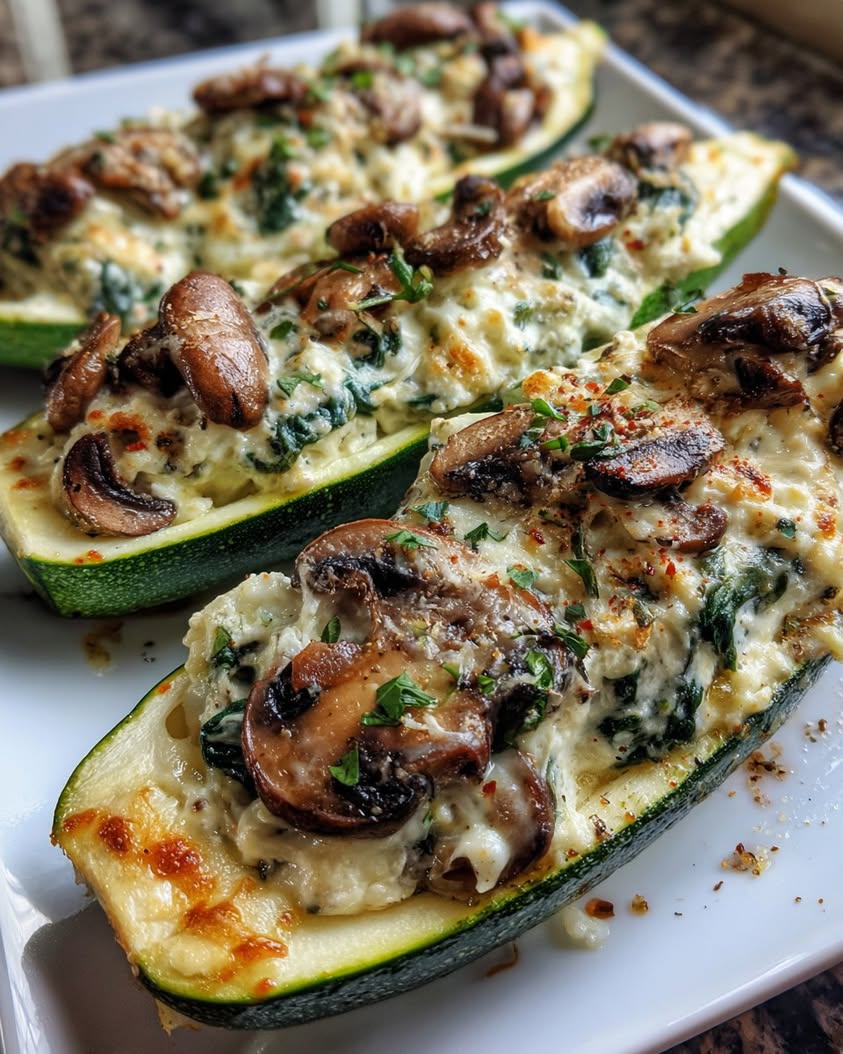
Spinach, Mushroom, and Ricotta Stuffed Zucchini Boats: A Flavorful Low-Carb Feast
These Spinach, Mushroom, and Ricotta Stuffed Zucchini Boats offer a delicious and satisfying meal that transforms simple vegetables into an elegant dinner. Imagine tender zucchini halves filled with a creamy, savory mixture of ricotta, sautéed mushrooms, and fresh spinach. This dish delivers incredible flavor while keeping things light and nutritious. Furthermore, it presents a fantastic way to enjoy a comforting, cheesy meal without the heaviness of traditional pasta or bread-based dishes.
The beauty of this recipe lies in its versatility and ease of preparation. You can easily customize the filling with different herbs, cheeses, or vegetables based on your preferences or what you have available. Baking the zucchini boats creates a wonderfully tender texture while allowing the cheesy topping to become perfectly golden and bubbly. Consequently, this meal feels both indulgent and wholesome, making it a perfect choice for a family dinner or for impressing guests with minimal effort.
Creating these stuffed zucchini boats provides a wonderful opportunity to explore the world of vegetable-centric cooking. The process is straightforward and rewarding, resulting in a beautiful presentation that belies the simple preparation. Each component brings its own unique texture and flavor, harmonizing into a cohesive and delightful dish. Ultimately, this recipe proves that healthy eating does not require sacrificing taste or satisfaction.
Quick Recipe Highlights
- Flavor Profile: These zucchini boats deliver a rich, savory taste from the umami of sautéed mushrooms combined with the mild creaminess of ricotta. Garlic and herbs like thyme or oregano add aromatic depth, while a touch of Parmesan cheese introduces a salty, nutty finish that enhances the overall flavor.
- Texture: The experience begins with the tender-crisp flesh of the baked zucchini, which provides a perfect vessel for the creamy, moist ricotta and spinach filling. Simultaneously, the sautéed mushrooms offer a satisfying, meaty bite, and the melted, bubbly cheese topping adds a delightful contrast.
- Aroma: As these boats bake, your kitchen will fill with the irresistible scent of garlic and herbs mingling with the earthy notes of mushrooms and the mild, milky fragrance of melting cheese. This aromatic bouquet promises a comforting and delicious meal is on its way.
- Visual Appeal: The vibrant green zucchini shells cradling a creamy white and green filling, all crowned with a golden-brown cheese crust, create a stunning presentation. This colorful dish looks beautiful on any plate, making it suitable for both casual family meals and special occasions.
- Skill Level Needed: This recipe is perfect for beginner cooks or anyone seeking a straightforward, reliable weeknight meal. Basic skills like sautéing vegetables and using a baking sheet are the primary requirements, making it an accessible project for cooks of all experience levels.
- Special Equipment: You need only standard kitchen tools: a baking sheet, a skillet for sautéing, a mixing bowl, and a spoon for filling the boats. No specialized gadgets are necessary, which makes this recipe easy to prepare in almost any kitchen.
Recipe Overview
- Difficulty Level: We classify this recipe as easy because it involves fundamental cooking techniques like sautéing and baking. The steps are logical and sequential, with minimal room for error. Even novice cooks can achieve excellent results by following the clear instructions, and the assembly process is forgiving and straightforward.
- Category: This dish fits perfectly into several meal categories, including main courses for lunch or dinner, substantial vegetarian entrees, and impressive side dishes. It is a versatile recipe that can anchor a meal or complement other dishes, making it a valuable addition to your culinary repertoire.
- Cuisine: While stuffed vegetables appear in many culinary traditions, this recipe draws inspiration from Italian and Mediterranean cuisines, celebrated for their emphasis on fresh produce, herbs, and cheeses. The use of ricotta, Parmesan, and specific herbs like oregano directly connects to these beloved food cultures.
- Cost: This is a cost-effective meal, especially during summer when zucchini is plentiful and affordable. The other primary ingredients—ricotta, mushrooms, and spinach—are generally budget-friendly year-round. You can create a satisfying meal for four people without straining your grocery budget.
- Season: This recipe shines brightest in the summer and early fall when zucchini is at its peak of freshness, flavor, and affordability. However, it is a wonderful dish for any season because its comforting, baked nature makes it suitable for cooler months as well.
- Occasion: These stuffed zucchini boats are incredibly versatile for various occasions. They work beautifully for a simple weeknight family dinner, a healthy lunch, or a more formal vegetarian option for entertaining. Their elegant appearance makes them suitable for potlucks and holiday meals too.
Why You’ll Love This Recipe
First and foremost, the taste and texture combination is utterly irresistible. The creamy ricotta filling, packed with savory mushrooms and earthy spinach, creates a luxurious mouthfeel. Each bite offers a harmony of flavors, from the mild sweetness of the zucchini to the rich, cheesy topping. The contrast between the tender vegetable boat and the hearty filling ensures every spoonful is interesting and satisfying. This dish proves that healthy food can be deeply comforting and delicious.
From a convenience standpoint, this recipe is a true weeknight hero. The preparation is straightforward, and the active cooking time is minimal. You can easily assemble the boats ahead of time and simply pop them in the oven when you are ready to eat. Furthermore, cleanup is a breeze since everything comes together on one or two baking sheets. This efficiency makes it an ideal choice for busy individuals and families who want a wholesome, home-cooked meal without spending hours in the kitchen.
Nutritionally, these zucchini boats are a powerhouse. They are naturally low in carbohydrates and high in fiber, vitamins, and minerals. Zucchini provides vitamin C and potassium, while spinach contributes iron and vitamin K. The ricotta offers a good source of protein and calcium. This combination makes for a balanced meal that supports energy levels and overall health. Choosing this dish is a delicious way to incorporate more vegetables into your diet without feeling like you are on a restrictive diet.
For social and entertaining value, this dish is a fantastic choice. Its beautiful presentation always impresses guests, making it look like you spent far more time and effort than you actually did. It is a complete, self-contained meal that is easy to serve and eat. Whether you are hosting a dinner party or bringing a dish to a potluck, these stuffed zucchini boats are sure to receive compliments and requests for the recipe.
Finally, the cost-effectiveness and accessibility of this recipe cannot be overstated. The ingredients are common, affordable, and available in most grocery stores throughout the year. You can also easily adapt the recipe based on what is seasonal or on sale. This adaptability makes it a sustainable choice for your regular meal rotation, allowing you to enjoy a gourmet-tasting meal that is kind to your wallet.
Historical Background and Cultural Significance
The concept of stuffing vegetables is an ancient culinary practice found across numerous cultures worldwide. This technique likely originated as a practical solution to extend meals, make use of available ingredients, and create more substantial dishes from humble produce. In many Mediterranean and Middle Eastern cultures, stuffed vegetables, or “dolma,” have been a cornerstone of family meals and festive gatherings for centuries. The specific idea of stuffing zucchini, or courgettes, has strong roots in Italian and French cuisines, where gardeners often found themselves with a summer surplus of this prolific squash.
Culturally, dishes like stuffed zucchini boats represent a philosophy of “cucina povera,” or cooking of the poor, which emphasizes resourcefulness and avoiding waste. This tradition celebrates transforming simple, inexpensive ingredients into something special and deeply flavorful. In many families, recipes for stuffed vegetables are hand-me-down treasures, passed from one generation to the next. They symbolize hospitality, care, and the ability to create a feast from the earth’s bounty, making them much more than just a meal.
The evolution of the stuffed zucchini boat recipe mirrors broader food trends, particularly the modern shift towards vegetable-centric and low-carb eating. While traditional versions might have included breadcrumbs or rice to bulk up the filling, contemporary adaptations often focus on high-protein, low-carb ingredients to meet modern dietary preferences. The addition of ricotta and mushrooms, as in this recipe, creates a rich and satisfying filling without the need for grains, showcasing how classic techniques can be updated for today’s nutritional awareness.
Regional variations of stuffed zucchini are fascinating. In Italy, they might be called “zucchine ripiene” and often feature a filling of breadcrumbs, herbs, and sometimes anchovies. Greek versions might include feta cheese and olives, while Turkish “kabak dolması” often involves a spiced meat and rice filling. The Spinach, Mushroom, and Ricotta version represents a more modern, vegetarian-friendly interpretation that draws on these traditions while creating a unique identity. This global journey highlights the universal appeal of taking a vegetable and turning it into a vessel for a delicious, personalized creation.
Ingredient Deep Dive
Zucchini, also known as courgette, is a summer squash that belongs to the Cucurbitaceae plant family, alongside melons and cucumbers. Historically, it was first cultivated in Central and South America thousands of years ago before being brought to Europe by explorers. Nutritionally, zucchini is low in calories and carbohydrates but high in water and fiber, making it excellent for hydration and digestion. It is a good source of vitamin C, which supports immune function, and potassium, which helps regulate blood pressure. When selecting zucchini, look for firm, glossy skins that are free of bruises or soft spots, and choose medium-sized ones for the best texture and flavor. Store them unwashed in a plastic bag in the refrigerator crisper drawer for up to a week.
Cremini mushrooms, the star of the filling, are actually young portobello mushrooms and offer a deeper, earthier flavor than common white button mushrooms. They have been foraged and cultivated for centuries, valued for their umami-rich taste that adds a meaty depth to vegetarian dishes. Mushrooms are unique as they are the only non-animal source of natural vitamin D when exposed to UV light. They are also rich in B vitamins, selenium, and antioxidants. Select mushrooms that are firm with tightly closed caps and avoid any that are slimy or have dark spots. Store them in a paper bag in the refrigerator to allow them to breathe, which prevents sogginess. For a flavor variation, you can substitute shiitake or portobello mushrooms.
Ricotta cheese is a fresh, soft Italian cheese traditionally made from the whey leftover from producing other cheeses. Its name literally means “recooked,” referring to this process. This cheese has a mild, slightly sweet flavor and a grainy, moist texture that makes it ideal for fillings and spreads. Nutritionally, ricotta is a good source of protein and calcium, and part-skim versions offer these benefits with lower fat content. When shopping, look for ricotta that has a fresh, milky scent and a creamy consistency. For the best quality, consider purchasing ricotta from the deli counter. Store it tightly sealed in its original container in the refrigerator and use it within a few days of opening. For a dairy-free version, blended firm tofu or lactose-free ricotta can be used.
Fresh spinach brings a vibrant color and a nutritional boost to the filling. This leafy green has a history dating back to ancient Persia and was introduced to Europe in the Middle Ages. It is famously rich in iron, though it also contains high levels of vitamins A, C, and K, as well as folate and magnesium. The oxalic acid in spinach can inhibit iron absorption, but cooking it helps reduce this effect. Choose spinach with deep green, crisp leaves and avoid any that are wilted or yellowing. Store it unwashed in a plastic bag in the refrigerator crisper, and wash it thoroughly just before using. If fresh spinach is unavailable, frozen chopped spinach that has been thoroughly thawed and squeezed dry is an excellent substitute.
Common Mistakes to Avoid
- Overcooking the Zucchini: Par-baking the zucchini boats before filling is crucial. If you skip this step or under-bake them, the final dish may become watery because the zucchini releases too much liquid during the final bake. This extra moisture can make the filling soggy and dilute the flavors, resulting in a less appealing texture.
- Not Salting the Zucchini: Salting the scooped-out zucchini halves and letting them sit for a few minutes draws out excess moisture. If you omit this step, you risk a final product that is watery and lacks concentrated flavor. Simply sprinkle with salt, let sit for 10 minutes, then pat dry with paper towels.
- Skipping the Sauté for Mushrooms and Spinach: Adding raw mushrooms and spinach directly to the ricotta filling is a common error. Raw mushrooms contain a lot of water and will steam inside the boat, making everything soggy. Always sauté them first to cook off moisture and concentrate their flavors.
- Overfilling the Boats: It is tempting to pack in as much filling as possible, but overfilling can cause the mixture to spill over during baking, creating a mess in your oven and making the boats difficult to serve. Leave a little space at the top for the filling to settle as it heats.
- Using Wet Ricotta: If your ricotta cheese is particularly watery, your filling may not hold together well. To prevent a runny filling, you can place the ricotta in a fine-mesh strainer for 15-20 minutes before mixing to drain off any excess liquid.
- Underseasoning the Filling: The ricotta mixture itself needs ample seasoning since the zucchini is relatively mild. Taste the filling before spooning it into the boats and adjust the salt, pepper, and herbs accordingly. Remember, some of the seasoning will mellow during baking.
- Baking at the Wrong Temperature: A too-low oven temperature will steam the boats rather than bake them, while a too-high temperature can burn the cheese topping before the zucchini is tender. Following the recommended temperature ensures even cooking and perfect browning.
- Not Letting Them Rest: Pulling the zucchini boats directly from the oven and serving them immediately can lead to a filling that is too loose. Let them rest for 5-10 minutes after baking; this allows the filling to set slightly, making them easier to serve and eat.
Essential Techniques
Hollowing the Zucchini: Mastering the hollowing technique is fundamental for creating a sturdy vessel. Use a small spoon or a melon baller to scrape out the flesh, leaving a border of about 1/4 to 1/2 inch on all sides. This border is crucial because it prevents the boat from collapsing during baking. A common mistake is scraping too aggressively, which can puncture the bottom or sides. The goal is a uniform, canoe-like shape that can hold the filling securely. The visual cue for success is a zucchini half that holds its shape firmly when you pick it up.
Sautéing the Filling Components: Properly sautéing the mushrooms and spinach is key to developing flavor and removing excess moisture. Start by cooking the mushrooms over medium-high heat until they have released their liquid and achieved a beautiful golden-brown color. This browning, known as the Maillard reaction, creates complex, savory flavors. Then, add the spinach and garlic, cooking just until the spinach wilts. The pitfall here is crowding the pan, which steams the vegetables instead of sautéing them. Success is evident when the mushrooms are browned and the spinach mixture is dry, not sitting in a pool of liquid.
Mixing the Filling: The goal when combining the ricotta with the sautéed vegetables and other ingredients is to achieve a homogeneous mixture without overworking it. Overmixing can cause the ricotta to become gummy or loose its delicate texture. Gently fold the ingredients together until just combined. This technique ensures a light and creamy filling. The visual cue is a uniform mixture where the green spinach and brown mushrooms are evenly distributed throughout the white ricotta.
Par-Baking the Zucchini Boats: This preliminary bake is a non-negotiable step for perfect texture. It partially cooks the zucchini, driving off a significant amount of its inherent water content. This process ensures that the final bake concentrates on cooking the filling and melting the cheese, rather than dealing with a flood of zucchini water. The technique involves a short bake at a high temperature. You will know it is done when the edges of the zucchini just begin to look translucent and the flesh is easily pierced with a fork but still firm.
Pro Tips for Perfect Spinach, Mushroom, and Ricotta Stuffed Zucchini Boats
Choose Uniform Zucchini: Select zucchini that are similar in size and shape. This ensures they cook at the same rate, so you do not end up with some boats perfectly done while others are still firm. Medium-sized, straight zucchini work best for creating even, stable boats.
Maximize Flavor with Herb Stems: When using fresh herbs like thyme or oregano, add the whole sprigs to the pan when sautéing the mushrooms. The heat will infuse the oil with their essence. Remove the woody stems before mixing the filling for a deeper, more complex herbal flavor without any tough bits.
Boost Umami with Soy Sauce: For an extra layer of savory depth, add a teaspoon of soy sauce or tamari to the mushrooms as they sauté. This will not make the dish taste like soy sauce; instead, it enhances the meaty, umami character of the mushrooms, making the filling even more satisfying.
Create a Crispy Topping: For an added textural element, mix your grated Parmesan cheese with a couple of tablespoons of panko breadcrumbs before sprinkling it over the boats. This creates a delightfully crispy, golden crust that contrasts beautifully with the creamy filling below.
Use a Cooling Rack: Place a wire cooling rack on top of your baking sheet and then arrange the zucchini boats on the rack. This elevates them, allowing hot air to circulate underneath and promoting more even cooking while preventing the bottoms from becoming soggy.
Let the Filling Cool: Allow the sautéed mushroom and spinach mixture to cool completely before mixing it with the ricotta and egg. Adding a hot mixture can cause the ricotta to break or become too loose, potentially affecting the final texture of the baked filling.
Grate Your Own Cheese: For the best melting quality and flavor, buy a block of Parmesan or Mozzarella and grate it yourself. Pre-shredded cheeses are often coated with anti-caking agents like potato starch or cellulose, which can prevent them from melting smoothly and seamlessly.
Variations and Adaptations
Regional Variations: You can easily take these zucchini boats on a world tour by altering the filling ingredients. For a Greek twist, substitute the ricotta with crumbled feta cheese and add kalamata olives and fresh dill. For an Italian-inspired version, mix in some finely chopped sun-dried tomatoes and fresh basil. To channel flavors from the American Southwest, use pepper jack cheese and add corn and black beans to the filling, topping it all with a sprinkle of chili powder.
Seasonal Adaptations: This recipe is wonderfully adaptable to the harvest of each season. In the spring, try using asparagus tips and fresh peas in the filling. During the fall, incorporate roasted, diced butternut squash and sage. For a winter version, use hearty kale instead of spinach and add roasted chestnuts for a festive touch. These changes keep the dish exciting and aligned with the freshest available produce.
Dietary Modifications: Catering to different dietary needs is simple. For a vegan version, replace the ricotta with blended firm tofu or a store-bought vegan ricotta, use a flax egg, and top with vegan Parmesan. To make it keto-friendly, ensure you use full-fat ricotta and cheese, and confirm that any added ingredients fit within your carb limits. For a gluten-free diet, this recipe is naturally compliant as long as you verify that all packaged ingredients like cheeses are certified gluten-free.
Flavor Variations: The basic filling is a perfect canvas for different flavor profiles. For a richer taste, add a few tablespoons of grated Pecorino Romano to the ricotta mixture. For a spicy kick, mix in red pepper flakes or a diced jalapeño with the mushrooms. To add a smoky note, use smoked paprika or a few drops of liquid smoke. Incorporating a tablespoon of pesto into the ricotta mixture is another fantastic way to instantly elevate the flavor.
Texture Modifications: If you enjoy different textures, consider adding elements like toasted pine nuts or walnuts to the filling for a crunchy contrast. For a more substantial, meat-like texture, mix in cooked quinoa or lentils. Alternatively, for an ultra-creamy and decadent filling, stir a couple of tablespoons of cream cheese or mascarpone into the ricotta before assembling.
Presentation Alternatives: While the classic “boat” shape is iconic, you can present this dish in other ways. For appetizer-sized portions, use smaller zucchinis or slice them into thicker rounds and hollow out the center to create “zucchini cups.” You can also chop the scooped-out zucchini flesh and mix it into the filling, then bake the entire mixture in a casserole dish topped with cheese for a deconstructed, scoopable version.
Serving and Presentation Guide
Plating Techniques: For an elegant presentation, place two zucchini boats slightly overlapping in the center of a warm plate. Use a offset spatula for a clean transfer from the baking sheet. Wipe the edges of the plate with a clean towel to ensure it looks pristine. Alternatively, for a family-style serving, arrange all the boats neatly on a large, colorful platter, garnished generously with fresh herbs. This approach makes the dish the stunning centerpiece of your meal.
Garnishing Ideas: The right garnish adds visual pop and fresh flavor. A sprinkle of chopped fresh parsley, basil, or chives provides a vibrant green contrast against the golden cheese. A light drizzle of high-quality extra virgin olive oil or a balsamic glaze just before serving adds shine and a touch of acidity. For a final touch of color and flavor, add a few halved cherry tomatoes or a sprinkle of red pepper flakes around the plate.
Traditional Accompaniments: In the Italian tradition from which this dish draws inspiration, a simple side salad is a perfect partner. A classic arugula salad with a lemon vinaigrette cuts through the richness of the cheese. A side of crusty, warmed bread is also ideal for soaking up any delicious juices left on the plate. These accompaniments keep the meal light and balanced.
Modern Serving Suggestions: For a contemporary, protein-packed meal, serve the zucchini boats alongside grilled chicken breast or a piece of pan-seared salmon. They also pair beautifully with a portion of quinoa or farro for those who desire a whole grain. For a low-carb feast, simply double up on the vegetables with a side of roasted broccoli or a crisp cucumber salad.
Temperature Considerations: These stuffed zucchini boats are best served hot from the oven, when the cheese is molten and bubbly. However, they are also surprisingly delicious at room temperature, making them excellent for picnics or packed lunches. If you do serve them warm, allow them to rest for 5-10 minutes after baking; this allows the filling to set, making them easier to cut and eat.
Portion Control Tips: One medium zucchini half typically constitutes a satisfying single serving as a main course, especially when paired with a side salad. For a larger appetite or as part of a bigger spread, one boat can serve as a substantial side dish. If you are serving them as an appetizer, consider using smaller zucchinis and cutting each boat into smaller, bite-sized pieces after baking.
Wine and Beverage Pairing
Wine Pairings: The creamy ricotta and earthy mushrooms in these zucchini boats call for wines that can complement their richness without overpowering them. A crisp, unoaked white wine like a Pinot Grigio or Sauvignon Blanc works wonderfully, as their acidity cuts through the cheese’s fat. For a red wine option, choose a light-bodied, low-tannin red such as a Pinot Noir or Gamay (Beaujolais). These reds have enough fruitiness to stand up to the mushrooms but are gentle enough not to clash with the other flavors. Ultimately, the goal is balance, allowing both the food and the wine to shine.
Non-Alcoholic Alternatives: For a sophisticated non-alcoholic pairing, consider a sparkling water infused with cucumber and mint, which offers a refreshing cleanse between bites. Iced herbal teas are another excellent choice; a chilled lemon verbena or peppermint tea provides a bright, clean contrast to the dish’s richness. For something with more body, a virgin Bloody Mary mocktail with its savory, spiced notes can mirror the umami depth of the mushrooms beautifully.
Coffee and Tea Pairings: While not a typical dinner beverage, a cup of tea can be a lovely post-meal accompaniment. A green tea like Sencha, with its vegetal and slightly sweet notes, can echo the flavors of the zucchini and spinach. If you prefer coffee after your meal, a medium-roast brew with low acidity would be a better choice than a dark, bitter roast, as it is less likely to conflict with the delicate flavors of the ricotta and herbs.
Temperature Considerations: Serving your beverages at the correct temperature is crucial for the best pairing experience. White wines and sparkling waters should be well-chilled, typically between 45-50°F (7-10°C). Red wines should be served slightly cooler than room temperature, around 55-60°F (13-16°C), to keep them refreshing. Iced teas and mocktails must be thoroughly cold to provide a palate-cleansing effect against the warm, baked dish.
Serving Suggestions: Always serve your chosen beverage in the appropriate glassware to enhance the experience. A stemmed glass for white wine helps keep it cool, while a large-bowled glass is ideal for appreciating the aroma of a light red. For non-alcoholic options, a tall, highball glass filled with ice is perfect for sparkling drinks and iced teas, making them look as appealing as they taste.
Storage and Shelf Life
Storage Methods: Proper storage is key to maintaining the quality of your leftover zucchini boats. First, allow them to cool completely to room temperature, which should take no longer than two hours to ensure food safety. Then, transfer the boats to a single layer in an airtight container. If you need to stack them, place a sheet of parchment paper between the layers to prevent them from sticking together and becoming misshapen. This method helps preserve their texture and prevents them from absorbing odors from the refrigerator.
Temperature Requirements: Always store leftover zucchini boats in the refrigerator at a consistent temperature of 40°F (4°C) or below. Do not leave them on the counter for extended periods, as the dairy and vegetable combination can spoil quickly. The refrigerator is the only safe short-term storage environment for this dish. For longer storage, freezing is an option, though it will slightly alter the texture of the zucchini.
Container Recommendations: The best containers for storage are shallow, rigid, airtight containers made of glass or BPA-free plastic. Shallow containers promote rapid and even cooling, which is crucial for food safety. Avoid storing them in the original baking dish covered with foil or plastic wrap, as this does not provide a sufficient seal and can lead to dryness or contamination.
Signs of Spoilage: Before consuming leftovers, always inspect them for signs of spoilage. Discard the zucchini boats if you notice an off or sour smell, which can indicate bacterial growth. Visible mold, especially on the cheese or filling, is an immediate sign to throw the food away. If the texture becomes excessively slimy or mushy, this is also an indicator that the dish is no longer good to eat.
Reheating Instructions: To reheat, preheat your oven to 350°F (175°C). Place the zucchini boats on a baking sheet and warm them for 10-15 minutes, or until heated through. The oven method is superior to the microwave because it helps restore some of the original texture and prevents the zucchini from becoming rubbery. If you must use a microwave, do so in short 30-second bursts and expect a softer final product.
Freezing Guidelines: You can freeze these stuffed zucchini boats for up to two months. Assemble and bake them completely, then let them cool entirely. Wrap each boat individually in plastic wrap and then in aluminum foil before placing them in a freezer-safe bag or container. This double-wrapping prevents freezer burn. To serve, thaw overnight in the refrigerator and then reheat in the oven until hot and the cheese is bubbly again.
Make Ahead Strategies
Prep Timeline: You can prepare these zucchini boats up to 24 hours in advance, making them a fantastic option for stress-free entertaining or easy weeknights. The ideal timeline is to complete all the prep work—hollowing the zucchini, making the filling, and assembling the boats—the day before you plan to serve them. Cover and refrigerate the assembled-but-unbaked boats, then simply bake them as directed when you are ready to eat. This approach allows the flavors to meld beautifully while saving you valuable time on the day of your meal.
Storage Between Steps: If you are preparing components separately, store the hollowed and salted zucchini boats in an airtight container in the refrigerator. Keep the prepared filling in a separate, sealed container. This prevents the zucchini from becoming soggy from the filling’s moisture. When stored this way, both components will keep well for a day. For the best results, bring the filling to room temperature for about 15 minutes before assembling the cold zucchini boats, as this promotes more even baking.
Quality Impact Assessment: Making these boats ahead of time has a minimal impact on their final quality. In fact, many cooks find that the flavors improve after the filling has had time to rest. The primary consideration is that the zucchini may release a small amount of additional liquid during refrigeration, which you can simply blot away with a paper towel before baking. The texture and appearance of the final baked dish are virtually indistinguishable from one made entirely fresh.
Assembly Tips: When assembling the boats ahead of time, place them on the baking sheet you plan to use for cooking. This means you will not have to move the filled, delicate boats later, which could cause them to break or spill. Cover the entire baking sheet tightly with plastic wrap before placing it in the refrigerator. Do not add the final cheese topping until you are ready to bake, as this prevents it from becoming gummy or absorbing moisture.
Reheating Guidelines: If you have fully baked the boats ahead of time and are reheating them, the oven method is crucial. Reheat at 350°F (175°C) for about 10-15 minutes, or until warmed through. You may want to add a fresh sprinkle of cheese for the last few minutes of reheating to restore that freshly baked, bubbly appearance. Avoid reheating in the microwave, as it will make the zucchini soggy.
Fresh Element Additions: For the absolute best presentation and flavor, consider adding some fresh elements after the make-ahead boats come out of the oven. A final drizzle of high-quality olive oil, a sprinkle of flaky sea salt, or a garnish of freshly chopped herbs like basil or parsley added just before serving will make the dish taste and look vibrant and freshly made.
Scaling Instructions
Halving the Recipe: Reducing this recipe to serve two people is straightforward. Use two medium zucchini and simply halve all the other ingredient quantities. The baking time may be slightly shorter, perhaps by 5 minutes, so start checking for doneness a little earlier. The primary equipment adjustment is using a smaller baking sheet or a quarter sheet pan. All other techniques and steps remain exactly the same. This is a perfect solution for couples or small families without generating excessive leftovers.
Doubling or Tripling: Scaling up for a crowd is easy and makes this dish ideal for potlucks or large family gatherings. When doubling or tripling, the most important consideration is using multiple baking sheets and rotating them halfway through the baking time to ensure even cooking. You may also need to work in batches when sautéing the mushroom and spinach filling to avoid overcrowding the pan, which leads to steaming instead of browning. The baking time might need a slight increase of 5-10 minutes due to the larger volume of food in the oven.
Equipment Adjustments: Scaling the recipe requires thoughtful equipment planning. For a double batch, ensure you have two large baking sheets that can fit on separate oven racks. If you are tripling the recipe, you might need to bake in consecutive batches, keeping the assembled-but-unbaked boats refrigerated while the first batch cooks. For very large quantities, using a disposable aluminum roasting pan can be convenient for transport and cleanup. A large mixing bowl is essential for comfortably combining a big batch of filling.
Timing Modifications: While the prep time will increase linearly with the quantity, the baking time does not double when you double the recipe. Expect to add only 5-10 minutes to the total bake time for a double batch. The key is to rely on visual and textural cues for doneness—golden-brown cheese and tender zucchini—rather than strictly adhering to the original timer. Always check the boats in the center of the baking sheet, as they take the longest to cook.
Storage Considerations: When making a large batch, think about your storage plans beforehand. If you anticipate having many leftovers, it is wise to bake and store them in smaller, meal-sized portions. This makes reheating easier and ensures you only warm up what you will eat. Label and date all containers clearly. Remember that a large quantity of hot food will raise the temperature of your refrigerator, so allow the baked boats to cool completely on the counter before refrigerating to maintain food safety.
Nutritional Deep Dive

I’m Shaykee—born in Morocco, seasoned across continents. From airplane galleys to home kitchens, I share the flavors and stories that shaped my journey.