
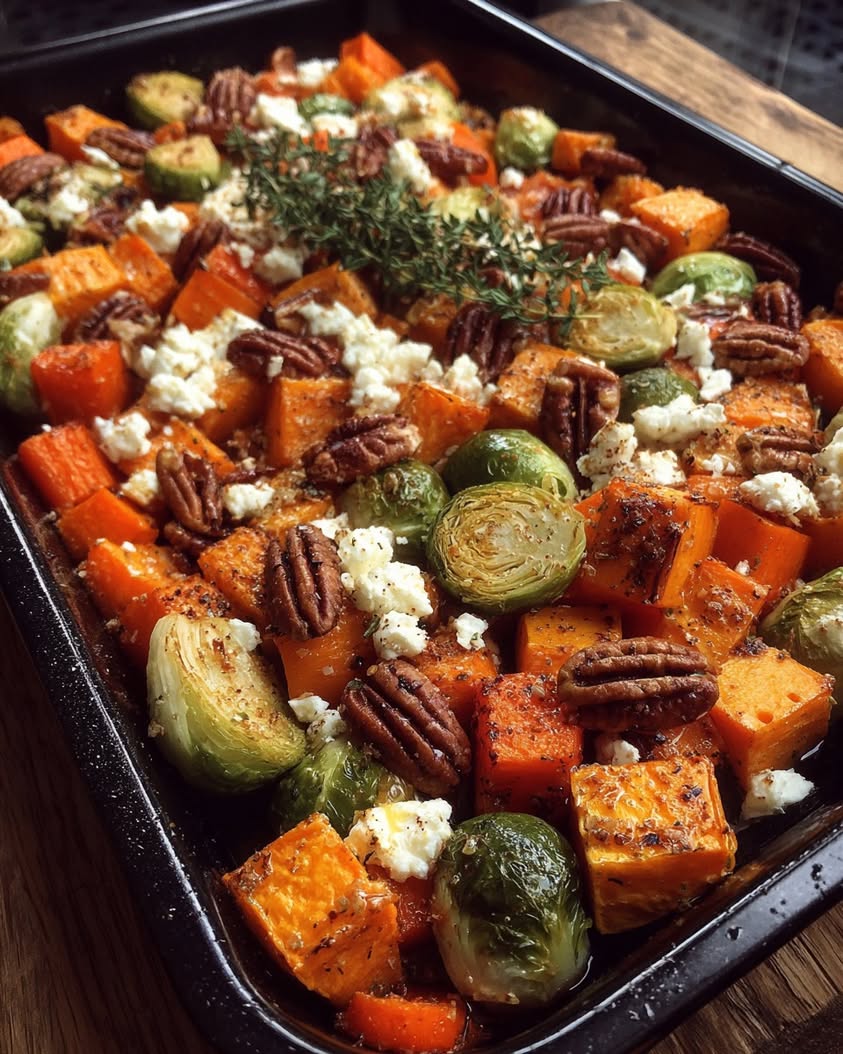
Maple-Cinnamon Caramelized Butternut Squash, Sweet Potato, Carrots & Brussels Sprouts with Goat Cheese and Toasted Pecans: A Stunning Fall Side Dish
This stunning fall side dish transforms humble root vegetables into an unforgettable culinary experience. The combination of sweet butternut squash, earthy sweet potatoes, and vibrant carrots creates a beautiful mosaic of color and flavor. Furthermore, the addition of Brussels sprouts introduces a delightful savory note that perfectly balances the dish’s natural sweetness. This recipe is a celebration of autumn’s bounty, designed to impress at any holiday gathering or weeknight dinner.
The magic happens when these vegetables roast to caramelized perfection with a maple-cinnamon glaze. Consequently, each bite offers a complex harmony of sweet, savory, and slightly bitter notes. The final flourish of creamy goat cheese and crunchy toasted pecans provides textural contrast and rich flavor depth. Ultimately, this dish serves as the perfect centerpiece for your holiday table or a special weeknight meal that feels both nourishing and indulgent.
Quick Recipe Highlights
- Flavor Profile: This dish masterfully balances sweet and savory elements. The maple syrup and cinnamon enhance the vegetables’ natural sugars, while the goat cheese adds a tangy counterpoint. Additionally, the toasted pecans contribute a rich, buttery depth that ties all the flavors together.
- Texture: You will experience a wonderful contrast between the tender, caramelized vegetables and the crunchy pecans. The creamy goat cheese melts slightly on the warm vegetables, creating a luxurious mouthfeel. Meanwhile, the Brussels sprouts develop crispy, browned edges that provide satisfying texture.
- Aroma: As this dish roasts, your kitchen will fill with the warm, comforting scent of cinnamon and maple. The caramelizing vegetables release a sweet, earthy fragrance that signals autumn. Finally, the toasting pecans add a nutty perfume that completes the aromatic experience.
- Visual Appeal: This recipe creates a beautiful autumnal palette of orange, gold, and deep green. The caramelized edges on the vegetables glisten with the maple glaze. Subsequently, the white goat cheese crumbles and brown pecans create an elegant, restaurant-quality presentation.
- Skill Level Needed: This recipe requires only basic knife skills for chopping vegetables. The roasting technique is straightforward and forgiving. Therefore, even beginner cooks can achieve impressive results with minimal culinary experience.
- Special Equipment: You need only a large baking sheet and basic kitchen tools. Parchment paper is recommended for easy cleanup. A sharp chef’s knife makes vegetable preparation quicker and safer.
Recipe Overview
- Difficulty Level: This recipe earns its easy rating because it involves simple chopping and roasting techniques. The most challenging aspect is achieving uniformly cut vegetables for even cooking. However, the process is largely hands-off once the vegetables are in the oven. Consequently, even novice cooks can successfully create this impressive dish.
- Category: This versatile dish functions beautifully as a side dish for holiday meals. It also works well as a vegetarian main course when served over grains. Additionally, it makes excellent leftovers that can be reinvented in various ways throughout the week.
- Cuisine: This recipe draws inspiration from modern American farm-to-table cooking. It incorporates traditional autumn flavors commonly found in New England cuisine. The use of maple syrup pays homage to North American culinary traditions while the roasting technique has Mediterranean influences.
- Cost: This dish offers excellent value, particularly during autumn when these vegetables are in season. The most expensive components are the pecans and goat cheese. However, you can adjust quantities based on your budget without sacrificing flavor.
- Season: Autumn is the perfect season for this recipe when these vegetables are at their peak. The warm spices and roasting method provide comfort as temperatures drop. Furthermore, the colors and flavors align perfectly with holiday celebrations from Halloween through Thanksgiving.
- Occasion: This dish shines as a holiday side dish for Thanksgiving or Christmas dinners. It also elevates casual weeknight meals with minimal effort. Additionally, it works wonderfully for potlucks and dinner parties where you want to impress guests.
Why You’ll Love This Maple-Cinnamon Roasted Vegetable Recipe
First and foremost, the taste experience is truly exceptional. The natural sweetness of the roasted vegetables intensifies beautifully in the oven. The maple-cinnamon glaze caramelizes creating delicious crispy edges while maintaining tender interiors. Meanwhile, the Brussels sprouts develop a wonderful nutty flavor that contrasts with the sweeter root vegetables. The creamy goat cheese adds tanginess that cuts through the richness. Finally, the toasted pecans provide buttery crunch that completes each bite with satisfying texture.
Convenience is another significant advantage of this recipe. Preparation is straightforward requiring only chopping and tossing before roasting. The hands-off cooking time allows you to focus on other meal components or simply relax. Furthermore, the dish can be partially prepared ahead of time making holiday meal planning less stressful. Cleanup is minimal especially if you use parchment paper on your baking sheet. The recipe uses common ingredients that are easily sourced during autumn months.
Nutritionally, this dish delivers substantial benefits from its vegetable-rich composition. These colorful vegetables provide diverse vitamins, minerals, and antioxidants supporting overall health. The fiber content promotes digestive wellness and helps maintain stable energy levels. Additionally, the healthy fats from olive oil and pecans aid nutrient absorption. Goat cheese offers protein and calcium with potentially easier digestion than other dairy products. This side dish contributes meaningfully to a balanced diet without excessive calories.
Entertaining value makes this recipe particularly special for social occasions. The beautiful presentation creates an impressive centerpiece for your holiday table. Guests consistently appreciate the sophisticated flavor combination that feels both familiar and novel. The dish accommodates various dietary preferences since it’s naturally vegetarian. It pairs wonderfully with numerous main courses from roasted turkey to beef tenderloin. You can confidently serve this to food-loving friends knowing it will receive enthusiastic compliments.
Cost-effectiveness and accessibility further enhance this recipe’s appeal. Seasonal vegetables offer excellent value during autumn months. The recipe utilizes affordable pantry staples like olive oil and spices. Maple syrup represents the most significant investment but a small amount delivers substantial flavor. You can easily adjust ingredient proportions based on what’s available or on sale. This approachability makes the dish accessible to cooks with varying budget constraints.
Historical Background and Cultural Significance
Roasted root vegetables have ancient origins dating back to early agricultural societies. Indigenous cultures throughout the Americas cultivated squash, potatoes, and similar crops for millennia. These vegetables formed dietary staples that sustained communities through winter months. European settlers adopted these native ingredients incorporating them into their culinary traditions. The specific combination in this recipe represents modern fusion cooking that honors these historical foodways while incorporating contemporary flavors.
Maple syrup production has deep cultural significance in North American history. Indigenous communities in the Northeast developed sophisticated sap collection and reduction techniques long before European contact. They viewed maple sap as a vital seasonal resource and celebrated its harvest with ceremonies. European settlers adopted these methods eventually developing the metal evaporation equipment used in modern production. Using maple syrup in cooking connects us to this rich cultural heritage and traditional food preservation method.
The evolution of this recipe reflects broader culinary trends toward vegetable-centric dishes. As vegetarian and plant-based eating gained popularity, chefs began elevating vegetables to center stage. Roasting techniques that caramelize natural sugars became particularly favored for developing deep flavor. The addition of cheese and nuts follows Mediterranean culinary principles that prioritize texture contrast and flavor balance. This recipe represents how traditional cooking methods continue inspiring contemporary culinary innovation.
Regional variations of roasted vegetable dishes appear in cuisines worldwide. Mediterranean countries roast vegetables with olive oil and herbs. Asian traditions might incorporate soy sauce and ginger. South American recipes often feature spicy chili peppers. This particular recipe with maple syrup and cinnamon reflects North American autumn traditions. The combination specifically evokes Thanksgiving imagery and flavors while utilizing ingredients native to the continent.
Ingredient Deep Dive
Butternut squash serves as the foundation of this dish with its sweet, nutty flavor. This winter squash originated in Central America and has been cultivated for thousands of years. It provides significant vitamin A, vitamin C, and fiber supporting immune function and eye health. Select squash that feel heavy for their size with firm, unblemished skin. Store whole squash in a cool, dark place for up to three months. Alternatively, substitute acorn squash or pumpkin if butternut isn’t available.
Sweet potatoes bring vibrant color and natural sweetness to the recipe. Historically, sweet potatoes have been staple crops in Central and South America for over 5,000 years. They’re packed with beta-carotene, vitamin C, and potassium promoting skin health and reducing inflammation. Choose firm sweet potatoes without soft spots or sprouts. Store them in a cool, dark place but not refrigerated. You can substitute regular potatoes though the flavor profile will be less sweet.
Carrots contribute earthy sweetness and beautiful orange hue to the dish. Carrots originated in Central Asia and were originally purple or yellow before Dutch cultivation developed the orange variety. They’re renowned for vitamin A content supporting vision and antioxidant benefits. Select firm carrots with bright color and smooth skin. Refrigerate them in plastic bags for several weeks. Parsnips make an excellent substitution offering similar texture with slightly different flavor.
Brussels sprouts provide crucial savory balance to the sweeter vegetables. These miniature cabbages were cultivated in ancient Rome and gained popularity in Northern Europe. They offer impressive amounts of vitamin K, vitamin C, and cancer-fighting compounds. Choose small, firm sprouts with tightly packed leaves and bright green color. Refrigerate them unwashed in plastic bags for up to one week. Broccoli florets or cauliflower can substitute if Brussels sprouts aren’t preferred.
Goat cheese delivers creamy tanginess that contrasts the sweet vegetables. Goat domestication for milk production dates back approximately 10,000 years in the Middle East. Goat cheese provides protein, calcium, and often contains less lactose than cow’s milk cheese. Select fresh, crumbled goat cheese without visible drying or discoloration. Refrigerate it tightly wrapped and use within one week. Feta cheese or blue cheese crumbles make suitable substitutions with different flavor profiles.
Common Mistakes to Avoid
- Uneven vegetable cutting creates inconsistent cooking results. Smaller pieces will burn before larger pieces caramelize properly. Always aim for uniform approximately one-inch pieces regardless of vegetable type. This ensures everything finishes roasting simultaneously with perfect texture.
- Overcrowding the baking sheet prevents proper caramelization. When vegetables are too crowded, they steam rather than roast. Use two baking sheets if necessary to ensure adequate space between pieces. Proper spacing allows hot air circulation creating those desirable crispy edges.
- Insufficient oil coating leads to dried-out vegetables rather than caramelized ones. The oil helps conduct heat and promotes browning. Ensure each vegetable piece gets lightly coated before roasting. However, avoid excessive oil which can make vegetables greasy.
- Neglecting to stir during cooking creates uneven browning. The vegetables touching the pan will brown more than those on top. Stirring halfway through ensures all sides get exposed to direct heat. This simple step dramatically improves final texture and appearance.
- Adding goat cheese too early causes it to melt completely into the dish. The cheese should be a fresh garnish added after roasting. Sprinkling it over hot vegetables just before serving maintains its distinct texture and appearance.
- Burning the pecans during toasting creates bitter flavor. Nuts contain oils that can quickly go from toasted to burnt. Watch them carefully in the final minutes of toasting. They continue cooking slightly after removal from heat.
- Using expired spices results in muted flavor. Cinnamon particularly loses potency over time. Check your spice freshness before using. Freshly ground cinnamon provides the most vibrant flavor profile.
- Skipping the parchment paper leads to difficult cleanup. The maple syrup glaze can create stubborn baked-on residue. Lining your pan prevents this issue without affecting cooking results.
Essential Techniques
Uniform vegetable cutting represents the most crucial technique for this recipe. Consistent size ensures even cooking and caramelization. Use a sharp chef’s knife for clean cuts through firm vegetables. Aim for approximately one-inch pieces regardless of shape. Irregular pieces will cook at different rates resulting in some burnt and some undercooked vegetables. The goal is creating pieces with similar mass and surface area for predictable roasting behavior.
Proper roasting technique transforms raw vegetables into caramelized perfection. Preheating your oven ensures immediate cooking upon entry. Spread vegetables in a single layer with space between pieces to allow steam escape. The high oven temperature quickly caramelizes exterior surfaces while cooking interiors. Stirring halfway through exposes all sides to direct heat contact. Watch for golden brown edges and tender texture when pierced with a fork.
Toasting nuts maximizes their flavor and crunch factor. Spread raw pecans in a single layer on a dry baking sheet. Toast at 350°F for 5-8 minutes until fragrant and slightly darkened. Watch carefully during the final minutes as they burn quickly. Alternatively, toast in a dry skillet over medium heat stirring frequently. The nuts will continue to crisp as they cool. Always toast nuts before chopping for most even results.
Pro Tips for Perfect Maple-Cinnamon Roasted Vegetables
Chill your vegetables briefly after cutting if you have time. This step helps them maintain structure during roasting. Cold vegetables also develop slightly crisper exteriors when they hit the hot oven.
Consider adding a tablespoon of balsamic vinegar to the maple glaze. The acidity beautifully balances the sweetness. Additionally, it helps create deeper caramelization during roasting.
Add fresh herbs like thyme or rosemary along with the dried spices. The combination of fresh and dried herbs creates more complex flavor layers. Remove woody stems before serving.
For extra crispy vegetables, place them cut-side down on the baking sheet. This maximizes surface contact with the hot pan. The flat surfaces develop beautiful browning this way.
If your vegetables aren’t browning sufficiently, increase oven temperature slightly. Sometimes oven thermostats aren’t perfectly accurate. Another option is moving the baking sheet to a higher rack position.
Let the roasted vegetables rest for five minutes before adding garnishes. This allows their internal structure to stabilize. The brief rest improves final texture and makes serving easier.
Variations and Adaptations
Regional variations can transform this dish to match different culinary traditions. Mediterranean version would use olive oil, lemon, and oregano instead of maple and cinnamon. Asian-inspired adaptation might incorporate soy sauce, ginger, and sesame oil. Southwestern variation could feature chili powder, cumin, and lime juice. Each modification creates a completely different flavor profile while maintaining the same basic roasting technique. Experimenting with spice blends allows you to customize the dish to your preferences.
Seasonal adaptations make this recipe work year-round with available produce. Spring version could feature asparagus, radishes, and new potatoes with fresh herbs. Summer adaptation might include zucchini, bell peppers, and eggplant with basil. Winter variation could incorporate parsnips, turnips, and beets with warming spices. The basic formula remains constant while the vegetable selection changes with the seasons. This approach keeps the dish interesting throughout the year.
Dietary modifications accommodate various eating preferences and restrictions. Vegan version simply omits the goat cheese or uses vegan alternative. Nut-free adaptation eliminates pecans and might substitute sunflower or pumpkin seeds. Lower-carb version reduces carrots and sweet potatoes while increasing Brussels sprouts and squash. Each modification maintains the dish’s essential character while meeting specific dietary needs. The recipe is wonderfully adaptable to most eating approaches.
Serving and Presentation Guide
Plating techniques significantly enhance this dish’s visual appeal. For family-style serving, transfer the roasted vegetables to a large, shallow platter. Create height by mounding them slightly in the center rather than spreading flat. Sprinkle garnishes strategically rather than uniformly distributing them. The contrasting colors and textures should remain visible rather than mixed together completely. This approach creates visual interest that matches the complex flavor experience.
Garnishing ideas extend beyond the basic goat cheese and pecans. Fresh pomegranate seeds add brilliant color and juicy bursts of flavor. Microgreens or fresh herb sprigs provide freshness and visual lift. A drizzle of high-quality balsamic reduction creates beautiful presentation and flavor enhancement. Toasted breadcrumbs add another textural element and golden color. Consider your overall menu when selecting garnishes to complement other dishes being served.
Wine and Beverage Pairing
Wine pairings should complement both the sweetness and savory elements in this dish. Off-dry Riesling or Gewürztraminer work beautifully with their slight sweetness balancing the maple. These wines have enough acidity to cut through the richness without overwhelming the vegetables. Medium-bodied red wines like Pinot Noir or Grenache also pair well with their berry notes and soft tannins. The fruitiness complements the caramelized vegetables without dominating the palate.
Non-alcoholic alternatives provide sophisticated pairing options for all guests. Sparkling apple cider mirrors the autumn flavors while cleansing the palate between bites. Ginger beer offers spicy complexity that contrasts the dish’s sweetness. Herbal teas like chamomile or mint provide soothing accompaniment that doesn’t compete with the flavors. Even simple sparkling water with lemon wedge refreshes the palate effectively between rich bites.
Storage and Shelf Life
Storage methods maintain quality and food safety for leftovers. Cool completely before transferring to airtight containers. Refrigerate within two hours of cooking to prevent bacterial growth. Properly stored, the roasted vegetables maintain good quality for 3-4 days. The texture will soften slightly upon refrigeration but flavors will meld and develop further. The goat cheese and pecans are best added fresh when serving rather than stored with the vegetables.
Reheating instructions help restore the dish’s original texture and appeal. Spread vegetables in a single layer on a baking sheet and reheat at 375°F for 10-15 minutes. This method restores some crispness better than microwave reheating. If using microwave, spread in a single layer and heat in one-minute intervals stirring between. Add fresh garnishes after reheating rather than before. The revived dish won’t be identical to fresh but will still be delicious.
Make Ahead Strategies
Prep timeline allows significant advance preparation for stress-free entertaining. Vegetables can be chopped 1-2 days ahead and stored in airtight containers in refrigerator. Keep different vegetable types separate as some may release moisture. The maple glaze can be mixed and refrigerated separately. On cooking day, simply toss vegetables with oil and glaze then roast. This approach minimizes active preparation time when you’re busy with other meal components.
Storage between steps maintains ingredient quality when preparing ahead. Cut vegetables should be patted dry and stored with paper towels to absorb excess moisture. The maple glaze may thicken when refrigerated so bring to room temperature before using. Toast pecans up to three days ahead and store at room temperature in airtight containers. Crumble goat cheese just before serving for freshest texture and appearance.
Scaling Instructions
Halving the recipe works perfectly for smaller households or intimate meals. Use a standard baking sheet rather than reducing pan size. The vegetables will have even more space promoting better caramelization. Reduce cooking time slightly since the smaller quantity will cook faster. Check for doneness beginning at 25 minutes rather than waiting the full time. All other instructions and proportions remain exactly the same when halving.
Doubling or tripling requires practical adjustments for successful execution. Use multiple baking sheets rather than overcrowding single sheets. Rotate pans halfway through cooking for even browning. You may need to extend cooking time by 5-10 minutes due to increased oven load. Consider roasting in batches if oven space is limited. The maple glaze can be mixed in larger quantities without adjustment to proportions.
Nutritional Deep Dive
Macro breakdown reveals this dish’s balanced nutritional profile. The vegetables provide complex carbohydrates for sustained energy release. Olive oil and pecans contribute healthy monounsaturated fats supporting heart health. Goat cheese adds protein for satiety and muscle maintenance. The combination creates a satisfying dish that provides lasting energy without blood sugar spikes. The fiber content further regulates digestion and energy release throughout the day.
Micronutrient analysis shows impressive vitamin and mineral diversity. Orange vegetables deliver beta-carotene which converts to vitamin A supporting vision and immunity. Brussels sprouts provide vitamin K for bone health and blood clotting. All vegetables contribute various B vitamins for energy metabolism. The dish contains potassium, magnesium, and trace minerals from the diverse plant sources. This nutrient density makes it valuable addition to any eating pattern.
Dietary Adaptations
Vegan adaptation simply omits the goat cheese or substitutes vegan alternative. Many excellent vegan cheeses now mimic goat cheese’s tangy flavor and crumbly texture. Nutritional yeast sprinkled over the vegetables provides similar savory notes. The maple glaze naturally contains no animal products. Toasted pumpkin seeds can replace pecans if nut-free is also required. These simple changes create an entirely plant-based version without compromising flavor.
Dairy-free modification follows similar approach to vegan adaptation. Omit the goat cheese or use dairy-free cheese alternative. Consider adding chopped olives or sun-dried tomatoes for the salty, tangy element instead. The rest of the recipe contains no dairy ingredients naturally. Ensure the maple syrup used doesn’t contain added butter or cream, which is uncommon but worth verifying.
Troubleshooting Guide
Texture issues commonly involve vegetables that are either too soft or not tender enough. If vegetables are mushy, they were likely overcrowded or cut too small. If they’re tough, they needed longer cooking time or higher oven temperature. For future attempts, ensure uniform cutting and proper spacing on baking sheet. If vegetables are burning before cooking through, your oven temperature may be too high or pieces too small.
Flavor balance problems typically involve excessive sweetness or insufficient seasoning. If the dish tastes too sweet, reduce maple syrup slightly next time or increase black pepper. If flavors seem flat, you may need more salt or spices. Remember that roasting concentrates flavors so underseasoned vegetables will taste particularly bland. Always taste before serving and adjust with flaky sea salt if needed.
Recipe Success Stories
Community feedback consistently highlights this recipe’s reliability and crowd-pleasing nature. Many readers report it becoming their go-to holiday side dish that receives requested every year. Several have shared stories of vegetable-skeptical family members enthusiastically enjoying this preparation. The combination of familiar flavors in a novel presentation seems to bridge generational and preference divides. Photographs shared by readers showcase beautiful variations with personal touches.
Adaptation stories demonstrate the recipe’s wonderful flexibility for different needs. One reader created a Thanksgiving version for her diabetic father by reducing maple syrup and adding herbs. Another substituted delicata squash with excellent results because the skin became tender enough to eat. Several gluten-free families appreciate having an impressive side dish that naturally meets their dietary needs. These success stories illustrate how the recipe serves as a template for creative interpretation.
Frequently Asked Questions
Can I use different vegetables in this recipe? Absolutely. The technique works well with most root vegetables and cruciferous varieties. Maintain similar density and cutting size for even cooking. Adjust sweet vegetables versus savory ones to maintain balance.
Can I make this recipe ahead of time? You can roast vegetables several hours ahead and reheat before serving. For best texture, add garnishes after reheating. The vegetables can be prepped and seasoned a day in advance then roasted when needed.
What if I don’t have maple syrup? Honey makes an excellent substitute with similar viscosity and sweetness. Agave nectar also works well. The flavor profile will change slightly but still be delicious.
Can I use frozen vegetables? Fresh vegetables work significantly better for roasting. Frozen vegetables release too much water preventing proper caramelization. The texture becomes mushy rather than developing crispy edges.
How do I prevent the vegetables from sticking to the pan? Parchment paper or a silicone baking mat provides the most reliable non-stick surface. Adequate oil coating also helps prevent sticking to bare baking sheets.
Can I roast the vegetables at a different temperature? The recommended temperature creates ideal balance between cooking through and caramelizing. Higher temperatures may burn the maple glaze before interiors cook. Lower temperatures won’t create sufficient browning.
What main dishes pair well with this side? Roasted turkey, chicken, pork, and beef all complement these vegetables. For vegetarian meals, serve alongside grain dishes like quinoa or farro. The flavors work well with many cuisines.
How do I know when the vegetables are done cooking? The vegetables should be tender when pierced with a fork and nicely browned at the edges. The Brussels sprouts leaves will be crispy in places. Caramelization should be visible but not blackened.
Can I add other spices to the glaze? Certainly. Nutmeg, allspice, or cardamom would complement the cinnamon beautifully. Smoked paprika adds interesting savory note. Experiment with spices you enjoy.
What can I do with leftovers? Leftovers make excellent additions to grain bowls, salads, or omelets. They can be pureed into soup with vegetable broth. Alternatively, simply reheat and enjoy as originally served.
Additional Resources
Related recipes that complement this dish include simple grain preparations that absorb the flavorful glaze. Quinoa with herbs or wild rice pilaf make excellent bases for the roasted vegetables. A simple green salad with vinaigrette provides refreshing contrast to the rich, sweet vegetables. For dessert, consider apple or pear crisps that continue the autumn flavor theme. These menu suggestions create a cohesive dining experience centered around seasonal ingredients.
Technique guides for vegetable roasting can further enhance your culinary skills. Understanding the science of caramelization helps troubleshoot any issues that arise. Knife skills tutorials ensure efficient, safe vegetable preparation. Learning about spice toasting and grinding maximizes flavor potential in all your cooking. These fundamental skills transfer to countless other recipes beyond this specific dish.
PrintMaple-Cinnamon Caramelized Butternut Squash, Sweet Potato, Carrots & Brussels Sprouts with Goat Cheese and Toasted Pecan
Description
A vibrant, sweet and savory roasted vegetable medley with caramelized edges, creamy goat cheese, and crunchy pecans.
Ingredients
For the Crust:
- 1 small butternut squash, peeled and cubed
- 1 large sweet potato, peeled and cubed
- 3 medium carrots, peeled and sliced
- 1 lb Brussels sprouts, trimmed and halved
- 3 tbsp olive oil
- 3 tbsp pure maple syrup
- 1 tsp ground cinnamon
- Salt and black pepper to taste
- 1/2 cup pecans, toasted
- 4 oz goat cheese, crumbled
- 2 tbsp fresh parsley, chopped
Instructions
1. Prepare the Crust:
- Preheat oven to 400°F (200°C). Line a large baking sheet with parchment paper.
- In a large bowl, toss butternut squash, sweet potato, carrots, and Brussels sprouts with olive oil, maple syrup, cinnamon, salt, and pepper until evenly coated.
- Spread vegetables in a single layer on the prepared baking sheet. Roast for 25-30 minutes, stirring halfway, until tender and caramelized.
- While vegetables roast, toast pecans in a dry skillet over medium heat for 3-5 minutes, until fragrant. Let cool and roughly chop.
- Transfer roasted vegetables to a serving platter. Top with crumbled goat cheese, toasted pecans, and fresh parsley. Serve warm.
Notes
You can customize the seasonings to taste.

I’m Shaykee—born in Morocco, seasoned across continents. From airplane galleys to home kitchens, I share the flavors and stories that shaped my journey.