
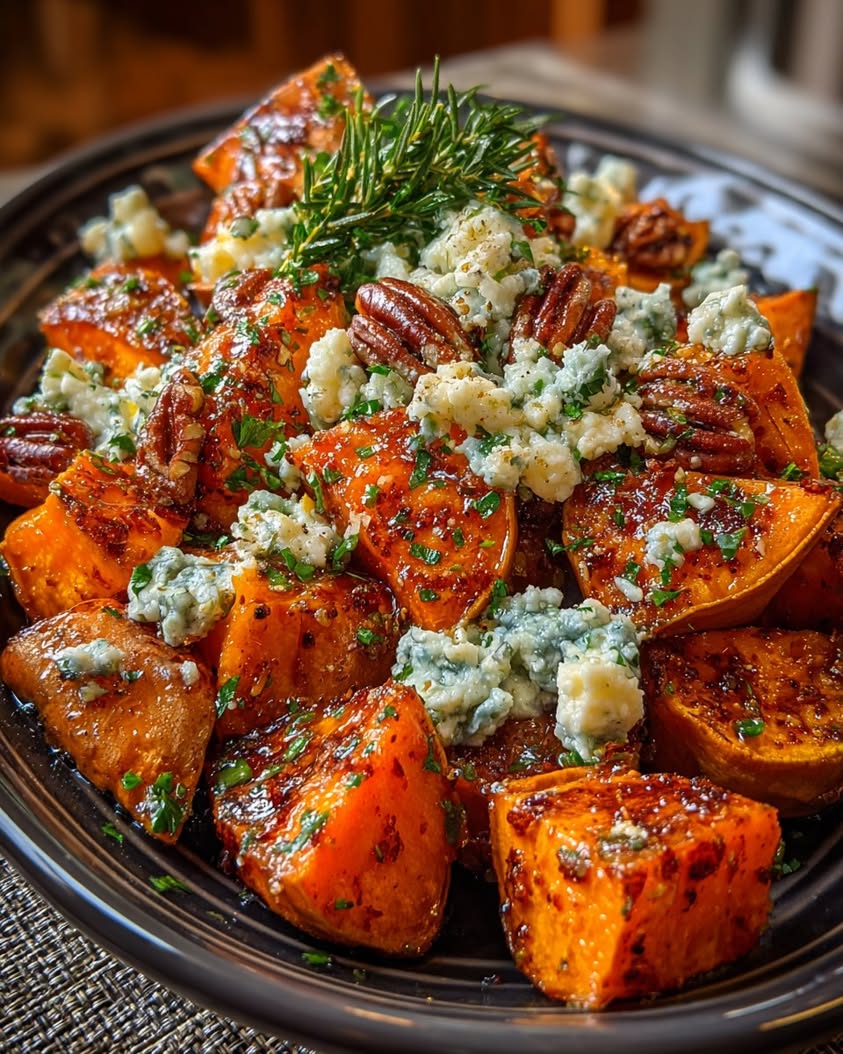
Maple-Roasted Sweet Potatoes with Blue Cheese & Candied Pecans: The Ultimate Sweet and Savory Side Dish
This incredible maple roasted sweet potatoes recipe creates a side dish that will steal the show at any dinner table. Imagine tender, caramelized sweet potatoes coated in a glossy maple glaze, then topped with tangy blue cheese crumbles and sweet, crunchy candied pecans. The combination of flavors and textures is absolutely magical, making this dish a guaranteed crowd-pleaser for both casual family dinners and elegant holiday gatherings.
Furthermore, this recipe strikes the perfect balance between sweet and savory elements. The natural sweetness of the roasted sweet potatoes intensifies in the oven, while the maple syrup adds a rich, complex sweetness. Meanwhile, the bold blue cheese provides a sharp, salty counterpoint that cuts through the sweetness beautifully. Finally, the candied pecans add that essential crunch, creating a symphony of textures in every single bite.
Additionally, this dish is surprisingly simple to prepare, requiring just basic kitchen skills and common ingredients. You will love how the aromas of roasting sweet potatoes and maple syrup fill your kitchen, creating an inviting, cozy atmosphere. This maple roasted sweet potatoes recipe has become a staple in many households for good reason; it delivers restaurant-quality results with home kitchen simplicity.
Quick Recipe Highlights
- Flavor Profile: This dish offers a sophisticated sweet and savory combination. The maple syrup enhances the natural sweetness of the potatoes, while the blue cheese adds a sharp, tangy contrast. Consequently, every bite delivers a complex flavor experience that delights the palate.
- Texture: You will experience multiple satisfying textures in this dish. The roasted sweet potatoes become beautifully tender inside with slightly crisp edges. Meanwhile, the candied pecans provide a firm, crunchy element, and the blue cheese adds creamy crumbles that melt slightly on the warm potatoes.
- Aroma: As this dish roasts, your kitchen will fill with warm, comforting scents. The maple syrup caramelizes, releasing its distinctive sweet fragrance. Simultaneously, the roasting sweet potatoes emit an earthy, sweet aroma that blends perfectly with the toasty notes from the pecans.
- Visual Appeal: This dish presents beautifully on any table with its vibrant orange sweet potatoes, snowy blue cheese crumbles, and golden-brown pecans. The glossy maple glaze catches the light, making the entire dish look as delicious as it tastes.
- Skill Level Needed: This recipe requires only basic kitchen skills like chopping vegetables and using an oven. Even beginner cooks can achieve excellent results by following the simple steps. Therefore, it is an ideal recipe for building confidence in the kitchen.
- Special Equipment: You need only standard kitchen tools: a baking sheet, a sharp knife, a mixing bowl, and measuring spoons. Parchment paper is helpful for easy cleanup but not essential. Ultimately, this accessibility makes the recipe perfect for any home cook.
Recipe Overview
- Difficulty Level: This maple roasted sweet potatoes recipe falls squarely into the easy category. The steps are straightforward and require no advanced techniques. Additionally, the ingredient list is simple, and the process is forgiving, making it perfect for novice cooks. Even children can help with the preparation, making it a fun family cooking project.
- Category: This versatile dish works as both a side dish and a vegetarian main course. It complements roasted meats beautifully, especially turkey and ham. Meanwhile, it stands strong as the centerpiece of a vegetarian meal when served with a fresh green salad.
- Cuisine: While sweet potatoes have roots in American Southern cooking, this preparation draws from modern American culinary trends. The combination of sweet and savory elements reflects contemporary tastes, while the use of maple syrup nods to traditional New England ingredients.
- Cost: This recipe uses affordable ingredients, with sweet potatoes being economical year-round. Blue cheese and pecans represent the priciest components, but you need only small amounts. Overall, this dish delivers impressive gourmet appeal without straining your grocery budget.
- Season: Although perfect for fall and winter holidays, this dish works well throughout the year. Sweet potatoes are consistently available, and the bright flavors complement spring and summer meals equally. Consequently, it has become a go-to recipe for many home cooks regardless of the season.
- Occasion: This elegant side dish shines at holiday feasts like Thanksgiving and Christmas. Simultaneously, it elevates weeknight dinners and impresses at potlucks and dinner parties. Its versatility makes it appropriate for both casual and formal gatherings.
Why You’ll Love This Maple Roasted Sweet Potatoes Recipe
First and foremost, the taste and texture combination is absolutely irresistible. The creamy sweet potatoes develop deep, caramelized notes from roasting, while the maple glaze adds a glossy sweetness that is not overly sugary. Then comes the delightful contrast of tangy blue cheese that cuts through the richness, followed by the satisfying crunch of candied pecans. Each component complements the others perfectly, creating a harmonious balance that will have everyone asking for seconds. Furthermore, the visual appeal of this dish makes it perfect for special occasions, with its vibrant colors and elegant presentation that looks far more complicated than it actually is.
Convenience is another significant advantage of this maple roasted sweet potatoes recipe. The preparation is remarkably simple, requiring only about fifteen minutes of active time before the oven takes over. This means you can focus on other meal components while your side dish cooks itself to perfection. Additionally, the ingredients are easy to find at any grocery store, with no special shopping trips required. The recipe is also forgiving; if your sweet potato cubes are not perfectly uniform, they will still roast up beautifully. This flexibility makes the recipe stress-free, even when cooking for important guests or during busy holiday meals.
Nutritionally, this dish offers substantial benefits that might surprise you. Sweet potatoes are packed with vitamin A, vitamin C, and fiber, making them an excellent addition to a balanced diet. The blue cheese provides calcium and protein, while the pecans contribute healthy fats and antioxidants. Although maple syrup adds sweetness, it is a natural sweetener that contains beneficial minerals like manganese and zinc. When enjoyed in reasonable portions, this dish can absolutely fit into a health-conscious eating plan. The combination of complex carbohydrates, healthy fats, and protein also makes it more satisfying than many other side dishes.
Socially, this maple roasted sweet potatoes recipe has tremendous value for entertaining. It consistently receives rave reviews from guests, often becoming the most talked-about dish on the table. The unique combination of flavors feels special and celebratory, making people feel truly cared for when you serve it. Moreover, the recipe scales beautifully for larger gatherings, so you can easily double or triple it to feed a crowd. The dish holds well at room temperature, eliminating the stress of perfect timing when coordinating multiple dishes for a dinner party. It also travels well for potlucks, making you the star of any shared meal event.
Finally, the cost-effectiveness and accessibility of this recipe cannot be overstated. Sweet potatoes are one of the most affordable vegetables available, providing excellent value for your food budget. While blue cheese and pecans might seem like luxury ingredients, you use them in modest quantities that stretch their impact. Compared to restaurant side dishes with similar sophistication, this homemade version costs a fraction of the price. Additionally, the recipe uses basic kitchen equipment that most home cooks already own. This accessibility means anyone can create this impressive dish regardless of their kitchen setup or culinary experience.
Historical Background and Cultural Significance
The story of sweet potatoes in American cuisine spans centuries, with roots reaching back to indigenous cultures of Central and South America. Spanish explorers introduced sweet potatoes to Europe and Asia after their voyages to the New World, and eventually, these nutritious tubers made their way to North American colonies. Early American cooks recognized their versatility and nutritional value, incorporating them into both savory and sweet preparations. The natural sweetness of these potatoes made them particularly valuable before refined sugar became widely available. Consequently, sweet potatoes became a staple in Southern cooking, where they featured prominently in both everyday meals and special occasion feasts.
Maple syrup has its own rich history in North American cuisine, particularly among Indigenous communities who first developed the process of tapping maple trees. They taught European settlers these techniques, and maple syrup production became an important seasonal activity in northeastern regions. The unique flavor of pure maple syrup made it a prized ingredient for sweetening dishes before the widespread availability of cane sugar. Its use with sweet potatoes was a natural pairing that celebrated two native North American ingredients. This combination represents a truly American culinary tradition that honors indigenous foodways while adapting them to contemporary tastes.
The evolution of this specific maple roasted sweet potatoes recipe reflects broader trends in modern American cooking. As palates became more sophisticated in the late 20th century, chefs began experimenting with contrasting flavor profiles, particularly the combination of sweet and savory elements. Blue cheese, with its sharp saltiness, provided the perfect counterpoint to sweet ingredients like maple-glazed vegetables. Meanwhile, the addition of candied nuts added textural interest that elevated simple roasted vegetables into restaurant-quality dishes. This particular combination likely emerged in upscale restaurants before trickling down to home kitchens through food magazines and cooking shows.
Regional variations of this concept exist throughout the United States, each reflecting local ingredients and culinary traditions. In the South, you might find pecans replaced with other native nuts like black walnuts or peanuts. In northern regions, maple syrup might be supplemented with apple cider reduction for additional complexity. Some versions incorporate fresh herbs like rosemary or thyme to add aromatic notes, while others include spicy elements like cayenne pepper or chipotle. These adaptations demonstrate the recipe’s versatility and its ability to reflect regional tastes while maintaining its core identity as a sophisticated sweet and savory side dish.
Ingredient Deep Dive
Sweet potatoes form the foundation of this magnificent dish, and selecting the right ones ensures optimal results. These vibrant tubors actually belong to the morning glory family rather than the same family as regular potatoes. Historically, they originated in Central or South America over 5,000 years ago and spread throughout the world via exploration and trade routes. Nutritionally, they are powerhouses of vitamin A in the form of beta-carotene, which gives them their characteristic orange hue. They also provide substantial vitamin C, manganese, and dietary fiber. When selecting sweet potatoes, look for firm specimens with smooth, unblemished skins and consistent coloring. Avoid any with soft spots, sprouts, or signs of decay. Store them in a cool, dark, well-ventilated place—not the refrigerator—where they will keep for about two weeks.
Pure maple syrup serves as both sweetener and glaze in this recipe, contributing its distinctive flavor and glossy sheen. This natural sweetener comes from the sap of maple trees, primarily sugar maples, and requires approximately forty gallons of sap to produce one gallon of syrup. The grading system indicates color and flavor intensity rather than quality, with darker syrups having more robust flavors. Maple syrup contains beneficial antioxidants and minerals like manganese and zinc, though it should still be used in moderation due to its sugar content. For this recipe, choose grade A dark amber or grade B maple syrup for the most pronounced flavor. Store maple syrup in the refrigerator after opening to prevent mold growth, where it will keep for up to a year.
Blue cheese introduces a bold, tangy element that beautifully balances the sweetness of the potatoes and maple. This category of cheese encompasses varieties like Roquefort, Gorgonzola, and Stilton, all characterized by blue-green mold veins created during the aging process. Historically, blue cheeses likely originated accidentally when cheeses were stored in caves with natural mold spores. Nutritionally, blue cheese provides protein, calcium, and phosphorus, though it is also high in sodium and saturated fat. When selecting blue cheese for this recipe, look for a crumbly texture and avoid any that appears dried out or has excessive ammonia scent. Store blue cheese tightly wrapped in the refrigerator, where it will keep for several weeks. If you are not a blue cheese fan, feta or goat cheese make excellent substitutes.
Candied pecans provide the essential crunchy element that completes the textural experience of this dish. Pecans are native to North America and were an important food source for Indigenous peoples long before European settlement. These nuts are particularly rich in healthy monounsaturated fats and contain various vitamins and minerals, including manganese and copper. The candying process typically involves coating the pecans in a sugar syrup that hardens when baked, creating their characteristic sweet crunch. For this recipe, you can use store-bought candied pecans or make your own with just pecans, sugar, and a pinch of salt. Store pecans in an airtight container in a cool, dark place to prevent them from becoming rancid. Walnuts or almonds can substitute if pecans are unavailable.
Common Mistakes to Avoid
- Cutting uneven sweet potato pieces leads to inconsistent cooking. Some pieces will burn while others remain undercooked. Always aim for uniform one-inch cubes to ensure even roasting and caramelization throughout the entire batch.
- Overcrowding the baking sheet prevents proper browning and creates steamed rather than roasted potatoes. Arrange the pieces in a single layer with space between them. Use two baking sheets if necessary to avoid overcrowding.
- Using imitation maple syrup instead of the real thing dramatically affects flavor. Pure maple syrup has complex notes that imitation syrups cannot replicate. The investment in quality syrup makes a significant difference in the final dish.
- Adding blue cheese too early causes it to melt completely and lose its distinctive texture. Always sprinkle the cheese over the hot sweet potatoes just before serving so it softens slightly but maintains its crumbly character.
- Burning the candied pecans creates bitter notes that overwhelm the other flavors. Watch them carefully during the last few minutes of toasting since they can go from perfectly golden to burnt very quickly.
- Skipping the olive oil results in less caramelization and sticking to the pan. The oil helps conduct heat and promotes the Maillard reaction that develops deep, complex flavors in the roasted sweet potatoes.
- Neglecting to season with enough salt fails to balance the sweetness. Salt enhances all the flavors and prevents the dish from tasting one-dimensionally sweet. Always taste and adjust seasoning before serving.
- Using stale pecans introduces off-flavors that detract from the dish. Always taste a pecan before using to ensure it is fresh and has not turned rancid, which can happen with improper storage.
Essential Techniques
Proper roasting technique transforms simple sweet potatoes into caramelized perfection. Roasting at high heat causes the natural sugars in the sweet potatoes to caramelize, developing deep, complex flavors that boiling or steaming cannot achieve. The key to successful roasting lies in even cutting, adequate oil coating, and proper spacing on the baking sheet. Cut your sweet potatoes into uniform one-inch cubes to ensure they cook at the same rate. Toss them thoroughly with oil to promote even browning and prevent sticking. Arrange them in a single layer with space between pieces to allow hot air to circulate, which creates crispy edges rather than steaming them. The visual cue for perfectly roasted sweet potatoes is golden brown edges with tender interiors that easily pierce with a fork.
Mastering the maple glaze application ensures optimal flavor distribution without making the dish overly sweet. The technique involves tossing the partially roasted sweet potatoes with maple syrup during the final stage of cooking. This timing allows the syrup to caramelize slightly without burning, which can happen if added too early. The high sugar content of maple syrup means it burns at lower temperatures than many people realize. By adding it during the last ten minutes of roasting, you achieve a glossy coating that enhances both flavor and appearance. Use a gentle tossing motion to coat the potatoes evenly without breaking them apart. The finished glaze should be sticky and glossy but not blackened or bitter tasting.
Toasting nuts properly maximizes their flavor and crunch factor. This simple technique involves heating nuts in a dry skillet or oven to release their natural oils and develop deeper, richer flavors. For candied pecans, the process typically involves coating them in a sugar syrup before toasting, which creates their characteristic sweet crunch. The key to successful toasting lies in constant attention since nuts can burn in moments. Use medium heat and shake the pan frequently for even coloring. The pecans are done when they become fragrant and take on a slightly darker hue. Always transfer them to a cool plate immediately after toasting to prevent residual heat from continuing the cooking process. Properly toasted pecans should taste rich and nutty without any bitter notes.
Pro Tips for Perfect Maple Roasted Sweet Potatoes
Choose garnet or jewel sweet potato varieties for their vibrant color and creamy texture when roasted. These types have moist, orange flesh that becomes particularly tender and sweet when cooked. Their thin skins become pleasantly edible after roasting, adding textural interest and nutritional value.
Soak cut sweet potatoes in cold water for thirty minutes before roasting to remove excess starch. This simple step results in crispier edges and fluffier interiors. Always pat them thoroughly dry before tossing with oil to ensure proper browning.
Add a pinch of cayenne pepper to the maple glaze for a subtle heat that enhances the other flavors. The spicy note creates additional complexity that balances the sweetness and keeps the palate interested. This small addition elevates the dish from simply delicious to truly memorable.
Use a rimmed baking sheet lined with parchment paper for easiest cleanup and even cooking. The rim prevents any oil or syrup from dripping into your oven, while the parchment paper eliminates sticking. The light color of parchment paper also promotes even browning compared to dark baking sheets.
Rotate your baking sheet halfway through cooking to account for hot spots in your oven. Most ovens have uneven heat distribution, which can cause one side of your sweet potatoes to brown more quickly. This simple rotation ensures uniformly cooked results.
Let the roasted sweet potatoes rest for five minutes before adding the blue cheese and pecans. This brief resting period allows the potatoes to firm up slightly, making them less likely to break when tossed with toppings. The residual heat will still gently warm the cheese without melting it completely.
Toast extra candied pecans to have on hand for salads or snacking. They store well in an airtight container and add instant elegance to various dishes. Having them prepared in advance makes assembling this recipe even quicker on busy days.
Variations and Adaptations
Regional variations of this concept allow for creative interpretation based on local ingredients and traditions. In the American South, you might find versions that incorporate bourbon in the maple glaze or use local pecans specifically. Northeastern adaptations might include apples or cranberries for additional tartness that complements the sweetness. Southwestern versions could incorporate chili powder or chipotle for smoky heat that contrasts beautifully with the sweet elements. International interpretations might use different cheese varieties like feta or halloumi, or substitute the pecans with other nuts like pistachios or pine nuts. These regional differences demonstrate the recipe’s incredible flexibility while maintaining its core identity as a sophisticated sweet and savory side dish.
Seasonal adaptations keep this recipe exciting throughout the year by incorporating produce that shines in different seasons. Spring versions might include fresh peas or asparagus tips added during the last few minutes of roasting. Summer adaptations could feature fresh corn kernels or cherry tomatoes for brightness and color. Autumn remains the classic season for this dish, particularly when made with newly harvested sweet potatoes. Winter versions might incorporate roasted Brussels sprouts or parsnips alongside the sweet potatoes for additional complexity. These seasonal variations allow you to enjoy the fundamental concept while celebrating the best produce each season offers.
Dietary modifications make this recipe accessible to people with various eating preferences and restrictions. For vegan versions, simply omit the blue cheese or use a plant-based alternative, and ensure your maple syrup is vegan-certified. Gluten-free needs are naturally met since the recipe contains no gluten-containing ingredients. Lower-carb adaptations might use fewer sweet potatoes and add more non-starchy vegetables like cauliflower. Dairy-free versions skip the blue cheese or use nutritional yeast for a cheesy flavor without dairy. Reduced-sugar versions might use less maple syrup and enhance flavor with spices like cinnamon or nutmeg. These modifications ensure everyone can enjoy this wonderful dish regardless of dietary needs.
Serving and Presentation Guide
Plating techniques significantly impact how this dish is perceived and enjoyed. For family-style serving, transfer the maple roasted sweet potatoes to a warm platter and sprinkle with blue cheese and candied pecans. Garnish with fresh herb sprigs like thyme or rosemary for color and fragrance. For individual portions, use a ring mold to create elegant towers on each plate, then carefully remove the mold to maintain the shape. Alternatively, serve in small ramekins for a more rustic presentation. The vibrant orange color of the sweet potatoes creates a beautiful base that makes the white cheese and brown pecans stand out dramatically. Always serve on warm plates to maintain the ideal temperature throughout the meal.
Garnishing ideas extend beyond the basic components to add visual interest and additional flavor dimensions. Fresh herb sprigs provide color contrast and subtle aromatic notes that complement the other flavors. Microgreens or edible flowers add sophistication and restaurant-quality presentation. A final drizzle of reduced balsamic vinegar creates beautiful dark swirls that add both visual appeal and tangy flavor. For special occasions, additional candied pecans arranged around the perimeter of the serving dish create a more lavish appearance. A light dusting of smoked paprika or sumac adds color and subtle flavor complexity. These garnishing touches transform the dish from everyday to extraordinary with minimal additional effort.
Traditional accompaniments for this maple roasted sweet potatoes recipe include roasted meats like turkey, ham, or pork tenderloin. The sweet and savory profile complements these proteins beautifully without overwhelming them. For vegetarian meals, pair with hearty greens like kale or Swiss chard sautéed with garlic. Grain-based sides like wild rice pilaf or quinoa provide additional texture and make the meal more substantial. Fresh, crisp elements like apple and fennel salad balance the richness of the roasted sweet potatoes. These traditional pairings have stood the test of time because they create balanced, satisfying meals that highlight the star qualities of this exceptional side dish.
Wine and Beverage Pairing
Wine pairings for this dish should consider the complex sweet and savory profile that requires a versatile wine. Off-dry Rieslings or Gewürztraminers work beautifully because their slight sweetness complements the maple glaze while their acidity cuts through the richness. For red wine lovers, Pinot Noir provides enough fruitiness to stand up to the sweetness without overwhelming the other flavors. Rosé wines, particularly those with some body, offer refreshing acidity that cleanses the palate between bites. For special occasions, sparkling wines like Prosecco or Cava provide effervescence that contrasts pleasantly with the dish’s richness. The key is choosing wines with good acidity to balance the sweetness and enough character to complement the bold blue cheese notes.
Non-alcoholic alternatives should provide similar balancing acts between sweetness and acidity. Sparkling apple cider offers effervescence and fruit notes that complement the autumnal flavors. Iced hibiscus tea provides tartness that cuts through the richness while offering beautiful color. Ginger beer delivers spicy warmth that contrasts with the sweet elements beautifully. For warmer weather, lavender lemonade offers floral notes that enhance the sophisticated profile of the dish. Craft sodas with complex flavors like blood orange or pear work surprisingly well. The goal is to choose beverages that refresh the palate between bites while complementing the dish’s unique flavor combination.
Storage and Shelf Life
Storage methods for leftovers maintain quality and food safety for enjoyable subsequent meals. Cool the maple roasted sweet potatoes completely before transferring to an airtight container. Store the blue cheese and candied pecans separately to prevent sogginess. Refrigerate the sweet potatoes within two hours of cooking to prevent bacterial growth. Properly stored, the roasted sweet potatoes will keep for three to four days in the refrigerator. The blue cheese will maintain its quality for up to two weeks when wrapped properly. The candied pecans will stay crisp for about a week when stored in an airtight container at room temperature.
Reheating instructions focus on restoring texture and flavor without further cooking the ingredients. For best results, spread the sweet potatoes in a single layer on a baking sheet and reheat in a 350°F oven for 10-15 minutes. This method restores some crispness to the edges rather than making them soggy. Microwave reheating works in a pinch but will soften the texture significantly. Always add the blue cheese and pecans after reheating to maintain their distinct textures. If the sweet potatoes seem dry after storage, drizzle with a tiny amount of maple syrup before reheating to refresh the glaze. Proper reheating makes leftovers nearly as delicious as the freshly made dish.
Make Ahead Strategies
Prep timeline planning reduces stress when serving this dish for important meals. You can peel and cube the sweet potatoes up to a day in advance if stored in cold water in the refrigerator. The candied pecans can be prepared several days ahead and stored at room temperature. The blue cheese can be crumbled in advance and refrigerated. On cooking day, simply drain and dry the sweet potatoes thoroughly before proceeding with the recipe. This advance preparation cuts the active cooking time significantly, making the recipe much more manageable for busy occasions like holiday meals.
Storage between steps maintains quality when preparing components in advance. Keep cubed sweet potatoes completely submerged in cold water to prevent oxidation and texture changes. Store candied pecans in an airtight container with parchment paper between layers to prevent clumping. Keep blue cheese crumbles wrapped in parchment paper inside an airtight container to maintain proper moisture levels. When ready to assemble, ensure all components reach room temperature for the most even cooking and best texture. These simple storage techniques preserve the quality of each component until you are ready to create the final dish.
Scaling Instructions
Halving the recipe works beautifully for smaller households or when you want to test it before serving to guests. Simply divide all ingredient quantities in half and use a smaller baking sheet. The cooking time may decrease slightly since there is less mass in the oven, so begin checking for doneness about five minutes earlier than the original recipe suggests. The reduced quantity means the sweet potatoes may brown more quickly, so monitor them closely during the final roasting stage. This scaling option makes the recipe practical for everyday meals rather than just special occasions.
Doubling or tripling the recipe requires some adjustments to ensure consistent results. Use multiple baking sheets rather than overcrowding a single sheet, and rotate them halfway through cooking for even browning. You may need to extend the cooking time by five to ten minutes due to the increased volume in your oven. Consider roasting in batches if your oven cannot accommodate multiple sheets at once. When increasing quantities, mix the maple syrup with the sweet potatoes in a large bowl rather than on the baking sheet for more even distribution. These adjustments ensure that larger batches turn out as perfectly as the standard recipe.
Nutritional Deep Dive
Macro breakdown of this dish reflects its balanced nature despite the sweet elements. Sweet potatoes provide complex carbohydrates that offer sustained energy release rather than blood sugar spikes. The olive oil contributes healthy monounsaturated fats that aid in nutrient absorption, particularly the fat-soluble vitamins in sweet potatoes. Blue cheese adds protein and additional fats that increase satiety. The pecans contribute more healthy fats along with plant-based protein. This combination of macros creates a satisfying dish that provides energy while keeping you full longer than carbohydrate-heavy side dishes. When enjoyed in reasonable portions, it fits well into various eating patterns.
Micronutrient analysis reveals an impressive array of vitamins and minerals in this seemingly simple dish. Sweet potatoes deliver massive amounts of vitamin A as beta-carotene, which supports vision, immune function, and skin health. They also provide substantial vitamin C, manganese, and several B vitamins. Blue cheese contributes calcium, phosphorus, and zinc for bone health. Pecans offer manganese, copper, and thiamine. The olive oil provides vitamin E and various antioxidants. Maple syrup contains small amounts of manganese, zinc, and calcium. This nutrient density means you are nourishing your body while enjoying incredible flavors, making it a true win-win situation.
Dietary Adaptations
Gluten-free needs are naturally met with this recipe since none of the core ingredients contain gluten. However, always check labels on processed ingredients like maple syrup, as some brands may process them in facilities that also handle wheat products. Most blue cheeses are gluten-free, but if you are highly sensitive, verify with the manufacturer since some aging processes might involve gluten. Candied pecans sometimes contain wheat-based ingredients in their coating, so either make your own or check labels carefully. With these simple verifications, this recipe easily accommodates gluten-free diets without any modifications to the preparation method.
Vegan adaptations require replacing two ingredients: the blue cheese and the honey if used in the candied pecans. For the cheese component, several excellent plant-based alternatives exist, including cashew-based “cheeses” or commercial vegan blue cheese substitutes. Nutritional yeast can provide some cheesy flavor if alternatives are unavailable. For the candied pecans, use maple syrup instead of honey for the sweetening process. These simple swaps create a completely plant-based version that maintains the sophisticated flavor profile of the original recipe. The result is equally impressive and satisfying for vegan diners.
Troubleshooting Guide
Texture issues commonly arise from improper preparation or cooking techniques. If your sweet potatoes turn out mushy, you likely overcrowded the pan or cut them too small. Solution: Always ensure space between pieces and maintain the recommended one-inch cube size. If they are not tender inside but browned outside, your oven temperature is too high. Solution: Reduce temperature by 25 degrees and extend cooking time. If the pecans become soft, they absorbed moisture from the other components. Solution: Always store and add them separately just before serving. These adjustments address the most common texture problems for perfect results every time.
Flavor balance problems typically involve excessive sweetness or insufficient seasoning. If the dish tastes too sweet, you may have used particularly sugary sweet potatoes or too much maple syrup. Solution: Increase the salt slightly and add more blue cheese to counterbalance the sweetness. If the flavors seem flat, the dish likely needs more salt or acid. Solution: A splash of lemon juice or vinegar can brighten the flavors dramatically. If the blue cheese overpowers, use a milder variety or reduce the quantity. These simple corrections restore the perfect sweet-savory balance that makes this dish exceptional.
Recipe Success Stories
Community feedback consistently highlights this recipe’s reliability and crowd-pleasing qualities. Many home cooks report that it has become their most requested side dish for holiday meals, with family members specifically asking for it year after year. Several readers have shared stories of converting blue cheese skeptics with this preparation, as the combination with sweet potatoes and maple creates a harmonious balance that even hesitant eaters enjoy. Others note that the recipe has become their go-to impressive but easy dish for dinner parties, consistently earning compliments from guests who assume it required far more effort than it actually does.
Variation successes demonstrate the recipe’s adaptability to different tastes and ingredient availability. One cook substituted walnuts for pecans and added crispy bacon bits for a heartier version that became a main course. Another incorporated roasted Brussels sprouts alongside the sweet potatoes for additional vegetable content that her children enjoyed. Several readers have created beautiful seasonal variations by adding pomegranate seeds in winter or fresh peaches in summer. These adaptations show how the basic template inspires creativity while maintaining the essential character that makes the original so beloved. The recipe serves as a springboard for personal interpretation while remaining foolproof in its fundamental form.
Frequently Asked Questions
Can I make this recipe ahead of time? Yes, you can prepare components in advance. Roast the sweet potatoes and store them separately from the toppings. Reheat gently in the oven before adding blue cheese and pecans. The texture remains excellent with this method.
What can I substitute for blue cheese? Excellent alternatives include feta, goat cheese, or even sharp cheddar. For vegan versions, use cashew-based alternatives or simply omit the cheese component altogether. The recipe remains delicious with these substitutions.
Can I use regular potatoes instead of sweet potatoes? While possible, the flavor profile changes significantly. Sweet potatoes provide the necessary sweetness that balances the other elements. If substituting, consider adding a touch more maple syrup to maintain the intended balance.
How do I prevent the maple syrup from burning? Add it during the last 10-15 minutes of roasting rather than at the beginning. This timing allows it to caramelize without burning. Also, ensure your oven temperature is accurate with an oven thermometer.
Can I use pre-cubed sweet potatoes from the store? Yes, this saves preparation time. However, check for uniform sizing since pre-cut pieces sometimes vary. Also, they may dry out slightly, so consider reducing roasting time by a few minutes.
Is this dish served hot or at room temperature? It is best served warm, when the sweet potatoes are tender and the blue cheese softens slightly. However, it also tastes excellent at room temperature, making it great for buffets or picnics.
Can I freeze the leftovers? The roasted sweet potatoes freeze reasonably well for up to three months. However, the texture softens upon thawing. The blue cheese and candied pecans do not freeze well and should be added fresh.
How can I make this recipe less sweet? Reduce the maple syrup by half and add more savory elements like fresh herbs or black pepper. You can also increase the blue cheese quantity to provide more balancing tang.
What main dishes pair well with this side? Roasted turkey, ham, pork tenderloin, or roast chicken all complement it beautifully. For vegetarian meals, serve with substantial salads or grain dishes like quinoa pilaf.
Can I add other vegetables to this recipe? Absolutely! Brussels sprouts, carrots, parsnips, or butternut squash all work well. Adjust cutting sizes for even cooking and consider slightly longer roasting times for harder vegetables.
Additional Resources
Related recipes that complement this maple roasted sweet potatoes recipe include other vegetable side dishes with similar sophistication level. Consider learning proper techniques for roasting other vegetables like Brussels sprouts with balsamic glaze or carrots with honey and thyme. Grain-based sides like wild rice pilaf with dried fruits and nuts provide textural contrast when serving this dish as part of a larger meal. Green vegetable preparations like garlic sautéed kale or green beans amandine offer freshness that balances the richness. Mastering these additional side dishes expands your entertaining repertoire and creates well-balanced menus that highlight this star recipe.
Technique guides that enhance your overall cooking skills will improve your results with this and many other recipes. Learning proper knife skills ensures evenly cut sweet potatoes for consistent roasting. Understanding oven temperature calibration helps prevent burning or undercooking. Mastering the Maillard reaction explanation helps you achieve perfect caramelization on various roasted vegetables. Studying herb and spice pairing principles allows you to create your own variations confidently. These fundamental skills transform good home cooks into exceptional ones, making every recipe you attempt more successful. Many online cooking schools and YouTube channels offer excellent free resources for developing these essential kitchen competencies.
PrintMaple-Roasted Sweet Potatoes with Blue Cheese & Candied Pecans
Description
A savory-sweet side dish featuring tender roasted sweet potatoes glazed with maple syrup, topped with creamy blue cheese and crunchy candied pecans.
Ingredients
For the Crust:
- 2 large sweet potatoes, peeled and cubed
- 3 tablespoons olive oil
- 1/4 cup pure maple syrup
- 1 teaspoon smoked paprika
- Salt and black pepper to taste
- 1/2 cup crumbled blue cheese
- 1/2 cup candied pecans, roughly chopped
- 2 tablespoons fresh parsley, chopped
Instructions
1. Prepare the Crust:
- Preheat oven to 400°F (200°C). Line a baking sheet with parchment paper.
- In a large bowl, toss sweet potato cubes with olive oil, maple syrup, smoked paprika, salt, and pepper until evenly coated.
- Spread the sweet potatoes in a single layer on the prepared baking sheet. Roast for 25-30 minutes, or until tender and caramelized, stirring halfway through.
- Remove from oven and transfer to a serving dish. Top with crumbled blue cheese and candied pecans while still warm.
- Garnish with fresh parsley and serve immediately.
Notes
You can customize the seasonings to taste.

I’m Shaykee—born in Morocco, seasoned across continents. From airplane galleys to home kitchens, I share the flavors and stories that shaped my journey.