
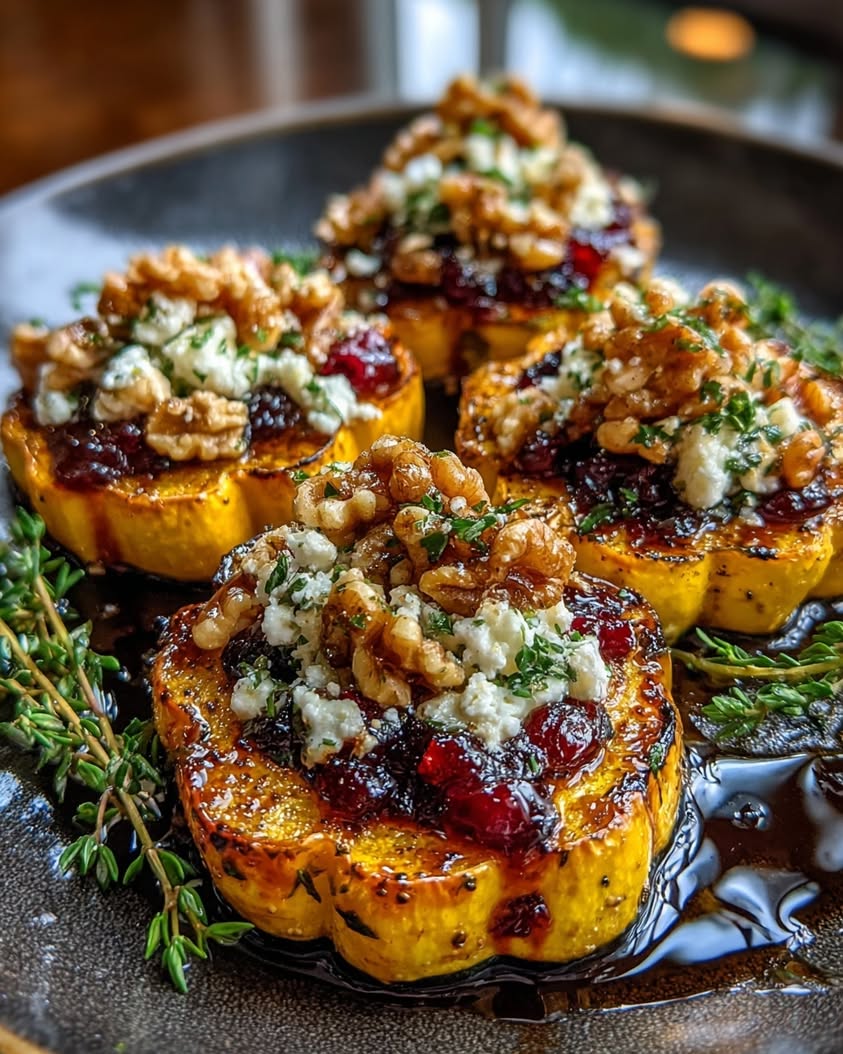
Savory Roasted Acorn Squash Rings: A Festive Fall Side Dish
These savory roasted acorn squash rings create an unforgettable autumn experience. Imagine tender, caramelized squash circles topped with creamy feta, crunchy walnuts, and a vibrant cranberry glaze. This stunning dish transforms simple ingredients into a show-stopping centerpiece. Furthermore, it brings warmth and elegance to any fall table with minimal effort required.
The beautiful presentation of these roasted acorn squash rings makes them perfect for holiday entertaining. Each ring maintains its shape beautifully during roasting, creating natural edible bowls for the toppings. Consequently, you get perfect portions that look as incredible as they taste. The combination of savory, sweet, and tangy elements will delight every palate at your table.
This recipe celebrates the best of fall produce in one magnificent dish. Acorn squash becomes wonderfully sweet and tender when roasted, while the cranberry glaze adds a festive touch. Additionally, the feta and walnuts provide contrasting textures and flavors that complement the squash perfectly. Ultimately, this dish proves that vegetable sides can be both beautiful and bursting with flavor.
Quick Recipe Highlights
- Flavor Profile: These roasted acorn squash rings offer a perfect balance of savory and sweet notes. The natural sweetness of the squash pairs beautifully with the tangy feta and rich walnuts. Meanwhile, the cranberry glaze adds a bright, tart counterpoint that ties everything together.
- Texture: You will experience multiple satisfying textures in every bite. The roasted squash becomes tender yet maintains structural integrity. Simultaneously, the walnuts provide a satisfying crunch while the feta offers a creamy, crumbly contrast that enhances the overall experience.
- Aroma: Your kitchen will fill with warm, comforting aromas as these squash rings roast. The scent of caramelizing squash blends with toasting walnuts and warming spices. Additionally, the cranberry glaze releases fruity, sweet notes that create an inviting atmosphere.
- Visual Appeal: The ring presentation makes this dish exceptionally beautiful on any table. The golden-brown squash circles create perfect platforms for the white feta, brown walnuts, and vibrant red glaze. Consequently, the final presentation features stunning color contrast and elegant composition.
- Skill Level Needed: This recipe requires only basic kitchen skills and simple techniques. You need basic knife skills for slicing the squash and the ability to mix a simple glaze. Therefore, even novice cooks can achieve impressive results with this approachable method.
- Special Equipment: You need only standard kitchen equipment to prepare this dish. A sharp chef’s knife and sturdy cutting board handle the squash preparation efficiently. Meanwhile, a baking sheet and mixing bowls are the only other essential tools required.
Recipe Overview
- Difficulty Level: This recipe falls into the easy category because it involves straightforward techniques. The most challenging aspect is safely cutting the squash, which becomes simple with proper technique. All other steps involve basic mixing and roasting methods that anyone can master quickly. Furthermore, the recipe forgives minor timing variations, making it very forgiving for beginners.
- Category: These roasted acorn squash rings function beautifully as a vegetable side dish. They also work well as a light vegetarian main course when served with a salad. Additionally, they make an impressive appetizer for holiday parties when cut into smaller portions.
- Cuisine: This dish draws inspiration from modern American fall and holiday cooking traditions. It incorporates classic autumn ingredients prepared with contemporary presentation sensibilities. The flavor profile reflects a fusion approach that highlights seasonal produce with global influences. Ultimately, it represents the best of seasonal, vegetable-forward American cuisine.
- Cost: This recipe uses affordable, seasonal ingredients that maximize flavor without high expense. Acorn squash remains budget-friendly during autumn months, and walnuts and feta offer high impact for reasonable cost. The cranberry glaze uses simple pantry staples, making the overall dish very economical for special occasions.
- Season: Fall and early winter represent the perfect season for this recipe. Acorn squash reaches peak sweetness and availability during autumn months. Furthermore, cranberries come into season, making this the ideal time for this flavor combination. The warm, comforting qualities also suit cooler weather perfectly.
- Occasion: This dish shines particularly bright during Thanksgiving and other holiday meals. It also works beautifully for autumn dinner parties, weekend family meals, and potluck gatherings. Additionally, it makes an impressive meatless Monday option that feels special enough for celebrations.
Why You’ll Love This Recipe
The taste and texture combination in these roasted acorn squash rings creates an unforgettable eating experience. Each component brings something unique to the dish, from the sweet, tender squash to the crunchy walnuts and creamy feta. The cranberry glaze adds a burst of fruity flavor that cuts through the richness beautifully. Moreover, the caramelized edges of the squash provide depth that balances the brighter notes. Every bite delivers complex flavors that evolve and complement each other perfectly.
Preparation convenience makes this recipe ideal for busy cooks and entertaining. The hands-on time remains minimal, with most effort going into simple slicing and mixing. Meanwhile, the oven does the majority of the work, freeing you to focus on other dishes or guests. The presentation looks far more impressive than the actual work involved, giving you maximum impact for minimal effort. Consequently, you can create a stunning centerpiece dish without kitchen stress.
Nutritional advantages make this dish as healthy as it is delicious. Acorn squash provides significant vitamins A and C, along with fiber and antioxidants. Walnuts contribute healthy fats and protein, while feta offers calcium with moderate calories. The cranberry glaze adds antioxidant benefits without excessive sugar, creating a well-rounded nutritional profile. Therefore, you can feel good about serving this beautiful dish to health-conscious guests and family members.
Social and entertaining value comes from the dramatic presentation and universal appeal. The ring presentation creates immediate visual interest and conversation at any table. Vegetarian guests appreciate having a substantial, beautiful option, while meat-eaters enjoy it as a complementary side. The familiar flavors with elegant presentation make it suitable for both casual family dinners and formal occasions. Ultimately, it bridges dietary preferences and occasion types with grace and flavor.
Cost-effectiveness and accessibility make this recipe practical for regular rotation. Seasonal squash remains affordable throughout autumn, and the other ingredients represent pantry staples for most cooks. The recipe adapts easily to what you have available, accepting substitutions without compromising quality. Furthermore, the impressive results belie the modest ingredient cost, giving you restaurant-quality presentation on a home cook’s budget. This accessibility ensures you can create special meals without special shopping trips.
Historical Background and Cultural Significance
Acorn squash has deep roots in Native American agriculture and cuisine. Indigenous peoples cultivated various squash varieties for thousands of years before European contact. They developed sophisticated growing techniques and preservation methods that ensured winter food security. Furthermore, they utilized every part of the plant, from the flesh and seeds to the blossoms and vines. This holistic approach to squash cultivation and usage represents an important culinary heritage.
European settlers adopted squash into their cooking traditions while introducing new ingredients. They combined indigenous squash with Old World ingredients like dairy products and sweeteners. This cultural fusion created the foundation for modern squash preparations we enjoy today. Meanwhile, cranberries also held significance for Native American communities, who used them for food, medicine, and dye. The combination of these native ingredients with European influences reflects American culinary history.
The evolution of stuffed and topped squash preparations shows changing American tastes. Early American cooks often simply roasted or boiled squash as a basic sustenance food. As refrigeration and transportation improved, creative preparations emerged that highlighted squash’s versatility. The mid-20th century saw stuffed squash becoming popular for special occasions and holiday meals. More recently, chefs have reimagined these preparations with contemporary presentations and global flavor influences.
Regional variations of squash dishes reflect local ingredients and cultural influences. New England traditions often feature maple syrup and cranberries with squash. Southern preparations might include pecans and different sweeteners, while Western versions could incorporate chili spices. These regional differences demonstrate how local ingredients and cultural preferences shape classic preparations. The ring presentation represents a modern twist that maintains respect for traditional flavor combinations.
Ingredient Deep Dive
Acorn squash serves as the foundation of this dish, both structurally and flavor-wise. This winter squash variety features dark green skin with distinctive ridges and sweet, yellow-orange flesh. Native to North and Central America, it has been cultivated for thousands of years by indigenous peoples. When selecting acorn squash, choose specimens that feel heavy for their size with firm, unblemished skin. Store whole squash in a cool, dark place for up to three months, but once cut, wrap tightly and refrigerate for up to five days.
Feta cheese provides the salty, tangy counterpoint that balances the squash’s sweetness. This brined cheese originated in Greece and traditionally uses sheep’s or goat’s milk. The crumbly texture and distinctive flavor come from the brining process that can last several weeks. For this recipe, block feta works better than pre-crumbled varieties because it maintains its shape during baking. If you need dairy-free alternatives, consider firm tofu marinated in lemon juice and salt or vegan feta varieties.
Walnuts contribute essential crunch and rich, earthy flavor to the dish. These nuts have been cultivated for thousands of years around the Mediterranean and Central Asia. They provide healthy fats, protein, and antioxidants, particularly valuable polyphenols. Always taste walnuts before using to ensure they haven’t turned rancid, as their high oil content makes them perishable. Store walnuts in an airtight container in the refrigerator or freezer to maintain freshness and prevent oxidation.
The cranberry glaze brings vibrant color and sweet-tart flavor that elevates the entire dish. Cranberries represent one of only three fruits native to North America, with a history of use by Native Americans dating back centuries. Their natural pectin content helps create a glossy, slightly thickened glaze without additional thickeners. Fresh or frozen cranberries both work well, though frozen may require slightly longer cooking to break down completely. The glaze can be prepared ahead and refrigerated for up to five days.
Common Mistakes to Avoid
- Uneven squash slicing creates inconsistent cooking results. Always use a sharp chef’s knife and apply even pressure when cutting through the squash. Furthermore, aim for consistent ¾-inch thickness to ensure all rings cook at the same rate.
- Skipping the seeding step leads to unpleasant texture issues. Take time to thoroughly scrape out all seeds and stringy membranes from each ring. Otherwise, these elements can become tough and bitter during roasting.
- Insufficient oil coating causes drying instead of caramelization. Use your hands to ensure every surface of each squash ring receives a thin oil coating. This step ensures proper browning and prevents the squash from drying out.
- Overcrowding the baking sheet prevents proper browning. Arrange squash rings in a single layer with space between them for air circulation. Crowding creates steam that inhibits the caramelization process essential for flavor development.
- Underseasoning the squash results in bland final flavor. Remember to season both sides of each ring generously with salt and pepper. The seasoning penetrates the flesh during roasting, enhancing the natural squash flavor.
- Adding toppings too early causes burning and texture loss. Wait until the final minutes of roasting to add the cheese and nuts. This timing preserves their textures and prevents burning from prolonged oven exposure.
- Neglecting to toast walnuts separately diminishes their flavor impact. Toasting walnuts before adding them to the dish enhances their nutty flavor and crisp texture. Raw walnuts lack the depth that toasted walnuts contribute.
- Rushing the cranberry glaze development affects consistency and flavor. Simmer the glaze until it properly thickens and the cranberries fully break down. A rushed glaze will be too thin and lack the concentrated fruit flavor.
- Serving immediately from the oven misses optimal flavor integration. Let the finished dish rest for five minutes before serving to allow flavors to meld. This brief resting period improves both flavor and slicing neatness.
Essential Techniques
Squash preparation requires proper technique to ensure safety and good results. Always stabilize the squash on your cutting board before attempting to slice it. Use a sharp chef’s knife and apply firm, controlled pressure rather than forceful chopping motions. The ridged skin of acorn squash can guide your cuts if you follow the natural lines. This method produces even rings that cook consistently and present beautifully.
Roasting technique determines the texture and flavor development of your squash rings. Proper oven temperature ensures the squash cooks through while developing caramelized edges. Arrange the rings in a single layer with space between them to allow hot air circulation. Rotate the baking sheet halfway through cooking if your oven has hot spots. The rings should become tender enough to pierce easily with a fork but still hold their shape.
Glaze preparation involves balancing sweetness and acidity while achieving proper consistency. Simmer the cranberries until they burst and release their natural pectin, which thickens the glaze. Stir frequently to prevent sticking and ensure even cooking throughout the process. Taste and adjust seasoning before cooling slightly, as flavors will concentrate as the glaze thickens. The finished glaze should coat the back of a spoon but still be pourable.
Assembly timing ensures each component contributes its best qualities to the final dish. Add the cheese and walnuts during the last few minutes of roasting to warm through without burning. Drizzle the glaze just before serving to maintain its vibrant color and fresh flavor. This staggered approach preserves the distinct textures and temperatures that make the dish interesting. Proper assembly transforms individual components into a cohesive, balanced final presentation.
Pro Tips for Perfect Roasted Acorn Squash Rings
Select medium-sized squash that feel heavy for their size, indicating good moisture content. Larger squash often have thicker, tougher skin and less tender flesh. Furthermore, medium squash produce rings of ideal diameter for individual portions.
Use an ice cream scoop or sturdy spoon to cleanly remove seeds from the squash rings. The curved shape conforms perfectly to the ring interior, making cleanup efficient. This method ensures no stringy membranes remain to affect texture.
Brush both sides of each ring thoroughly with oil using a pastry brush for even coverage. This technique uses less oil than tossing while ensuring complete coverage. Consequently, you achieve consistent browning without greasiness.
Arrange squash rings on a parchment-lined baking sheet for easy cleanup and preventing sticking. The parchment also promotes even browning and prevents the glaze from bonding to the pan. This simple step significantly improves your cleanup experience.
Toast walnuts separately while the squash roasts to maximize their flavor potential. Spread them in a single layer on a separate baking sheet for the last five minutes of roasting. This method ensures perfect toastiness without risk of burning.
Prepare the cranberry glaze while the squash roasts to streamline your workflow. The glaze can rest at room temperature until needed, allowing flavors to meld. This timing makes final assembly quick and efficient.
Let the finished dish rest briefly before serving to allow the feta to set slightly. This resting period helps the cheese adhere better to the squash when slicing. Additionally, it allows the flavors to integrate more completely.
Garnish with fresh herbs like thyme or rosemary just before serving for aromatic appeal. The fresh herbs provide a final flavor layer that complements the other components. This finishing touch enhances both presentation and taste complexity.
Variations and Adaptations
Regional variations allow you to customize this dish to different culinary traditions. For a Southern twist, substitute pecans for walnuts and add a touch of bourbon to the glaze. Mediterranean versions could use goat cheese instead of feta and incorporate oregano and lemon zest. Southwest adaptations might include pepitas, cotija cheese, and a chili-spiked glaze. These regional variations maintain the beautiful presentation while offering new flavor experiences.
Seasonal adaptations keep this recipe relevant throughout the year while using peak ingredients. Spring versions could feature asparagus tips and fresh herbs with lemon-based glaze. Summer adaptations might use zucchini rings and fresh berries in the glaze. Winter variations could incorporate roasted chestnuts and pomegranate molasses. Each seasonal twist celebrates available produce while maintaining the dish’s structural appeal.
Dietary modifications make this dish accessible to various eating preferences and restrictions. Vegan versions can use tofu feta and maple syrup instead of honey in the glaze. Gluten-free adaptations require no changes since the recipe naturally contains no gluten. Lower-carb options might reduce the sweetener in the glaze and increase the cheese proportion. These modifications ensure everyone can enjoy this beautiful dish regardless of dietary needs.
Flavor variations let you experiment with different taste profiles while keeping the format. Savory options could include garlic herb butter instead of sweet glaze and Parmesan cheese. Asian-inspired versions might feature miso glaze and sesame seeds with scallions. Middle Eastern variations could incorporate za’atar seasoning and pomegranate seeds. These flavor explorations demonstrate the versatility of the basic ring presentation.
Texture modifications allow you to customize the eating experience to personal preference. Extra-crispy versions involve roasting at higher temperature for shorter time. Softer textures result from covering during part of the roasting time to steam slightly. Added crunch can come from breadcrumb topping or additional nuts. These texture adjustments let you perfect the dish to your ideal consistency.
Presentation alternatives maintain the flavor profile while changing the visual impact. Horizontal stacking creates a tower effect for more formal plating. Deconstructed versions arrange components separately for interactive dining experiences. Individual ramekins make elegant single servings for dinner parties. These presentation options provide flexibility for different occasions and service styles.
Serving and Presentation Guide
Plating techniques significantly enhance the visual appeal of this already beautiful dish. Arrange two rings slightly overlapping on each plate for dynamic composition. Alternatively, create a single layer covering the plate surface for maximum color display. Use negative space effectively to let the vibrant colors stand out against the plate background. These plating approaches transform the dish from simple food to edible art.
Garnishing ideas add the final touches that elevate the presentation to restaurant quality. Fresh herb sprigs like thyme or rosemary provide color contrast and aromatic appeal. Microgreens or edible flowers add sophistication and freshness to the composition. A drizzle of high-quality olive oil or balsamic reduction creates elegant finishing lines. These garnishes should complement rather than overwhelm the main components.
Traditional accompaniments create balanced menus that highlight the squash rings appropriately. Roasted turkey or chicken makes a classic protein partner that doesn’t compete for attention. Wild rice or quinoa pilaf provides textural contrast and absorbs the delicious glaze. Simple green salads with vinaigrette cut the richness of the dish. These accompaniments create harmonious meals where each element supports the others.
Modern serving suggestions adapt this dish to contemporary dining trends. Serve as part of a vegetarian tasting menu with other seasonal vegetable preparations. Offer as a shared plate in the center of the table for family-style dining. Present as an appetizer course before a more substantial main dish. These serving approaches reflect current dining preferences while showcasing the dish’s versatility.
Temperature considerations ensure optimal eating experience from first bite to last. Serve the dish warm but not piping hot to allow all flavors to be perceptible. Warm your serving platter or plates to maintain temperature during service. Consider room temperature components if serving buffet-style to prevent temperature issues. These temperature management techniques preserve the intended texture and flavor balance.
Portion control tips help balance this rich side dish with other menu components. One to two rings per person works well as a side dish alongside other offerings. Three to four rings can serve as a vegetarian main course when accompanied by salad. Smaller ring halves work beautifully as passed appetizers during cocktail hour. These portion guidelines ensure satisfying but not overwhelming servings.
Wine and Beverage Pairing
Wine pairings should complement both the sweetness of the squash and the saltiness of the feta. Off-dry Riesling or Gewürztraminer work beautifully with their slight sweetness and aromatic profiles. Medium-bodied Pinot Noir provides enough structure without overwhelming the delicate squash flavors. Rosé with good acidity cuts through the richness while complementing the cranberry notes. These wine choices enhance rather than compete with the complex flavor profile.
Non-alcoholic alternatives offer sophisticated pairing options for all guests. Sparkling apple cider provides effervescence and fruit notes that mirror the autumn themes. Ginger beer offers spice and sweetness that stand up to the bold flavors. Hibiscus tea served chilled provides tartness that echoes the cranberry elements. These alcohol-free options deliver complexity and pairing appropriateness worthy of special occasions.
Craft beer selections can highlight different aspects of this multifaceted dish. Belgian-style witbier offers citrus notes that complement the squash and cheese beautifully. Amber ale provides maltiness that stands up to the roasted elements without bitterness. Saison farmhouse ale brings peppery notes that cut through the richness effectively. These beer choices demonstrate how hops and malt can enhance vegetable-focused dishes.
Temperature considerations ensure beverages complement rather than clash with the dish. White wines and rosés should be properly chilled but not ice-cold to preserve aroma. Red wines benefit from slight chilling to approximately 55°F for optimal expression. Non-alcoholic options should match the temperature of your wine service for consistency. Proper temperature management allows each beverage to perform its pairing role effectively.
Serving suggestions create cohesive beverage experiences throughout the meal. Offer both white and red options to accommodate different preferences among guests. Consider a signature non-alcoholic cocktail for inclusive entertaining. Provide water service throughout the meal to cleanse palates between bites. These serving approaches ensure all guests have appropriate beverage options that enhance their dining experience.
Storage and Shelf Life
Storage methods vary depending on whether you’re storing components separately or the assembled dish. Unassembled components keep best when stored separately in airtight containers. The roasted squash rings can be refrigerated for up to four days when properly stored. The cranberry glaze maintains quality for up to one week when refrigerated in glass containers. These separate storage approaches preserve the quality of each element.
Temperature requirements ensure food safety while maintaining texture and flavor integrity. Always cool components to room temperature before refrigerating to prevent condensation. Store at consistent refrigerator temperatures of 40°F or below for food safety. Never leave the assembled dish at room temperature for more than two hours. These temperature guidelines prevent bacterial growth while preserving quality.
Container recommendations help maintain optimal texture during storage. Use shallow containers for squash rings to prevent stacking and crushing. Glass containers prevent odor transfer and allow easy visibility of contents. Separate compartments work well for storing the various components together. Proper container selection significantly extends the quality life of your prepared components.
Signs of spoilage help you determine when to discard stored components. Mold growth, off odors, or slimy textures indicate spoilage has occurred. Significant color changes or fermented smells also signal the end of safe storage life. When in doubt, follow the basic food safety principle: when uncertain, throw it out. These indicators help prevent foodborne illness while ensuring optimal eating experiences.
Reheating instructions restore the dish to serving quality while maintaining food safety. Reheat squash rings in a 350°F oven until warmed through, about 10-15 minutes. Microwave reheating can make the squash rubbery, so oven method is preferred. Add fresh toppings after reheating to maintain their textures and appearances. Proper reheating techniques revive the dish close to its freshly made quality.
Freezing guidelines help extend storage life for longer-term preservation. The roasted squash rings freeze reasonably well for up to three months. Freeze in single layers before transferring to airtight containers to prevent sticking. The cranberry glaze also freezes well for several months. Note that previously frozen feta may become crumbly upon thawing, so consider adding fresh.
Make Ahead Strategies
Prep timeline organization helps distribute workload for stress-free entertaining. The cranberry glaze can be prepared up to five days in advance and refrigerated. Squash can be sliced and seeded one day ahead, stored wrapped in refrigerator. Toppings can be measured and prepared the day before, stored separately. This staggered approach makes final assembly quick and simple.
Storage between steps maintains quality when preparing components in advance. Store prepared squash rings between layers of parchment paper in airtight containers. Keep toasted walnuts in separate airtight containers at room temperature. Refrigerate crumbled feta in its own container until ready to use. These separate storage methods preserve the distinct qualities of each component.
Quality impact assessment helps determine which steps benefit from advance preparation. The cranberry glaze actually improves when made ahead as flavors meld. Squash rings maintain quality well when sliced ahead but not roasted. Toasted nuts retain their crunch for several days when stored properly. Understanding these quality timelines helps you plan effectively.
Assembly tips ensure the final dish comes together seamlessly after advance preparation. Bring all components to near room temperature before final assembly for even heating. Reheat the cranberry glaze gently to return it to pourable consistency. Roast the prepared squash rings just before serving for optimal texture. These assembly techniques bridge the gap between advance prep and fresh quality.
Reheating guidelines restore make-ahead components to serving perfection. Reheat the squash rings from refrigerated state rather than room temperature for safety. Warm the glaze in a saucepan over low heat, stirring frequently. Add the cheese and nuts during the last few minutes of reheating the squash. These specific reheating methods preserve the qualities you worked to create.
Fresh element additions provide the final touches that make advance-prepared dishes taste freshly made. Always add fresh herbs as garnish just before serving for maximum impact. Consider a final drizzle of high-quality olive oil after reheating for freshness. A sprinkle of flaky salt at service enhances all the flavors. These last-minute additions elevate make-ahead dishes to fresh-made quality.
Scaling Instructions
Halving the recipe works beautifully for smaller households or more intimate meals. Use one medium acorn squash and reduce all other ingredients proportionally. Maintain the same oven temperature and roasting time for consistent results. Use a smaller baking sheet or arrange rings on half of a standard sheet. This scaling approach ensures the same quality and cooking dynamics as the full recipe.
Doubling or tripling requires consideration of equipment and oven space limitations. Use multiple baking sheets and rotate them halfway through cooking for even results. Consider roasting in batches if oven space is limited, keeping finished batches warm. Increase glaze preparation in a larger saucepan to prevent overflow issues. These adjustments maintain quality when preparing larger quantities.
Equipment adjustments become necessary when significantly scaling recipe quantities. Use multiple oven racks positioned in upper and lower thirds of the oven. Invest in heavy-duty baking sheets that resist warping under larger loads. Consider using sheet pan liners for easier cleanup with multiple batches. Proper equipment selection prevents quality compromises when scaling up.
Timing modifications help manage workflow when preparing larger quantities. Stagger preparation so you’re not slicing all squash at once if working alone. Prepare the glaze while the first batches of squash roast to optimize time. Enlist help for final assembly when dealing with multiple baking sheets. These timing strategies prevent last-minute stress when scaling up for crowds.
Storage considerations change when working with larger quantities of prepared dish. Plan refrigerator space in advance for storing components or finished dish. Use shallow storage containers to promote rapid cooling for food safety. Label containers with preparation dates when making components ahead. These storage preparations ensure food safety and quality when cooking in volume.
Nutritional Deep Dive
Macro breakdown reveals a well-balanced nutritional profile suitable for various eating plans. Each serving provides complex carbohydrates from the squash for sustained energy release. Healthy fats from the walnuts and olive oil support nutrient absorption and satisfaction. Moderate protein comes from the cheese and nuts, contributing to meal completeness. This macro balance makes the dish suitable as either a substantial side or light main course.
Micronutrient analysis shows significant vitamin and mineral content from the whole food ingredients. Acorn squash delivers substantial vitamin A, vitamin C, and several B vitamins. Walnuts provide important minerals like manganese, copper, and magnesium. Feta cheese contributes calcium and phosphorus for bone health. These micronutrients support various body systems from immunity to energy production.
Health benefits extend beyond basic nutrition to functional food advantages. The antioxidants in squash and cranberries help combat oxidative stress and inflammation. The fiber content supports digestive health and blood sugar regulation. Anti-inflammatory compounds in walnuts contribute to heart health and cognitive function. These functional benefits make the dish both delicious and genuinely health-supporting.
Dietary considerations accommodate various eating patterns and restrictions. The recipe naturally fits vegetarian eating patterns without modification. Gluten-free needs are automatically met with these ingredients. Mediterranean diet adherents will appreciate the emphasis on vegetables, nuts, and olive oil. These inherent dietary compatibilities make the dish accessible to diverse nutritional approaches.
Portion analysis helps with calorie awareness and meal planning. As a side dish, one or two rings provide substantial nutrition without excessive calories. As a main course, three rings create a satisfying meal under 500 calories. The ingredient proportions provide visual cues for appropriate portion sizes. This flexibility supports both weight management and satisfying eating experiences.
Weight management tips focus on the satiety factors and nutrient density. The high fiber and water content of squash promotes fullness with moderate calories. Protein and fat from toppings extend satiety between meals. Nutrient density means you get significant nutrition per calorie consumed. These factors make the dish weight-management friendly when portioned appropriately.
Dietary Adaptations
Gluten-free adaptation requires no changes since the recipe contains no gluten-containing ingredients. Naturally, always verify that any processed ingredients like glaze components are certified gluten-free. This inherent compatibility makes the recipe safe for celiac disease and gluten sensitivity. Furthermore, the dish demonstrates how naturally gluten-free cooking can be delicious and satisfying.
Dairy-free modification substitutes the feta cheese with appropriate alternatives. Firm tofu crumbled and marinated in lemon juice and salt creates a convincing texture. Commercial vegan feta products have improved significantly in recent years. Nutritional yeast can be added to either option for cheesy flavor notes. These substitutions maintain the dish’s structural integrity while accommodating dairy restrictions.
Vegan adaptation combines dairy-free modifications with sweetener adjustments. Use maple syrup or agave instead of honey in the cranberry glaze. Ensure any sugar used in the glaze is certified vegan, as some refining processes use bone char. The walnuts and squash naturally align with vegan eating patterns. These simple changes create a completely plant-based version that remains impressive.
Low-carb modification focuses on reducing the sugar content in the glaze. Use sugar-free sweeteners like erythritol or monk fruit in the cranberry glaze. Increase the proportion of walnuts and cheese to compensate for reduced squash portions. Consider adding more herbs and spices to enhance flavor without carbohydrates. These adjustments create a keto-friendly version while maintaining the dish’s appeal.
Paleo adaptation removes dairy and uses natural sweeteners in moderation. Substitute the feta with chopped olives or avocado for creamy, salty elements. Use raw honey or maple syrup in minimal quantities in the glaze. Ensure all ingredients comply with paleo principles regarding processing and sourcing. These modifications align the dish with paleo dietary guidelines while preserving its essence.
Low-FODMAP adaptation modifies ingredient quantities to reduce fermentable carbohydrates. Limit squash portion to one ring per serving to stay within FODMAP limits. Use lactose-free feta or substitute with small quantities of hard cheese. Replace honey with maple syrup in the glaze for FODMAP compliance. These careful adjustments make the dish suitable for irritable bowel syndrome management.
Troubleshooting Guide
Texture issues often stem from improper roasting temperature or timing. If squash remains tough, it likely needs additional roasting time at the same temperature. Conversely, if squash becomes mushy, reduce roasting time or temperature slightly. Always test tenderness with a fork rather than relying solely on timer. These adjustments restore the ideal tender-yet-firm texture.
Flavor balance problems typically involve insufficient seasoning or component proportions. If the dish tastes bland, increase salt seasoning or add a splash of lemon juice to brighten. If too sweet, increase the feta quantity or add black pepper for contrast. Adjust the sweet-tart balance in the glaze by adding more lemon juice or sweetener. These simple corrections restore the intended flavor harmony.
Temperature problems usually relate to oven accuracy or baking sheet positioning. Use an oven thermometer to verify your oven temperature matches the setting. Rotate baking sheets halfway through cooking if your oven has hot spots. Consider convection setting if available for more even roasting. These solutions address common temperature-related cooking challenges.
Equipment challenges often involve knife sharpness or baking sheet quality. Invest in professional sharpening if your knife struggles with squash preparation. Use heavy-duty baking sheets that resist warping at high temperatures. Consider parchment paper liners if sticking becomes an issue. Proper equipment selection prevents many common preparation problems.
Ingredient substitution issues require understanding flavor profiles and textures. When substituting nuts, choose varieties with similar oil content and crunch factor. Cheese substitutions should match the saltiness and crumbliness of feta. Sweetener alternatives should provide similar consistency and sweetness level. These substitution principles maintain the dish’s balance when using alternatives.
Timing concerns typically involve coordinating multiple components for service. Prepare the glaze while squash roasts to optimize timing. Toast nuts during the last few minutes of roasting if you forgot earlier. Have all components measured and ready before starting final assembly. These timing strategies prevent last-minute rushing and mistakes.
Recipe Success Stories
Community feedback consistently highlights the impressive presentation and balanced flavors. Many home cooks report receiving compliments from guests who assume the dish required professional skill. Families appreciate having a vegetable side that everyone enjoys, including picky eaters. Thanksgiving cooks particularly value having a show-stopping vegetarian option that doesn’t feel like a compromise. These responses demonstrate how the recipe delivers both visual and culinary satisfaction.
Variation successes show the recipe’s adaptability to different tastes and occasions. One cook created a Mexican-inspired version with chili powder and pepitas that became a family favorite. Another substituted blue cheese and pears for the feta and cranberries with excellent results. A third cook made miniature versions for a holiday party that disappeared immediately. These success stories illustrate the recipe’s flexibility and crowd-pleasing potential.
Adaptation stories demonstrate how cooks have personalized the recipe to their needs. A gluten-free family was thrilled to find such an impressive naturally gluten-free option. Vegan cooks have successfully adapted the recipe for plant-based holiday meals. Budget-conscious cooks have substituted ingredients based on sales without sacrificing quality. These adaptations show the recipe’s accessibility across dietary and economic circumstances.
Reader suggestions have contributed valuable improvements to the preparation process. Multiple cooks recommend using a mandoline for perfectly even squash rings. Others suggest adding orange zest to the cranberry glaze for enhanced complexity. Several readers swear by toasting the squash seeds for an additional garnish. These community contributions enrich the recipe through shared kitchen wisdom.
Photography tips from successful makers help others capture the dish’s beauty. Natural sidelighting emphasizes the texture contrast between components. Shooting from directly above highlights the circular composition. Including preparation shots of the sliced squash rings tells a visual story. These photographic techniques help home cooks showcase their beautiful results.
Frequently Asked Questions
Can I use other types of squash for this recipe?
Absolutely, while acorn squash works
Print
Roasted Acorn Squash Rings with Feta, Walnuts & Cranberry Glaze
Description
A beautiful and flavorful autumn dish featuring roasted acorn squash rings topped with tangy feta, crunchy walnuts, and a sweet-tart cranberry glaze.
Ingredients
For the Crust:
- 1 large acorn squash, sliced into 1/2-inch rings and seeds removed
- 2 tablespoons olive oil
- 1/2 teaspoon salt
- 1/4 teaspoon black pepper
- 1/2 cup crumbled feta cheese
- 1/4 cup chopped walnuts
- 1/4 cup cranberry sauce
- 1 tablespoon maple syrup
- 1 teaspoon balsamic vinegar
- Fresh thyme leaves for garnish
Instructions
1. Prepare the Crust:
- Preheat oven to 400°F (200°C). Line a baking sheet with parchment paper.
- Brush both sides of the acorn squash rings with olive oil and season with salt and pepper. Arrange in a single layer on the baking sheet.
- Roast for 25-30 minutes, flipping halfway through, until squash is tender and edges are golden.
- While squash is roasting, combine cranberry sauce, maple syrup, and balsamic vinegar in a small saucepan. Heat over low until smooth and warmed through.
- Remove squash from oven. Drizzle with cranberry glaze, then sprinkle with feta and walnuts. Garnish with fresh thyme and serve warm.
Notes
You can customize the seasonings to taste.

I’m Shaykee—born in Morocco, seasoned across continents. From airplane galleys to home kitchens, I share the flavors and stories that shaped my journey.