
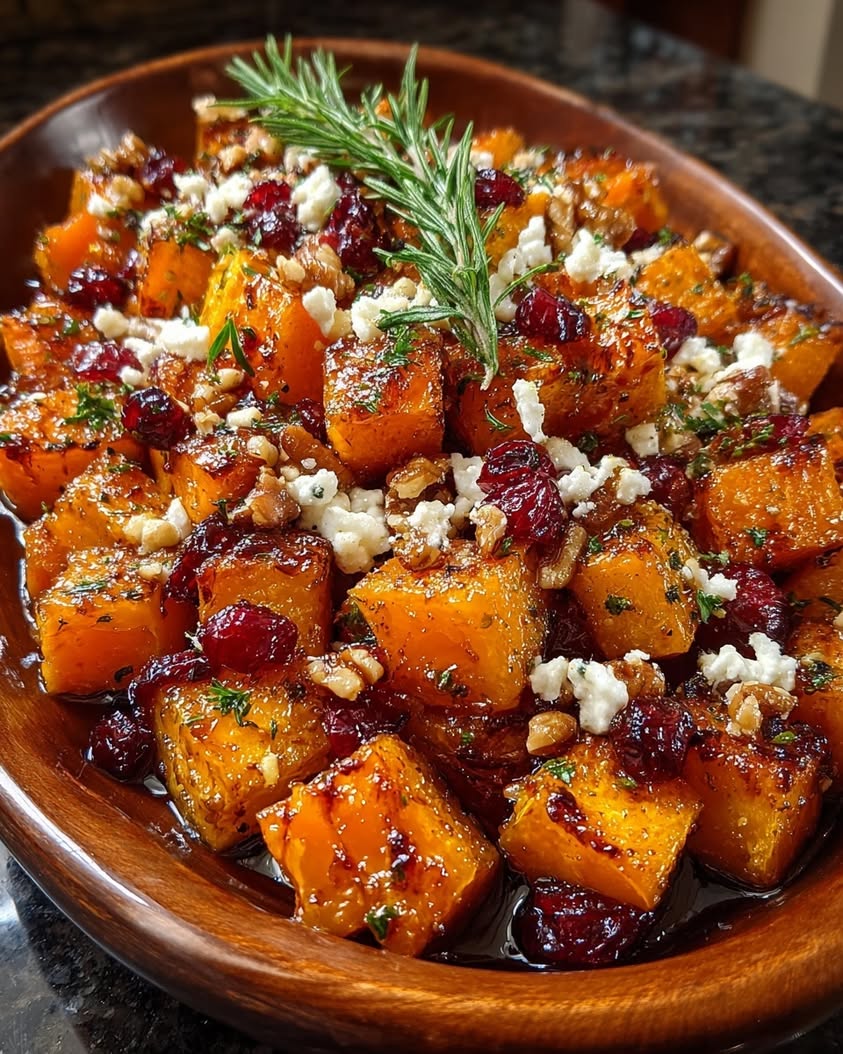
Creamy Roasted Butternut Squash with Tangy Feta, Crunchy Walnuts & a Sweet Cranberry-Honey Glaze
This creamy roasted butternut squash recipe truly captures the essence of autumn in a single dish. Imagine tender, caramelized squash cubes paired with salty feta, toasted walnuts, and a vibrant cranberry-honey glaze. Consequently, every bite delivers a perfect harmony of sweet and savory flavors. This stunning side dish will undoubtedly become the star of your holiday table.
Furthermore, this recipe simplifies the process of creating an impressive vegetable side dish. Roasting the squash concentrates its natural sweetness, while the quick stovetop glaze adds a sophisticated touch. The final assembly takes mere minutes, yet the result looks and tastes like it came from a professional kitchen. Ultimately, this dish proves that simple ingredients can create extraordinary meals.
Quick Recipe Highlights
- Flavor Profile: This dish features a masterful balance of sweet roasted squash and tangy honey-cranberry glaze against salty feta cheese. The flavor combination creates a complex taste experience that evolves with each bite. Savory herbs and warm spices round out the profile beautifully.
- Texture: You will enjoy contrasting textures from creamy roasted squash, crunchy toasted walnuts, and crumbly feta cheese. The caramelized edges of the squash provide pleasant crispness against the soft interior. Meanwhile, the glossy glaze adds a lovely sheen and slight stickiness.
- Aroma: As the squash roasts, your kitchen will fill with warm, sweet aromas of cinnamon and maple. The toasted walnuts release a nutty fragrance that complements the earthy squash. Finally, the cranberry glaze introduces bright, fruity notes that cut through the richness.
- Visual Appeal: This dish presents a beautiful color palette of deep orange squash, white feta, brown walnuts, and ruby-red glaze. The glossy coating makes the vegetables shimmer invitingly on the plate. Additionally, the scattered herbs and nuts create appealing visual texture.
- Skill Level Needed: This recipe requires basic knife skills for cubing squash and simple stovetop techniques. Even beginner cooks can achieve excellent results by following the straightforward instructions. The roasting process is largely hands-off, making it perfect for multi-tasking cooks.
- Special Equipment: You will need a sturdy baking sheet, a good chef’s knife, and a small saucepan. Parchment paper is helpful for easy cleanup but not essential. A wooden spoon for stirring the glaze completes your equipment list.
Recipe Overview
- Difficulty Level: This recipe falls squarely into the easy category because it uses fundamental cooking techniques. The most challenging aspect involves safely cutting the butternut squash, which you can simplify by purchasing pre-cubed squash. Otherwise, the process involves straightforward roasting and simple sauce making that any cook can master.
- Category: This versatile dish works beautifully as a vegetable side dish for holiday meals or weeknight dinners. It can also serve as a main course for vegetarian meals when paired with grains or legumes. The recipe fits perfectly into special occasion cooking and everyday healthy eating alike.
- Cuisine: While butternut squash appears in various world cuisines, this preparation draws inspiration from modern American cooking. The flavor profile incorporates Mediterranean elements through the feta cheese and walnuts. Meanwhile, the sweet and savory combination reflects contemporary fusion cooking trends.
- Cost: This recipe uses affordable seasonal produce, making it budget-friendly during autumn months. Butternut squash provides excellent value because of its dense, meaty texture and high yield. The other ingredients represent pantry staples that many cooks already possess.
- Season: Autumn is the ideal season for this recipe because butternut squash reaches its peak flavor then. The warm spices and hearty ingredients provide comfort during cooler weather. Furthermore, the colors and flavors align perfectly with holiday celebrations from October through December.
- Occasion: This dish shines at Thanksgiving and Christmas dinners as an elegant alternative to traditional sides. It also works wonderfully for casual autumn gatherings, potlucks, and weeknight family meals. The impressive presentation makes it suitable for entertaining, while the simple preparation suits everyday cooking.
Why You’ll Love This Recipe
The taste and texture appeal of this roasted butternut squash recipe will immediately win you over. Each component contributes something special to the eating experience. The squash becomes wonderfully creamy and sweet through roasting, while the feta provides salty tanginess. Meanwhile, the walnuts add essential crunch, and the cranberry-honey glaze brings bright acidity. Consequently, every forkful delivers multiple sensations that keep your palate interested from first bite to last.
You will appreciate the convenience and preparation benefits this recipe offers. The hands-on time is minimal, with most effort going into cubing the squash. Once the squash is in the oven, you can prepare the other components or work on your main course. The glaze comes together quickly on the stovetop while the squash roasts. Therefore, you can create an impressive dish without spending hours in the kitchen.
The nutritional advantages of this vegetable side dish make it a smart choice for health-conscious cooks. Butternut squash delivers significant amounts of vitamin A, vitamin C, and fiber. Walnuts provide healthy fats and protein, while cranberries offer antioxidants. Using honey instead of refined sugar adds natural sweetness with beneficial compounds. Altogether, this dish supports overall wellness while satisfying your taste buds.
This recipe offers tremendous social and entertaining value for holiday hosts. The beautiful presentation creates a centerpiece-worthy dish that guests will admire. The familiar yet elevated flavors appeal to diverse palates, including picky eaters. Additionally, the recipe can be easily doubled or tripled for larger gatherings without complicating the process. Your guests will likely request the recipe after tasting this spectacular side.
Cost-effectiveness and accessibility make this recipe practical for regular rotation. Butternut squash is inexpensive during its peak season, and the other ingredients are pantry staples. You can find everything at most grocery stores year-round. The recipe uses simple techniques that don’t require special equipment or hard-to-find ingredients. Thus, you can create restaurant-quality food without the restaurant price tag.
Historical Background and Cultural Significance
Butternut squash has a rich history dating back thousands of years to its origins in Central and South America. Indigenous peoples cultivated various squash varieties alongside corn and beans in the “Three Sisters” agricultural system. These crops provided complete nutrition and supported each other’s growth. European explorers eventually brought squash back to their homelands, where it spread throughout the world. The specific butternut variety we know today was developed in Massachusetts during the 1940s.
The cultural importance of squash in autumn traditions stems from its harvest timing and storage capabilities. Before modern refrigeration, winter squash provided essential nutrients during cold months when fresh produce was scarce. Consequently, squash became associated with harvest celebrations and survival. This historical significance continues today through its prominent place on Thanksgiving tables. The vegetable symbolizes abundance, nourishment, and the changing seasons.
The evolution of this particular recipe reflects broader culinary trends toward vegetable-forward dishes with global influences. Traditional squash preparations often involved simple roasting or mashing with butter. Contemporary recipes like this one incorporate international ingredients like feta cheese from Greece and flavor combinations from modern American cuisine. The addition of a fruit-based glaze shows how chefs have elevated humble vegetables through sophisticated sauces and garnishes.
Regional variations of roasted squash dishes appear throughout the world with local ingredients and traditions. Mediterranean versions might feature olive oil, rosemary, and lemon instead of the sweet glaze. Latin American preparations could include chili spices and queso fresco. Asian variations might incorporate soy sauce, ginger, and sesame. This recipe’s particular combination represents the fusion cooking popular in contemporary American cuisine that draws from multiple culinary traditions.
Ingredient Deep Dive
Butternut squash serves as the foundation of this dish with its sweet, nutty flavor and creamy texture. This winter squash originated in the Americas and has been cultivated for thousands of years. It provides excellent nutritional value with high levels of vitamin A, vitamin C, potassium, and fiber. When selecting squash, look for firm, heavy specimens with dull, uniform skin and no soft spots. Store whole squash in a cool, dark place for up to three months. If you cannot find butternut squash, sweet potatoes or acorn squash make good substitutes.
Feta cheese contributes salty, tangy notes that balance the squash’s sweetness. This brined cheese has protected designation of origin status in Greece, where it must be made from sheep’s milk or sheep and goat milk blends. Feta provides protein, calcium, and beneficial probiotics. Look for feta blocks packed in brine rather than pre-crumbled varieties for better texture and flavor. Store feta in its brine in the refrigerator for up to two weeks. For dairy-free versions, consider vegan feta or brined tofu.
Walnuts add essential crunch and earthy flavor to this vegetable side dish. Walnuts have been consumed since prehistoric times and were highly valued in ancient Persia and Rome. They are nutritional powerhouses rich in omega-3 fatty acids, antioxidants, and plant-based protein. Choose walnuts that feel heavy for their size without cracks or holes. Store them in an airtight container in the refrigerator to prevent rancidity. Pecans or almonds can substitute if you have nut allergies or prefer different flavors.
The cranberry-honey glaze provides the sweet and tart element that ties the dish together. Cranberries are native to North America and have been used by Indigenous peoples for food and medicine for centuries. Honey has been harvested by humans for over 8,000 years and appears in ancient Egyptian, Greek, and Roman cultures. Combined, they create a complex sweet-tart sauce with antioxidant benefits. Use fresh or frozen cranberries rather than dried for the best texture. Maple syrup can replace honey for a vegan version.
Common Mistakes to Avoid
- Cutting squash unevenly leads to inconsistent cooking. Pieces that are too large will remain hard while smaller pieces burn. Always aim for uniform 1-inch cubes to ensure even caramelization and tenderness throughout the dish.
- Overcrowding the baking sheet prevents proper browning. When squash pieces are too close together, they steam rather than roast. Use two baking sheets if necessary to give each piece enough space for optimal caramelization.
- Neglecting to toast the walnuts results in less flavor and texture. Raw walnuts taste bland and lack the fragrant, crispy quality that enhances the dish. Always toast nuts briefly to unlock their full potential.
- Adding the glaze too early makes the squash soggy. The moisture from the sauce prevents proper browning and can make the texture unpleasantly soft. Always add the glaze just before serving to maintain ideal texture.
- Using pre-crumbled feta diminishes flavor and texture. These products often contain anti-caking agents and lack the creamy quality of block feta. Crumbling your own feta from a block provides superior results.
- Boiling the cranberry glaze instead of simmering destroys its delicate balance. High heat can make cranberries bitter and cause honey to lose its nuanced flavor. Gentle simmering preserves the sauce’s bright, complex character.
- Skipping the resting period after roasting affects flavor development. Allowing the squash to rest for five minutes helps the starches set and intensifies the sweet, caramelized notes. Serve immediately after this brief rest.
- Not seasoning the squash before roasting results in bland vegetables. Salt draws out moisture and enhances natural flavors, while pepper adds subtle heat. Always season generously before the squash goes into the oven.
Essential Techniques
Proper roasting technique transforms hard, raw squash into tender, caramelized perfection. Roasting works by surrounding food with dry, hot air that cooks from the outside in. This process caramelizes natural sugars while evaporating moisture, concentrating flavors and creating appealing browned surfaces. To master roasting, always preheat your oven completely and use high enough temperature—400°F works ideally for squash. Arrange pieces in a single layer with space between them to ensure even air circulation. The visual cue for perfectly roasted squash is golden brown edges with a fork-tender interior.
Creating a balanced fruit glaze requires understanding how sweetness, acidity, and texture interact. The technique involves gently cooking fruit with sweetener until it breaks down and thickens naturally. Simmering rather than boiling preserves the bright, fresh flavors of the fruit while allowing pectin to activate for slight thickening. Stir frequently to prevent scorching and ensure even cooking. The glaze is ready when it coats the back of a spoon and cranberries have mostly burst open. Proper technique results in a glossy, vibrant sauce that complements rather than overwhelms the other components.
Toasting nuts enhances their flavor and texture through careful application of heat. This technique works by warming the natural oils in nuts, releasing their aromatic compounds and creating a crispier texture. Use a dry skillet over medium heat and stir constantly for even toasting. Watch carefully since nuts can burn quickly once they reach the perfect point. The visual cue for perfectly toasted walnuts is a light golden color and fragrant aroma. Immediately transfer them to a cool plate to stop the cooking process and prevent residual heat from burning them.
Pro Tips for Perfect Roasted Butternut Squash
Choose a heavy squash with dull skin for the best flavor and texture. Heavy squash indicates good moisture content, while dull skin suggests proper maturity. These characteristics ensure sweet, creamy results after roasting.
Use a sharp chef’s knife and steady cutting board for safer squash preparation. A dull knife requires more force and increases slipping risk. Meanwhile, placing a damp towel under your cutting board prevents movement during cutting.
Toss the squash with oil and seasonings in a large bowl for even coating. This method distributes fat and seasonings more effectively than drizzling directly on the baking sheet. Every piece will cook consistently with maximum flavor.
Arrange squash pieces cut-side down on the baking sheet for better browning. The flat surfaces make direct contact with the hot surface, promoting caramelization. This simple positioning trick significantly improves color and flavor development.
Resist moving the squash during the first 20 minutes of roasting. Disturbing the pieces prevents proper browning by interrupting contact with the hot surface. Allow the magic of caramelization to happen undisturbed.
Prepare the glaze and toast the walnuts while the squash roasts for efficient timing. This multitasking approach ensures all components finish simultaneously. Your dish will come together quickly at the end without delays.
Let the roasted squash rest for five minutes before adding other components. This brief waiting period allows the starches to set slightly, preventing sogginess when adding the glaze. The texture will remain ideal for serving.
Garnish with fresh herbs just before serving for maximum visual impact and fresh flavor. Delicate herbs like parsley or thyme wilt quickly when added too early. Their bright color and aroma should be preserved until the final moment.
Variations and Adaptations
Regional variations can transform this dish to reflect different culinary traditions. For a Mediterranean twist, replace the cranberry glaze with lemon juice, olive oil, and fresh herbs like oregano and thyme. Middle Eastern versions might include pomegranate molasses instead of honey and sumac-spiced yogurt. Latin American adaptations could feature chili powder, lime, and cotija cheese. Asian-inspired versions might incorporate soy sauce, ginger, and sesame oil. These variations demonstrate the squash’s versatility across global cuisines while maintaining the core concept of sweet and savory balance.
Seasonal adaptations allow you to enjoy this recipe throughout the year with available ingredients. During summer, substitute zucchini or yellow squash and use a basil-infused vinaigrette. Spring versions could feature asparagus and peas with a lemon-herb glaze. For winter holidays, incorporate chestnuts or pomegranate seeds for festive appeal. The basic formula of roasted vegetables with contrasting textures and balanced sauce works with nearly any seasonal produce. Simply adjust roasting times based on the density and moisture content of your chosen vegetables.
Dietary modifications make this dish accessible for various eating preferences and restrictions. Vegan versions can use maple syrup instead of honey and vegan feta or toasted chickpeas for salty contrast. For nut allergies, substitute seeds like pumpkin or sunflower seeds. Low-carb adaptations might reduce the amount of honey in the glaze or use sugar-free sweeteners. Gluten-free needs are naturally met since the recipe contains no grains. These modifications ensure everyone can enjoy this flavorful vegetable side dish regardless of dietary needs.
Serving and Presentation Guide
Plating techniques significantly impact how guests perceive and enjoy this roasted butternut squash dish. For individual servings, create height by mounding the squash in the center of the plate rather than spreading it flat. Use a ring mold for restaurant-style precision if you want perfectly cylindrical portions. For family-style presentation, arrange the squash on a large platter and drizzle the glaze in attractive patterns. Always leave some components visible rather than mixing everything completely—the visual contrast adds to the appeal.
Garnishing ideas should enhance both appearance and flavor without overwhelming the dish. Fresh herb sprigs like rosemary, thyme, or parsley provide color and fragrance. Additional toasted walnuts or feta crumbles sprinkled over the top reinforce the main components. For special occasions, edible flowers or pomegranate arils add spectacular color contrast. Microgreens offer a contemporary touch with delicate texture. Remember that garnishes should be edible and complementary to the dish’s flavor profile rather than merely decorative.
Traditional accompaniments for roasted vegetable side dishes include roasted meats, grains, and leafy greens. This squash pairs beautifully with turkey, chicken, or pork for holiday meals. For vegetarian menus, serve it alongside quinoa, farro, or wild rice pilaf. Simple green salads with vinaigrette dressing provide refreshing contrast to the rich, sweet squash. The dish’s versatility means it complements many main courses without conflicting flavors or textures. Consider your complete menu when planning seasoning levels to ensure harmonious balance across all dishes.
Wine and Beverage Pairing
Wine pairings should complement the sweet and savory elements of this roasted butternut squash dish. Off-dry white wines like Riesling or Gewürztraminer work beautifully because their slight sweetness mirrors the squash while their acidity cuts through the richness. Medium-bodied red wines with low tannins such as Pinot Noir or Grenache provide enough structure without overwhelming the vegetables. Rosé offers versatility with its fruit notes and crisp finish that refresh the palate between bites. Sparkling wines create celebratory pairings while cleansing the palate with their bubbles.
Non-alcoholic alternatives can be just as sophisticated and complementary as wine pairings. Sparkling apple cider mirrors the autumn theme while providing sweetness and effervescence. Herbal teas like peppermint or chamomile served chilled offer refreshing counterpoints to the rich dish. Fruit shrubs—vinegar-based syrups mixed with soda water—provide tangy complexity that stands up to the bold flavors. Craft sodas with natural ingredients like ginger or blood orange make festive pairings without alcohol. These options ensure all guests can enjoy thoughtful beverage combinations.
Storage and Shelf Life
Storage methods for leftover roasted butternut squash depend on how quickly you plan to use it. For short-term storage up to three days, place completely cooled squash in an airtight container in the refrigerator. Keep components separate if possible—store squash, glaze, walnuts, and feta in different containers. This approach maintains optimal texture since the walnuts stay crisp and the squash avoids sogginess. For best results, bring components to room temperature before reassembling or gently reheat the squash alone in a 350°F oven until warmed through.
Freezing guidelines allow you to preserve this dish for future enjoyment with some texture compromises. The roasted squash freezes reasonably well for up to three months when packed in freezer-safe containers. However, the texture will become softer upon thawing due to ice crystal formation breaking down cell structure. The cranberry glaze freezes excellently and may even improve in flavor as ingredients meld. Do not freeze assembled dishes with feta or walnuts added—these components should be fresh. Always thaw frozen components in the refrigerator overnight before use.
Make Ahead Strategies
Prep timeline planning can significantly reduce stress when serving this dish for special occasions. Up to two days ahead, cube the squash and store it in an airtight container in the refrigerator. The cranberry glaze can be prepared up to three days in advance and refrigerated—gently reheat before using. Toast the walnuts up to one week ahead and store at room temperature in an airtight container. Crumbling the feta is best done the day of serving to maintain freshness. These make-ahead steps leave only roasting and assembly for the final day.
Storage between steps requires attention to detail for maintaining quality. Prepared squash cubes should be kept very dry—any moisture promotes spoilage and prevents proper roasting. The cranberry glaze should be cooled completely before covering and refrigerating. Toasted nuts must be completely cool before storage to prevent steam from making them soft. When reheating the glaze, do so gently over low heat or in short bursts in the microwave, stirring frequently. Proper handling at each stage ensures all components retain their ideal characteristics for final assembly.
Scaling Instructions
Halving the recipe works perfectly for smaller households or when you want fewer leftovers. Use a half sheet pan or quarter sheet pan instead of a full-sized baking sheet to maintain proper spacing between squash pieces. Reduce the glaze ingredients proportionally, but consider making the full glaze recipe if you want extra sauce for other uses. The walnuts and feta can be measured by eye according to your preference when halving. Cooking time may decrease slightly since there’s less mass in the oven—start checking for doneness at 25 minutes.
Doubling or tripling the recipe requires practical adjustments for successful results. Use multiple baking sheets and rotate them halfway through cooking for even browning. You may need to roast in batches if your oven cannot accommodate multiple sheets properly. When making larger glaze quantities, use a wider saucepan for faster evaporation and better consistency control. Toasting nuts in batches ensures even coloring rather than overcrowding the pan. For serving, consider assembling on multiple platters rather than one enormous dish for better presentation and easier serving.
Nutritional Deep Dive
Macro breakdown of this roasted butternut squash dish reveals a well-balanced nutritional profile. The squash provides complex carbohydrates for sustained energy with significant dietary fiber for digestive health. Walnuts contribute healthy fats, particularly omega-3 fatty acids that support brain function and reduce inflammation. Feta cheese adds protein and fat that promote satiety and nutrient absorption. The honey in the glaze offers simple carbohydrates for quick energy. This combination of macros provides both immediate and lasting fuel for your body while keeping you satisfied between meals.
Micronutrient analysis shows this dish delivers impressive vitamin and mineral content. Butternut squash is exceptionally rich in vitamin A from beta-carotene, which supports vision, immune function, and skin health. It also provides substantial vitamin C, potassium, and manganese. Walnuts offer important B vitamins, magnesium, and antioxidant compounds. Cranberries contribute vitamin C, vitamin E, and various phytochemicals. Feta provides calcium, phosphorus, and zinc. Together, these ingredients create a micronutrient powerhouse that supports multiple body systems and overall wellness.
Dietary Adaptations
Vegan modifications for this roasted butternut squash dish are simple and effective. Replace honey with maple syrup or agave nectar to maintain the sweet element while keeping the recipe plant-based. Instead of feta cheese, use vegan feta available in many stores or make your own from firm tofu marinated in lemon juice and salt. For the creamy element, a sprinkle of nutritional yeast can provide the savory note that balances the sweetness. These substitutions create a dish that aligns with vegan principles while preserving the essential flavor and texture contrasts.
Gluten-free needs are naturally met since the recipe contains no wheat, barley, or rye ingredients. However, cross-contamination can be a concern for those with celiac disease or severe sensitivity. Use clean utensils and baking sheets that haven’t contacted gluten-containing foods. Check that your baking powder is certified gluten-free if using it in any variations. Most importantly, verify that all packaged ingredients like walnuts and cranberries are processed in gluten-free facilities. With these precautions, this dish becomes safely enjoyable for those avoiding gluten.
Troubleshooting Guide
Texture issues often arise from improper roasting techniques or ingredient handling. If your squash turns out mushy, you likely overcrowded the pan or used too much oil, which steams rather than roasts the vegetables. For tough, undercooked squash, your oven temperature may be too low or the pieces may be too large. If the glaze becomes too thick, thin it with a tablespoon of water or orange juice until it reaches pouring consistency. Soggy walnuts indicate improper storage or adding them while still warm to the dish, creating condensation.
Flavor balance problems can usually be corrected with simple adjustments. If the dish tastes too sweet, increase the salty element by adding more feta or a sprinkle of flaky sea salt. For excessive tartness from the cranberries, balance with additional honey or a pinch of sugar. If the overall flavor seems flat, enhance with a squeeze of lemon juice to brighten the profile or a dash of black pepper for subtle heat. Remember that seasoning is personal, so adjust to your preference while maintaining the sweet-savary balance that defines the dish.
Recipe Success Stories
Community feedback for this roasted butternut squash recipe consistently highlights its versatility and crowd-pleasing qualities. Many home cooks report that it has become their go-to vegetable side dish for holiday meals because it appeals to both adults and children. Several readers have shared that the recipe converted self-proclaimed squash skeptics into enthusiastic fans. The stunning presentation receives frequent compliments, with many noting that the dish photographs beautifully for social media. These success stories demonstrate how a well-balanced recipe can build confidence in home cooks while delivering restaurant-quality results.
Variation successes from creative cooks show how adaptable this recipe can be to different tastes and ingredient availability. One cook substituted pecans for walnuts and added crumbled bacon for a Southern twist that became a family favorite. Another used pears instead of cranberries in the glaze when that was what they had available, creating a delicious alternative. Several vegetarian cooks have added chickpeas to the roasting pan to make the dish a complete meal. These adaptations prove that the core technique provides a solid foundation for culinary creativity while maintaining the essential sweet and savory balance.
Frequently Asked Questions
Can I use pre-cubed butternut squash from the grocery store? Yes, pre-cubed squash works well and saves preparation time. However, check the pieces for uniform size since inconsistent cutting can lead to uneven roasting. The flavor may be slightly less sweet than fresh squash, but the convenience often outweighs this minor difference, especially during busy holiday seasons.
How do I know when the squash is perfectly roasted? Perfectly roasted squash should be fork-tender with caramelized edges. The pieces should yield easily when pierced with a fork but still hold their shape. The color transforms from bright orange to deeper gold with browned spots where sugars have caramelized. Avoid roasting until completely soft or the pieces will become mushy when tossed with other components.
Can I make this recipe without nuts for allergies? Absolutely, you can omit the walnuts entirely or substitute seeds like pumpkin or sunflower seeds. The dish will still deliver excellent flavor and texture contrast from the creamy squash and crunchy glaze. Toasted breadcrumbs or chickpeas can also provide alternative crunch elements if you want to maintain that textural component.
What’s the best way to reheat leftovers? For best results, reheat roasted squash in a 350°F oven for 10-15 minutes until warmed through. The microwave can make the squash soft, so oven reheating is preferred. Add the glaze, walnuts, and feta after reheating to preserve their textures. The glaze may need gentle warming to become pourable again.
Can I prepare this dish entirely ahead of time? You can prepare components ahead but assemble just before serving for optimal texture. Roast the squash up to two days ahead and reheat before serving. The glaze keeps well for three days refrigerated. Toast nuts up to a week ahead. Assemble within 30 minutes of serving to prevent sogginess.
What other cheeses work well instead of feta? Goat cheese provides similar tanginess with creamier texture. Blue cheese offers stronger flavor that stands up to the sweet elements. For milder options, fresh mozzarella or halloumi provide saltiness without sharpness. Vegan cheeses work well for dairy-free versions, particularly those with tangy profiles.
Can I use frozen cranberries for the glaze? Yes, frozen cranberries work perfectly and often cost less than fresh, especially outside of fall season. There’s no need to thaw them before using—add directly to the saucepan. The cooking time may increase slightly since frozen berries release more liquid, but the result will be equally delicious.
What herbs complement this dish best? Fresh thyme, rosemary, and sage all pair beautifully with the autumnal flavors. Add sturdy herbs like rosemary to the roasting pan, while delicate herbs like thyme are better as fresh garnishes. Parsley provides fresh contrast, while mint offers unexpected brightness. Experiment to find your preferred combination.
How can I make this dish more substantial as a main course? Add protein elements like chickpeas tossed with the squash before roasting, or serve alongside quinoa or lentils. Toasted pecans or walnuts provide additional substance. For non-vegetarian versions, crumbled bacon or pancetta adds richness and protein. The basic recipe serves as an excellent foundation for meal customization.
My glaze is too tart—how can I fix it? Balance excessive tartness with additional honey or a pinch of sugar. A tiny pinch of salt can also help balance acidity without making the glaze taste salty. If the cranberries were particularly tart, consider adding a tablespoon of orange juice for natural sweetness and complexity.
Additional Resources
Related recipes that complement this roasted butternut squash include other vegetable side dishes with contrasting flavors and textures. Consider a bitter greens salad with citrus vinaigrette to balance the squash’s sweetness. Grain-based sides like wild rice pilaf or farro with herbs provide neutral bases that let the squash shine. For protein mains, herb-roasted chicken or pork tenderloin make excellent partners. These complementary dishes create well-rounded menus that highlight the squash while providing variety for your guests.
Technique guides for perfect vegetable roasting can enhance your results with this and similar recipes. Understanding how different vegetables respond to heat helps you adjust cooking times and temperatures appropriately. Learning proper knife skills makes squash preparation safer and more efficient. Sauce-making techniques beyond this glaze open up possibilities for customizing the dish to your taste. These fundamental skills transfer to countless other recipes, making you a more versatile and confident cook in the process.
PrintCaramelized Butternut Squash with Feta, Walnuts, and Cranberry-Honey Glaze
Description
A sweet and savory roasted butternut squash dish topped with tangy feta, crunchy walnuts, and a vibrant cranberry-honey glaze.
Ingredients
For the Crust:
- 1 medium butternut squash, peeled and cubed
- 2 tablespoons olive oil
- 1 teaspoon smoked paprika
- 1/2 teaspoon salt
- 1/4 teaspoon black pepper
- 1/2 cup crumbled feta cheese
- 1/4 cup chopped walnuts
- 1/4 cup dried cranberries
- 2 tablespoons honey
- 1 tablespoon balsamic vinegar
Instructions
1. Prepare the Crust:
- Preheat oven to 400°F (200°C). Toss cubed butternut squash with olive oil, smoked paprika, salt, and pepper.
- Spread squash in a single layer on a baking sheet. Roast for 25-30 minutes, until tender and caramelized.
- While squash roasts, toast walnuts in a dry skillet over medium heat for 3-4 minutes until fragrant. Set aside.
- In a small saucepan, combine dried cranberries, honey, and balsamic vinegar. Heat over low until cranberries soften and glaze thickens slightly.
- Arrange roasted squash on a serving platter. Top with crumbled feta, toasted walnuts, and drizzle with cranberry-honey glaze.
Notes
You can customize the seasonings to taste.

I’m Shaykee—born in Morocco, seasoned across continents. From airplane galleys to home kitchens, I share the flavors and stories that shaped my journey.