
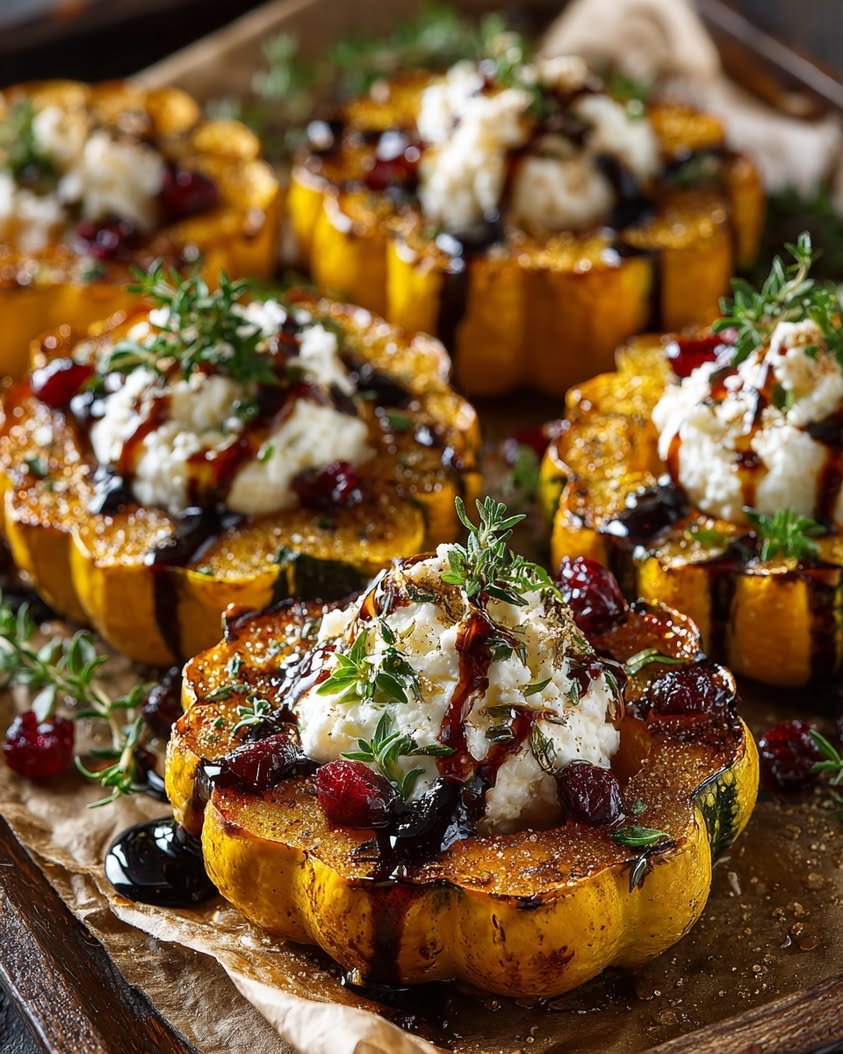
Honey-Glazed Acorn Squash with Creamy Goat Cheese and Cranberry Drizzle: A Savory-Sweet Fall Masterpiece
This stunning Honey-Glazed Acorn Squash with Creamy Goat Cheese and Cranberry Drizzle recipe captures the very essence of autumn in a single, beautiful dish. Imagine tender, caramelized squash wedges, their natural sweetness amplified by a glossy honey glaze, then topped with tangy, creamy goat cheese and a vibrant cranberry drizzle. Each component works in perfect harmony, creating a symphony of flavors and textures that will elevate any fall meal from ordinary to extraordinary. Consequently, this dish not only tastes incredible but also presents like a work of art on your dinner table.
Furthermore, this Honey-Glazed Acorn Squash with Creamy Goat Cheese and Cranberry Drizzle serves as the ultimate centerpiece for your holiday table or a cozy weeknight dinner. The process is surprisingly simple, transforming humble, seasonal ingredients into something truly special. As the squash roasts, your kitchen will fill with the warm, comforting aromas of cinnamon and maple, signaling the arrival of the best season for cooking. Ultimately, this recipe proves that impressive, restaurant-quality dishes can be effortlessly created at home with just a handful of thoughtful ingredients.
Moreover, the combination of sweet, savory, and tart elements in this Honey-Glazed Acorn Squash with Creamy Goat Cheese and Cranberry Drizzle is nothing short of magical. The creamy goat cheese provides a luxurious, tangy counterpoint to the sweet squash, while the cranberry drizzle cuts through the richness with a bright, fruity acidity. This balance makes the dish incredibly versatile, pairing wonderfully with everything from a simple roast chicken to an elaborate Thanksgiving turkey. Therefore, it deserves a permanent spot in your autumn recipe rotation.
Quick Recipe Highlights
- Flavor Profile: This dish masterfully balances sweet, savory, and tangy notes. The natural sweetness of the honey-glazed acorn squash meets the sharp, creamy tang of goat cheese, while the cranberry drizzle adds a bright, fruity acidity that ties everything together beautifully.
- Texture: You will experience a delightful contrast of textures, from the tender, almost buttery flesh of the roasted squash to the creamy crumbles of goat cheese. The cranberry drizzle adds a slight jammy consistency, creating a complex and satisfying mouthfeel in every bite.
- Aroma: As it roasts, the kitchen fills with the warm, comforting scent of caramelizing honey and cinnamon mingling with the earthy aroma of squash. The final addition of fresh thyme and tangy goat cheese adds an herby, savory fragrance that is utterly irresistible.
- Visual Appeal: This dish is a feast for the eyes, featuring vibrant orange squash halves with beautiful caramelized edges, stark white creamy goat cheese, and a deep red cranberry drizzle. The colorful presentation makes it a stunning centerpiece for any table setting.
- Skill Level Needed: This is an accessible recipe for cooks of all levels, requiring only basic knife skills for halving the squash and simple mixing for the glaze and drizzle. The roasting process is hands-off, making it a low-stress, high-reward culinary endeavor.
- Special Equipment: You need only a sturdy baking sheet, a sharp chef’s knife, and a small saucepan. A spoon or melon baller for scooping out the seeds is helpful but not strictly necessary, keeping the equipment list simple and manageable.
Recipe Overview
- Difficulty Level: We classify this Honey-Glazed Acorn Squash with Creamy Goat Cheese and Cranberry Drizzle as an easy recipe because it involves straightforward techniques like roasting and simple sauce-making. The most challenging part is safely cutting the squash, a task that becomes simple with a sharp knife and a stable cutting board. Furthermore, the recipe is very forgiving, as slight variations in roasting time or ingredient proportions still yield delicious results. Therefore, it is an excellent choice for both novice cooks and experienced chefs seeking a stress-free, impressive side dish.
- Category: This dish falls squarely into the side dish category, perfectly complementing a wide range of main courses from holiday roasts to weeknight proteins. It also fits into the special occasion and vegetarian-friendly categories, offering a substantial and satisfying option that stands on its own. Additionally, its components make it suitable for a festive brunch or a light lunch when served with a simple green salad.
- Cuisine: This recipe draws inspiration from modern American farm-to-table cuisine, which emphasizes seasonal, local produce and elegant, simple preparations. It incorporates classic fall flavors found in North American and European cooking, particularly the combination of squash with sweet and tangy elements. The use of goat cheese adds a touch of French or Mediterranean influence, creating a culturally blended dish that feels both familiar and sophisticated.
- Cost: Preparing this Honey-Glazed Acorn Squash with Creamy Goat Cheese and Cranberry Drizzle is remarkably cost-effective, especially during the autumn months when acorn squash is at its peak and most affordable. The other ingredients—honey, cranberries, and goat cheese—are relatively inexpensive pantry staples or small-quantity purchases. Overall, you can create this stunning, restaurant-quality dish for a fraction of the cost of dining out, making it a brilliant choice for entertaining on a budget.
- Season: This is unequivocally a fall and winter recipe, designed to showcase the best produce of the cooler months. Acorn squash is harvested in the autumn, and its sweet, dense flesh is ideal for roasting. Similarly, cranberries come into season in the late fall, making their inclusion both timely and flavorful. The warm spices and hearty nature of the dish provide comfort during colder weather, perfectly aligning with seasonal eating principles.
- Occasion: This versatile dish is perfect for everything from a casual family dinner to a formal Thanksgiving or Christmas feast. It elevates weeknight meals with minimal extra effort and shines as a standout side on a holiday buffet. Its beautiful presentation also makes it ideal for dinner parties or potlucks where you want to impress guests with your culinary skills and seasonal flair.
Why You’ll Love This Recipe
First and foremost, the taste and texture appeal of this Honey-Glazed Acorn Squash with Creamy Goat Cheese and Cranberry Drizzle is absolutely unparalleled. Each forkful delivers a complex journey of flavors, starting with the sweet, caramelized squash, moving to the rich, tangy creaminess of the goat cheese, and finishing with the bright, tart pop of the cranberry drizzle. The contrasting textures—soft squash, creamy cheese, and slightly chunky sauce—create a dining experience that is far more exciting than a typical vegetable side. This symphony of sensations will keep you and your guests coming back for another bite, making it a guaranteed crowd-pleaser.
Another significant advantage is the sheer convenience and straightforward preparation of this stunning dish. Unlike many elaborate holiday sides, this recipe requires minimal hands-on time; after a quick prep, the oven does most of the work. You can easily prepare the cranberry drizzle while the squash roasts, maximizing your efficiency in the kitchen. Furthermore, the ingredients are simple to source, especially during the fall season, and the steps are easy to follow, reducing pre-meal stress. Consequently, you can create a show-stopping side dish without spending hours tied to the stove.
From a health perspective, this Honey-Glazed Acorn Squash with Creamy Goat Cheese and Cranberry Drizzle offers substantial nutritional advantages. Acorn squash is a powerhouse of vitamins A and C, fiber, and potassium, supporting immune function and digestive health. Meanwhile, the honey provides natural sweetness without refined sugar, and the goat cheese offers protein and healthy fats. The cranberries contribute antioxidants and vitamin C, making this a side dish that is as nourishing as it is delicious. Therefore, you can feel good about serving it to your family, knowing you are providing a meal that delights the palate and supports well-being.
This recipe also boasts incredible social and entertaining value, acting as a beautiful centerpiece that sparks conversation. Its vibrant colors and elegant presentation make it look like it came from a professional kitchen, instantly elevating any dinner party or holiday table. Moreover, it is a fantastic vegetarian option that feels substantial and celebratory, ensuring all your guests have a memorable dish to enjoy. When you bring this to a potluck, you are guaranteed to receive compliments and recipe requests, solidifying your reputation as an excellent host and cook.
Finally, the cost-effectiveness and accessibility of this dish cannot be overstated. Seasonal acorn squash is incredibly budget-friendly, and the other components are used in modest quantities, keeping the overall cost low. You do not need any special or expensive equipment to achieve perfect results, just a standard baking sheet and oven. This accessibility means that anyone, regardless of their kitchen setup or grocery budget, can create this beautiful, restaurant-worthy dish at home. It democratizes gourmet cooking, proving that impressive meals do not require exotic ingredients or a hefty price tag.
Historical Background and Cultural Significance
The story of acorn squash in North American cuisine begins long before European colonization, with Indigenous peoples cultivating and consuming various squash varieties for thousands of years. These hardy vegetables, including acorn squash, were part of the “Three Sisters” agricultural system, grown alongside corn and beans in a symbiotic relationship that enriched the soil and provided a complete nutritional profile. Indigenous tribes roasted squash in the embers of fires, often sweetening it with maple syrup or honey, a preparation method that directly inspires our modern recipe. Consequently, when we cook with acorn squash today, we are participating in a culinary tradition with deep, ancient roots on this continent.
The cultural significance of squash, particularly in the fall, is deeply woven into the fabric of American holidays like Thanksgiving. While pumpkin often steals the spotlight, varieties like acorn squash have always been part of the autumnal harvest celebration. The introduction of honey as a sweetener has its own global history, but in America, it paired naturally with the native squash. Meanwhile, the practice of stuffing or topping vegetables with cheese has European origins, with goat cheese having a strong tradition in Mediterranean and French cooking. The fusion of these elements—Native American, European, and modern American—in one dish tells a story of cultural exchange and adaptation on the plate.
The evolution of this specific recipe, Honey-Glazed Acorn Squash with Creamy Goat Cheese and Cranberry Drizzle, reflects broader trends in late 20th and early 21st-century cooking. As the farm-to-table movement gained momentum, chefs and home cooks alike began to revisit humble, seasonal ingredients, elevating them with sophisticated techniques and flavor pairings. The combination of sweet squash, tangy cheese, and tart fruit is a classic flavor triad in gourmet cooking, applied here to a traditional vegetable. This recipe represents a modern take on comfort food, where familiar flavors are presented in a more refined, visually appealing way that suits contemporary palates and dining aesthetics.
Regional variations of stuffed or glazed squash appear across the United States, often reflecting local ingredients and culinary traditions. In the Northeast, a maple syrup glaze might be more common than honey, while in the South, a pecans or bacon crumble could be a popular topping. The addition of cranberries nods to New England’s bogs, where cranberry harvesting is a major industry. On the West Coast, one might find a version with goat cheese from local artisanal producers and a drizzle of pomegranate molasses. This adaptability is a testament to the squash’s versatility and its ability to absorb and express different regional flavors while maintaining its essential character as a comforting, seasonal dish.
Ingredient Deep Dive
Let us begin with the star of the show: the acorn squash. This winter squash, named for its distinctive acorn-like shape, has a history of cultivation in the Americas dating back over 8,000 years. Its sweet, slightly nutty flesh is rich in dietary fiber, vitamin C, potassium, and magnesium, and it boasts a high level of antioxidants, including beta-carotene. When selecting acorn squash, look for firm, heavy fruits with a deep green rind and a patch of orange where it rested on the ground; avoid any with soft spots or cracks. Store whole acorn squash in a cool, dark place for up to a month, but once cut, wrap it tightly and refrigerate for up to a week. If acorn squash is unavailable, you can substitute delicata or even sweet potato wedges with excellent results.
The honey glaze introduces natural sweetness and a beautiful caramelized finish. Honey has been used as a sweetener for millennia, with ancient cave paintings depicting honey harvesting. Nutritionally, it contains trace enzymes, minerals, vitamins, and amino acids, and it has antimicrobial properties. For the best flavor, choose a raw, local honey if possible, as it will have more complex notes than highly processed varieties. Store honey in a cool, dry place in a sealed container; it has an almost indefinite shelf life. For a vegan version, you can substitute maple syrup or agave nectar, which will provide a similar sweetness and glazing effect, though with a slightly different flavor profile.
Creamy goat cheese, or chèvre, provides a tangy, luxurious counterpoint to the sweet squash. Its origins trace back to ancient Mediterranean and Middle Eastern cultures, where goats were among the first domesticated animals for milk. Goat cheese is easier to digest for many people compared to cow’s milk cheese and is a good source of protein, calcium, and healthy fats. Select a fresh, soft goat cheese log that is crumbly yet moist. You can store goat cheese in its original wrapper in the refrigerator for up to two weeks. If you are not a fan of goat cheese, feta cheese makes a brilliant salty, tangy substitute, while ricotta salata or even blue cheese can offer a different but equally delicious pungent kick.
The cranberry drizzle adds a vital pop of color and tartness. Cranberries are one of only three fruits native to North America, and Native Americans used them for food, medicine, and dye long before the pilgrims arrived. They are packed with vitamin C, fiber, and unique phytonutrients called proanthocyanidins, known for supporting urinary tract health. Purchase fresh cranberries that are firm, shiny, and bright red; discard any that are soft or discolored. You can keep fresh cranberries in the refrigerator for several weeks or freeze them for up to a year. If fresh cranberries are out of season, you can use high-quality cranberry sauce or jam, thinning it with a little orange juice or water to achieve a drizzling consistency.
Common Mistakes to Avoid
- Underseasoning the Squash: Many cooks forget to season the squash cavity and flesh before roasting. Consequently, the final dish can taste bland despite the flavorful toppings. Always season the squash generously with salt and pepper inside and out to build a foundational layer of flavor that enhances the sweet glaze and tangy cheese.
- Skipping the Oil on the Baking Sheet: Neglecting to oil the baking sheet or using insufficient oil is a common error. The honey glaze can caramelize and stick fiercely to the pan, making cleanup difficult and potentially tearing the beautiful squash wedges. Therefore, always use a generous amount of oil or line your sheet with parchment paper for easy release.
- Overcrowding the Pan: Arranging the squash wedges too closely together steams them instead of roasting them. This prevents the edges from achieving that desirable caramelization and can result in a mushy texture. For perfectly roasted squash with caramelized edges, ensure there is space between each wedge on the baking sheet to allow for hot air circulation.
- Using a Dull Knife to Cut the Squash: Acorn squash skin is notoriously tough, and attempting to cut it with a dull knife is both dangerous and frustrating. A sharp, heavy chef’s knife is essential for safely halving the squash. Additionally, stabilize the squash by cutting a thin slice off the bottom to create a flat, non-slip surface before halving it lengthwise.
- Not Scooping the Seeds Thoroughly: Leaving the stringy pulp and seeds inside the squash halves can create an unpleasant texture in the final dish. Use a sturdy spoon or an ice cream scoop to remove all the seeds and membranes completely. Interestingly, you can rinse and roast the seeds with a little oil and salt for a tasty, crunchy snack.
- Under-roasting the Squash: Removing the squash from the oven before it is fully tender is a frequent mistake. The flesh should be easily pierced with a fork or knife with no resistance. Undercooked squash will be firm and lack the sweet, creamy quality that makes this dish so delightful, so be patient and test for doneness.
- Adding the Goat Cheese Too Early: Sprinkling the creamy goat cheese on before serving can cause it to melt into a puddle and lose its distinct texture and tang. The cheese is meant to be a fresh, cool contrast to the warm squash. As a result, always add the crumbled goat cheese and the cranberry drizzle just before serving to maintain their individual characteristics.
- Making the Cranberry Drizzle Too Thick: Over-reducing the cranberry drizzle will make it more of a paste than a sauce, making it difficult to drizzle artistically. If your drizzle becomes too thick, simply whisk in a tablespoon of warm water or orange juice at a time until it reaches your desired consistency.
Essential Techniques
Mastering the technique of safely halving an acorn squash is the first critical step. This is important because a whole, round squash is unstable and its tough skin can cause a knife to slip, leading to potential injury. To master it, start by placing the squash on a stable cutting board. Using a sharp, heavy chef’s knife, carefully pierce the squash along the natural indentations, which are its weakest points. Alternatively, you can microwave the whole squash for one to two minutes to slightly soften the skin, making it easier to cut. A common pitfall is using a sawing motion; instead, use a firm, controlled rocking motion with the knife. Visual success is achieved when you have two clean, even halves with the stem split between them.
Properly roasting the squash is the technique that develops its deep, caramelized flavor. This process is important because dry heat converts the squash’s starches into sugars, concentrating its natural sweetness and creating a tender, creamy texture. To master it, ensure your oven is fully preheated and that the squash is coated evenly with oil and seasoning. Place the halves cut-side down to maximize contact with the hot pan, which promotes browning and caramelization. A common mistake is roasting at too low a temperature, which steams the squash rather than roasting it. The visual cue for success is a golden-brown, caramelized surface on the cut sides and flesh that is easily pierced with a fork without resistance.
Creating a perfectly balanced cranberry drizzle requires understanding the basics of fruit reduction. This technique is important because it concentrates the tart flavor of the cranberries and melds them with the sweetener and spices, creating a complex sauce. To master it, combine all ingredients in a saucepan and simmer gently, allowing the cranberries to pop and release their pectin, which naturally thickens the sauce. Stir occasionally to prevent sticking and burning on the bottom of the pan. A common pitfall is boiling too vigorously, which can make the drizzle bitter. The visual cue for success is a thickened, jam-like consistency that coats the back of a spoon, with whole cranberries broken down but still offering some texture.
Pro Tips for Perfect Honey-Glazed Acorn Squash
- For enhanced flavor, consider brushing the cut sides of the squash with the honey glaze before roasting and then again halfway through the cooking process. This double application builds layers of sweetness and creates a more complex, glossy finish on the final dish.
- Add a pinch of flaky sea salt over the finished dish just before serving. The salt crystals will provide little bursts of salinity that heighten the sweetness of the squash and the tang of the goat cheese, elevating the overall flavor profile dramatically.
- If your squash halves are rocking on the baking sheet, carefully slice a thin piece off the bottom to create a flat, stable base. This simple step prevents the squash from tipping and ensures even roasting and caramelization across the entire surface.
- For a more savory depth, mix a teaspoon of fresh, finely chopped rosemary or sage into the honey glaze before brushing it onto the squash. These earthy herbs complement the sweetness beautifully and add another dimension of autumn flavor to the recipe.
- Allow the roasted squash to rest for 5-10 minutes after removing it from the oven before adding the toppings. This brief rest allows the flesh to set slightly, making it easier to handle and ensuring the goat cheese does not immediately melt upon contact.
- Toasting the squash seeds you scooped out is a fantastic zero-waste tip. Simply rinse them, pat them dry, toss with a little oil and salt, and roast at 350°F for 10-15 minutes. Use them as a crunchy garnish for your squash or for a salad.
- For a smoother, more elegant cranberry drizzle, you can carefully puree the cooked mixture in a blender or with an immersion blender until silky. Then, strain it through a fine-mesh sieve to remove the skins for a perfectly smooth sauce.
Variations and Adaptations
Regional variations of this dish can take you on a culinary tour without leaving your kitchen. For a Southern twist, incorporate toasted pecans or a crumble of candied bacon over the top. A Mediterranean version could feature crumbled feta cheese, Kalamata olives, and a drizzle of olive oil instead of the cranberry sauce. If you are inspired by Middle Eastern flavors, swap the honey for pomegranate molasses and sprinkle with pistachios and a dash of sumac. These regional adaptations showcase the squash’s incredible versatility and its ability to carry a wide range of global flavor profiles while maintaining its comforting core identity.
Seasonal adaptations ensure you can enjoy this concept year-round with the best available produce. In the winter, try using buttercup squash or pumpkin and pair it with a citrus-orange glaze. For a spring interpretation, use delicata squash and top it with fresh peas, mint, and lemon zest. During the summer, pattypan squash can be halved and roasted, then topped with fresh tomatoes, basil, and a balsamic reduction. This flexibility allows you to celebrate seasonal abundance and keep the recipe exciting and new no matter the time of year, always focusing on fresh, peak-ingredient flavors.
Dietary modifications are straightforward, making this dish accessible to almost everyone. For a vegan version, use maple syrup instead of honey and a plant-based goat cheese alternative or a cashew cream. To make it Paleo or Whole30 compliant, ensure the goat cheese is omitted and use a compliant sweetener like pure maple syrup. For a nut-free version, simply avoid any nut-based garnishes. If you are watching your sugar intake, you can reduce the amount of honey in the glaze and use a sugar-free cranberry sauce for the drizzle. These simple swaps ensure that dietary restrictions do not prevent anyone from enjoying this beautiful and flavorful dish.
Serving and Presentation Guide
Plating techniques can transform this dish from a simple side to a stunning centerpiece. For individual servings, place one roasted squash half on each plate, ensuring the cavity is facing upward to cradle the toppings. Alternatively, for a family-style presentation, arrange the roasted halves on a large, rustic wooden board or a beautiful platter. You can also scoop the tender flesh out of the skin, layer it on a serving dish, and then top it with the goat cheese and drizzle for a more deconstructed approach. The goal is to create height and visual interest, making the dish look as inviting as it tastes.
Garnishing ideas extend beyond the core ingredients to add texture, color, and flavor. Fresh herb sprigs like thyme, rosemary, or parsley add a touch of green and a fresh aroma. Toasted nuts such as pecans, walnuts, or pumpkin seeds provide a delightful crunch and nutty flavor. A final sprinkle of pomegranate arils introduces a jewel-like brightness and a burst of juicy tartness that complements the cranberry drizzle perfectly. Edible flowers can also be used for a special occasion to create a truly spectacular presentation. Remember, garnishes should enhance, not overwhelm, the beautiful colors and forms of the main components.
Traditional accompaniments for this dish lean into the comforting flavors of fall. It pairs wonderfully with a simple roast chicken or turkey, allowing the squash to shine as the star side dish. For a vegetarian feast, serve it alongside wild rice pilaf, sautéed greens like kale or Swiss chard, and lentil salad. On a holiday buffet, it complements other classic sides like mashed potatoes, green bean casserole, and stuffing. The sweet and savory profile of the squash makes it a versatile partner that bridges the gap between rich mains and lighter vegetable sides, creating a balanced and complete meal.
Wine and Beverage Pairing
Selecting the right wine pairing enhances the sweet, savory, and tangy elements of this dish beautifully. A slightly off-dry Riesling or Gewürztraminer is an excellent choice, as their inherent sweetness and floral notes harmonize with the honey glaze and the squash’s natural sugars. Alternatively, a crisp, oak-aged Chardonnay with notes of vanilla and butter can stand up to the creamy goat cheese and rich squash flesh. For red wine lovers, a light-bodied Pinot Noir with its red fruit characteristics and low tannins will not overpower the dish but will complement the cranberry drizzle wonderfully. The key is to choose wines with good acidity to cut through the richness and balance the sweetness.
Non-alcoholic alternatives can be just as sophisticated and thoughtfully paired. A sparkling apple cider provides effervescence and autumnal flavor that mirrors the honey and squash notes. For a warmer option, a ginger-turmeric tea offers a spicy kick that contrasts nicely with the dish’s sweetness. Alternatively, a cranberry and rosemary spritzer, made with muddled rosemary, cranberry juice, and club soda, echoes the flavors on the plate in a refreshing, alcohol-free format. These beverages ensure that all guests, regardless of their drinking preferences, can enjoy a complete and complementary dining experience.
Coffee and tea pairings work surprisingly well, especially if serving this dish for a festive brunch or lunch. A medium-roast coffee with nutty or chocolatey notes can complement the roasted flavors of the squash without clashing with the sweetness. For tea, an Earl Grey with its bergamot citrus notes can provide a lovely contrast to the rich, creamy elements. A chai tea, with its warm spices like cinnamon and cardamom, naturally aligns with the autumn spices often used in the glaze. Serving these warm beverages after the meal can also help aid digestion and provide a comforting conclusion to your autumnal feast.
Storage and Shelf Life
Proper storage methods are crucial for maintaining the quality and safety of your leftovers. Store any unused portions in an airtight container in the refrigerator, keeping the components separate if possible. The plain roasted squash will keep for up to 4 days, while the assembled dish with goat cheese and drizzle is best consumed within 2 days. For the cranberry drizzle, transfer it to a separate jar or container; it can last for up to a week in the fridge. Always allow the squash to cool completely to room temperature before refrigerating to prevent condensation, which can make the texture soggy.
Reheating instructions require care to preserve the dish’s texture and prevent the goat cheese from melting away. To reheat the squash, place it in a baking dish, add a tablespoon of water or broth to the bottom to create steam, cover with foil, and warm in a 350°F oven for 10-15 minutes until heated through. Alternatively, you can reheat individual portions in the microwave on medium power for 1-2 minutes. Crucially, only reheat the squash itself and then add fresh goat cheese and the cold cranberry drizzle after warming. Reheating the assembled dish will cause the cheese to melt and the drizzle to lose its vibrancy.
Freezing guidelines apply primarily to the roasted squash and the cranberry drizzle, but not the assembled dish. You can freeze plain, roasted acorn squash halves or pieces in a freezer-safe bag or container for up to 3 months; however, note that the texture may become slightly watery upon thawing. The cranberry drizzle freezes exceptionally well; portion it into an ice cube tray for easy use, then transfer the frozen cubes to a bag. Frozen drizzle will keep for 4-6 months. Unfortunately, the goat cheese does not freeze well, as it becomes crumbly and loses its creamy texture, so it is always best to add it fresh when serving.
Make Ahead Strategies
A strategic prep timeline can drastically reduce your workload on the day you plan to serve this dish. Up to two days in advance, you can wash the squash and prepare the cranberry drizzle, storing both in the refrigerator. The day before, you can halve and seed the squash, wrap it tightly in plastic wrap, and keep it refrigerated. On the morning of your event, roast the squash halves and let them cool completely. Then, shortly before serving, gently reheat the squash in the oven, warm the drizzle on the stovetop or in the microwave, and assemble with the fresh goat cheese. This staged approach spreads the work over several days, making final assembly quick and stress-free.
Understanding the quality impact of each make-ahead step is key to a successful strategy. Prepping the squash (washing, cutting, seeding) up to a day ahead has no negative impact on flavor or texture. The cranberry drizzle often tastes even better when made a day or two in advance, as the flavors have time to meld. However, roasting the squash too far in advance can lead to a loss of texture and make it difficult to reheat without becoming mushy. The goat cheese must always be added fresh to maintain its distinct texture and tang. By respecting these guidelines, you can maximize your prep time without sacrificing the final quality of your beautiful dish.
Scaling Instructions
Halving the recipe is straightforward for smaller gatherings or fewer servings. Simply use one medium acorn squash, and halve all the other ingredient quantities. The roasting time may decrease slightly, so start checking for doneness around the 30-minute mark. Use a smaller baking sheet to ensure the squash halves still have proper contact with the hot surface for caramelization. This scaled-down version is perfect for a cozy dinner for two, allowing you to enjoy this festive dish without being overwhelmed by leftovers.
Doubling or tripling the recipe for a large crowd requires some adjustments for consistent results. Use multiple baking sheets and rotate them halfway through the roasting time to ensure even cooking. You may need to roast in batches if your oven cannot accommodate multiple sheets at once. When increasing the cranberry drizzle, use a wider, heavy-bottomed saucepan to allow for proper evaporation and thickening. For a very large event, consider using a variety of small squash (like delicata or sweet dumpling) alongside the acorn squash to create a visually dynamic and colorful platter that caters to different preferences.
Nutritional Deep Dive
A macro breakdown reveals this dish as a well-balanced option, particularly for a side dish. The acorn squash provides complex carbohydrates and dietary fiber, offering sustained energy and promoting digestive health. The honey contributes simple sugars for quick energy, while the goat cheese adds protein and healthy fats, creating a sense of satiety. The cranberries contribute additional fiber and micronutrients. This combination of macronutrients means the dish is satisfying without being overly heavy, and it can fit into various dietary approaches, from balanced eating to more specific carbohydrate or fat-focused plans.
The micronutrient analysis highlights the impressive vitamin and mineral content. Acorn squash is exceptionally high in Vitamin C, crucial for immune function, and Vitamin A (as beta-carotene), which supports vision and skin health. It also provides potassium for heart health and magnesium for muscle and nerve function. Goat cheese contributes calcium for bone strength and phosphorus. Cranberries are famous for their proanthocyanidins, which support urinary tract health, and they are also a good source of Vitamin K and manganese. Together, these ingredients create a nutrient-dense dish that supports overall wellness, especially during the colder months when immune support is paramount.
Dietary Adaptations
For a gluten-free version, this recipe is naturally compliant as written, containing no gluten-containing ingredients. However, always double-check labels on pre-packaged items like cranberry sauce if you are using a shortcut, as some brands may include stabilizers derived from wheat. This makes it an excellent, safe choice for serving at gatherings where guests have celiac disease or gluten sensitivity, without requiring any modifications or special ingredients.
Creating a dairy-free or vegan adaptation is simple and yields delicious results. Substitute the creamy goat cheese with a plant-based alternative; several brands now offer credible vegan goat-style cheeses made from nuts or tofu. For the honey glaze, use an equal amount of maple syrup or agave nectar to maintain the sweetness and glazing properties. These swaps result in a dish that is entirely plant-based but still retains the elegant contrast of sweet, savory, and tangy flavors that make the original so compelling.
Troubleshooting Guide
If you encounter texture issues, such as squash that is too watery, the likely cause is under-roasting or a particularly high-moisture squash. Solution: Continue roasting until a fork pierces the flesh easily and the edges are well-caramelized. For future attempts, choose squash that feel heavy for their size, indicating dense flesh. If the squash is mushy, it has been overcooked; reduce the roasting time slightly next time and check for doneness earlier. Remember that oven temperatures can vary, so use visual and textural cues rather than relying solely on timer.
Flavor balance problems often manifest as a dish that is too sweet or too tart. If it is too sweet, balance it by adding a pinch more salt to the squash before roasting and using a more generous hand with the black pepper. You can also increase the amount of goat cheese for more tangy contrast. If the dish is too tart, ensure you are using a mild, creamy goat cheese rather than an aged, sharp one, and consider adding a teaspoon of maple syrup to the cranberry drizzle to soften its acidity. Tasting and adjusting each component as you cook is the best way to achieve perfect harmony.
Recipe Success Stories
Community feedback on this Honey-Glazed Acorn Squash with Creamy Goat Cheese and Cranberry Drizzle has been overwhelmingly positive, with many home cooks reporting it has become a permanent fixture in their fall recipe rotation. One reader shared that she now makes it for every Thanksgiving and has received more compliments on this dish than on the turkey itself. Another mentioned that her children, who typically avoid vegetables, eagerly ask for seconds because they love the sweet glaze and the colorful presentation. These stories highlight the recipe’s broad appeal and its ability to win over even the most hesitant eaters with its beautiful balance of flavors.

I’m Shaykee—born in Morocco, seasoned across continents. From airplane galleys to home kitchens, I share the flavors and stories that shaped my journey.