
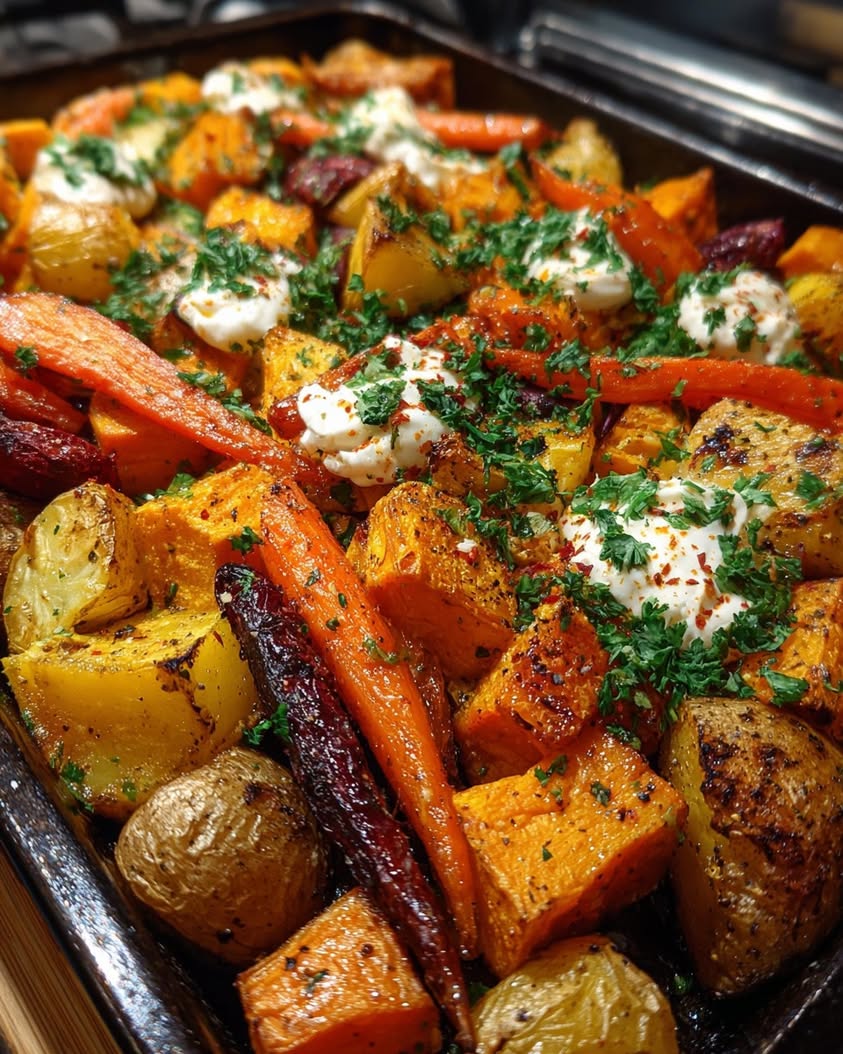
Roasted Butternut Squash, Carrots, Sweet Potato and Potatoes with Spicy Whipped Feta, Walnuts and Cranberry-Honey Glaze: A Symphony of Fall Flavors
This stunning recipe for roasted butternut squash, carrots, sweet potato and potatoes with spicy whipped feta, walnuts and cranberry-honey glaze is an absolute showstopper. It brings together the very best of autumn’s bounty in one spectacular dish. Imagine sweet, caramelized roasted roots paired with a creamy, tangy, and slightly spicy whipped feta dip. Then, picture a vibrant cranberry-honey glaze drizzled over the top, adding a pop of tartness and shine. Finally, a crunchy walnut garnish provides the perfect textural contrast, making every bite a complex and delightful experience.
This dish is incredibly versatile, serving as the perfect centerpiece for a vegetarian feast or a standout side dish for your holiday table. The combination of flavors and textures is truly unforgettable. Furthermore, the creamy, spicy whipped feta meets sweet roasted roots in a way that feels both rustic and elegant. It is the kind of recipe that will have your guests asking for the secret. Ultimately, it transforms simple, wholesome ingredients into a culinary masterpiece that celebrates the season.
Whether you are planning a cozy family dinner or a large holiday gathering, this recipe is sure to impress. The colors alone—vibrant orange, deep yellow, and rich red—create a beautiful presentation on any plate. Moreover, the aroma that fills your kitchen while the vegetables roast is pure comfort. This dish is a testament to how beautiful, simple ingredients can create magic when combined thoughtfully. It is a must-try for anyone who loves hearty, flavorful, and visually appealing food.
Quick Recipe Highlights
- Flavor Profile: This dish masterfully balances sweet, savory, spicy, and tangy notes. The natural sweetness of the roasted roots is complemented by the salty, creamy feta and the sharp, sweet-tart cranberry glaze. Additionally, a hint of heat from the whipped feta adds a delightful complexity that keeps your palate engaged.
- Texture: You will experience a wonderful contrast of creamy, crunchy, and tender textures. The roasted vegetables become tender and slightly caramelized, while the whipped feta is luxuriously smooth. Meanwhile, the walnuts add a necessary crunch, and the glaze provides a sticky, glossy finish that ties everything together.
- Aroma: As the dish cooks, your kitchen will fill with the warm, earthy scent of roasting root vegetables and fragrant rosemary. The spicy whipped feta contributes a tangy, peppery aroma, while the cranberry-honey glaze introduces a sweet and fruity fragrance that is simply irresistible.
- Visual Appeal: This is a visually stunning dish with a beautiful color palette. The golden-brown and orange hues of the roasted vegetables look gorgeous against the white whipped feta. Subsequently, the deep red glaze and sprinkled walnuts create a festive and appetizing presentation that is perfect for special occasions.
- Skill Level Needed: This recipe is accessible for cooks of all levels, from beginners to experts. The techniques involved—chopping, roasting, and blending—are straightforward. Consequently, you do not need any advanced culinary skills to achieve a restaurant-quality result right in your own kitchen.
- Special Equipment: You will need a good baking sheet for roasting and a food processor or high-speed blender to achieve the perfectly smooth texture for the whipped feta. Other than that, basic kitchen tools like a sharp knife and mixing bowls are all that is required.
Recipe Overview
- Difficulty Level: We have classified this recipe as easy because it involves simple, fundamental cooking techniques. The primary steps are chopping vegetables and roasting them, which are beginner-friendly tasks. Additionally, making the whipped feta is a simple process of blending ingredients until smooth. Therefore, even novice cooks can follow this recipe with confidence and success.
- Category: This dish falls perfectly into the category of a side dish, but it is substantial enough to be a main course for a vegetarian meal. It is ideal for holiday feasts, weeknight dinners with a gourmet twist, or potluck gatherings where you want to bring something memorable and delicious.
- Cuisine: While it draws inspiration from Mediterranean flavors with the use of feta and olive oil, this recipe is a modern fusion creation. It incorporates American holiday staples like sweet potatoes and cranberries, resulting in a unique and contemporary dish that feels both familiar and excitingly new.
- Cost: This is a very cost-effective recipe, especially during the autumn and winter months when root vegetables are in season and priced lower. Feta cheese and walnuts are relatively affordable ingredients, making this an elegant dish that will not break the bank. You can easily feed a crowd without a large grocery bill.
- Season: This recipe is a quintessential fall and winter dish. It utilizes hearty root vegetables that are at their peak during the cooler months. The warm, comforting flavors are perfectly suited for holiday tables like Thanksgiving and Christmas, but it is also wonderful for any cozy dinner on a cold evening.
- Occasion: It is an impeccable choice for Thanksgiving, Christmas, or any festive potluck. Beyond holidays, it elevates a simple weeknight meal and is fantastic for dinner parties where you want to showcase a beautiful, flavorful dish that caters to vegetarians and omnivores alike.
Why You’ll Love This Roasted Vegetable Medley
First and foremost, the taste and texture appeal of this dish is off the charts. The creamy, spicy whipped feta meets sweet roasted roots in a harmonious blend that is simply addictive. Each component brings something unique to the table. You get the earthy sweetness from the carrots and squash, the hearty comfort from the potatoes, and the luxurious, tangy creaminess from the feta. Then, the cranberry-honey glaze cuts through the richness with its bright, tart flavor, while the walnuts offer a satisfying crunch. This combination ensures that no single bite is ever boring.
From a convenience standpoint, this recipe is a dream. While the vegetables roast, you have ample time to prepare the whipped feta and the simple glaze. This efficient use of time means you are not rushed or stressed in the kitchen. Furthermore, the ingredients are easy to find at any standard grocery store. You can easily adapt the level of spice in the feta to suit your personal preference, making it a versatile base recipe that you can make your own. Ultimately, it delivers a gourmet-looking and tasting dish with manageable steps and common ingredients.
The nutritional advantages of this roasted vegetable dish are significant. Root vegetables like sweet potatoes and carrots are packed with beta-carotene, which converts to Vitamin A in the body and is essential for eye health and immunity. Butternut squash and potatoes provide a good source of fiber and complex carbohydrates for sustained energy. Additionally, walnuts contribute healthy omega-3 fats, and the feta offers a protein and calcium boost. This makes the dish not only delicious but also a wholesome addition to your diet, balancing indulgence with nourishment.
For social and entertaining value, this recipe is a true winner. Its stunning visual presentation makes it a fantastic centerpiece for any gathering. It is a conversation starter that will impress your guests with its complex flavors and beautiful assembly. Moreover, it is a fantastic option for mixed-diet crowds as it is naturally vegetarian. You can easily double or triple the recipe to feed a larger party without complicating the process. It is the kind of dish that makes you look like a culinary rock star with minimal fuss.
Finally, the cost-effectiveness and accessibility of this dish cannot be overstated. Root vegetables are among the most affordable produce items, especially in season. Feta cheese and walnuts are pantry staples that are reasonably priced and available everywhere. You are creating a dish that tastes expensive and looks elaborate without the high cost of specialty ingredients. This accessibility means you can enjoy this gourmet-level side dish regularly, turning an ordinary meal into a special occasion without straining your budget.
Historical Background and Cultural Significance
The practice of roasting root vegetables dates back centuries and is a culinary tradition found in many cultures across the globe. Before modern ovens, people would cook vegetables in the embers of a fire, which caramelized their natural sugars and created deep, comforting flavors. This method was a practical way to cook hardy vegetables that stored well through the winter. In Europe and North America, root cellars filled with potatoes, carrots, and squash were essential for survival during cold months. Consequently, roasted root medleys became a staple of cold-weather cooking, embodying the essence of rustic, hearth-side cuisine.
Feta cheese brings a distinct cultural significance from Greece, where it has been produced for thousands of years. Traditionally made from sheep’s milk or a blend with goat’s milk, feta is a brined cheese known for its tangy saltiness and crumbly texture. It is a cornerstone of Greek salads and meze platters. The innovation of whipping feta into a creamy spread is a more modern take, often seen in contemporary Mediterranean and fusion restaurants. This technique transforms the cheese into a luxurious dip or sauce, making it a perfect pairing for the sweet and earthy notes of roasted vegetables.
The use of cranberries in a cooked glaze is deeply rooted in North American history, particularly with Native American tribes who used them for food, medicine, and dye. They introduced cranberries to Pilgrims, and the fruit became a part of Thanksgiving traditions. The classic cranberry sauce evolved into various forms, including cooked-down glazes sweetened with honey or maple syrup. Incorporating this glaze into a savory vegetable dish is a creative evolution, blending traditional holiday flavors with new culinary applications. It represents a fusion of old-world techniques and new-world ingredients.
This specific recipe is a beautiful example of modern fusion cuisine. It takes the timeless technique of roasting vegetables and elevates it with globally inspired components. The spicy whipped feta adds a Mediterranean kick, while the cranberry-honey glaze is a nod to classic American holiday fare. The result is a dish that feels both familiar and novel, reflecting how contemporary cooking often blends cultural traditions to create exciting new flavor profiles. It is a celebration of seasonal, accessible ingredients prepared in a way that honors their history while looking firmly to the future of food.
Ingredient Deep Dive
Butternut Squash is a winter squash native to the Americas. It was a staple food for many Indigenous peoples long before European colonization. Culturally, it symbolizes harvest and abundance, often featured in autumn festivals and Thanksgiving meals. Nutritionally, it is a powerhouse of Vitamin A, Vitamin C, and fiber. When selecting a squash, look for one that feels heavy for its size with a hard, matte skin and no soft spots. Store it in a cool, dark place for up to a month. For a substitution, you can use acorn squash or pumpkin, though the roasting time may vary slightly.
Feta Cheese has a protected designation of origin (PDO) in the European Union, meaning true feta must be made in specific regions of Greece. Its history spans over 6,000 years, making it one of the oldest cheeses in the world. It is a brined curd cheese, traditionally made from sheep’s milk, which gives it its distinctive tangy and salty flavor. Feta is an excellent source of calcium and protein. For the best flavor in this recipe, opt for a block of feta packed in brine rather than pre-crumbled varieties. If you need a substitute, a creamy goat cheese or a dairy-free tofu-based feta can work well.
Cranberries are one of only three major fruits native to North America. Native Americans used them for food, medicine, and even as a symbol of peace. They are famously associated with American Thanksgiving, but their use has expanded globally. These berries are packed with antioxidants and Vitamin C, known for supporting urinary tract health. When buying fresh cranberries, look for firm, plump berries with a deep red color. They can be stored in the refrigerator for several weeks or frozen for up to a year. If fresh are unavailable, you can use frozen cranberries directly in the glaze without thawing.
Sweet Potatoes are not actually related to white potatoes; they are a root vegetable from the morning glory family. Originating in Central or South America, they have been cultivated for over 5,000 years. They are now a vital food source in many parts of the world. Incredibly nutritious, they are loaded with beta-carotene, Vitamin C, and potassium. Choose firm sweet potatoes with smooth skin and no signs of decay. Store them in a cool, dark, well-ventilated place, but not in the refrigerator. Garnet yams can be used interchangeably with sweet potatoes in this recipe.
Common Mistakes to Avoid
- Cutting Vegetables Unevenly: One of the most common errors is chopping the vegetables into different sizes. Consequently, smaller pieces will burn before larger pieces are cooked through. Always aim for a uniform, bite-sized dice to ensure everything roasts evenly and achieves that perfect caramelization.
- Crowding the Baking Sheet: If you pack the vegetables too tightly on the pan, they will steam instead of roast. This prevents them from developing the desirable crispy, caramelized edges. For the best results, use a large enough sheet and spread the vegetables in a single layer with some space between them.
- Skipping the Preheating Step: Placing vegetables in a cold oven is a surefire way to get soggy results. Always preheat your oven to the specified temperature. The blast of high heat is crucial for kicking off the Maillard reaction, which creates complex flavors and beautiful browning.
- Overblending the Feta: While you want the feta to be smooth, over-processing it can sometimes cause it to become too loose or even grainy. Blend just until it is creamy and spreadable. If it seems too thick, add the olive oil or a teaspoon of water to reach the desired consistency.
- Using Old, Soft Walnuts: Walnuts contain oils that can go rancid over time. Using stale walnuts will impart a bitter flavor to your dish. Always taste a walnut before using it to ensure it is fresh and crisp. Store walnuts in the freezer to extend their shelf life.
- Neglecting to Season the Vegetables: Do not be shy with salt and pepper before roasting. Seasoning at this stage is essential for building layers of flavor from the inside out. The vegetables need this base seasoning to stand up to the other bold components in the dish.
- Boiling the Glaze Instead of Simmering: When making the cranberry glaze, a rapid boil can make it bitter or cause it to burn. Keep the heat at a gentle simmer, allowing the cranberries to pop and release their pectin naturally, which will thicken the glaze to a perfect saucy consistency.
- Adding the Walnuts Too Early: If you mix the walnuts in with the vegetables before roasting, they are likely to burn and become bitter. Instead, toast them separately or simply add them at the end as a garnish to preserve their crunch and nutty flavor.
Essential Techniques
Uniform Vegetable Chopping is the foundation of this recipe. The goal is to create pieces that are all roughly the same size, typically a ¾-inch to 1-inch dice. This consistency is critical because it ensures that every piece of vegetable cooks at the same rate. If your pieces are uneven, you will end up with some that are mushy and others that are undercooked. Use a sharp chef’s knife for control and safety. A visual cue for success is seeing similarly sized pieces that will fit comfortably in a single bite, promoting both even cooking and elegant presentation.
High-Heat Roasting is the technique that transforms simple vegetables into something extraordinary. Preheating your oven to a high temperature, around 425°F (220°C), is non-negotiable. This intense heat causes the natural sugars in the vegetables to caramelize on the surface, creating a sweet, deep flavor and a slightly crispy texture. The common pitfall is roasting at too low a temperature, which steams the vegetables instead. You will know it is working when you see golden-brown, blistered edges on the vegetables and smell their sweet, roasted aroma filling your kitchen.
Creating a Smooth Whipped Feta relies on using the right equipment and technique. A food processor or high-speed blender is essential to break down the crumbly cheese into a silky, spreadable dip. The fat from the olive oil and the liquid from the lemon juice help to emulsify the mixture. The key is to process the feta first until it’s sandy, then stream in the other ingredients while the machine is running. Over-processing can sometimes warm the cheese and make it greasy, so stop as soon as you achieve a creamy, homogeneous consistency with no lumps.
Simmering a Fruit Glaze requires patience and gentle heat. The objective is to cook the cranberries just until they burst and release their natural pectin, which thickens the glaze without the need for added starches. Boiling it vigorously will cook away the fresh, tart flavor and can lead to a bitter taste. Instead, maintain a low simmer, stirring occasionally. The visual cue for success is when most of the cranberries have popped open and the mixture has thickened enough to coat the back of a spoon. It will continue to thicken slightly as it cools.
Pro Tips for Perfect Roasted Roots with Whipped Feta
First, for the crispiest roasted vegetables, make sure they are completely dry before tossing them in oil. Any residual moisture will create steam, preventing that desirable caramelization. Furthermore, using a light-colored, heavy-duty baking sheet promotes even browning, unlike dark pans which can sometimes over-brown the bottoms.
Second, do not discard the seeds from your butternut squash. Instead, rinse them, toss them with a little oil and salt, and roast them on a separate corner of the baking sheet. They make a fantastic, crunchy garnish that adds another layer of texture and reduces food waste.
Third, take your feta and cream cheese out of the refrigerator about 15-20 minutes before you plan to whip them. Starting with slightly softened cheese will put less strain on your food processor and result in a smoother, fluffier whipped feta texture without any grainy bits.
Fourth, taste your whipped feta after blending and adjust the seasoning accordingly. The saltiness of feta can vary greatly between brands. You might find you need an extra pinch of salt, another squeeze of lemon for brightness, or a bit more red pepper flakes for heat.
Fifth, if your cranberry glaze becomes too thick upon cooling, you can easily thin it out. Simply whisk in a teaspoon of warm water at a time until it reaches a drizzle-able consistency. Conversely, if it is too thin, a brief simmer will help reduce it further.
Sixth, for an elegant presentation, use the back of a spoon to create swoops and swirls of the whipped feta on your serving platter. This creates little pockets and valleys that will catch the glaze and hold the roasted vegetables, making the final dish look professionally assembled.
Variations and Adaptations
For regional variations, you can take this dish on a world tour of flavors. Give it a Middle Eastern twist by adding a teaspoon of za’atar to the vegetables before roasting and sprinkling pomegranate seeds instead of cranberries in the glaze. For a North African flair, incorporate ras el hanout spice blend into the olive oil coating and use toasted almonds or pistachios instead of walnuts. These simple swaps can completely transform the character of the dish while maintaining its structural integrity and visual appeal.
Seasonal adaptations are simple and effective. In the spring, try using asparagus tips and baby radishes alongside the roots. During summer, roasted zucchini and bell peppers would be a lovely addition. You can also change the fruit in the glaze based on the season; a peach and ginger glaze in the summer or a pear and rosemary glaze in the fall would be delightful. The base recipe is a wonderful template that encourages you to use what is fresh and available at your local market.
Dietary modifications are straightforward. For a vegan version, substitute the feta and cream cheese with a block of firm tofu and a few tablespoons of nutritional yeast, blended with lemon juice and spices. To make it gluten-free, simply ensure all your packaged ingredients, like spices, are certified gluten-free, which they typically are. For a nut-free option, replace the walnuts with toasted sunflower seeds or pepitas for a similar crunch without the allergen concern.
Flavor variations can cater to different palates. If you prefer less heat, omit the red pepper flakes from the whipped feta entirely. For a smokier profile, add a pinch of smoked paprika to the vegetable seasoning. You could also infuse the olive oil with a clove of garlic before tossing it with the vegetables. Experimenting with different fresh herbs is also encouraged; thyme or sage would be excellent alternatives to the rosemary suggested in the recipe.
Serving and Presentation Guide
Plating techniques can elevate this dish from homely to haute cuisine. For a family-style presentation, spread the whipped feta in a thick layer across the bottom of a large, shallow platter. Artfully pile the warm roasted vegetables on top, allowing some of the white feta to peek through the sides. Then, drizzle the cranberry glaze over everything in a zig-zag pattern and finish with a generous scattering of toasted walnuts. This method creates height and visual interest.
Garnishing is the final touch that adds freshness and color. Beyond the walnuts, consider adding a sprinkle of fresh, finely chopped parsley or chives for a green accent. If you have them, a few fresh whole cranberries or pomegranate arils add a beautiful jewel-like quality. A final drizzle of high-quality extra virgin olive oil over the entire platter just before serving adds shine and a fruity, peppery note that enhances the other flavors.
For traditional accompaniments, this dish pairs beautifully with a simple roast chicken, turkey, or pork loin. The creamy, tangy feta and sweet vegetables complement the savory notes of the meat perfectly. It also stands up well to other hearty sides like garlic mashed potatoes or a wild rice pilaf. Consider serving it with a crisp, green salad with a light vinaigrette to balance the richness of the roasted components.
Modern serving suggestions include using it as a topping for a grain bowl. Spoon it over a base of quinoa or farro for a complete vegetarian meal. You can also serve it in individual portions for a more formal dinner party. Alternatively, serve the whipped feta, roasted vegetables, and glaze in separate bowls and let guests build their own plates, which is a fun and interactive way to dine, especially for a casual gathering.
Wine and Beverage Pairing
Selecting the right wine can enhance the complex flavors of this dish beautifully. A crisp, acidic white wine like a Sauvignon Blanc or Pinot Grigio works wonderfully. Their bright acidity cuts through the richness of the whipped feta and complements the sweet roasted vegetables. Alternatively, a light-bodied red with low tannins, such as a Pinot Noir or Gamay, can also be a fantastic pairing. The fruit notes in these reds harmonize with the cranberry glaze without overpowering the more delicate flavors of the dish.
For non-alcoholic alternatives, consider a sparkling apple cider. Its effervescence and subtle sweetness are a perfect match for the autumn flavors. Another excellent option is a ginger beer, either plain or mixed with a splash of apple juice. The spicy kick of ginger plays nicely with the heat in the whipped feta and the sweetness of the vegetables. Iced herbal tea, such as peppermint or rooibos, can also be a refreshing and palate-cleansing choice.
If you are serving this for a holiday brunch or considering a warm beverage, coffee and tea pairings are worth exploring. A medium-roast coffee with low acidity will not clash with the tangy feta or sweet glaze. For tea, a classic Earl Grey with its bergamot notes can be surprisingly complementary, or a simple cup of peppermint tea can aid digestion after this rich and satisfying meal. The key is to choose beverages that are not overly bitter or astringent.
Storage and Shelf Life
Proper storage is key to maintaining the quality of your leftovers. Store the components separately for the best results. The roasted vegetables can be kept in an airtight container in the refrigerator for 3-4 days. The whipped feta should also be stored in a sealed container and will last for up to 5 days. The cranberry-honey glaze can be refrigerated for up to a week. Always use clean utensils when serving from the containers to prevent cross-contamination and spoilage.
When it comes to reheating, the goal is to restore the vegetables’ texture without making them soggy. Reheat the roasted vegetables in a 375°F (190°C) oven or toaster oven for about 10-15 minutes until warmed through. This method will help re-crisp their edges. Avoid using the microwave, as it will steam the vegetables and make them soft. The whipped feta and glaze are best served at room temperature, so take them out of the refrigerator about 30 minutes before you plan to serve the leftovers.
Freezing is not generally recommended for the assembled dish. The high water content in the roasted vegetables means they will become mushy upon thawing. The whipped feta can separate and become grainy when frozen and defrosted. However, the cranberry-honey glaze freezes exceptionally well. You can freeze it in an ice cube tray for portioned use, then transfer the cubes to a freezer bag. It will keep for up to 3 months and can be thawed slowly in the refrigerator for future use.
Make Ahead Strategies
With a smart prep timeline, you can have this impressive dish ready for guests with minimal day-of stress. The day before your event, you can chop all the vegetables. Store them in a large zip-top bag or airtight container in the refrigerator. This is the most time-consuming part of the recipe, so completing it in advance is a huge time-saver. You can also toast the walnuts and store them at room temperature in a sealed container.
You can also prepare the whipped feta up to two days in advance. Simply blend it according to the recipe instructions, transfer it to a container, press a piece of plastic wrap directly onto the surface to prevent it from drying out, and refrigerate. The flavors often meld and improve over time. The cranberry-honey glaze can be made up to three days ahead. Store it in a jar in the refrigerator. It will thicken as it cools, so you may need to let it sit at room temperature or warm it gently to make it drizzle-able again.
On the day of serving, your only task is to roast the vegetables. Toss the pre-chopped veggies with oil and seasoning, then roast them until tender and caramelized. While they are in the oven, you can take the whipped feta and glaze out of the refrigerator to come to room temperature. This strategy breaks the recipe into manageable stages, ensuring you can enjoy your own party without being stuck in the kitchen the entire time.
Scaling Instructions
Halving this recipe is straightforward if you are cooking for a smaller household. Simply divide all the ingredient quantities by two. Use a standard-sized baking sheet to ensure the vegetables still have plenty of room to roast properly and not steam. The cooking time may be slightly reduced, so start checking for doneness around the 25-minute mark. The whipped feta and glaze can also be halved without issue, though you may find it easier to make the full glaze recipe and use the extra on yogurt, oatmeal, or toast.
Doubling or tripling the recipe is perfect for a large holiday gathering or potluck. Use multiple baking sheets and rotate them halfway through the cooking time to ensure even roasting. You may also need to extend the roasting time by 5-10 minutes due to the increased volume in the oven. For the whipped feta, you may need to blend it in batches if your food processor is not large enough. The glaze can be easily scaled up in a medium saucepan.
When scaling, pay attention to equipment adjustments. A single batch fits nicely on one large half-sheet pan. For a double batch, you will absolutely need two pans. Do not try to cram everything onto one, as it will lead to steaming. If you are tripling the recipe for a very large crowd, consider roasting in consecutive batches to maintain the quality and texture of the vegetables, keeping the finished batches warm in a low oven.
Nutritional Deep Dive
This dish offers a well-rounded macro breakdown. The root vegetables provide complex carbohydrates for sustained energy, while the feta cheese and walnuts contribute healthy fats and a moderate amount of protein. The olive oil used for roasting is a source of monounsaturated fats, which are beneficial for heart health. This combination makes the dish quite satiating, helping to keep you full and satisfied for hours after your meal. It is a balanced option that provides energy, building blocks for your body, and essential fatty acids.
The micronutrient profile is exceptionally rich. The orange-hued vegetables—butternut squash, carrots, and sweet potatoes—are loaded with beta-carotene, which your body converts to Vitamin A, crucial for vision, immune function, and skin health. They also provide a good dose of Vitamin C and potassium. Walnuts are a top source of alpha-linolenic acid (ALA), a plant-based omega-3 fat, and also contain antioxidants. Feta cheese is an excellent source of calcium and phosphorus, which are vital for bone health. Together, they create a nutrient-dense meal.
From a dietary consideration standpoint, this recipe is naturally vegetarian and can be easily adapted to be gluten-free. It is not inherently low-carb due to the starchy vegetables, but it is a source of high-quality, fiber-rich carbs. The fiber from the vegetables and the fat from the cheese and nuts help to slow down the absorption of sugars, preventing a sharp spike in blood sugar. For those managing their weight, the high fiber and protein content promotes feelings of fullness, which can help with portion control and prevent overeating.
Dietary Adaptations
For a vegan adaptation, the whipped feta is the primary component to modify. Replace the feta and cream cheese with a block of extra-firm tofu that has been pressed to remove excess water. Blend it with 3 tablespoons of nutritional yeast for a cheesy flavor, 2 tablespoons of lemon juice, 1 tablespoon of white miso paste for umami, and 1-2 tablespoons of olive oil until smooth. Add the red pepper flakes and salt to taste. The result is a surprisingly creamy and tangy spread that mimics the original beautifully.
To make this dish dairy-free, follow the same substitution for the whipped feta as the vegan version. Ensure that all other ingredients, such as the spices and cranberries, are checked for any hidden dairy derivatives, though they are typically safe. This adaptation allows those with lactose intolerance or a dairy allergy to enjoy all the complex flavors and textures of the dish without compromise. The roasted vegetables and glaze are naturally dairy-free, making the feta the only significant substitution needed.
For a paleo-friendly version, you will need to omit the dairy and the potatoes. Replace the whipped feta with a dip made from soaked and blended cashews, lemon juice, and spices. Use only the squash, carrots, and sweet potatoes for the roasting component, as white potatoes are generally excluded from a strict paleo diet. Ensure the honey in the glaze is raw and unprocessed to align with paleo principles. The walnuts are perfectly paleo-approved.
For a lower-carb or keto adaptation, focus on the vegetables with the lowest net carb count. Use primarily squash and carrots, and drastically reduce or omit the sweet potato and white potatoes. You can add lower-carb vegetables like cauliflower florets or broccoli. For the glaze, you will need to use a sugar-free sweetener like erythritol or allulose instead of honey, and be mindful that cranberries are relatively high in carbs, so use them sparingly. The whipped feta is naturally keto-friendly.
Troubleshooting Guide
If your vegetables are soggy instead of roasted, the issue is likely overcrowding or insufficient oven heat. For a solution, always spread vegetables in a single layer with space between them and ensure your oven is fully preheated. If you are making a large batch, use two sheets and rotate them top to bottom halfway through cooking. Another trick is to pat the vegetables completely dry after washing and before oiling. Soggy vegetables can still be salvaged by spreading them back out and putting them under the broiler for a few minutes to crisp up the edges.
If your whipped feta is too thick or grainy, it likely needs more liquid. With the food processor running, slowly stream in an additional tablespoon of olive oil or a teaspoon of water at a time until it reaches a smooth, spreadable consistency. If it is grainy, it may be that your feta was too cold or your food processor is not powerful enough. Letting the cheese come to room temperature before blending can help. Blending for a full minute or two can also help achieve a smoother texture.
If your cranberry glaze is too tart, the balance of sweet and sour is off. The simplest fix is to stir in more honey, a tablespoon at a time, tasting after each addition until it reaches your preferred sweetness. If it is too sweet, balance it with a squeeze of fresh lemon juice. Remember that the glaze is meant to be a tart counterpoint to the sweet vegetables and rich feta, so it should have a pronounced tang, but it should not be unpleasantly sour.
Frequently Asked Questions
Can I use pre-cubed butternut squash from the store? Yes, you absolutely can use pre-cubed squash to save time. However, be aware that pre-cut vegetables often dry out faster. Consequently, check them a few minutes earlier than the recipe suggests, as they may roast more quickly. The flavor and final result will still be delicious, making it a great convenience option for busy cooks.
My whipped feta is very salty. What can I do? If your whipped feta is too salty, you can try to balance it by adding more cream cheese or a tablespoon of plain Greek yogurt to dilute the saltiness. A little extra lemon juice can also help counterbalance the salt. For future reference, taste a small piece of your feta block before blending, as salt levels can vary significantly by brand.
Can I make this recipe without a food processor? You can make the whipped feta without a food processor, though the texture will be different. Use a sturdy fork to mash the feta and softened cream cheese together in
Print
Roasted Butternut Squash, Carrots, Sweet Potato and Potatoes with Spicy Whipped Feta, Walnuts and Cranberry-Honey Glaze
Description
A vibrant and hearty roasted vegetable medley topped with creamy spicy whipped feta, crunchy walnuts, and a sweet-tart cranberry-honey glaze.
Ingredients
For the Crust:
- 1 small butternut squash, peeled and cubed
- 3 carrots, peeled and sliced
- 1 large sweet potato, peeled and cubed
- 2 medium potatoes, cubed
- 2 tbsp olive oil
- 1 tsp smoked paprika
- 1/2 tsp garlic powder
- Salt and black pepper to taste
- 1 cup feta cheese
- 1/4 cup Greek yogurt
- 1 tbsp lemon juice
- 1/2 tsp red pepper flakes
- 1/4 cup walnuts, toasted and chopped
- 1/4 cup cranberry sauce
- 2 tbsp honey
Instructions
1. Prepare the Crust:
- Preheat oven to 400°F (200°C). Toss butternut squash, carrots, sweet potato, and potatoes with olive oil, smoked paprika, garlic powder, salt, and pepper.
- Spread vegetables in a single layer on a baking sheet and roast for 25-30 minutes, until tender and lightly browned.
- While vegetables roast, blend feta, Greek yogurt, lemon juice, and red pepper flakes in a food processor until smooth and creamy.
- In a small saucepan, warm cranberry sauce and honey over low heat, stirring until combined and slightly thinned.
- To serve, spread whipped feta on a platter, top with roasted vegetables, drizzle with cranberry-honey glaze, and sprinkle with toasted walnuts.
Notes
You can customize the seasonings to taste.

I’m Shaykee—born in Morocco, seasoned across continents. From airplane galleys to home kitchens, I share the flavors and stories that shaped my journey.