
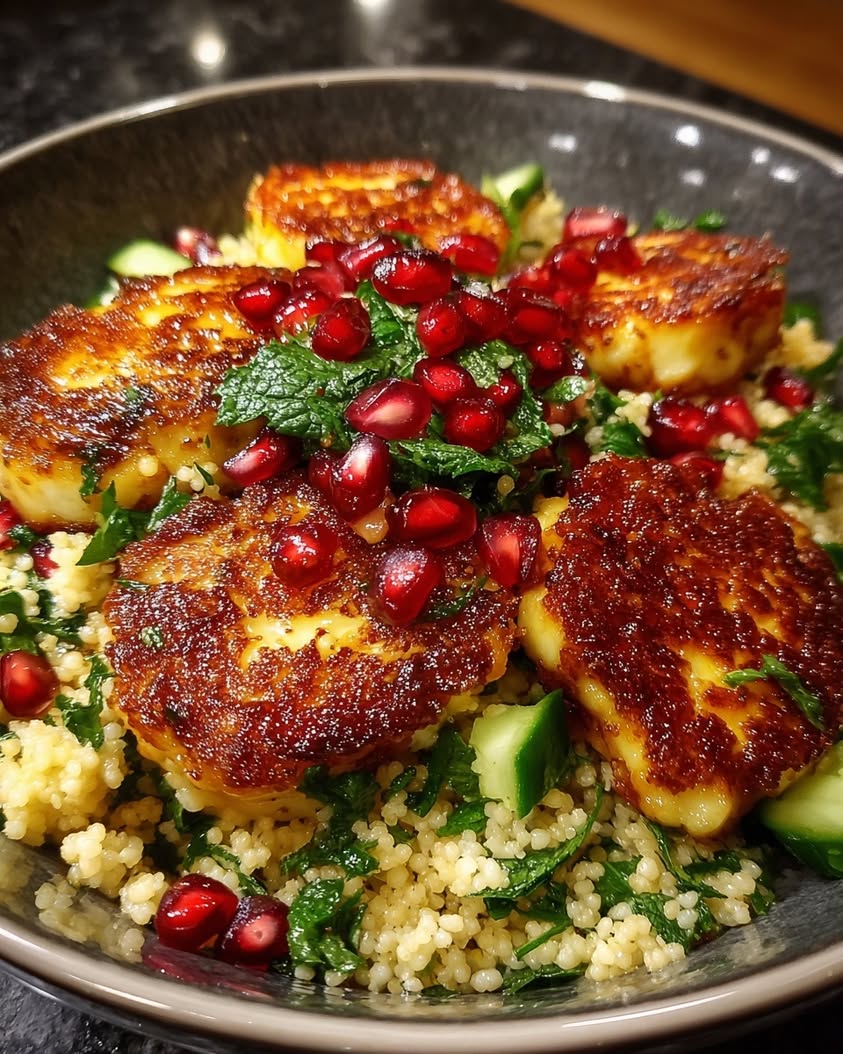
Halloumi & Pomegranate Couscous Salad with Mint-Lemon Dressing: A Mediterranean Masterpiece
This vibrant Halloumi & Pomegranate Couscous Salad is a true celebration of Mediterranean flavors. Imagine creamy, pan-seared halloumi meeting fluffy couscous and juicy pomegranate seeds, all brought together with a zesty mint-lemon dressing. This dish delivers an explosion of taste and texture in every single bite. Furthermore, it transforms simple ingredients into an extraordinary meal that will impress your family and guests alike.
The beauty of this Halloumi & Pomegranate Couscous Salad lies in its perfect balance. Salty halloumi cheese contrasts beautifully with the sweet, jewel-like pomegranate arils. Meanwhile, the light and fluffy couscous provides a neutral base that soaks up the vibrant mint-lemon dressing. Consequently, you get a dish that is simultaneously refreshing and satisfying. This salad is a fantastic choice for a quick lunch, a stunning side dish, or even a light main course.
Creating this Halloumi & Pomegranate Couscous Salad is surprisingly straightforward. In fact, it comes together in just about 25 minutes from start to finish. The process is simple: cook the couscous, pan-fry the halloumi until golden, and whisk together the dressing. Finally, you just assemble everything for a visually stunning and delicious result. This recipe proves that you do not need complicated techniques to create a restaurant-quality meal at home.
Quick Recipe Highlights
- Flavor Profile: This Halloumi & Pomegranate Couscous Salad offers a symphony of tastes. The salty, creamy halloumi perfectly balances the sweet, tart pomegranate seeds. Additionally, the zesty mint-lemon dressing ties all the flavors together with a fresh, citrusy kick.
- Texture: You will experience a wonderful contrast of textures in every forkful. Expect crispy, golden halloumi against fluffy, light couscous and the juicy pop of pomegranate seeds. The result is a satisfying and dynamic mouthfeel that is never boring.
- Aroma: The scent of sizzling halloumi and fresh mint is incredibly inviting. As you prepare the salad, the kitchen will fill with warm, savory notes from the cheese and a bright, herbaceous fragrance from the mint and lemon dressing.
- Visual Appeal: This salad is a feast for the eyes with its stunning color palette. The white halloumi, ruby-red pomegranate seeds, and green herbs create a vibrant, confetti-like dish that looks beautiful on any table.
- Skill Level Needed: This is an ideal recipe for beginners or anyone short on time. The techniques are basic, involving simple boiling, pan-frying, and whisking. Therefore, you do not need any advanced culinary skills to achieve a perfect result.
- Special Equipment: You only need standard kitchen tools. A medium saucepan for the couscous, a non-stick skillet for the halloumi, and a small bowl for the dressing are all that is required. No fancy gadgets are necessary.
Recipe Overview
- Difficulty Level: This Halloumi & Pomegranate Couscous Salad is classified as easy for a good reason. The steps are sequential and simple, with no complex knife work or cooking methods involved. Essentially, if you can boil water and fry cheese, you can master this recipe. The entire process is forgiving and designed for success, even on your first attempt.
- Category: This versatile dish fits multiple meal categories beautifully. It works wonderfully as a substantial vegetarian main course for lunch or a light dinner. Alternatively, it serves as a stunning side dish for grilled meats or fish. It is also a fantastic potluck or picnic option because it travels well and can be served at room temperature.
- Cuisine: The recipe draws its primary inspiration from Eastern Mediterranean and Middle Eastern culinary traditions. Halloumi hails from Cyprus, couscous is a staple across North Africa, and pomegranates are deeply symbolic throughout the region. The combination of these elements creates a modern fusion dish that honors its cultural roots while offering a fresh, contemporary twist.
- Cost: Preparing this salad is surprisingly budget-friendly. Couscous is an inexpensive grain, and a little halloumi goes a long way due to its rich flavor. Pomegranates can be seasonal, but you can often find affordable seeds sold separately. Overall, the cost per serving is quite reasonable, especially when compared to a restaurant version of a similar dish.
- Season: This salad shines brightest in the late summer and early autumn. This is when pomegranates are at their peak, and the refreshing qualities of the mint and lemon are most welcome. However, it is a versatile recipe that can be enjoyed year-round, bringing a burst of sunshine to colder months.
- Occasion: It is perfect for a wide array of events. Serve it at a casual weeknight family dinner, a sophisticated weekend brunch, or a festive holiday gathering. Its vibrant colors make it particularly suitable for celebrations like Christmas or Valentine’s Day. It is also an excellent choice for meal prep, as it holds up well in the refrigerator.
Why You’ll Love This Recipe
First and foremost, the taste and texture appeal of this Halloumi & Pomegranate Couscous Salad is undeniable. The combination of warm, salty halloumi with the cool, sweet burst of pomegranate is simply magical. Each component brings something unique to the table, creating a complex and satisfying eating experience. The fluffy couscous soaks up the bright, herby dressing, ensuring that every single bite is packed with flavor. This is not a boring salad; it is a culinary adventure that will keep you coming back for more.
From a convenience standpoint, this recipe is a true lifesaver. It comes together in under 30 minutes, making it a fantastic option for busy weeknights. Furthermore, most of the components can be prepared simultaneously, which maximizes your efficiency in the kitchen. You can cook the couscous while the halloumi is sizzling and whisk the dressing in the time it takes for both to finish. The result is a gourmet-quality meal with minimal effort and time investment, which is a huge win for any home cook.
Nutritionally, this Halloumi & Pomegranate Couscous Salad offers a well-rounded profile. Couscous provides a good source of carbohydrates for energy, while halloumi delivers a satisfying dose of protein to keep you full. Pomegranate seeds are rich in antioxidants and vitamins, and the fresh mint aids digestion. It is a balanced meal that fuels your body without weighing you down. While halloumi is a salted cheese, the overall dish is packed with fresh, whole-food ingredients that contribute to a healthy diet.
For social and entertaining value, this salad is an absolute superstar. Its stunning visual presentation is guaranteed to draw compliments from your guests. It is a conversation starter that looks far more impressive than the effort required to make it. Because it can be served at room temperature, it alleviates the stress of last-minute cooking and plating. You can assemble it ahead of time and focus on enjoying your company, confident that your dish will be a hit.
Finally, the cost-effectiveness and accessibility of this recipe are major advantages. The ingredients are not exotic or hard to find; most are available at a standard supermarket. Couscous is one of the most affordable grains, and a single block of halloumi can feed multiple people. Compared to ordering takeout or dining out, making this salad at home represents significant savings. It is a restaurant-quality dish that is kind to your wallet, proving that eating well does not have to be expensive.
Historical Background and Cultural Significance
The origin story of this dish is a beautiful tapestry of Mediterranean culinary exchange. Halloumi cheese has been a staple in Cyprus for centuries, with its unique non-melting properties making it ideal for frying and grilling. Couscous, often associated with North African Berber cultures, traveled across the Mediterranean. Pomegranates, one of the oldest known fruits, hold deep symbolic meaning in Greek, Persian, and Turkish mythology, often representing life and abundance. The modern fusion of these elements in a single salad is a relatively recent innovation, reflecting today’s globalized palate and the trend towards vibrant, vegetable-forward meals.
The cultural importance of the individual components cannot be overstated. In Cyprus, halloumi is more than just a food; it is a point of national pride and has even received Protected Designation of Origin (PDO) status from the European Union. Couscous is the cornerstone of social and family life in many Maghreb countries, traditionally prepared for Friday family meals and special celebrations. The pomegranate appears in ancient texts and art, symbolizing everything from fertility and prosperity to the afterlife. Combining them creates a dish that respectfully nods to multiple rich cultural traditions.
The evolution of this recipe follows the natural path of modern home cooking. As international ingredients became more readily available in supermarkets, creative cooks began experimenting. The logical step of pairing salty, fried halloumi with a grain led to couscous, which cooks quickly and has a gentle flavor. The addition of pomegranate seeds provided a necessary pop of sweetness and color, while a simple mint-lemon dressing echoed classic flavor profiles found throughout the Eastern Mediterranean. This evolution showcases how home cooks actively blend traditions to create new, beloved classics.
Regional variations of this concept are endless, demonstrating its versatility. In a Greek version, one might find oregano and kalamata olives alongside the halloumi. A Lebanese twist could include toasted pine nuts and a sprinkle of sumac in the dressing. Some modern interpretations swap the couscous for quinoa or bulgur wheat for a different nutritional profile. The addition of other vegetables like roasted red peppers, cucumber, or chickpeas is also common. This adaptability is a testament to the recipe’s solid foundation, allowing it to be personalized based on taste and what is seasonally available.
Ingredient Deep Dive
Let’s start with halloumi, the star of our Halloumi & Pomegranate Couscous Salad. This semi-hard, brined cheese originates from Cyprus and is traditionally made from a mixture of goat’s and sheep’s milk. Its most remarkable property is its high melting point, which allows it to be fried or grilled until golden brown without losing its shape. This results in a deliciously crispy exterior and a soft, slightly squeaky interior. From a nutritional standpoint, halloumi is a good source of protein and calcium, but it is also high in sodium and saturated fat, so moderation is key. When selecting halloumi, look for a cheese that is white and firm, without any discoloration or strong odor. Store it in its brine in the refrigerator, and always pat it dry thoroughly before cooking to achieve the perfect sear. If you need a substitute, grilled paneer or firm tofu can work, though the unique salty flavor will be different.
Next, we have couscous, which forms the base of our salad. Despite its rice-like appearance, couscous is actually a type of tiny pasta made from semolina wheat. It is a staple food throughout North Africa and has been consumed for centuries. Its primary culinary advantage is its incredibly fast cooking time; most modern instant couscous simply requires soaking in hot water. Nutritionally, it is a carbohydrate that provides quick energy, and it is often enriched with B vitamins. When buying couscous, the most common type is Moroccan, which is the finest and quickest-cooking. For storage, keep dry couscous in an airtight container in a cool, dark pantry. After cooking, it should be refrigerated and consumed within a few days. For a gluten-free alternative, cooked quinoa or millet makes an excellent substitution, offering a similar light and fluffy texture.
Pomegranate seeds, or arils, provide the vibrant color and juicy burst in our Halloumi & Pomegranate Couscous Salad. The pomegranate is a fruit steeped in history and mythology, appearing in ancient Egyptian, Greek, and Roman cultures. These ruby-red jewels are not only beautiful but also a nutritional powerhouse, packed with vitamin C, vitamin K, and powerful antioxidants called punicalagins. Selecting a ripe pomegranate involves choosing one that feels heavy for its size with a firm, leathery skin. You can find pre-seeded pomegranate arils in the refrigerated section of most grocery stores, which is a major time-saver. Fresh pomegranate seeds can be stored in an airtight container in the refrigerator for up to a week, or frozen for several months. If pomegranates are unavailable, dried cranberries or cherries can provide a similar sweet-tart note, though the fresh juiciness will be lost.
The mint-lemon dressing is what ties our Halloumi & Pomegranate Couscous Salad together. Fresh mint has been used for millennia both culinarily and medicinally, known for its digestive properties and refreshing aroma. Lemon juice, rich in vitamin C, provides the necessary acidity to cut through the richness of the halloumi and brighten the entire dish. The quality of these ingredients is paramount; fresh mint is far superior to dried, and freshly squeezed lemon juice offers a brighter flavor than bottled. When selecting mint, look for vibrant, perky leaves without any wilting or dark spots. To store fresh mint, treat it like a bouquet of flowers: trim the stems and place it in a glass of water in the refrigerator, covering it loosely with a plastic bag. If you are out of fresh mint, fresh basil or parsley can offer a different but still delicious herbal note.
Common Mistakes to Avoid
- Overcooking the Couscous: This results in a mushy, gummy texture that ruins the salad’s base. Always follow the package instructions precisely, using the correct water-to-couscous ratio. Furthermore, fluff the couscous immediately with a fork after cooking to separate the grains and prevent clumping.
- Not Drying the Halloumi: Skipping the step of patting the halloumi dry with a paper towel prevents proper browning. Excess moisture will cause the cheese to steam instead of sear. Consequently, you will miss out on the delicious crispy, golden-brown crust that is essential to its appeal.
- Crowding the Pan: Frying too many halloumi slices at once lowers the pan’s temperature dramatically. This leads to steaming and a soggy, pale result. For the best sear, cook the halloumi in batches, ensuring each piece has enough space around it in the pan.
- Adding Dressing Too Early: Pouring the mint-lemon dressing over the hot couscous or halloumi can cause it to be absorbed too quickly and make the salad soggy. Always allow the cooked components to cool slightly before combining everything. This ensures the final dish remains light and fresh.
- Using Stale Herbs: Wilted, brown mint will impart a bitter flavor and look unappealing. Your herbs should be as fresh as possible for the brightest flavor and vibrant color. If your mint looks tired, it is better to omit it than to use a subpar product.
- Neglecting to Season the Dressing: A dressing is not just about acid and oil; it needs salt to balance the flavors. Always taste your dressing and adjust the seasoning with salt and perhaps a pinch of black pepper before adding it to the salad.
- Forgetting to Let the Salad Rest: Assembling the salad and serving it immediately is a common error. Allowing it to sit for 5-10 minutes after tossing lets the flavors meld together beautifully. The couscous soaks up the dressing, and the overall taste becomes more harmonious.
- Incorrect Pomegranate Seed Extraction: Hacking at a pomegranate can burst the seeds and make a mess. The best method is to score the fruit and submerge it in a bowl of water to gently release the arils. This keeps the seeds intact and prevents red juice from splattering everywhere.
Essential Techniques
Perfectly Fluffing Couscous: This technique is crucial for achieving a light, separate grain rather than a sticky clump. After your couscous has absorbed the hot water and rested, take a fork and gently rake through it. Do not use a spoon, as it will press the grains together. The goal is to incorporate air and break up any lumps. The visual cue for success is individual, fluffy grains that easily separate from one another. A common pitfall is stirring too vigorously, which can make the couscous mushy. Mastering this simple step ensures your salad has the ideal base texture.
Pan-Searing Halloumi: The key to perfect halloumi is a hot pan and a dry surface. Use a non-stick or well-seasoned cast-iron skillet and heat it over medium-high heat. There is no need for oil, as the halloumi will release its own fats. Pat the cheese slices completely dry with a paper towel before they hit the pan. Listen for a confident sizzle upon contact. Cook for 1-2 minutes per side without moving them, until a deep golden-brown crust forms. The pitfall here is impatience; flipping too soon will tear the crust. Wait until the cheese releases easily from the pan, indicating a proper sear.
Emulsifying the Dressing: A well-emulsified dressing coats the salad evenly and clings to the ingredients. Start by combining the lemon juice, finely chopped mint, and seasonings in a bowl. Then, while whisking constantly, slowly stream in the extra virgin olive oil. This slow incorporation allows the oil and acid to bind into a temporary emulsion. The dressing will look slightly thickened and creamy. If you just dump the oil in and stir, it will separate quickly. The success of this technique is visible; a properly emulsified dressing will not have a layer of oil floating on top.
Gentle Folding for Assembly: The final assembly of the Halloumi & Pomegranate Couscous Salad requires a delicate hand. Use a large, wide bowl and a flexible spatula or large serving spoons. Add the cooled couscous, most of the pomegranate seeds, herbs, and dressing. Then, gently fold the ingredients together. The goal is to distribute everything evenly without crushing the delicate pomegranate arils or breaking the halloumi into tiny pieces. Over-mixing will result in a bruised, messy-looking salad. The visual cue for success is a beautifully integrated salad where each component remains distinct and visually appealing.
Pro Tips for Perfect Halloumi & Pomegranate Couscous Salad
- For an extra flavor boost, cook your couscous in vegetable broth instead of water. This simple swap infuses the grain with a savory depth that complements the other ingredients beautifully.
- Allow the pan-fried halloumi to rest on a paper towel for a minute after cooking. This helps absorb any excess surface oil, ensuring the cheese stays crispy rather than becoming greasy in the salad.
- Zest the lemon before you juice it for the dressing. Adding a teaspoon of fresh lemon zest to the dressing will intensify the citrus aroma and flavor, making the entire salad taste brighter.
- If you have time, toasting the couscous in a dry saucepan for a few minutes before adding the liquid can enhance its nutty flavor. Stir constantly until it becomes fragrant and light golden.
- Chill your serving bowls in the freezer for 10-15 minutes before assembling the salad. This is a chef’s trick that keeps the salad cool and refreshing for longer, especially on a warm day.
- Reserve a small handful of pomegranate seeds and fresh mint leaves for garnish. Sprinkling these on top just before serving adds a final touch of color and freshness that makes the presentation professional.
- Add a pinch of sugar or a drizzle of honey to your dressing if the lemons are particularly sharp. This tiny adjustment can help balance the acidity and round out the flavor profile perfectly.
- For a more substantial meal, stir in a can of rinsed and drained chickpeas. They add plant-based protein and fiber, turning the salad into a complete, filling lunch that will keep you energized for hours.
Variations and Adaptations
Regional Variations: You can easily take your Halloumi & Pomegranate Couscous Salad on a world tour. For a Greek twist, add chopped Kalamata olives, diced cucumber, and a sprinkle of dried oregano. A Middle Eastern version might include a pinch of sumac or za’atar in the dressing, along with some toasted pine nuts. For a North African flair, stir in some chopped preserved lemon and a dash of harissa for a gentle heat. These regional additions honor the origins of the core ingredients while creating a completely new taste experience.
Seasonal Adaptations: This salad is wonderfully adaptable to the seasons. In the spring, incorporate fresh peas and chopped asparagus. For summer, add diced peaches or nectarines and fresh basil. In autumn, roasted cubes of butternut squash or sweet potato work beautifully. During winter, segments of orange or grapefruit can stand in for the pomegranate, providing a similar juicy, tart element. The mint-lemon dressing is a constant that pairs well with almost any seasonal produce, making this a year-round recipe.
Dietary Modifications: Accommodating different dietary needs is straightforward. For a gluten-free Halloumi & Pomegranate Couscous Salad, simply replace the couscous with an equal amount of cooked quinoa or millet. To make it vegan, omit the halloumi and use pan-fried, marinated extra-firm tofu or chickpeas for protein. For a lower-carb version, substitute the couscous with cauliflower rice. If you are watching your sodium intake, look for a low-sodium halloumi or reduce the amount used, balancing the flavor with extra herbs and lemon.
Flavor Variations: Do not be afraid to play with the flavor profile. For a creamier texture, swirl in a tablespoon of Greek yogurt or tahini into the dressing. Add a spicy kick with a finely chopped fresh chili or a pinch of red pepper flakes. Introduce an earthy note by including chopped, toasted walnuts or pistachios. A tablespoon of pomegranate molasses in the dressing will intensify the fruity flavor and add a lovely sweetness. The basic recipe is a perfect canvas for your own creative experiments.
Serving and Presentation Guide
Plating Techniques: How you present your Halloumi & Pomegranate Couscous Salad significantly impacts its appeal. For individual servings, use a ring mold to create a neat, cylindrical tower of couscous in the center of the plate. Alternatively, for a family-style presentation, a large, wide, shallow bowl or platter is ideal, as it allows the colorful ingredients to be visible. Avoid piling the salad high in a deep bowl, which can hide its beauty. Gently arrange the golden halloumi slices on top or around the edges, rather than mixing them in completely, to showcase their perfect sear.
Garnishing Ideas: The final garnish elevates the dish from homemade to restaurant-quality. Always reserve a small amount of pomegranate seeds, fresh mint leaves, and perhaps a few whole parsley sprigs to scatter over the top just before serving. A final drizzle of high-quality extra virgin olive oil adds a lovely sheen. For a touch of elegance, add a light dusting of sumac or smoked paprika over the halloumi. These small, thoughtful touches enhance the visual texture and signal care and attention to detail.
Traditional Accompaniments: In its native regions, this type of salad would often be part of a larger mezze spread. Serve it alongside other small dishes like hummus, baba ganoush, stuffed grape leaves, and warm pita bread. It also pairs wonderfully with grilled meats like lamb kofta, chicken souvlaki, or spiced fish. A simple side of sliced tomatoes and cucumbers with a sprinkle of salt completes the Mediterranean feast. This approach turns the salad into the centerpiece of a vibrant and varied meal.
Modern Serving Suggestions: For a contemporary twist, consider deconstructing the salad. Serve the couscous in a bowl with the dressing already mixed in, and present the halloumi and pomegranate seeds in separate small dishes, allowing guests to build their own bites. You can also use the salad as a hearty filling for wraps or pitta pockets, adding a layer of hummus or tzatziki. Another modern idea is to serve it in a jar for a stylish, portable lunch, with the dressing at the bottom and the halloumi on top to stay crisp.
Wine and Beverage Pairing
Wine Pairings: The salty halloumi and bright, acidic dressing in this salad call for specific wine choices. A crisp, high-acid white wine like a Sauvignon Blanc or a Greek Assyrtiko is an excellent match, as their citrus notes complement the lemon in the dressing. A dry Rosé from Provence also works beautifully, offering red fruit flavors that harmonize with the pomegranate without overpowering the dish. If you prefer red wine, opt for a light-bodied, low-tannin option like a Pinot Noir or a Beaujolais. The key is to avoid heavily oaked or high-tannin wines, which can clash with the halloumi’s saltiness.
Non-Alcoholic Alternatives: For a refreshing non-alcoholic pairing, you have many delightful options. A sparkling lemonade or limeade mirrors the citrus notes in the salad. Iced mint tea is a natural fit, reinforcing the herbal element. For something more unique, try a pomegranate spritzer made with pomegranate juice, soda water, and a squeeze of lime. Alternatively, a glass of chilled coconut water provides a neutral, hydrating counterpoint to the salad’s bold flavors. These beverages cleanse the palate and enhance the overall dining experience.
Storage and Shelf Life
Proper storage is key to enjoying your Halloumi & Pomegranate Couscous Salad later. Store any leftovers in an airtight container in the refrigerator. The salad is best consumed within 1-2 days. After this time, the couscous may begin to dry out or become soggy, and the fresh herbs will wilt. The halloumi will lose its crispy texture upon refrigeration but will still be edible. For the best quality, consider storing the components separately if you know you will have leftovers. Keep the dressing in a small jar, the couscous in one container, and the halloumi and pomegranate seeds in another. Assemble just before serving to maintain optimal texture.
This salad is not ideal for freezing. The high water content in the cucumbers, pomegranate seeds, and halloumi will cause the texture to become mushy and unappealing upon thawing. The couscous will also become very soft. Therefore, it is highly recommended to enjoy this dish fresh. If you must store it for longer, the undressed couscous base can be frozen separately for up to a month, but the complete salad should always be made and eaten fresh. Signs of spoilage include a sour smell, significant wilting or sliminess of the vegetables and herbs, or any visible mold. When in doubt, it is safest to discard the salad.
Make Ahead Strategies
This Halloumi & Pomegranate Couscous Salad is a fantastic candidate for strategic make-ahead prep. You can prepare nearly all the components up to 24 hours in advance. Cook the couscous and let it cool completely before storing it in an airtight container in the fridge. The mint-lemon dressing can be whisked together and kept in a sealed jar in the refrigerator. You can also extract the pomegranate seeds and chop the herbs ahead of time. The key to success is keeping these elements separate until just before you are ready to serve. This prevents the couscous from becoming soggy and the herbs from wilting.
The halloumi is the one component that should always be cooked fresh. Pre-cooked and refrigerated halloumi becomes rubbery and loses its delightful crispy exterior. Therefore, plan to pan-fry the cheese right before assembling the salad. When you are ready to serve, take your pre-prepared components out of the refrigerator. Combine the couscous, most of the pomegranate seeds, and herbs in a large bowl. Add the dressing and toss gently. Finally, top the salad with the freshly fried, warm halloumi and the reserved garnishes. This approach gives you all the convenience of make-ahead prep without compromising on texture or flavor.
Scaling Instructions
Scaling this recipe up or down is straightforward because it uses simple ratios. To halve the recipe for two servings, simply divide all the ingredient quantities by two. Use a smaller saucepan for the couscous and a small skillet for the halloumi. The cooking times will remain largely the same, but keep a close eye on the halloumi as it will cook slightly faster in a less crowded pan. When doubling or tripling the recipe for a crowd, it is best to cook the couscous in batches to avoid clumping. You may need to fry the halloumi in several batches to ensure each piece gets properly seared. Use a very large bowl for mixing to allow for even distribution of the dressing and ingredients.
Consider your equipment when scaling. A standard recipe serves four comfortably. If you are doubling it to serve eight, ensure you have a bowl large enough to mix everything without spilling. For tripling, you might want to mix in two separate batches and then combine them. The storage considerations also change with scale. A large batch of salad will take longer to cool down, so spread it out on a baking sheet to cool quickly before refrigerating to maintain food safety. Regardless of the scale, the core techniques and principles remain identical, making this a very adaptable dish for any number of guests.
Nutritional Deep Dive
A serving of this Halloumi & Pomegranate Couscous Salad provides a balanced mix of macronutrients. The couscous is the primary source of carbohydrates, offering energy-sustaining complex carbs. The halloumi cheese contributes a significant amount of protein and fat, particularly saturated fat, which is why portion control is important. The olive oil in the dressing provides heart-healthy monounsaturated fats. The pomegranate seeds add a small amount of natural sugar and dietary fiber. From a micronutrient perspective, this salad is a good source of calcium from the halloumi, vitamin C from the lemon and pomegranate, and various antioxidants from the pomegranate arils and fresh herbs.
The health benefits of this dish are tied to its whole-food ingredients. The antioxidants in pomegranates can help combat oxidative stress in the body. The fiber from the couscous and pomegranates supports digestive health. The protein from the halloumi promotes satiety, helping you feel full for longer. However, it is important to be mindful of the sodium content from the halloumi and the saturated fat. For those watching their intake, using less halloumi or seeking out a lower-sodium version can help. Overall, when enjoyed as part of a balanced diet, this salad is a nutritious and flavorful meal option that provides both immediate energy and longer-lasting satisfaction.
Dietary Adaptations
Gluten-Free: Transforming this into a gluten-free Halloumi & Pomegranate Couscous Salad is simple. Replace the standard wheat-based couscous with an equal amount of cooked quinoa, which is naturally gluten-free and provides a similar light, fluffy texture. You could also use certified gluten-free couscous made from corn or rice, which is available in many health food stores. Ensure all other ingredients, like the halloumi, are checked for any gluten-containing additives, though they are typically safe. This easy swap makes the salad accessible for those with celiac disease or gluten sensitivity without sacrificing taste or satisfaction.
Vegan: To create a vegan version of this salad, the halloumi must be replaced. An excellent substitute is extra-firm tofu that has been pressed, sliced, and pan-fried until golden. For a more authentic salty flavor, marinate the tofu slices in a mixture of lemon juice, salt, and a splash of tamari before cooking. Chickpeas are another great vegan protein option; you can pan-fry them briefly for a crispy texture. The rest of the recipe is naturally vegan, so this single substitution allows you to enjoy all the vibrant flavors and textures of the original dish in a plant-based format.
Lower-Carb/Keto: For a low-carb or keto-friendly adaptation, the couscous is the main ingredient that needs to change. Substitute it with cauliflower rice. To prepare, pulse fresh cauliflower florets in a food processor until they reach a rice-like consistency. You can sauté it lightly to soften it, or use it raw for a crunchier texture. Be mindful that pomegranate seeds are higher in natural sugars, so you may want to reduce the quantity or replace them with a few low-carb berries like raspberries. The halloumi and olive oil fit well within a keto framework, providing healthy fats and protein.
Troubleshooting Guide
Soggy Salad: If your Halloumi & Pomegranate Couscous Salad turns out soggy, the most likely culprit is adding the dressing while the couscous is still too hot. Hot grains absorb liquid rapidly and become mushy. The solution is to always allow the couscous to cool to room temperature after fluffing it before you mix in the dressing. Another cause could be overdressing; start with half the dressing, toss, and then add more as needed. If the salad is already assembled and soggy, you can try to salvage it by mixing in a handful of fresh, un-dressed couscous or some crunchy lettuce to absorb the excess moisture.
Rubbery Halloumi: Halloumi that is tough and overly chewy has typically been overcooked. While you want a deep sear, cooking it for too long over too high heat will squeeze out its moisture and make it rubbery. The solution is to cook it over medium-high heat for just 1-2 minutes per side, only until golden brown. If your halloumi is still rubbery straight from the package, it might be a lower-quality brand; try soaking it in cold water for 30 minutes to remove some excess salt and soften it slightly before patting dry and cooking.
Bland Flavor: A salad that tastes bland is often under-seasoned. Remember that couscous itself is very plain and needs seasoning from the dressing and other ingredients. The solution is to be generous with seasoning at every stage. Season the dressing well with salt and pepper, and taste it before adding it to the salad. You can also season the couscous with a pinch of salt as it cooks. Finally
Print
Halloumi & Pomegranate Couscous Salad with Mint-Lemon Dressing
Description
A vibrant and refreshing salad featuring pan-fried halloumi, fluffy couscous, juicy pomegranate seeds, and a zesty mint-lemon dressing.
Ingredients
For the Crust:
- 1 cup couscous
- 1 1/4 cups boiling water
- 250g halloumi cheese, sliced
- 1/2 cup pomegranate seeds
- 1/4 cup fresh mint leaves, chopped
- 1/4 cup fresh parsley, chopped
- 1/4 cup olive oil
- 2 tbsp lemon juice
- 1 tsp honey
- Salt and pepper to taste
Instructions
1. Prepare the Crust:
- Place couscous in a bowl, pour boiling water over, cover and let sit for 10 minutes. Fluff with a fork.
- Heat a non-stick pan over medium heat. Cook halloumi slices for 2-3 minutes per side until golden brown.
- In a small bowl, whisk together olive oil, lemon juice, honey, salt, and pepper to make the dressing.
- Combine couscous, halloumi, pomegranate seeds, mint, and parsley in a large bowl. Drizzle with dressing and toss gently to combine.
- Serve immediately or chill for 30 minutes for a cooler salad.
Notes
You can customize the seasonings to taste.

I’m Shaykee—born in Morocco, seasoned across continents. From airplane galleys to home kitchens, I share the flavors and stories that shaped my journey.