
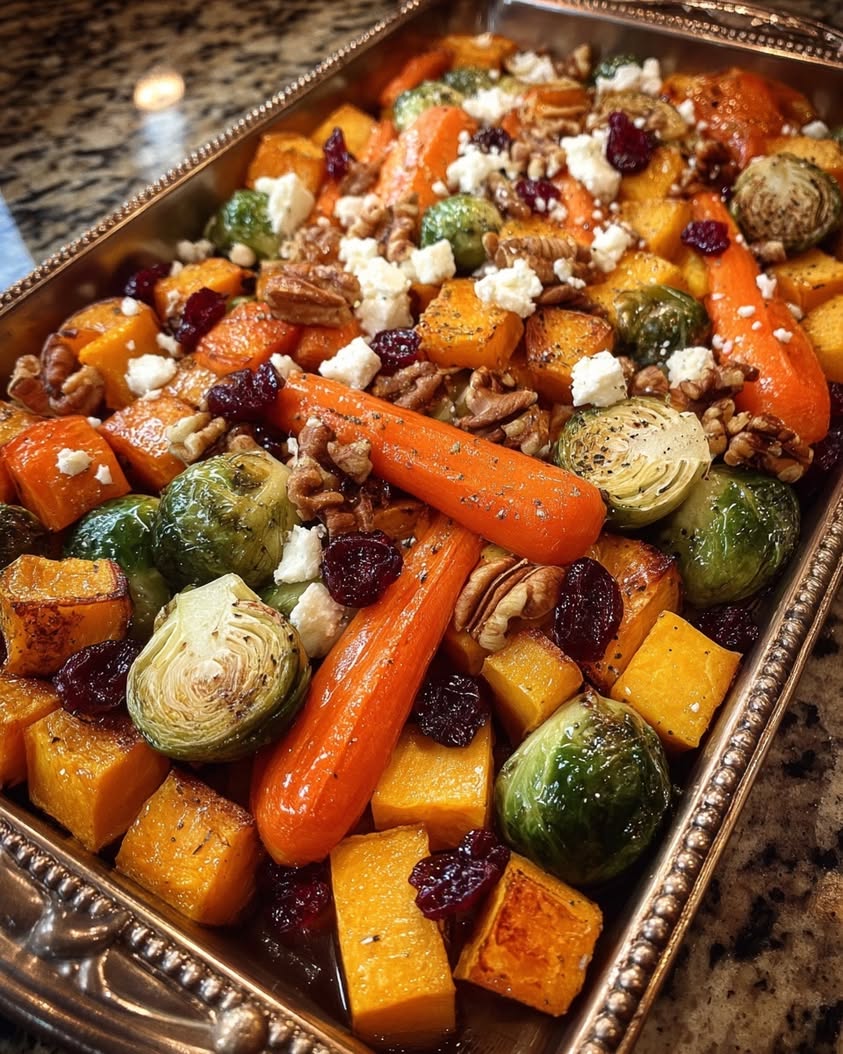
Caramelized Roasted Veggies with Sweet & Savory Glaze: Your New Favorite Holiday Side
Imagine a sheet pan filled with vibrant autumn colors, each vegetable caramelized to perfection and glistening with a sweet and savory glaze. This stunning dish of caramelized roasted veggies with sweet & savory glaze brings together the best of fall produce in one spectacular presentation. Furthermore, the combination of earthy roasted vegetables with tangy feta and crunchy walnuts creates a textural symphony that will have everyone asking for seconds. Consequently, this recipe has become a staple for holiday gatherings and weeknight dinners alike.
The magic of these caramelized roasted veggies lies in their transformation through simple roasting. High heat coaxes out the natural sugars in the butternut squash, carrots, and sweet potatoes, creating beautifully browned edges and tender interiors. Meanwhile, the Brussels sprouts develop a nutty complexity that pairs wonderfully with the cranberry-honey glaze. Additionally, the final sprinkle of feta and walnuts adds both creaminess and crunch, making this dish a complete sensory experience. Ultimately, this recipe proves that sometimes the most impressive dishes are also the simplest to prepare.
Perfect for busy hosts, these caramelized roasted veggies require minimal hands-on time while delivering maximum flavor impact. The sheet pan method means easy cleanup, allowing you to focus on other meal components or simply enjoy time with guests. Moreover, the beautiful color combination of orange squash, green Brussels sprouts, and vibrant carrots makes this dish as visually appealing as it is delicious. Whether serving a holiday crowd or looking for a special weeknight side, these glazed roasted vegetables will quickly become your go-to recipe.
Quick Recipe Highlights
- Flavor Profile: These caramelized roasted veggies offer a perfect balance of sweet from the honey glaze and savory from the roasted vegetables and feta. The cranberry reduction adds a tart counterpoint that cuts through the richness, while the walnuts contribute an earthy depth. Each bite delivers complex layers of flavor that complement rather than compete with each other.
- Texture: You will experience multiple textures in every forkful, from the tender-crisp Brussels sprouts to the soft sweet potatoes and the crunchy walnut topping. The caramelization process creates delightful crispy edges on the vegetables while maintaining creamy interiors. Additionally, the crumbled feta provides creamy pockets that melt slightly from the residual heat.
- Aroma: As these caramelized roasted veggies cook, your kitchen will fill with the warm, comforting scents of roasting root vegetables and sweet honey. The cranberry glaze releases fruity notes that mingle with the earthy aroma of roasting Brussels sprouts. Finally, the toasted walnuts add a nutty fragrance that signals the dish is ready to serve.
- Visual Appeal: This dish presents a beautiful autumnal color palette with vibrant orange squash, deep green Brussels sprouts, and bright orange carrots. The cranberry-honey glaze gives everything a glossy sheen, while the white feta and brown walnuts create attractive contrast. Consequently, the finished dish looks as spectacular as it tastes, making it perfect for holiday tables.
- Skill Level Needed: This recipe requires basic knife skills for vegetable preparation and understanding of oven temperatures. No advanced techniques are necessary, making it accessible for beginner cooks. However, timing the vegetables properly to ensure even cooking represents the only slight challenge, though the recipe instructions make this straightforward.
- Special Equipment: You need just a large baking sheet, parchment paper for easy cleanup, and a small saucepan for the glaze. A good chef’s knife and cutting board make vegetable prep safer and more efficient. No fancy kitchen gadgets are required, which makes this recipe perfect for cooks with basic kitchen setups.
Recipe Overview
- Difficulty Level: This recipe earns its easy rating because it involves straightforward techniques like chopping vegetables and making a simple glaze. The sheet pan method eliminates complicated cooking processes and multiple pans. While the vegetable cutting requires some time, the actual hands-on work remains minimal. Even novice cooks can achieve impressive results with this approach to caramelized roasted veggies.
- Category: These caramelized roasted veggies function beautifully as a side dish for holiday meals or special dinners. They also work well as a main course for vegetarian meals when served over grains like quinoa or farro. The dish fits perfectly into the vegetable sides category while having enough substance to stand as a centerpiece for meatless meals.
- Cuisine: This recipe draws inspiration from modern American farm-to-table cooking with Mediterranean influences from the feta cheese. The use of seasonal root vegetables reflects traditional autumn harvest cooking from various culinary traditions. Meanwhile, the sweet and savory glaze combination has roots in both European and American culinary techniques.
- Cost: This recipe uses affordable seasonal vegetables that are readily available in most grocery stores. The more expensive components like feta and walnuts are used sparingly as garnishes. Overall, the dish provides excellent value, especially considering it serves six people generously. Seasonal purchases can further reduce costs when vegetables are at their peak abundance.
- Season: Autumn and winter represent the ideal seasons for this dish when root vegetables and winter squash are at their peak. The warm, comforting nature of roasted vegetables makes it perfect for cooler weather. However, with minor vegetable substitutions, you can enjoy variations of this recipe year-round. The holiday-friendly presentation makes it particularly suitable for Thanksgiving through New Year’s celebrations.
- Occasion: These caramelized roasted veggies shine at holiday gatherings like Thanksgiving and Christmas dinners. They also work well for special Sunday family meals or dinner parties where you want an impressive but manageable side dish. The recipe scales easily for larger crowds, making it perfect for potlucks and festive gatherings of all sizes.
Why You’ll Love This Caramelized Roasted Veggies Recipe
First and foremost, the flavor combination in these caramelized roasted veggies will delight your taste buds with every bite. The natural sweetness of the roasted vegetables intensifies during cooking, creating deep, complex flavors that simple steaming cannot achieve. Meanwhile, the cranberry-honey glaze adds both tartness and sweetness that cut through the earthy vegetable notes. The salty feta and crunchy walnuts provide the perfect finishing touches that elevate the entire dish from simple to spectacular.
From a convenience perspective, this recipe simplifies holiday meal preparation significantly. The sheet pan cooking method means you can cook a large quantity of vegetables simultaneously with minimal cleanup. Furthermore, most of the cooking time is hands-off, allowing you to prepare other components of your meal. The vegetables can even be prepped ahead of time and stored in the refrigerator until ready to roast. This make-ahead flexibility makes holiday entertaining much less stressful.
Nutritionally, these caramelized roasted veggies pack a powerful punch of vitamins, minerals, and fiber. Butternut squash provides ample vitamin A, while Brussels sprouts offer vitamin C and K. Sweet potatoes deliver beta-carotene, and carrots contribute additional vitamin A. The walnuts add healthy fats and protein, making the dish more satisfying and nutritionally balanced. Roasting vegetables also helps preserve more nutrients compared to boiling, making this both a delicious and health-conscious choice.
For social gatherings, this dish serves as a beautiful centerpiece that will impress your guests with its vibrant colors and sophisticated flavor profile. The combination of familiar vegetables with the special treatment of glazing and garnishing makes it feel celebratory without being overly complicated. Additionally, the recipe easily accommodates dietary restrictions since it’s naturally vegetarian and can be made vegan with simple substitutions. Its crowd-pleasing qualities make it perfect for mixed groups where dietary preferences vary.
Finally, this recipe represents outstanding value both in terms of cost and effort versus reward. The ingredients are affordable, especially when purchased in season, and the preparation method maximizes flavor with minimal expensive additions. The dish feels special enough for holiday tables but simple enough for regular weeknight meals. This versatility means you can add it to your regular rotation without breaking the bank or spending hours in the kitchen.
Historical Background and Cultural Significance
Roasting vegetables represents one of humanity’s oldest cooking methods, dating back to when early civilizations first discovered fire. The technique of caramelizing vegetables through roasting developed naturally as cooks noticed how high heat transformed the flavors of root vegetables and hardy squashes. In America, roasted root vegetables have long been part of autumn and winter culinary traditions, particularly in New England where the growing season produced abundant storage crops. The combination of sweet and savory elements in vegetable dishes also has deep roots in early American cooking, where maple syrup and honey were often used to enhance vegetable flavors.
The cultural significance of roasted vegetable dishes spans multiple culinary traditions around the world. Mediterranean cuisines have long celebrated roasted vegetables with olive oil and herbs, while Middle Eastern cultures often incorporate nuts and cheese into vegetable dishes. This particular recipe represents a fusion of these traditions, combining American seasonal produce with Mediterranean garnishes and glazing techniques. The dish reflects modern American cooking’s tendency to draw inspiration from global flavors while utilizing local, seasonal ingredients. This cultural blending creates something both familiar and novel that appeals to contemporary palates.
The evolution of this recipe mirrors broader trends in American home cooking over recent decades. As vegetarian and vegetable-forward eating gained popularity, home cooks began looking for ways to make vegetables the star of the meal rather than just a side. Sheet pan recipes emerged as a solution for busy cooks wanting to prepare impressive vegetable dishes without multiple pans and complicated techniques. The addition of glazes and gourmet garnishes like specialty cheeses and nuts elevated simple roasted vegetables to special occasion status. This evolution demonstrates how home cooking continues to adapt to changing lifestyles while maintaining connections to traditional techniques.
Regional variations of roasted vegetable dishes appear throughout the United States, often reflecting local agricultural products. In the South, roasted sweet potatoes might feature pecans instead of walnuts, while in California, persimmons might replace cranberries in the glaze. New England versions might include maple syrup rather than honey, reflecting the region’s sugar maple traditions. These regional adaptations show how the basic concept of caramelized roasted veggies can be tailored to local tastes and ingredients. The flexibility of the recipe ensures its continued relevance across different culinary landscapes and seasonal availabilities.
Ingredient Deep Dive
Butternut squash, native to North America, has been cultivated for thousands of years by Indigenous peoples. This winter squash provides excellent storage capabilities, making it a valuable food source through winter months. Nutritionally, it’s rich in vitamin A, vitamin C, magnesium, and potassium, while being low in calories. Select squash that feel heavy for their size with firm, matte skin free of soft spots. Store whole squash in a cool, dark place for up to three months, but once cut, wrap tightly and refrigerate for up to five days. If butternut squash is unavailable, sweet potatoes or acorn squash make good substitutes.
Brussels sprouts, belonging to the cabbage family, originated in Europe where they’ve been cultivated since the 16th century. These miniature cabbages grow on tall stalks and develop sweeter flavors after exposure to frost. They deliver impressive amounts of vitamins C and K, along with folate, manganese, and fiber. Choose firm, bright green sprouts with tightly packed leaves, avoiding those with yellowing or loose leaves. Store unwashed sprouts in a plastic bag in the refrigerator for up to one week. For substitutions, broccoli florets or cauliflower work well, though cooking times may need adjustment.
Sweet potatoes, despite their name, aren’t related to regular potatoes and actually belong to the morning glory family. Native to Central and South America, they’ve been cultivated for over 5,000 years and now grow in tropical regions worldwide. They’re nutritional powerhouses, providing massive amounts of vitamin A, along with vitamin C, manganese, and fiber. Look for firm sweet potatoes with smooth skin and consistent coloring, avoiding those with soft spots or signs of sprouting. Store in a cool, dark, well-ventilated place for up to two weeks, but not in the refrigerator. Regular potatoes or carrots can substitute if necessary, though the flavor profile will change.
Carrots, originating in Central Asia, were originally purple or yellow before Dutch growers developed the orange varieties we know today. They’ve been cultivated for over 1,000 years and were initially valued for their medicinal properties more than culinary uses. Carrots provide exceptional amounts of vitamin A in the form of beta-carotene, along with biotin, vitamin K, and potassium. Choose firm, smooth carrots with bright color, avoiding those that are limp or cracked. Remove green tops before storing in plastic bags in the refrigerator for up to three weeks. Parsnips make an excellent substitute, offering similar texture with a slightly different flavor profile.
Feta cheese, with protected designation of origin status, traditionally comes from Greece where it’s made from sheep’s milk or sheep and goat milk blends. This brined cheese has been produced for centuries using methods passed down through generations. Feta provides calcium, protein, and beneficial fatty acids, though it’s also high in sodium. Look for feta stored in brine for optimal freshness and flavor, avoiding pre-crumbled versions which often contain anti-caking agents. Store submerged in brine in the refrigerator for up to two weeks. For dairy-free options, tofu feta or seasoned nutritional yeast can provide similar salty, tangy notes.
Common Mistakes to Avoid
- Overcrowding the pan prevents proper caramelization because the vegetables steam rather than roast. Always use a large enough baking sheet and spread vegetables in a single layer with space between pieces. If necessary, use two baking sheets rather than cramming everything onto one.
- Inconsistent cutting leads to uneven cooking, with some pieces burning while others remain undercooked. Take time to cut vegetables into uniform sizes, approximately 1-inch pieces for this recipe. This attention to detail ensures everything cooks at the same rate.
- Skipping the parchment paper makes cleanup difficult and can cause sticking, especially with the sweet glaze. Always line your baking sheet to prevent messy cleanup and ensure easy removal of the caramelized roasted veggies.
- Neglecting to toss vegetables during cooking results in uneven browning and possible burning. Make sure to rotate the pan and stir the vegetables at least once during the roasting process. This simple step ensures all sides develop beautiful caramelization.
- Adding garnishes too early causes walnuts to burn and feta to melt completely into the dish. Always wait until after roasting to add these finishing elements. The residual heat will warm them perfectly without compromising their texture.
- Underseasoning is common with vegetable dishes, but roasted vegetables need ample seasoning to shine. Don’t be shy with salt and pepper, and consider adding herbs like thyme or rosemary for additional flavor dimensions.
- Using old, dried-out walnuts results in bitter rather than nutty flavor. Always taste nuts before using and purchase from stores with high turnover. Toasting them lightly before adding to the dish enhances their flavor significantly.
- Rushing the glaze prevents proper thickening and flavor development. Simmer the cranberry-honey mixture until it reduces to a syrupy consistency that will coat the vegetables beautifully. A thin glaze will make the dish watery rather than glossy.
- Neglecting to preheat the oven means the vegetables start cooking at too low a temperature. Always ensure your oven reaches the proper temperature before adding the baking sheet. This initial high heat is crucial for proper caramelization.
- Cutting vegetables too small causes them to burn before developing sweet caramelized flavors. Stick to the recommended 1-inch pieces to achieve the perfect balance of tender interiors and crispy edges.
Essential Techniques
Proper vegetable cutting represents the foundation of successful caramelized roasted veggies. Uniform pieces ensure even cooking, preventing some vegetables from burning while others remain hard. Use a sharp chef’s knife and steady cutting surface for safety and precision. Aim for consistent 1-inch cubes or chunks, adjusting harder vegetables like carrots slightly smaller than softer ones like sweet potatoes. The goal is pieces that will cook through in approximately the same time while developing beautiful browned edges. Mastering this basic technique improves not just this recipe but all your vegetable preparation.
The caramelization process relies on both high heat and proper oil coating. Oil helps transfer heat efficiently to the vegetable surfaces while promoting Maillard reactions that create complex flavors. Toss vegetables thoroughly with oil until every piece glistens but isn’t dripping. Use an oil with a high smoke point like avocado or refined olive oil to prevent burning. The oven temperature must remain consistently high to transform natural sugars into caramelized goodness without steaming the vegetables. Understanding this chemical process helps you achieve perfect results every time you make roasted vegetables.
Creating the cranberry-honey glaze requires balancing sweetness with acidity for a well-rounded flavor profile. Simmer the mixture gently rather than boiling vigorously to prevent burning the honey. As the liquid reduces, the natural pectin in cranberries helps thicken the glaze to a syrupy consistency. Stir frequently to prevent sticking and ensure even reduction. The glaze should coat the back of a spoon when it reaches the proper thickness. This technique of reduction intensifies flavors while creating the perfect texture for adhering to the roasted vegetables.
Timing the addition of different components ensures each element reaches its ideal state simultaneously. Harder vegetables like carrots and squash need more time than Brussels sprouts, which is why we add them first. The glaze application timing allows it to caramelize slightly without burning during the final minutes of roasting. Garnishes like walnuts and feta are added after cooking to preserve their textures. Mastering this sequencing separates good roasted vegetables from exceptional ones where every component shines.
Pro Tips for Perfect Caramelized Roasted Veggies
Always pat vegetables dry after washing to ensure proper oil adhesion and caramelization. Excess moisture creates steam that prevents the desirable crispy edges from forming. This simple step significantly improves the final texture of your roasted vegetables.
Consider roasting vegetables on separate baking sheets if making a double batch. Overcrowding remains the primary reason for poorly caramelized vegetables, so never stack them deeply on a single pan. Using multiple sheets ensures proper air circulation and browning.
Add a tablespoon of balsamic vinegar to your glaze for extra complexity. The acidity balances the sweetness while adding depth to the overall flavor profile. This small addition elevates the dish from great to extraordinary.
Toast walnuts separately before adding to the finished dish for enhanced flavor. Simply spread them on a baking sheet and toast at 350°F for 5-7 minutes until fragrant. This extra step maximizes their nutty taste and crunchy texture.
Let the roasted vegetables rest for five minutes after adding the glaze before serving. This allows the glaze to adhere properly to the vegetables rather than pooling at the bottom of the serving dish. The brief resting period improves both flavor distribution and presentation.
Use an oven thermometer to verify your oven temperature accuracy. Many home ovens run hot or cold, which significantly impacts roasting times and results. Knowing your oven’s true temperature helps you adjust cooking times for perfect caramelization.
Experiment with different herb combinations to customize the flavor profile. Fresh thyme, rosemary, or sage all complement these autumn vegetables beautifully. Add sturdy herbs at the beginning and delicate ones at the end for layered flavor.
Reserve some feta and walnuts to sprinkle on top just before serving for optimal visual appeal. This final garnish adds freshness and texture contrast that enhances the overall eating experience.
Variations and Adaptations
Regional variations allow you to customize these caramelized roasted veggies based on local ingredients and culinary traditions. Southern adaptations might include pecans instead of walnuts and a bourbon-enhanced glaze. Southwestern versions could incorporate chili powder and pepitas, while New England styles might feature maple syrup and cranberries. Mediterranean variations often include olives and oregano, and Asian-inspired versions might use sesame oil and five-spice powder. These regional twists demonstrate the recipe’s versatility while honoring different culinary heritages. Experimenting with local flavors makes the dish feel both familiar and new.
Seasonal adaptations ensure you can enjoy this dish year-round with the best available produce. Spring versions might feature asparagus, radishes, and new potatoes with a lemon-herb glaze. Summer adaptations could include zucchini, eggplant, and bell peppers with a basil-infused glaze. Autumn remains the classic season for the original recipe, while winter variations might incorporate parsnips, turnips, and beets with a pomegranate molasses glaze. Each season offers unique vegetable combinations that work beautifully with the roasting and glazing technique. This adaptability makes the recipe a perennial favorite rather than just a holiday specialty.
Dietary modifications make these caramelized roasted veggies accessible to various eating preferences and restrictions. Vegan versions simply omit the feta or use a plant-based alternative, while ensuring the honey is replaced with maple syrup. For paleo diets, omit the cheese and verify the honey aligns with your preferences. Low-carb adaptations might reduce or eliminate the sweet potatoes and carrots in favor of more Brussels sprouts and squash. Gluten-free needs are naturally met since the recipe contains no grains. These straightforward adjustments ensure everyone can enjoy this delicious vegetable dish regardless of dietary needs.
Flavor variations let you customize the profile to match your meal or personal preferences. Savory versions might include garlic, herbs, and a balsamic reduction instead of the sweet glaze. Spicy adaptations could incorporate chili flakes, harissa, or chipotle powder for heat. Umami-rich versions might include mushrooms and a miso-based glaze, while Mediterranean styles could feature olives, lemon, and oregano. The basic roasting technique remains constant while the seasoning and glazing components transform the final dish. This flexibility means you can create multiple distinct recipes from the same foundational method.
Serving and Presentation Guide
Plating techniques significantly impact how these caramelized roasted veggies are perceived by your guests. For family-style serving, transfer the vegetables to a large, shallow platter rather than serving directly from the baking sheet. Arrange the vegetables with intention, creating height in the center and allowing the different colors to show. For individual plating, use a ring mold to create elegant towers or arrange components deliberately with negative space. Always wipe the edges of serving platters for a clean presentation. These simple plating considerations elevate the dish from casual to restaurant-quality.
Garnishing ideas extend beyond the basic feta and walnut combination while maintaining the dish’s integrity. Fresh herb sprigs like thyme, rosemary, or parsley add color and fragrance. Pomegranate arils provide brilliant red pops that complement the cranberry glaze. Toasted pumpkin seeds or sunflower seeds offer additional crunch and visual interest. Edible flowers like nasturtiums or pansies create a stunning special occasion presentation. Citrus zest sprinkled over the top adds brightness and aroma. These garnishing options allow you to customize the presentation for different occasions while enhancing flavors.
Traditional accompaniments for these caramelized roasted veggies include roasted meats like turkey, chicken, or pork. The sweet and savory notes complement the richness of roasted meats beautifully. For vegetarian meals, serve alongside grain dishes like wild rice pilaf, quinoa, or farro. Creamy mashed potatoes or polenta provide comforting contrast to the roasted vegetable textures. Green salads with sharp vinaigrettes balance the sweetness of the glaze. These accompaniment choices create balanced meals where the roasted vegetables shine without overwhelming other components.
Modern serving suggestions might include using the roasted vegetables as a topping for grain bowls or flatbreads. They make excellent fillings for wraps or sandwiches when chopped slightly smaller. Blended with broth, they create beautiful autumn soups. As pizza toppings, they add gourmet flair to homemade pies. In breakfast hash, they pair wonderfully with eggs. These contemporary applications extend the recipe’s usefulness beyond the traditional side dish role. The versatility of the roasted vegetables makes them valuable components for multiple meals throughout the week.
Wine and Beverage Pairing
Wine pairings for these caramelized roasted veggies should balance the sweet and savory elements of the dish. Off-dry Rieslings or Gewürztraminers work beautifully because their slight sweetness mirrors the glaze while their acidity cuts through the richness. Medium-bodied Pinot Noirs offer red fruit notes that complement the cranberry elements without overwhelming the vegetables. For white wine lovers, oaked Chardonnay provides buttery notes that enhance the roasted flavors, while Sauvignon Blanc offers crisp acidity. Rosé wines, particularly those with some body, bridge the gap between red and white with their versatility. These wine choices enhance rather than compete with the complex flavor profile of the dish.
Non-alcoholic alternatives should provide similar balancing acts between sweetness and acidity. Sparkling apple cider mirrors the autumn flavors while cutting through the richness with its bubbles. Cranberry spritzers made with cranberry juice, club soda, and a squeeze of lime complement the glaze components. Herbal teas like peppermint or chamomile served iced provide refreshing counterpoints to the roasted flavors. For warmer options, spiced apple cider with cinnamon and clove enhances the cozy autumn vibe of the meal. These non-alcoholic options ensure all guests can enjoy thoughtful beverage pairings.
Coffee and tea pairings work surprisingly well with these caramelized roasted veggies, particularly for brunch or lunch servings. Medium-roast coffees with nutty or chocolate notes complement the roasted vegetable flavors without bitterness. Chai tea’s warming spices echo the autumn season and stand up to the bold flavors. Green tea provides a clean, palate-cleansing effect that prepares you for each delicious bite. For dessert transitions, coffee with hints of caramel or nut flavors bridges smoothly from the main course. These hot beverage options expand pairing possibilities beyond traditional wine recommendations.
Storage and Shelf Life
Storage methods for leftover caramelized roasted veggies maintain quality and food safety. Always cool completely before transferring to airtight containers, as trapping steam accelerates spoilage. Glass containers prevent odor transfer and allow easy visibility of contents. Refrigerate within two hours of cooking to prevent bacterial growth, placing containers in the coldest part of your refrigerator. For best results, store the vegetable base separately from garnishes like walnuts and feta. These proper storage practices extend shelf life while preserving texture and flavor.
Temperature requirements are crucial for food safety with roasted vegetables. Refrigerate at 40°F or below, using a refrigerator thermometer to verify accuracy. When reheating, ensure the internal temperature reaches 165°F to kill any potential bacteria. Never leave roasted vegetables at room temperature for more than two hours, or one hour if the ambient temperature exceeds 90°F. For transport to potlucks or gatherings, use insulated containers to maintain safe temperatures. These temperature guidelines prevent foodborne illness while preserving quality.
Container recommendations impact both storage life and flavor preservation. Glass containers with tight-sealing lids prevent odor absorption and allow easy stacking. For freezing, use heavy-duty freezer bags pressed to remove excess air before sealing. Avoid storing in metal containers, which can react with the acidic components in the glaze. If using plastic containers, ensure they’re BPA-free and designed for food storage. Proper container selection seems minor but significantly affects how well your leftovers maintain their quality.
Make Ahead Strategies
Prep timeline for these caramelized roasted veggies can be spread over several days to reduce holiday cooking stress. Vegetables can be washed, peeled, and cut 2-3 days in advance, stored in airtight containers in the refrigerator. The cranberry-honey glaze can be prepared up to one week ahead and refrigerated, simply reheating before use. Walnuts can be toasted several days in advance and stored at room temperature. Feta can be crumbled a day ahead and refrigerated. This staggered preparation approach makes final assembly quick and stress-free.
Storage between steps requires attention to maintain freshness and prevent spoilage. Cut vegetables should be stored in resealable bags or containers with a slightly damp paper towel to maintain moisture. The glaze should be covered with plastic wrap pressed directly onto the surface to prevent skin formation. Toasted nuts should be completely cooled before storing in airtight containers at room temperature. Crumbled feta should be stored in its own container to prevent drying out. These specific storage methods for each component ensure everything remains at peak quality until assembly.
Quality impact assessment helps determine which steps work best when done ahead. Vegetable cutting can be done 2-3 days ahead with minimal quality loss if stored properly. Glaze making actually benefits from sitting, allowing flavors to meld. Nut toasting is best done within 1-2 days of serving to maintain optimal crunch. Feta crumbling should be done the day of serving for best texture. Understanding how each component holds up over time guides your make-ahead strategy for optimal results.
Scaling Instructions
Halving the recipe works beautifully for smaller households or when you want a smaller quantity. Use a standard baking sheet rather than downsizing to ensure proper air circulation around the vegetables. Reduce cooking time by approximately 5-10 minutes since the smaller quantity will cook slightly faster. The glaze can be halved precisely, though simmering time may be slightly shorter. Garnishes should be reduced by eye rather than precise measurement to maintain proper balance. These adjustments ensure the smaller batch turns out as perfectly as the full recipe.
Doubling or tripling the recipe requires practical considerations for successful results. Use multiple baking sheets rather than overloading single sheets, and rotate them halfway through cooking for even browning. You may need to roast in batches if your oven cannot accommodate multiple sheets simultaneously. Increase glaze simmering time slightly as the larger quantity will take longer to reduce properly. Consider toasting walnuts in separate batches to ensure even browning. These scaling techniques maintain quality when cooking for larger crowds.
Nutritional Deep Dive
Macro breakdown of these caramelized roasted veggies provides valuable information for various dietary needs. The dish offers complex carbohydrates from the vegetables for sustained energy release. Healthy fats come primarily from the olive oil and walnuts, providing monounsaturated and polyunsaturated fatty acids. Protein content is moderate, with contributions from the walnuts, feta, and vegetables themselves. The glaze adds natural sugars from honey and cranberries, though fiber from the vegetables helps moderate blood sugar response. This balanced macronutrient profile makes the dish satisfying without being heavy.
Micronutrient analysis reveals an impressive array of vitamins and minerals in each serving. Vitamin A appears abundantly from the orange vegetables, supporting vision and immune function. Vitamin C from Brussels sprouts and cranberries aids collagen production and iron absorption. Vitamin K from the Brussels sprouts and carrots supports bone health and blood clotting. Potassium from multiple vegetables helps maintain fluid balance and nerve function. Magnesium from squash and walnuts contributes to muscle function and energy production. This diverse micronutrient profile makes the dish as nutritious as it is delicious.
Dietary Adaptations
Vegan adaptation requires just two simple substitutions with excellent results. Replace honey with maple syrup or agave nectar in the glaze, using the same measurement. Omit the feta cheese or use a plant-based feta alternative made from tofu or almonds. These changes maintain the sweet and savory balance while making the dish completely plant-based. The resulting version remains equally delicious and visually appealing for all eaters.
Paleo adaptation focuses on removing dairy and ensuring sweeteners align with paleo guidelines. Omit the feta cheese entirely, as dairy is typically excluded from paleo diets. Verify that your honey is raw and unprocessed to meet strict paleo standards. All vegetables and nuts in the recipe are paleo-approved, making these simple changes sufficient. The adaptation results in a dish that fits perfectly within paleo dietary parameters while delivering fantastic flavor.
Troubleshooting Guide
Texture issues commonly arise from improper roasting techniques or ingredient preparation. If vegetables are soggy rather than caramelized, the likely cause is overcrowding the pan or insufficient oven temperature. For future attempts, spread vegetables in a single layer with space between pieces and verify oven temperature with a thermometer. If some vegetables are undercooked while others are perfect, the pieces were likely cut inconsistently. Next time, take care to cut vegetables to uniform sizes for even cooking. These adjustments resolve the most common texture problems with roasted vegetables.
Flavor balance problems typically involve either excessive sweetness or insufficient seasoning. If the dish tastes too sweet, reduce the honey in the glaze next time or increase the lemon juice for acidity. If flavors seem flat, the vegetables likely needed more salt before roasting—season generously at the oiling stage. For bitter notes, your walnuts may have been rancid—always taste nuts before using and store properly. These simple adjustments restore the perfect sweet-savory balance that makes this dish so appealing.
Frequently Asked Questions
Can I use frozen vegetables instead of fresh? While fresh vegetables yield the best texture and caramelization, you can use frozen in a pinch. Thaw completely and pat very dry to remove excess moisture. Expect slightly softer results with less browning, as frozen vegetables release more water during roasting. The flavor will still be delicious, though the texture differences will be noticeable to discerning palates.
How can I make this recipe vegan? Simply substitute the honey with maple syrup or agave nectar in the glaze. Omit the feta cheese or use a plant-based feta alternative. These two changes make the dish completely vegan while maintaining the sweet and savory balance that makes it so appealing. All other components are naturally plant-based.
Can I prepare this dish ahead of time? You can prep components ahead but roast just before serving for best texture. Cut vegetables 2-3 days ahead and store refrigerated in airtight containers. Make the glaze up to one week ahead and refrigerate. Toast nuts 1-2 days ahead. Combine and roast within an hour of serving for optimal results.
What other vegetables work well in this recipe? Many root vegetables and winter squashes adapt beautifully to this preparation. Parsnips, turnips, beets, and cauliflower all work well. Adjust cutting sizes based on density—harder vegetables like beets should be cut slightly smaller. Avoid watery vegetables like zucchini which can make the dish soggy.
Can I use different nuts? Absolutely—pecans, almonds, and pine nuts all make excellent substitutions. Toast them lightly before adding to maximize flavor. Each nut brings its own character—pecans offer buttery richness while almonds provide crunch. Consider what flavors complement your menu when choosing alternatives.
How do I prevent the glaze from burning? Add the glaze during the last 10-15 minutes of roasting rather than at the beginning. This allows it to caramelize slightly without burning. Also ensure your oven temperature is accurate—an oven that runs hot can cause sugar in the glaze to burn quickly.
Can I make this without nuts for allergies? Simply omit the nuts—the dish will still be delicious. For added crunch, you might include sunflower or pumpkin seeds if those are safe for your needs. The feta provides texture contrast even without nuts, so the dish remains satisfying.
What’s the best way to reheat leftovers? Spread leftovers on a baking sheet and reheat at 375°F for 10-15 minutes until warmed through. This method restores some crispness rather than making them soggy like microwave reheating. Add fresh garnishes after reheating for best texture.
Can I use dried cranberries instead of fresh? Dried cranberries won’t work for the glaze but can be sprinkled on at the end. Soak them in warm water or orange juice first to plump them up. For the glaze, fresh or frozen cranberries are necessary for proper consistency and flavor.
How do I know A vibrant, sweet and savory roasted vegetable medley topped with tangy feta, crunchy walnuts, and a glossy cranberry-honey glaze. You can customize the seasonings to taste.
PrintCaramelized Butternut Squash, Carrots, Brussels Sprouts, and Sweet Potato with Feta, Walnuts, and Cranberry-Honey Glaze
Description
Ingredients
For the Crust:
Instructions
1. Prepare the Crust:
Notes

I’m Shaykee—born in Morocco, seasoned across continents. From airplane galleys to home kitchens, I share the flavors and stories that shaped my journey.