
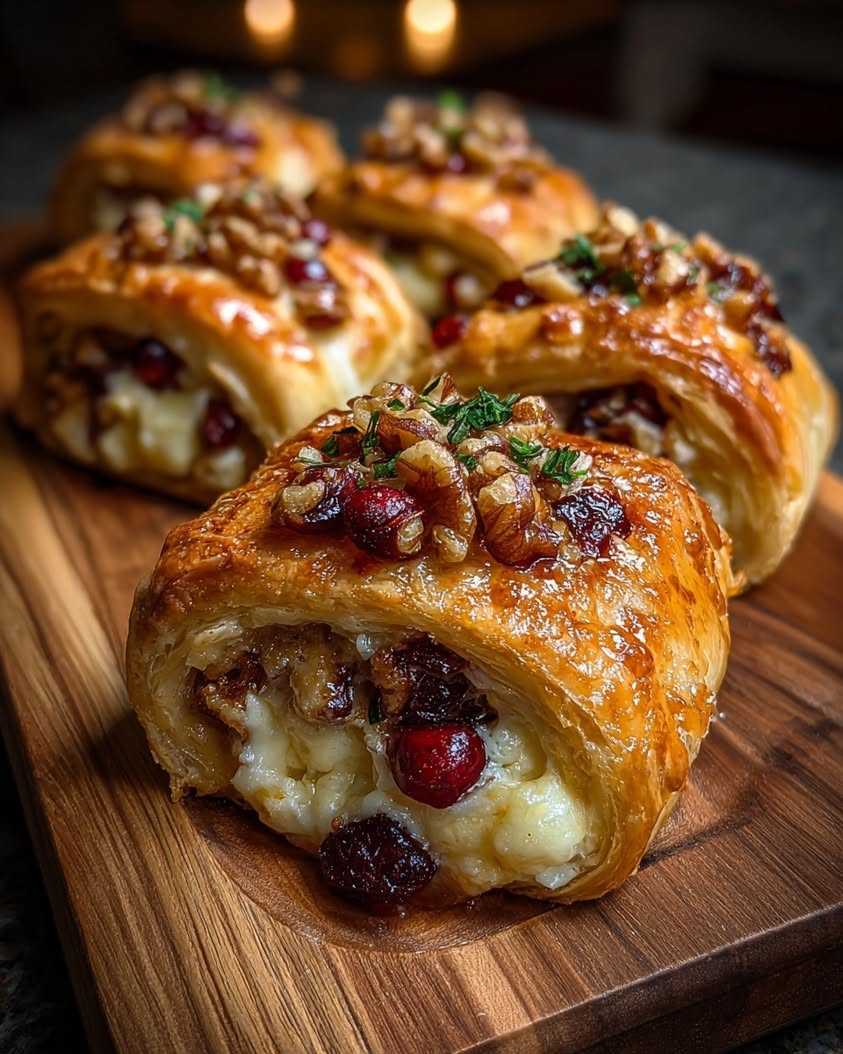
Cranberry & Walnut Baked Brie Rolls: The Ultimate Easy & Elegant Holiday Appetizer
Imagine pulling a tray of golden, flaky rolls from the oven, their aroma filling your kitchen with the promise of warm, melty cheese and sweet, tart cranberries. These Cranberry & Walnut Baked Brie Rolls are the ultimate easy and elegant holiday appetizer, guaranteed to become the star of your party spread. Furthermore, they combine the sophisticated flavor profile of a classic baked brie en croute with the fun, shareable format of pull-apart rolls. Consequently, your guests will marvel at your culinary skills, never guessing how simple they are to prepare.
The magic of this recipe lies in its perfect balance of textures and flavors. You get the rich, creamy melt of brie cheese, the sweet and tangy pop of cranberry sauce, and the satisfying crunch of toasted walnuts, all wrapped in a buttery, crisp puff pastry shell. Moreover, this appetizer is incredibly versatile, working beautifully for everything from an intimate Friendsgiving to a large Christmas cocktail party. Ultimately, it delivers maximum impact with minimal effort, freeing you to enjoy your own gathering.
Creating these impressive rolls requires no special skills or hard-to-find ingredients. In fact, you likely have most components in your pantry right now. The process is straightforward and forgiving, making it an ideal project for novice cooks and seasoned chefs alike. Additionally, the rolls can be assembled ahead of time and baked just before serving, making your party planning seamless and stress-free.
Quick Recipe Highlights
- Flavor Profile: These rolls offer a masterful balance of savory, sweet, and nutty notes. The rich, creamy brie cheese is perfectly complemented by the bright, tart cranberry sauce, while the walnuts add a deep, earthy crunch. Every bite is a complex and satisfying flavor experience.
- Texture: The texture journey is a key part of the appeal. You experience a crisp, flaky pastry exterior that gives way to a gooey, melted cheese center. Meanwhile, the cranberries provide a soft, jammy contrast, and the walnuts contribute a essential crunchy element that prevents the texture from becoming one-dimensional.
- Aroma: As these rolls bake, they release an irresistible fragrance that signals holiday cheer. The scent of buttery, baking pastry is the first note, followed by the warm, nutty aroma of toasting walnuts and the sweet, fruity scent of bubbling cranberries. This combination is pure comfort and anticipation.
- Visual Appeal: These rolls are a feast for the eyes, making them perfect for your holiday table. The golden-brown, puffed pastry is stunning, and when you break a roll open, the dramatic cheese pull and the vibrant red cranberry filling create a beautiful, festive presentation that is sure to impress.
- Skill Level Needed: This recipe is decidedly beginner-friendly. It uses store-bought puff pastry, which does all the technical work for you. The assembly involves simple rolling and filling, requiring no advanced pastry skills. Consequently, anyone can achieve professional-looking results with ease.
- Special Equipment: You need only basic kitchen tools. A baking sheet, parchment paper, a rolling pin, and a sharp knife are the primary necessities. A pastry brush is helpful for egg washing but not strictly required. Therefore, you can make this elegant appetizer without any fancy gadgets.
Recipe Overview
- Difficulty Level: We classify this recipe as easy because it utilizes convenient, pre-made components like puff pastry. The techniques involved, such as rolling and brushing with egg wash, are fundamental. There is no complex dough-making or intricate shaping, making it accessible for cooks of all confidence levels. The margin for error is also quite generous.
- Category: This dish falls squarely into the appetizer and snack category. It is designed for sharing and grazing, making it ideal for parties, potlucks, and holiday gatherings. Additionally, it could easily serve as a luxurious brunch item or a special weekend treat alongside a fresh salad.
- Cuisine: While baked brie has strong roots in French cuisine, this recipe is a modern American fusion. It takes the French concept of “en croute” and reimagines it in a fun, shareable roll format using ingredients popular in American holiday cooking, like cranberry sauce. It is a celebration of festive, party-food culture.
- Cost: This is a moderately priced appetizer that delivers luxury on a budget. The most significant cost is the brie cheese and puff pastry. Fortunately, walnuts and cranberry sauce are typically affordable, especially when purchased in bulk or during the holiday season. Overall, it is a cost-effective way to feed a crowd with style.
- Season: This recipe is a quintessential fall and winter dish. It features the warm, comforting flavors and ingredients we crave during the holidays. The cranberries are a nod to the harvest season, and the warm, baked nature of the dish makes it perfect for colder weather. It is a seasonal superstar.
- Occasion: These rolls are incredibly versatile for entertaining. They are perfect for holiday parties like Thanksgiving, Christmas Eve, and New Year’s Eve. Furthermore, they are excellent for game day gatherings, book club meetings, or any event where you want to serve a memorable, crowd-pleasing finger food.
Why You’ll Love This Recipe
First and foremost, the taste and texture combination is utterly irresistible. The warm, flaky pastry provides a buttery crunch that contrasts beautifully with the river of melted brie cheese that flows from the center. Simultaneously, the sweet and tart cranberry sauce cuts through the richness of the cheese, while the walnuts offer a crucial textural counterpoint that makes every bite interesting. This harmonious blend of creamy, crunchy, sweet, and savory is what keeps people coming back for more. It is a sophisticated flavor profile that feels both indulgent and balanced.
From a practical standpoint, the convenience of this recipe is a major selling point. Using store-bought puff pastry is a huge time-saver that eliminates the fuss of making dough from scratch. The entire assembly process takes about fifteen minutes, and the baking time is equally short. Moreover, you can prepare the rolls hours in advance, keep them in the refrigerator, and pop them in the oven when your guests arrive. This make-ahead flexibility is a game-changer for stress-free entertaining, allowing you to be a present host rather than a stressed-out cook.
While this is an indulgent treat, it does offer some nutritional advantages compared to other party foods. Walnuts are a fantastic source of omega-3 fatty acids and antioxidants. Cranberries are packed with vitamin C and other beneficial plant compounds. Although it is not a health food, the inclusion of these whole ingredients adds a layer of nutritional value you will not find in many other appetizers. You can feel good about serving a dish that provides both pleasure and some wholesome components.
The social and entertaining value of these rolls cannot be overstated. They are designed for sharing and create a fantastic focal point on any appetizer table. The dramatic cheese pull when someone breaks open a roll is always a conversation starter. This dish encourages interaction and communal eating, fostering a warm and convivial atmosphere. It signals to your guests that you have gone the extra mile to create something special, making them feel welcomed and valued.
Finally, this recipe is remarkably cost-effective and accessible. You do not need to source expensive, exotic ingredients. The component list is simple and can be found at any standard grocery store. Despite its humble ingredients and straightforward method, the final product looks and tastes incredibly luxurious. You get a massive return on investment in terms of flavor, presentation, and guest satisfaction, making it one of the best value appetizers you can add to your repertoire.
Historical Background and Cultural Significance
The story of baked brie begins in the French region of Île-de-France, where Brie de Meaux cheese has been produced since the Middle Ages. This soft, creamy cow’s milk cheese was historically known as the “King of Cheeses” and was a favorite among French royalty. The practice of baking cheese is ancient, but wrapping brie in pastry, known as “Brie en Croute,” became a popular way to serve it in the latter half of the 20th century. This method transformed the cheese, warming it to a decadent, spreadable consistency and containing its melt within an edible, buttery vessel. The dish quickly symbolized rustic French elegance and became a staple in bistros and homes alike.
As baked brie traveled across the Atlantic, it was enthusiastically adopted into American culinary culture, particularly for entertaining. American cooks began experimenting with the classic formula, adding their own regional twists and ingredients. The addition of sweet fruits and nuts, like cranberries and walnuts, is a distinctly American innovation that reflects the flavor profiles popular in New England and other regions. This adaptation turned the dish into a perfect holiday appetizer, aligning it with traditional Thanksgiving and Christmas flavors. Consequently, it has become an iconic party food, representing a fusion of Old-World technique and New-World creativity.
The evolution of the recipe from a whole wheel in pastry to individual rolls is a more recent development, mirroring broader food trends. Modern entertaining often favors finger foods and shareable small bites that are easy to eat while standing and socializing. The roll format makes the dish more accessible and eliminates the need for a knife and plate. This evolution demonstrates how classic recipes adapt to changing lifestyles and dining preferences. It takes a timeless concept and repackages it for contemporary parties, where convenience and interactivity are highly valued.
Regional variations of baked brie abound, showcasing the dish’s incredible versatility. In the American South, you might find it topped with pepper jelly and pecans. On the West Coast, fig jam and almonds are a popular combination. The cranberry and walnut version has a particularly strong association with the Northeast and Midwest, where cranberries are a native crop. Each variation tells a story about local ingredients and tastes, proving that this dish is a fantastic canvas for culinary expression. This adaptability ensures its continued popularity and relevance in diverse food cultures.
Ingredient Deep Dive
Brie cheese is the star of this show, a soft, surface-ripened cheese with a rich history dating back to the 8th century in France. Its edible, bloomy rind and creamy, buttery interior become incredibly fluid and luxurious when heated. Nutritionally, brie is a good source of protein and calcium, though it is also high in fat and should be enjoyed in moderation. When selecting brie, look for a wheel that feels soft to the touch and is free from any ammonia smells. A perfectly ripe brie will ooze gloriously when baked. Store brie in the refrigerator in its original wrapping or wax paper, and bring it to room temperature before using for the best texture and flavor.
Puff pastry is the architectural wonder that contains our delicious filling. This laminated dough, with its hundreds of paper-thin layers of butter and dough, puffs up dramatically in the oven’s high heat due to steam. For this recipe, store-bought, all-butter puff pastry is highly recommended for its consistent results and fantastic flavor. It is a convenient shortcut that saves hours of laborious rolling and folding. Keep it frozen until ready to use, and thaw it slowly in the refrigerator for several hours or overnight. Working with cold, but pliable, pastry is key to achieving those coveted flaky layers.
Cranberry sauce provides the essential sweet and tart counterpoint to the rich brie. While you can use homemade sauce, a good-quality, whole-berry canned sauce works perfectly and saves time. Cranberries are native to North America and were used by Indigenous peoples for food and medicine long before the first Thanksgiving. They are packed with vitamin C, fiber, and unique plant compounds called proanthocyanidins, which are known for supporting urinary tract health. The vibrant red color also adds a festive visual pop to the rolls. If your cranberry sauce is too loose, you can simmer it for a few minutes to thicken it before assembling the rolls.
Walnuts bring the crucial element of crunch and a deep, earthy flavor to the recipe. These nuts have been cultivated for thousands of years and are one of the best plant sources of omega-3 fatty acids, which are beneficial for heart and brain health. They also contain antioxidants and melatonin. For the best flavor, always toast your walnuts before using them. Simply spread them on a baking sheet and bake at 350°F for 5-8 minutes until fragrant. This process deepens their flavor and makes them extra crispy. Store walnuts in an airtight container in the freezer to prevent their oils from turning rancid.
Common Mistakes to Avoid
- Using Warm Puff Pastry: Working with puff pastry that is too warm is a common error. The butter layers will soften and melt into the dough, resulting in a greasy, dense final product instead of light, flaky layers. Always ensure your pastry is cold and firm to the touch when rolling and cutting.
- Overfilling the Rolls: It is tempting to pack in as much cheese and cranberry as possible, but overfilling will cause the rolls to burst open during baking. The filling will leak out and burn on the baking sheet. Use a moderate amount of each ingredient to ensure the pastry can seal properly around it.
- Skipping the Egg Wash: The egg wash is not just for color; it acts as a glue to seal the pastry edges and gives the rolls their beautiful, glossy, golden-brown finish. Without it, the rolls may look pale and the seams might open up. Do not skip this simple but crucial step.
- Not Scoring the Tops: Forgetting to make shallow cuts on top of the rolls before baking can lead to uneven puffing and potential bursting. The scoring gives the steam a controlled path to escape, allowing the pastry to rise evenly and beautifully. It also adds a professional touch to their appearance.
- Using an Unripe or Overripe Brie: An underripe brie will not melt properly, remaining too firm. Conversely, an overripe brie that is already very runny can be difficult to handle and may make the pastry soggy before baking. Aim for a brie that is soft but still holds its shape when sliced.
- Baking at the Wrong Temperature: Puff pastry needs a high, initial blast of heat to create the steam that makes it puff. Baking at too low a temperature will result in a sad, flat, and greasy pastry. Always preheat your oven thoroughly and avoid opening the door frequently during the first half of baking.
- Ignoring Resting Time: Serving the rolls straight from the oven is tempting, but the molten cheese and cranberry filling will be dangerously hot. Allowing them to rest for 5-10 minutes lets the fillings set slightly, making them safe to eat and allowing the flavors to meld together perfectly.
- Using a Dull Knife to Cut: A dull knife will tear and compress the delicate layers of puff pastry instead of slicing cleanly through them. This can prevent the pastry from rising to its full potential. Always use a sharp knife or a pastry wheel for clean cuts.
Essential Techniques
Properly thawing puff pastry is a foundational technique for success. You must plan ahead and thaw the pastry slowly in the refrigerator for several hours or overnight. If you try to speed up the process on the counter or in a microwave, the butter will melt and create sticky spots, compromising the final flakiness. The ideal texture for working with puff pastry is cold but pliable; it should bend without cracking. If it cracks, it is too cold. If it feels soft and sticky, it is too warm. Mastering this temperature control is the first step to perfect, lofty pastry.
Creating a tight seal on your rolls is critical to preventing filling leakage. After placing the filling on the pastry square, brush the edges lightly with egg wash. This acts as an edible glue. When you bring the opposite corners together, press them firmly to seal. Then, gently pick up the roll and pinch the seams along the sides to ensure they are completely closed. A well-sealed roll will contain all the melty goodness inside, resulting in a beautiful presentation and preventing a messy, burnt baking sheet. This simple attention to detail makes a significant difference.
Applying an egg wash is a simple technique with a powerful impact. To make it, simply whisk one egg with a tablespoon of water or milk until smooth. Using a soft-bristled pastry brush, apply a thin, even layer over the entire surface of each assembled roll. Avoid letting pools of egg wash drip down the sides, as this can glue the layers together and inhibit rising. The egg wash not only promotes browning through the Maillard reaction but also gives the finished rolls an attractive, professional sheen that makes them look bakery-quality.
Knowing the visual cues for doneness is essential for perfect baking. The primary indicator is color; the rolls should be a deep, golden brown all over. This color signals that the pastry is fully cooked and crisp. If the tops are browning too quickly while the sides remain pale, your oven may have hot spots. You can rotate the baking sheet halfway through the cooking time for even coloring. Additionally, you should see the layers of pastry visibly puffed and separated. If you gently tap the top, it should sound hollow. These signs guarantee a perfectly baked texture.
Pro Tips for Perfect Cranberry & Walnut Baked Brie Rolls
Chill the assembled rolls on the baking sheet for 15 minutes before baking. This final chill re-solidifies the butter in the pastry, which is crucial for achieving maximum puff and flakiness in the oven. It also helps the seals set, further preventing leaks.
Use a pizza wheel or a very sharp knife for cutting the pastry. These tools create clean cuts without dragging and compressing the delicate layers. Compressed edges will not rise as well, so clean cuts are key to a beautiful, uniform appearance.
Add a pinch of fresh thyme or rosemary to the filling. A tiny amount of fresh, finely chopped herb mixed with the cranberry sauce can add a wonderful, aromatic complexity that elevates the flavor profile and makes it even more festive.
Create a flavor boost by toasting the walnuts. As mentioned earlier, toasting nuts unlocks their full potential. Spread them on a dry baking sheet and toast in a 350°F oven for 5-8 minutes until fragrant. Let them cool before chopping and using.
If your cranberry sauce is very runny, thicken it first. Simmer it in a small saucepan over medium heat for 5-7 minutes, stirring frequently, until it reduces and thickens to a spreadable jam consistency. Let it cool completely before assembling the rolls.
For an extra glossy finish, use an egg wash made with just the yolk. An egg yolk mixed with a teaspoon of water will yield a richer, darker golden color than a whole egg wash. This is a simple trick for exceptional visual appeal.
Line your baking sheet with parchment paper. This is non-negotiable. It prevents sticking and makes cleanup an absolute breeze, especially if any filling does happen to leak out during baking.
Serve with a small dish of extra cranberry sauce for dipping. This provides an extra burst of flavor for those who want it and makes the presentation even more inviting and interactive for your guests.
Variations and Adaptations
Explore regional variations to customize the flavor profile. For a Southern twist, substitute the cranberry sauce with pepper jelly and use pecans instead of walnuts. For a taste of the Mediterranean, use fig jam and Marcona almonds. An apricot and pistachio combination is also delightful. These swaps allow you to tailor the appetizer to your personal taste or to complement the theme of your meal. The basic method remains the same, making it an incredibly adaptable recipe that you can make your own.
Consider seasonal adaptations to keep the recipe exciting all year round. In the spring, try a version with lemon curd and blueberries. During summer, a combination of peach preserves and toasted almonds is fantastic. For a fall-themed variation beyond cranberry, apple butter paired with candied pecans is wonderfully cozy. This flexibility ensures that your go-to appetizer never becomes boring and can always feature the best flavors of the season.
Dietary modifications are straightforward and effective. For a gluten-free version, use a high-quality gluten-free puff pastry. To make it dairy-free, seek out a plant-based brie-style cheese, though the melting characteristics may vary. For a nut-free option, simply omit the walnuts or replace them with toasted sunflower or pumpkin seeds for a similar crunch. The recipe is forgiving and can be adjusted to accommodate most common dietary restrictions without sacrificing its core appeal.
Experiment with flavor variations by incorporating different spices and extracts. A dash of cinnamon or pumpkin pie spice mixed into the cranberry sauce adds warm, holiday notes. A tiny drop of orange extract or a bit of orange zest can brighten the entire dish. For a savory kick, a light sprinkle of everything bagel seasoning on top of the egg wash before baking creates a delicious sweet-and-salty contrast. Do not be afraid to get creative with your spice cabinet.
Serving and Presentation Guide
Plating techniques can elevate this dish from simple to stunning. Arrange the warm rolls on a beautiful wooden board or a elegant slate platter. Instead of piling them in a basket, space them out to showcase their individual beauty. You can place a small ramekin of extra cranberry sauce or honey in the center of the platter for dipping. Scatter a few fresh cranberries and walnut halves around the rolls to hint at the filling inside and add a touch of rustic elegance. This thoughtful presentation makes the appetizer look as if it came from a professional kitchen.
Garnishing ideas are simple but impactful. A light dusting of flaky sea salt, such as Maldon, over the warm rolls enhances all the flavors. A sprinkle of fresh, finely chopped parsley or chives adds a pop of color and a fresh flavor note. For a sweet finish, a light drizzle of honey or balsamic glaze over the plated rolls just before serving looks beautiful and adds another layer of flavor. Remember, garnishes should complement, not overwhelm, the star of the show.
Traditional accompaniments for a rich, cheesy appetizer include crisp, fresh elements. A simple arugula salad with a lemon vinaigrette served on the side provides a refreshing, peppery contrast that cleanses the palate. Other classic pairings include sliced apples, pears, or grapes, which offer a cool, crisp, and sweet counterpoint to the warm, savory rolls. These accompaniments balance the richness and make the overall eating experience more well-rounded and satisfying.
Modern serving suggestions embrace the shareable, interactive nature of the dish. Serve them family-style on a large platter in the center of the table, encouraging guests to help themselves. For a cocktail party, you can even spear each roll with a decorative cocktail pick for easy grabbing. Another contemporary idea is to serve them as part of a larger “appetizer board” alongside cured meats, olives, and other finger foods, allowing guests to create their own perfect bite.
Wine and Beverage Pairing
Selecting the right wine pairing can enhance the experience tremendously. A sparkling wine, such as Champagne, Prosecco, or Cava, is a classic and excellent choice. The high acidity and bubbles cut through the richness of the cheese and cleanse the palate beautifully. A light-bodied, fruity red wine like a Pinot Noir or Beaujolais also works well; its berry notes harmonize with the cranberry without overpowering the dish. For white wine lovers, an off-dry Riesling or a creamy Chardonnay can complement the sweet and savory elements. The key is to choose wines with good acidity to balance the fat.
Non-alcoholic alternatives are just as important for a inclusive gathering. Sparkling apple cider offers the same festive fizz as Champagne with complementary apple flavors. A tart cranberry spritzer, made with cranberry juice, club soda, and a squeeze of lime, echoes the flavors in the rolls. For a warm option, a mulled cider with cinnamon and orange slices provides a cozy, aromatic pairing that feels especially holiday-appropriate. These drinks ensure every guest can enjoy a perfectly paired beverage.
While not a traditional pairing for cheese, coffee and tea can work surprisingly well after a meal featuring these rolls. A medium-roast coffee with low acidity can complement the nutty notes of the walnuts. A cup of Earl Grey tea, with its bergamot citrus notes, can provide a lovely, aromatic finish that contrasts with the richness of the brie. These are best considered if the rolls are served as part of a brunch or as a final savory bite before dessert.
Storage and Shelf Life
Understanding storage methods is key to maintaining quality. Once baked and fully cooled, these rolls can be stored in an airtight container in the refrigerator for up to 2 days. However, be aware that the puff pastry will lose its crispness and become soft upon refrigeration. To reheat, place them on a baking sheet in a 350°F oven for 5-10 minutes until warm and the pastry is re-crisped. Avoid using a microwave, as it will make the pastry soggy. For the best taste and texture, serving them fresh from the oven is always ideal.
Freezing guidelines are helpful for advanced preparation. You can freeze the unbaked, assembled rolls for up to 2 months. Arrange them on a parchment-lined baking sheet and freeze until solid, then transfer to a freezer-safe bag or container. When ready to bake, do not thaw them. Place the frozen rolls on a parchment-lined baking sheet, brush with egg wash, and bake in a preheated 400°F oven, adding 5-10 minutes to the baking time. This make-ahead strategy is perfect for busy hosts.
Make Ahead Strategies
A practical prep timeline can transform your party experience. You can assemble the entire recipe up to 24 hours in advance. Simply arrange the sealed rolls on your parchment-lined baking sheet, cover the entire sheet tightly with plastic wrap, and refrigerate. About 20 minutes before you want to serve them, preheat your oven, brush the cold rolls with egg wash, score the tops, and bake. The cold pastry will actually benefit from this extended chill, resulting in a better rise. This strategy allows you to be a completely relaxed host.
Consider the quality impact of make-ahead steps. The pastry itself holds up very well to refrigeration. The filling may make the pastry slightly softer where it touches, but this is minimal and does not affect the final baked product. The flavors often benefit from this resting time, as they have a chance to meld together. The primary compromise is a slightly less dramatic “oven spring” or rise compared to baking immediately, but the difference is negligible to most people. The convenience far outweighs this minor trade-off.
Scaling Instructions
Halving the recipe is simple for smaller gatherings. Simply divide all the ingredients by two. You will use half a sheet of puff pastry, half a wheel of brie, etc. The baking time may be slightly reduced, so start checking for doneness around the 10-minute mark. All other techniques and temperatures remain the same. This is perfect for an intimate dinner for two or a small family treat.
Doubling or tripling the recipe for a crowd is equally straightforward. Multiply all ingredients accordingly. You will need multiple baking sheets. It is crucial to bake in batches or on multiple oven racks, rotating the sheets front-to-back and top-to-bottom halfway through baking to ensure even cooking and browning. Do not overcrowd the baking sheets, as the rolls need space for hot air to circulate for even puffing. Planning your baking schedule in batches ensures everything is served warm.
Nutritional Deep Dive
A macro breakdown of these rolls reveals a rich and indulgent profile. They are a significant source of fats, primarily from the butter in the puff pastry and the brie cheese, which provide energy and satiety. The carbohydrates come from the pastry and the cranberry sauce, offering quick energy. The protein content is moderate, mostly from the cheese. While not a low-calorie food, when enjoyed in moderation as part of a balanced diet, they provide a satisfying and celebratory eating experience. The walnuts contribute healthy polyunsaturated and monounsaturated fats.
The micronutrient analysis shows some valuable contributions from the whole food ingredients. Walnuts are a powerhouse, providing manganese, copper, magnesium, and phosphorus. Cranberries offer vitamin C, vitamin E, and vitamin K1. Brie cheese is a good source of calcium and vitamin B12. While the pastry and cheese are energy-dense, the inclusion of cranberries and walnuts adds a layer of vitamins, minerals, and antioxidants that you would not find in a more plain pastry. This makes them a more nutritionally complex choice than many other appetizers.
Dietary Adaptations
For a gluten-free adaptation, the most important change is the pastry. Several brands offer excellent gluten-free puff pastry that performs remarkably well. Be sure to check that your cranberry sauce is also certified gluten-free, as some brands may use modified food starch. The rest of the ingredients are naturally gluten-free. Follow the same assembly and baking instructions, and you will have a delicious appetizer that everyone can enjoy, regardless of dietary needs.
A dairy-free version is entirely possible with modern plant-based products. Look for a high-quality vegan brie-style cheese; many are made from cashews or coconut oil and melt reasonably well. Also, ensure you use a vegan puff pastry, as some store-bought brands may contain butter. Most cranberry sauces and walnuts are naturally dairy-free. The final result will have a different flavor profile but can still capture the essence of the creamy, savory, and sweet combination that makes the original so appealing.
Troubleshooting Guide
If you encounter soggy pastry, the likely culprit is under-baking or a leaky seal that allowed the moist filling to steam the pastry from the inside. To fix this in the future, ensure your oven is fully preheated and use an oven thermometer to verify the temperature. Double-check that your rolls are tightly sealed before baking. If the pastry is pale, your oven temperature may be too low. Conversely, if the pastry is burning before the inside is hot, your oven may be too hot, or the rolls may be placed too high in the oven. An oven thermometer is an invaluable tool for diagnosing temperature issues.
If the cheese leaks out significantly, it is usually due to overfilling or an imperfect seal. Next time, use less filling and be meticulous about pinching the seams. If the walnuts taste bitter, they have likely gone rancid. Always taste your nuts before using them and store them properly in the freezer. If the rolls did not puff much, the pastry may have been too warm when handled, or the layers may have been compressed during cutting or sealing. Ensuring everything stays cold and handling the pastry gently are the solutions.
Frequently Asked Questions
Can I use crescent roll dough instead of puff pastry? Yes, you can use crescent roll dough in a pinch. The texture will be different—softer and more bread-like than flaky—but the flavor combination will still work well. Follow the baking instructions on the crescent roll package for time and temperature.
Can I make these with camembert instead of brie? Absolutely. Camembert is a wonderful substitute for brie. It has a similar creamy texture and rich flavor when melted. The main difference is that camembert often has a slightly more robust, earthy flavor, which pairs beautifully with the cranberry and walnut.
How do I prevent the bottom from getting soggy? Ensuring your oven is fully preheated is the first defense. Baking on a parchment-lined baking sheet also helps. Most importantly, avoid assembling the rolls too far in advance, as the moisture from the filling can start to soak into the pastry if it sits for hours before baking.
Can I use dried cranberries instead of cranberry sauce? Dried cranberries will not provide the same moist, jammy quality. If you use them, rehydrate them first by soaking in hot water or orange juice for 10-15 minutes, then drain well. Alternatively, chop them finely and mix with a little cream cheese to create a spreadable paste.
My pastry didn’t puff up. What went wrong? This is usually caused by the pastry being too warm when handled, which melts the butter layers. It could also be due to a dull knife compressing the edges, the egg wash dripping down the sides and gluing layers together, or an oven that was not hot enough.
Are these served hot or warm? They are best served warm. Straight from the oven, the cheese is dangerously hot. Let them rest for 5-10 minutes on the baking sheet before serving. This allows the fillings to set slightly, making them the perfect temperature for eating and allowing the flavors to meld.
Can I add other ingredients to the filling? Certainly. Cooked, crumbled bacon or pancetta adds a wonderful savory saltiness. A thin layer of prosciutto under the cheese is also delicious. For a herbal note, a sprinkle of fresh thyme or rosemary works well. Feel free to experiment with your favorite flavors.
How far in advance can I assemble them? You can assemble them up to 24 hours in advance. Keep them covered in the refrigerator on the baking sheet until you are ready to bake. You can also freeze them for up to 2 months and bake from frozen, adding a few extra minutes to the baking time.
What’s the best way to reheat leftovers? Reheat leftovers in a conventional oven or toaster oven at 350°F for 5-10 minutes until warm and the pastry is re-crisped. Avoid the microwave, as it will make the pastry soft and soggy. The texture will be best when freshly baked, but reheating this way is effective.
Can I make a sweet version of these rolls? Yes, for a dessert version, you can fill them with a mixture of cream cheese, sugar, and lemon zest, or with Nutella and chopped hazelnuts. You could also use apple pie filling and a sharp cheddar. Adjust the baking time as needed based on the new fillings.
Additional Resources
If you enjoyed this recipe, you might love exploring other elegant yet easy appetizers. Consider a classic baked brie en croute with a different jam, like apricot or fig. Spinach and artichoke stuffed phyllo cups are another fantastic party bite
Print
Cranberry & Walnut Baked Brie Rolls
Description
Flaky puff pastry rolls filled with creamy brie, sweet cranberries, and crunchy walnuts, baked to golden perfection.
Ingredients
For the Crust:
- 1 sheet puff pastry, thawed
- 8 oz brie cheese, rind removed and cubed
- 1/2 cup dried cranberries
- 1/2 cup chopped walnuts
- 1 egg, beaten (for egg wash)
- 1 tbsp honey (optional, for drizzling)
Instructions
1. Prepare the Crust:
- Preheat oven to 400°F (200°C) and line a baking sheet with parchment paper.
- Roll out the puff pastry sheet and cut into 8 equal rectangles.
- Place a few cubes of brie, a sprinkle of cranberries, and walnuts on one end of each rectangle.
- Roll up each rectangle tightly, sealing the edges, and place seam-side down on the baking sheet.
- Brush each roll with beaten egg and bake for 15-20 minutes, until golden and puffed.
- Drizzle with honey if desired and serve warm.
Notes
You can customize the seasonings to taste.

I’m Shaykee—born in Morocco, seasoned across continents. From airplane galleys to home kitchens, I share the flavors and stories that shaped my journey.