
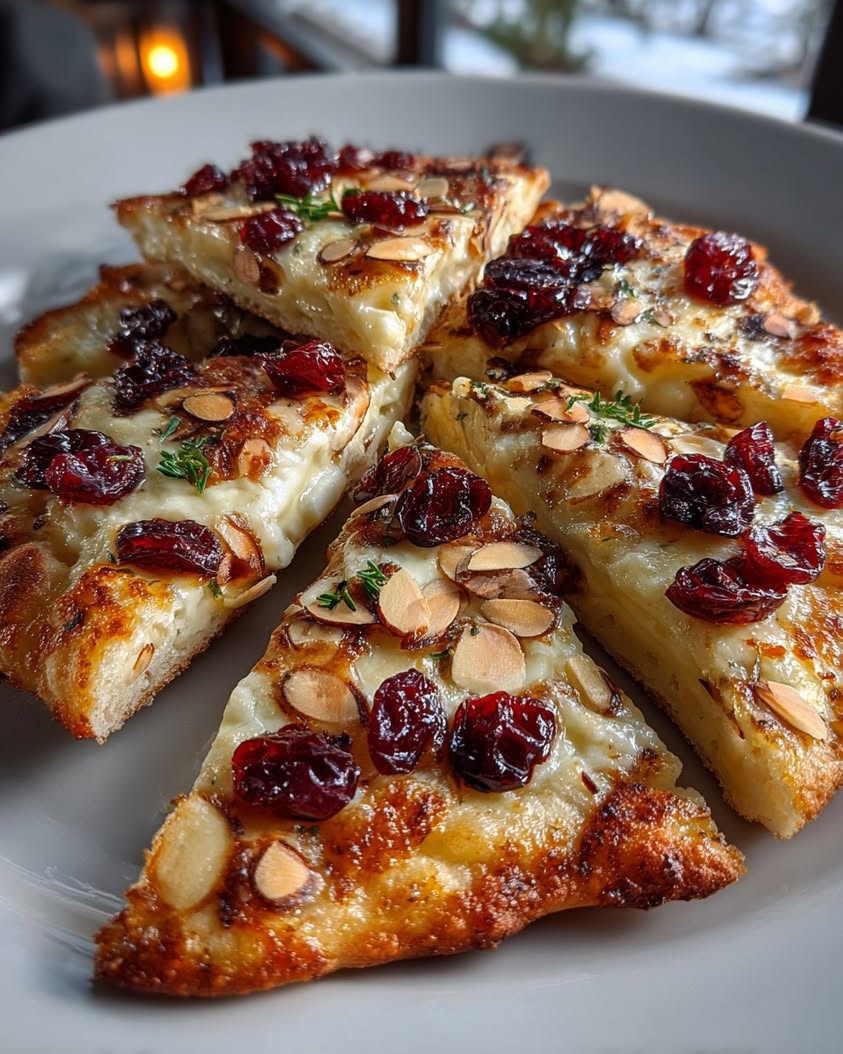
Crispy Flatbread with Brie, Cranberries & Toasted Almonds: The Ultimate Easy Elegant Appetizer
This crispy flatbread with brie, cranberries, and toasted almonds delivers an explosion of flavor and texture in every single bite. Imagine a perfectly crisp base layered with creamy, melted brie, tart-sweet cranberries, and the satisfying crunch of almonds. Furthermore, this stunning appetizer looks like it came from a professional kitchen, yet it requires minimal effort and basic ingredients. Consequently, it has become my go-to recipe for impressing guests without spending hours in the kitchen.
The combination of flavors in this easy appetizer creates a harmonious balance that appeals to virtually every palate. You get the rich, buttery notes from the brie, the bright acidity from the cranberries, and the nutty depth from the almonds. Additionally, the textural contrast between the crispy flatbread crust and the soft, gooey cheese makes each mouthful incredibly satisfying. This dish truly embodies effortless elegance, making it perfect for both casual gatherings and formal holiday parties.
What makes this crispy flatbread with brie, cranberries, and toasted almonds truly special is its versatility. You can serve it as an appetizer, a light lunch, or even as part of a festive cheese board. Moreover, the recipe adapts beautifully to seasonal variations and dietary preferences. Whether you are hosting a large party or enjoying a cozy night in, this flatbread promises to deliver restaurant-quality results with home kitchen simplicity.
Quick Recipe Highlights
- Flavor Profile: This crispy flatbread features a sophisticated balance of creamy, tangy, and nutty notes. The rich brie cheese melts beautifully against the tart cranberries, while the toasted almonds add a savory depth. Every component works in harmony to create a memorable taste experience.
- Texture: You will enjoy multiple textural contrasts in this easy appetizer. The flatbread base becomes wonderfully crisp in the oven, while the brie turns luxuriously soft and melted. Meanwhile, the cranberries offer a slight chewiness, and the almonds provide the perfect crunchy finish.
- Aroma: As this flatbread bakes, your kitchen will fill with an irresistible fragrance. The nutty scent of toasting almonds blends with the earthy aroma of melting brie and the sweet-tart notes of warming cranberries. This aromatic combination will have everyone eagerly awaiting the first slice.
- Visual Appeal: This dish presents beautifully with its golden-brown crust, creamy white cheese, vibrant red cranberries, and speckled almond pieces. The colorful ingredients create a festive appearance that looks especially stunning on a holiday table or party platter.
- Skill Level Needed: This recipe requires absolutely no advanced culinary skills, making it perfect for beginner cooks. You simply assemble pre-made ingredients and bake until perfectly golden. Consequently, even those with limited kitchen experience can achieve impressive results.
- Special Equipment: You need only basic kitchen tools for this crispy flatbread recipe. A baking sheet, parchment paper, and a sharp knife for slicing the brie are the only essentials. No special pans or expensive equipment are necessary for success.
Recipe Overview
- Difficulty Level: This crispy flatbread with brie ranks as exceptionally easy because it uses store-bought flatbread as the base. The assembly process involves simply layering ingredients without any complicated techniques. Additionally, the baking time is short and requires minimal supervision. Even novice cooks can confidently prepare this impressive-looking appetizer.
- Category: This versatile dish fits multiple meal categories beautifully. It works perfectly as an appetizer or starter for dinner parties. Meanwhile, it also serves well as a light lunch or dinner when paired with a simple salad. Furthermore, it makes an excellent addition to holiday brunch menus or cocktail party spreads.
- Cuisine: This recipe draws inspiration from modern American cuisine with Mediterranean influences. The use of flatbread as a base has roots in various culinary traditions, while the brie and cranberry combination feels both contemporary and classic. Ultimately, it represents a fusion approach that prioritizes flavor harmony over strict cultural boundaries.
- Cost: Creating this elegant appetizer remains surprisingly budget-friendly. Store-bought flatbread keeps costs low, while brie, cranberries, and almonds are typically affordable, especially when purchased in larger quantities. Compared to restaurant appetizers, this homemade version delivers superior quality at a fraction of the price.
- Season: This crispy flatbread with brie shines particularly bright during the fall and winter months. The cranberries evoke holiday spirit, while the warm, comforting flavors suit colder weather perfectly. That said, its refreshing taste also works wonderfully for spring gatherings and summer parties when you want something light yet impressive.
- Occasion: This versatile flatbread suits numerous occasions with equal elegance. It makes a perfect holiday appetizer for Thanksgiving or Christmas celebrations. Meanwhile, it also works beautifully for game day parties, book club meetings, or romantic date nights at home. Essentially, any gathering benefits from this crowd-pleasing dish.
Why You’ll Love This Recipe
You will adore this crispy flatbread with brie for its incredible flavor combination that delights every palate. The creamy, mild brie perfectly balances the tartness of the cranberries, while the toasted almonds add a satisfying crunch that elevates the entire experience. Each component complements the others without overwhelming your taste buds. Moreover, the contrast between the warm, melted cheese and the cool, crisp flatbread creates a sensory experience that keeps you coming back for another slice. This harmonious blend of textures and flavors makes it impossible to resist.
The convenience factor of this easy appetizer cannot be overstated. With just ten minutes of active preparation, you can have this impressive dish ready for the oven. Using store-bought flatbread as the base eliminates the need for complicated dough preparation. Additionally, the ingredient list remains short and simple, with most components readily available in your local grocery store. This means you can whip up a gourmet-quality appetizer even when unexpected guests arrive or when you simply do not feel like spending hours in the kitchen.
From a nutritional perspective, this crispy flatbread offers several benefits that might surprise you. Almonds provide healthy fats, protein, and vitamin E, while cranberries deliver antioxidants and dietary fiber. Meanwhile, brie cheese offers calcium and protein, making this appetizer more balanced than many alternatives. By controlling the ingredients yourself, you can ensure quality and avoid the excessive sodium and preservatives often found in pre-made appetizers. This homemade approach allows for healthier indulgence.
The social and entertaining value of this dish is truly exceptional. This beautiful flatbread becomes the centerpiece of any gathering, sparking conversation and compliments. Its visual appeal makes it perfect for photography, whether for your social media or simply to remember a special occasion. Furthermore, it serves as a fantastic icebreaker at parties, as guests naturally gravitate toward its inviting appearance and incredible aroma. Serving something this impressive makes both host and guests feel special.
Cost-effectiveness makes this crispy flatbread with brie even more appealing. Restaurant-quality flatbread appetizers often cost fifteen to twenty dollars, while this homemade version comes together for a fraction of that price. You can feed a small crowd for what you would pay for a single serving at a restaurant. Additionally, the ingredients have excellent shelf life, meaning you can keep them on hand for last-minute entertaining needs. This economic advantage allows you to entertain more frequently without straining your budget.
Historical Background and Cultural Significance
The concept of flatbread dates back thousands of years, representing one of humanity’s oldest prepared foods. Ancient civilizations across the Mediterranean, Middle East, and Asia developed their own versions using locally available grains. These simple breads served as edible plates, utensils, and nourishment all in one. The modern interpretation of topped flatbreads evolved from these ancient traditions, with the Italian pizza and Middle Eastern manakish being particularly influential. Our crispy flatbread with brie represents a contemporary take on this ancient culinary practice, blending global influences with modern tastes.
Brie cheese carries a rich cultural heritage originating from the Île-de-France region near Paris. This soft cheese has been produced since the Middle Ages and earned the nickname “Queen of Cheeses” for its exceptional quality and flavor. Historically, French royalty particularly favored brie, with Charlemagne and King Louis XVI among its most famous admirers. The cheese’s protected designation of origin status ensures that only cheeses produced in specific regions following traditional methods can bear the name Brie de Meaux or Brie de Melun. Incorporating this historically significant cheese into our flatbread adds a touch of culinary royalty to the dish.
Cranberries hold a special place in American culinary history, particularly in New England where Native American tribes used them extensively. These indigenous communities recognized the berry’s preservative qualities and nutritional value, using them in pemmican, a traditional survival food. European settlers adopted cranberries into their cooking, and the fruit eventually became synonymous with Thanksgiving celebrations. The canned cranberry sauce popularized in the early 20th century made this tart berry accessible year-round. Our use of cranberries in this flatbread connects to this deep American tradition while updating it for modern palates.
The combination of cheese and fruit on bread has appeared in various forms across numerous cultures. The French have long paired brie with fruits like grapes and apples on cheese boards, while Scandinavian countries combine lingonberries with their traditional cheeses. Meanwhile, Mediterranean cultures frequently top their flatbreads with local cheeses and seasonal fruits. Our crispy flatbread with brie, cranberries, and toasted almonds represents a fusion of these global traditions, creating something both familiar and novel. This cultural blending reflects our increasingly interconnected culinary world where ingredients and techniques travel freely across borders.
Ingredient Deep Dive
Flatbread serves as the foundation for our recipe, providing the crispy base that supports all other ingredients. This versatile bread type has origins spanning multiple continents, from Indian naan to Middle Eastern pita to Italian focaccia. Nutritionally, flatbread typically contains fewer calories and carbohydrates than traditional loaf bread, especially when made with whole grains. When selecting flatbread, look for varieties with minimal ingredients and no added sugars. For optimal crispiness, choose thinner flatbreads rather than thick, fluffy versions. Store flatbread in a cool, dry place and use within a few days of opening for best texture.
Brie cheese brings luxurious creaminess and mild, buttery flavor to our crispy flatbread. This French cheese has been celebrated since the 8th century and was historically presented to French kings as tribute. Nutritionally, brie provides high-quality protein, calcium, phosphorus, and vitamin B12. When selecting brie, look for a wheel that feels springy to the touch and has a white, edible rind free from brown spots. Avoid brie that appears overly runny or has an ammonia smell. Store brie in the refrigerator’s cheese drawer and bring to room temperature before using to maximize flavor and creaminess.
Cranberries contribute vibrant color and tangy sweetness that cuts through the richness of the brie. These native North American berries have been used medicinally by Indigenous peoples for centuries due to their high antioxidant content. Cranberries are packed with vitamin C, fiber, and various phytochemicals that support urinary tract health. When selecting dried cranberries for this recipe, choose varieties with no added sugar or minimal processing for the best flavor and nutritional profile. Store opened cranberries in an airtight container in a cool, dark place where they will keep for several months.
Almonds provide the satisfying crunch and nutty depth that complete our crispy flatbread experience. Almonds have been cultivated since ancient times, originating in the Mediterranean region and traveling along trade routes to California, now the world’s largest producer. These nuts deliver impressive nutritional benefits, including vitamin E, magnesium, fiber, and healthy monounsaturated fats. When selecting almonds for toasting, choose raw, unsalted varieties for the purest flavor. Store almonds in an airtight container in a cool, dark place or refrigerate to extend freshness. Toasting enhances their natural oils and creates deeper, more complex flavors.
Common Mistakes to Avoid
- Overloading the flatbread with too many ingredients seems tempting but leads to a soggy result. The weight of excessive toppings prevents the flatbread from crisping properly. Instead, apply a moderate, even layer that allows heat to circulate and create that desirable crispy texture.
- Using cold brie straight from the refrigerator creates uneven melting and potential burning. The cheese needs time to soften before baking to achieve that perfect melt. Always bring brie to room temperature for at least thirty minutes before assembling your flatbread.
- Neglecting to toast the almonds beforehand results in less developed flavor and softer texture. Raw almonds lack the aromatic depth that toasting unlocks. Take those extra few minutes to toast your almonds for significantly better results.
- Baking at the wrong temperature causes either undercooked flatbread or burned toppings. Most flatbreads require a hot oven around 400°F to achieve crispness without burning delicate ingredients. Always preheat your oven completely for consistent baking.
- Cutting the flatbread immediately after removing it from the oven causes the cheese to slide off. Allow your creation to rest for two to three minutes so the cheese can set slightly. This brief waiting period ensures clean, beautiful slices.
- Using overly thick flatbread creates a chewy, bread-like base rather than a crisp platform. Look for thin, sturdy flatbreads specifically designed for topping. The thickness should be similar to a good pizza crust rather than sandwich bread.
- Skipping the parchment paper leads to sticking and difficult cleanup. The melted cheese often drips over the edges and bonds to the baking sheet. Lining your pan guarantees easy removal and minimal post-cooking scrubbing.
- Spreading ingredients too close to the edges causes messy drips and burned bits. Leave a half-inch border around the flatbread to create a beautiful frame and contain the toppings. This simple technique improves both appearance and functionality.
Essential Techniques
Toasting almonds properly transforms them from ordinary to extraordinary. This technique enhances their natural oils, creating deeper flavor and satisfying crunch. Spread raw almonds in a single layer on a dry baking sheet and toast at 350°F for 8-10 minutes, shaking halfway through. Watch carefully during the final minutes as they can burn quickly. The almonds should turn fragrant and develop a light golden color. Avoid overcrowding the pan, which causes steaming rather than toasting. Properly toasted almonds will fill your kitchen with a nutty aroma that signals perfection.
Slicing brie requires a specific approach to maintain its structure and appearance. Use a sharp knife dipped in hot water between cuts for clean slices that do not stick. Cut the brie wheel into thin wedges if using a full wheel, or slice horizontally into even pieces if using a segment. Remove the rind only if you prefer, though it is completely edible and adds flavor. For easier slicing, chill the brie briefly if it becomes too soft to handle. Consistent thickness ensures even melting and professional-looking results.
Assembling the flatbread strategically ensures optimal baking and flavor distribution. Start with the flatbread on a parchment-lined baking sheet to prevent sticking. Arrange the brie slices evenly, leaving small gaps between them rather than covering the entire surface. This technique allows some crispy areas to remain while ensuring every bite includes cheese. Sprinkle cranberries and almonds evenly across the surface, distributing them between the cheese slices. The strategic placement creates visual appeal and balanced flavor in every single slice.
Baking to crispy perfection requires attention to oven temperature and positioning. Always preheat your oven completely before baking, as starting with a cold oven yields soggy results. Place the baking sheet in the center rack position for even heat circulation. Watch for the edges of the flatbread to turn golden brown and the cheese to become bubbly. The almonds should darken slightly but not burn. Remember that baking times may vary based on your specific oven and the thickness of your flatbread, so visual cues are more reliable than strict timing.
Pro Tips for Perfect Crispy Flatbread
Brush the flatbread lightly with olive oil before adding toppings. This simple step creates an extra crispy base and prevents sogginess from the cheese. Additionally, the oil helps the toppings adhere better to the surface.
Experiment with different cranberry varieties for unique flavor profiles. Try orange-flavored cranberries for citrus notes or cherry-infused versions for deeper berry flavor. These small variations can completely transform the final dish.
Add fresh herbs after baking rather than before. Sprinking fresh thyme or rosemary over the hot flatbread releases their aromatic oils without burning. The fresh herbal notes complement the other flavors beautifully.
Consider a light drizzle of honey or balsamic glaze after baking. This addition enhances the sweet-tart balance and adds professional presentation. Apply the drizzle in a zigzag pattern for visual appeal.
Use a pizza cutter for clean, easy slicing. The sharp wheel glides through the crispy flatbread without dragging the toppings. Cut into various sizes depending on your serving needs.
Prepare multiple flatbreads with different toppings for parties. This approach accommodates various dietary preferences and keeps your menu interesting. The basic method remains the same while toppings change.
Variations and Adaptations
Regional variations allow this crispy flatbread to travel across culinary traditions. For a Mediterranean twist, substitute feta for brie and add kalamata olives and fresh oregano. Meanwhile, a French-inspired version might include caramelized onions and herbes de Provence alongside the brie. For American comfort food flair, try sharp cheddar with apple slices and candied pecans. These regional adaptations demonstrate the recipe’s incredible flexibility while maintaining the essential crispy flatbread concept. Each variation brings its own cultural signature to the basic formula.
Seasonal adaptations keep this appetizer exciting throughout the year. During spring, fresh strawberries and goat cheese create a bright, celebratory version. Summer calls for peaches, fresh basil, and burrata cheese for peak seasonal flavor. Autumn naturally welcomes figs, blue cheese, and walnuts as temperatures cool. Even winter offers opportunities with roasted squash, sage, and fontina cheese. These seasonal rotations ensure your crispy flatbread always features the freshest, most flavorful ingredients available. The basic technique remains constant while the toppings evolve with the seasons.
Dietary modifications make this crispy flatbread accessible to various eating preferences. For vegan versions, use dairy-free cheese alternatives and ensure the flatbread contains no animal products. Gluten-free adaptations simply require using certified gluten-free flatbread or cauliflower crust. Low-carb options might use eggplant slices or portobello mushrooms as the base instead of traditional flatbread. Nut allergies can be accommodated by substituting seeds like pumpkin or sunflower for the almonds. These thoughtful modifications ensure everyone can enjoy this delightful appetizer regardless of dietary restrictions.
Serving and Presentation Guide
Plating techniques significantly enhance the visual impact of your crispy flatbread. Serve whole flatbreads on large wooden cutting boards for rustic appeal, or transfer individual slices to elegant porcelain plates for formal occasions. Consider using slate serving boards for modern presentation, as the dark background makes the colorful toppings pop. For party serving, cut the flatbread into bite-sized pieces and arrange on tiered stands for easy access. Always use a sharp pizza wheel for clean cuts that maintain the structural integrity of each piece.
Garnishing ideas elevate your crispy flatbread from homemade to professional quality. Fresh herb sprigs like rosemary or thyme add color and fragrance when placed strategically around the serving platter. Microgreens scattered over the top provide a fresh contrast to the rich ingredients. Edible flowers create stunning visual appeal for special occasions, while a light dusting of powdered sugar adds subtle sweetness. For additional texture, offer small bowls of extra toasted almonds or cranberries for guests to sprinkle over their portions. These finishing touches demonstrate attention to detail that impresses guests.
Traditional accompaniments complement the flavors of your crispy flatbread beautifully. A simple mixed green salad with citrus vinaigrette provides refreshing contrast to the rich cheese. Marinated olives and pickled vegetables offer tangy counterpoints that cleanse the palate between bites. For heartier meals, serve alongside roasted vegetable soups or protein-based salads. Charcuterie elements like prosciutto or salami create a complete antipasto experience when arranged around the flatbread. These thoughtful pairings transform your appetizer into a more substantial offering.
Wine and Beverage Pairing
Wine pairings should complement rather than compete with the complex flavors of your crispy flatbread. A crisp Sauvignon Blanc cuts through the richness of the brie while highlighting the cranberry’s acidity. Meanwhile, Pinot Noir offers enough body to stand up to the cheese without overwhelming the other components. For special occasions, Champagne or sparkling wine provides celebratory effervescence that cleanses the palate between bites. If you prefer rosé, choose a drier Provencal style that balances fruitiness with crisp minerality. These wine selections enhance rather than dominate the dining experience.
Non-alcoholic alternatives provide sophisticated options for all guests. Sparkling water with a twist of lemon or lime offers simple refreshment that cleanses the palate. Craft sodas with natural fruit flavors like blood orange or blackberry complement the sweet-tart profile of the cranberries. For something more distinctive, try cold-brewed hibiscus tea over ice with a touch of honey. Kombucha with ginger or berry notes provides probiotic benefits while pairing beautifully with the flavors. These thoughtful non-alcoholic options ensure every guest enjoys a special beverage experience.
Coffee and tea pairings work surprisingly well with this crispy flatbread, especially for brunch servings. Lightly roasted coffee with bright acidity balances the richness of the brie without bitterness. Earl Grey tea’s bergamot notes create an elegant complement to the cranberries and almonds. For afternoon tea service, consider Darjeeling with its muscatel character that harmonizes with the cheese. Herbal teas like peppermint or chamomile provide soothing alternatives that do not compete with the flavors. These warm beverage options expand serving possibilities beyond traditional wine pairings.
Storage and Shelf Life
Storage methods for leftover crispy flatbread require specific approaches to maintain quality. First, allow the flatbread to cool completely to room temperature, as trapping heat creates condensation that makes the crust soggy. Then transfer slices to an airtight container, separating layers with parchment paper to prevent sticking. For individual portions, wrap slices tightly in aluminum foil before refrigerating. Never store flatbread in plastic bags, as the lack of air circulation accelerates softening. These proper storage techniques help preserve texture and flavor for later enjoyment.
Temperature requirements vary based on your planned consumption timeline. For same-day consumption, stored at room temperature in a cool, dry place works perfectly. Refrigeration becomes necessary for storage beyond four hours, with optimal temperature between 35-40°F. For longer preservation, freezing provides the best results, though the texture will change slightly upon reheating. Avoid repeated temperature fluctuations, as this causes condensation and quality deterioration. Understanding these temperature guidelines ensures your flatbread remains at its best until serving.
Reheating instructions are crucial for restoring the crispy texture that makes this flatbread special. The oven method works best: preheat to 375°F and place flatbread directly on the rack for 5-8 minutes until crisp. The air fryer provides excellent results at 350°F for 3-4 minutes, recreating the original texture remarkably well. Avoid microwaving, which creates a rubbery, soggy result. For single servings, a toaster oven offers convenience without sacrificing quality. These reheating methods return your flatbread close to its freshly baked state.
Make Ahead Strategies
Prep timeline organization transforms this already easy appetizer into an effortless entertaining solution. The day before your event, toast the almonds and store them in an airtight container at room temperature. Measure the cranberries and keep them ready in a separate container. You can even slice the brie, place it between parchment paper, and refrigerate until needed. The flatbread itself can be removed from packaging and kept in its original wrapping. This advance preparation means you simply assemble and bake when guests arrive.
Storage between steps requires understanding how ingredients interact over time. Toasted almonds maintain their crunch for several days when stored properly in airtight containers. Brie slices should be refrigerated in a single layer to prevent sticking together. Cranberries need no special storage beyond keeping them in their original packaging or transferring to sealed containers. The flatbread should remain in its packaging until ready to use to prevent drying out. These simple storage considerations ensure all components remain fresh and ready for final assembly.
Assembly tips for make-ahead preparation focus on maintaining optimal texture. For ultimate convenience, you can fully assemble the flatbreads up to two hours ahead, cover loosely with plastic wrap, and refrigerate. However, for the crispiest results, wait until 30 minutes before baking to assemble, allowing the chilled ingredients to come closer to room temperature. If preparing multiple flatbreads, assemble them in stages rather than all at once to prevent sogginess. These assembly strategies balance convenience with quality for the best possible outcome.
Scaling Instructions
Halving the recipe works beautifully for smaller gatherings or intimate meals. Use exactly half of each ingredient, though you may need to adjust baking time slightly downward since a smaller flatbread may cook faster. For the brie, cutting a small wedge in half horizontally works better than trying to slice a tiny piece from a large wheel. Bake on a smaller baking sheet or position the halved flatbread in the center of a regular sheet. These adjustments ensure your smaller batch turns out perfectly despite the reduced quantities.
Doubling or tripling the recipe requires some practical considerations for success. Use multiple baking sheets rather than overcrowding a single sheet, as proper air circulation is essential for crispiness. Rotate the baking sheets halfway through cooking to ensure even browning. You may need to bake in batches unless you have a commercial oven with excellent heat distribution. When multiplying ingredient amounts, maintain the same proportional relationships rather than simply increasing everything equally. These scaling techniques guarantee consistent results regardless of batch size.
Equipment adjustments become necessary when significantly increasing recipe quantities. Invest in a second baking sheet if you regularly entertain large groups, as this provides flexibility for multiple flatbreads. Consider using a baking stone for more professional results with larger batches, as it maintains consistent temperature. For massive quantities, commercial sheet pans offer greater durability and better heat conduction. A large pizza cutter with a sharp blade makes quick work of slicing multiple flatbreads. These equipment considerations streamline the process when cooking for crowds.
Nutritional Deep Dive
Macro breakdown reveals a surprisingly balanced nutritional profile for this indulgent-tasting appetizer. The flatbread contributes complex carbohydrates for sustained energy, while the almonds and brie provide healthy fats and protein. Cranberries add natural sugars and dietary fiber that support digestive health. When portioned appropriately, this crispy flatbread offers a reasonable balance of all three macronutrients without excessive calories. The specific ratios depend on your exact ingredients, but generally, you get approximately 40% carbohydrates, 35% fats, and 25% protein in each serving.
Micronutrient analysis shows significant contributions from several key vitamins and minerals. Almonds deliver substantial vitamin E, an important antioxidant that supports skin and immune health. Brie provides calcium and phosphorus for bone strength, along with vitamin B12 for neurological function. Cranberries contribute vitamin C and various phytonutrients with anti-inflammatory properties. The combination creates a nutrient-dense appetizer that offers more than just empty calories. These micronutrients work synergistically to support overall health and wellbeing.
Health benefits extend beyond basic nutrition when you consider the quality of ingredients. The monounsaturated fats in almonds support heart health and help regulate cholesterol levels. Probiotics in brie cheese contribute to gut health when consumed in moderation. Cranberries contain compounds that prevent urinary tract infections and support oral health. When prepared thoughtfully, this crispy flatbread becomes not just a tasty treat but a genuinely health-supportive food choice. These benefits make it easier to enjoy this delicious appetizer without guilt.
Dietary Adaptations
Gluten-free adaptation simply requires substituting regular flatbread with a certified gluten-free version. Many excellent gluten-free flatbreads now available mimic the texture and crispiness of traditional options. Check that all other ingredients, including dried cranberries, are processed in gluten-free facilities if cross-contamination is a concern. The assembly and baking process remains identical to the original recipe. This straightforward substitution makes the recipe accessible to those with celiac disease or gluten sensitivity without sacrificing quality or flavor.
Dairy-free modification involves replacing brie with plant-based cheese alternatives. Look for vegan brie-style cheeses made from cashews or almonds that mimic the creamy texture of traditional brie. Many artisanal vegan cheese makers now produce impressive alternatives that melt beautifully. Ensure the flatbread itself contains no dairy products, as some commercial varieties include milk or butter. The cranberries and almonds naturally contain no dairy, making them safe choices. This adaptation allows those with dairy allergies or lactose intolerance to enjoy the same flavor experience.
Vegan transformation requires both dairy-free cheese and verification of all ingredient sources. Beyond substituting the brie, ensure the flatbread contains no animal products like honey, milk, or eggs. Some dried cranberries are processed with animal-derived sugar, so look for brands that use vegan sweeteners. Toasted almonds naturally fit within vegan parameters. The assembly and cooking process remains unchanged from the original method. This comprehensive approach creates a completely plant-based version that maintains the sophisticated flavor profile of the original recipe.
Troubleshooting Guide
Texture issues commonly involve sogginess, which typically results from overloading with toppings or underbaking. If your flatbread turns out soggy, try reducing the quantity of cheese and baking for additional time at a slightly lower temperature. For uneven crispiness, ensure your oven is fully preheated and position the baking sheet in the center rack. If the almonds burn before the flatbread crisps, add them halfway through the baking process rather than at the beginning. These adjustments address the most common texture problems effectively.
Flavor balance problems usually stem from ingredient quality or proportion issues. If the flatbread tastes bland, consider adding a light sprinkle of sea salt before baking or a drizzle of quality olive oil. When the cranberries overwhelm other flavors, reduce their quantity or balance with a touch of honey. If the brie becomes too dominant, use a thinner layer or combine with another milder cheese. Adjusting these elements allows you to fine-tune the flavor profile to your personal preference.
Equipment challenges often involve baking sheets that warp or ovens with hot spots. If your baking sheet warps in the oven, place it on a preheated pizza stone or baking steel for stability. For ovens with uneven heating, rotate the baking sheet halfway through cooking and consider using an oven thermometer to verify temperature accuracy. If your flatbread sticks despite using parchment paper, try a light coating of cooking spray on the paper itself. These practical solutions overcome common equipment limitations.
Recipe Success Stories
Community feedback consistently highlights how this recipe impresses guests despite its simplicity. Many home cooks report receiving compliments that make them feel like professional chefs. One reader mentioned serving this at her holiday party where guests assumed she had ordered from a specialty bakery. Another shared how her children, typically picky eaters, devoured multiple slices and requested it for their birthday dinner. These success stories demonstrate how accessible gourmet cooking can be with the right recipe guidance and quality ingredients.
Variation successes show the recipe’s incredible adaptability across different tastes and occasions. A camping enthusiast developed a version cooked over a fire in a cast iron skillet with impressive results. A college student created a budget-friendly adaptation using store-brand ingredients that still wowed her roommates. A professional chef incorporated the concept into her restaurant’s menu using artisanal local ingredients. These creative interpretations prove that the basic formula provides a solid foundation for endless customization based on available resources and personal preferences.
Photography tips from successful makers emphasize natural lighting and strategic styling. Many achievers recommend shooting the flatbread immediately after baking when the cheese is at its most photogenic. Using a wooden cutting board as a background adds rustic appeal, while fresh ingredients scattered around the frame suggest abundance. Overhead shots capture the beautiful distribution of toppings, while angled views highlight the crispy texture of the crust. These visual storytelling techniques help showcase your culinary creation in its best light, whether for social media or personal memories.
Frequently Asked Questions
Can I use fresh cranberries instead of dried?
Fresh cranberries require different preparation as they contain more moisture and sharper tartness. If substituting, chop them coarsely and consider sautéing briefly with a sweetener to mellow their intensity. The increased liquid content may affect the flatbread’s crispiness, so reduce other moist ingredients accordingly. Fresh cranberries create a distinctly different result that some prefer for its brighter, more vibrant flavor profile.
What other cheeses work well in this recipe?
Camembert provides a similar creamy texture with slightly earthier notes that complement the cranberries beautifully. Goat cheese offers tanginess that contrasts nicely with the sweet elements, while gouda provides excellent melting quality with nutty undertones. Blue cheese creates a bold flavor experience for those who enjoy stronger cheeses, balancing particularly well with the almonds. Each alternative brings its own character while maintaining the recipe’s essential balance of flavors and textures.
Can I prepare this flatbread in advance?
You can assemble the flatbread up to two hours ahead and refrigerate until baking, though the crust may soften slightly. For best results, prepare components separately and assemble just before baking. The toasted almonds and measured cranberries keep well for days, while the brie slices can be prepared several hours ahead. This approach maximizes freshness while minimizing last-minute effort when entertaining guests.
How do I prevent the almonds from burning?
Toast almonds separately before assembling the flatbread rather than relying on the baking process to toast them. Watch carefully during the final minutes of toasting as they transition from perfect to burned quickly. When adding to the flatbread, distribute them evenly rather than clustering in spots. If your oven has hot spots, rotate the baking sheet halfway through cooking to ensure even exposure to heat.
What’s the best way to slice brie for this recipe?
Use a sharp knife dipped in hot water between cuts for clean slices that maintain their shape. For a full wheel, cut into thin wedges resembling pizza slices. For a segment, slice horizontally into even pieces about ¼-inch thick. If the brie becomes too soft to handle, chill it briefly for easier slicing. Consistent thickness ensures even melting and professional presentation.
Can I make this recipe vegan?
Excellent vegan versions are possible using plant-based brie alternatives now available from specialty producers. Look for cashew-based cheeses that mimic the creamy texture of traditional brie. Ensure the flatbread contains no animal products, and verify that the cranberries are processed with vegan
Print
Crispy Flatbread with Brie, Cranberries & Toasted Almonds
Description
A delightful appetizer featuring crispy flatbread topped with creamy brie, sweet-tart cranberries, and crunchy toasted almonds.
Ingredients
For the Crust:
- 1 large flatbread or naan
- 4 oz brie cheese, sliced
- 1/4 cup dried cranberries
- 2 tbsp sliced almonds, toasted
- 1 tbsp honey
- 1 tsp fresh thyme leaves
- 1 tbsp olive oil
- Salt and pepper to taste
Instructions
1. Prepare the Crust:
- Preheat oven to 400°F (200°C). Brush flatbread with olive oil and season lightly with salt and pepper.
- Arrange brie slices evenly over the flatbread. Sprinkle with dried cranberries and toasted almonds.
- Bake for 10-12 minutes until the flatbread is crispy and the brie is melted. Drizzle with honey and garnish with fresh thyme before serving.
Notes
You can customize the seasonings to taste.

I’m Shaykee—born in Morocco, seasoned across continents. From airplane galleys to home kitchens, I share the flavors and stories that shaped my journey.