
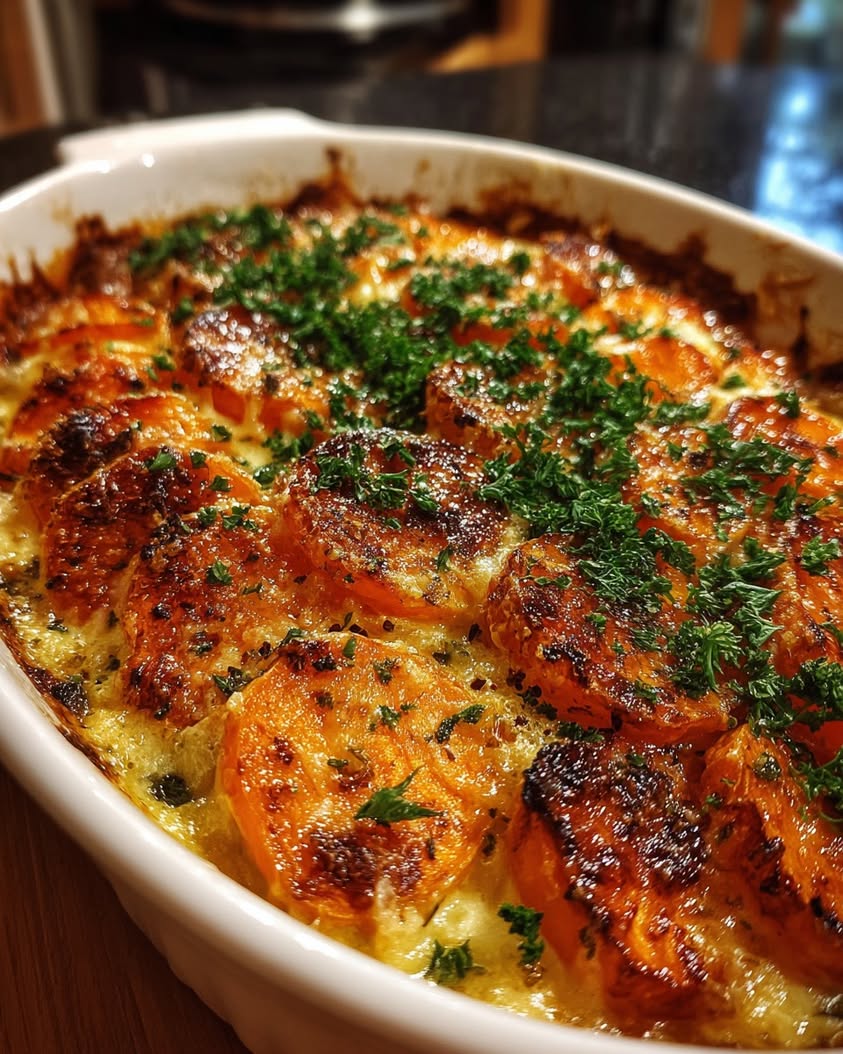
Creamy Garlic Butter Sweet Potato Bake: Your New Favorite Comfort Food Side Dish
Imagine pulling a bubbling, golden casserole dish from your oven. The air fills with the intoxicating aroma of roasted garlic and sweet potatoes. This creamy garlic butter sweet potato bake delivers pure comfort food magic in every spoonful. Furthermore, it transforms simple, wholesome ingredients into a side dish that will absolutely steal the show at any dinner table. Consequently, your family and guests will beg you for this recipe after just one bite.
The beauty of this sweet potato bake lies in its perfect harmony of flavors and textures. Tender, thinly sliced sweet potatoes soak up a luxurious, creamy garlic butter sauce. Meanwhile, a lightly browned, cheesy topping provides a delightful contrast. This dish feels indulgent and special. However, it comes together with surprisingly little effort, making it perfect for both weeknight dinners and holiday feasts. Ultimately, it is the ultimate vegetarian side dish that satisfies everyone.
This recipe celebrates the natural sweetness of the potatoes, balancing it perfectly with savory, aromatic notes. The garlic butter sauce is rich and velvety, clinging to each slice of potato. As it bakes, the sauce thickens and caramelizes slightly around the edges. The result is a side dish with complex flavors and a wonderfully creamy texture. Therefore, it pairs beautifully with a wide variety of main courses, from roasted chicken to holiday ham.
Quick Recipe Highlights
- Flavor Profile: This sweet potato bake offers a masterful balance of savory and sweet. The natural candy-like notes of the sweet potatoes shine through, while the garlic and butter provide a deeply savory, aromatic base. Finally, a hint of herbs and a cheesy topping round out the flavor for a truly satisfying experience.
- Texture: Expect a wonderfully creamy and tender interior from the slow-baked potatoes. The top develops a slightly crisp, golden-brown crust that gives way to the soft layers beneath. Consequently, each bite delivers a delightful contrast between the silky potato slices and the rich, thickened sauce.
- Aroma: As this dish bakes, your kitchen will fill with the warm, inviting scent of roasting garlic and sweet potatoes. The nutty fragrance of melted butter and the earthy notes of herbs create an olfactory promise of the comfort food to come. It is a truly irresistible scent.
- Visual Appeal: This bake is a feast for the eyes with its beautiful layers of orange and yellow potato slices. The golden, bubbly cheese topping adds a gorgeous color contrast. Served in a baking dish, it looks rustic, hearty, and incredibly appetizing, making it perfect for serving directly at the table.
- Skill Level Needed: This is an beginner-friendly recipe that requires no advanced techniques. Basic skills like peeling, slicing, and whisking a sauce are all you need. Therefore, even a novice cook can achieve spectacular, restaurant-quality results with this straightforward guide.
- Special Equipment: You will need a sharp knife or mandoline for even potato slices, a mixing bowl for the sauce, and a standard 9×13 inch baking dish. A mandoline is highly recommended for achieving uniformly thin slices, which ensures even cooking and a perfect creamy texture throughout the bake.
Recipe Overview
- Difficulty Level: We classify this sweet potato bake as easy because it involves simple preparation steps like slicing vegetables and mixing a sauce. There is no complex cooking technique required. The oven does most of the work, gently baking the potatoes until they are tender and the sauce is bubbly. This makes it an accessible recipe for cooks of all experience levels.
- Category: This dish fits perfectly into the side dish category, destined to accompany a main protein. It also qualifies as a comfort food and a casserole. Its rich, creamy nature makes it a standout addition to any meal, from a simple family dinner to an elaborate holiday spread.
- Cuisine: While sweet potato casseroles have roots in American Southern cuisine, this particular recipe has a modern, fusion feel. The use of garlic and herbs gives it a slight European influence. Ultimately, it is a contemporary take on a classic comfort food that draws from various culinary traditions to create something uniquely delicious.
- Cost: This is a very cost-effective recipe to prepare. Sweet potatoes are an affordable vegetable, and the other ingredients like butter, garlic, flour, milk, and cheese are common pantry staples. You can create an impressive, restaurant-quality side dish for a crowd without straining your grocery budget.
- Season: This bake is truly a fantastic year-round recipe. It is especially perfect for fall and winter holidays like Thanksgiving and Christmas, thanks to its warm, comforting flavors. However, its versatility also makes it a wonderful choice for spring and summer gatherings, particularly when paired with grilled meats.
- Occasion: This dish is suitable for any occasion. Serve it at a casual weeknight family dinner, a potluck with friends, or a formal holiday feast. Its crowd-pleasing nature and beautiful presentation make it a reliable choice for any event where you want to serve a memorable and delicious side dish.
Why You’ll Love This Creamy Garlic Butter Sweet Potato Bake
First and foremost, the taste and texture of this sweet potato bake are utterly irresistible. The sweet potatoes become meltingly tender, absorbing the rich, savory garlic butter sauce. Each bite delivers a creamy, luxurious mouthfeel that is both comforting and sophisticated. The flavors are a perfect harmony; the sweetness of the potato is not cloying but is expertly balanced by the pungent garlic and rich butter. This is not your average, overly sweet potato casserole. Instead, it is a savory, deeply flavorful side dish that will convert even those who are skeptical about sweet potatoes.
Another significant reason to love this recipe is its sheer convenience. The preparation is straightforward and requires no pre-cooking of the potatoes. You simply slice them, whisk the sauce, and layer everything in a dish. After that, the oven takes over, freeing you up to prepare the rest of your meal. This makes it an ideal make-ahead dish; you can assemble it hours in advance and simply pop it in the oven when needed. Consequently, it reduces last-minute kitchen stress, especially when entertaining guests for a holiday or special dinner.
From a nutritional standpoint, this dish offers considerable advantages. Sweet potatoes are a powerhouse of nutrients, packed with beta-carotene, Vitamin A, Vitamin C, and fiber. By preparing them in a bake with a creamy sauce, you create a vegetable-based side dish that feels indulgent while still providing essential vitamins and minerals. Furthermore, you can easily adapt the recipe to be lighter by using low-fat milk or a plant-based alternative. This allows you to enjoy comfort food without completely abandoning your health goals.
The social and entertaining value of this sweet potato bake cannot be overstated. It is a guaranteed crowd-pleaser that serves multiple people beautifully. When you bring this bubbling, golden dish to the table, it creates a sense of warmth and abundance that enhances any gathering. It pairs wonderfully with a wide range of main courses, making it a versatile choice for any menu. Moreover, its visually appealing layers and cheesy top make it a centerpiece-worthy side dish that will have everyone reaching for a second helping.
Finally, this recipe is remarkably cost-effective and accessible. The ingredients are humble and easy to find at any grocery store. Sweet potatoes are typically inexpensive, especially when in season. The other components—butter, garlic, milk, flour, and cheese—are common kitchen staples. This means you can create a stunning, impressive side dish without a significant financial investment. It is a fantastic way to feed a group delicious, high-quality food while sticking to a reasonable budget, proving that great taste does not have to be expensive.
Historical Background and Cultural Significance
The story of the sweet potato casserole in the United States is deeply intertwined with Southern culinary traditions. Sweet potatoes have been a staple crop in the South for centuries, originally cultivated by Native Americans. Early recipes were simple, often involving roasting or boiling the tubers. The concept of a baked sweet potato dish, however, gained significant popularity in the early to mid-20th century, particularly as home cooking embraced the convenience of casseroles. These one-dish wonders became a hallmark of church suppers, family reunions, and holiday potlucks across the region.
The cultural importance of dishes like this sweet potato bake is rooted in community and comfort. In the South, food is a language of love and hospitality, and casseroles are a primary dialect. They represent sharing, abundance, and care. Bringing a hot, homemade casserole to an event is a gesture of support and fellowship. This particular bake, with its rich, creamy sauce, elevates the humble sweet potato into a celebratory dish. It symbolizes the transformation of simple, homegrown ingredients into something special enough for a Thanksgiving or Christmas table, connecting generations through shared recipes and flavors.
The evolution of the sweet potato bake recipe is a fascinating journey. The earliest versions were likely very simple, perhaps just mashed sweet potatoes with a bit of butter. The now-iconic marshmallow-topped version emerged in the early 1900s, heavily promoted by companies like Angelus Marshmallows. In contrast, savory versions with cheese and creamy sauces developed as a counterpoint, appealing to those who preferred their sides less sugary. This creamy garlic butter variation represents a more modern, gourmet take on the classic, focusing on the natural flavor of the potato enhanced by savory, aromatic ingredients rather than overwhelming sweetness.
Regional variations of sweet potato dishes are plentiful across the United States and the world. In the American South, you will find both sweet and savory interpretations. In the North, sweet potato dishes might be simpler, often served roasted or mashed with minimal adornment. Globally, sweet potatoes feature in diverse cuisines; in Japan, they are used in sweet and savory dishes like daigaku imo (candied sweet potatoes), while in African cuisine, they are often stewed or fried. This creamy garlic butter bake is a versatile recipe that borrows from this global appreciation for the tuber, creating a fusion dish that feels both familiar and excitingly new.
Ingredient Deep Dive
Sweet Potatoes are the undeniable star of this bake. Native to the Americas, they have a long history of cultivation dating back thousands of years. They are a nutritional powerhouse, exceptionally high in beta-carotene (which converts to Vitamin A), Vitamin C, manganese, and fiber. Their natural sweetness comes from a healthy, complex carbohydrate profile. When selecting sweet potatoes, look for firm tubers with smooth, unblemished skin and a vibrant orange color. Avoid any with soft spots or signs of sprouting. Store them in a cool, dark, well-ventilated place—not the refrigerator, as cold temperatures can alter their taste and texture. For a different flavor, you can substitute with other orange-fleshed squash like butternut, though the texture will be slightly different.
Garlic provides the essential savory punch that balances the sweetness of the potatoes. This bulbous plant has been used for both culinary and medicinal purposes for over 5,000 years, originating in Central Asia. It is renowned for its allicin content, a compound with potent antioxidant and anti-inflammatory properties. For the best flavor in this bake, use fresh garlic cloves rather than pre-minced jarred garlic. Look for firm, plump heads with tight, unbroken papery skin. Store garlic in a cool, dark place with good air circulation. If you are out of fresh garlic, a teaspoon of garlic powder can be used as a substitute, though the flavor will be less complex and aromatic.
Butter is the foundation of the rich, creamy sauce that makes this dish so indulgent. It contributes a nutty, savory depth and a luxurious mouthfeel that water or oil cannot replicate. Butter has been a staple in diets across Europe and North America for centuries, prized for its flavor and fat content which carries other flavors beautifully. For the best results, use unsalted butter so you can control the salt level in the dish. High-quality European-style butter with a higher fat content will yield an even richer sauce. Butter should be stored wrapped in the refrigerator. For a dairy-free version, a high-quality plant-based butter substitute works remarkably well, ensuring the sauce still has that essential creamy, rich base.
Cheese, specifically the melty, browned topping, adds a final layer of flavor and texture. In this context, a good melting cheese like mozzarella, provolone, or a mild cheddar is ideal. Cheese-making dates back thousands of years, serving as a way to preserve milk. Cheese provides protein, calcium, and fat. For this bake, freshly grated cheese from a block is vastly superior to pre-shredded bags, which contain anti-caking agents that can hinder melting. Store cheese tightly wrapped in the refrigerator. If you need a substitution, a dairy-free shredded cheese alternative can be used, or for a different flavor profile, Parmesan or Asiano would add a sharper, saltier note.
Common Mistakes to Avoid
- Uneven Potato Slices: Cutting the sweet potatoes into uneven slices is a common error. Thick slices will remain hard and crunchy, while thin slices may turn to mush. Consequently, the bake will cook unevenly. Always use a sharp knife or, ideally, a mandoline slicer to achieve uniform thickness for perfectly tender results.
- Skipping the Sauce Thickening: Simply pouring milk over the potatoes without creating a roux with the butter and flour will result in a thin, watery sauce. The flour needs to cook in the butter for a minute to eliminate its raw taste and to properly thicken the liquid as it bakes, creating a creamy consistency.
- Overcrowding the Baking Dish: Packing the potato slices too tightly can prevent the sauce from circulating properly. This leads to uneven cooking and potentially undercooked potatoes. Gently layer the slices, allowing some space for the sauce to seep between them and cook everything evenly from all sides.
- Using Pre-Shredded Cheese: Pre-shredded cheese is coated with potato starch or cellulose to prevent clumping. Unfortunately, these additives also prevent the cheese from melting smoothly. For a beautifully golden, gooey topping, always grate your cheese from a block just before using it.
- Underseasoning the Sauce: Sweet potatoes can handle and benefit from a good amount of seasoning. Forgetting to adequately salt and pepper the garlic butter sauce will leave the entire dish tasting flat. Taste your sauce before pouring it over the potatoes and adjust the seasoning confidently.
- Baking at the Wrong Temperature: A temperature that is too high will cause the top to brown too quickly while the inside remains raw. A temperature that is too low will not cook the potatoes through or thicken the sauce properly. Following the recommended baking temperature and time is crucial for success.
- Not Letting it Rest: Pulling the bake from the oven and serving it immediately is tempting. However, allowing it to rest for 10-15 minutes lets the sauce thicken further and the layers set. This makes it much easier to slice and serve neat portions.
- Using Old, Woody Garlic: Garlic that has begun to sprout or has brown spots inside can impart a bitter, harsh flavor to the delicate sauce. Always use fresh, firm garlic cloves for the best and sweetest roasted garlic flavor in your bake.
Essential Techniques
Creating a Roux is the first critical technique for a perfect sauce. A roux is a mixture of equal parts fat and flour cooked together. In this recipe, you cook the garlic in butter, then stir in the flour. This step is vital because it coats the flour particles in fat, preventing them from clumping when liquid is added. Furthermore, cooking the flour for a minute or two removes its raw, pasty taste. The key is to stir constantly over medium heat until the mixture is bubbly and fragrant. The common pitfall is burning the roux; if it turns dark brown, it will taste bitter. A successful roux will look pale and have a nutty, cooked aroma, forming the foundation for your luxuriously creamy sauce.
Mastering the Mandoline Slicer is highly recommended for this recipe. A mandoline ensures every sweet potato slice is perfectly uniform in thickness, which is non-negotiable for even cooking. The technique involves using the safety guard to hold the potato firmly and sliding it across the blade with consistent pressure. Always use the guard to protect your fingers from the extremely sharp blade. The pitfall is uneven pressure, which creates wedges instead of slices. The visual cue for success is a stack of potato slices that are all identical, promising a bake where every piece is equally tender and creamy.
Layering is the technique that builds the structure of your bake. Instead of dumping all the potatoes and sauce into the dish, you create intentional layers. This ensures the sauce distributes evenly and every bite is flavorful. Start with a thin layer of sauce on the bottom to prevent sticking. Then, arrange a single, slightly overlapping layer of potato slices. Spoon more sauce over this layer and repeat. The pitfall is haphazardly piling everything in, which leads to dry spots and uneven texture. A successful layering technique results in a cohesive casserole that holds its shape when served, with the sauce visibly infused throughout.
Pro Tips for Perfect Creamy Garlic Butter Sweet Potato Bake
First, for an extra layer of flavor, gently sauté your minced garlic in the butter until it is just fragrant but not browned. This step unlocks the garlic’s sweet, nutty potential and infuses the butter base of your sauce with a deeper, more complex aroma than using raw garlic would achieve.
Secondly, let your assembled bake sit at room temperature for 20-30 minutes before putting it in the oven. This allows the potatoes to start absorbing the sauce, which leads to a more integrated flavor and a creamier final texture. It also promotes more even cooking from the start.
For a spectacularly golden and crisp topping, switch your oven to broil for the final 2-3 minutes of cooking. Watch it closely during this time to prevent burning. This quick blast of high heat will bubble and brown the cheese beautifully, adding fantastic visual appeal and a delightful textural crunch.
If you notice the top of your bake is browning too quickly during the cooking process, simply tent it loosely with a piece of aluminum foil. This will shield the cheese from direct heat, allowing the potatoes underneath to continue cooking through without the top becoming overdone or burnt.
For the ultimate flavor infusion, consider adding a teaspoon of fresh thyme leaves or a sprinkle of smoked paprika between the potato layers. These herbs and spices complement the sweet and savory profile of the dish beautifully, adding a subtle, aromatic complexity that elevates it to a new level.
Always taste your sauce for seasoning before you pour it over the potatoes. The raw sauce should taste slightly too salty and seasoned on its own, as the potatoes will absorb a significant amount of that flavor during baking. This proactive step ensures a perfectly seasoned final dish.
Variations and Adaptations
For regional variations, you can take this bake in many exciting directions. A Southern-inspired version might include a crunchy pecan and breadcrumb streusel topping instead of cheese. A Mediterranean twist could incorporate sun-dried tomatoes, spinach, and feta cheese. For a French flair, swap the mozzarella for Gruyère and add a pinch of nutmeg to the sauce. These adaptations show how the basic framework of a creamy sweet potato bake can be a canvas for global flavors, allowing you to travel the world from your dinner table.
Seasonal adaptations keep this recipe exciting all year long. In the spring, add layers of fresh asparagus tips or peas. During summer, incorporate fresh corn kernels and chopped basil for a brighter profile. In the heart of winter, mix in cubed butternut squash or caramelized onions for extra depth and sweetness. Using seasonal produce not only enhances the flavor but also ensures you are cooking with ingredients at their peak freshness and nutritional value, making your bake a true celebration of the season.
Dietary modifications are straightforward with this versatile recipe. For a gluten-free version, simply use a 1:1 gluten-free flour blend in the roux. To make it dairy-free, use plant-based butter and milk, and top with a dairy-free cheese alternative or a sprinkle of nutritional yeast for a cheesy flavor. For a vegan bake, employ all the dairy-free swaps and ensure your vegetable broth is vegan. These simple changes make this comforting dish accessible to almost everyone, regardless of dietary restrictions or preferences.
Flavor variations can completely transform the character of the dish. Add cooked, crumbled bacon or pancetta for a smoky, salty punch. Stir a tablespoon of Dijon mustard or a dash of Worcestershire sauce into the cream sauce for tangy complexity. For a hint of warmth, include a pinch of cayenne pepper or red pepper flakes. You can also experiment with different cheese varieties; sharp cheddar, pepper jack, or smoked Gouda would each create a uniquely delicious experience. Do not be afraid to customize the bake to suit your personal taste cravings.
Serving and Presentation Guide
Plating techniques can elevate this homestyle bake into a restaurant-quality presentation. For individual servings, use a round cookie cutter to portion a neat cylinder of the bake onto each plate. Alternatively, serve it family-style directly from the beautiful baking dish, which adds a rustic, welcoming feel to the table. Use a sharp, flat spatula to lift out clean portions, revealing the beautiful layered interior. Wiping the edge of the baking dish clean before bringing it to the table ensures a polished and appetizing look that invites everyone to dig in.
Garnishing ideas add the final touch of color and freshness. A sprinkle of freshly chopped parsley or chives provides a vibrant green contrast against the orange and golden-brown bake. For a festive touch, add a few toasted pumpkin seeds or pecans on top for crunch. A light drizzle of high-quality olive oil or a balsamic reduction just before serving can add shine and a hint of acidity. These small garnishes not only enhance the visual appeal but also introduce new textures and flavors that complement the rich, creamy base of the dish.
Traditional accompaniments for a savory sweet potato bake like this are hearty proteins. It pairs wonderfully with a classic roasted chicken or turkey, a glazed holiday ham, or a juicy pot roast. The creamy, savory-sweet flavors of the bake complement the richness of the meat without overpowering it. For a vegetarian feast, serve it alongside a lentil loaf or stuffed portobello mushrooms. These pairings create a balanced and satisfying meal that feels both comforting and complete, satisfying a variety of dietary preferences at your table.
Wine and Beverage Pairing
Wine pairings for this creamy garlic butter sweet potato bake should balance its rich, savory-sweet profile. An oaked Chardonnay is a fantastic choice; its buttery notes and full body mirror the richness of the sauce, while its acidity cuts through the creaminess. Alternatively, a medium-bodied Pinot Noir works beautifully. Its red fruit flavors and earthiness complement the sweet potatoes without overwhelming the dish, and its low tannins prevent any clash with the creamy texture. Ultimately, these wines enhance the dining experience by creating harmony between the sip and the bite.
Non-alcoholic alternatives can be just as sophisticated and pairing-conscious. A sparkling apple cider offers sweet-tart bubbles that cleanse the palate between bites of the rich bake. For a warmer option, a creamy butternut squash or tomato soup would make a excellent companion, creating a cohesive flavor theme. Iced tea with a hint of lemon or a ginger-based mocktail also provides a refreshing counterpoint to the dish’s richness. These beverages ensure everyone at the table can enjoy a perfectly paired drink, regardless of their preference for alcohol.
Coffee and tea pairings are excellent for a cozy dinner. A medium-roast coffee with low acidity and notes of nut or caramel will complement the sweet and savory notes of the potatoes without adding bitterness. After the meal, a cup of herbal tea like chamomile or rooibos can be a soothing finish. These warm drinks extend the comfort food experience, making the meal feel even more relaxing and indulgent, especially on a cool evening.
Storage and Shelf Life
Proper storage methods are key to enjoying your sweet potato bake leftovers. First, allow the bake to cool completely to room temperature; however, do not leave it out for more than two hours to prevent bacterial growth. Transfer the leftovers to an airtight container, or cover the baking dish tightly with plastic wrap or aluminum foil. Store it in the refrigerator, where it will keep well for 3 to 5 days. Using a shallow container helps it cool quickly and evenly, which is the best practice for food safety.
Recognizing signs of spoilage is crucial for safety. If the bake develops an off or sour smell, visible mold (often fuzzy spots in green, white, or black), or a slimy texture on the surface, you must discard it immediately. Even if only a small section looks questionable, it is safest to throw out the entire portion, as bacteria can spread throughout the food even if not visibly apparent. When in doubt, always follow the golden rule: when in doubt, throw it out.
Reheating instructions are simple but important for restoring texture and flavor. For best results, reheat individual portions in the oven at 350°F (175°C) for 15-20 minutes, or until hot all the way through. You can add a splash of milk or broth to the baking dish to prevent it from drying out. The microwave is a quicker option, but it may make the texture slightly softer; heat in 60-second intervals, stirring gently between each. Reheating only once is recommended for the best quality and safety.
Make Ahead Strategies
A practical prep timeline can turn this dish into a stress-free option for entertaining. You can fully assemble the sweet potato bake up to 24 hours in advance. Simply follow all the steps—slicing the potatoes, making the sauce, and layering everything in the dish. Then, cover it tightly with plastic wrap and refrigerate it. About 30 minutes before you plan to bake it, take the dish out of the refrigerator to take the chill off. This prevents the cold dish from cracking in the hot oven and promotes more even cooking. You may need to add 5-10 minutes to the baking time since you are starting from a colder temperature.
Understanding the quality impact of make-ahead prep is important. The potatoes may release a small amount of liquid and the colors might darken slightly due to oxidation, but this does not affect the taste or safety. The flavors often benefit from this resting period, as the potatoes begin to absorb the sauce, resulting in a more cohesive and flavorful final product. The texture remains excellent, especially if you used a mandoline for even slices. This make-ahead strategy is a reliable way to manage your time without sacrificing the quality of your meal.
For last-minute freshness, consider preparing components separately. You can slice the sweet potatoes and submerge them in a bowl of cold water in the refrigerator overnight; this prevents browning. The garlic butter sauce can also be made a day ahead and stored in a separate container in the fridge. When ready to bake, simply drain the potatoes, gently reheat the sauce on the stove (it may have thickened, so whisk in a little extra milk), and assemble. This method ensures the freshest possible texture and brightest color for your potatoes.
Scaling Instructions
Halving the recipe is simple for smaller households. Use an 8×8 inch baking dish instead of the 9×13 inch pan. Precisely halve all the ingredient quantities. The prep time will remain similar, but the cook time may be reduced by 5-10 minutes since the bake is shallower. Start checking for doneness around the 35-minute mark. The potatoes should be easily pierced with a knife and the top should be golden and bubbly. This adjustment allows you to enjoy this delicious dish without being overwhelmed by leftovers, making it perfect for a cozy dinner for two or three.
Doubling or tripling the recipe is ideal for large gatherings and potlucks. Double or triple all ingredients accordingly. You will need to use multiple 9×13 inch baking dishes or one very large, deep roasting pan. The assembly time will increase, but the baking time may need to be extended by 15-25 minutes for a doubled recipe. The key is to look for the same visual cues: bubbly sauce and tender potatoes. It is crucial to ensure the center of the large pan reaches the proper temperature. A deeper bake will take significantly longer, so use a knife to test the center potatoes for doneness.
Nutritional Deep Dive
The macro breakdown of this sweet potato bake is a balance of complex carbohydrates, healthy fats, and a moderate amount of protein. Sweet potatoes are the primary source of high-quality, fiber-rich carbs that provide sustained energy. The butter, milk, and cheese contribute fats, which are essential for absorbing the fat-soluble vitamins (like Vitamin A) in the potatoes, and also provide satiety. The cheese and milk offer a boost of protein, which helps make the dish more satisfying. This combination makes it a substantial side dish that contributes meaningfully to a balanced meal.
A micronutrient analysis reveals this dish is particularly rich in Vitamin A, thanks to the beta-carotene in sweet potatoes. Just one serving can provide well over 100% of your daily needs. It is also a good source of Vitamin C, calcium from the dairy, and several B vitamins. The garlic provides manganese and contains beneficial compounds like allicin. While it is a rich dish, it delivers significant nutritional value alongside its comfort food appeal, making it a more nutrient-dense choice than many other creamy casseroles.
Dietary Adaptations
For a gluten-free version, the adaptation is incredibly simple. Replace the all-purpose flour in the roux with an equal amount of a 1:1 gluten-free flour blend. Brands like Bob’s Red Mill or King Arthur Measure for Measure work perfectly. Ensure that all other ingredients, such as your vegetable broth, are certified gluten-free. This simple swap results in a creamy sweet potato bake that is entirely safe for those with celiac disease or gluten sensitivity, with no discernible difference in taste or texture.
Creating a dairy-free and vegan bake is entirely achievable. Substitute the butter with a high-quality plant-based butter alternative. For the milk, use an unsweetened, unflavored plant milk like oat, soy, or almond milk; oat milk is particularly creamy. Replace the cheese with your favorite dairy-free shredded cheese or a sprinkle of nutritional yeast for a cheesy flavor. These swaps create a plant-based side dish that is just as rich, creamy, and comforting as the original, allowing everyone to enjoy this delicious comfort food.
Troubleshooting Guide
If your bake turns out watery, the issue likely stems from the potatoes releasing too much liquid. This can happen if they were not sliced evenly or if the sauce was too thin to begin with. To fix it for next time, ensure your roux is cooked properly and that you are using the correct flour-to-liquid ratio. Also, letting the assembled dish rest before baking can help the potatoes absorb some liquid. If you have a watery result, you can carefully drain off some excess liquid after baking, or simply serve it with a slotted spoon.
If the potatoes are still hard after the suggested baking time, it means they need more time in the oven. This is common if the potato slices were too thick or the dish was overly crowded. The solution is simple: cover the dish with foil to prevent the top from burning and continue baking in 10-minute increments, checking each time, until a knife slides easily into the center of the bake. Patience is key; the potatoes will eventually become tender with additional heat and time.
Frequently Asked Questions
Can I use regular potatoes instead of sweet potatoes?
Yes, you can absolutely use regular potatoes like Yukon Gold or Russets. The flavor profile will be more savory and less sweet, but the creamy texture will be similar. Keep in mind that cooking times might vary slightly depending on the starch content and density of the potato variety you choose. The dish will still be delicious, offering a classic scalloped potato experience with a garlic butter twist.
Do I need to peel the sweet potatoes?
Peeling is recommended for the most uniform texture and creamy mouthfeel in the final bake. The skins can be slightly tough and may not break down during cooking, creating textural inconsistencies. However, if you prefer to leave the skins on for extra fiber and nutrients, just scrub them very thoroughly first. The dish will still taste great, though the presentation and texture will be more rustic.
Can I make this without a mandoline slicer?
Absolutely. While a mandoline ensures perfect uniformity, a sharp chef’s knife and a steady hand can achieve good results. Aim for slices about 1/8-inch thick. Take your time and try to keep the slices as even as possible. Uneven slices are the main challenge when slicing by hand, as they lead to inconsistent cooking, but with patience, you can still create a wonderful bake.
Why is my sauce grainy?
A grainy sauce usually indicates that the sauce broke or curdled, often due to overheating or adding the milk too quickly. To prevent this, ensure you are cooking the roux over medium heat and whisk constantly while gradually adding the milk. Using very cold milk can also sometimes cause issues, so room temperature milk is ideal. If it happens, straining the sauce can help, but prevention is the best approach.
How can I tell when the bake is done?
The bake is done when the sweet potatoes are completely tender and the sauce is bubbling vigorously around the edges. The most reliable test is to insert a sharp knife or a skewer into the center of the dish; it should slide through the potato layers with little to no resistance. The top should be a beautiful golden brown color. If the top is brown but the potatoes are not tender, cover with foil and continue baking.
Can I freeze the sweet potato bake?
Freezing is possible but not highly recommended for the best texture. Creamy sauces can sometimes separate or become watery upon thawing. The potato slices may also become a bit softer. If you do freeze it, cool completely, wrap tightly in plastic and foil, and freeze for up to 2 months. Thaw in the refrigerator overnight before reheating in the oven. Expect a slight change in texture but the flavor will still be good.
Additional Resources
If you loved this creamy garlic butter sweet potato bake, you might enjoy exploring other vegetable-centric
Print
Creamy Garlic Butter Sweet Potato Bake
Description
A rich and comforting side dish featuring tender sweet potatoes baked in a creamy garlic butter sauce, perfect for holidays or cozy dinners.
Ingredients
For the Crust:
- 4 large sweet potatoes, peeled and thinly sliced
- 1/2 cup unsalted butter, melted
- 4 cloves garlic, minced
- 1 cup heavy cream
- 1/2 cup grated Parmesan cheese
- 1 teaspoon dried thyme
- Salt and black pepper to taste
- 1/4 cup chopped fresh parsley for garnish
Instructions
1. Prepare the Crust:
- Preheat oven to 375°F (190°C). Grease a 9×13 inch baking dish.
- In a bowl, mix melted butter, minced garlic, heavy cream, Parmesan, thyme, salt, and pepper.
- Arrange sweet potato slices in layers in the baking dish, pouring some of the cream mixture between each layer.
- Cover with foil and bake for 25 minutes. Remove foil and bake another 15-20 minutes until potatoes are tender and top is golden.
- Garnish with fresh parsley before serving.
Notes
You can customize the seasonings to taste.

I’m Shaykee—born in Morocco, seasoned across continents. From airplane galleys to home kitchens, I share the flavors and stories that shaped my journey.