
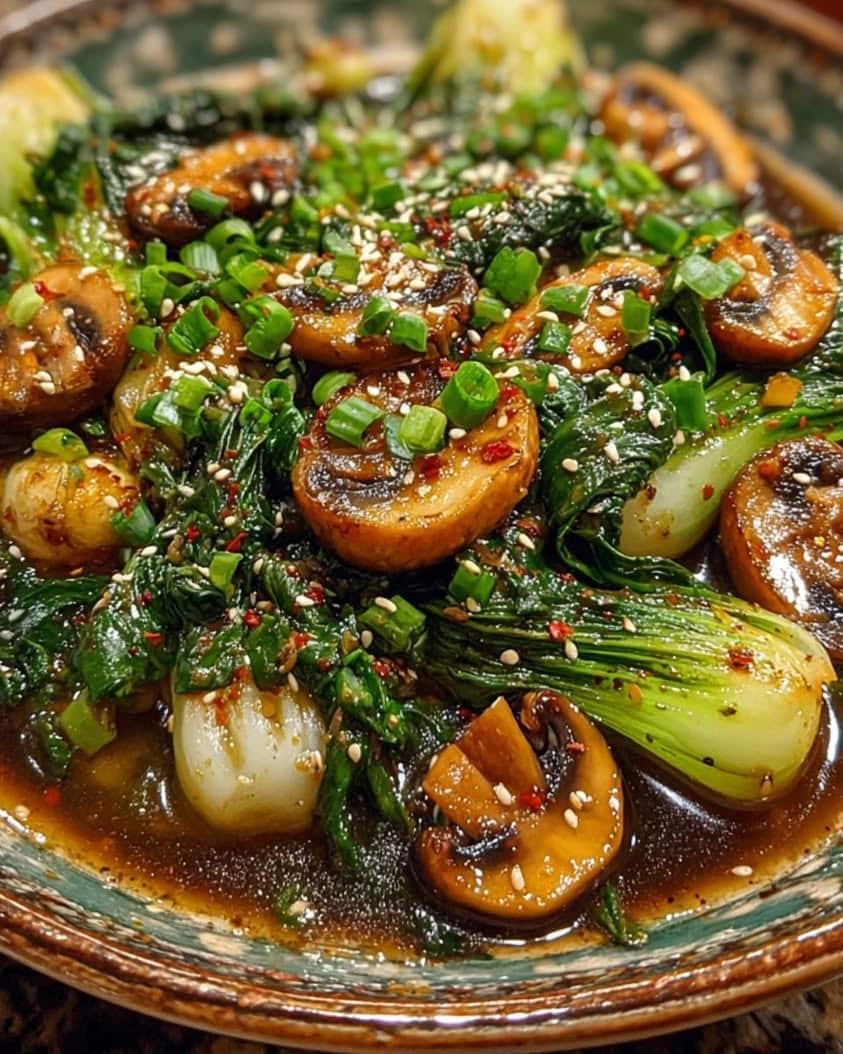
Tender Bok Choy & Savory Mushrooms in a Rich, Garlicky Sauce: Your New Weeknight Hero
Imagine a dish that lands on your table in a flash yet tastes like it simmered for hours. This recipe for tender bok choy and savory mushrooms in a rich, garlicky sauce delivers exactly that experience. The magic happens quickly in a hot pan, where earthy mushrooms meet crisp, green bok choy. Ultimately, a simple but profound sauce brings everything together into a harmonious and satisfying side dish or light main course.
Furthermore, this dish is a celebration of texture and umami. The mushrooms absorb the savory sauce, becoming little flavor bombs, while the bok choy stalks offer a satisfying crunch that softens just slightly. The rich, garlicky sauce, built from pantry staples, clings to every nook and cranny, ensuring each bite is bursting with flavor. This is a perfect example of how a few quality ingredients can create something truly special and delicious.
Consequently, if you are searching for a healthy vegan recipe that doesn’t sacrifice taste for speed, your search ends here. This Asian-inspired creation is not only a quick side dish but also a versatile component for your weekly meal prep. It pairs beautifully with rice, noodles, or tofu, making it an incredibly adaptable addition to your culinary repertoire. Get ready to fall in love with how easy and delicious healthy eating can be.
Quick Recipe Highlights
- Flavor Profile: This dish boasts a deep, savory umami character from the mushrooms and soy sauce, balanced by the subtle peppery notes of fresh bok choy. The rich, garlicky sauce provides a pungent backbone that is both comforting and complex, with a hint of sweetness and acidity to round it out perfectly.
- Texture: You will experience a wonderful contrast between the soft, almost meaty texture of the sautéed mushrooms and the initial crisp crunch of the bok choy stalks that tenderize slightly while the leafy greens wilt softly. This combination creates a dynamic and satisfying mouthfeel in every single bite.
- Aroma: As this dish cooks, your kitchen will fill with the irresistible, hearty scent of sizzling garlic and ginger, followed by the earthy fragrance of mushrooms hitting the hot pan. The aroma is warm, savory, and deeply appetizing, promising a flavorful meal ahead.
- Visual Appeal: The presentation is vibrant and fresh, featuring brilliant green bok choy leaves against the deep brown of the mushrooms, all glistening with the glossy savory sauce. It is a colorful and attractive dish that looks as good on the plate as it tastes.
- Skill Level Needed: This is a beginner-friendly recipe requiring only basic knife skills for chopping and the ability to sauté ingredients in a pan. If you can stir ingredients in a hot wok or skillet, you can absolutely master this simple and straightforward cooking process.
- Special Equipment: No special tools are required beyond a reliable large skillet or wok and a sturdy spatula. A good knife for prepping the vegetables is helpful, but otherwise, this recipe utilizes standard kitchen equipment that most home cooks already own and use regularly.
Recipe Overview
- Difficulty Level: We classify this recipe as easy because it involves straightforward techniques like washing, chopping, and sautéing. The steps are sequential and simple, with minimal room for error, making it an ideal choice for novice cooks or anyone needing a quick, stress-free meal after a long and busy day.
- Category: This dish fits beautifully into multiple categories, serving as a stellar healthy side dish, a light vegan main course, or a component in a larger Asian-inspired feast. Its versatility allows it to complement proteins like chicken or fish, or stand alone with a base of rice or noodles for a complete plant-based meal.
- Cuisine: The flavor profile is rooted in Chinese culinary traditions, utilizing fundamental ingredients like soy sauce, garlic, and ginger. However, it is a modern, adaptable recipe that welcomes interpretation, making it a fantastic gateway to cooking more Asian-inspired dishes in your own home kitchen.
- Cost: This is an incredibly budget-friendly recipe, as bok choy and common mushrooms like cremini are typically inexpensive. The sauce ingredients are pantry staples for many, and even if you need to purchase them, they are cost-effective and can be used in numerous other recipes, providing excellent value.
- Season: While available year-round, bok choy is at its peak in the cooler months, making this a wonderful autumn or winter side dish. Conversely, its light and fresh character also makes it suitable for spring and summer, especially when you are craving a healthy, vegetable-forward meal that feels nourishing and light.
- Occasion: This dish is perfect for busy weeknights, a simple lunch, or as part of a multi-course weekend dinner. It is elegant enough for casual entertaining but simple enough for a regular family meal, demonstrating its incredible flexibility for any dining situation you might encounter.
Why You’ll Love This Tender Bok Choy and Savory Mushrooms
First and foremost, the taste and texture appeal is immediate and undeniable. The combination of earthy, savory mushrooms with the fresh, slightly bitter crunch of bok choy creates a symphony in your mouth. Each component is coated in that rich, garlicky sauce, which delivers a powerful umami punch that is both familiar and exciting. This is a dish that satisfies deep flavor cravings while still feeling light and healthy on the palate, a balance that is often difficult to achieve in quick recipes.
From a convenience standpoint, this recipe is an absolute lifesaver. With a total time of just fifteen minutes from start to finish, it is faster than ordering takeout. The preparation is minimal, involving little more than washing and chopping a few vegetables. Furthermore, the cooking process is a simple, one-pan sauté, meaning cleanup is incredibly quick and easy. This makes it the ideal solution for those evenings when you are short on time, energy, or motivation but still want a wholesome, home-cooked meal.
The nutritional advantages of this dish are another major reason to love it. Bok choy is a nutritional powerhouse, packed with vitamins A, C, and K, as well as important minerals like calcium and potassium. Mushrooms provide a valuable source of B vitamins and selenium. Together, they create a low-calorie, high-fiber, and vitamin-rich dish that supports overall health. Because the recipe is vegan and can easily be made gluten-free, it accommodates a wide range of dietary needs and preferences without any compromise on flavor.
This recipe also holds significant social and entertaining value. While simple, its vibrant colors and restaurant-quality appearance make it impressive to serve to guests. You can easily double or triple the recipe to feed a crowd, and it pairs wonderfully with a variety of other dishes. Serving a beautiful, homemade, healthy dish like this allows you to showcase your cooking skills and care for your guests’ well-being, making any meal feel a little more special and thoughtfully prepared.
Finally, the cost-effectiveness and accessibility of the ingredients cannot be overstated. Bok choy and mushrooms are among the most affordable fresh vegetables available in most supermarkets. The sauce components are simple, shelf-stable items that are inexpensive and have long pantry lives. This means you can create a delicious, satisfying, and healthy meal for a fraction of the cost of a restaurant entrée or even a pre-made meal kit. It proves that eating well does not have to be complicated or expensive, which is a win for any home cook.
Historical Background and Cultural Significance
The story of this dish begins with its core components, both of which have deep roots in East Asian cuisine. Bok choy, also known as Chinese cabbage, has been cultivated in China for over 1,500 years. It is a fundamental vegetable in Chinese cooking, prized for its versatility, mild flavor, and nutritional benefits. Similarly, the use of mushrooms in Chinese gastronomy dates back centuries, with varieties like shiitake being revered for their rich, savory umami flavor and medicinal properties. The combination of these two ingredients is a natural and classic pairing in many regional Chinese dishes.
Culturally, stir-frying as a cooking technique is central to many East Asian food traditions, developed as a fast, fuel-efficient method to cook food. A dish like tender bok choy and savory mushrooms exemplifies this philosophy. It is designed to be cooked quickly over high heat to preserve the color, texture, and nutrients of the fresh vegetables. The savory, garlicky sauce is a hallmark of many home-style Chinese recipes, demonstrating a mastery of balancing salty, sweet, and aromatic elements to create a harmonious and deeply satisfying flavor profile that is both comforting and refined.
The evolution of this specific recipe is a testament to adaptation and globalization. While the core technique and flavor profile are traditional, the exact combination and accessibility of ingredients have made it a popular dish in Western home kitchens. As Asian vegetables like bok choy became more widely available in global supermarkets, home cooks began to incorporate them into their routines. This recipe represents a modern interpretation of a classic culinary principle, making the vibrant flavors of Asian-inspired cooking accessible to everyone, regardless of their background or experience level.
Regional variations of this concept abound throughout China and beyond. In some regions, fermented black beans might be added for a deeper, saltier dimension. In others, a touch of chili oil introduces a spicy kick. The type of mushroom used can also vary dramatically, from standard button mushrooms to prized shiitake or oyster mushrooms. This particular version with a rich, garlicky sauce is a fantastic and versatile base. It invites you to explore and add your own personal touch, connecting you to a long and dynamic culinary history while allowing for personal creativity and taste.
Ingredient Deep Dive
Let us start with bok choy, the star of our show. This leafy vegetable, a type of Chinese cabbage, has been a dietary staple in East Asia for millennia. It is incredibly nutrient-dense, providing a massive dose of Vitamins A, C, and K, which are crucial for vision, immunity, and bone health. When selecting bok choy, look for firm, crisp stalks with vibrant green leaves, avoiding any with yellowing or wilting. Store it unwashed in a plastic bag in your refrigerator’s crisper drawer. If bok choy is unavailable, you can substitute other leafy greens like baby spinach or kale, though the cooking time and final texture will vary slightly.
Next, we have the savory mushrooms. Cremini or baby bella mushrooms are an excellent choice for their robust, earthy flavor and meaty texture. Mushrooms have been valued across cultures both as a food source and for their purported health benefits, including being a good source of B vitamins and the antioxidant selenium. Choose mushrooms that are firm with a smooth appearance and closed caps. Store them in a paper bag in the refrigerator to prevent sogginess. For a more intense umami flavor, consider using shiitake mushrooms. Alternatively, you can use simple white button mushrooms or a wild mushroom blend for a more complex, gourmet touch.
The foundation of our rich, garlicky sauce is, unsurprisingly, fresh garlic. Garlic has a history spanning over 5,000 years and was even used by ancient civilizations for its medicinal properties. It adds a pungent, aromatic depth that is irreplaceable. For the best flavor, use fresh garlic cloves rather than pre-minced jarred versions. Fresh ginger adds a warm, zesty, and slightly sweet note that complements the garlic perfectly. Look for ginger root with smooth, taut skin. Both garlic and ginger should be stored in a cool, dry place. In a pinch, a teaspoon of ginger powder can substitute for fresh, but the flavor will be less bright and aromatic.
The liquid components of the sauce are what build its savory character. Soy sauce provides the primary salty, umami base. For a gluten-free version, tamari is a perfect substitute. A touch of maple syrup or agave nectar balances the saltiness with a subtle sweetness, while rice vinegar introduces a necessary acidic brightness that lifts the entire dish. Finally, a slurry of cornstarch and water is the key to transforming the thin liquids into a glossy, luxurious sauce that clings beautifully to the vegetables. Each of these ingredients is pivotal in creating the complex, well-rounded flavor profile that makes this dish so memorable and delicious.
Common Mistakes to Avoid
- Overcrowding the Pan: Adding all the vegetables at once to a small pan will cause them to steam rather than sauté. This results in soggy, limp bok choy and mushrooms that do not develop a nice sear. Consequently, always use a large enough skillet or cook in batches to ensure everything has contact with the hot surface.
- Burning the Garlic: Garlic burns very quickly and becomes bitter, which can ruin the entire dish. Therefore, add it to the pan for just 30 seconds to one minute until it becomes fragrant. You are toasting it, not browning it, so keep the heat managed and stir constantly to prevent any scorching.
- Using Wilted or Old Bok Choy: The success of this recipe relies on the fresh, crisp texture of the bok choy. Using old, yellowed, or wilted bok choy will result in a mushy, lackluster dish. Always select the freshest produce available, with bright white stalks and deep green, perky leaves for the best possible outcome.
- Neglecting to Wash Bok Choy Thoroughly: Bok choy can harbor grit and soil between its stalks. Failing to wash it properly will leave you with a gritty, unpleasant texture. To avoid this, separate the stalks and rinse them well under cold running water, ensuring all traces of dirt are completely removed before cooking.
- Adding the Sauce Too Early: If you add the sauce before the vegetables are nearly cooked, the bok choy will become overcooked and the sauce may reduce too much or break. Wait until the bok choy is just tender-crisp before pouring in the sauce, allowing it to thicken quickly and coat the hot vegetables perfectly.
- Skipping the Cornstarch Slurry: The cornstarch is essential for creating a glossy, thick sauce that clings to the vegetables. Without it, you will have a thin, watery liquid that pools at the bottom of the plate. Always mix your cornstarch with a cold liquid first to create a smooth slurry before adding it to the hot pan.
- Overcooking the Bok Choy: The goal is tender-crisp stalks and wilted leaves, not a soft, mushy mess. Overcooking destroys the vibrant color and pleasant crunch. As soon as the stalks become bright green and are easily pierced with a fork, the dish is done and should be removed from the heat immediately.
- Using Low-Heat Oil with a Low Smoke Point: Extra virgin olive oil is not ideal for the high-heat stir-fry method used here, as it can burn and impart a bitter flavor. Instead, use an oil with a high smoke point like avocado oil, grapeseed oil, or canola oil for best results and a clean taste.
Essential Techniques
The first essential technique is the high-heat stir-fry. This method is crucial because it cooks the vegetables quickly, sealing in their moisture and nutrients while creating a slight caramelization on the surface of the mushrooms. To master it, ensure your pan is very hot before adding the oil and ingredients. You should hear a vigorous sizzle upon contact. The common pitfall is a pan that is not hot enough, leading to steaming and soggy vegetables. A visual cue for success is the mushrooms releasing their liquid and developing a golden-brown sear without becoming rubbery.
Another critical technique is creating the cornstarch slurry for the sauce. This process, known as slurry-making, is important because it prevents the cornstarch from clumping when introduced to heat, ensuring a smooth, lump-free sauce. To do it correctly, always mix the cornstarch with a cold liquid like water or vegetable broth until it forms a thin, milky paste. A common mistake is adding dry cornstarch directly to the hot pan, which will instantly form unappealing lumps. The visual cue for success is a sauce that transforms from thin and watery to glossy and thick within a minute of adding the slurry, coating the back of a spoon nicely.
The final key technique is properly wilting the bok choy. This is important to achieve the desired texture contrast between the crisp-tender stalks and the soft leaves. The method involves adding the thicker stalks first, as they take longer to cook, followed by the more delicate leaves. A common pitfall is adding everything at once, which results in overcooked leaves and undercooked stems. To master it, listen for the sound of the stalks sizzling vigorously. The visual cue for success is the stalks turning a brighter, vibrant green and becoming slightly translucent at the edges, while the leaves wilt down dramatically but retain some structure.
Pro Tips for Perfect Tender Bok Choy and Savory Mushrooms
First, thoroughly dry your washed bok choy before cooking. Any excess water clinging to the leaves will create steam in the pan, preventing the desirable sear and making the vegetables soggy. Use a salad spinner or pat them dry gently with a clean kitchen towel for the best possible texture and browning.
For an even richer, deeper umami flavor, try using a combination of mushrooms. Mixing cremini with a few rehydrated shiitake mushrooms will add a fantastic layer of complexity to the dish. The soaking liquid from the shiitakes can also be used as part of the water for the sauce, intensifying the savory character even further.
Do not mince your garlic; instead, try slicing it thinly. Thinly sliced garlic cloves will soften and mellow in the oil, infusing it with flavor and providing little caramelized bites throughout the dish. This offers a different, more nuanced garlic experience compared to the stronger punch of minced garlic.
If you prefer a bit of heat, introduce it at the beginning of the cooking process. Add a teaspoon of chili flakes or a few thin slices of fresh chili to the hot oil right before the garlic. This allows the capsaicin to infuse the oil, distributing a gentle, warming spice throughout the entire dish.
Finish the dish with a final brightening agent. A small squeeze of fresh lime juice or a sprinkle of toasted sesame seeds added just before serving can elevate the flavors dramatically. This adds a layer of freshness and aroma that contrasts beautifully with the rich, savory sauce.
For the most beautiful presentation, consider chopping the bok choy stalks and leaves separately. Add the chopped stalks to the pan first to cook for a minute or two, then add the leaves. This ensures every component is cooked to its own perfect level of doneness, showcasing your attention to detail.
Variations and Adaptations
For regional variations, you can easily take this base recipe in different culinary directions. A Sichuan-inspired version would include a generous spoonful of doubanjiang (fermented broad bean paste) and dried red chilies for a mouth-numbing, spicy kick. A Japanese adaptation might use mirin and dashi in the sauce for a sweeter, more delicate umami profile. Exploring these regional tweaks is a fantastic way to travel with your taste buds and discover new flavor combinations using the same core technique and ingredients.
Seasonal adaptations are simple and rewarding. In the spring, add a handful of fresh snap peas or asparagus tips along with the mushrooms. During summer, sweet cherry tomatoes can be tossed in at the end for a burst of juiciness. In autumn, consider adding thin slices of Brussels sprouts or cubed sweet potato, adjusting the cooking time slightly to ensure they become tender. This flexibility makes the recipe a year-round staple in your kitchen.
Dietary modifications are straightforward. For a gluten-free version, simply ensure you use tamari instead of standard soy sauce. To add protein and make it a more substantial main course, stir in baked tofu cubes, tempeh, or cooked chickpeas when you add the sauce. If you are not strictly vegan, a drizzle of oyster sauce at the end would add an incredible depth of flavor, though it would make the dish vegetarian rather than vegan.
Flavor variations can keep this dish exciting every time you make it. For a tangier profile, add a teaspoon of grated orange zest to the sauce. For a smoky note, use a dash of smoked paprika or a few drops of liquid smoke. You can also infuse the cooking oil with a star anise pod or a piece of cinnamon stick at the beginning, removing it before adding the garlic, for a warm, aromatic background note that is subtle but complex.
Texture modifications can also be explored. For a crisper mushroom, avoid moving them too much in the pan, allowing them to develop a deep sear. If you prefer a softer, more stew-like consistency, add a quarter cup of vegetable broth along with the sauce and let everything simmer for a few extra minutes until the bok choy is very tender. Topping the finished dish with crushed peanuts or crispy fried shallots adds a wonderful crunchy contrast.
Presentation alternatives can turn this simple dish into a restaurant-worthy plate. Instead of chopping, you can use baby bok choy and sauté them whole for a dramatic, elegant look. Serve it in a hollowed-out pineapple half for a tropical twist, or present it in individual small bowls as a starter. Plating it over a swoosh of black rice or vibrant purple sweet potato mash can create a stunning visual contrast that impresses your guests.
Serving and Presentation Guide
Plating techniques can elevate this humble dish significantly. For a family-style meal, serve it directly from the skillet or a warm, rustic ceramic bowl. For individual plating, use a pair of tongs to create a neat, vertical stack of the bok choy and mushrooms in the center of a white or neutral-colored plate, allowing the vibrant green and brown colors to pop. Drizzle any extra sauce around the plate artfully for a professional touch.
Garnishing is the final step to adding both flavor and visual appeal. A sprinkle of thinly sliced green onions or fresh chopped cilantro adds a fresh, colorful note. Toasted sesame seeds or a drizzle of chili oil or sesame oil provide visual texture and a flavor boost. For a special occasion, a few edible flowers or microgreens can transform the dish into a gourmet presentation.
Traditional accompaniments are simple and effective. Steamed jasmine rice or brown rice is the classic and perfect partner to soak up the delicious savory sauce. For a more substantial meal, serve it alongside lo mein noodles or ramen. It also pairs beautifully with simple proteins like grilled tofu, teriyaki chicken, or pan-seared fish, acting as the flavorful vegetable component of a balanced plate.
Modern serving suggestions might include using it as a flavorful topping for grain bowls with quinoa and roasted sweet potatoes. You can also stuff it into lettuce wraps for a low-carb lunch option, or fold it into an omelet for a hearty breakfast. Its versatility means it can easily transition from a side dish to the star ingredient in various contemporary meal formats.
Temperature considerations are key. This dish is best served immediately, hot from the pan, when the textures are at their peak. The bok choy should be hot and crisp-tender, and the sauce should be glossy and warm. If you must hold it, keep it in a warm oven but for no more than 15 minutes, as it will continue to cook and the bok choy will lose its desirable crunch.
Portion control tips are helpful for meal planning. As a side dish, this recipe comfortably serves four people. If serving as a main course for two, you might want to double the mushrooms for extra heartiness. When serving it as part of a multi-course meal with several other dishes, this recipe can easily stretch to serve six, allowing everyone to enjoy a taste without overfilling their plates.
Wine and Beverage Pairing
Selecting the right wine pairing can enhance the umami and garlicky notes of this dish beautifully. A crisp, dry white wine like a Sauvignon Blanc or Pinot Grigio works wonderfully, as their high acidity and citrus notes cut through the richness of the sauce. For those who prefer red wine, a light-bodied, low-tannin red like a Pinot Noir or Gamay will complement the earthy mushrooms without overpowering the delicate bok choy. The key is to choose wines that are refreshing and not overly oaky.
Non-alcoholic alternatives offer just as much complexity and enjoyment. A chilled, unsweetened jasmine or green tea is a classic and perfect pairing, cleansing the palate between bites. Sparkling water with a squeeze of lime or a splash of ginger syrup can mimic the refreshing quality of a cocktail. For a more substantial option, a non-alcoholic ginger beer provides a spicy, sweet kick that stands up well to the bold garlic and savory flavors in the dish.
While not traditional, certain coffee and tea pairings can be intriguing. A light-roast, floral coffee, served black, can surprisingly highlight the earthy notes of the mushrooms. Alternatively, a genmaicha tea (brown rice tea) with its toasty, nutty flavor profile can create a harmonious bridge between the green vegetable and the savory elements. These are adventurous pairings for those looking to explore beyond conventional beverage matches.
Temperature considerations are crucial for all beverage pairings. White wines and non-alcoholic sparkling drinks should be served well-chilled, between 45-50°F, to provide a refreshing contrast to the warm dish. Red wines should be served slightly cooler than room temperature, around 55°F, to keep them tasting fresh. Teas should be hot but not scalding, allowing you to appreciate their aroma and flavor without burning your palate.
Serving suggestions for your chosen beverage are the final touch. Serve wines in appropriate glassware to concentrate the aromas. Present iced teas or sparkling drinks in tall, elegant glasses with plenty of ice. For hot tea, use a pre-warmed teapot and cups to maintain the ideal temperature throughout your meal. Thoughtful presentation of the drink makes the entire dining experience feel more complete and considered.
Storage and Shelf Life
Proper storage methods are essential for maintaining quality. Allow the cooked dish to cool completely to room temperature before storing, but do not leave it out for more than two hours to prevent bacterial growth. Transfer the leftovers to an airtight container. Glass containers are ideal as they do not absorb odors and allow you to see the contents easily. Properly stored, your tender bok choy and savory mushrooms will keep in the refrigerator for up to 3 days.
Understanding the signs of spoilage is crucial for food safety. If the bok choy develops an overly slimy texture, a sour smell, or any visible mold, it must be discarded immediately. The mushrooms may darken slightly in color, which is normal, but if they become unpleasantly mushy or develop a foul odor, it is a clear sign they have gone bad. When in doubt, remember the golden rule: if you are uncertain about its safety, it is always better to err on the side of caution and throw it out.
Reheating instructions are key to preserving texture. The best method is to reheat the dish gently in a skillet over medium heat, stirring frequently. You may need to add a tablespoon or two of water or vegetable broth to loosen the sauce, as it will have thickened in the refrigerator. Avoid using the microwave if possible, as it can make the bok choy rubbery and unevenly heat the dish. If you must use a microwave, do so in short 30-second bursts, stirring between each interval.
Freezing guidelines come with a caveat. While you can freeze this dish, the texture of the bok choy will suffer significantly, becoming very watery and mushy upon thawing. Therefore, freezing is not recommended for the best quality. If you must freeze it for meal prep, expect a softer final product that is better suited for incorporating into soups, stews, or fillings rather than serving as a standalone side dish. Thaw it overnight in the refrigerator before reheating.
Make Ahead Strategies
An efficient prep timeline can make weeknight cooking a breeze. The day before, or in the morning, you can wash and thoroughly dry the bok choy, then chop it and store the stalks and leaves separately in sealed containers or zip-top bags in the refrigerator. Similarly, clean and slice the mushrooms, storing them in another container. You can also mince or slice the garlic and ginger, keeping them in a small airtight container. This advance prep reduces your active cooking time to just 10 minutes when you are ready to eat.
Understanding the storage between steps is important for food safety and quality. Pre-chopped vegetables can be stored in the refrigerator for up to 24 hours before their quality begins to decline. The sauce can also be mixed ahead of time; simply combine the soy sauce, maple syrup, and rice vinegar in a jar and shake it well. Store the sauce and the cornstarch slurry (mixed separately) in the fridge. Do not combine the cornstarch slurry with the main sauce until you are ready to cook, as it will thicken prematurely.
Assessing the quality impact of make-ahead steps is crucial. Pre-chopping the vegetables has a minimal impact, especially if they are stored properly. The bok choy might lose a tiny bit of crispness but will still cook up wonderfully. The pre-mixed sauce will taste identical to one made fresh. The main advantage is the massive time savings, turning a 15-minute recipe into a 5-minute one, which is invaluable on a busy weeknight when every minute counts.
Final assembly tips for a make-ahead meal are straightforward. When you are ready to cook, have all your pre-prepped ingredients lined up next to the stove. Heat your oil, then follow the standard cooking steps: mushrooms first, then garlic/ginger, then bok choy stalks, then leaves. Give your pre-mixed sauce a good shake and add it to the pan, followed by the fresh cornstarch slurry. Because your ingredients are prepped, the cooking process will be seamless, fast, and entirely stress-free.
Scaling Instructions
Halving the recipe is simple for smaller households. Use half the amount of every single ingredient. The cooking times will remain roughly the same, though you may find the process is even quicker since there is less volume in the pan. Use a medium-sized skillet instead of a large one to ensure the vegetables still have good contact with the hot surface. This scaled-down version is perfect for a cozy dinner for one or two people without generating unnecessary leftovers.
Doubling or tripling the recipe for a crowd requires some adjustments. Double or triple all ingredients proportionally. However, do not attempt to cook it all in one batch, as overcrowding will lead to steaming. Instead, cook in multiple batches, using a fresh tablespoon of oil for each batch if needed. You can keep the finished batches warm on a baking sheet in a low oven (around 200°F) while you cook the rest. This ensures every serving has the perfect texture.
Equipment adjustments are necessary when scaling. For a halved recipe, a 10-inch skillet is sufficient. For a doubled recipe, a large wok or a very large (14-inch) skillet is ideal. If you are tripling the recipe for a big gathering, consider using two large skillets simultaneously on separate burners to manage the volume efficiently. Having all your scaled ingredients pre-measured and organized in separate bowls (mise en place) is absolutely essential for managing the larger quantity without confusion or mistakes.
Timing modifications are minimal when scaling up or down. The actual active cooking time per batch remains about 10 minutes. The main time difference comes from cooking in multiple batches. When doubling the recipe and cooking in two batches, your total active cooking time will be around 20-25 minutes. Plan accordingly, especially if you are serving this as part of a larger meal where timing is crucial for getting all dishes to the table hot and fresh.
Nutritional Deep Dive
Let us break down the macronutrients in this dish. It is naturally low in calories and carbohydrates, making it an excellent choice for those monitoring their intake. The primary source of calories comes from the small amount of cooking oil and the natural sugars in the vegetables and maple syrup. It is a low-fat recipe, with most of the fat being heart-healthy unsaturated fat from the oil. Protein content is modest, primarily from the mushrooms, so pairing it with tofu, tempeh, or a serving of legumes can make it a more balanced main course.
The micronutrient analysis reveals why this dish is such a nutritional superstar. Bok choy is an exceptional source of Vitamin K, crucial for bone health and blood clotting, and Vitamin A, vital for vision and immune function. It also provides a good amount of Vitamin C and folate. Mushrooms contribute B vitamins, which support energy metabolism, and selenium, a powerful antioxidant. Garlic adds allicin, a compound with noted anti-inflammatory and antimicrobial properties. Together, they create a meal that is densely packed with vitamins, minerals, and beneficial plant compounds.
The collective health benefits are impressive. This dish supports cardiovascular health through its low sodium and saturated fat content and the presence of potassium from the bok choy. The high fiber content aids in digestion and promotes a feeling of fullness, which can help with weight management. The antioxidants from the vegetables help combat oxidative stress in the body. Regularly incorporating such vegetable-forward, nutrient-dense meals into your diet is a proven strategy for long-term health maintenance and disease prevention.
For those with specific dietary considerations, this recipe is a fantastic option. It is inherently vegan and can be made gluten-free with tamari. It is suitable for low-carb and keto diets in moderation, as the primary carbohydrates come from fibrous vegetables. For individuals on a low-FODMAP diet, you may need to omit the garlic and use garlic-infused oil instead, and ensure you are using a FODMAP-friendly mushroom variety like oyster mushrooms, adapting the recipe to meet your specific digestive needs.
Dietary Adaptations
For a gluten-free adaptation, the only ingredient that typically contains gluten is the soy sauce. Simply substitute it with an equal amount of tamari or a certified gluten-free soy sauce. All other ingredients in this recipe—bok choy, mushrooms, garlic, ginger, maple syrup, rice vinegar, and cornstarch—are naturally gluten-free. This simple swap makes the dish safe and enjoyable for those with celiac disease or gluten sensitivity without any compromise on flavor.
A dairy-free adaptation is effortless because this recipe contains no dairy ingredients to begin with. It is inherently dairy-free. However, always be cautious when using pre-made sauces or condiments, as some can contain hidden dairy derivatives. The ingredients listed in this recipe are all plant-based and free from dairy, making it a safe and creamy-free option for those avoiding lactose or casein.

I’m Shaykee—born in Morocco, seasoned across continents. From airplane galleys to home kitchens, I share the flavors and stories that shaped my journey.