
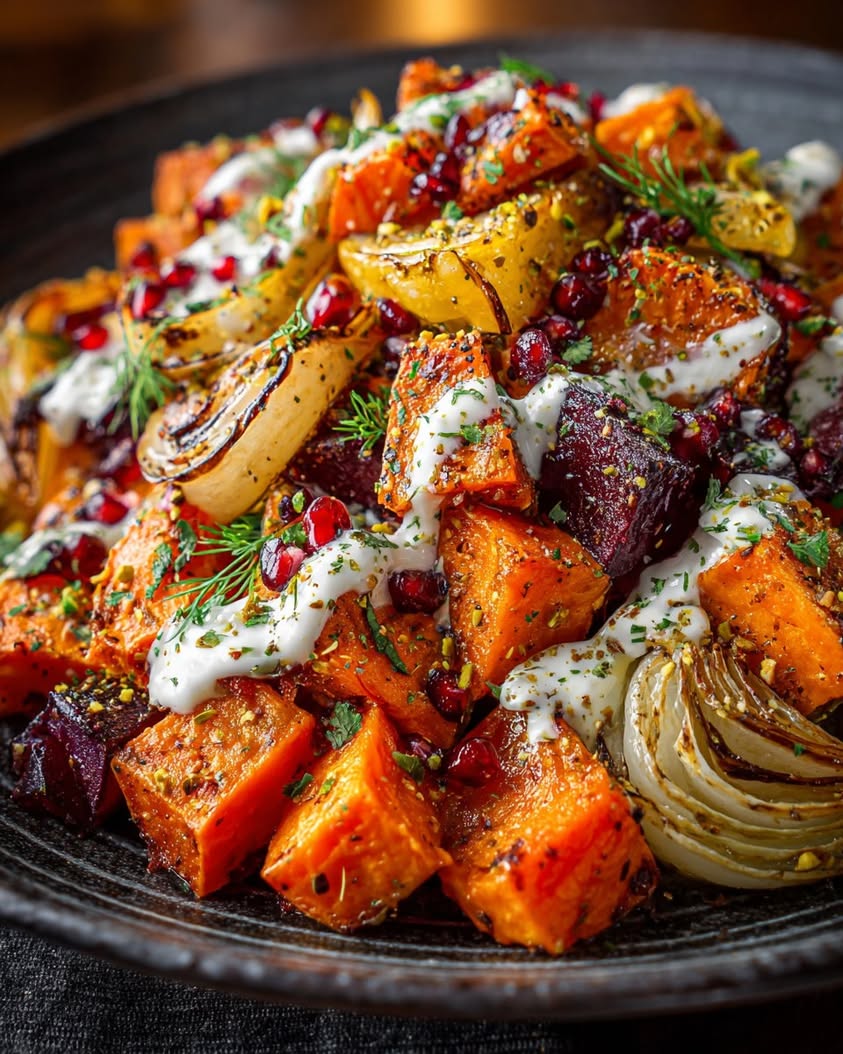
Roasted Sweet Potato, Carrot & Fennel with Whipped Feta, Pistachios & Orange-Cranberry Glaze: A Festive Flavor Symphony
This stunning roasted sweet potato, carrot, and fennel dish is a true celebration of seasonal flavors. It transforms humble root vegetables into an extraordinary culinary experience that will impress even the most discerning palates. The combination of creamy whipped feta, crunchy pistachios, and a vibrant orange-cranberry glaze creates a symphony of textures and tastes that dance across your tongue. Furthermore, this dish proves that vegetarian recipes can be just as exciting and satisfying as any meat-centered meal.
Imagine the sweet, caramelized notes of roasted root vegetables meeting the tangy creaminess of whipped feta. Then picture that combination elevated by the bright, citrusy sweetness of an orange-cranberry glaze and the satisfying crunch of toasted pistachios. This recipe delivers all these elements in perfect harmony, creating a side dish that could easily steal the show at any holiday gathering. Consequently, it serves as the perfect gourmet vegetable centerpiece for your festive feast or special occasion dinner.
What makes this roasted sweet potato, carrot, and fennel recipe truly special is its versatility. While it shines as a holiday side dish, it’s equally wonderful for weeknight dinners when you want something extraordinary without excessive effort. The colors alone make it a feast for the eyes, with vibrant oranges, deep reds from the glaze, and bright green pistachio accents creating a visually stunning presentation. Ultimately, this dish demonstrates how simple ingredients can create extraordinary results with the right techniques and flavor combinations.
Quick Recipe Highlights
- Flavor Profile: This dish features sweet caramelized vegetables balanced by tangy whipped feta and a bright, slightly tart orange-cranberry glaze. The flavor journey moves from earthy sweetness to creamy tanginess, finishing with citrusy notes and subtle anise from the fennel.
- Texture: You will experience multiple textural elements including tender roasted vegetables, luxuriously smooth whipped feta, satisfyingly crunchy pistachios, and the glossy viscosity of the reduction glaze. Each component contributes to a complex mouthfeel that keeps every bite interesting.
- Aroma: As the vegetables roast, your kitchen will fill with the sweet scent of caramelizing roots and the subtle licorice fragrance of fennel. The orange-cranberry glaze adds bright citrus notes while toasting pistachios contributes a warm, nutty aroma that completes the sensory experience.
- Visual Appeal: This dish presents a beautiful color palette of orange and yellow from the roasted vegetables, creamy white from the whipped feta, vibrant red from the glaze, and emerald green from the pistachios. The composition creates an artful arrangement that looks as impressive as it tastes.
- Skill Level Needed: This recipe requires basic kitchen skills like vegetable chopping, simple roasting, and making a quick stovetop reduction. Even novice cooks can achieve excellent results by following the straightforward instructions, while experienced cooks will appreciate the sophisticated flavor combinations.
- Special Equipment: You will need a reliable baking sheet, a good blender or food processor for the whipped feta, and a small saucepan for the glaze. A sharp chef’s knife makes vegetable preparation easier, but no specialized professional equipment is necessary for success.
Recipe Overview
- Difficulty Level: This recipe earns its easy rating because it involves straightforward techniques most home cooks already know. The vegetable roasting requires simple chopping and occasional pan-shaking, while the whipped feta comes together quickly in a blender. Meanwhile, the glaze involves basic simmering until properly reduced. Consequently, even cooking beginners can create this impressive dish with confidence.
- Category: This versatile creation functions beautifully as a substantial vegetarian side dish, but it can also serve as a light main course when paired with a simple green salad. It fits perfectly into holiday menus, special occasion dinners, and even elegant weeknight meals. The dish bridges multiple categories from vegetable sides to vegetarian mains with equal success.
- Cuisine: While not tied to a specific traditional cuisine, this recipe draws inspiration from Mediterranean flavor profiles with its use of feta, olive oil, and citrus. The combination of sweet and savory elements reflects modern American culinary trends that prioritize vegetable-forward dishes with global influences. The result is a contemporary creation that feels both familiar and excitingly new.
- Cost: This recipe uses affordable root vegetables as its foundation, with sweet potatoes and carrots providing economical bulk. Feta cheese represents the most significant cost, while small amounts of pistachios and fresh cranberries add luxury without breaking the budget. Overall, it delivers gourmet results at a reasonable price point, especially when compared to meat-centric dishes.
- Season: This dish shines brightest during fall and winter when root vegetables are at their peak sweetness and cranberries are freshly harvested. The warm, comforting qualities make it perfect for cooler weather, while the bright citrus notes provide a welcome contrast to heavier seasonal dishes. That said, it works year-round thanks to the general availability of its core ingredients.
- Occasion: This recipe excels as a holiday side dish for Thanksgiving, Christmas, or Easter celebrations where its vibrant colors and sophisticated flavors complement traditional menus. It also works beautifully for dinner parties, potlucks, and special family meals when you want to serve something memorable. The dish transitions effortlessly from casual to formal dining situations.
Why You’ll Love This Roasted Sweet Potato and Carrot Dish
The taste and texture appeal of this roasted sweet potato, carrot, and fennel recipe creates an unforgettable eating experience. Each component brings something unique to the plate, from the earthy sweetness of perfectly roasted root vegetables to the luxurious creaminess of whipped feta. The orange-cranberry glaze provides a bright, tangy counterpoint that cuts through the richness, while the pistachios add crucial textural contrast. Every forkful delivers a balanced combination of sweet, savory, creamy, and crunchy elements that keep your palate engaged throughout the meal. The complexity of flavors seems sophisticated, yet they harmonize in an instinctively satisfying way that will have everyone asking for seconds.
Regarding convenience and preparation benefits, this recipe offers impressive results without demanding professional kitchen skills. The vegetable roasting requires minimal hands-on time once the chopping is complete, freeing you to prepare other components or simply relax. The whipped feta comes together in minutes using a standard blender, and the glaze simmers unattended while the vegetables cook. This efficient workflow means you can create a stunning gourmet vegetable dish without spending hours in the kitchen. The recipe components can also be prepared in advance and assembled just before serving, making it ideal for entertaining when you want to minimize last-minute stress.
The nutritional advantages of this vegetable-forward dish make it a smart choice for health-conscious eaters. Sweet potatoes deliver abundant vitamin A, while carrots contribute additional antioxidants and fiber. Fennel provides unique phytonutrients and digestive benefits, and the olive oil offers heart-healthy monounsaturated fats. The whipped feta adds protein and calcium without excessive heaviness, creating a more balanced nutritional profile than many traditional holiday side dishes. Using natural sweetness from the roasted vegetables and fruit-based glaze means you can enjoy incredible flavor without relying on refined sugars or artificial ingredients. This approach to cooking celebrates whole foods in their most delicious forms.
For social and entertaining value, this roasted sweet potato and carrot creation serves as a spectacular conversation starter at any gathering. The beautiful presentation immediately signals that something special is coming to the table, while the sophisticated flavor combinations demonstrate thoughtful menu planning. As a vegetarian option, it ensures all guests have a substantial and satisfying dish, yet it complements meat main courses perfectly for omnivorous gatherings. The recipe scales easily for larger groups, and its make-ahead potential reduces host stress. Serving a dish that looks and tastes this impressive creates a memorable dining experience that guests will talk about long after the meal concludes.
The cost-effectiveness and accessibility of this recipe make gourmet eating achievable on a reasonable budget. Root vegetables like sweet potatoes and carrots remain affordable throughout the year, providing the foundation for this dish without significant expense. Feta cheese offers big flavor impact for moderate cost, while the small quantities of pistachios and cranberries provide luxury touches without breaking the bank. Compared to meat-centric main dishes, this vegetable-focused creation delivers exceptional value while feeling indulgent and special. The ingredients are readily available at most supermarkets, eliminating the need for specialty shopping trips. This accessibility means you can create restaurant-quality food using everyday ingredients from your local grocery store.
Historical Background and Cultural Significance
The origin story of combining roasted root vegetables with dairy and fruit elements spans multiple culinary traditions. Roasting vegetables over fire represents one of humanity’s oldest cooking methods, while the specific combination of sweet potatoes and carrots gained popularity in American cooking during the 20th century. Fennel has Mediterranean roots where it frequently appears in Italian and Greek cuisine, often paired with citrus and cheese. The whipped feta technique likely emerged from contemporary restaurant kitchens seeking to update traditional Greek flavors for modern palates. Meanwhile, cranberry-orange combinations have strong American associations, particularly in New England where both ingredients grow abundantly.
Cultural importance of this dish lies in its reflection of current food trends that celebrate vegetable-forward eating while honoring traditional flavor pairings. The combination represents a shift away from meat-centered meals toward plant-based options that don’t sacrifice satisfaction or flavor complexity. This approach aligns with Mediterranean dietary patterns that emphasize vegetables, healthy fats, and moderate dairy consumption. The dish also embodies the modern American culinary spirit of borrowing globally while creating something new and distinctive. It respects tradition through its ingredient combinations while employing contemporary techniques like vegetable roasting at high heat and transforming cheese into ethereal whipped creations.
Evolution of the recipe follows the broader trajectory of vegetable dishes moving from simple preparations to centerpiece status. Where roasted vegetables once played supporting roles on dinner plates, they now frequently star as main attractions in vegetarian and flexitarian meals. The whipped feta component exemplifies how traditional ingredients get reimagined through modern techniques, transforming a crumbly cheese into something spreadable and luxurious. The orange-cranberry glaze represents the contemporary preference for fruit-based sauces over heavier gravies or cream-based preparations. This evolution reflects changing consumer preferences for lighter, brighter flavors and visually appealing plates that deliver both nutrition and indulgence.
Regional variations of this concept could include substituting different root vegetables based on local availability. In the American South, might incorporate pecans instead of pistachios and add a touch of bourbon to the glaze. Mediterranean versions might include olives, oregano, and lemon juice rather than orange and cranberry. Middle Eastern interpretations could feature pomegranate molasses in the glaze and toasted pine nuts as garnish. Asian-inspired variations might include ginger and soy sauce in the glaze with sesame seeds replacing pistachios. These adaptations demonstrate the recipe’s flexibility while maintaining the core concept of roasted vegetables with creamy cheese and fruit-enhanced accents.
Ingredient Deep Dive
Sweet potatoes have a rich history dating back over 5,000 years to Central and South America where they were first domesticated. Spanish explorers introduced them to Europe and Asia, creating a global presence that continues today. Nutritionally, they’re packed with beta-carotene (which converts to vitamin A), vitamin C, manganese, and fiber. When selecting sweet potatoes, look for firm specimens with smooth, unblemished skins and consistent coloring. Avoid any with soft spots, signs of sprouting, or cracks. Store them in a cool, dark, well-ventilated place (not refrigerated) for up to two weeks. For substitutions, regular potatoes, winter squash, or parsnips can work, though the flavor profile will change significantly.
Carrots have been cultivated for thousands of years, originally in Central Asia where their wild ancestors were purple and yellow rather than orange. The familiar orange carrot we know today was developed by Dutch growers in the 17th century. They’re renowned for their high beta-carotene content, along with fiber, vitamin K1, potassium, and antioxidants. Choose carrots that are firm, smooth, and brightly colored with fresh-looking greens if attached. Avoid limp, rubbery, or cracked specimens. Refrigerate carrots in a plastic bag for several weeks. Parsnips make an excellent substitution, offering similar texture with a slightly sweeter, nuttier flavor profile that complements the other ingredients beautifully.
Fennel boasts an ancient Mediterranean history where it was valued by Greeks, Romans, and Egyptians for both culinary and medicinal properties. The bulb, fronds, pollen, and seeds all find uses in various cuisines. Nutritionally, it provides vitamin C, potassium, and unique phytonutrients with antioxidant and anti-inflammatory properties. Select fennel bulbs that are clean, firm, and white or pale green with no signs of browning or splitting. The stalks should be crisp, and the fronds should look bright green and fresh. Store wrapped in plastic in the refrigerator for up to five days. Celery root or bok choy stems can substitute in a pinch, though neither will replicate fennel’s distinctive anise flavor.
Feta cheese originated in Greece where it has been produced for centuries using sheep’s milk or a sheep-goat milk blend. Traditional production methods and protected designation of origin status make authentic Greek feta a very specific product. It provides protein, calcium, phosphorus, and beneficial bacteria when unpasteurized. Look for feta stored in brine, which helps maintain moisture and flavor. Avoid crumbled feta in bags, which tends to be drier. Refrigerate feta in its brine for up to several weeks. For substitutions, ricotta salata, goat cheese, or queso fresco can work, though the whipping quality and flavor will differ. For vegan versions, soaked and blended cashews with lemon juice and salt create a surprisingly similar texture and tang.
Common Mistakes to Avoid
- Cutting vegetables unevenly: Inconsistent sizing causes some pieces to burn while others remain undercooked. Always take time to cut vegetables into uniform pieces approximately 1-inch in size, ensuring they roast evenly and develop consistent caramelization.
- Overcrowding the baking sheet: When vegetables are packed too tightly, they steam rather than roast, preventing proper browning and texture development. Use two baking sheets if necessary to ensure adequate space between pieces for optimal heat circulation and browning.
- Using old, dried-out feta: Stale feta won’t whip properly into a smooth, creamy consistency. Always select fresh feta stored in brine and ensure it’s properly chilled before blending to achieve the perfect texture for your whipped feta component.
- Neglecting to toast the pistachios: Raw pistachios lack the depth of flavor that toasted nuts provide. Briefly toasting them in a dry skillet enhances their nuttiness and improves texture, adding crucial flavor dimension to the finished dish.
- Under-reducing the glaze: If the orange-cranberry mixture remains too thin, it will make the vegetables soggy rather than coating them beautifully. Simmer until properly thickened to a syrup-like consistency that will cling to the roasted vegetables.
- Skipping the resting step for roasted vegetables: Removing vegetables directly from oven to plate causes them to continue cooking excessively. Allowing a brief rest helps them reabsorb some juices and firm up slightly for better texture.
- Adding salt too early to the vegetables: Salting vegetables before roasting can draw out moisture, preventing proper browning. Season just before roasting or immediately after removing from the oven for best caramelization results.
- Using pre-chopped garlic for the whipped feta: Fresh garlic provides brighter, cleaner flavor compared to pre-chopped versions which often have off-flavors. Always start with fresh garlic cloves for the best tasting whipped feta.
- Blending the feta without adequate liquid: Too little liquid creates a pasty, thick consistency rather than light and fluffy whipped feta. Adjust yogurt or cream quantity gradually until achieving the perfect spreadable texture.
- Assembling components too far in advance: The whipped feta can soften and the vegetables can lose their crisp edges if assembled more than 30 minutes before serving. For best results, assemble just before serving to maintain ideal textures.
Essential Techniques
Proper vegetable roasting requires understanding the relationship between temperature, space, and time. High heat (400-425°F) is crucial for creating caramelization rather than simply cooking the vegetables through. This Maillard reaction creates complex flavor compounds that transform simple vegetables into something extraordinary. The technique involves cutting vegetables uniformly, coating them lightly with oil, and spreading them in a single layer with space between pieces. Resist the temptation to stir too frequently—allowing vegetables to remain in contact with the hot pan surface develops those desirable browned edges. Visual cues for success include golden-brown spots, slightly shrunken appearance, and tender-but-not-mush texture when pierced with a fork.
Creating whipped feta demonstrates how mechanical action can completely transform a familiar ingredient’s texture. The process breaks down feta’s crumbly structure into a smooth, spreadable consistency that feels luxurious on the palate. Success depends on using cold feta, adequate fat content (from yogurt, cream, or olive oil), and powerful blending action. Pulse initially to break down large chunks, then process continuously until completely smooth. Common pitfalls include overprocessing which can warm the cheese excessively, and using feta that’s too dry. Perfect whipped feta should hold soft peaks, have a homogeneous appearance without graininess, and taste noticeably lighter than its unwhipped counterpart while maintaining feta’s characteristic tang.
Reduction glazes require patience and attention to achieve the perfect balance between flavor concentration and texture. The process involves simmering liquid ingredients until water evaporates, leaving behind intensified flavors and natural thickeners. For the orange-cranberry glaze, this means cooking until the mixture coats the back of a spoon and leaves a clear trail when you draw a line through it. The technique transforms tart, thin juice into a glossy, flavor-packed sauce that clings beautifully to food. Common mistakes include rushing the process with too-high heat (which can create bitter flavors) and under-reducing (resulting in a watery sauce that dilutes other components). Proper execution creates a balanced glaze that’s neither too thick nor too thin, with concentrated fruit flavor that complements rather than overwhelms.
Pro Tips for Perfect Roasted Sweet Potato and Carrot Dish
For extra-crispy edges on your roasted vegetables, preheat your baking sheet in the oven before adding the oiled vegetables. The instant contact with a hot surface jumpstarts the browning process, creating beautifully caramelized exteriors while maintaining tender interiors. This restaurant technique ensures professional-level results with minimal extra effort.
When making whipped feta, start with well-chilled ingredients straight from the refrigerator. Cold feta and yogurt blend more efficiently and create a fluffier, more stable final product. If your kitchen is particularly warm, you can even chill the blender container beforehand to maintain optimal temperature throughout the process.
For maximum flavor in your orange-cranberry glaze, add a strip of orange zest during the simmering process and remove it before serving. The zest contains aromatic oils that infuse the glaze with bright citrus essence without additional acidity. This simple step elevates the glaze from simply fruity to complex and perfumed.
To prevent your pistachios from becoming soggy, toast them just before serving and allow them to cool completely before sprinkling over the dish. Store any leftovers separately in an airtight container rather than mixing them into the completed dish if you anticipate having leftovers.
For beautifully roasted fennel with minimal bitterness, remove the tough outer layer before cutting the bulb. The outer layer can sometimes develop unpleasantly strong flavors during roasting, while the inner layers remain sweet and tender with a more subtle anise character.
When assembling the final dish, create a “bed” of whipped feta on the serving platter first, then artfully arrange the roasted vegetables over it. This presentation ensures every serving includes the creamy component and makes for a stunning visual presentation when the vibrant vegetables contrast with the white base.
If your vegetables release more liquid than expected during roasting, transfer them to a fresh baking sheet for the final few minutes of cooking. This prevents them from steaming in their own juices and helps recover any lost crispness before serving.
For an extra flavor dimension, toss your roasted vegetables with half the glaze before plating, then drizzle the remaining glaze over the assembled dish. This technique ensures flavor in every bite while maintaining the beautiful glossy appearance on the surface.
Variations and Adaptations
Regional variations can transform this dish to suit different culinary traditions while maintaining its core appeal. A Mediterranean version might incorporate Kalamata olives, fresh oregano, and lemon juice instead of orange, with toasted pine nuts replacing pistachios. For a Middle Eastern twist, add cumin and coriander to the roasted vegetables, use pomegranate molasses in the glaze, and garnish with pomegranate arils and mint. An Asian-inspired adaptation could include ginger and garlic in the roasting oil, soy sauce and rice vinegar in the glaze, and sesame seeds with scallions for garnish. Southern U.S. variations might feature pecans instead of pistachios and a bourbon-enhanced glaze, while a North African version could include harissa-spiced roasted vegetables with a date-orange glaze and almond garnish.
Seasonal adaptations ensure this dish remains exciting throughout the year by incorporating the best available produce. During spring, substitute asparagus and young carrots for the root vegetables, using a lemon-herb glaze instead of cranberry-orange. Summer versions might feature zucchini, eggplant, and bell peppers with a basil-infused whipped goat cheese and tomato-based glaze. Autumn obviously suits the original combination perfectly, while winter variations could include parsnips, rutabaga, and Brussels sprouts with a cranberry-apple glaze and walnut garnish. These seasonal rotations keep the concept fresh while taking advantage of peak flavor availability from local markets and gardens.
Dietary modifications make this recipe accessible to various eating preferences and restrictions. For vegan versions, substitute the whipped feta with blended cashews or tofu with lemon juice and nutritional yeast, using maple syrup instead of honey in the glaze. Dairy-free adaptations can use vegan cream cheese alternatives or simply omit the whipped component entirely, focusing on the roasted vegetables with extra glaze and nuts. Lower-carb versions might reduce or eliminate the sweet potatoes in favor of more carrots and fennel, using a sugar-free sweetener in the glaze. For nut allergies, sunflower or pumpkin seeds provide similar crunch without pistachios, while seed-free versions might use gluten-free breadcrumbs toasted with herbs for textural contrast.
Serving and Presentation Guide
Plating techniques significantly impact how this dish is perceived and enjoyed. For individual servings, create a swoosh of whipped feta across the plate using the back of a spoon, then artfully stack the roasted vegetables over it. Drizzle the glaze in a zigzag pattern and sprinkle pistachios strategically for visual interest. For family-style presentation, spread the whipped feta across the entire serving platter, creating a white canvas for the colorful vegetables. Arrange the roasted vegetables in alternating color patterns rather than tossing them together, then drizzle glaze generously over everything. This approach creates a stunning centerpiece that invites compliments before the first bite.
Garnishing ideas extend beyond the basic pistachio sprinkle to include additional elements that enhance both appearance and flavor. Fresh herb sprigs like parsley, dill, or mint add green accents that complement the vegetables’ earthiness. Edible flowers like nasturtiums or pansies create spectacular visual impact for special occasions. For additional texture contrast, consider crispy fried shallots or garlic chips sprinkled over the top. A final drizzle of high-quality extra virgin olive oil adds sheen and fruity notes. Microgreens or delicate herb leaves scattered just before serving provide freshness and restaurant-level sophistication. Remember that garnishes should always be edible and should complement rather than overwhelm the dish’s existing flavor profile.
Traditional accompaniments for this type of vegetable-forward dish include simple proteins that don’t compete for attention. Roasted chicken or turkey benefit from the sweet and savory elements, while grilled fish like salmon or halibut pairs beautifully with the bright citrus notes. For vegetarian meals, lentil salads, quinoa pilafs, or simply crusty bread to scoop up the whipped feta make excellent complements. The dish’s versatility means it can transition from side to main course depending on portion size and accompanying items. When planning a full menu, consider starting with a light soup or salad and finishing with a dessert that contrasts the savory elements, such as something chocolate-based or fruit-forward.
Wine and Beverage Pairing
Wine pairings should complement both the sweetness of the roasted vegetables and the tanginess of the whipped feta and glaze. Off-dry Rieslings or Gewürztraminers work beautifully because their slight sweetness mirrors the vegetables while their acidity cuts through the rich feta. For red wine lovers, lighter-bodied options like Pinot Noir or Gamay provide enough structure without overwhelming the dish’s delicate balance. Orange wines with their oxidative notes and tannic structure create interesting contrast with the sweet elements while complementing the citrus components. Rosé, particularly those with brighter acidity, bridges the gap between red and white, making it an excellent versatile choice. When uncertain, sparkling options like Prosecco or Cava refresh the palate between bites and celebrate the dish’s festive nature.
Non-alcoholic alternatives should provide similar balancing acts between sweetness, acidity, and richness. Sparkling water with a twist of orange or lemon mimics the citrus notes while cleansing the palate. For more substantial options, ginger beer offers spice that contrasts the sweetness, while tart cherry juice provides depth without alcohol. Herbal teas served chilled, particularly those with mint or verbena, refresh the palate between bites. For a special occasion beverage, create a mocktail with cranberry juice, orange zest, and a splash of soda water for effervescence. These alternatives ensure all guests can enjoy thoughtful beverage pairings regardless of their alcohol preferences, enhancing the overall dining experience for everyone at the table.
Storage and Shelf Life
Storage methods vary by component to maintain optimal quality for leftovers. Store roasted vegetables separately from whipped feta and glaze in airtight containers in the refrigerator. The vegetables will keep for 3-4 days, while the whipped feta remains at peak quality for about 5 days. The glaze can be refrigerated for up to two weeks due to its sugar content acting as a preservative. Pistachios should be stored separately at room temperature in an airtight container to maintain crispness. For best results, assemble individual portions as needed rather than storing the fully composed dish, which becomes soggy when refrigerated together.
Reheating instructions focus on restoring texture without further cooking the vegetables. For roasted vegetables, spread them in a single layer on a baking sheet and warm in a 350°F oven for 10-15 minutes until heated through. This method helps re-crisp the edges better than microwave reheating. The whipped feta should be served cold or at room temperature—never heated, as warming can cause separation. The glaze can be gently warmed in a saucepan or the microwave with a splash of water to restore its pouring consistency. Assembling with cold components over reheated vegetables maintains the intended contrast of temperatures and textures that makes the dish special.
Make Ahead Strategies
Prep timeline for efficient entertaining begins up to three days before serving. Day one can include making the orange-cranberry glaze, which actually improves as flavors meld. Day two can focus on prepping vegetables—washing, peeling, and cutting them, then storing in water-filled containers in the refrigerator to prevent oxidation. The whipped feta can be prepared the morning of serving and refrigerated until needed. Vegetables should be roasted no more than 2-3 hours before serving to maintain optimal texture. Pistachios can be toasted and chopped a day ahead, stored at room temperature. This staggered approach distributes the work while ensuring every component tastes fresh and vibrant when served.
Storage between steps requires understanding each ingredient’s specific needs. Pre-cut vegetables submerge in water prevent browning and maintain crispness. The whipped feta should be stored in the coldest part of the refrigerator with plastic wrap pressed directly against its surface to prevent discoloration and skin formation. The glaze should be cooled completely before transferring to an airtight container—any residual heat can create condensation that dilutes the flavor. When assembling components later, bring the whipped feta to room temperature for about 30 minutes before serving to soften slightly for easier spreading. These simple precautions preserve quality during the waiting period between preparation and serving.
Scaling Instructions
Halving the recipe works beautifully for smaller households or when testing the dish for the first time. Use a standard baking sheet rather than downsizing to a smaller pan—the extra space actually improves browning when working with smaller quantities. Reduce oven temperature by 25°F and check for doneness 5-10 minutes earlier than the original recipe suggests. For the whipped feta, a mini food processor or immersion blender with a tall cup works better than a full-sized blender for small batches. The glaze can be challenging to reduce properly in tiny quantities, so consider making the full recipe and storing half for future use, as it keeps well and complements many other dishes.
Doubling or tripling requires practical adjustments for consistent results. Use multiple baking sheets rotated halfway through cooking, and consider roasting in batches if oven space is limited. The whipped feta can typically be doubled in a standard blender, but may require working in batches for tripling. When increasing the glaze, use a wider saucepan to increase surface area for more efficient reduction. Taste components carefully when scaling—sometimes flavor balances shift when multiplying recipes, requiring slight adjustments to seasoning. For large gatherings, consider setting up an assembly station where guests can build their own plates with the various components, which often works better than trying to create one massive composed platter.
Nutritional Deep Dive
Macro breakdown reveals a balanced profile that provides sustained energy without excessive calories. The roasted vegetables contribute complex carbohydrates with a low glycemic impact thanks to their fiber content. The whipped feta adds protein and fat, creating greater satiety than vegetable-only dishes. Pistachios contribute additional protein, healthy fats, and fiber. The glaze adds natural sugars from fruit sources, which are more slowly absorbed than refined sugars. This combination of macros provides steady energy release, making the dish satisfying without causing blood sugar spikes. The balance also supports various dietary approaches from vegetarian to Mediterranean-inspired eating patterns.
Micronutrient analysis shows exceptional vitamin and mineral density from the diverse ingredients. Sweet potatoes provide more than 400% of the daily value for vitamin A in a single serving, along with significant vitamin C and manganese. Carrots contribute additional vitamin A and biotin, while fennel offers vitamin C, potassium, and various phytonutrients. Feta cheese provides calcium, phosphorus, and B vitamins, while pistachios contribute B vitamins, copper, and manganese. The orange-cranberry glaze adds vitamin C and various antioxidants. This nutrient diversity supports multiple body systems including vision, immune function, bone health, and antioxidant protection against cellular damage.
Dietary Adaptations
Gluten-free requirements are naturally met by this recipe as written, since none of the ingredients typically contain gluten. However, always verify that purchased feta cheese hasn’t been processed with gluten-containing additives, as some lower-quality brands sometimes include stabilizers. Similarly, check that yogurt used in the whipped feta is certified gluten-free if cross-contamination is a concern. The dish represents an excellent option for gluten-free entertaining since it feels special enough for celebrations while being safe for those with celiac disease or gluten sensitivity.
Dairy-free adaptations replace the whipped feta with plant-based alternatives that provide similar creamy contrast. Soaked and blended cashews with lemon juice, nutritional yeast, and salt create a remarkably similar texture and tanginess. Commercial vegan cream cheese alternatives can also be whipped with plant-based yogurt for a quicker option. For the roasting process, simply use olive oil without the butter option. These substitutions maintain the dish’s essential contrast of creamy against the roasted vegetables while making it accessible for those avoiding dairy due to allergies, intolerance, or lifestyle choices.
Troubleshooting Guide
Texture issues commonly arise from improper roasting techniques or component assembly timing. If vegetables emerge soggy rather than caramelized, the likely causes include overcrowding the pan, insufficient oven temperature, or excess oil. Solutions involve using multiple baking sheets, verifying oven temperature with a thermometer, and lightly coating vegetables rather than drowning them in oil. If whipped feta turns out grainy rather than smooth, the feta may have been too dry or under-blended. Soaking dry feta in milk for 30 minutes before blending can help, as can processing for longer periods. If the glaze remains too thin, continue simmering until properly reduced, remembering that it will thicken further as it cools.
Flavor balance problems typically involve one element overpowering the others. If the dish tastes too sweet, increase the lemon juice in the glaze or add a pinch of salt to balance the sweetness. If the fennel’s anise flavor dominates, use less fennel relative to the other vegetables next time, or ensure you’re removing the tougher outer layers before roasting. If the whipped feta seems too salty, soak it in cold water for 10-15 minutes before whipping, or use a milder feta variety. Remember that flavors intensify as components sit, so slightly underseasoning during preparation often creates perfect balance after assembly and resting.
Frequently Asked Questions
Can I make this dish ahead of time? Yes, with proper planning. You can prepare the components separately up to 3 days in advance. Roast the vegetables, make the whipped feta, and prepare the glaze, storing each separately in airtight containers. Assemble just before serving to maintain optimal textures. The vegetables can be briefly reheated in the oven to restore crispness if prepared more than 2 hours ahead.
What can I substitute for fennel if I don’t like licorice flavor? Celery root makes an excellent substitution with similar texture but much milder flavor. Alternatively, increase the carrot quantity or add parsnips for additional sweetness. The fennel’s flavor mellows significantly during roasting, becoming sweeter and less assertive, so you might be pleasantly surprised if you try it despite generally disliking raw fennel.
Is there a vegan alternative for the whipped feta? Absolutely. Soaked cashews blended with lemon juice, nutritional yeast, and salt creates a surprisingly similar creamy, tangy spread. For best results, soak raw cashews for at least 4 hours, then blend with the other ingredients until completely smooth. Adjust lemon and salt to achieve the desired tanginess that mimics feta’s characteristic flavor profile.
Can I use frozen vegetables for this recipe? While fresh vegetables yield superior results, frozen sweet potatoes and carrots can work in a pinch. Thaw completely and pat very dry before roasting, as excess moisture will prevent proper browning. Frozen vegetables may require slightly longer roasting time and typically won’t achieve the same level of caramelization, but will still taste delicious with the other components.
How do I prevent the vegetables from sticking to the baking sheet? Proper pan preparation is key. Use a heavy-duty baking sheet rather than thin, warped pans.
Print
Roasted Sweet Potato, Carrot & Fennel with Whipped Feta, Pistachios & Orange-Cranberry Glaze
Description
A vibrant, flavorful dish featuring roasted root vegetables, creamy whipped feta, crunchy pistachios, and a tangy orange-cranberry glaze.
Ingredients
For the Crust:
- 2 medium sweet potatoes, peeled and cubed
- 3 large carrots, peeled and sliced
- 1 large fennel bulb, cored and sliced
- 2 tbsp olive oil
- 1 tsp smoked paprika
- Salt and black pepper to taste
- 8 oz feta cheese
- 1/4 cup Greek yogurt
- 1 tbsp lemon juice
- 1/4 cup shelled pistachios, chopped
- 1/2 cup cranberry juice
- 1/4 cup orange juice
- 2 tbsp honey
- 1 tsp cornstarch
- 1 tbsp water
Instructions
1. Prepare the Crust:
- Preheat oven to 400°F (200°C). Toss sweet potatoes, carrots, and fennel with olive oil, smoked paprika, salt, and pepper. Spread on a baking sheet and roast for 25-30 minutes, until tender and slightly caramelized.
- While vegetables roast, prepare whipped feta: In a food processor, blend feta, Greek yogurt, and lemon juice until smooth and creamy. Set aside.
- Make the glaze: In a small saucepan, combine cranberry juice, orange juice, and honey. Bring to a simmer. Mix cornstarch with water and stir into the saucepan. Cook until thickened, about 3-5 minutes. Remove from heat.
- To serve, spread whipped feta on a platter, top with roasted vegetables, drizzle with orange-cranberry glaze, and sprinkle with chopped pistachios.
Notes
You can customize the seasonings to taste.

I’m Shaykee—born in Morocco, seasoned across continents. From airplane galleys to home kitchens, I share the flavors and stories that shaped my journey.