
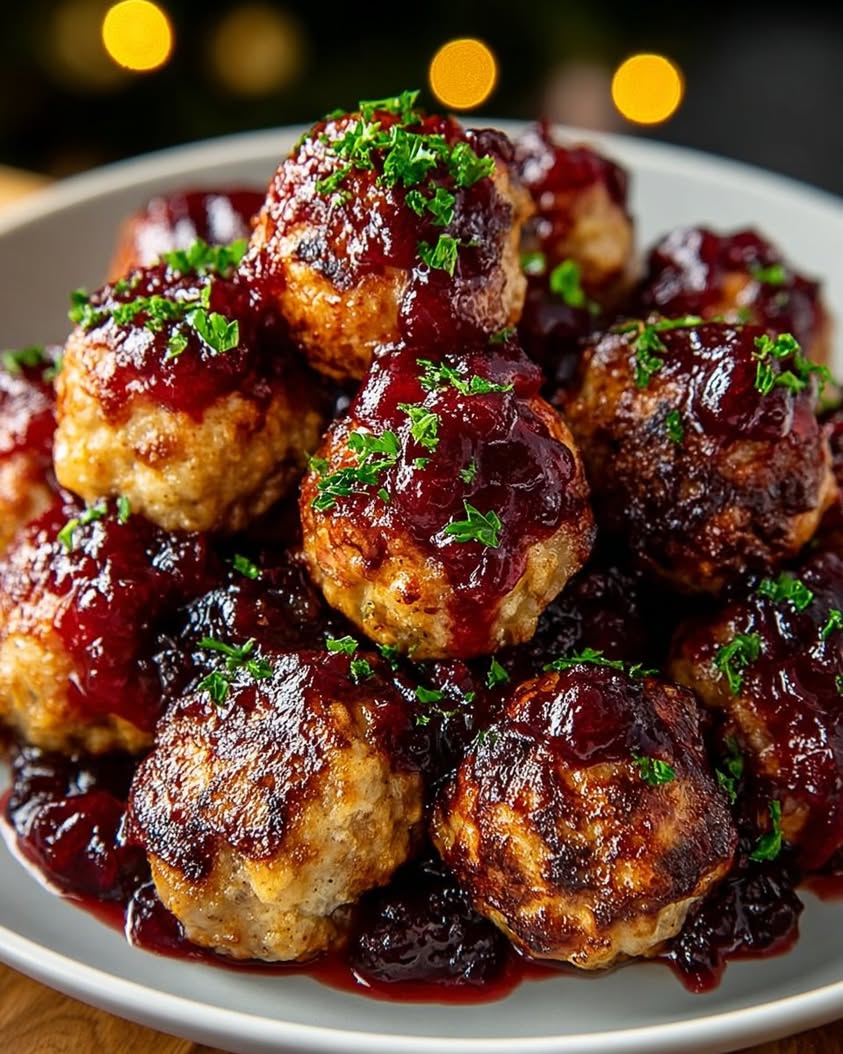
Quick Christmas Cranberry Chicken Meatballs: The Ultimate Festive Appetizer
These Quick Christmas Cranberry Chicken Meatballs deliver a spectacular flavor experience that perfectly captures the holiday spirit. Imagine tender, juicy chicken meatballs glazed in a vibrant, sweet-tart cranberry sauce that glistens like edible ornaments. This dish brings together the comforting familiarity of homemade meatballs with the festive flair of seasonal cranberries, creating an appetizer that looks as beautiful as it tastes. Furthermore, the aroma that fills your kitchen while these cook is pure holiday magic, blending savory herbs with the tangy sweetness of cranberries.
Surprisingly, this impressive-looking dish comes together with minimal effort, making it a lifesaver during the busy holiday season. You can whip up these Quick Christmas Cranberry Chicken Meatballs while managing other kitchen tasks, and they appeal to both adults and children. The combination of lean protein and fruit-based sauce also offers a slightly healthier alternative to traditional party foods. Consequently, you get a crowd-pleasing appetizer that satisfies multiple dietary preferences without compromising on flavor or presentation.
Every bite of these Quick Christmas Cranberry Chicken Meatballs offers a delightful contrast of textures and flavors. The savory, herb-infused chicken provides a perfect base for the glossy, tangy-sweet cranberry glaze. This balance makes them incredibly versatile for various holiday occasions, from casual family gatherings to elegant cocktail parties. Ultimately, this recipe proves that creating memorable holiday food doesn’t require complicated techniques or hard-to-find ingredients.
Quick Recipe Highlights
- Flavor Profile: These Quick Christmas Cranberry Chicken Meatballs feature a masterful balance of savory and sweet. The rich, herbed chicken contrasts beautifully with the bright, tangy cranberry glaze. Additionally, subtle notes of orange zest and warm spices create a complex, festive taste experience.
- Texture: The meatballs themselves boast a tender, juicy interior with a slightly caramelized exterior from baking. Meanwhile, the cranberry glaze adds a lovely sticky quality that coats each meatball perfectly. This combination creates a satisfying mouthfeel that keeps you coming back for more.
- Aroma: As these Quick Christmas Cranberry Chicken Meatballs cook, they release an irresistible holiday fragrance. The savory scent of roasting chicken and herbs mingles with the sweet-tart aroma of simmering cranberries. Consequently, your kitchen will smell like a festive wonderland.
- Visual Appeal: These meatballs present beautifully with their deep ruby glaze against the golden-brown meatballs. They look especially festive when garnished with fresh rosemary sprigs or orange zest. Therefore, they add a pop of holiday color to any appetizer spread.
- Skill Level Needed: This recipe requires only basic cooking skills like mixing, shaping, and baking. Even novice cooks can achieve excellent results with these straightforward instructions. Essentially, if you can use a mixing bowl and a baking sheet, you can master this dish.
- Special Equipment: You need only standard kitchen equipment like a mixing bowl, baking sheet, and saucepan. A cookie scoop helps portion uniform meatballs but isn’t essential. Ultimately, no specialized gadgets are required for this accessible recipe.
Recipe Overview
- Difficulty Level: These Quick Christmas Cranberry Chicken Meatballs rank as easy because they involve simple techniques like mixing and baking. The recipe uses readily available ingredients and straightforward steps that even cooking beginners can follow successfully. Additionally, the method is forgiving, meaning small variations won’t ruin the final result. This accessibility makes them perfect for holiday hosts of all experience levels.
- Category: This dish falls into multiple categories including appetizers, party food, and holiday specialties. It works beautifully as a passed hors d’oeuvre or as part of a buffet spread. The protein content also makes it substantial enough for a light main course when served over rice or pasta.
- Cuisine: These Quick Christmas Cranberry Chicken Meatballs draw inspiration from American holiday traditions with modern twists. The combination of meatballs with fruit-based glaze has roots in various culinary traditions, including Scandinavian and Eastern European cuisines. This recipe specifically adapts those concepts for contemporary American palates and busy lifestyles. The result is a fusion dish that feels both familiar and excitingly new.
- Cost: This recipe is remarkably budget-friendly, using affordable ingredients like ground chicken and canned cranberry sauce. You can expect to spend approximately $15-20 for all components, which yields enough for six servings. This cost-effectiveness makes it ideal for feeding a crowd during expensive holiday seasons.
- Season: These Quick Christmas Cranberry Chicken Meatballs are perfect for the winter holiday season when cranberries are at their peak. The warm, comforting qualities make them especially appealing during colder months. However, the bright flavors also provide a welcome contrast to heavy traditional holiday foods.
- Occasion: This dish shines at Christmas parties, holiday open houses, and family gatherings. It’s equally suitable for festive weeknight dinners during December or Christmas Eve celebrations. The quick preparation also makes it perfect for last-minute entertaining situations.
Why You’ll Love This Recipe
First, the taste and texture appeal of these Quick Christmas Cranberry Chicken Meatballs is undeniable. The savory chicken meatballs provide a satisfying, protein-rich base that contrasts beautifully with the sweet-tart cranberry glaze. Each bite delivers a perfect harmony of flavors that feels both comforting and celebratory. The tender, juicy interior of the meatballs against the sticky glaze creates a mouthfeel that keeps you reaching for just one more. This combination ensures they disappear quickly from any serving platter.
Second, the convenience and preparation benefits cannot be overstated. These Quick Christmas Cranberry Chicken Meatballs come together in about thirty-five minutes from start to finish. You can prepare them ahead of time and simply reheat before serving, making party planning significantly less stressful. The recipe uses simple techniques that don’t require advanced culinary skills or special equipment. Consequently, you can create an impressive holiday appetizer without spending hours in the kitchen.
Third, the nutritional advantages make these meatballs a smarter choice for holiday entertaining. Using lean ground chicken instead of beef or pork reduces saturated fat content without sacrificing flavor or satisfaction. Cranberries bring antioxidants and vitamin C to the party, adding nutritional value to this festive treat. This combination means you can enjoy indulgent-tasting food that aligns better with health-conscious eating goals during the holiday season.
Fourth, the social and entertaining value of these Quick Christmas Cranberry Chicken Meatballs is tremendous. They serve as perfect finger food for cocktail parties and stand-up gatherings where guests mingle. The festive appearance immediately puts people in the holiday spirit and makes any event feel more special. Additionally, their crowd-pleasing flavor profile appeals to diverse palates, from children to adults. This universal appeal makes them a reliable choice when cooking for groups with varying taste preferences.
Fifth, the cost-effectiveness and accessibility of ingredients make this recipe practical for any budget. Ground chicken is typically more affordable than other meat options, especially during holiday sales. Canned cranberry sauce and other pantry staples keep costs down while delivering maximum flavor impact. This economical approach means you can create an impressive dish without breaking your holiday entertainment budget.
Historical Background and Cultural Significance
The origin story of meatballs with fruit-based glazes spans multiple cultures and centuries. Scandinavian countries have long paired meatballs with lingonberry jam, while Middle Eastern cuisines often incorporate fruits like apricots into meat dishes. The American adaptation featuring cranberries specifically emerged in the mid-20th century as canned cranberry sauce became widely available. This convenience product allowed home cooks to create sophisticated glazes without lengthy cooking processes. The combination particularly gained popularity during the holiday season when cranberries feature prominently in traditional meals.
The cultural importance of these Quick Christmas Cranberry Chicken Meatballs connects to broader American holiday traditions. Cranberries have been part of North American cuisine since Native American communities used them for food, medicine, and dye. European settlers adopted cranberries into their cooking, eventually establishing them as essential to Thanksgiving and Christmas celebrations. The meatball concept meanwhile represents comfort food across numerous cultures, making this fusion dish particularly resonant in America’s melting pot culinary landscape. This combination of historic ingredient and universal food form creates a dish that feels both traditional and contemporary.
The evolution of this recipe reflects changing American eating habits and food availability. Early versions likely used beef or pork before the rise of chicken’s popularity as a leaner alternative. The “quick” aspect became increasingly important as busy home cooks sought impressive recipes that fit modern time constraints. The development of oven-baking methods replaced traditional pan-frying, making the process cleaner and more hands-off. These adaptations have transformed what might have been a complicated dish into an accessible holiday staple.
Regional variations of this concept appear across the United States with distinctive local twists. In the Midwest, some versions incorporate cream of mushroom soup into the glaze for extra richness. Southern adaptations might include a touch of bourbon or pecans for added complexity. Health-conscious California versions sometimes use fresh cranberries and alternative sweeteners like maple syrup. These regional interpretations demonstrate how a basic concept adapts to local ingredients and taste preferences while maintaining its essential holiday character.
Ingredient Deep Dive
Ground chicken serves as the protein foundation for these Quick Christmas Cranberry Chicken Meatballs. Chicken has been domesticated for thousands of years, with ground chicken products becoming popular in the late 20th century as consumers sought leaner meat options. Nutritionally, chicken provides high-quality protein with less saturated fat than red meats, along with essential nutrients like selenium and B vitamins. When selecting ground chicken, look for packages with minimal liquid and a fresh smell. For best results, choose ground chicken with a moderate fat content (around 7-10%) rather than extra-lean versions, as some fat ensures juicier meatballs.
Cranberry sauce creates the signature glaze for these holiday meatballs. Cranberries are one of only three fruits native to North America, with Native Americans using them for food, medicine, and dye long before European settlement. Canned cranberry sauce became widely available after Ocean Spray introduced it in 1941, revolutionizing holiday cooking. Nutritionally, cranberries are packed with antioxidants and vitamin C, and they contain compounds that may help prevent urinary tract infections. For this recipe, jellied cranberry sauce works better than whole-berry sauce as it creates a smoother glaze. If you prefer using homemade cranberry sauce, simply puree it before using to achieve the right consistency.
Breadcrumbs act as a binder in the meatball mixture, helping hold everything together. The use of breadcrumbs in ground meat mixtures dates back to ancient Roman times when cooks added bread soaked in wine to meatballs. In this recipe, breadcrumbs absorb moisture and prevent the meatballs from becoming too dense. Whole wheat breadcrumbs add fiber, while traditional white breadcrumbs provide a neutral background that lets other flavors shine. For gluten-free versions, crushed gluten-free crackers or rolled oats work equally well. If your mixture seems too wet, add a tablespoon more breadcrumbs; if too dry, add another tablespoon of milk or broth.
Egg serves as another crucial binder in the meatball mixture. Humans have consumed eggs as food for thousands of years, with chicken eggs becoming predominant in most cuisines. In meatball recipes, egg proteins coagulate during cooking, helping bind the ingredients together. Eggs also contribute moisture and richness to the final texture. Nutritionally, eggs provide high-quality protein, vitamins D and B12, and choline. For egg-free versions, you can substitute a “flax egg” (1 tablespoon ground flaxseed mixed with 3 tablespoons water) or commercial egg replacer. The egg should be lightly beaten before adding to the mixture for even distribution.
Common Mistakes to Avoid
- Overmixing the meatball mixture develops too much gluten from the breadcrumbs, resulting in tough, dense meatballs. Instead, mix just until the ingredients combine, using a light hand. Your mixture should look somewhat uneven rather than perfectly homogeneous.
- Using meat that’s too lean creates dry, crumbly meatballs that lack juiciness. Look for ground chicken with about 7-10% fat content for optimal texture. This moderate fat level ensures tender results without excessive greasiness.
- Skipping the step of lining the baking sheet leads to sticking and difficult cleanup. Always use parchment paper or a silicone baking mat for easy release. This simple preparation step saves frustration later.
- Making meatballs different sizes causes uneven cooking, with some being overdone while others remain undercooked. Use a cookie scoop or tablespoon measure for consistent portioning. Uniform size ensures they all finish cooking simultaneously.
- Overcrowding the baking sheet prevents proper browning as the meatballs steam rather than roast. Leave at least one inch between meatballs for optimal air circulation. This spacing allows them to develop appealing caramelization.
- Not tasting the seasoning before forming meatballs risks bland results. Cook a small tester patty to check seasoning adjustment needs. This extra minute prevents disappointment later.
- Using cold ingredients straight from the refrigerator makes the mixture harder to work with. Let refrigerated items sit at room temperature for 15-20 minutes before mixing. This slight warming creates a more pliable mixture.
- Boiling the cranberry glaze instead of gently simmering it can cause separation or burning. Maintain a low bubble rather than a vigorous boil. Gentle heating preserves the glaze’s smooth texture.
- Adding the glaze too early in the baking process may cause burning from the sugar content. Apply the glaze during the last 10-15 minutes of cooking. This timing gives the glaze time to set without scorching.
- Serving immediately from the oven doesn’t allow the meatballs to reabsorb juices. Let them rest for 5 minutes before serving. This brief resting period significantly improves texture.
Essential Techniques
Proper meatball mixing requires a light touch to avoid developing toughness. Use your fingertips or a fork rather than vigorous stirring or kneading motions. The goal is uniform distribution without compacting the proteins. Stop mixing as soon as no dry spots remain, even if the mixture looks somewhat uneven. Overmixed meatballs become dense and rubbery because the proteins tighten and squeeze out moisture during cooking. Perfectly mixed meatballs will feel soft and slightly sticky but should hold their shape when formed.
Meatball shaping significantly impacts both cooking efficiency and final presentation. Dampen your hands with water or oil to prevent sticking while forming the balls. Roll gently between your palms without applying heavy pressure, creating loose spheres rather than compact balls. This technique ensures tender results by avoiding overcompaction. Properly shaped meatballs have slight seams but generally smooth surfaces and uniform size. Consistent sizing guarantees even cooking, preventing some from drying out while others remain underdone.
Baking rather than frying meatballs offers multiple advantages for holiday cooking. Baking provides hands-off cooking that doesn’t require standing over a skillet, freeing you for other tasks. It also creates more even cooking with less risk of burning, and the dry heat promotes better browning than steaming. The rendered fat drips away during baking, resulting in lighter final product. For optimal browning, use a rimmed baking sheet rather than a pan with high sides, which traps steam. Rotating the sheet halfway through cooking ensures even browning if your oven has hot spots.
Glaze preparation requires attention to consistency and flavor balance. Whisk the sauce ingredients thoroughly to eliminate any lumps from the cranberry sauce. Simmer rather than boil to prevent the sugars from burning or becoming bitter. The finished glaze should coat the back of a spoon thickly but still be pourable. If too thick, add a tablespoon of water or orange juice; if too thin, simmer a few minutes longer. Proper glaze consistency ensures it clings to the meatballs without pooling around them.
Pro Tips for Perfect Quick Christmas Cranberry Chicken Meatballs
First, chill the formed meatballs for 15-20 minutes before baking to help them hold their shape better during cooking. This brief refrigeration firms the fat slightly, reducing spreading on the baking sheet. The result is more uniformly round meatballs with better texture.
Second, add a tablespoon of grated onion to the meatball mixture for enhanced moisture and flavor complexity. The fine grating creates onion juice that distributes evenly throughout the mixture. This small addition significantly boosts overall savoriness without overwhelming other flavors.
Third, lightly oil your hands before shaping meatballs to prevent sticking and create smoother surfaces. The oil creates a barrier that stops the protein from adhering to your skin. This simple trick makes the shaping process faster and less messy.
Fourth, use a cookie scoop for portioning to ensure consistently sized meatballs that cook evenly. The mechanical action of the scoop also helps create lightly packed balls with better texture. Uniform size means you don’t need to check individual meatballs for doneness.
Fifth, reserve some glaze for serving to refresh the appearance and flavor right before presenting. The extra glaze can be warmed slightly and drizzled over the plated meatballs. This final touch makes them look freshly prepared even if made ahead.
Sixth, add a teaspoon of orange zest to the cranberry glaze for brighter, more complex flavor. The citrus notes cut through the richness and enhance the fruity character of the cranberries. This small addition elevates the entire dish significantly.
Variations and Adaptations
Regional variations allow you to customize these Quick Christmas Cranberry Chicken Meatballs to different American culinary traditions. For a Southern twist, add a tablespoon of bourbon to the glaze and garnish with toasted pecans. Midwest versions might incorporate a cream-based element like a drizzle of thinned sour cream over the finished dish. Southwest adaptations could include a pinch of chili powder in the meatball mixture and lime juice in the glaze. These regional touches personalize the recipe while maintaining its essential holiday character.
Seasonal adaptations make this recipe work beyond the winter holidays. For spring, substitute lemon zest for orange and add fresh herbs like dill to the meatball mixture. Summer versions might feature a fresh cranberry relish instead of cooked sauce, providing brighter, tarter notes. Autumn adaptations could incorporate warm spices like nutmeg and allspice more prominently, complementing other seasonal flavors. These modifications keep the concept feeling fresh and appropriate throughout the year.
Dietary modifications ensure everyone can enjoy these meatballs regardless of restrictions. For gluten-free needs, use certified gluten-free breadcrumbs or crushed gluten-free crackers. Dairy-free versions simply omit the optional Parmesan cheese or use nutritional yeast instead. Vegetarian adaptations might use plant-based ground “meat” alternatives or a mixture of mushrooms and walnuts. Each substitution maintains the spirit of the recipe while accommodating specific dietary needs.
Flavor variations let you customize the profile to your preferences. For Asian-inspired meatballs, add ginger and soy sauce to the mixture and use a hoisin-cranberry glaze. Mediterranean versions could include feta cheese and oregano in the meatballs with a lemon-cranberry sauce. Smoky variations might incorporate smoked paprika into the meatball mixture and a touch of chipotle in the glaze. These creative twists keep the recipe exciting for repeated holiday seasons.
Serving and Presentation Guide
Plating techniques significantly impact how guests perceive these Quick Christmas Cranberry Chicken Meatballs. For buffet service, arrange them in a single layer on a platter garnished with fresh rosemary sprigs and orange slices. The green and orange colors complement the red glaze beautifully. For passed appetizers, use decorative toothpicks and small napkins for easy handling. If serving as part of a sit-down meal, consider placing them over a bed of mashed potatoes or polenta to catch the extra glaze.
Garnishing ideas enhance both visual appeal and flavor complexity. Fresh herb sprigs like rosemary, thyme, or parsley provide color contrast and aromatic notes. Citrus elements like orange zest strips or thin lemon slices brighten the presentation. Toasted nuts such as pecans or walnuts add textural interest and sophisticated appearance. Edible flowers like pansies or nasturtiums create stunning special-occasion presentations. Each garnish should complement rather than overwhelm the dish’s established flavors.
Traditional accompaniments create cohesive menu planning around these holiday meatballs. Creamy mashed potatoes or sweet potato puree provide a neutral base that highlights the cranberry flavor. Buttered egg noodles or rice pilaf offer simple carbohydrates that balance the protein. Roasted winter vegetables like Brussels sprouts or carrots continue the festive color scheme. Green salads with vinaigrette dressing cut through the richness and refresh the palate. These pairings create well-rounded holiday meals.
Wine and Beverage Pairing
Wine pairings should complement both the savory meatballs and the sweet-tart cranberry glaze. Off-dry Riesling or Gewürztraminer work beautifully because their slight sweetness mirrors the glaze while their acidity cuts through the richness. Pinot Noir provides a red option with enough fruitiness to harmonize with cranberries without overwhelming the dish. Sparkling wines like Prosecco or Cava offer celebratory bubbles that cleanse the palate between bites. Ultimately, the best choice depends on your overall menu and guest preferences.
Non-alcoholic alternatives ensure all guests can enjoy thoughtful beverage pairings. Sparkling apple cider mirrors the festive qualities of champagne with complementary fruit notes. Cranberry spritzers made with cranberry juice, club soda, and lime echo the dish’s primary flavor. Herbal teas like peppermint or chamomile provide warming comfort that contrasts nicely with the tangy glaze. Lemonade with a rosemary sprig garnish offers refreshing acidity that balances the dish’s richness. These options demonstrate that thoughtful pairing isn’t limited to alcoholic beverages.
Coffee and tea pairings work particularly well if serving these meatballs as part of a holiday brunch or late-afternoon gathering. Lightly roasted coffee with bright acidity complements the cranberry notes without clashing. Chai tea’s warm spices echo any cinnamon or nutmeg in the meatball mixture. Earl Grey tea’s bergamot notes provide citrusy brightness that enhances the overall flavor experience. These hot beverages offer comforting warmth during cold-weather gatherings.
Storage and Shelf Life
Storage methods depend on whether you’re keeping cooked meatballs for short-term or long-term use. For refrigeration, place completely cooled meatballs in an airtight container with any remaining glaze. They’ll maintain best quality for 3-4 days when properly stored. For freezing, arrange glazed meatballs in a single layer on a parchment-lined baking sheet until solid, then transfer to freezer bags. This prevents them from sticking together, allowing you to remove individual portions as needed.
Temperature requirements are crucial for food safety with these protein-based appetizers. Never leave cooked meatballs at room temperature for more than two hours, as bacteria multiply rapidly in the danger zone between 40°F and 140°F. When reheating, ensure they reach an internal temperature of 165°F to destroy any potential pathogens. Use a food thermometer rather than visual cues for accuracy. These simple precautions prevent foodborne illness during holiday gatherings.
Container recommendations impact both food safety and quality preservation. Glass containers with tight-sealing lids prevent odor transfer and don’t absorb stains from the cranberry glaze. For freezing, heavy-duty freezer bags with all air pressed out prevent freezer burn. If using plastic containers, ensure they’re BPA-free and rated for freezer use if applicable. Proper container selection extends shelf life and maintains flavor integrity.
Make Ahead Strategies
Prep timeline options provide flexibility for busy holiday hosts. You can prepare the meatball mixture up to 24 hours in advance, storing it covered in the refrigerator until ready to shape and bake. Alternatively, form the meatballs and refrigerate them on the baking sheet covered with plastic wrap for up to 12 hours before baking. For fullest advance preparation, completely cook and glaze the meatballs, then refrigerate or freeze for later reheating. Each approach offers different time-saving advantages depending on your schedule.
Storage between steps requires attention to food safety and quality preservation. If refrigerating the raw mixture, press plastic wrap directly against the surface to prevent drying and oxidation. Formed but unbaked meatballs should be covered and kept refrigerated until ready to bake. Cooked meatballs should be cooled completely before transferring to storage containers to prevent condensation that creates sogginess. Proper handling at each stage ensures the final result tastes freshly made.
Quality impact assessment helps determine which make-ahead method works best for your needs. The meatball mixture actually benefits from brief refrigeration as the flavors meld and the breadcrumbs fully hydrate. Fully cooked and frozen meatballs experience slight texture changes upon reheating but remain delicious. The glaze can be made up to three days ahead and refrigerated, needing only gentle reheating before use. Understanding these effects lets you choose the approach that delivers your desired quality level.
Scaling Instructions
Halving the recipe works perfectly for smaller gatherings or testing the dish before a major event. Simply divide all ingredient quantities exactly in half, including seasonings. Use a smaller baking sheet to maintain proper spacing between the fewer meatballs. Reduce the baking time slightly, checking for doneness a few minutes earlier than the original recipe suggests. This scaling down allows you to enjoy the dish without excessive leftovers.
Doubling or tripling the recipe requires minor adjustments for optimal results. Use two baking sheets rather than overcrowding one, and rotate them halfway through cooking for even browning. You may need to extend the baking time by 3-5 minutes when the oven contains multiple sheets. Mix the meatball ingredients in batches if your bowl becomes too full for proper incorporation. These simple modifications ensure large-batch success.
Equipment adjustments become necessary when significantly increasing quantities. For doubled recipes, use multiple mixing bowls or work in batches to avoid overmixing large quantities. Additional baking sheets ensure proper air circulation around each meatball. A larger saucepan prevents the glaze from boiling over when making bigger batches. Having these tools ready before starting streamlines the scaling process.
Nutritional Deep Dive
Macro breakdown reveals why these Quick Christmas Cranberry Chicken Meatballs offer balanced nutrition. Each serving provides approximately 15-20 grams of protein from the chicken and egg, supporting muscle maintenance and satiety. Carbohydrates come primarily from the cranberry sauce and breadcrumbs, offering quick energy for busy holiday activities. The fat content remains moderate thanks to using lean ground chicken, with most coming from unsaturated sources. This balance makes them suitable as part of varied holiday eating.
Micronutrient analysis highlights the vitamin and mineral content of this festive dish. Cranberries contribute significant vitamin C and manganese, supporting immune function and antioxidant defense. Chicken provides B vitamins essential for energy metabolism, along with selenium for thyroid health. If using whole wheat breadcrumbs, you add fiber and additional minerals. These nutritional benefits demonstrate that holiday food can be both delicious and nourishing.
Health benefits extend beyond basic nutrition when considering the ingredients’ functional properties. Cranberries contain proanthocyanidins that may help prevent urinary tract infections. Chicken provides amino acids necessary for neurotransmitter production, potentially supporting mood during stressful holiday seasons. Herbs like parsley contribute anti-inflammatory compounds. These functional benefits make the dish more than just empty calories.
Dietary Adaptations
Gluten-free adaptation simply requires substituting regular breadcrumbs with certified gluten-free alternatives. Crushed gluten-free crackers, gluten-free panko, or even cooked quinoa work excellently as binders. Ensure all other ingredients like Worcestershire sauce (if using) are gluten-free versions. These simple swaps create meatballs indistinguishable from the original for those with celiac disease or gluten sensitivity.
Dairy-free modification involves omitting the optional Parmesan cheese or using nutritional yeast instead. Nutritional yeast provides similar savory notes without dairy content. Check that any prepared breadcrumbs don’t contain dairy-derived ingredients. Most other components are naturally dairy-free, making this an easy adaptation for lactose intolerance or vegan preferences.
Low-carb and keto adaptations require more significant ingredient changes. Replace breadcrumbs with crushed pork rinds or almond flour for binding. Use sugar-free cranberry sauce or make your own with low-carb sweetener like erythritol. Increase the fat content slightly by using ground chicken with higher fat percentage or adding a tablespoon of olive oil to the mixture. These modifications create a dish suitable for carbohydrate-restricted diets.
Troubleshooting Guide
Texture issues commonly stem from incorrect meat-to-binder ratios or mixing techniques. If meatballs turn out too dense, you likely overmixed or used too much binder. Solution: Mix more gently next time and measure breadcrumbs precisely. If they’re too crumbly, you need more binder or egg. Solution: Add an extra tablespoon of breadcrumbs or a teaspoon of water to the mixture. Proper technique correction resolves most texture problems.
Flavor balance problems typically involve underseasoning or clashing elements. If meatballs taste bland, the seasoning wasn’t adequately distributed or sufficient. Solution: Always taste-test a small cooked portion and adjust seasoning before forming all meatballs. If the cranberry glaze seems too sweet or too tart, simple adjustments restore balance. Solution: For excessive sweetness, add lemon juice or vinegar; for excessive tartness, add a touch of honey or maple syrup.
Temperature problems usually relate to oven accuracy or improper preheating. If meatballs aren’t browning properly, your oven temperature might be inaccurate. Solution: Use an oven thermometer to verify temperature and adjust accordingly. If they’re cooking unevenly, your oven may have hot spots. Solution: Rotate the baking sheet halfway through cooking for more consistent results. These simple fixes address common temperature-related issues.
Recipe Success Stories
Community feedback consistently highlights how these Quick Christmas Cranberry Chicken Meatballs become holiday staples. Many readers report receiving more compliments on this dish than any other at parties and gatherings. Several have shared stories of skeptical family members converted to cranberry lovers after tasting these meatballs. The accessibility of the recipe particularly resonates with busy parents who need impressive but manageable holiday recipes. These testimonials confirm the recipe’s reliability across diverse cooking skill levels.
Variation successes demonstrate the recipe’s adaptability to different tastes and dietary needs. One reader created a successful paleo version using almond flour and homemade cranberry sauce with honey. Another developed a Thanksgiving leftover version using turkey instead of chicken. Several home cooks have shared beautiful presentation ideas, including serving in miniature cast iron skillets or on cinnamon stick “spears.” These creative adaptations inspire continued recipe evolution.
Photography tips from successful makers emphasize natural lighting and contrasting backgrounds. Shooting near a window during daylight hours captures the glaze’s beautiful shine. Dark-colored plates or rustic wood backgrounds make the red cranberry glaze pop visually. Garnishing with fresh herbs immediately before photographing adds texture and color dimension. These simple techniques help home cooks document their beautiful results.
Frequently Asked Questions
Can I use fresh cranberries instead of canned sauce? Yes, but you’ll need to cook them first. Simmer 2 cups fresh cranberries with 1/2 cup orange juice and 1/4 cup sweetener until bursting, then puree. The consistency will be thinner than canned sauce, so you may need to simmer longer to thicken.
Can I make these meatballs ahead and freeze them? Absolutely. Cook and glaze the meatballs completely, then freeze in single layers on baking sheets before transferring to freezer bags. They’ll keep for 3 months. Reheat from frozen in a 350°F oven for 15-20 minutes until hot.
What can I substitute for ground chicken? Ground turkey works perfectly as a direct substitute. For pork or beef versions, adjust seasoning slightly as these meats have stronger flavors. Plant-based ground meat alternatives also work well for vegetarian versions.
My glaze is too thick. How can I thin it? Add liquid one tablespoon at a time, using water, orange juice, or chicken broth. Whisk continuously until it reaches pourable consistency. Remember it will thicken slightly as it cools on the meatballs.
Can I cook these in a slow cooker? Yes, after initial baking. Place baked meatballs in a slow cooker, add glaze, and keep on warm setting for serving. This method works beautifully for parties where you need to keep them hot for extended periods.
Why did my meatballs turn out dry? This usually results from overmixing, using meat that’s too lean, or overbaking. Next time, mix more gently, choose chicken with 7-10% fat, and check for doneness a few minutes earlier.
Can I pan-fry instead of bake these meatballs? Yes, heat a tablespoon of oil in a skillet over medium heat and cook in batches, turning frequently until browned all over and cooked through. Baking is preferred for hands-off cooking and less oil.
How do I know when the meatballs are fully cooked? They should be firm to the touch and register 165°F on an instant-read thermometer. The juices should run clear when pierced with a knife, with no pink remaining inside.
What’s the best way to reheat leftovers? Arrange in a single layer on a baking sheet and warm at 325°F for 10-12 minutes. Microwave reheating can make them rubbery, so oven method is preferred.
Can I make mini meatballs for appetizers? Definitely. Use a teaspoon measure for portioning and reduce baking time to 12-15 minutes. Mini versions are perfect for cocktail parties and holiday gatherings.
Additional Resources
Related recipes that complement these Quick Christmas Cranberry Chicken Meatballs include other holiday appetizers and main dishes. Consider serving them alongside baked brie with cranberry compote or a festive winter salad with citrus vinaigrette. For dessert, cranberry-orange bread or spiced pear cake continues the seasonal flavor theme. These menu suggestions create cohesive holiday meals that highlight complementary flavors and textures.
Technique guides for perfect meatballs provide foundational knowledge that improves many recipes. Understanding proper mixing methods helps with meatloaves, burgers, and other ground meat preparations. Baking versus frying comparisons inform cooking decisions across various dishes. Glaze and sauce techniques apply to proteins beyond chicken, from pork tenderloin to meatless alternatives. These skill transfers make learning this recipe valuable beyond this specific application.
Ingredient information resources help you make informed purchasing decisions. Understanding ground meat labels ensures you select the best quality and fat percentage for your needs. Cranberry product comparisons guide choices between canned, fresh, and frozen options. Herb selection and storage knowledge maintains freshness and flavor potency. This information elevates your overall cooking beyond this single recipe.
PrintQuick Christmas Cranberry Chicken Meatballs
Description
Tender chicken meatballs simmered in a sweet and tangy cranberry glaze, perfect for festive holiday gatherings.
Ingredients
For the Crust:
- 1 lb ground chicken
- 1/2 cup breadcrumbs
- 1 large egg, beaten
- 2 cloves garlic, minced
- 1 tsp dried parsley
- 1/2 tsp salt
- 1/4 tsp black pepper
- 1 cup cranberry sauce
- 1/4 cup ketchup
- 2 tbsp soy sauce
- 1 tbsp apple cider vinegar
Instructions
1. Prepare the Crust:
- Preheat oven to 375°F (190°C) and line a baking sheet with parchment paper.
- In a large bowl, combine ground chicken, breadcrumbs, egg, garlic, parsley, salt, and pepper. Mix until just combined.
- Shape mixture into 1-inch meatballs and place on the prepared baking sheet. Bake for 18-20 minutes, until cooked through.
- While meatballs bake, whisk together cranberry sauce, ketchup, soy sauce, and apple cider vinegar in a saucepan over medium heat. Simmer for 5 minutes, stirring occasionally.
- Toss baked meatballs in the cranberry glaze until evenly coated. Serve warm.
Notes
You can customize the seasonings to taste.

I’m Shaykee—born in Morocco, seasoned across continents. From airplane galleys to home kitchens, I share the flavors and stories that shaped my journey.