
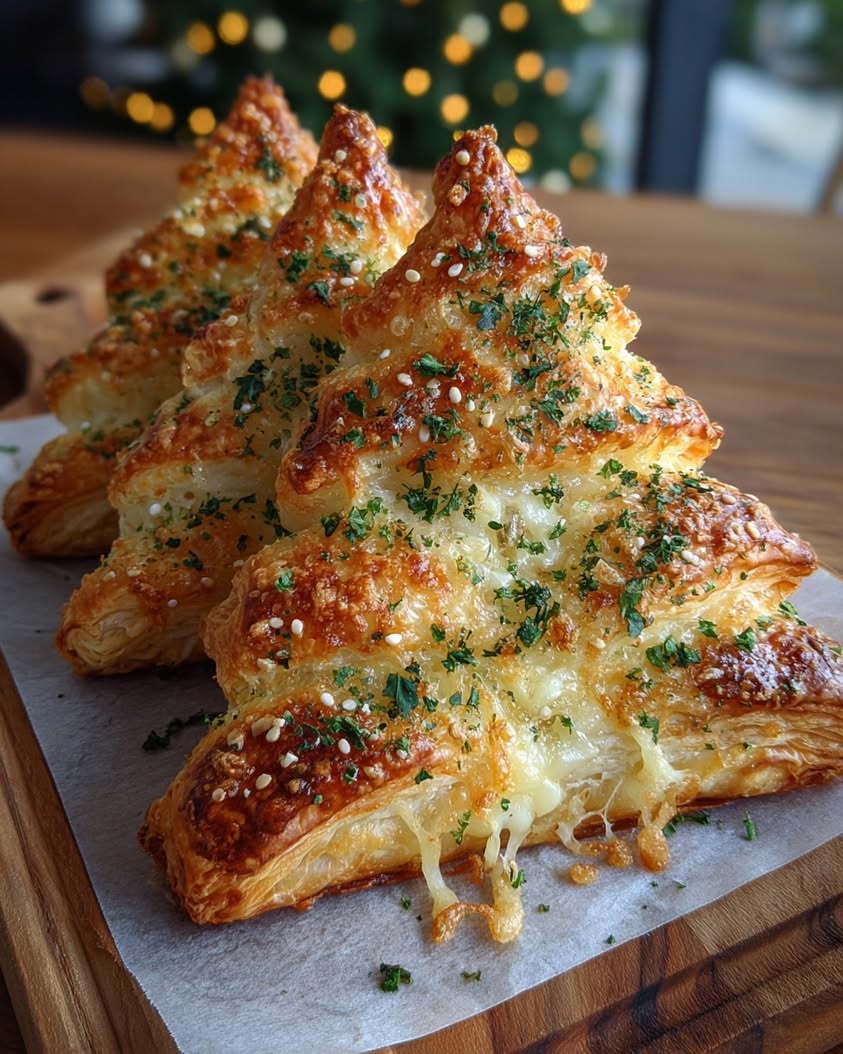
Cheese Puff Pastry Christmas Trees: The Ultimate Festive Appetizer
These Cheese Puff Pastry Christmas Trees bring pure holiday magic to your table with minimal effort. Imagine golden, flaky puff pastry twisted into adorable evergreen shapes, generously stuffed with melted cheese, and baked to perfection. This stunning appetizer combines the buttery crispness of pastry with the gooey richness of melted cheese in every delightful bite. Consequently, these edible Christmas trees become the centerpiece of any holiday spread, captivating guests with their charming appearance and irresistible flavor.
Creating these Cheese Puff Pastry Christmas Trees requires just a handful of simple ingredients and basic kitchen tools. The process transforms store-bought puff pastry into something extraordinary, making it accessible for cooks of all skill levels. Furthermore, the recipe offers incredible flexibility, allowing you to customize the cheese filling and seasonings to match your personal taste preferences. Ultimately, these festive treats prove that impressive holiday entertaining doesn’t need to be complicated or time-consuming.
The visual appeal of these Cheese Puff Pastry Christmas Trees makes them perfect for social media sharing and holiday parties alike. As they bake, your kitchen fills with the comforting aroma of buttery pastry and melting cheese, creating that quintessential holiday atmosphere. Moreover, the recipe scales beautifully, whether you’re hosting an intimate family gathering or a large holiday open house. These edible Christmas trees guarantee compliments and satisfied smiles from everyone who tries them.
Quick Recipe Highlights
- Flavor Profile: These Cheese Puff Pastry Christmas Trees deliver a sophisticated balance of rich, savory cheese and buttery, flaky pastry. The sharpness of Parmesan cheese complements the milder, meltable cheeses beautifully. Additionally, herbs like rosemary or thyme add aromatic depth that enhances the overall holiday flavor experience.
- Texture: The exterior bakes to a satisfying crispness while the interior remains wonderfully light and airy. Meanwhile, the cheese filling transforms into a gooey, stretchy center that contrasts perfectly with the delicate pastry layers. This combination creates a truly addictive mouthfeel that keeps people coming back for more.
- Aroma: As these Cheese Puff Pastry Christmas Trees bake, they release an irresistible scent of browned butter and toasted cheese. The herbal notes from your chosen seasonings mingle with the rich pastry aromas to create that classic holiday kitchen smell. This fragrance alone will have your guests eagerly awaiting the finished product.
- Visual Appeal: The twisted tree shape creates beautiful layers that resemble actual evergreen branches when baked. The golden-brown color development provides natural shading that enhances the three-dimensional tree illusion. Finally, the optional sesame seed “trunk” and seasoning “ornaments” complete the festive presentation.
- Skill Level Needed: This recipe requires absolutely no advanced culinary techniques or special training. Basic kitchen skills like rolling, cutting, and brushing are sufficient to create these impressive-looking appetizers. Therefore, even beginner cooks can achieve professional-looking results with this approachable method.
- Special Equipment: You need only standard baking sheets and parchment paper for successful results. A pizza cutter or sharp knife makes clean cuts through the pastry, while a pastry brush helps with egg washing. Otherwise, no specialized tools are necessary for these charming Cheese Puff Pastry Christmas Trees.
Recipe Overview
- Difficulty Level: These Cheese Puff Pastry Christmas Trees earn their easy rating through straightforward preparation and common ingredients. The technique involves simple cutting and twisting that anyone can master on the first attempt. Furthermore, the recipe forgives minor imperfections since the trees maintain their charming appearance regardless. This accessibility makes them perfect for involving children in holiday kitchen activities.
- Category: This recipe fits perfectly into the appetizer and snack categories for holiday entertaining. The individual portion size makes them ideal finger food for cocktail parties and open houses. Additionally, they work wonderfully as a special treat for Christmas morning breakfast or brunch gatherings.
- Cuisine: While puff pastry has French origins, these Cheese Puff Pastry Christmas Trees represent modern global fusion cooking. The technique draws inspiration from various twisted pastry traditions across European baking. However, the Christmas tree presentation gives them a distinctly contemporary, festive character that transcends specific culinary traditions.
- Cost: Using store-bought puff pastry keeps costs manageable while delivering premium results. The cheese selection offers flexibility to match your budget, from affordable cheddar to premium Gruyère. Overall, this recipe provides impressive holiday fare without straining your entertainment budget.
- Season: These Cheese Puff Pastry Christmas Trees naturally shine during the winter holiday season from November through December. Their festive appearance makes them particularly suitable for Christmas parties and gatherings. However, the delicious combination works year-round with simple shape modifications.
- Occasion: These edible trees elevate any holiday event from casual family dinners to formal Christmas parties. They make excellent additions to cookie exchange gatherings and holiday potlucks. Furthermore, they serve as wonderful edible gifts when packaged beautifully for neighbors and friends.
Why You’ll Love This Recipe
The irresistible combination of flaky puff pastry and melted cheese creates pure comfort food magic. Each bite delivers that satisfying crackle as you break through the golden exterior into the soft, cheesy interior. The seasoning choices allow you to customize the flavor profile to match your menu perfectly. Moreover, the visual wow factor far exceeds the actual effort required, making these Cheese Puff Pastry Christmas Trees incredibly rewarding to prepare. The recipe consistently delivers impressive results that will have guests asking for your secret.
Convenience stands out as a major advantage with these Cheese Puff Pastry Christmas Trees. Using store-bought puff pastry eliminates the most time-consuming element of pastry preparation. The assembly process moves quickly once you understand the simple cutting and twisting technique. Additionally, you can prepare the trees in advance and refrigerate them before baking, making party day much less stressful. This make-ahead flexibility proves invaluable during the busy holiday season when time management becomes crucial.
From a nutritional perspective, these appetizers offer more balance than many holiday treats. Cheese provides protein and calcium, while the pastry contributes carbohydrates for energy. You control the quality of ingredients, avoiding preservatives and excessive sodium found in store-bought alternatives. Furthermore, portion control comes naturally with the individual tree servings. When served alongside vegetable crudités and fresh fruit, these Cheese Puff Pastry Christmas Trees fit comfortably into a balanced holiday menu.
The social and entertainment value of these edible Christmas trees cannot be overstated. They immediately become conversation starters at any gathering, breaking the ice with their charming appearance. Children particularly adore them, making holiday meals more enjoyable for the whole family. Additionally, they photograph beautifully for social media, allowing you to share your culinary creativity with friends near and far. The recipe easily doubles or triples for larger crowds without complicating the process.
Cost-effectiveness makes these Cheese Puff Pastry Christmas Trees accessible for all budgets. Compared to purchased hors d’oeuvres, homemade versions save significant money while tasting far superior. The ingredients remain readily available at any supermarket throughout the holiday season. Moreover, you likely have many of the components already in your refrigerator and pantry. This accessibility means you can create impressive holiday fare without special shopping trips or excessive expense.
Historical Background and Cultural Significance
The concept of shaped pastry dates back centuries across multiple culinary traditions. European bakers have long created decorative breads and pastries for religious festivals and seasonal celebrations. The Christmas tree tradition itself originated in Germany during the Renaissance, eventually spreading throughout the Christian world. Meanwhile, cheese-filled pastries appear in various forms across Mediterranean and Eastern European cuisines. The modern Cheese Puff Pastry Christmas Tree represents a creative fusion of these established culinary traditions.
Puff pastry development traces back to France in the 17th century, with credit often given to pastry chef Claude Lorrain. This laminated dough technique created exceptionally light, flaky layers that revolutionized European baking. Over time, puff pastry became associated with special occasions and celebrations due to its labor-intensive nature. However, the commercial availability of quality frozen puff pastry in the 20th century democratized this luxurious ingredient. Consequently, home cooks could now create impressive pastry creations without days of preparation.
The cultural significance of edible Christmas decorations spans many traditions. Germanic cultures created gingerbread houses and cookies, while Eastern Europeans developed elaborate bread sculptures. The Cheese Puff Pastry Christmas Tree represents a modern evolution of these practices, combining visual appeal with savory flavors. This innovation reflects contemporary entertaining trends where presentation matters equally alongside taste. Furthermore, the shareable, finger-food nature aligns with today’s more casual approach to holiday gatherings.
Regional variations continue to emerge as this recipe spreads through food blogs and social media. Some versions incorporate regional cheeses like Manchego for Spanish flair or feta for Greek influence. Others add ingredients like sun-dried tomatoes, pesto, or caramelized onions to the cheese filling. The basic concept proves remarkably adaptable to different culinary traditions while maintaining its festive appeal. This evolution demonstrates how holiday recipes continuously transform while maintaining their seasonal spirit.
Ingredient Deep Dive
Puff pastry serves as the foundation for these Christmas trees, providing the characteristic flaky layers. Traditional puff pastry consists of hundreds of paper-thin dough and butter layers that create steam during baking. This steam lifts the dough into those desirable airy separations. Quality frozen puff pastry delivers excellent results without the extensive labor of homemade versions. When selecting puff pastry, check that butter rather than shortening appears as the primary fat. Proper thawing in the refrigerator prevents the butter from melting prematurely, which would compromise the final flakiness.
Cheese selection dramatically influences the flavor and texture of your Christmas trees. A combination of melting cheeses like mozzarella or Gruyère with flavorful varieties like Parmesan or sharp cheddar creates optimal results. The melting cheeses provide that desirable stretch, while the harder cheeses contribute deeper flavor notes. Always grate your own cheese rather than using pre-shredded products, which contain anti-caking agents that can affect melting quality. Freshly grated cheese melts more evenly and creates superior texture in the finished trees.
Egg wash might seem like a minor component but plays a crucial role in the final appearance. The egg proteins promote browning through the Maillard reaction while creating a beautiful sheen. For the richest color, use whole eggs rather than just whites or yolks. Lightly beating the egg ensures even application without weighing down the delicate pastry. Brushing carefully between the twists helps maintain definition while still achieving uniform golden coloring.
Seasonings and garnishes offer opportunities for personalization. Everything bagel seasoning provides savory crunch and visual interest resembling Christmas ornaments. Alternatively, sesame seeds at the base create a realistic tree trunk appearance. Fresh herbs like rosemary or thyme complement both the cheese and the holiday theme. Consider your overall menu when selecting seasonings to ensure harmonious flavor combinations across all dishes.
Common Mistakes to Avoid
- Using inadequately thawed puff pastry leads to cracking and difficult handling. Always thaw frozen pastry slowly in the refrigerator for several hours or overnight. If the pastry becomes too warm and sticky during assembly, briefly chill it before continuing.
- Overfilling with cheese causes leakage during baking and messy presentation. The cheese should distribute evenly but sparingly along the center of each tree section. Remember that the cheese will melt and spread slightly during the baking process.
- Cutting completely through the outer edges destroys the tree structure. When making cuts for twisting, stop approximately half an inch from the center line. This preserved center spine maintains the tree’s integrity during twisting and baking.
- Skipping the egg wash results in pale, less appealing pastry. The egg wash promotes beautiful browning and provides that professional bakery shine. It also helps any sprinkled seasonings adhere properly to the surface.
- Twisting too tightly can tear the delicate pastry layers. Use a gentle touch when turning the cut strips, aiming for two or three relaxed twists per strip. The pastry will expand during baking, tightening the twists naturally.
- Baking on an unlined sheet risks sticking and difficult cleanup. Parchment paper or silicone mats guarantee easy release and protect your baking sheets. They also promote more even browning on the bottom.
- Underbaking yields soggy pastry rather than crisp flakiness. Bake until deeply golden brown rather than just lightly colored. The visual cue matters more than exact timing since oven temperatures vary.
- Serving immediately from the oven burns mouths with molten cheese. Allow the trees to rest for five minutes after baking so the cheese stabilizes slightly. This brief cooling period improves both safety and eating experience.
Essential Techniques
Proper puff pastry handling ensures the flakiest possible results. Always work with cold but pliable pastry straight from the refrigerator rather than at room temperature. When rolling, use light pressure and minimal flour to avoid compressing the delicate layers. If the pastry becomes too soft during assembly, transfer it to a baking sheet and chill for ten minutes before continuing. This attention to temperature preservation maintains the butter in distinct layers, which creates the characteristic flakiness during baking.
The cutting technique requires precision but remains simple to master. Use a sharp pizza cutter or knife for clean edges that won’t seal together during baking. The center spine must remain intact to hold the tree structure together. Meanwhile, the angled cuts should extend nearly but not completely to this center line. Consistent strip width creates uniform twisting and more professional appearance. Practicing on paper first can build confidence before handling the actual pastry.
Twisting represents the most distinctive technique in this recipe. Begin from the top of the tree and work downward, turning each strip several times away from the center. The motion resembles gently twisting a ribbon rather than tightly winding a rope. Maintaining consistent tension and number of twists creates symmetrical trees. The finished twists should lay flat against the baking sheet without springing back significantly.
Egg washing contributes significantly to the final appearance. Use a soft-bristled pastry brush rather than a silicone brush for the most controlled application. Apply a thin, even coat without allowing pools to form in the crevices. Take care to brush between the twists where they meet the center spine. This attention to detail ensures uniform browning and professional results that impress visually.
Pro Tips for Perfect Cheese Puff Pastry Christmas Trees
Chill the assembled trees for fifteen minutes before baking to ensure maximum flakiness. This rest period relaxes the gluten and re-chills the butter layers. Consequently, the pastry rises higher and creates more distinct separation during baking.
Create different tree sizes by adjusting your initial rectangle dimensions. Smaller trees work beautifully as passed hors d’oeuvres, while larger versions make impressive plate presentations. Just remember to adjust baking times accordingly based on size.
Experiment with cheese combinations to match your menu theme. Italian-inspired trees might use mozzarella, Parmesan, and oregano. French versions could feature Gruyère, Comté, and herbes de Provence. The basic method accommodates countless flavor variations.
Add finely chopped ingredients to the cheese filling for additional flavor dimensions. Sun-dried tomatoes, caramelized onions, cooked bacon bits, or fresh herbs integrate beautifully. Just ensure any additions are finely chopped to prevent tearing the pastry during twisting.
Use a pizza stone or baking steel for extra-crispy bottoms. Preheat the stone along with your oven and slide the parchment-lined baking sheet directly onto it. This technique delivers professional-level crust texture.
Create a decorative tree trunk using a small piece of pastry at the base. Roll a narrow strip of leftover pastry and attach it with egg wash before baking. This extra touch enhances the realistic tree appearance.
Brush with garlic butter after baking for additional flavor dimension. Melt butter with minced garlic and brush lightly over the baked trees as they emerge from the oven. This last-minute enhancement adds wonderful aroma and richness.
Serve with complementary dipping sauces to extend the flavor experience. Marinara sauce, garlic aioli, or cranberry chutney all pair wonderfully. Provide small individual cups for dipping to maintain neat eating.
Variations and Adaptations
Regional variations allow these Christmas trees to reflect different culinary traditions. Mediterranean versions might incorporate feta cheese, Kalamata olives, and oregano. Southwest-inspired trees could feature pepper jack cheese, green chiles, and cumin. Meanwhile, Alpine variations might use Emmentaler cheese with nutmeg and caraway seeds. These adaptations demonstrate the recipe’s incredible flexibility while maintaining the festive tree presentation that makes it so special.
Seasonal adaptations extend the usefulness of this technique throughout the year. For autumn, create pumpkin shapes using the same twisting method with sweet potato filling. Spring might bring butterfly shapes with herb-infused cheeses. Summer parties could feature star shapes with barbecue-seasoned fillings. The basic cutting and twisting method translates beautifully to numerous shapes beyond the Christmas tree concept.
Dietary modifications accommodate various eating preferences without sacrificing flavor. Gluten-free puff pastry now available in many supermarkets creates celiac-friendly versions. Vegan adaptations use plant-based puff pastry and dairy-free cheese alternatives. For lower-carb options, reduce the pastry amount by creating smaller trees or using cheese-only filling in some sections.
Flavor variations keep this recipe exciting through multiple holiday seasons. Sweet versions filled with cinnamon sugar or chocolate hazelnut spread make delightful desserts. Savory alternatives might include spinach and artichoke filling or buffalo chicken and blue cheese combination. The pastry acts as a neutral canvas for countless filling possibilities limited only by your imagination.
Texture modifications adjust the eating experience to personal preference. Adding chopped nuts to the filling provides pleasant crunch contrast. Incorporating cream cheese into the shredded cheese mixture creates richer, denser texture. For extra flakiness, sprinkle the pastry with grated frozen butter before adding the main filling.
Presentation alternatives offer creative serving possibilities. Arrange multiple small trees as a edible centerpiece on a platter decorated with fresh herbs. Create a Christmas tree forest by varying sizes and seasonings. Alternatively, make one giant tree as a stunning centerpiece for a holiday buffet table.
Serving and Presentation Guide
Plating techniques dramatically enhance the visual impact of these edible Christmas trees. Arrange them on a rectangular platter with the trunks aligned to create a uniform forest appearance. Alternatively, circle them around a bowl of dipping sauce to form a wreath-like arrangement. For individual servings, place each tree on a small plate garnished with fresh herb sprigs resembling Christmas greenery. The presentation should highlight the beautiful twisted layers that make these pastries so distinctive.
Garnishing ideas extend the holiday theme while adding freshness. Fresh rosemary sprigs placed at the base of each tree create miniature Christmas tree stands. Pomegranate seeds scattered around the platter resemble festive red ornaments. Alternatively, a light dusting of powdered sugar over sweet versions suggests a snowy winter scene. These simple touches transform the presentation from simple pastry to holiday centerpiece.
Traditional accompaniments balance the rich, savory character of the cheese pastry. Fresh vegetable crudités provide refreshing crunch and lightness alongside the rich trees. Marinated olives and pickled vegetables offer acidic counterpoints that cut through the richness. For sweet contrasts, include dried fruit and nut selections that complement the savory elements without overwhelming them.
Modern serving suggestions adapt these trees to contemporary entertaining styles. For cocktail parties, spear miniature trees with decorative picks for easy handling. Create build-your-tree stations where guests can add their preferred seasonings before baking. As part of a holiday grazing table, position them alongside charcuterie, cheeses, and other finger foods for varied snacking.
Temperature considerations ensure optimal eating experience. Serve the trees warm rather than piping hot to allow the cheese to set slightly. If preparing in advance, rewarm in a moderate oven for five minutes before serving to restore crispness. Avoid microwave reheating, which makes the pastry soggy rather than refreshing the crisp texture.
Portion control comes naturally with the individual tree servings. For light appetizer portions, plan one to two trees per person. As part of a larger spread, a single tree per guest suffices. When serving as a main element, three to four trees with side salads create a satisfying meal. The built-in portioning simplifies party planning and food quantity calculations.
Wine and Beverage Pairing
Wine pairings should complement rather than compete with the rich, cheesy flavor profile. Crisp white wines like Sauvignon Blanc or Pinot Grigio cut through the richness with their acidity. Light-bodied reds such as Pinot Noir provide fruit notes without overwhelming tannins. Sparkling wines and Champagnes make celebratory pairings while cleansing the palate between bites. Ultimately, the best wine choice depends on your specific cheese selection and seasoning choices.
Non-alcoholic alternatives offer sophisticated options for all guests. Sparkling apple cider provides similar effervescence to Champagne with complementary fruit notes. Herbal teas like rosemary-infused blends echo the seasoning elements in the pastry. For creamier options, chai tea lattes or golden milk provide warming spices that enhance the holiday feeling. These thoughtful non-alcoholic pairings ensure every guest enjoys a complete tasting experience.
Coffee and tea pairings work wonderfully for morning or brunch servings. Medium-roast coffee with its balanced acidity complements rather than overwhelms the pastry flavors. Earl Grey tea’s bergamot notes provide aromatic complexity that enhances the eating experience. For holiday special occasions, peppermint tea creates festive flavor associations while cleansing the palate effectively.
Temperature considerations ensure optimal beverage service. White wines and sparkling options should chill thoroughly but not ice-cold, which numbs the palate. Red wines benefit from slight cooling rather than room temperature serving. Non-alcoholic sparkling drinks show best when well-chilled to maintain their effervescence. Meanwhile, hot beverages should serve at temperatures comfortable for immediate drinking.
Serving suggestions complete the beverage experience. Provide appropriate glassware that enhances each drink’s characteristics. Offer lemon twists for white wines and sparkling options to brighten flavors. Have sugar and milk available for coffee and tea drinkers to customize their preferences. These small touches demonstrate hospitality and attention to detail that guests appreciate.
Storage and Shelf Life
Storage methods preserve quality while maintaining food safety. Cool baked trees completely before transferring to an airtight container. Separate layers with parchment paper to prevent sticking. For longer storage, freeze individually on a baking sheet before transferring to freezer bags. This initial freezing prevents them from sticking together during storage. Properly stored, baked trees maintain quality for several days with simple refreshing before serving.
Temperature requirements ensure optimal preservation. Refrigerate any trees containing perishable ingredients like cheese within two hours of baking. Frozen storage works beautifully for up to three months without significant quality loss. Never leave these pastries at room temperature for extended periods due to the dairy content. Following these guidelines prevents foodborne illness while maintaining best possible texture.
Container recommendations protect the delicate pastry structure. Airtight plastic containers prevent moisture loss that causes staleness. For freezing, heavy-duty freezer bags remove excess air to prevent freezer burn. If transporting, use rigid containers that prevent crushing during movement. The right storage vessel makes the difference between perfect preservation and compromised quality.
Signs of spoilage indicate when to discard rather than serve. Visible mold growth, off odors, or slimy texture all signal spoilage. If frozen trees develop ice crystals or freezer burn, the quality has deteriorated. When in doubt, apply the golden rule: when uncertain about food safety, disposal becomes the safest choice. Never taste questionable food to determine edibility.
Reheating instructions restore just-baked quality. Use a conventional oven or toaster oven at 350°F for five to eight minutes until rewarmed and recrisped. Avoid microwaving, which creates soggy texture. For frozen trees, reheat directly from frozen, adding a few extra minutes to the warming time. Proper reheating makes day-old pastries taste freshly baked again.
Freezing guidelines maintain optimal quality. Freeze unbaked assembled trees on parchment-lined sheets before transferring to bags. This method preserves the raw pastry’s rising potential. Alternatively, freeze baked trees after complete cooling. Both methods produce excellent results when properly executed. Label packages with contents and date for easy identification later.
Make Ahead Strategies
Prep timeline planning reduces holiday stress significantly. You can assemble the trees completely up to 24 hours before baking. Store them covered in the refrigerator until ready to bake. Alternatively, freeze unbaked trees for up to three months, baking directly from frozen when needed. This advance preparation means you can enjoy your own party rather than spending all your time in the kitchen.
Storage between steps maintains quality when working in stages. If preparing the filling separately, store it airtight in the refrigerator for up to two days. Rolled-out pastry can refrigerate wrapped in plastic for several hours before cutting and assembly. Partially assembled trees can chill covered with plastic wrap while you work in batches. This flexibility makes the recipe adaptable to your schedule.
Quality impact assessment helps determine the best make-ahead approach. Refrigerating assembled unbaked trees overnight actually improves flavor through ingredient marrying. Freezing preserves quality beautifully but may require slight baking time adjustments. Baked trees suffer some texture loss upon storage but refresh well. Understanding these impacts helps you choose the optimal preparation strategy for your situation.
Assembly tips for make-ahead preparation ensure best results. When refrigerating unbaked trees, wait to apply egg wash until just before baking. This prevents the wash from soaking in and creating soggy spots. If freezing, double-wrap in plastic before bagging to prevent freezer odor absorption. These small considerations maintain quality through the holding period.
Reheating guidelines for make-ahead trees restore fresh-baked quality. For refrigerated unbaked trees, add two to three minutes to the baking time since they start colder. Frozen unbaked trees may need five to seven extra minutes. Previously baked trees refresh in a moderate oven until warm and crisp again. Adjustments ensure perfect results regardless of preparation method.
Fresh element additions enhance make-ahead trees upon serving. Add fresh herb sprinkles after reheating to boost aroma and appearance. A final dusting of flaky salt or grated cheese just before serving refreshes flavors. Dipping sauces served alongside provide moisture and flavor contrast. These last-minute touches make advance-prepared trees taste freshly made.
Scaling Instructions
Halving the recipe works beautifully for smaller gatherings. Use one sheet of puff pastry instead of two, cutting it into four trees rather than eight. Reduce other ingredients proportionally, though you may need slightly more than half the egg for proper coating. Baking time may decrease by a minute or two due to the smaller batch size. This flexibility makes the recipe adaptable to any group size.
Doubling or tripling requires consideration of workspace and equipment. Work in batches to prevent the pastry from becoming too warm during assembly. Use multiple baking sheets and rotate them halfway through baking for even results. You may need to extend baking time slightly when the oven contains multiple sheets. Planning the workflow ensures efficient production of larger quantities.
Equipment adjustments accommodate different batch sizes. For single batches, standard baking sheets work perfectly. When doubling, ensure you have enough sheet space or use larger commercial-sized sheets. For very large quantities, consider baking in successive batches rather than overcrowding the oven. The right equipment setup prevents bottlenecks in the preparation process.
Timing modifications account for increased preparation volume. Allow extra time for grating larger cheese quantities and assembling more trees. When baking multiple sheets, factor in the time needed to rotate them during baking. For party preparation, spread the work over multiple days using make-ahead strategies. Realistic timing prevents last-minute stress.
Storage considerations change with batch size. Larger batches may require multiple storage containers with proper labeling. When freezing, spread the trees in single layers on baking sheets before bagging to prevent sticking. For refrigerated storage, ensure adequate air circulation around containers. Proper storage maintains quality regardless of quantity prepared.
Nutritional Deep Dive
Macro breakdown varies based on specific ingredient choices but generally provides balanced macronutrients. The pastry contributes carbohydrates for energy while the cheese provides protein and fat. Using part-skim cheese reduces fat content without sacrificing flavor. The overall balance makes these trees more substantial than many appetizers, providing lasting satisfaction rather than empty calories. Understanding the macronutrient profile helps with menu planning and portion control.
Micronutrient analysis reveals valuable nutrients beyond basic macronutrients. Cheese provides calcium for bone health and protein for muscle maintenance. Using whole-grain puff pastry when available increases fiber and B vitamins. Herb additions contribute antioxidants and phytonutrients. While not a health food, these trees offer more nutritional value than many holiday treats when consumed in moderation.
Health benefits emerge when considering the complete nutritional picture. The protein content promotes satiety, potentially preventing overeating of less nutritious options. Calcium supports bone density, particularly important during winter months with reduced sunlight exposure. When served alongside vegetable-based dishes, these trees become part of a balanced approach to holiday eating that avoids deprivation while maintaining nutrition consciousness.
Dietary considerations help various eaters enjoy this holiday treat. The recipe naturally contains gluten and dairy, but numerous quality alternatives now exist. For lactose intolerance, aged cheeses like Parmesan contain minimal lactose. Those monitoring sodium can reduce salt in seasonings since cheese provides natural saltiness. Understanding these considerations helps accommodate guests with specific dietary needs.
Portion analysis supports mindful eating during the holidays. Each tree represents a defined portion that helps prevent mindless overconsumption. The visual appeal encourages savoring rather than rapid eating. When included as part of a varied spread, they satisfy cravings without dominating the plate. This built-in portion control supports holiday eating enjoyment without regret.
Weight management tips allow enjoyment while maintaining goals. Balance richer items like these trees with lighter vegetable dishes. Eat mindfully, appreciating each bite rather than eating hurriedly. Include physical activity in your holiday routine to offset increased calorie intake. This balanced approach prevents holiday weight gain while still celebrating with special foods.
Dietary Adaptations
Gluten-free adaptation simply requires quality gluten-free puff pastry, now available in many supermarkets. The assembly method remains identical to the traditional version. Ensure all other ingredients, including seasonings, carry gluten-free certification. This straightforward substitution makes the recipe accessible to those with celiac disease or gluten sensitivity without compromising quality or appearance.
Dairy-free adaptation uses plant-based cheese alternatives and dairy-free puff pastry. Select meltable vegan cheeses that mimic the stretching quality of dairy cheese. The egg wash can substitute with plant milk or oil for browning. With careful ingredient selection, dairy-free trees can achieve similar appearance and satisfying eating quality to the original version.
Vegan adaptation combines dairy-free adjustments with egg-free preparation. Use plant-based puff pastry and cheese alternatives as in the dairy-free version. Replace the egg wash with plant milk, aquafaba, or oil for browning. The resulting trees maintain the festive appearance while aligning with vegan dietary practices. This inclusivity ensures all guests can enjoy the holiday treat.
Low-carb adaptation reduces the pastry component while maintaining the concept. Create smaller trees using less pastry relative to filling. Alternatively, use cheese-only filling in some sections for higher protein, lower carbohydrate portions. These modifications accommodate low-carb eating styles while preserving the holiday spirit of the recipe.
Keto adaptation focuses on high-fat, very low-carb approaches. Use fat-head dough or other keto-friendly pastry alternatives instead of traditional puff pastry. Increase the cheese proportion and incorporate keto-approved seasonings. While different from the original, this adaptation allows keto followers to participate in holiday food traditions.
Paleo adaptation requires grain-free and dairy-free modifications. Use paleo-approved pastry recipes based on almond or coconut flour. For the filling, consider dairy-free cheese alternatives or seasoned meat fillings. This approach aligns with paleo dietary principles while maintaining the festive tree concept.
Low-FODMAP adaptation addresses digestive sensitivity concerns. Use lactose-free cheese and ensure puff pastry doesn’t contain high-FODMAP ingredients. Season with FODMAP-friendly herbs like chives, oregano, or thyme rather than garlic or onion powders. This thoughtful adaptation allows those with IBS or similar conditions to enjoy holiday treats without discomfort.
Troubleshooting Guide
Texture issues commonly stem from pastry handling or baking problems. If pastry seems tough rather than flaky, you may have overworked it during rolling. Soggy bottoms typically result from underbaking or inadequate oven preheating. Dense, heavy texture suggests the butter melted into the dough before baking, often from overly warm pastry. Understanding these connections helps prevent texture problems in future batches.
Flavor balance adjustments correct seasoning issues. If the trees taste bland, increase seasoning in the filling or add a flavorful sprinkle before baking. Overly salty results may come from highly salted cheese combined with seasoned toppings. Balancing flavors sometimes requires tasting the cheese mixture before assembly and adjusting accordingly. This proactive approach ensures optimal flavor in the finished product.
Temperature problems affect both preparation and final quality. If pastry becomes sticky and difficult to work with, it has become too warm—chill it briefly before continuing. If cheese leaks excessively during baking, the filling may have been too warm when assembled. Oven temperature accuracy crucially impacts results, so verify with an oven thermometer if experiencing consistent issues. Temperature control remains fundamental to pastry success.
Equipment challenges often have simple solutions. If pastry sticks to cutting surfaces, ensure adequate flour dusting or use parchment paper as a work surface. Uneven browning may require baking sheet rotation during cooking. For consistently sized trees, create a cardboard template to guide cutting. These practical solutions overcome common equipment-related frustrations.
Ingredient substitutions sometimes produce unexpected results. Different cheese melting properties affect the final texture and appearance. Various puff pastry brands behave differently based on butter content and manufacturing methods. When substituting, expect slight variations and consider doing a test tree before committing to a full batch. This cautious approach prevents wasted ingredients when trying new products.
Timing concerns usually relate to oven variability or preparation speed. If trees brown too quickly, reduce oven temperature and extend baking time. If preparation takes longer than expected, chill assembled trees before baking to maintain quality. Learning your oven’s characteristics and planning adequate preparation time prevents most timing issues. Experience builds efficiency with this recipe.
Recipe Success Stories
Community feedback consistently highlights the impressive results compared to effort required. Many home cooks report these trees becoming their signature holiday appetizer year after year. Families enjoy making them together, with children particularly delighted by the transformation from simple pastry to edible Christmas trees. The recipe’s reliability gives cooks confidence when serving to guests, knowing the results will impress visually and satisfy palates.
Variation successes demonstrate the recipe’s adaptability to different tastes and occasions. One reader created a spectacular Hanukkah version shaped as menorahs using the same twisting technique. Another family makes them annually for Christmas morning breakfast with cinnamon-sugar filling instead of cheese. These adaptations show how the basic method inspires creativity while maintaining the festive spirit that makes the recipe special.
Adaptation stories often focus on dietary modifications that allow everyone to participate. One mother developed a gluten-free, dairy-free version so her child with food allergies could enjoy the same holiday treat as the rest of the family. Another cook created a lower-sodium version for heart-healthy holiday entertaining. These successful adaptations highlight the recipe’s flexibility and the importance of inclusive holiday cooking.
Reader suggestions have improved the recipe through collective kitchen wisdom. Many recommend adding a light sprinkle of flaky salt
Print
Cheese Puff Pastry Christmas Trees
Description
Festive, flaky puff pastry trees filled with gooey cheese and herbs, perfect for holiday appetizers.
Ingredients
For the Crust:
- 1 sheet puff pastry, thawed
- 1 cup shredded mozzarella cheese
- 1/4 cup grated Parmesan cheese
- 1 tsp dried oregano
- 1 tsp garlic powder
- 1 egg, beaten
- Salt and pepper to taste
Instructions
1. Prepare the Crust:
- Preheat oven to 400°F (200°C) and line a baking sheet with parchment paper.
- Roll out puff pastry sheet and sprinkle with mozzarella, Parmesan, oregano, garlic powder, salt, and pepper.
- Cut the pastry into tree shapes using a tree-shaped cookie cutter and place on baking sheet.
- Brush each tree with beaten egg for a golden finish.
- Bake for 12-15 minutes until puffed and golden. Serve warm.
Notes
You can customize the seasonings to taste.

I’m Shaykee—born in Morocco, seasoned across continents. From airplane galleys to home kitchens, I share the flavors and stories that shaped my journey.