
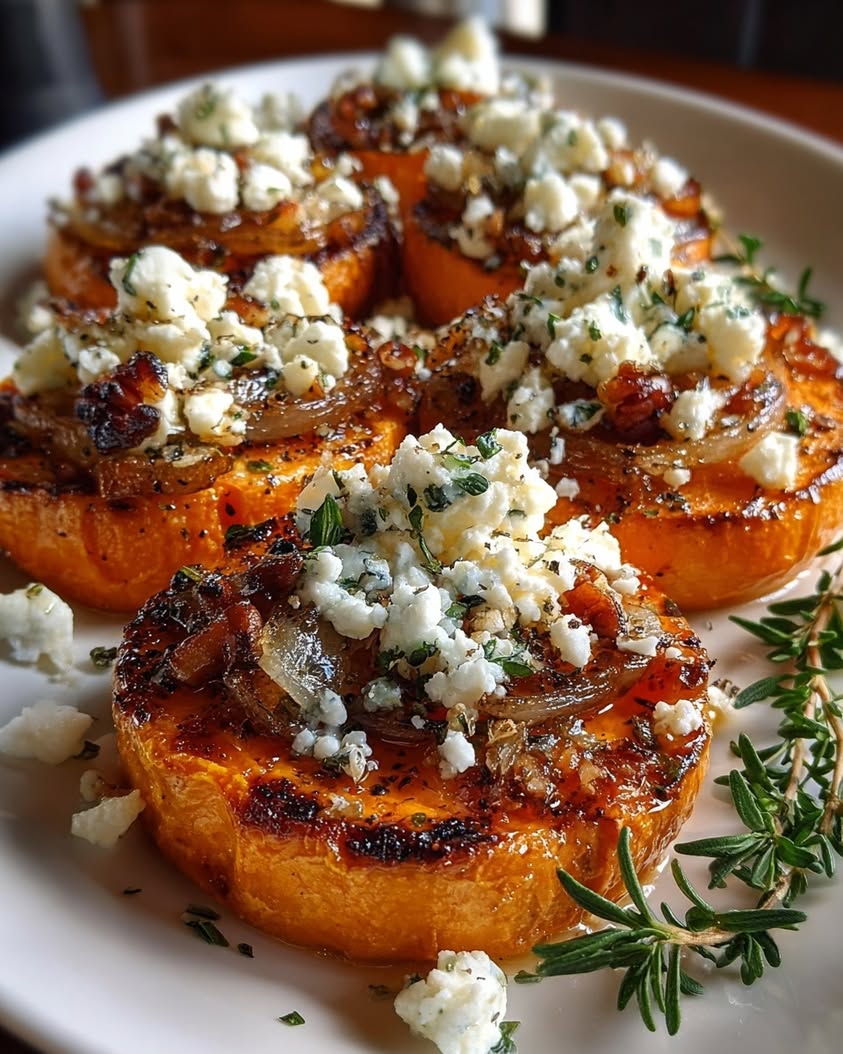
Crispy Sweet Potato Slices with Caramelized Onions, Feta & Pecans: An Elegant Appetizer for Any Occasion
These crispy sweet potato slices topped with caramelized onions, tangy feta, and crunchy pecans create a perfect, elegant appetizer or side dish that consistently impresses guests. The combination of textures and flavors creates a symphony in your mouth, making each bite a delightful experience. Furthermore, this dish brings a beautiful pop of color to any table setting, enhancing the visual appeal of your meal presentation.
Creating this stunning dish requires minimal effort for maximum impact, making it ideal for busy hosts. The sweet potatoes become wonderfully crisp on the edges while remaining tender inside, providing a fantastic base for the toppings. Simultaneously, the caramelized onions develop a deep, rich sweetness that perfectly balances the salty feta cheese. Ultimately, the pecans add that final textural contrast, ensuring every component plays a crucial role.
This recipe works beautifully for holiday gatherings, dinner parties, or even as a special weeknight treat. The ingredients are simple and accessible, yet they come together in a way that feels sophisticated and special. Moreover, the dish is naturally vegetarian, appealing to a wide range of dietary preferences. Consequently, you can confidently serve these crispy sweet potato slices knowing they will be a crowd-pleaser.
Quick Recipe Highlights
- Flavor Profile: These crispy sweet potato slices deliver a harmonious balance of savory and sweet notes. The natural sweetness of the roasted potatoes pairs exquisitely with the deep, caramelized onions. Meanwhile, the salty feta cheese provides a tangy counterpoint that elevates the entire flavor experience.
- Texture: You will experience a delightful contrast of textures in every single bite. The crispy edges of the roasted sweet potato slices give way to a tender interior. Additionally, the creamy feta and crunchy toasted pecans create a symphony of mouthfeel that keeps your palate engaged.
- Aroma: As these crispy sweet potato slices bake, your kitchen will fill with an inviting, warm fragrance. The scent of roasting sweet potatoes and caramelizing onions creates an irresistible aroma. Furthermore, the toasting pecans add a nutty depth that signals something special is coming.
- Visual Appeal: The vibrant orange sweet potato rounds create a beautiful canvas for your toppings. The golden-brown caramelized onions and white feta crumbles provide stunning color contrast. Finally, the toasted pecans add visual texture and sophistication to the finished presentation.
- Skill Level Needed: This recipe is perfectly accessible for cooks of all experience levels. Basic knife skills and the ability to monitor cooking times are the primary requirements. Consequently, even beginner cooks can achieve impressive results with this straightforward preparation.
- Special Equipment: You only need standard kitchen tools to create these crispy sweet potato slices. A good baking sheet, a sharp knife for slicing, and a skillet for caramelizing onions are essential. However, a mandoline slicer can help achieve uniformly thick slices for even cooking.
Recipe Overview
- Difficulty Level: This recipe earns its easy rating due to straightforward techniques and minimal complicated steps. The most challenging aspect involves patiently caramelizing the onions, which requires attention rather than advanced skill. Essentially, anyone who can slice vegetables and operate an oven can successfully create this dish. The process flows logically from preparation to assembly, making it very approachable for home cooks.
- Category: These crispy sweet potato slices function beautifully as either an appetizer or a side dish. They work wonderfully as a starter for a multi-course meal or as an accompaniment to roasted meats. Additionally, they can serve as a light vegetarian main course when paired with a simple green salad.
- Cuisine: This dish draws inspiration from modern American culinary trends that emphasize vegetable-forward presentations. The flavor profile incorporates Mediterranean influences through the use of feta cheese and olive oil. Meanwhile, the technique of roasting root vegetables has roots in many global culinary traditions. Ultimately, it represents contemporary fusion cooking at its most accessible and delicious.
- Cost: This recipe utilizes affordable, accessible ingredients that provide excellent value. Sweet potatoes offer tremendous nutritional bang for your buck, while onions remain a kitchen staple. The feta cheese and pecans represent the splurge ingredients, but a little goes a long way in terms of flavor impact. Overall, you can create an impressive dish without breaking your grocery budget.
- Season: While sweet potatoes are available year-round, this dish feels particularly appropriate for fall and winter months. The warm, comforting flavors complement cooler weather beautifully. However, the bright, fresh elements make it suitable for spring and summer entertaining as well. Essentially, it transitions seamlessly between seasons with its balanced flavor profile.
- Occasion: These crispy sweet potato slices shine at holiday gatherings, from Thanksgiving to Christmas celebrations. They also make perfect party appetizers for game days or casual get-togethers. Furthermore, they elevate weeknight dinners when you want something special without excessive effort. Their versatility makes them suitable for virtually any dining scenario.
Why You’ll Love This Recipe
The taste and texture appeal of these crispy sweet potato slices is immediately apparent from the first bite. You experience multiple sensations simultaneously: the crisp exterior of the potato, the melting softness of the caramelized onions, the creamy saltiness of the feta, and the satisfying crunch of toasted pecans. This complex textural experience keeps your palate interested and engaged throughout. The flavor balance between sweet, savory, and tangy elements creates a sophisticated profile that feels both comforting and elegant.
Convenience and preparation benefits make this recipe particularly appealing for busy home cooks. The components can be prepared in stages, allowing you to work efficiently around your schedule. For instance, you can caramelize the onions while the sweet potato slices roast, maximizing your time in the kitchen. The final assembly takes mere minutes, meaning you can have an impressive dish ready quickly when guests arrive. This strategic approach to cooking minimizes last-minute stress while delivering maximum flavor impact.
Nutritional advantages abound in this dish, starting with the vitamin-rich sweet potato base. Sweet potatoes provide significant amounts of Vitamin A, Vitamin C, and dietary fiber, supporting overall health. The onions contribute antioxidants and anti-inflammatory compounds, while pecans offer heart-healthy fats and protein. When combined, these ingredients create a nutrient-dense dish that satisfies both your taste buds and your body’s needs. This makes it an excellent choice for health-conscious entertaining or everyday meals.
Social and entertaining value is another compelling reason to add this recipe to your repertoire. The beautiful presentation immediately signals to guests that you’ve prepared something special with care and attention. The individual portions make serving straightforward, whether passed as appetizers or plated as sides. Moreover, the vegetarian nature of the dish means it accommodates diverse dietary preferences without requiring separate preparations. This versatility makes it a reliable choice for any gathering.
Cost-effectiveness and accessibility round out the reasons this recipe deserves a permanent place in your cooking rotation. The main ingredients are budget-friendly and available at virtually any grocery store year-round. Even the more premium components like feta and pecans are used sparingly, making them cost-effective flavor amplifiers. This approachable ingredient list means you can create restaurant-quality results without specialty shopping or excessive expense. Ultimately, it delivers impressive culinary impact from humble, accessible components.
Historical Background and Cultural Significance
The origin story of combining sweet potatoes with savory toppings reflects broader culinary evolution rather than a single moment of invention. Sweet potatoes themselves have a long history in Central and South America, dating back thousands of years. European explorers introduced them to other continents, where they became incorporated into local cuisines. The specific combination with caramelized onions and cheese represents modern fusion cooking, drawing from multiple traditions to create something new and delicious.
Cultural importance of sweet potatoes varies globally, from staple food to celebratory dish. In the United States, sweet potatoes have strong associations with Thanksgiving and holiday traditions, often appearing in casserole form. Mediterranean cuisines have long embraced the combination of caramelized onions with salty cheeses like feta. This recipe effectively bridges these culinary traditions, creating a dish that feels both familiar and innovative simultaneously. The result honors multiple foodways while establishing its own contemporary identity.
Evolution of the recipe format for roasted vegetable slices mirrors broader trends in home cooking. As home ovens became more reliable and precise in the 20th century, roasting techniques gained popularity. The recent focus on vegetable-forward dishes and beautiful plating has further refined this approach. Today’s versions emphasize contrasting textures and balanced flavors, moving beyond simple roasted vegetables to composed dishes. This recipe represents the current pinnacle of that evolution, where technique serves flavor and presentation equally.
Regional variations of similar concepts demonstrate the versatility of the core idea. Southern American cooking might incorporate pecans or other native nuts, while Mediterranean versions favor olives and herbs. Asian interpretations might feature different spice blends or alternative cheese options. This adaptability speaks to the fundamental soundness of the crispy-sweet potato slice concept. Cooks worldwide can localize the toppings while maintaining the satisfying textural contrast that makes the dish successful.
Ingredient Deep Dive
Sweet potatoes form the foundation of this dish, providing both structural integrity and flavor base. Historically, sweet potatoes originated in Central or South America over 5,000 years ago and spread globally through exploration and trade. Nutritionally, they’re packed with beta-carotene (which converts to Vitamin A), Vitamin C, manganese, and dietary fiber. When selecting sweet potatoes, look for firm specimens with smooth, unblemished skins and consistent coloring. Store them in a cool, dark, well-ventilated place – not refrigerated – where they’ll keep for several weeks. For substitutions, regular potatoes or even sturdy root vegetables like parsnips could work, though the flavor profile will change significantly.
Yellow onions transform through caramelization into a sweet, deeply flavorful component that balances the dish. Onions have been cultivated for over 5,000 years and appear in the culinary traditions of virtually every culture. They contain quercetin, a powerful antioxidant, along with vitamin C and B vitamins. Choose onions that feel firm and heavy for their size with dry, papery skins and no soft spots. Store them in a cool, dark place with good air circulation, separate from potatoes. Shallots or red onions can substitute, though cooking times may vary slightly with different varieties.
Feta cheese provides the salty, tangy counterpoint that elevates the other ingredients. Traditional feta originates from Greece, where it’s made from sheep’s milk or a sheep-goat milk blend and protected by designation of origin status. It offers protein, calcium, and phosphorus, though it’s also high in sodium. Look for feta stored in brine for optimal freshness and flavor. Store feta in its brine in the refrigerator, changing the brine weekly if needed. For substitutions, goat cheese, queso fresco, or even blue cheese crumbles can provide different but equally interesting flavor profiles.
Pecans contribute the essential crunch and nutty richness that completes the textural experience. Native to North America, pecans were foraged by Indigenous peoples for millennia before becoming a cultivated crop. They’re rich in healthy monounsaturated fats, antioxidants, and various vitamins and minerals. Select pecans that feel heavy for their size with uniform color and no signs of shriveling or mold. Store them in an airtight container in the refrigerator or freezer to prevent rancidity. Walnuts or hazelnuts make excellent substitutes if pecans aren’t available, though the flavor will be slightly different.
Common Mistakes to Avoid
- Cutting sweet potato slices unevenly leads to inconsistent cooking. Some pieces will burn while others remain undercooked if thickness varies significantly. Always aim for uniform ¼-inch slices, using a mandoline if necessary for precision.
- Overcrowding the baking sheet prevents proper crisping of the sweet potato rounds. The slices will steam rather than roast if placed too close together. Always arrange them in a single layer with some space between each piece.
- Rushing the caramelization process results in bitter, underdeveloped onion flavor. True caramelization requires patience and low heat over an extended period. Resist the temptation to increase heat to speed up the process.
- Adding salt to onions too early during caramelization can draw out moisture and slow the process. Wait until the onions have softened and begun to brown before seasoning them properly.
- Toasting pecans at too high a temperature causes them to burn quickly. Nuts contain oils that can go rancid when overheated, creating bitter flavors. Always toast nuts at moderate temperatures with close supervision.
- Using pre-crumbled feta often results in dry, bland cheese compared to block feta. The block version crumbled fresh maintains better moisture and flavor integrity throughout the baking process.
- Skipping the olive oil coating on sweet potatoes prevents proper crisping and browning. The oil helps conduct heat and creates that desirable crispy texture on the exterior surfaces.
- Neglecting to rotate the baking sheet during cooking leads to uneven browning. Oven hotspots can cause some slices to cook faster than others without occasional rotation for even heat distribution.
- Assembling all components too far in advance can make the sweet potato slices soggy. The crispy texture is best preserved when assembly happens just before serving whenever possible.
- Forgetting to season each component individually results in bland final flavor. Each element – sweet potatoes, onions, even the pecans – benefits from proper seasoning at the appropriate preparation stage.
Essential Techniques
Proper slicing technique ensures even cooking and consistent texture across all sweet potato rounds. Using a sharp chef’s knife or mandoline slicer, aim for uniform ¼-inch thickness throughout. This consistency allows all pieces to cook at the same rate, preventing some from burning while others remain underdone. The visual cue for mastery is identical thickness when you stack several slices together. Common pitfalls include uneven pressure while cutting or using a dull blade that tears rather than slices cleanly.
Caramelizing onions properly transforms their sharp, pungent raw state into sweet, deeply flavorful goodness. This process requires patience and low heat to slowly break down the natural sugars without burning. Start with sliced onions in a heavy-bottomed pan with oil or butter over medium-low heat, stirring occasionally. The visual progression moves from translucent to golden brown to a deep caramel color over 25-35 minutes. Rushing this process with higher heat creates bitter, burned flavors rather than sweet complexity.
Roasting the sweet potato slices to crispy perfection requires proper oven temperature and spacing. The oven must be fully preheated to 400°F to ensure immediate cooking upon entry. Arranging the slices in a single layer with space between allows hot air to circulate, creating crispness rather than steaming. The visual cues for doneness include golden brown edges and tender centers when pierced with a fork. Proper technique here creates the foundational texture that makes the entire dish successful.
Toasting pecans enhances their flavor and crunch while ensuring food safety. Spread raw pecans in a single layer on a baking sheet and toast at 350°F for 5-8 minutes, watching carefully. The visual cues include slightly darkened color and fragrant aroma, but remove them before they appear significantly darker. The common pitfall is distraction – nuts can burn in moments, so stay nearby during toasting. Properly toasted pecans provide the final textural element that completes the dish.
Pro Tips for Perfect Crispy Sweet Potato Slices
Choose similarly sized sweet potatoes to ensure uniform slicing and consistent cooking times. Irregular shapes make achieving even thickness challenging, leading to some overcooked and some undercooked slices. Medium-sized, evenly shaped potatoes work best for this particular application.
Soak the sliced sweet potatoes in cold water for 10 minutes before roasting to remove excess starch. This simple step promotes crisper edges and prevents the slices from sticking to the baking sheet. Always pat them thoroughly dry before tossing with oil and seasoning.
Use a perforated pizza pan or baking rack set over a sheet pan for maximum air circulation. This technique allows heat to reach all surfaces of the sweet potato slices, creating exceptionally crispy results. The improved airflow prevents steaming and promotes even browning.
Finish with a drizzle of high-quality honey or maple syrup to enhance the natural sweetness. This final touch amplifies the caramel notes in the onions and complements the salty feta beautifully. Apply it sparingly just before serving to maintain textural integrity.
Add fresh herbs like thyme or rosemary during the last few minutes of roasting. The brief exposure to heat releases their aromatic oils without causing them to burn. This layered herbaceous note complements the other flavors without dominating them.
Let the roasted sweet potato slices cool slightly before topping to maintain crispness. Assembling while piping hot can create steam that softens the carefully achieved crispy texture. A brief 5-minute rest ensures ideal structural integrity.
Consider adding a sprinkle of flaky sea salt as a final garnish before serving. The large crystals provide occasional bursts of salinity that contrast beautifully with the sweet components. This finishing touch elevates the flavor experience significantly.
Experiment with different nut oils instead of olive oil for roasting. Pecan oil, walnut oil, or avocado oil can introduce subtle flavor variations that complement the other ingredients. Each option brings its own unique character to the dish.
Variations and Adaptations
Regional variations can transform this dish to reflect different culinary traditions. A Mediterranean version might include Kalamata olives, oregano, and lemon zest alongside the feta. Southern-inspired adaptations could incorporate bourbon-spiked caramelized onions and candied pecans. Latin American interpretations might feature cotija cheese, chili powder, and pepitas instead of pecans. These regional twists maintain the core concept while introducing culturally specific flavors that create entirely new experiences.
Seasonal adaptations allow this recipe to shine year-round with appropriate ingredient adjustments. Spring versions might incorporate fresh peas, mint, and young onions for a brighter profile. Summer adaptations could feature cherry tomatoes, basil, and zucchini alongside the sweet potatoes. Autumn remains the classic preparation, while winter variations might include roasted squash, pomegranate seeds, and warm spices. This seasonal approach keeps the dish feeling fresh and appropriate regardless of the calendar.
Dietary modifications make this recipe accessible to people with various nutritional needs. Vegan versions can substitute tofu feta or seasoned nutritional yeast for the dairy component. Gluten-free needs are naturally accommodated since the recipe contains no grains. Lower-carb adaptations might use zucchini rounds instead of sweet potatoes, though the cooking time would decrease significantly. These modifications ensure everyone can enjoy the fundamental flavor and textural experience.
Flavor variations can dramatically change the character of the dish while maintaining its structural integrity. Spicy versions might include chili flakes, cayenne, or sliced jalapeños for heat. Umami-forward adaptations could incorporate mushrooms, soy sauce, or miso paste. Herbaceous variations might highlight different fresh herbs like dill, tarragon, or sage. These flavor explorations demonstrate the recipe’s versatility and adaptability to personal taste preferences.
Texture modifications allow you to emphasize different mouthfeel experiences within the same basic framework. For extra crispness, you might double-roast the sweet potato slices or finish them under the broiler. For creamier texture, you could add dollops of goat cheese or ricotta alongside the feta. For additional crunch, consider including seeds like pumpkin or sunflower along with the pecans. These textural adjustments create new dimensions within the familiar format.
Presentation alternatives can make the same ingredients feel entirely different depending on serving style. Individual portions served on small plates create an elegant appetizer experience. Family-style presentation on a large platter makes for beautiful table presentation. Deconstructed versions allow guests to build their own combinations from separate component bowls. These presentation choices adapt the dish to different dining scenarios and service styles.
Serving and Presentation Guide
Plating techniques significantly impact the visual appeal and perceived sophistication of this dish. For individual servings, arrange three overlapping sweet potato slices slightly off-center on each plate. Artfully drape the caramelized onions across the slices, then sprinkle with feta and pecans. This structured approach creates restaurant-quality presentation that impresses guests immediately. The strategic placement allows each component to remain visible while creating an intentional, composed appearance.
Garnishing ideas should enhance both visual appeal and flavor complexity without overwhelming the main components. Fresh herb sprigs like thyme or rosemary provide color contrast and aromatic appeal. Microgreens or edible flowers introduce delicate textures and bright, fresh flavors. A final drizzle of high-quality olive oil or balsamic glaze adds shine and additional flavor notes. These garnishes should complement rather than dominate, serving as the final touches that complete the presentation.
Traditional accompaniments might include simple green salads, roasted meats, or grilled fish. The sweet and savory profile of these crispy sweet potato slices pairs beautifully with simply prepared proteins. A bitter green salad provides contrast to the sweet elements, while creamy soups make an excellent preceding course. These traditional pairings create balanced menus where each component supports the others without competing for attention.
Modern serving suggestions might include these slices as part of a vegetarian tasting menu or appetizer spread. They work wonderfully alongside other vegetable-focused small plates for progressive dining experiences. Alternatively, serve them as part of a brunch menu alongside eggs and fresh fruit. These contemporary applications demonstrate the recipe’s versatility beyond traditional meal structures and occasions.
Temperature considerations are crucial for optimal texture and flavor experience. The sweet potato slices are best served warm rather than piping hot to maintain crispness. The caramelized onions should be at room temperature or slightly warm to spread easily. The feta and pecans benefit from being at room temperature to maximize their respective textures and flavors. This temperature management ensures each component performs at its best when served.
Portion control tips help balance this rich dish within larger meals. As an appetizer, 2-3 slices per person provides sufficient tasting without overwhelming subsequent courses. As a side dish, 3-4 slices complement a main protein appropriately. For vegetarian main courses, 5-6 slices with additional salad creates a satisfying meal. These portion guidelines ensure the dish enhances rather than dominates the dining experience.
Wine and Beverage Pairing
Wine pairings should complement the sweet, savory, and salty elements of these crispy sweet potato slices. Off-dry Rieslings or Gewürztraminers work beautifully, as their slight sweetness mirrors the sweet potatoes and caramelized onions. Medium-bodied reds like Pinot Noir or Grenache provide enough structure without overwhelming the dish’s delicacy. Rosé wines offer versatility, bridging the gap between red and white with their bright acidity and berry notes. These selections enhance rather than compete with the complex flavor profile.
Non-alcoholic alternatives can provide equally sophisticated pairing experiences for all guests. Sparkling apple cider mirrors the autumnal notes while cutting through the richness effectively. Ginger beer offers spicy complexity that complements the sweet elements beautifully. Herbal iced teas, particularly those with mint or verbena, provide refreshing contrast to the savory components. These thoughtful non-alcoholic options ensure every guest enjoys a complete beverage pairing experience.
Coffee and tea pairings work surprisingly well with this dish, particularly for brunch or lunch servings. Medium-roast coffees with nutty or caramel notes echo the flavors in the pecans and onions. Black teas like Earl Grey provide bergamot brightness that cuts through the richness elegantly. Green teas offer grassy notes that provide contrast to the sweet components. These pairings demonstrate the recipe’s versatility across different meal occasions.
Temperature considerations for beverages are essential for optimal pairing experiences. White wines and rosés should be properly chilled but not ice-cold to preserve their aromatic qualities. Red wines should be slightly cooler than room temperature to maintain freshness. Non-alcoholic options benefit from serving temperatures that match the dish – cool but not frigid for warm weather, slightly warmed for cooler occasions. These temperature guidelines ensure beverages complement rather than distract from the food.
Serving suggestions for beverages should consider the overall dining experience and sequence. Offer a welcoming glass of sparkling wine or cider as guests arrive to set the tone. Transition to the primary pairing when serving the crispy sweet potato slices themselves. Consider a digestif or coffee service following the meal to complete the experience. This thoughtful progression enhances the entire dining occasion rather than just the specific dish.
Storage and Shelf Life
Storage methods vary depending on whether you’re storing components separately or the assembled dish. Unassembled components keep best in separate airtight containers in the refrigerator. The roasted sweet potato slices may lose some crispness but will still taste delicious when properly stored. Assembled dishes should be consumed immediately for optimal texture, though leftovers remain edible for a short period. Understanding these distinctions helps maintain quality throughout the storage period.
Temperature requirements are straightforward but crucial for food safety and quality preservation. All components and assembled dishes must be refrigerated at 40°F or below within two hours of preparation. Never leave these perishable ingredients at room temperature for extended periods. When reheating, ensure the internal temperature reaches 165°F to eliminate potential bacteria. These temperature guidelines ensure both safety and quality throughout the storage lifecycle.
Container recommendations focus on maintaining texture and preventing moisture accumulation. Glass containers with tight-fitting lids work well for individual components. For partially assembled dishes, consider containers that allow some air circulation rather than completely airtight seals. Never store in plastic bags, which can trap moisture and accelerate sogginess. The right containers significantly extend the usable life of your prepared components.
Signs of spoilage include off odors, visible mold, or significant texture changes. Sweet potatoes should never develop a sour smell or slimy texture. Caramelized onions will darken further but shouldn’t develop fermented aromas. Feta cheese may dry out but shouldn’t develop unusual colors or smells. Recognizing these signs helps ensure you only consume safe, high-quality leftovers.
Reheating instructions focus on restoring texture while maintaining food safety. To recrisp sweet potato slices, use an oven or toaster oven at 350°F for 5-8 minutes rather than a microwave. The caramelized onions can be gently warmed in a skillet over low heat. Assembled dishes are best enjoyed fresh, but if necessary, brief oven reheating works better than microwave methods. These techniques help revive leftovers while preserving as much quality as possible.
Freezing guidelines suggest freezing components separately rather than assembled dishes. Roasted sweet potato slices freeze reasonably well when spread on a baking sheet first, then transferred to freezer bags. Caramelized onions freeze beautifully in small portions for future use. The texture of thawed feta and pecans suffers significantly, so freeze these components only if necessary. Understanding these freezing characteristics helps you plan for make-ahead preparation.
Make Ahead Strategies
Prep timeline possibilities allow significant advance preparation for stress-free entertaining. The caramelized onions can be made up to 5 days in advance and refrigerated, actually improving in flavor. The sweet potatoes can be sliced and soaked 1 day ahead, stored in water in the refrigerator. The pecans can be toasted 2-3 days in advance and stored at room temperature. This staggered approach spreads the work over multiple days rather than concentrating it all at once.
Storage between steps requires understanding how each component behaves when prepared in advance. Drain and thoroughly pat dry the pre-soaked sweet potato slices before storing them in airtight containers with paper towels. The caramelized onions should be cooled completely before transferring to containers with a thin layer of olive oil on top. Toasted pecans benefit from storage in glass jars rather than plastic bags to maintain crispness. These specific storage methods preserve quality during the holding period.
Quality impact assessment helps determine which steps genuinely benefit from advance preparation. The caramelized onions develop deeper, more complex flavors when made ahead and refrigerated. The sweet potato slices suffer minimal quality loss when sliced ahead but shouldn’t be roasted in advance. The feta crumbles best when fresh rather than pre-crumbled and stored. Understanding these quality impacts guides intelligent make-ahead decisions.
Assembly tips for last-minute preparation ensure optimal texture and presentation. Have all components at appropriate temperatures before assembling – sweet potatoes warm, other components room temperature. Work quickly once you begin assembly to maintain the sweet potatoes’ crispness. Use a light touch when distributing toppings to avoid crushing the crispy potato structure. These assembly techniques preserve the careful work done during advance preparation.
Reheating guidelines for make-ahead components focus on texture restoration. Bring refrigerated caramelized onions to room temperature or warm gently before using. Re-crisp the sweet potato slices in a 350°F oven for 3-5 minutes if they’ve softened during storage. Toast the pecans briefly if they’ve lost their crunch during storage. These simple reviving techniques ensure make-ahead components perform as well as freshly prepared ones.
Fresh element additions can brighten make-ahead dishes that might have lost some vibrancy during storage. A squeeze of fresh lemon juice just before serving can brighten flavors that have mellowed during refrigeration. Fresh herb sprinkles added at the last minute provide aromatic lift that stored herbs lose. A final drizzle of high-quality olive oil adds freshness and shine to components prepared in advance. These last-minute touches bridge the gap between convenience and quality.
Scaling Instructions
Halving the recipe works beautifully for smaller households or intimate meals. Use one medium sweet potato instead of two, and reduce all other ingredients proportionally. The caramelized onion process remains the same, though you might use a smaller skillet. Baking time may decrease slightly due to less crowding on the baking sheet. This scaled-down version maintains all the flavor and textural qualities of the original recipe.
Doubling or tripling the recipe requires some adjustments to ensure consistent results. Use multiple baking sheets rather than overcrowding a single sheet, rotating them halfway through cooking. The caramelized onions may need to be cooked in batches or in a very large skillet to ensure proper evaporation. Consider toasting the pecans in separate batches to ensure even browning. These adjustments prevent quality compromises when preparing larger quantities.
Equipment adjustments become necessary when significantly scaling the recipe up or down. For larger batches, commercial sheet pans provide more surface area than standard home baking sheets. A mandoline slicer becomes almost essential when preparing multiple sweet potatoes for uniform slicing. Additional skillets or a large Dutch oven might be needed for caramelizing larger quantities of onions. These equipment considerations ensure efficiency and quality when working with different quantities.
Timing modifications help manage workflow when preparing scaled versions. When doubling, start the caramelized onions first since they take the longest, then prepare the sweet potatoes while onions cook. For smaller batches, you can often prepare components simultaneously since quantities are more manageable. Always build in extra time when scaling up, as larger quantities often take longer to prepare than mathematically projected. These timing strategies prevent last-minute rushes when working with adjusted recipe sizes.
Storage considerations change significantly when working with different quantities. Larger batches may require more refrigerator space for component storage before assembly. Leftover management becomes more important with larger batches, so have appropriate containers ready. Smaller batches may be consumed completely, eliminating storage concerns altogether. These practical considerations ensure successful scaling regardless of direction or magnitude.
Nutritional Deep Dive
Macro breakdown reveals a balanced profile with complex carbohydrates, healthy fats, and moderate protein. The sweet potatoes provide slow-digesting carbohydrates that deliver sustained energy without blood sugar spikes. The olive oil and pecans contribute monounsaturated fats that support heart health and nutrient absorption. The feta cheese offers protein and fat that increase satiety and complement the carbohydrate base. This macronutrient balance makes the dish satisfying without being overly heavy.
Micronutrient analysis highlights the impressive vitamin and mineral content throughout the ingredients. Sweet potatoes deliver exceptional amounts of Vitamin A (as beta-carotene), crucial for vision, immune function, and skin health. Onions provide quercetin, a powerful antioxidant with anti-inflammatory properties. Pecans offer manganese and copper, important for enzyme function and energy production. This micronutrient diversity supports overall health beyond basic nutrition.
Health benefits extend beyond basic nutrition to include specific protective effects. The combination of antioxidants from sweet potatoes, onions, and pecans provides comprehensive cellular protection. The fiber content supports digestive health and helps regulate cholesterol levels. The anti-inflammatory compounds may help reduce chronic disease risk when consumed as part of a balanced diet. These functional benefits make the dish both delicious and genuinely health-supportive.
Dietary considerations are well-addressed in this naturally vegetarian recipe. The dish contains no gluten-containing ingredients, making it suitable for celiac disease or gluten sensitivity. Lactose-intolerant individuals often tolerate feta better than other cheeses due to its lower lactose content. The high fiber content supports various health conditions including diabetes management when consumed in appropriate portions. These dietary accommodations make the recipe accessible to people with various nutritional needs.
Portion analysis helps contextualize the dish within broader dietary patterns. As an appetizer, the portion provides significant micronutrients without excessive calories. As a side dish, it complements protein sources while contributing valuable fiber and vitamins. As a main course, it provides balanced nutrition when paired with a simple green salad. Understanding these portion contexts helps integrate the dish appropriately into different meal structures.
Weight management tips focus on the dish’s high satisfaction factor relative to its calorie density. The fiber and protein content promote fullness, potentially reducing overall calorie intake at the meal. The significant volume created by the vegetable base provides psychological satisfaction. The strategic use of high-flavor ingredients like feta and pecans means small amounts deliver big impact. These characteristics make the dish compatible with weight management goals when consumed mindfully.
Dietary Adaptations
Gluten-free adaptation requires no changes since the recipe naturally contains no gluten-containing ingredients. The sweet potatoes, onions, feta, and pecans are all inherently gluten-free. Always verify that purchased ingredients like feta haven’t been processed with gluten-containing additives. This natural compatibility makes the recipe ideal for gluten-free entertaining without special modifications or ingredient substitutions.
Dairy-free adaptation replaces the feta cheese with appropriate alternatives that provide similar salty, tangy notes. Crumbled tofu marinated in lemon juice and salt can mimic some feta characteristics. Nutritional yeast sprinkled over the finished dish provides cheesy flavor without dairy. Vegan cheese alternatives made from nuts or soy can work, though flavors vary significantly by brand. These substitutions maintain the flavor balance while accommodating dairy restrictions.
Vegan adaptation combines dairy-free approaches with additional considerations. Replace the feta with seasoned tofu crumbles or commercial vegan feta alternatives. Ensure the sweet potato slices are roasted with oil rather than butter. Consider adding miso paste to the caramelized onions for additional umami depth lost from omitting cheese. These comprehensive changes create a plant-based version that maintains the original’s spirit and satisfaction.
Low-carb adaptation significantly modifies the foundation by replacing the sweet potato slices. Large zucchini rounds or eggplant slices can provide a similar structural base with fewer carbohydrates. The caramelized onions should be used sparingly due to their natural sugar content. Increase the pecans and add other low-carb vegetables like mushrooms to maintain volume and satisfaction. This adaptation preserves the concept while aligning with carbohydrate restrictions.
Keto adaptation follows low-carb principles with additional attention to macronutrient ratios. Use zucchini or eggplant bases as with low-carb version. Increase high-fat components like additional pecans and a generous drizzle of olive oil. Consider adding avocado slices or olives to boost healthy fat content further. These adjustments create
Print
Crispy Sweet Potato Slices with Caramelized Onions, Feta & Pecans
Description
A savory and sweet dish featuring crispy roasted sweet potato slices topped with caramelized onions, tangy feta cheese, and crunchy pecans.
Ingredients
For the Crust:
- 2 large sweet potatoes, sliced into 1/4-inch rounds
- 1 large yellow onion, thinly sliced
- 2 tbsp olive oil
- 1/2 tsp smoked paprika
- 1/2 tsp garlic powder
- Salt and black pepper to taste
- 1/2 cup crumbled feta cheese
- 1/4 cup chopped pecans
- 1 tbsp maple syrup (optional)
- Fresh parsley for garnish
Instructions
1. Prepare the Crust:
- Preheat oven to 400°F (200°C). Toss sweet potato slices with 1 tbsp olive oil, smoked paprika, garlic powder, salt, and pepper. Arrange in a single layer on a baking sheet and bake for 20-25 minutes, flipping halfway, until crispy.
- While potatoes bake, heat remaining 1 tbsp olive oil in a skillet over medium heat. Add sliced onions and cook, stirring occasionally, for 15-20 minutes until soft and caramelized. Season with salt and pepper.
- Remove sweet potatoes from oven. Top with caramelized onions, crumbled feta, and chopped pecans. Drizzle with maple syrup if desired. Garnish with fresh parsley and serve warm.
Notes
You can customize the seasonings to taste.

I’m Shaykee—born in Morocco, seasoned across continents. From airplane galleys to home kitchens, I share the flavors and stories that shaped my journey.