
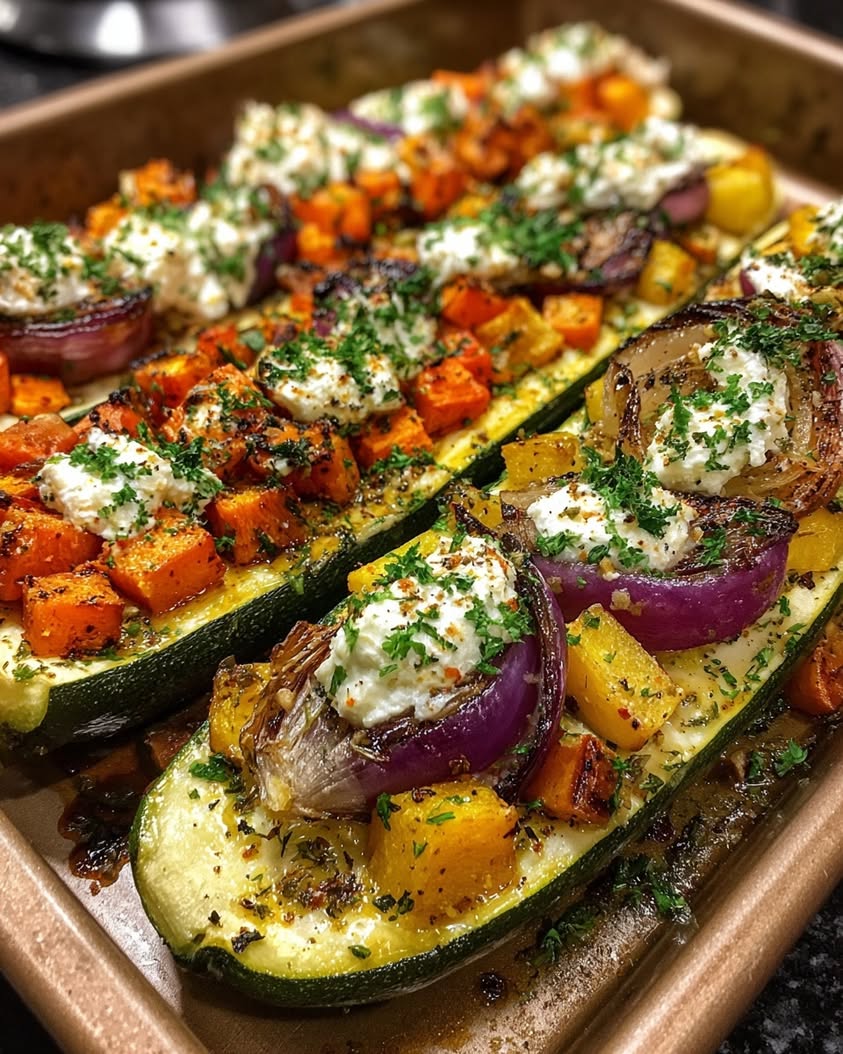
Golden Roasted Holiday Vegetable Zucchini Boats with Whipped Feta: A Festive, Flavor-Packed Centerpiece
These Golden Roasted Holiday Vegetable Zucchini Boats with Whipped Feta are a stunning and delicious way to celebrate the season. Imagine tender zucchini halves, roasted to perfection and generously filled with a vibrant medley of holiday vegetables. The real showstopper, however, is the cloud-like whipped feta topping, which adds a creamy, tangy contrast that will have everyone asking for the recipe. This dish is not just a side; it is a conversation-starting centerpiece that brings color and joy to any festive table.
Creating these holiday zucchini boats is a joyful process that fills your kitchen with the most incredible aromas. The scent of roasting vegetables like sweet potatoes and Brussels sprouts mingles with earthy herbs, creating an atmosphere of pure celebration. Furthermore, this recipe is wonderfully adaptable, allowing you to use your favorite seasonal produce. Ultimately, you get a beautiful, nutritious dish that looks as though it came from a professional kitchen but is surprisingly simple to make at home.
This recipe for Golden Roasted Holiday Vegetable Zucchini Boats is perfect for anyone seeking a healthier holiday option without sacrificing flavor or presentation. The combination of textures from the soft zucchini, the hearty roasted vegetable filling, and the smooth whipped feta is truly exceptional. Consequently, it satisfies multiple cravings in one elegant package. Whether you are hosting a large gathering or enjoying a cozy family dinner, these zucchini boats promise to be a memorable and beloved addition to your meal.
Quick Recipe Highlights
- Flavor Profile: These Golden Roasted Holiday Vegetable Zucchini Boats deliver a masterful balance of savory, sweet, and tangy notes. The natural sweetness from the roasted carrots and sweet potatoes beautifully complements the earthy Brussels sprouts and aromatic herbs. Meanwhile, the whipped feta introduces a sharp, creamy saltiness that ties all the flavors together harmoniously.
- Texture: You will experience a delightful symphony of textures in every bite. The zucchini boats become tender yet hold their structure, providing a perfect vessel. The roasted vegetable filling offers a satisfying, hearty bite, while the luxuriously smooth and airy whipped feta adds a creamy contrast that melts in your mouth.
- Aroma: As these holiday zucchini boats roast, your kitchen will fill with an irresistible, warm fragrance. The primary aromatic notes come from the caramelizing vegetables, pungent garlic, and fragrant rosemary and thyme. This comforting scent is the very essence of a holiday gathering, promising a delicious meal to come.
- Visual Appeal: This dish is a feast for the eyes with its stunning color palette. The vibrant green zucchini, golden-orange sweet potatoes, deep red cranberries, and snowy white whipped feta create a visually spectacular presentation. It is a dish that looks celebratory and elegant, perfect for a special occasion table.
- Skill Level Needed: This recipe is ideal for cooks of all levels, from beginners to experts. The techniques involved, such as chopping vegetables and using a food processor for the whipped feta, are straightforward. With clear, step-by-step instructions, anyone can achieve a beautiful and impressive result with confidence.
- Special Equipment: You will need a few key kitchen tools to make this recipe efficiently. A sturdy baking sheet is essential for roasting, and a food processor or high-speed blender is required to achieve the perfectly smooth, creamy texture for the whipped feta. Other than that, basic kitchen knives and a mixing bowl are all you need.
Recipe Overview
- Difficulty Level: We classify these Golden Roasted Holiday Vegetable Zucchini Boats as an easy recipe. The steps are simple and logical, primarily involving chopping, mixing, and roasting. There are no advanced culinary techniques required, making it very accessible. The most complex step is making the whipped feta, which is a quick process with a food processor. Anyone who can handle a knife and operate an oven can successfully create this beautiful dish.
- Category: This versatile dish fits wonderfully into several meal categories. It shines as a spectacular vegetarian main course for a holiday feast. Alternatively, it serves as a stunning and substantial side dish alongside a roast turkey or ham. It is also perfect for a special weekend dinner or a potluck where you want to bring something both healthy and impressive.
- Cuisine: While not tied to one specific tradition, this recipe draws inspiration from modern American and Mediterranean cuisines. The use of zucchini as a vessel is a popular low-carb trend, and the roasted vegetable medley is a classic American holiday staple. The whipped feta topping, however, is a direct nod to Greek culinary traditions, adding a sophisticated, tangy element that elevates the entire dish.
- Cost: This is a very cost-effective recipe, especially when you use vegetables that are in season during the holidays. Zucchini is typically affordable, and root vegetables like carrots and sweet potatoes offer great value. Feta cheese is a reasonably priced cheese option. Overall, you can create a dish that serves four people generously for a fraction of the cost of a meat-centric main course, making it kind to your wallet.
- Season: This recipe is perfectly designed for the fall and winter seasons. It utilizes hearty, robust vegetables that are at their peak during the colder months. The warm, roasting process is ideal for chilly weather, providing comfort and warmth. The festive colors and flavors also make it a natural fit for Thanksgiving, Christmas, and New Year’s Eve celebrations.
- Occasion: These zucchini boats are perfect for any celebratory gathering. They are a must for holiday feasts like Thanksgiving and Christmas dinner. They also work beautifully for a festive brunch, a special date night at home, or any potluck where you want to impress. It is a dish that says “celebration” in every colorful, flavorful bite.
Why You’ll Love This Recipe
First and foremost, the taste and texture appeal of these Golden Roasted Holiday Vegetable Zucchini Boats is undeniable. You get the gentle, slightly sweet flavor of the roasted zucchini combined with the deep, caramelized notes from the vegetable filling. The pop of tartness from the cranberries and the rich, creamy tang of the whipped feta create a complex flavor profile that is both satisfying and exciting. Every mouthful is a perfect balance of soft, hearty, and creamy textures that will keep you coming back for more. This is not a boring vegetable dish; it is a culinary experience that delights all your senses.
From a convenience standpoint, this recipe is a dream for any home cook, especially during the busy holiday season. You can prepare the vegetable filling and even the whipped feta ahead of time, streamlining your day-of cooking. The assembly is simple and almost artistic, allowing you to create a beautiful presentation without stress. Furthermore, the entire dish bakes on a single sheet pan, which means minimal cleanup. This efficiency allows you to spend less time in the kitchen and more time enjoying the company of your guests, making holiday hosting a joy rather than a chore.
The nutritional advantages of this dish are significant, allowing you to indulge healthfully. Zucchini is low in calories and high in water and fiber, promoting digestion and a feeling of fullness. The medley of roasted vegetables provides a powerful boost of vitamins, minerals, and antioxidants. Using olive oil as the primary fat adds heart-healthy monounsaturated fats. By choosing this as a main or side dish, you are incorporating a wealth of whole-food nutrients into your holiday meal, supporting your well-being without compromising on decadent flavor.
This recipe holds immense social and entertaining value. Placing a platter of these vibrant, stuffed zucchini boats on the table is guaranteed to draw admiration and curiosity from your guests. It serves as a fantastic conversation starter, especially for those seeking vegetarian or lighter holiday options. The individual portions make serving elegant and straightforward. Presenting a dish that is both visually stunning and incredibly delicious enhances your reputation as a thoughtful and skilled host, making any gathering feel more special and memorable.
Finally, the cost-effectiveness and accessibility of the ingredients make this a smart choice. Seasonal winter vegetables are typically very affordable, and zucchini is a budget-friendly base. Feta cheese is one of the more economical cheese options, especially when compared to the cost of a large roast. You can easily find all the ingredients at any standard grocery store. This accessibility means you can create a gourmet-looking, restaurant-quality dish without a special trip to a high-end market or a blow to your grocery budget, proving that eating well doesn’t have to be expensive.
Historical Background and Cultural Significance
The concept of stuffing vegetables is an ancient culinary practice with roots in many cultures around the world. From stuffed grape leaves in the Eastern Mediterranean to stuffed peppers in Central Europe, the idea of using a natural edible container for a flavorful filling is universal. The modern interpretation of the “zucchini boat” gained significant popularity in recent decades with the rise of low-carb and gluten-free diets. This recipe for Golden Roasted Holiday Vegetable Zucchini Boats is a contemporary evolution of that idea, specifically tailored to fit the flavors and aesthetics of a modern American holiday table.
Culturally, this dish represents a beautiful fusion of traditions. The roasted root vegetable medley is deeply embedded in American and Northern European holiday food culture, symbolizing the harvest and the heartiness of winter. Conversely, the whipped feta topping is a direct import from Greek cuisine, where feta is a staple and whipping it into a creamy spread is a common way to enhance its texture and spreadability. This combination creates a dish that feels both familiar and excitingly new, bridging culinary traditions in a single, beautiful presentation.
The evolution of this specific recipe is a testament to changing dietary preferences and the desire for more vegetable-centric celebrations. As more people seek to reduce their meat consumption or simply add more vibrant plant-based dishes to their tables, recipes like this have soared in popularity. The holiday zucchini boat is no longer seen as just an alternative but as a celebrated centerpiece in its own right. Its evolution mirrors a broader shift in home cooking towards health-conscious, visually appealing, and globally-inspired meals that do not sacrifice flavor or festivity.
Regional variations of this concept are endless, which is part of its enduring appeal. In the American South, you might find a version with black-eyed peas and cornbread stuffing. An Italian-inspired variation could feature a filling of tomatoes, olives, and herbs, topped with whipped ricotta instead of feta. A Mexican-themed boat might use a spiced bean and corn filling with a lime-crema topping. This adaptability is the recipe’s greatest strength, allowing home cooks to incorporate local ingredients and personal cultural touches, making each preparation of Golden Roasted Holiday Vegetable Zucchini Boats uniquely their own.
Ingredient Deep Dive
Zucchini, the foundation of our boats, is a summer squash that belongs to the Cucurbitaceae plant family, alongside melons and cucumbers. Historically, it was first cultivated in Central and South America thousands of years ago before being brought to Europe by explorers. Nutritionally, it is a powerhouse of hydration, being over 90% water, and is an excellent source of vitamin C, manganese, and antioxidants like lutein and zeaxanthin, which are crucial for eye health. When selecting zucchini, look for firm, glossy skins that are free of blemishes and feel heavy for their size. Store them unwashed in a perforated plastic bag in the refrigerator’s crisper drawer for up to a week. If you need a substitution, large yellow squash or even hollowed-out eggplant halves work wonderfully.
Feta cheese, the star of our creamy topping, is a brined curd cheese with a storied history originating from Greece. It has been a protected designation of origin (PDO) product since 2002, meaning authentic feta must be made in specific regions of Greece from at least 70% sheep’s milk mixed with goat’s milk. This cheese is a good source of calcium, phosphorus, and protein, and it contains beneficial bacteria due to its aging process. For the best whipped feta, choose a block of feta packed in brine rather than pre-crumbled cheese, as it will be creamier and less dry. Store opened feta in its brine in the refrigerator. For a dairy-free version, whipped tofu with lemon juice and nutritional yeast can mimic the tangy flavor profile.
Sweet Potatoes are a root vegetable with a rich history, domesticated in Central or South America over 5,000 years ago. They are not related to white potatoes but are instead part of the morning glory family. They are incredibly nutritious, packed with beta-carotene (which the body converts to vitamin A), vitamin C, potassium, and fiber. Choose firm sweet potatoes with smooth, taut skins and avoid any with soft spots or signs of sprouting. Store them in a cool, dark, well-ventilated place—not the refrigerator, as cold temperatures can alter their taste and texture. As a substitute, you can use butternut squash or carrots for a similar sweet, orange-hued vegetable component in the filling.
Brussels Sprouts, which add a wonderful earthy note, are part of the Gemmifera Group of cabbages, bred for their edible buds. They have been cultivated in Europe for centuries, with Brussels, Belgium, being their namesake and a major center of development. These mini-cabbages are rich in vitamins C and K, folate, manganese, and contain glucosinolates, compounds being studied for their cancer-fighting properties. Select small, firm, bright green sprouts with tightly packed leaves; smaller sprouts are often sweeter and more tender. Store them unwashed in a plastic bag in the refrigerator. If you are not a fan, broccoli florets or chopped kale make excellent, similarly nutritious substitutes in this holiday vegetable mix.
Common Mistakes to Avoid
- Overcooking the Zucchini: A common error is baking the zucchini boats until they become mushy and lose all structure. This happens if you parboil them for too long or roast them at too low a temperature. To avoid this, watch them closely in the oven and remove them as soon as they are tender enough to be pierced easily with a fork but still hold their boat shape firmly.
- Underseasoning the Filling: The vegetable filling can taste bland if you are too shy with salt and herbs. Remember that the zucchini itself is mild, and the filling needs to carry a lot of the flavor. Be generous with kosher salt, black pepper, and your dried herbs. Always taste the mixed filling before spooning it into the boats to check for seasoning.
- Using Watery Whipped Feta: If your whipped feta is runny, it will not hold its shape on top of the boats. This usually occurs if you use a low-fat feta or add too much liquid (like lemon juice or olive oil) before the cheese has broken down. Start by processing the feta and cream cheese alone until smooth, then gradually stream in the other ingredients until you achieve a thick, spreadable consistency.
- Skipping the Zucchini Prepping Step: Scooping out the zucchini centers is a crucial step that should not be rushed. If you leave the walls too thin, they will collapse during baking. Conversely, if you leave too much flesh, the boat will not have enough room for filling. Aim for walls about 1/4 to 1/2 inch thick to ensure they are both sturdy and capacious.
- Crowding the Baking Sheet: Placing the zucchini boats too close together on the pan will cause them to steam rather than roast. Steaming prevents the zucchini and the vegetable filling from achieving that desirable caramelized, golden-brown exterior. Ensure there is at least a half-inch of space between each boat to allow for proper hot air circulation and browning.
- Not Drying the Vegetables: If you wash your vegetables and do not dry them thoroughly, the excess water will steam during roasting. This steam prevents proper browning and can make the final dish soggy. After washing your Brussels sprouts, carrots, and sweet potatoes, always pat them completely dry with a clean kitchen towel or paper towels before tossing them with oil and seasoning.
- Adding Delicate Ingredients Too Early: Ingredients like fresh herbs or the dried cranberries can burn or become bitter if added at the beginning of the roasting process. For the filling, it is best to mix in the cranberries after the hearty vegetables have been partially roasted. Similarly, garnish with fresh herbs like parsley after the boats come out of the oven for a burst of fresh color and flavor.
- Forgetting to Let the Boats Rest: Pulling the zucchini boats from the oven and serving them immediately is a mistake. They need a few minutes to rest. This allows the juices to redistribute, firms up the structure slightly, and makes them easier to handle and serve. A five-minute rest on the counter will make a significant difference in the final presentation and texture.
Essential Techniques
Hollowing Zucchini is the foundational technique for creating perfect boats. This step is crucial because it creates a sturdy vessel that can hold the filling without collapsing, while also ensuring even cooking. To master it, slice the zucchini in half lengthwise and use a small spoon or a melon baller to scrape out the seedy center. Apply gentle pressure and work from the center outwards, leaving a uniform border about 1/4 to 1/2 inch thick. A common pitfall is scraping too aggressively, which can tear through the bottom or sides. The visual cue for success is a clean, canoe-like hollow that looks neat and has walls that are neither translucent-thin nor overly thick and fleshy.
Roasting Vegetables is the technique that develops deep, caramelized flavor in the filling. This dry-heat cooking method concentrates the vegetables’ natural sugars, creating a sweet and savory complexity that boiling or steaming cannot achieve. For mastery, ensure your vegetables are cut into uniform, bite-sized pieces so they cook evenly. Toss them thoroughly with oil to coat every surface, which promotes browning and prevents sticking. The most common pitfall is under-oiling or overcrowding the pan, which leads to steaming. Watch for the visual cues of success: the vegetables should be tender on the inside and have golden-brown, slightly crispy edges.
Whipping Feta transforms a crumbly cheese into a luxurious, spreadable cream. This technique is important because it changes the texture dramatically, making it easier to dollop onto the boats and creating a beautiful contrast with the roasted vegetables. To master it, ensure your feta and cream cheese are at room temperature to ensure a smooth blend, not a grainy one. Start by pulsing the cheeses together in a food processor before slowly drizzling in the olive oil and lemon juice. A common pitfall is adding liquid too quickly, which can cause the emulsion to break and become greasy. The success cue is a homogeneous, velvety, and spreadable mixture that holds soft peaks.
Pro Tips for Perfect Golden Roasted Holiday Vegetable Zucchini Boats
Salting the zucchini boats before filling them is a game-changer. Lightly sprinkle the hollowed-out halves with salt and let them sit for 10-15 minutes. This process draws out excess moisture, which prevents a soggy final dish. Be sure to pat them dry with a paper towel before brushing with oil and adding the filling.
For an extra flavor boost, toast your dried herbs before adding them to the vegetable filling. Simply warm the dried rosemary and thyme in a dry skillet for 30-60 seconds until fragrant. This quick step reawakens the essential oils in the herbs, releasing a much more potent and aromatic flavor into your dish.
Elevate your whipped feta by adding a hint of garlic. Before whipping the cheeses, rub the inside of your food processor bowl with a halved clove of garlic. This imparts a subtle, aromatic garlic essence without the sharp bite of raw minced garlic, creating a more nuanced and sophisticated flavor profile in your topping.
Create a beautiful presentation by paying attention to your vegetable chop. Aim to dice all your roasting vegetables—the sweet potatoes, carrots, and Brussels sprouts—to a similar small size. This not only ensures they cook evenly but also creates a more cohesive and visually appealing filling that spoons neatly into the zucchini boats.
If you are making this recipe for a special event, consider a test run first. Making a single zucchini boat a few days before your big gathering allows you to adjust seasoning, cooking time, and technique to your specific oven and taste preferences. This practice ensures flawless execution on the day it matters most.
For a gorgeous golden finish, give the filled boats a final mist of olive oil spray before they go into the oven. This helps the exposed edges of the zucchini and any topping vegetables achieve an attractive, appetizing color and slight crispness during the roasting process.
Let the whipped feta come to room temperature before serving. If you make it ahead and refrigerate it, take it out about 30 minutes before you plan to serve the dish. This allows it to soften, making it easier to dollop or spread beautifully onto the warm zucchini boats.
Variations and Adaptations
For regional variations, you can take this recipe on a world tour right from your kitchen. An Italian-inspired version could feature a filling of sun-dried tomatoes, chopped artichoke hearts, kalamata olives, and basil, topped with whipped ricotta. A Southwest twist might include black beans, corn, diced green chiles, and cumin, finished with a lime-cilantro crema. For a French Provençal feel, use a ratatouille-style filling of diced eggplant, bell peppers, and zucchini with herbes de Provence, topped with whipped goat cheese. These adaptations show the incredible versatility of the zucchini boat concept.
Seasonal adaptations allow you to enjoy this dish all year round. In the spring, try a filling of asparagus tips, fresh peas, leeks, and mint. For a summer rendition, use cherry tomatoes, corn, and fresh basil. In the heart of winter, stick with the robust root vegetables as outlined. You can also incorporate seasonal fruits; for example, add diced apples or pears in the fall for a touch of natural sweetness that complements the savory elements beautifully.
Dietary modifications are straightforward with this flexible recipe. For a vegan version, omit the whipped feta and create a topping from blended cashews, lemon juice, nutritional yeast, and a pinch of salt until creamy. To make it Paleo, ensure the feta is omitted and focus on a hearty vegetable filling with added ground meat or walnuts for protein. For a nut-free version, simply avoid any nut-based toppings or additions, sticking to seed-based additions like pepitas for crunch if desired.
Flavor variations can dramatically change the character of the dish. Add warmth with a teaspoon of smoked paprika or a pinch of red pepper flakes to the vegetable filling. For an umami boost, stir a tablespoon of tomato paste or a dash of tamari into the olive oil before tossing with the vegetables. Incorporate different fresh herbs like dill, tarragon, or oregano in place of or in addition to the rosemary and thyme to create a completely new aromatic profile.
Texture modifications can cater to personal preference. For more crunch, sprinkle the top with toasted pine nuts, walnuts, or breadcrumbs before the final bake. For a creamier interior, mix a spoonful of ricotta or goat cheese into the vegetable filling itself. If you prefer a smoother whipped cheese topping, blend in a tablespoon of Greek yogurt or sour cream with the feta to make it even more lush and spreadable.
Presentation alternatives offer creative ways to serve this dish. Instead of using large zucchini, make appetizer-sized versions with smaller zucchinis for a holiday party. For a deconstructed approach, chop the zucchini and roast it with the other vegetables, then serve the mixture in a bowl topped with dollops of whipped feta. You can also layer the components in a baking dish to create a holiday vegetable casserole with a whipped feta swirl on top.
Serving and Presentation Guide
Plating techniques can elevate this dish from homely to haute cuisine. For individual servings, place one or two zucchini boats in the center of a warm plate. Alternatively, for a family-style presentation, arrange all the boats neatly on a long, elegant platter, slightly overlapping if necessary. Angle the boats so the filling is visible, and use a small spoon to artfully dollop the whipped feta along the center of each boat. The goal is to create height and show off the colorful layers of the dish.
Garnishing is the final touch that adds professionalism and freshness. A sprinkle of finely chopped fresh parsley, chives, or dill adds a vibrant green contrast against the white feta and orange vegetables. For a festive touch, a few whole cranberries or a light dusting of paprika or za’atar over the whipped feta looks beautiful. If you added a crunchy element like toasted nuts, sprinkle those over the top just before serving to maintain their texture.
Traditional accompaniments for this dish lean into the holiday theme. These zucchini boats pair wonderfully with classic roast turkey or a glazed ham, acting as the sophisticated vegetable side. They also stand up well to other rich sides like creamy mashed potatoes or savory stuffing. Consider them as part of a larger vegetarian spread that includes a hearty grain salad, like farro or wild rice, and a bright, acidic green salad to balance the roasted flavors.
Modern serving suggestions might treat these boats as the main event. Serve them alongside a cup of spiced butternut squash soup for a light yet satisfying meal. For a brunch option, pair them with a fluffy frittata or scrambled eggs. They also make an excellent component of a “small plates” or tapas-style dinner, accompanied by other dishes like marinated olives, crusty bread, and a selection of cheeses.
Temperature considerations are key to the best eating experience. These Golden Roasted Holiday Vegetable Zucchini Boats are truly at their peak when served warm from the oven. The zucchini is tender, the filling is hot, and the whipped feta is slightly softened. If they must sit for a few minutes, that is fine, but avoid letting them get cold, as the textures can become less appealing. If preparing ahead, have all components ready and do the final assembly and heating just before serving.
Portion control is naturally built into this recipe, as each boat is a single serving. A standard large zucchini half makes a generous side dish portion, while two halves can constitute a satisfying vegetarian main course. For a larger crowd, you can easily scale up the recipe. If serving as part of a buffet with many other dishes, one boat per person is typically sufficient. The visual nature of the individual portions also helps guests intuitively understand how much to take, making serving streamlined.
Wine and Beverage Pairing
Wine pairings for this dish should complement its earthy, savory, and slightly tangy profile. A crisp, acidic white wine like a Sauvignon Blanc or Pinot Grigio cuts through the richness of the whipped feta beautifully. For red wine lovers, a light-bodied Pinot Noir with its red fruit notes and earthy undertones harmonizes with the roasted vegetables without overpowering them. An off-dry Riesling is also a fantastic choice, as its slight sweetness balances the saltiness of the feta and the tartness of the cranberries, creating a well-rounded dining experience.
Non-alcoholic alternatives can be just as sophisticated and pairing-conscious. A sparkling apple cider offers both effervescence and autumnal flavor that mirrors the holiday theme. For a more complex option, try a chilled ginger beer, whose spice and sweetness complement the savory notes of the dish. Iced herbal tea, such as peppermint or a rooibos blend, can provide a refreshing, palate-cleansing effect between bites of the rich vegetables and cheese.
While not traditional, coffee and tea can be lovely with this meal, especially for a holiday brunch. A medium-roast coffee with low acidity won’t clash with the vegetables or the cheese. For tea, consider an earthy Pu-erh or a robust English Breakfast tea, both of which have the body to stand up to the roasted flavors. Alternatively, a gentle Chamomile or Lemon Ginger tea can be a soothing finish to the meal, aiding digestion after a hearty feast.
Temperature considerations for beverages are straightforward. White wines and non-alcoholic sparklers should be served well-chilled, between 45-50°F (7-10°C). Red wines like Pinot Noir are best served slightly cool, around 55°F (13°C). Coffee and tea, of course, should be served hot to provide a comforting contrast to the warm, savory food. Getting the serving temperatures right ensures that each beverage can perform its role in cleansing the palate and enhancing the flavors of the Golden Roasted Holiday Vegetable Zucchini Boats.
Serving suggestions for your beverage pairings add to the overall experience. Pour wines into appropriate glassware to allow the aromas to develop. Serve sparkling ciders in flutes to maintain their bubbles. Offer coffee in a large mug and tea in a proper teapot with cups and saucers. Providing a choice of two beverages, perhaps a wine and a non-alcoholic option, caters to all your guests and makes the meal feel more thoughtfully curated and celebratory.
Storage and Shelf Life
Proper storage methods are essential for maintaining the quality and safety of your leftovers. Store any leftover zucchini boats in a single layer in a shallow, airtight container. If you must stack them, place a layer of parchment paper between them to prevent sticking and to protect the whipped feta topping. Always allow the boats to cool completely to room temperature before sealing the container and placing it in the refrigerator. Do not leave them at room temperature for more than two hours to prevent bacterial growth.
Temperature requirements for storage are non-negotiable for food safety. The refrigerator must be at or below 40°F (4°C). The leftover zucchini boats should be placed in the main body of the refrigerator, not in the door, where temperatures fluctuate more. For longer-term storage, you can freeze the components, but note that the texture of the zucchini will become softer upon thawing. The whipped feta can also be frozen, though it may separate slightly and require re-whipping after thawing.
Container recommendations can impact how well your food keeps. Glass containers with tight-sealing lids are ideal because they are non-porous and do not absorb odors. Alternatively, BPA-free plastic containers designed for food storage work well. If using a container that is too large for the amount of food, the excess air can speed up deterioration. Choose a container that fits the leftovers snugly, or transfer them to a resealable bag, pressing out all the air before sealing.
Signs of spoilage are important to recognize for your safety. Discard the zucchini boats if you notice any off odors, such as a sour or unpleasant smell. Visible mold, of any color, is an immediate sign to throw the food away. If the texture becomes excessively slimy or mushy, this indicates bacterial growth, and the food should not be consumed. When in doubt, it is always safer to err on the side of caution and dispose of the leftovers.
Reheating instructions are crucial for restoring the dish’s appeal. The best method is to use an oven or toaster oven. Preheat to 350°F (175°C) and place the boats on a baking sheet. Heat for 10-15 minutes, or until warmed through. This method will help re-crisp the vegetables and melt the cheese slightly. Avoid using a microwave, as it will make the zucchini soggy. If you must use a microwave, do so on a low power setting and for a short time, but expect a texture compromise.
Freezing guidelines allow you to enjoy this dish later, but with some caveats. The assembled boats do not freeze well due to the high water content of the zucchini, which becomes unpleasantly watery upon thawing. However, you can freeze the roasted vegetable filling separately for up to 3 months. The whipped feta can also be frozen for up to a month. Thaw both in the refrigerator overnight before assembling and baking fresh zucchini boats for a result that is closest to the original.
Make Ahead Strategies
A strategic prep timeline can turn a complex-looking dish into a stress-free meal. Up to two days in advance, you can wash, dry, and chop all the vegetables for the filling (sweet potato, carrots, Brussels sprouts). Store them in separate airtight containers or resealable bags in the refrigerator. You can also make the whipped feta completely up to two days ahead; its flavor often improves with a little time for the ingredients to meld. The day of serving, all you need to do is assemble and bake.
Storage between steps is simple with proper planning. Keep the pre-chopped vegetables for the filling chilled until you are ready to roast them. The whipped feta should be stored in an airtight container in the refrigerator. If you hollow out the zucchini boats a day ahead, wrap them tightly in plastic wrap and refrigerate. Do not salt them until the day you are baking, as salting too far in advance can draw out too much moisture, leaving them limp.
Assessing the quality impact of make-ahead steps is important. Pre-chopping the vegetables has virtually no negative impact and can save significant time. Making the whipped feta ahead is highly recommended, as the flavors have time to develop. The one step that is best done day-of is roasting the vegetable filling and assembling the boats. This ensures the filling is hot and fresh when it goes into the zucchini, and the final bake time is used primarily to heat everything through and soften the zucchini, not to fully cook the filling from cold.
Assembly tips for a make-ahead meal are straightforward. When you are ready to cook, take your pre-chopped vegetables from the fridge, toss them with oil and seasonings, and roast as directed. While they roast, you can prepare your zucchini boats (hollow and salt them). Let the roasted vegetables cool for just a few minutes before stuffing the zucchini boats. This prevents the zucchini from starting to cook from the residual heat before it even goes in the oven. Then proceed with the final bake.
Reheating guidelines for a fully assembled make-ahead dish are specific. If you fully assemble the boats a few hours ahead and refrigerate them, the final bake time will need to be increased by 5-10 minutes since you are starting with a cold component. Cover them loosely with foil for the first half of the baking time to prevent the topping from over-browning, then uncover to finish. The goal is to heat the center of the filling to at least 165°F (74°C).
Adding fresh elements after baking or reheating is a pro move that restores brightness. If you made components ahead, your finished dish might benefit from a final garnish of freshly chopped herbs that you add just before serving. A final drizzle of high-quality extra virgin olive oil or a squeeze of lemon juice over the top can also wake up all the flavors, making the dish taste freshly made and vibrant, even if much of the work was done in advance.
Scaling Instructions

I’m Shaykee—born in Morocco, seasoned across continents. From airplane galleys to home kitchens, I share the flavors and stories that shaped my journey.

I’m Shaykee—born in Morocco, seasoned across continents. From airplane galleys to home kitchens, I share the flavors and stories that shaped my journey.