
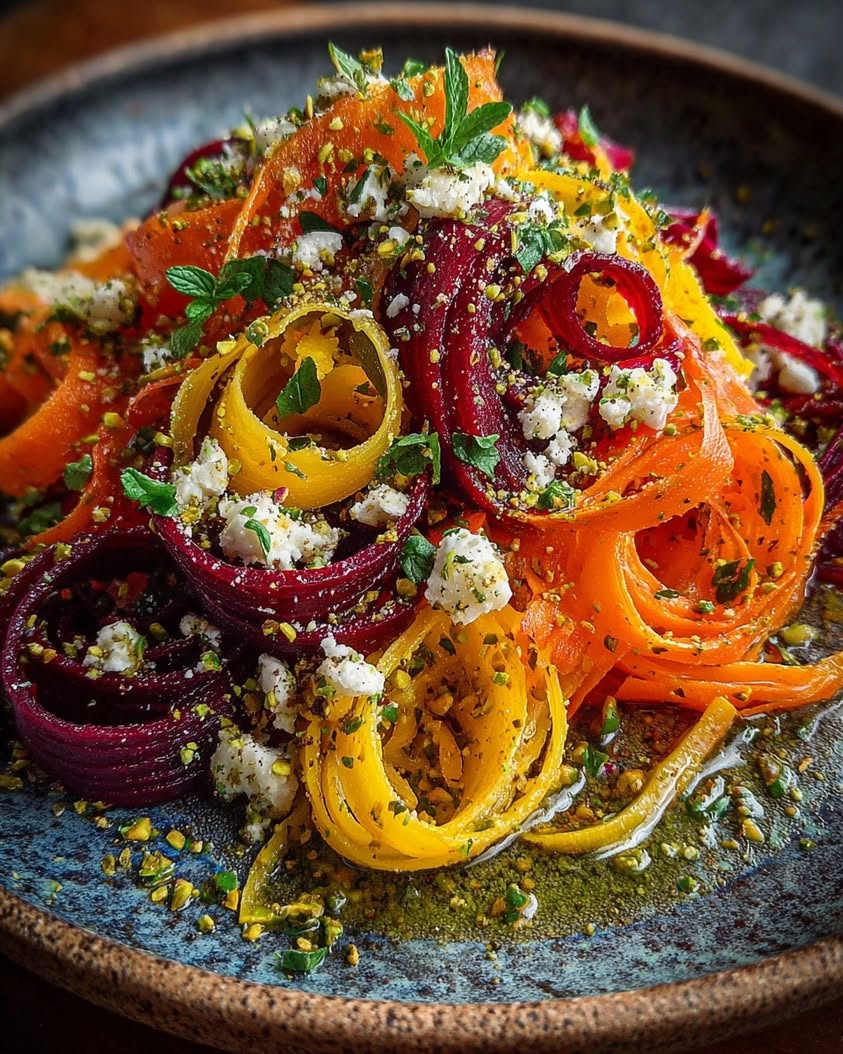
Caramelized Carrot & Beet Ribbons with Feta & Pistachio Crumble: A Sweet and Savory Side Dish Sensation
Imagine a dish that transforms humble root vegetables into a stunning, restaurant-worthy masterpiece. This recipe for caramelized carrot and beet ribbons does exactly that. It combines the natural sweetness of carrots and beets with a savory, salty, and crunchy topping for a truly unforgettable side dish. Moreover, the process of creating these elegant ribbons is surprisingly simple, making it perfect for both weeknight dinners and special occasions.
The magic happens in the oven where high heat coaxes out the vegetables’ sugars, creating deliciously caramelized edges. Consequently, each bite offers a complex harmony of flavors and textures. The final flourish of tangy feta and buttery pistachios elevates the dish from simple roasted veggies to a culinary showstopper. Ultimately, this recipe proves that vegetarian side dishes can be the star of any meal.
This caramelized carrot and beet ribbons recipe is a celebration of color, texture, and balanced flavor. It appeals to the senses with its vibrant hues, enticing aroma, and satisfying crunch. Whether you are seeking an elegant side for a holiday table or a nutritious way to enjoy more vegetables, this dish delivers on every front. Furthermore, it is naturally vegetarian and easily adaptable for various dietary needs, making it a versatile addition to your recipe collection.
Quick Recipe Highlights
- Flavor Profile: This dish masterfully balances sweet and savory notes. The natural sugars in the carrots and beets caramelize beautifully, creating a deep, rich sweetness. Conversely, the salty feta and earthy, nutty pistachios provide a perfect savory counterpoint, resulting in a complex and satisfying taste experience.
- Texture: You will enjoy a delightful contrast in every mouthful. The roasted vegetable ribbons become tender with slightly crisp, caramelized edges. Meanwhile, the crumbled feta offers a creamy, crumbly texture, and the chopped pistachios deliver a final, essential crunch that ties the whole dish together.
- Aroma: As the vegetables roast, your kitchen will fill with a warm, sweet, and earthy fragrance. The scent of caramelizing sugars mingles with the subtle earthiness of beets and the herbaceous hint of thyme. Finally, the nutty aroma of toasted pistachios adds the finishing olfactory note.
- Visual Appeal: This dish is a feast for the eyes with its stunning color contrast. The bright orange carrot ribbons and deep magenta beet ribbons create a vibrant, jewel-toned base. Subsequently, the white feta and green pistachios sprinkled on top make the colors pop, ensuring a beautiful presentation on any plate.
- Skill Level Needed: This is an accessible recipe for cooks of all levels. The primary skills involve simple vegetable peeling and a basic roasting technique. Therefore, even beginner cooks can achieve impressive results, while more experienced cooks can appreciate the elegant simplicity and flavor balance.
- Special Equipment: A vegetable peeler is the only special tool required to create the beautiful ribbons. Otherwise, you just need a sturdy baking sheet, some parchment paper for easy cleanup, and a mixing bowl. Consequently, this recipe requires no fancy gadgets or hard-to-find kitchen equipment.
Recipe Overview
- Difficulty Level: We rate this recipe as “Easy” because it involves straightforward techniques. The most complex step is using a peeler to create ribbons, which is a simple, safe method. Additionally, the roasting process is largely hands-off, requiring only occasional stirring. Ultimately, success relies more on quality ingredients and timing than advanced culinary skill.
- Category: This dish fits perfectly into the “Side Dishes” and “Vegetarian Mains” categories. It pairs wonderfully with roasted chicken, grilled fish, or a hearty grain bowl. Furthermore, it can stand alone as a light lunch or dinner when served over a bed of greens or quinoa for added protein.
- Cuisine: While not tied to one specific tradition, this recipe draws inspiration from modern Mediterranean and contemporary American farm-to-table cooking. It emphasizes fresh, whole vegetables, high-quality olive oil, and simple, bright flavors. The use of feta cheese nods to Greek influences, while the technique is universally adaptable.
- Cost: This is a cost-effective dish, especially when root vegetables are in season. Carrots and beets are typically inexpensive, and a small amount of feta and pistachios goes a long way. Therefore, you can create an elegant, impressive side dish for four people without straining your grocery budget.
- Season: This recipe shines in the fall and winter when root vegetables are at their peak sweetness and most abundant. However, it is truly a year-round delight. In spring and summer, you can use younger, more tender carrots and beets for a slightly lighter result.
- Occasion: Its versatility makes it suitable for countless occasions. Serve it as an elegant side for Thanksgiving or a dinner party. Alternatively, enjoy it as a vibrant component of a weeknight meal prep lineup. Its stunning appearance guarantees it will be a conversation starter at any gathering.
Why You’ll Love This Recipe
First and foremost, the taste and texture appeal is undeniable. Each forkful delivers a symphony of sensations: the tender give of the caramelized vegetable ribbons, the creamy saltiness of the feta, and the satisfying crackle of pistachios. This combination is deeply satisfying and far more exciting than standard roasted vegetables. The sweet and savory balance makes it universally appealing, even for those who might be skeptical of beets.
From a convenience standpoint, this recipe is a winner. The prep is minimal and mostly involves peeling, which can even be therapeutic. Once the vegetables are on the sheet pan, the oven does most of the work. Consequently, you have time to prepare the rest of your meal or simply relax. Cleanup is equally easy, especially if you use parchment paper on your baking sheet.
Nutritionally, this dish is a powerhouse. Carrots and beets are loaded with vitamins, antioxidants, and dietary fiber. The olive oil provides healthy fats, and the pistachios add plant-based protein and minerals. Together, they create a side dish that is as good for your body as it is for your taste buds. It is a delicious way to increase your vegetable intake without feeling like you are making a sacrifice.
For entertaining, this caramelized carrot and beet ribbons recipe offers immense value. It looks incredibly impressive and colorful on a buffet or dinner plate, suggesting far more effort than was actually required. Guests will be delighted by the unique presentation and sophisticated flavor profile. It is a guaranteed way to elevate a simple meal into a special event.
Finally, its cost-effectiveness and accessibility are major benefits. The ingredients are easy to find at any grocery store and are generally affordable. You can easily double the recipe for a crowd without significant added expense. This accessibility means you can enjoy a gourmet-quality vegetable dish anytime the craving strikes, making elegant eating an everyday possibility.
Historical Background and Cultural Significance
The story of roasting root vegetables is as old as cooking itself, dating back to when humans first used fire. However, the specific technique of creating “ribbons” from vegetables like carrots and beets is a relatively modern culinary innovation. It stems from a desire to present familiar ingredients in new, visually appealing ways, often associated with the rise of food media and restaurant culture in the late 20th and early 21st centuries. This method maximizes surface area for caramelization while creating a delicate, elegant texture.
Culturally, carrots and beets hold significant places in various cuisines. Beets have been cultivated since ancient times in the Mediterranean region and were initially valued for their greens. The Romans eventually bred them for their sweet roots. Carrots, originally purple or white, were developed into the orange variety we know today in the Netherlands. Combining these two storied roots on one plate connects us to centuries of agricultural history and culinary tradition, albeit in a fresh, contemporary format.
The evolution of this recipe reflects broader food trends. It aligns with the modern emphasis on plant-forward eating, vegetable-centric plates, and “eating the rainbow” for health. The addition of a crumble topping—traditionally used for desserts—to savory vegetables shows how contemporary chefs and home cooks play with texture and expectation. This blurring of lines between sweet and savory, and between rustic and refined, is a hallmark of current culinary exploration.
Regional variations of this concept are endless. In the Middle East, one might find similar roasted ribbons topped with za’atar and labneh instead of feta. In parts of Asia, a sprinkle of sesame seeds and a drizzle of chili oil could transform the profile. The basic template of long, roasted vegetable strips adorned with a flavorful topping is a canvas for global flavors. This adaptability ensures the concept remains vibrant and relevant across different kitchens and cultures.
Ingredient Deep Dive
Carrots are the sweet foundation of this dish. Historically, they were first cultivated for their aromatic leaves and seeds, not their roots. The orange carrot we know today was developed in the Netherlands in the 17th century. Nutritionally, they are famously rich in beta-carotene, which the body converts to vitamin A, essential for vision and immune health. For the best ribbons, choose firm, smooth carrots without cracks. A standard vegetable peeler works perfectly to create long, elegant strips that roast evenly.
Beets provide the stunning color and earthy depth. They have been used for thousands of years, initially for medicinal purposes. They are packed with folate, manganese, and dietary nitrates, which can support heart health and exercise performance. To select the best beets, look for ones that are firm with smooth skin and vibrant greens attached, if possible. When peeling, wear an apron to protect from stains, and use a sharp peeler. Their natural sugars concentrate beautifully during roasting, balancing their earthy flavor.
Feta cheese brings the essential salty, tangy element. Traditionally, authentic Greek feta is made from at least 70% sheep’s milk, often blended with goat’s milk, and aged in brine. This process gives it its characteristic crumbly texture and sharp flavor. It provides calcium and protein. For this recipe, a block of feta that you crumble yourself is superior to pre-crumbled varieties, which often contain anti-caking agents. Look for feta stored in brine for the best flavor and texture.
Pistachios contribute the crucial crunch and rich, buttery flavor. Originating from the Middle East, these nuts have been a prized food for millennia. They are a good source of healthy fats, protein, fiber, and antioxidants like lutein. For optimal flavor, buy raw, shelled pistachios and give them a quick toast in a dry pan before chopping. This step deepens their nutty flavor and improves their texture in the crumble. Store any leftovers in an airtight container in the freezer to maintain freshness.
Extra Virgin Olive Oil is the workhorse that facilitates caramelization and carries flavor. High-quality EVOO has fruity, peppery notes that enhance the vegetables without overpowering them. It is rich in monounsaturated fats and antioxidants. Use a good-tasting oil you enjoy, as its flavor will be present in the finished dish. Fresh thyme leaves add an aromatic, slightly lemony herbaceous note that bridges the sweet vegetables and savory toppings. If using dried thyme, use only one-third the amount.
Common Mistakes to Avoid
- Using a Dull Peeler: A dull peeler will crush the vegetables rather than slicing cleanly, resulting in ragged, uneven ribbons that cook inconsistently. Always start with a sharp, swivel-style peeler for the best, longest ribbons with minimal effort.
- Crowding the Pan: If you pile the vegetable ribbons on top of each other, they will steam instead of roast and caramelize. Spread them in a single, even layer, even if it means using two baking sheets. Proper spacing is key for achieving those delicious browned edges.
- Skipping the Parchment Paper: Roasting beets can lead to stubborn, colorful stains on your baking sheet. Lining the pan with parchment paper not only prevents this mess but also makes cleanup instantaneous and prevents any potential sticking.
- Overlooking the Toast on the Nuts: Adding raw pistachios will give you crunch but lack depth of flavor. Taking two minutes to toast them in a dry skillet until fragrant wakes up their natural oils and makes the entire crumble topping more complex and delicious.
- Adding the Toppings Too Early: If you add the feta and pistachios before roasting, the cheese will melt into a greasy pool and the nuts may burn. Always add these finishing elements after the vegetables come out of the oven so they retain their distinct textures.
- Not Seasoning Enough: Vegetables need ample seasoning to shine. Do not be shy with the salt and pepper before roasting. Remember, you are seasoning the entire volume of vegetables, not just the surface. Taste a ribbon after roasting and adjust if needed.
- Using Pre-Crumbled Feta: Pre-crumbled feta is often drier and coated with anti-caking agents, which can affect its melting quality and flavor. A block of feta crumbled by hand is creamier, more flavorful, and will distribute more evenly throughout the dish.
- Cutting the Vegetables Instead of Ribboning: Slicing carrots and beets into coins or chunks changes the cooking dynamics and final presentation completely. The thin ribbons caramelize faster and offer a more delicate, elegant eating experience that is central to this recipe’s appeal.
Essential Techniques
Creating Vegetable Ribbons is the signature technique for this dish. Using a firm, steady pressure, drag the peeler down the length of the washed and peeled vegetable to create long, wide strips. Rotate the vegetable after each pass to work evenly around its circumference. Stop when you reach the woody core. This technique maximizes surface area for caramelization and creates a beautiful, delicate texture. The key is a sharp peeler and confidence—long, smooth strokes yield the best results.
High-Heat Roasting for Caramelization is what develops the deep, sweet flavors. Preheat your oven fully to ensure the vegetables start cooking immediately. The high heat causes the natural sugars in the carrots and beets to brown and concentrate at the edges of the ribbons. Do not stir too often; let them sit undisturbed for stretches to allow browning to occur. The visual cue for success is seeing browned, slightly crisp edges on the ribbons while the centers remain tender.
Toasting Nuts is a simple but transformative step. Place raw, shelled pistachios in a single layer in a dry skillet over medium heat. Shake the pan frequently until they become fragrant and may show a slight golden color. This process, which takes only 3-5 minutes, releases their aromatic oils and deepens their flavor. The common pitfall is walking away, as they can burn quickly. Always transfer them to a plate immediately after toasting to stop the cooking process.
Pro Tips for Perfect Caramelized Carrot & Beet Ribbons
First, use separate bowls for tossing the carrot and beet ribbons with oil. This prevents the beet juice from staining all the carrots pink before they hit the oven. You can combine them on the baking sheet.
For extra flavor, add a strip of lemon zest or a smashed garlic clove to the olive oil before tossing it with the vegetables. Remove the garlic before roasting if you prefer a subtle hint rather than a strong punch.
If your vegetable ribbons vary greatly in width, place the thicker ones on the outer edges of the baking sheet where the heat is more intense. This helps everything finish cooking at the same time.
For a more cohesive crumble, mix the toasted, chopped pistachios with the feta and a tiny drizzle of olive oil before sprinkling. This helps the ingredients cling together and distribute more evenly.
Let the roasted vegetables rest for 5 minutes after removing them from the oven. This allows them to firm up slightly, making them easier to serve and preventing the toppings from immediately sinking in.
If serving for a party, prepare the components separately: roast the ribbons, make the crumble, and combine just before serving. This keeps the textures perfect and the presentation fresh.
Variations and Adaptations
For regional variations, consider swapping the toppings to match different cuisines. A Middle Eastern version could feature dukkah, pomegranate seeds, and a yogurt drizzle. An Italian-inspired take might use toasted pine nuts, ricotta salata, and a balsamic reduction. A Nordic adaptation could include toasted rye breadcrumbs and fresh dill. The basic method of caramelized ribbons is a perfect foundation for global flavor exploration.
Seasonal adaptations are simple and rewarding. In spring, use young carrots and golden beets for a lighter, sweeter profile. In summer, add fresh basil or mint to the topping. For a heartier fall or winter dish, incorporate roasted squash ribbons or sprinkle with a pinch of warming spices like cinnamon or cumin on the vegetables before roasting.
Dietary modifications are straightforward. For a vegan version, omit the feta and use a crumbled vegan cheese or a generous sprinkle of nutritional yeast mixed with the pistachios. For a dairy-free option, use a dairy-free feta alternative or simply double the nuts. To make it nut-free, substitute toasted sunflower seeds or pepitas for the pistachios.
Flavor variations can personalize the dish immensely. Add a teaspoon of smoked paprika or ground coriander to the oil before tossing the vegetables. For a sweet-and-spicy twist, drizzle the finished dish with a little honey or maple syrup and a pinch of chili flakes. A splash of sherry vinegar or lemon juice after roasting can add a welcome bright acidity.
Serving and Presentation Guide
Plating techniques can elevate this dish from home-cooked to haute cuisine. Instead of piling the ribbons in a mound, try arranging them in a loose, overlapping cascade on a long platter or individual plates. Use a fork to lift and twist small bundles for height and visual interest. The goal is to show off the beautiful colors and textures of each component.
Garnishing provides the final touch of freshness and color. Beyond the feta and pistachios, consider a final flourish of microgreens, edible flowers, or delicate herb sprigs like dill or chervil. A very light drizzle of high-quality extra virgin olive oil or a reduced balsamic glaze in artistic dots around the plate adds professional polish.
For traditional accompaniments, this side dish pairs classically with simply prepared proteins. Think herb-roasted chicken, pan-seared salmon, or grilled lamb chops. It also complements grain-based mains like a pearl couscous pilaf or a creamy risotto, where its vibrant colors and textures provide a striking contrast.
Modern serving suggestions include using it as a topping. Pile warm ribbons over a bed of peppery arugula for a hearty salad, or fold them into warm quinoa or farro for a grain bowl. You can also use them as a vibrant, flavorful topping for crostini or bruschetta spread with whipped goat cheese.
Wine and Beverage Pairing
Wine pairings should complement the sweet earthiness of the vegetables and the saltiness of the feta. A crisp, dry Rosé with good acidity cuts through the richness and mirrors the dish’s fruitiness. A light-bodied Pinot Noir with earthy notes can also be delightful, especially if serving with a protein like chicken or duck. For white wine lovers, an unoaked Chardonnay or a Sauvignon Blanc with citrus notes provides a refreshing counterpoint.
Non-alcoholic alternatives can be just as sophisticated. A sparkling water with a twist of orange or a slice of beet itself is visually thematic and refreshing. For a more complex option, try a cold-brewed hibiscus tea (which echoes the beet’s color) or a ginger-lemon kombucha, whose effervescence and tang cleanse the palate beautifully between bites.
Coffee and tea pairings are less common but can work. If serving this dish as part of a brunch, a medium-roast coffee with low acidity would not clash with the vegetables’ sweetness. A light, floral white tea or a green tea like Dragonwell could complement the earthy notes without overwhelming the delicate flavors of the dish.
Storage and Shelf Life
Store leftovers in an airtight container in the refrigerator for up to 3 days. It is best to store the vegetable ribbons separately from the feta and pistachio crumble to maintain optimal texture. The roasted ribbons may release some liquid upon cooling; this is normal.
Reheating requires care to prevent sogginess. Spread the ribbons on a baking sheet and warm in a 350°F oven for 5-10 minutes until heated through. Avoid the microwave, as it will steam the ribbons and make them limp. Always add the fresh crumble topping after reheating.
Freezing is not recommended for the assembled dish. The texture of the roasted vegetables becomes mushy upon thawing, and the feta does not freeze well. However, you can successfully freeze peeled, raw carrot and beet ribbons in a single layer on a tray before transferring to a freezer bag for up to 3 months, ready for roasting from frozen (add a few extra minutes).
Make Ahead Strategies
You can prep components up to 24 hours in advance for effortless assembly. Peel and create the carrot and beet ribbons, storing them separately in airtight containers or bags in the refrigerator. Toast and chop the pistachios, and crumble the feta, storing these separately at room temperature and in the fridge, respectively.
On the day of serving, simply toss the cold ribbons with oil and seasoning and roast as directed. The vegetables may need an extra minute or two if starting from fridge-cold. This strategy spreads the work and makes last-minute preparation a breeze, which is ideal for dinner parties or holiday meals.
The quality impact of prepping ribbons ahead is minimal. They may soften slightly but will roast up just fine. The key is keeping the beets and carrots separate until roasting to prevent staining. Allowing the toppings to be added fresh at the end guarantees the perfect contrast of textures every time.
Scaling Instructions
Halving the recipe is straightforward for smaller households. Use a standard baking sheet and simply reduce all ingredients by half. The cooking time may decrease by a few minutes, so start checking for doneness around the 18-minute mark. This is a perfect way to create a romantic dinner side for two.
Doubling or tripling for a crowd requires planning. Use multiple baking sheets and rotate them from top to bottom racks halfway through cooking to ensure even browning. You may need to roast in batches to avoid overcrowding. Mix the ribbons in very large bowls to ensure even oil coating.
Equipment adjustments are key when scaling up. Ensure you have enough large sheet pans and mixing bowls. Consider using the convection setting on your oven if available, as it circulates air better for multiple racks. For very large batches, you might even roast the different vegetable types on separate trays for most consistent results.
Nutritional Deep Dive
This dish offers a favorable macro breakdown. It is primarily carbohydrates from the vegetables, but they are complex carbs high in fiber. The olive oil and pistachios provide healthy monounsaturated and polyunsaturated fats. The feta adds a modest amount of protein and fat. Consequently, it is a balanced side that provides sustained energy without heaviness.
The micronutrient profile is impressive. Carrots deliver a huge dose of vitamin A (as beta-carotene), vital for eye health. Beets are rich in folate, important for cell function, and manganese, which supports bone health. Pistachios contribute B vitamins and potassium. Together, they create a nutrient-dense plate that supports overall wellness.
From a dietary consideration standpoint, this recipe is naturally vegetarian and gluten-free. It can be adapted to be vegan and dairy-free with simple substitutions. The fiber content promotes digestive health, and the antioxidants in the colorful vegetables help combat oxidative stress in the body.
Dietary Adaptations
For a Gluten-Free version, this recipe is already perfect as written. Just ensure all packaged ingredients like pistachios are certified gluten-free if cross-contamination is a concern. No other changes are needed.
To make it Dairy-Free or Vegan, replace the feta cheese. Excellent options include a crumbled vegan feta alternative, marinated tofu crumbles, or a sprinkle of nutritional yeast mixed with the pistachios for a cheesy flavor. A dollop of creamy, dairy-free yogurt on the side can also mimic the tangy element.
For a Low-Carb or Keto adaptation, reduce the amount of carrots and beets, as they are higher in natural sugars. Focus more on the topping and consider adding low-carb vegetables like zucchini ribbons to the mix. Increase the ratio of feta and pistachios for more fat and protein to fit macro goals.
For a Paleo version, omit the dairy-based feta. Use a compliant topping like chopped olives, avocado, or a homemade “paleo cheese” made from nuts. Ensure your olive oil is high-quality and that the pistachios are unsalted and not roasted in non-compliant oils.
Troubleshooting Guide
If your ribbons are soggy instead of caramelized, the oven temperature may be too low, or the pan was overcrowded. Always preheat your oven fully and use an oven thermometer to verify accuracy. Spread the ribbons in a single layer with space between them. Sogginess can also result from not patting the washed vegetables dry before ribboning and oiling.
If the vegetables are burning before becoming tender, your oven temperature may be too high, or the ribbons are cut too thinly. Check your oven calibration. Conversely, if they are not browning at all, the temperature may be too low, or you are stirring them too frequently. Allow them to sit undisturbed for at least 10-minute intervals to develop color.
If the feta melts into an unappealing greasy layer, it was added before or during roasting. Feta should only be added after the vegetables are out of the oven and have cooled for a minute or two. The residual heat will soften it slightly without causing it to melt completely. Always use block feta, not pre-crumbled.
Recipe Success Stories
Community feedback on this caramelized carrot and beet ribbons recipe consistently highlights its “wow factor.” Home cooks report that it reliably impresses guests and makes them feel like professional chefs. Many note that it has become their go-to dish for potlucks and holiday meals because it is always devoured, and people constantly ask for the recipe.
Variation successes abound. One reader added a drizzle of tahini-lemon sauce and called it a revelation. Another used a mix of rainbow carrots and golden beets for a stunning “sunset” effect on the plate. A family with young kids reported that calling them “vegetable noodles” got their children excited to eat them, proving the presentation is fun for all ages.
Reader suggestions have included brilliant tweaks. Some recommend adding a pinch of sumac to the pistachios for a lemony zing. Others suggest serving it alongside a minted yogurt dip. One creative cook even used the leftovers in an omelet the next morning, reporting it was a fantastic breakfast upgrade.
Frequently Asked Questions
Can I use a mandoline instead of a peeler? Yes, a mandoline can create very uniform ribbons quickly. However, use extreme caution with the guard, as beets and carrots are hard and slippery. A peeler is safer for most home cooks and yields excellent results.
My beets are staining everything. Help! Work quickly, use separate bowls, and consider wearing disposable gloves. To clean stained boards or hands, rub with coarse salt and lemon juice, then wash with soap and water.
Can I use pre-cooked or canned beets? We do not recommend it. Pre-cooked beets will not caramelize properly and will become mushy. The texture and flavor development from roasting raw beet ribbons is essential to the dish.
What can I substitute for pistachios? Toasted walnuts, almonds, pecans, or sunflower seeds all work well. Choose a nut or seed that offers a good crunch and a flavor you enjoy.
Is there a way to make this ahead for a party? Absolutely. Roast the ribbons up to 2 hours ahead and let them sit at room temperature. Re-crisp in a warm oven for 5 minutes before serving, then add the toppings.
Why are my carrot ribbons cooking faster than my beet ribbons? Carrots often contain less water and may cook slightly faster. You can add the beet ribbons to the pan first, give them a 3-5 minute head start, then add the carrot ribbons.
Can I use dried thyme instead of fresh? Yes, but use only one-third the amount, as dried herbs are more potent. Rub the dried thyme between your fingers before adding to release its oils.
How do I prevent the feta from sticking to my fingers when crumbling? Lightly coat your fingers with a tiny bit of olive oil or use the tines of a fork to break the block apart over the dish.
Is this dish served hot, warm, or at room temperature? It is best served warm, shortly after coming out of the oven. However, it is also delicious at room temperature, making it great for buffets.
Can I add other vegetables? Certainly. Parsnip, sweet potato, or butternut squash ribbons would be delicious additions. Just be mindful that different vegetables may have different roasting times.
Additional Resources
For related recipes, explore other elegant vegetable side dishes like Hasselback Potatoes, Roasted Brussels Sprouts with Balsamic Glaze, or a Summer Squash Gratin. Each shares the philosophy of transforming simple vegetables into spectacular fare through thoughtful technique and finishing touches.
If you loved the ribbon technique, consider applying it to other meals. Use zucchini ribbons for a quick “pasta,” or make cucumber ribbons for a stunning salad. The technique is versatile and can be used with any long, firm vegetable to add visual drama and alter texture.
For seasonal variations, follow the harvest. In spring, look for recipes featuring asparagus and peas. In summer, focus on tomatoes and corn. This caramelized carrot and beet ribbons recipe is your template for celebrating root vegetables in the cooler months, a cornerstone of seasonal eating.
PrintCaramelized Carrot & Beet Ribbons with Feta & Pistachio Crumble
Description
A vibrant, sweet-and-savory salad featuring thinly sliced carrot and beet ribbons, caramelized to perfection and topped with a tangy feta and crunchy pistachio crumble.
Ingredients
For the Crust:
- 2 large carrots, peeled and sliced into ribbons with a vegetable peeler
- 1 large beet, peeled and sliced into ribbons with a vegetable peeler
- 2 tablespoons olive oil
- 1 tablespoon honey
- 1 teaspoon balsamic vinegar
- Salt and black pepper to taste
- 1/2 cup crumbled feta cheese
- 1/4 cup shelled pistachios, roughly chopped
- 1 tablespoon fresh parsley, chopped
Instructions
1. Prepare the Crust:
- Preheat oven to 400°F (200°C). Line a baking sheet with parchment paper.
- In a bowl, toss carrot and beet ribbons with olive oil, honey, balsamic vinegar, salt, and pepper until evenly coated.
- Spread ribbons in a single layer on the baking sheet. Roast for 20-25 minutes, stirring halfway, until caramelized and tender.
- While roasting, combine feta, pistachios, and parsley in a small bowl to make the crumble.
- Transfer caramelized ribbons to a serving platter. Sprinkle the feta and pistachio crumble over the top. Serve warm or at room temperature.
Notes
You can customize the seasonings to taste.

I’m Shaykee—born in Morocco, seasoned across continents. From airplane galleys to home kitchens, I share the flavors and stories that shaped my journey.