
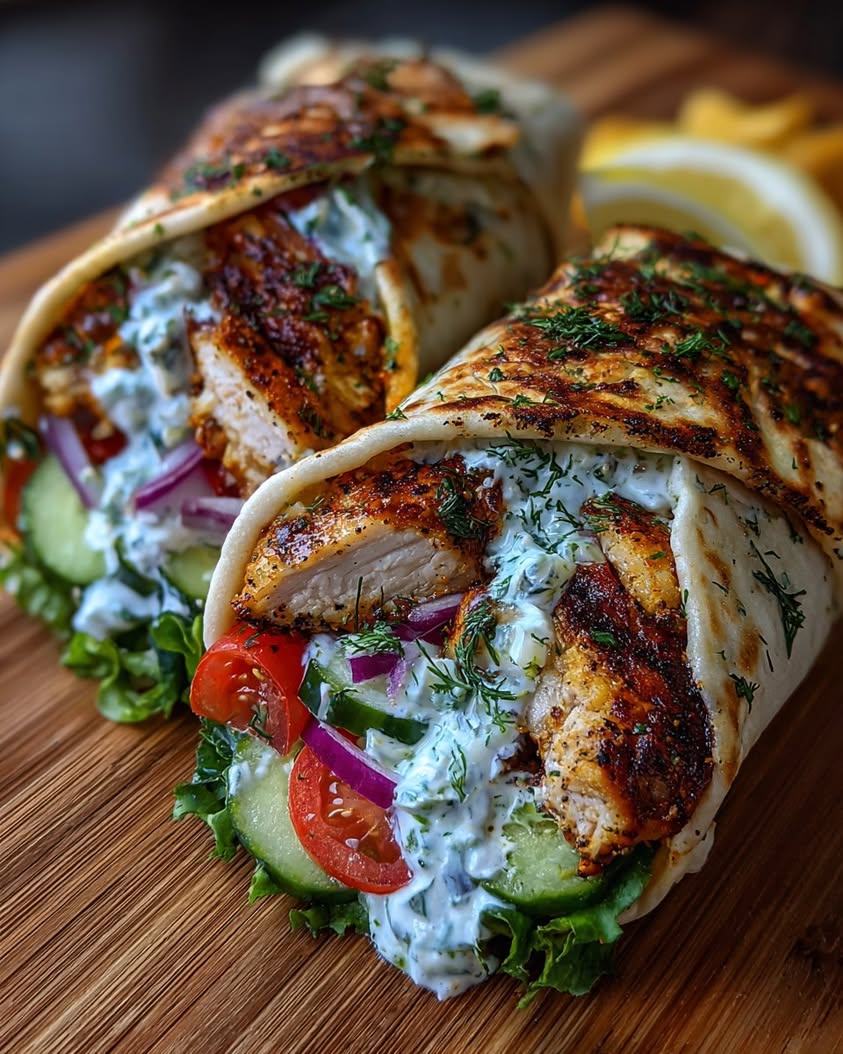
Greek Chicken Wraps with Sauce: Your New Go-To Healthy Meal
Imagine biting into a soft, warm wrap bursting with the vibrant flavors of the Mediterranean. This Greek chicken wraps recipe delivers exactly that experience. It features tender, herb-marinated chicken, crisp vegetables, and a generous drizzle of cool, creamy tzatziki sauce. Ultimately, it is a complete meal that feels both indulgent and nourishing.
These wraps are the perfect solution for busy weeknights, meal prep, or a casual lunch with friends. They come together in about thirty minutes, making them a fantastic option for anyone seeking a quick, healthy dinner. The combination of savory chicken, tangy feta, and refreshing cucumber creates a symphony of textures and tastes in every single bite.
Furthermore, this recipe is incredibly versatile. You can easily customize the fillings based on what you have in your refrigerator. Consequently, it is a fantastic way to reduce food waste while enjoying a delicious and satisfying meal. The star of the show, without a doubt, is the homemade tzatziki sauce, which ties all the components together with its garlicky, dill-infused creaminess.
Quick Recipe Highlights
- Flavor Profile: These wraps offer a bright and balanced taste. The lemon and oregano-marinated chicken provides a savory, herbaceous base. Meanwhile, the tzatziki sauce adds a tangy, garlicky punch, and the briny feta cheese contributes a salty, creamy finish.
- Texture: You will experience a wonderful contrast of textures. The chicken is juicy and tender, while the vegetables like cucumber and red onion offer a satisfying crunch. Additionally, the soft flour tortilla wraps everything together for a perfect handheld bite.
- Aroma: As the chicken cooks, your kitchen will fill with the irresistible scent of garlic, lemon, and Mediterranean herbs. The fresh dill in the tzatziki sauce adds a final, fragrant note that makes the dish smell as good as it tastes.
- Visual Appeal: These wraps are a feast for the eyes with their vibrant colors. You will see the golden-brown chicken, bright red tomatoes, green cucumbers, and white feta cheese all wrapped in a warm tortilla. A final drizzle of the white tzatziki sauce makes the presentation pop.
- Skill Level Needed: This is a beginner-friendly recipe. The techniques involve simple chopping, quick marinating, and basic stovetop cooking. No special culinary skills are required, making it accessible for cooks of all levels.
- Special Equipment: You only need basic kitchen tools: a sharp knife, a cutting board, a mixing bowl, and a large skillet or grill pan. A box grater for the cucumber in the sauce is helpful but not strictly necessary.
Recipe Overview
- Difficulty Level: We rate this recipe as easy because it uses straightforward techniques and common ingredients. The steps are logical and sequential, with no complicated processes. Even a novice cook can achieve excellent results by following the clear instructions.
- Category: This dish falls perfectly into the categories of a healthy lunch, a quick dinner, and an excellent meal prep option. It is a complete, balanced meal containing protein, vegetables, and healthy fats, all in one convenient package.
- Cuisine: This recipe is inspired by the fresh, vibrant flavors of Greek and broader Mediterranean cuisine. It utilizes classic ingredients like oregano, lemon, feta, cucumber, and olive oil, which are staples in that region’s cooking.
- Cost: Making these Greek chicken wraps at home is very cost-effective. Chicken breast, vegetables, and basic pantry spices form the bulk of the cost. Homemade tzatziki sauce is significantly cheaper than store-bought versions, stretching your food budget further.
- Season: This is truly a year-round recipe. It feels light and refreshing in the spring and summer, perfect for warm weather. Conversely, it also provides a bright, healthy option during the heavier meals of fall and winter.
- Occasion: These wraps are incredibly versatile for any occasion. They work for a fast family dinner, a casual weekend lunch, a potluck contribution, or even a healthy packed lunch for work or school.
Why You’ll Love This Recipe
First and foremost, the taste and texture combination is utterly irresistible. Each bite delivers a party of flavors: the savory, herbaceous chicken, the cool and tangy tzatziki sauce, the salty feta, and the crisp, fresh vegetables. The soft tortilla holds it all together, creating a handheld meal that is both messy and delightful. Every element complements the others, resulting in a perfectly balanced dish that satisfies cravings for something both hearty and refreshing.
From a convenience standpoint, this recipe is a true weeknight hero. It requires only thirty minutes from start to finish, with minimal active cooking time. The marinade for the chicken comes together in moments, and while it rests, you can prepare the sauce and chop the vegetables. This efficient workflow means you can get a healthy, homemade dinner on the table faster than you could wait for delivery. Moreover, it is an excellent meal prep candidate; you can cook the chicken and make the sauce ahead of time for effortless assembly later.
Nutritionally, these Greek chicken wraps are a powerhouse. They are packed with lean protein from the chicken breast, which helps keep you full and supports muscle maintenance. The abundance of vegetables like tomatoes, cucumbers, and red onions provides essential vitamins, minerals, and fiber. Using Greek yogurt as the base for the tzatziki sauce adds a boost of probiotics and protein without the fat of traditional creamy sauces. Altogether, it is a meal that aligns beautifully with the principles of the Mediterranean diet, known for its heart-healthy benefits.
For social and entertaining value, these wraps are a fantastic choice. They are easy to scale up for a crowd and can be served as a build-your-own-wrap bar, which is always a hit at gatherings. Guests love customizing their meals, and this setup accommodates various dietary preferences with ease. The bright, colorful ingredients make for an appealing presentation that looks like you spent far more time than you actually did. It is a stress-free way to feed friends and family something delicious and memorable.
Finally, the cost-effectiveness and accessibility of this recipe cannot be overstated. You likely have many of the core spices like oregano and garlic powder in your pantry already. Chicken breast, vegetables, and tortillas are affordable and readily available at any grocery store. By making the tzatziki sauce from scratch, you avoid the premium price of pre-made versions and control the ingredients, ensuring a fresher, tastier result. This recipe proves that eating well does not have to be expensive or complicated.
Historical Background and Cultural Significance
The concept of wrapping food in flatbread has ancient roots across many cultures, from Mexican tacos to Middle Eastern shawarma. In Greece, grilled meats and fresh vegetables are often served with pita bread, which is used to scoop up the ingredients. The modern Greek chicken wrap, or “gyro” style wrap, is a contemporary fusion that adapts these traditional elements into a convenient, handheld format popularized globally by fast-casual restaurants. It represents the globalization of Mediterranean flavors, making them accessible and easy to eat on the go.
Culturally, the ingredients tell a story of the Greek landscape and culinary philosophy. Olive oil, lemon, oregano, and garlic form the “holy quartet” of Greek seasoning, reflecting the country’s abundant produce. Feta cheese, made from sheep’s or goat’s milk, is a protected designation of origin product, deeply tied to Greek heritage. Yogurt-based sauces like tzatziki have origins that stretch across the Eastern Mediterranean and into the Middle East, showcasing the region’s shared culinary traditions. This dish, therefore, is a celebration of fresh, local, and vibrant ingredients.
The evolution of this recipe from traditional plated meals to a wrap is a testament to modern eating habits. While a classic Greek meal might feature souvlaki (skewered meat) with a side of pita and tzatziki, the wrap consolidates everything into one portable package. This adaptation likely gained popularity in urban centers worldwide as a quick lunch option. It maintains the authentic flavor profile while offering ultimate convenience, perfectly aligning with today’s fast-paced lifestyle without sacrificing quality or taste.
Regional variations of this concept are fascinating. In some areas, you might find the chicken replaced with lamb or pork. The vegetables can vary with the addition of kalamata olives, pepperoncini, or even fries inside the wrap, a popular style in parts of Greece. The sauce might be strictly tzatziki, or it could be augmented with a spicy harissa or a creamy feta spread. Some versions use lettuce cups instead of tortillas for a low-carb option. This adaptability is a key reason for the dish’s enduring and widespread popularity.
Ingredient Deep Dive
Let us start with the star protein: chicken breast. Chicken is a fantastic lean protein source, rich in niacin, selenium, and vitamin B6. For the juiciest results in your Greek chicken wraps, look for breasts that are similar in size so they cook evenly. You can also pound them to an even thickness. To store raw chicken, keep it in the coldest part of your refrigerator and use it within 1-2 days, or freeze it for longer storage. For a substitution, boneless, skinless chicken thighs offer more flavor and tenderness due to their higher fat content.
Greek yogurt is the foundation of the iconic tzatziki sauce. Culturally, strained yogurt is a staple across the Eastern Mediterranean. Nutritionally, it is packed with protein, calcium, and probiotics, which are beneficial for gut health. Always choose plain, full-fat or 2% Greek yogurt for the creamiest texture and best flavor. Low-fat versions can be watery. If you need a dairy-free alternative, thick coconut yogurt can work, though it will impart a different flavor. A pro tip is to strain regular yogurt through a cheesecloth to achieve a Greek-style thickness if needed.
The cucumber in the tzatziki sauce provides essential crunch and hydration. English or Persian cucumbers are ideal because they have fewer seeds and thinner skin, which you often do not need to peel. They are rich in water, vitamin K, and potassium. To prevent a watery sauce, the critical technique is to grate the cucumber and then squeeze out the excess liquid firmly in a clean kitchen towel or paper towels. This step ensures your tzatziki remains luxuriously thick and creamy, not runny.
Fresh dill is the herb that defines authentic tzatziki flavor. It has a bright, slightly anise-like taste that pairs perfectly with cucumber and garlic. Dill is a good source of vitamin C and manganese. For the best flavor, always use fresh dill, not dried. Look for bright green, perky fronds. If you absolutely must substitute, a smaller amount of fresh mint can provide a different but still refreshing herbal note. Store fresh dill with its stems in a glass of water in the fridge, covered loosely with a bag, to extend its life.
Common Mistakes to Avoid
- Skipping the Marinade Time: Even a short 15-30 minute marinade makes a significant difference. It allows the lemon juice and herbs to penetrate the chicken, resulting in far more flavorful and tender meat. Rushing this step leads to bland, dry chicken.
- Not Draining the Cucumber: Forgetting to squeeze the grated cucumber dry is the number one reason for watery tzatziki sauce. The excess moisture will dilute the yogurt, making the sauce runny and causing your wrap to become soggy quickly.
- Overcooking the Chicken: Chicken breast cooks quickly and can become dry and tough if left on the heat too long. Use a meat thermometer and pull the chicken off the heat when it reaches 165°F internally. Let it rest before slicing to retain juices.
- Using Cold Tortillas Straight from the Package: A cold, stiff tortilla is difficult to roll and can crack. Always warm your tortillas briefly in a dry skillet, over a gas flame, or in the microwave wrapped in a damp paper towel. This makes them pliable and more flavorful.
- Overstuffing the Wrap: It is tempting to load up the tortilla, but too much filling will make it impossible to roll neatly and will likely cause it to burst. Use a moderate amount of each ingredient, leaving a clear border around the edges for folding.
- Adding the Sauce Too Early: If you assemble the wraps long before serving, the tzatziki sauce will make the tortilla soggy. For meal prep, keep the components separate and add the sauce just before eating. For immediate serving, add it as the final layer before rolling.
- Ignoring the Resting Time for the Sauce: Tzatziki sauce tastes best after the flavors have had time to meld. Making it at least 30 minutes ahead, or even the day before, allows the garlic and dill to infuse the yogurt fully, creating a deeper, more cohesive flavor.
- Cutting the Vegetables Too Large: Chunky vegetables can make the wrap difficult to bite through and can cause fillings to spill out. Dice your tomatoes, cucumber, and red onion into small, uniform pieces for easier eating and better distribution of flavors.
- Not Seasoning the Chicken Enough: Do not be shy with the salt, pepper, and dried oregano. Chicken breast needs adequate seasoning to taste good. Taste your marinade; it should be distinctly flavorful on its own.
- Using the Wrong Type of Yogurt: Regular yogurt is too thin for tzatziki and will not provide the characteristic thick, creamy texture. Always use Greek yogurt, which has been strained to remove whey. The thickness is non-negotiable for a proper sauce.
Essential Techniques
Marinating the Chicken: Marinating is crucial for infusing flavor and tenderizing the meat. The acid in the lemon juice gently breaks down surface proteins, allowing the herbs and garlic to seep in. To master it, use a zip-top bag or shallow dish to ensure all chicken pieces are coated. Do not marinate for more than a few hours in lemon juice, as the acid can start to “cook” the chicken, giving it a mushy texture. The visual cue for a good marinade is chicken that has changed color slightly on the surface and smells fragrantly of lemon and oregano.
Properly Draining Grated Cucumber: This technique is the secret to thick, restaurant-quality tzatziki. After grating the cucumber, place it in the center of a clean kitchen towel or several layers of paper towels. Gather the edges and twist tightly over the sink, applying strong pressure to squeeze out as much liquid as possible. You will be amazed at how much water comes out. The result should be a small, dry-ish ball of cucumber pulp. Skipping this step is the most common pitfall, leading to a sad, watery sauce that fails to coat the other ingredients properly.
Resting Cooked Meat: Always let your cooked chicken breast rest for 5-10 minutes before slicing. When meat cooks, its juices are driven toward the center. Slicing immediately causes those precious juices to run out onto the cutting board, leaving the chicken dry. Resting allows the juices to redistribute evenly throughout the meat. The visual cue is that the chicken will continue to cook slightly from residual heat (called carryover cooking), and when you slice it, you will see moist, tender flesh instead of a flood of liquid.
Warming Tortillas: A warm tortilla is pliable and less likely to tear when rolled. The best method is to heat a dry skillet over medium heat and warm each tortilla for about 15-30 seconds per side until soft and slightly puffed. Alternatively, you can wrap a stack in a damp paper towel and microwave for 20-30 seconds. The pitfall is overheating, which makes them brittle. The perfect tortilla should be warm to the touch, flexible, and have a slight toastiness if done in a skillet.
Pro Tips for Perfect Greek Chicken Wraps
First, for maximum flavor, let your chicken marinate for at least 30 minutes, or even overnight if you have time. The longer it sits, the more pronounced the Mediterranean herb and lemon character will be.
Second, make your tzatziki sauce ahead of time. Allowing it to chill in the refrigerator for a few hours lets the garlic mellow and the dill flavor permeate the yogurt, creating a more complex and harmonious sauce.
Third, slice your chicken against the grain. After resting, look for the lines running along the chicken breast and cut perpendicular to them. This shortens the muscle fibers, making each piece much more tender and easier to bite through in the wrap.
Fourth, build your wrap strategically. Spread a layer of tzatziki directly on the tortilla first; this acts as a glue for the other ingredients. Then add the chicken and vegetables, keeping everything in a tight, horizontal line just below the center of the tortilla.
Fifth, master the rolling technique. Fold the sides of the tortilla inward over the ends of the filling, then tightly roll from the bottom up, using your fingers to hold the fillings in place as you go. A tight roll prevents everything from falling out.
Sixth, if you are making these for a crowd, keep the components separate and let everyone build their own. This keeps tortillas from getting soggy and allows for personal preference, which guests always appreciate.
Seventh, for a beautiful presentation and easier eating, wrap your finished Greek chicken wrap in parchment paper or foil, then slice it in half on a diagonal. This keeps everything contained and shows off the colorful layers inside.
Eighth, toast your wraps after rolling. For a crispy exterior, place your assembled wrap seam-side down in a lightly oiled panini press or a hot skillet with a weight on top. Grill for a minute or two until golden and marked.
Variations and Adaptations
For regional variations, consider a Cypriot twist by adding a sprinkle of dried mint and sumac to the chicken marinade. A more Middle Eastern-inspired version could include a spoonful of tahini swirled into the tzatziki and the addition of pickled turnips. In a Greek-American style, you might find thinly sliced potatoes or fries tucked inside the wrap, a hearty addition popular in many diners.
Seasonal adaptations are simple and fun. In summer, add fresh, sweet corn kernels or grilled zucchini slices. For fall, incorporate roasted red peppers or a spoonful of fig jam for a sweet contrast. In winter, use heartier greens like kale, massaged with a little lemon juice to soften them. Spring calls for fresh peas, asparagus tips, or a sprinkle of chopped fresh mint.
Dietary modifications are straightforward. For a gluten-free Greek chicken wrap, use your favorite gluten-free tortilla, lettuce leaves, or even a collard green as the wrapper. To make it dairy-free, substitute the tzatziki with a sauce made from dairy-free yogurt or a tahini-lemon sauce, and omit the feta cheese. A vegan version can use marinated and grilled chickpeas, tofu, or seitan in place of the chicken.
Flavor variations can take this recipe in new directions. Try a spicy version by adding chopped pepperoncini or a dash of red pepper flakes to the marinade and sauce. For a more herbaceous profile, mix fresh chopped rosemary and thyme with the oregano. A “Greek Caesar” twist could involve swapping the tzatziki for a yogurt-based Caesar dressing and adding romaine lettuce.
Texture modifications can cater to different preferences. For extra crunch, add toasted pine nuts or chopped walnuts. For a creamier interior, mix a little crumbled feta directly into the tzatziki sauce. If you prefer a softer bite, you can quickly pickle the red onions to mellow their sharpness and add a tangy tenderness.
Presentation alternatives go beyond the classic wrap. Serve the components as a hearty salad by chopping the chicken and placing it over a bed of greens with all the toppings and a dollop of tzatziki. You can also make it into a grain bowl with a base of quinoa or rice. For a fun appetizer, use small pita rounds or endive leaves as mini vessels for the chicken and sauce.
Serving and Presentation Guide
Plating techniques matter even for casual food. For a neat presentation, wrap each finished Greek chicken wrap tightly in parchment paper or foil, then slice it in half on a sharp diagonal. Place the two halves side-by-side on a plate with the cut side facing up to showcase the colorful layers inside. This method also contains any potential drips and makes it easier to eat.
Garnishing ideas can elevate the visual appeal instantly. A final drizzle of extra tzatziki sauce and a sprinkle of paprika or chopped fresh dill over the top adds a professional touch. You can also place a few kalamata olives and a lemon wedge on the side of the plate for a pop of color and extra flavor options.
Traditional accompaniments for a Greek meal are simple and complementary. Serve your wraps with a side of lemon-dressed Greek salad, a bowl of olives, or some crispy oven-baked lemon potatoes. For a lighter option, a simple cucumber and tomato salad with red wine vinaigrette pairs perfectly.
Modern serving suggestions include deconstructing the meal. Create a “Greek wrap bowl” with all the components arranged artfully in a bowl, allowing each flavor to be distinct. Alternatively, set up a DIY wrap station for a party, with all the ingredients in separate bowls so guests can build their own creations.
Temperature considerations are key for the best experience. The chicken and vegetables should be warm or at room temperature, while the tzatziki sauce should be cold. This contrast is part of what makes the wrap so refreshing. Avoid assembling with piping hot chicken directly onto a cold sauce-covered tortilla, as it can create condensation and sogginess.
Portion control tips are helpful for meal planning. One standard large tortilla with a moderate amount of filling makes a satisfying single serving. For a lighter meal, use a smaller 8-inch tortilla or a lettuce wrap. If serving as part of a larger spread with multiple sides, you can even cut the wraps into smaller pinwheels for a finger-food appetizer.
Wine and Beverage Pairing
Wine pairings for Greek chicken wraps should complement the bright, herbal flavors without overpowering them. A crisp, dry white wine like Assyrtiko from Santorini is a classic Greek choice, with its citrus notes and mineral finish that mirror the lemon in the dish. A Sauvignon Blanc with its herbaceous character also pairs beautifully. For red wine lovers, a light-bodied, low-tannin red like a Beaujolais or a Greek Xinomavro rosé can work well, especially if the chicken has a good char from grilling.
Non-alcoholic alternatives are just as important. A sparkling lemonade or limeade echoes the citrus in the marinade perfectly. Iced herbal tea, such as mint or lemon verbena, provides a refreshing counterpoint. For something more authentic, try a glass of chilled Greek frappé coffee (if serving for lunch) or a simple cucumber-infused water to stay on theme.
Coffee and tea pairings are excellent if serving these wraps for a brunch or lunch. A medium-roast coffee with low acidity won’t clash with the tangy tzatziki. A cup of hot or iced mint tea complements the dill and other herbal notes in the wrap beautifully, cleansing the palate between bites.
Temperature considerations for beverages are straightforward. Crisp, cold drinks are generally the best match for the fresh, cool elements of the wrap. Serve white wines and non-alcoholic options well-chilled. If you choose a red wine, serve it slightly cooler than room temperature to keep it refreshing.
Serving suggestions include offering a variety of drinks to suit different preferences. Set out a pitcher of infused water, a bottle of white wine, and some sparkling water with lemon slices. This allows everyone to choose their perfect pairing and enhances the overall communal, relaxed feel of the meal.
Storage and Shelf Life
Storage methods must keep components separate to maintain quality. Store the cooked, sliced chicken, the chopped vegetables, and the tzatziki sauce in separate airtight containers in the refrigerator. This prevents the vegetables from getting soggy and the sauce from becoming watery. Assembled wraps will become soggy if stored for more than a few hours.
Temperature requirements are standard for cooked proteins and dairy. All components must be refrigerated at 40°F or below. Do not leave assembled wraps or the tzatziki sauce at room temperature for more than two hours to prevent bacterial growth.
Container recommendations are key for freshness. Use glass or BPA-free plastic containers with tight-fitting lids. For the tzatziki sauce, a small mason jar is perfect. For the chicken, a shallow container allows it to cool quickly and evenly before storing.
Signs of spoilage to watch for include an off or sour smell from the yogurt sauce, a slimy texture on the chicken, or wilted, discolored vegetables. If any component develops an unusual odor, texture, or appearance, discard it immediately. Tzatziki sauce may separate slightly when stored; this is normal and can be stirred back together.
Reheating instructions apply only to the chicken. Gently reheat the sliced chicken in a skillet over medium-low heat with a splash of water or chicken broth to keep it moist. You can also microwave it in 30-second intervals. Do not reheat the tzatziki sauce or the assembled wrap, as this will ruin the texture.
Freezing guidelines are limited. You can freeze the cooked, marinated chicken for up to 3 months. Thaw it overnight in the refrigerator before reheating. Do not freeze the tzatziki sauce or assembled wraps, as the yogurt will separate and the vegetables will become mushy upon thawing.
Make Ahead Strategies
Prep timeline can stretch over two days for ultimate convenience. Day 1: Make the tzatziki sauce and let it chill overnight for maximum flavor development. Day 2 (morning or afternoon): Marinate the chicken for at least 30 minutes, then cook it. Chop all vegetables. Store everything separately. Right before serving, warm tortillas and assemble.
Storage between steps is simple with proper planning. The tzatziki sauce can be made 2-3 days ahead. The chicken can be cooked and refrigerated for up to 3 days. Chop the vegetables 1 day ahead, but store tomatoes separately as they release moisture. Keep red onion in cold water in the fridge to maintain crunch and reduce sharpness.
Quality impact assessment shows that make-ahead steps often improve the dish. The tzatziki sauce absolutely benefits from resting. The chicken, when sliced and stored in its juices, remains moist and flavorful. The only potential quality loss is in the texture of the chopped vegetables, which is why they are best prepped closer to serving time.
Assembly tips for make-ahead meals involve a “kit” approach. Portion all components into individual meal prep containers: one container with chicken, one with mixed veggies, and a small container with tzatziki sauce. Pack a tortilla separately. At mealtime, warm the tortilla and chicken, then assemble fresh. This keeps textures perfect.
Reheating guidelines for prepped components are gentle. Reheat the chicken gently in a microwave or skillet to avoid drying it out. Always bring the tzatziki sauce to cool refrigerator temperature, not cold, for the best texture and flavor release. Never microwave the sauce.
Fresh element additions are the final touch. Even with everything prepped, add a final sprinkle of fresh dill or a squeeze of lemon juice over the chicken just before assembling. This brightens up all the pre-made flavors and makes the wrap taste freshly made.
Scaling Instructions
Halving the recipe is straightforward for smaller households. Simply divide all ingredient quantities by two. Use a smaller skillet to cook the chicken to ensure proper browning. The tzatziki sauce can still be made in the full batch if desired, as it keeps well and is delicious on salads or as a dip. The total prep and cook time will remain roughly the same.
Doubling or tripling the recipe for a crowd requires slight adjustments. Use two large skillets or cook the chicken in batches to avoid overcrowding, which steams the meat instead of searing it. Consider using a sheet pan in a 400°F oven to cook a large batch of chicken breasts evenly. For the tzatziki, mix it in a very large bowl to ensure even distribution of garlic and herbs.
Equipment adjustments become necessary when scaling up. For a large batch, you will need a bigger mixing bowl for the sauce, more containers for storage, and potentially a baking sheet for oven-cooking the chicken. If serving a crowd buffet-style, have multiple spoons and serving utensils for each component to keep the line moving.
Timing modifications are minimal when scaling. The marinade time remains the same regardless of batch size. Cooking time may increase slightly if you are cooking chicken in batches, so plan for an extra 10-15 minutes. Assembly time will naturally be longer with more wraps to roll.
Storage considerations for large batches are important. If you have a lot of leftover cooked chicken, portion it into smaller containers before refrigerating so it cools quickly and safely. Large batches of tzatziki should also be divided into smaller containers to maintain freshness and make it easier to serve.
Nutritional Deep Dive
Macro breakdown for one typical wrap shows a balanced profile. It provides approximately 35-40 grams of high-quality protein from the chicken and Greek yogurt, supporting muscle repair and satiety. Carbohydrates come mainly from the tortilla and vegetables, offering around 30-40 grams of complex and simple carbs for energy. Healthy fats, approximately 15-20 grams, are present in the olive oil, yogurt, and feta cheese, contributing to heart health and nutrient absorption.
Micronutrient analysis reveals a wealth of vitamins and minerals. The chicken and yogurt offer B vitamins, selenium, and phosphorus. Tomatoes and red peppers are rich in vitamin C and lycopene, a powerful antioxidant. Cucumber provides vitamin K and potassium. Olive oil is a source of vitamin E. Together, they create a nutrient-dense meal that supports overall immune function, bone health, and cellular protection.
Health benefits are aligned with the Mediterranean diet, one of the most studied and recommended dietary patterns in the world. This meal promotes heart health through its use of olive oil and lean protein. The high vegetable content increases fiber intake, aiding digestion. The probiotics in Greek yogurt support gut health. The balanced macros help regulate blood sugar levels, preventing energy crashes.
Dietary considerations are easily addressed. This recipe is naturally high in protein and can be made lower in carbs by using a lettuce wrap. It contains dairy, but that can be modified. For those monitoring sodium, you can reduce the added salt and use a lighter hand with the feta cheese. It is a whole-foods-based meal with minimal processed ingredients.
Portion analysis shows that one wrap constitutes a complete and satisfying meal for most adults. The protein and fiber content promote fullness, helping to prevent overeating. If you are very active or have higher caloric needs, you can easily add a side like a grain salad or some roasted potatoes. For a lighter meal, simply use a smaller tortilla.
Weight management tips include being mindful of the tortilla size and the amount of feta and olive oil used. Opt for whole wheat or high-fiber tortillas for extra satiety. You can increase the vegetable-to-chicken ratio to bulk up the wrap with low-calorie, high-volume ingredients. The high protein content is key for maintaining muscle mass while managing weight.
Dietary Adaptations
For a gluten-free adaptation, the only change needed is the wrap itself. Use a certified gluten-free tortilla, a large lettuce leaf like romaine or butter lettuce, or a gluten-free pita. Ensure all other ingredients, like spices, are certified gluten-free, as cross-contamination can sometimes occur in processing facilities.
A dairy-free version requires substitutions for the yogurt and feta. For the tzatziki, use a thick, plain dairy-free yogurt made from coconut, almond, or soy. The flavor will be different but still tasty. Omit the feta cheese or use a store-bought vegan feta alternative. The marinade and vegetables remain the same.
Creating a vegan Greek wrap involves replacing the chicken and dairy. Use marinated and grilled chickpeas, extra-firm tofu, or seitan as the protein base. For the sauce, use dairy-free yogurt as above. Nutritional yeast or vegan feta can add a cheesy flavor. Load up on all the vegetables for a hearty, plant-based meal.
For a low-carb or keto adaptation, ditch the tortilla entirely. Serve the filling in a bowl or use large, sturdy lettuce leaves as cups. Be mindful of the carb count in the tomatoes and onions, and adjust quantities to fit your macros. Ensure the yogurt used in the tzatziki is full-fat and check for added sugars.
A Paleo adaptation also avoids grains and dairy. Use lettuce cups for wrapping. For the sauce, create a “tzatziki” using coconut cream mixed with cucumber, garlic, and dill—though the flavor profile will shift. Omit the feta cheese. The chicken marinade, using olive oil, lemon, and herbs, is already Paleo-friendly.
For a Low-FODMAP version, modifications are needed for garlic and onion. Use garlic-infused olive oil in the marinade instead of fresh garlic. Omit the red onion from the fillings or use only the green tops of scallions. Ensure the yogurt is lactose-free, as many Greek yogurts are low in lactose already. Portion control is key, as some FODMAPs may be present in other ingredients.
Troubleshooting Guide
If your chicken turns out dry, the most likely culprits are overcooking or not resting it. Next time, use a meat thermometer and pull the chicken at 160-
Print
Greek Chicken Wraps with Sauce
Description
A fresh and flavorful wrap featuring grilled chicken, crisp vegetables, and a creamy tzatziki sauce, all wrapped in a warm pita.
Ingredients
For the Crust:
- 1 lb boneless, skinless chicken breasts, sliced into strips
- 2 tbsp olive oil
- 1 tsp dried oregano
- 1/2 tsp garlic powder
- Salt and pepper to taste
- 4 large pita breads or flatbreads
- 1 cup chopped romaine lettuce
- 1 large tomato, diced
- 1/2 red onion, thinly sliced
- 1/2 cup crumbled feta cheese
- 1/2 cup sliced Kalamata olives
- For the Tzatziki Sauce: 1 cup Greek yogurt, 1/2 cucumber, grated and drained, 1 tbsp lemon juice, 1 clove garlic, minced, 1 tbsp fresh dill, chopped
Instructions
1. Prepare the Crust:
- Season the chicken strips with olive oil, oregano, garlic powder, salt, and pepper. Grill or pan-sear over medium-high heat for 6-8 minutes until cooked through and golden.
- In a bowl, mix Greek yogurt, grated cucumber, lemon juice, minced garlic, and dill to make the tzatziki sauce. Refrigerate until ready to use.
- Warm the pita breads in a skillet or oven for 1-2 minutes until soft.
- Assemble wraps by spreading tzatziki sauce on each pita, then layering with lettuce, tomato, red onion, cooked chicken, feta cheese, and olives.
- Fold the pita around the fillings and serve immediately.
Notes
You can customize the seasonings to taste.

I’m Shaykee—born in Morocco, seasoned across continents. From airplane galleys to home kitchens, I share the flavors and stories that shaped my journey.