
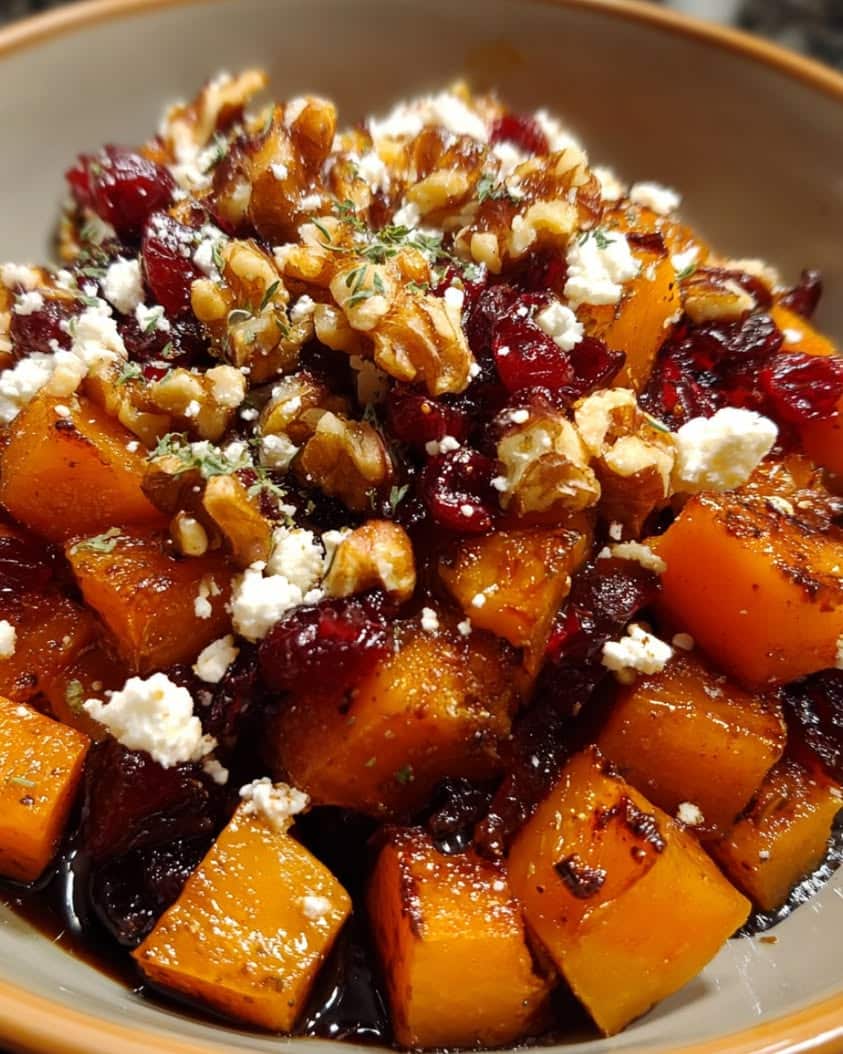
Caramelized Butternut Squash with Feta, Walnuts, and Cranberry-Honey Glaze: Sweet, Savory & Perfect for Fall!
This caramelized butternut squash recipe is a true celebration of autumn on a plate. Imagine tender, sweet cubes of squash roasted to a perfect golden-brown caramelization, then tossed with salty feta, crunchy walnuts, and a vibrant cranberry-honey glaze. The result is a stunning holiday side dish that delivers an unforgettable symphony of flavors and textures. Moreover, it’s surprisingly simple to prepare, making it a reliable star for your Thanksgiving table or any cozy fall dinner.
Every bite offers a delightful contrast. You get the deep, natural sweetness of the roasted squash, the sharp tang of the feta cheese, the earthy crunch of toasted walnuts, and the bright, tart-sweet pop from the cranberry glaze. This dish is not just food; it’s an experience. It looks beautiful, smells incredible while roasting, and tastes even better. Ultimately, this recipe proves that the best holiday side dishes are those that balance simplicity with spectacular, crowd-pleasing results.
Quick Recipe Highlights
- Flavor Profile: This dish masterfully balances sweet, savory, tangy, and salty notes. The natural sweetness of the caramelized butternut squash pairs perfectly with the salty feta and the tart-sweet cranberry-honey glaze, creating a complex and satisfying taste.
- Texture: Enjoy a wonderful mix of soft and creamy roasted squash, crunchy toasted walnuts, and crumbly feta cheese. The glaze adds a sticky, glossy component that brings all the textures together harmoniously.
- Aroma: As it roasts, your kitchen will fill with the warm, sweet scent of caramelizing squash and cinnamon. The final drizzle of the cranberry-honey glaze adds a festive, fruity fragrance that is simply irresistible.
- Visual Appeal: This dish is a feast for the eyes with its vibrant orange squash, white feta, deep brown walnuts, and ruby-red glaze. It’s a colorful and elegant addition to any holiday spread.
- Skill Level Needed: This is an easy recipe suitable for cooks of all levels. The primary techniques are simple chopping, tossing, and roasting. No advanced culinary skills are required for success.
- Special Equipment: You only need a good chef’s knife, a sturdy cutting board, a large baking sheet, and a small saucepan. A silicone baking mat or parchment paper is helpful for easy cleanup.
Recipe Overview
- Difficulty Level: This recipe is rated easy because it involves straightforward, common kitchen techniques. The most challenging part is safely cutting the squash, but pre-cubed squash is a great time-saver. The roasting process is largely hands-off, and the glaze comes together in minutes on the stovetop.
- Category: This dish falls squarely into the side dish category, perfect for holidays and special dinners. Additionally, it can be served warm over a bed of greens as a hearty fall salad or alongside grains like quinoa for a vegetarian main course.
- Cuisine: While not tied to one specific tradition, this recipe draws inspiration from modern American and Mediterranean cuisines. The use of feta and walnuts nods to Mediterranean flavors, while the cranberry glaze is a classic North American holiday touch.
- Cost: This is a moderately priced dish. Butternut squash is an affordable winter vegetable. Feta, walnuts, and fresh cranberries are the primary cost drivers, but they provide significant flavor impact. You can often find walnuts in bulk for better value.
- Season: This is the ultimate fall and winter recipe. Butternut squash and cranberries are at their peak during these seasons. The warm, comforting flavors are perfectly suited to holiday gatherings and cold-weather meals.
- Occasion: It’s an ideal centerpiece side dish for Thanksgiving, Christmas, or Friendsgiving. Furthermore, it’s elegant enough for a dinner party yet simple enough for a special weeknight family meal.
Why You’ll Love This Caramelized Butternut Squash
First and foremost, the taste and texture combination is absolutely divine. The caramelization process unlocks the squash’s natural sugars, creating deep, almost nutty flavor notes. When paired with the salty punch of feta and the earthy crunch of walnuts, each forkful is a delightful surprise. The cranberry-honey glaze is the final maestro, conducting all these elements into a cohesive and memorable dish. It’s that perfect bite you’ll find yourself thinking about long after the meal is over.
From a practical standpoint, this recipe offers incredible convenience. After the initial prep, the oven does most of the work. This hands-off time allows you to focus on other parts of your meal or simply relax. The ingredients are also easy to find at any standard grocery store, especially during the fall and winter months. Consequently, you can whip up this impressive dish without any stressful last-minute searches for obscure components.
Nutritionally, this caramelized butternut squash dish is a powerhouse. Butternut squash is loaded with vitamin A, vitamin C, and fiber. Walnuts contribute healthy omega-3 fatty acids and protein. Even the cranberries bring antioxidants and vitamin C to the table. While the honey and feta add some sugars and sodium, overall, this is a nutrient-dense side that complements a balanced diet beautifully.
For entertaining, this recipe is a true winner. Its stunning visual appeal instantly elevates your table. It’s a fantastic conversation starter and caters well to various dietary preferences when served alongside other options. Guests will be impressed by the complex flavors, assuming you spent hours in the kitchen, while you’ll know the simple truth of its easy preparation.
Finally, this dish is cost-effective and accessible. Butternut squash is one of the most affordable produce items in the cooler months. You can stretch pricier ingredients like feta and walnuts by using them as impactful garnishes rather than the main bulk. This approach makes an elegant, restaurant-quality side dish achievable on a home cook’s budget.
Historical Background and Cultural Significance
The story of this dish begins with its individual components, each with a rich history. Butternut squash, a type of winter squash, is native to the Americas and has been cultivated for thousands of years. Indigenous peoples across North and Central America relied on squash as one of the “Three Sisters” (alongside corn and beans), a foundational agricultural system. The squash we know today was developed in the 1940s in Massachusetts, bred for its sweet flavor, thin skin, and fewer seeds.
Cranberries, another native North American fruit, hold deep significance. Native American tribes used them for food, dye, and medicine. They were introduced to Pilgrims and quickly became a staple of New England cuisine. The tradition of cranberry sauce at Thanksgiving dates back to these early colonial celebrations, cementing the berry’s place in American holiday food culture.
The combination of sweet squash and tart berries represents a very American culinary evolution. It takes indigenous ingredients and prepares them with techniques and accompaniments from other traditions. The addition of feta cheese introduces a Mediterranean element, a reflection of the modern fusion cooking style that characterizes much of contemporary American cuisine. This blend of Old World and New World ingredients is a testament to the country’s melting pot food identity.
Regional variations of roasted squash dishes abound. In the South, you might find pecans instead of walnuts and a bourbon-based glaze. In the Northeast, maple syrup often replaces honey. On the West Coast, goat cheese might stand in for feta, and pomegranate arils could substitute for cranberries. Our specific recipe sits comfortably within this tradition of adaptable, seasonal, and flavor-forward cooking that celebrates local and accessible ingredients.
Ingredient Deep Dive
Butternut Squash is the hearty star of this show. Historically, as mentioned, it’s a New World vegetable with ancient roots. Nutritionally, it’s a champion, providing over 450% of your daily Vitamin A needs per cup, along with a good dose of Vitamin C, potassium, and fiber. When selecting squash, look for one that feels heavy for its size with a firm, matte skin free of soft spots or cracks. Store whole squash in a cool, dark place for up to 3 months. Once cut, wrap tightly and refrigerate for up to 5 days. For a substitution, sweet potato or acorn squash would work well, though cooking times may vary slightly.
Fresh Cranberries bring the essential tart contrast. These native berries are packed with antioxidants, specifically proanthocyanidins, which are linked to urinary tract health. They also offer Vitamin C and fiber. Choose berries that are firm, plump, and deep red in color; avoid any that are shriveled or soft. Refrigerate them in their original bag or a sealed container for up to two months, or freeze them for up to a year. If fresh are unavailable, you can use frozen cranberries without thawing, or substitute with dried cranberries soaked in a bit of warm water or orange juice to plump them up.
Feta Cheese provides the salty, tangy counterpoint. This brined cheese has origins in Greece and is traditionally made from sheep’s milk or a sheep-goat milk blend. It’s a good source of calcium and protein. For this recipe, a block of feta in brine is superior to pre-crumbled feta, as it is creamier and less dry. Store feta in its brine in the refrigerator. If you need a dairy-free alternative, a firm, salty vegan cheese or even chopped, marinated kalamata olives can provide a similar salty punch.
Walnuts contribute the necessary crunch and earthy depth. Walnuts are among the oldest tree foods, cultivated for thousands of years. They are uniquely high in alpha-linolenic acid, a plant-based omega-3 fatty acid. Always taste a walnut before using to ensure it hasn’t turned rancid. For the best flavor, buy raw walnuts and toast them yourself just before using. Store walnuts in an airtight container in the freezer to prevent their oils from spoiling. Pecans or toasted pumpkin seeds (pepitas) make excellent substitutes.
Common Mistakes to Avoid
- Cutting Squash Unevenly: Inconsistent cube sizes lead to uneven cooking. Some pieces will burn while others remain hard. Take the time to cut the squash into uniform 1-inch cubes for perfect, simultaneous caramelization.
- Skipping the Toasting of Walnuts: Raw walnuts can taste bland and slightly bitter. Toasting them in a dry skillet or the oven for a few minutes unlocks their rich, nutty flavor and improves their crunch dramatically.
- Overcrowding the Baking Sheet: If the squash cubes are piled on top of each other, they will steam instead of roast. Use a large enough sheet pan and spread the squash in a single layer with some space between pieces for optimal browning.
- Not Preheating the Oven: Putting squash into a cold oven drastically changes the cooking process and prevents proper caramelization. Always ensure your oven is fully preheated to the specified temperature before roasting.
- Using Pre-Crumbled Feta: Pre-crumbled feta is often coated in anti-caking agents and can be dry and chalky. For superior creaminess and flavor, buy a block of feta in brine and crumble it yourself just before serving.
- Neglecting to Stir the Glaze: The cranberry-honey glaze can burn easily due to its sugar content. Cook it over medium heat and stir it frequently until the cranberries just begin to pop and the mixture thickens slightly.
- Adding the Glaze Too Early: If you toss the roasted squash with the hot glaze and then return it to the oven, the glaze can burn. It’s best to drizzle the glaze over the assembled dish just before serving.
- Forgetting to Season the Squash: Butternut squash needs salt to enhance its natural sweetness. Don’t rely solely on the saltiness of the feta. Generously season the squash cubes with salt and pepper before they go into the oven.
Essential Techniques
Caramelization is the most crucial technique here. This is the process where the natural sugars in the butternut squash brown and develop complex, deep flavors when exposed to high, dry heat. To master it, ensure your oven is hot (400°F is ideal), your squash is in a single layer, and you don’t stir it too often. Let it sit for at least 15-20 minutes before giving it a first toss. The visual cues for success are golden-brown edges and a slightly shrunken, tender interior. A common pitfall is stirring too frequently, which releases moisture and steams the squash instead of browning it.
Reducing a Glaze is another key skill. The goal is to simmer the cranberry, honey, and vinegar mixture until some of the liquid evaporates, concentrating the flavors and creating a slightly syrupy consistency. Importance lies in balancing the sweet and tart elements. Cook over medium heat and stir frequently to prevent scorching. The glaze is ready when the cranberries have popped, the mixture has thickened enough to coat the back of a spoon, and it leaves a clear trail when you drag a spatula through it. Under-reducing will leave it too runny, while over-reducing can make it sticky and too sweet.
Toasting Nuts might seem simple, but it’s easy to burn them. Toasting is important because it drives off moisture, crisps the nut, and intensifies its flavor through the Maillard reaction. Spread raw walnuts in a single layer on a dry skillet or baking sheet. Cook over medium heat on the stovetop or in a 350°F oven, shaking or stirring frequently. They are done when they become fragrant and take on a slightly darker color. The moment you smell that rich, nutty aroma, they are ready. Immediately transfer them to a plate to stop the cooking process. The main pitfall is walking away, as they can go from perfect to burnt in seconds.
Pro Tips for Perfect Caramelized Butternut Squash
For easier peeling, microwave the whole squash for 2-3 minutes first. This loosens the skin slightly and makes it much simpler to cut and peel with a sharp vegetable peeler or knife.
Toss the squash cubes with oil, salt, and pepper directly on the baking sheet. This minimizes dirty dishes and ensures even coating without needing an extra bowl.
Use a light-colored, heavy-duty baking sheet. Dark sheets absorb more heat and can cause the squash to brown too quickly or even burn on the bottom before the interior is tender.
Add a pinch of warming spices like cinnamon, nutmeg, or a dash of cayenne pepper to the squash before roasting. This builds another layer of flavor that complements the other ingredients beautifully.
Let the roasted squash sit for 5 minutes after taking it out of the oven before assembling. This allows the sugars to set slightly and makes the squash less likely to turn to mush when tossed.
If your glaze becomes too thick upon cooling, simply warm it gently over low heat or whisk in a teaspoon of warm water at a time until it returns to a drizzle-able consistency.
For an extra flavor boost, toast the walnuts with a tiny drizzle of maple syrup and a pinch of salt. This creates a candied element that is absolutely irresistible.
Assemble the dish just before serving to maintain the distinct textures. You want the feta to stay cool and crumbly and the walnuts to remain crunchy against the warm squash.
Variations and Adaptations
For regional twists, consider a Southern version with pecans and a bourbon-maple glaze. A Northeastern adaptation might use pure maple syrup instead of honey and add some chopped apples to roast with the squash. A California-inspired take could feature crumbled goat cheese, toasted pepitas, and a pomegranate molasses glaze.
Seasonal adaptations are easy. In late summer, try this with delicata squash (no peeling needed!) and a peach-balsamic glaze. For a winter holiday, incorporate chopped fresh rosemary into the roasting oil. In spring, asparagus tips roasted alongside the squash make a lovely addition.
Dietary modifications are straightforward. For a vegan dish, omit the feta or use a vegan alternative, and ensure your sweetener is vegan (maple syrup works perfectly). For a nut-free version, substitute toasted sunflower seeds or pumpkin seeds for the walnuts. To make it gluten-free, simply confirm all your ingredients are certified GF, which they naturally are in this recipe.
Flavor variations can take this dish in new directions. Add a Middle Eastern flair with za’atar spice on the squash and a drizzle of pomegranate molasses. For an Italian twist, use rosemary, swap walnuts for pine nuts, and finish with shaved Parmesan instead of feta. A spicy-sweet version can include a chipotle pepper in the glaze or a sprinkle of chili flakes on the squash before roasting.
Serving and Presentation Guide
For elegant plating, use a wide, shallow serving bowl or platter. Spoon the warm caramelized butternut squash into the center, creating a slight mound. Artfully scatter the crumbled feta and toasted walnuts over the top, allowing some to tumble down the sides. Finally, drizzle the cranberry-honey glaze in zig-zags or a loose spiral over the entire dish. This method showcases every beautiful component.
Garnishing adds the final touch. Beyond the ingredients in the recipe, consider a few fresh herb sprigs like thyme or rosemary. A final flake of sea salt or a twist of black pepper adds sophistication. For a burst of color and freshness, a handful of microgreens or flat-leaf parsley works wonderfully.
Traditional accompaniments include a classic roast turkey, honey-glazed ham, or herb-roasted chicken. For a vegetarian feast, pair it with a wild rice pilaf, lentil loaf, or stuffed mushrooms. It also complements other holiday sides like creamy mashed potatoes, green bean casserole, or a crisp garden salad.
Modern serving suggestions are versatile. Serve it warm over a bed of baby arugula or massaged kale for a hearty fall salad. Spoon it alongside creamy polenta or cheesy grits. Use it as a flavorful topping for a grain bowl with farro or quinoa. It can even be served at room temperature as part of a festive buffet.
Wine and Beverage Pairing
Wine pairings should complement the sweet, savory, and tangy notes. A slightly off-dry Riesling or Gewürztraminer is a classic choice, as their sweetness mirrors the squash and their acidity cuts through the richness. A medium-bodied Pinot Noir with its red fruit notes pairs beautifully with the cranberry and earthy squash. For a richer option, an oaked Chardonnay can stand up to the caramelized flavors and the creaminess of the feta.
Non-alcoholic alternatives are just as important. Sparkling apple cider is a festive and perfect match for the fall flavors. A ginger beer or spicy ginger ale provides a zesty contrast to the dish’s sweetness. For a warm option, a mulled cranberry juice or a spiced apple tea would be cozy and complementary.
If considering coffee or tea after the meal, opt for options with low bitterness. A medium-roast coffee with notes of caramel or nut would echo flavors in the dish. A cup of chai tea, with its warm spices like cinnamon and cardamom, would be a delightful and harmonious ending to the feast.
Storage and Shelf Life
Store any leftovers in an airtight container in the refrigerator for up to 3 days. It’s best to store the components separately if possible: keep the roasted squash, the crumbled feta, the toasted walnuts, and the glaze in their own containers. This preserves the distinct textures. The walnuts may lose some crunch over time, but you can refresh them in a dry skillet for a minute.
Signs of spoilage include an off or sour smell, significant moisture or slime on the squash, or mold growth. The cranberry glaze may darken in color over time, which is normal, but if it develops an unusual odor, discard it.
Reheating instructions are simple. Reheat only the squash portion, either in the microwave in 30-second intervals or in a 350°F oven until warmed through. Re-assemble with the fresh, cold feta, walnuts, and a drizzle of reheated or room-temperature glaze. Avoid reheating the entire assembled dish, as the feta will melt and the walnuts will become soggy.
Freezing is possible but with caveats. You can freeze the plain roasted squash cubes in a single layer on a sheet pan before transferring to a freezer bag for up to 3 months. The texture may become slightly softer upon thawing. Do not freeze the assembled dish with cheese, nuts, or glaze, as these components do not freeze well.
Make Ahead Strategies
You can prep almost every component 1-2 days in advance. Peel and cube the squash, then store it submerged in water in the refrigerator to prevent browning. Make the cranberry-honey glaze and store it in a jar in the fridge. Toast the walnuts and keep them at room temperature in an airtight container. Crumble the feta and refrigerate it separately.
On the day of serving, simply drain and thoroughly dry the squash cubes, toss with oil and seasonings, and roast. Gently warm the glaze on the stovetop or in the microwave, adding a splash of water if needed. This strategy spreads the work out and makes final assembly a quick, stress-free process.
The quality impact of prepping ahead is minimal if done correctly. The squash may lose a tiny bit of freshness but roasting will revive its flavor. The glaze may thicken in the fridge but reheats beautifully. The key is keeping elements separate until the last moment to preserve their individual textures and flavors.
Scaling Instructions
Halving the recipe is simple for smaller gatherings. Use a medium baking sheet and reduce the roasting time by 5-10 minutes, checking for tenderness and browning. The glaze can be easily halved in a small saucepan. Keep an eye on it, as it will reduce more quickly due to the smaller volume.
Doubling or tripling for a crowd requires planning. Use multiple baking sheets and rotate them from top to bottom oven racks halfway through cooking to ensure even browning. You may need to roast in batches. For the glaze, use a wider, heavy-bottomed saucepan to allow for faster evaporation without burning. Consider toasting the walnuts in the oven on a separate sheet rather than in batches on the stovetop.
Equipment adjustments are key when scaling up. Ensure you have enough large sheet pans. If oven space is limited, you can roast the squash ahead of time and re-warm it briefly before serving. For very large batches, consider using disposable aluminum pans for easy cleanup.
Nutritional Deep Dive
This dish provides a balanced mix of macronutrients. The butternut squash and honey contribute healthy complex and simple carbohydrates for energy. The walnuts and olive oil offer beneficial monounsaturated and polyunsaturated fats, including omega-3s. The feta cheese provides protein and fat. It’s a satisfying side that helps balance a meal without being overly heavy.
The micronutrient profile is impressive. Butternut squash is exceptionally high in Vitamin A (as beta-carotene), crucial for vision and immune health. It also provides Vitamin C, potassium, and magnesium. Cranberries add more Vitamin C and unique antioxidants. Walnuts contribute manganese and copper. Together, they make this a nutrient-dense choice that supports overall wellness.
For weight management, this dish is a great option because it is high in fiber and volume, which promotes satiety. The combination of fiber from the squash and healthy fats from the walnuts and oil helps you feel full and satisfied. Be mindful of portion size with the glaze and cheese to manage calorie intake, but overall, it’s a wholesome addition to a balanced plate.
Dietary Adaptations
Gluten-Free: This recipe is naturally gluten-free. Simply verify that all packaged ingredients (like pre-crumbled cheese) are certified gluten-free if you have celiac disease or a severe sensitivity.
Dairy-Free/Vegan: Omit the feta cheese. For a vegan “cheesy” element, use crumbled firm tofu marinated in lemon juice and nutritional yeast, or a store-bought vegan feta. Replace the honey with maple syrup or agave nectar to keep it fully plant-based.
Low-Carb/Keto: Reduce the amount of butternut squash significantly, as it is higher in carbs. Increase the proportion of walnuts and feta. Replace the honey in the glaze with a keto-friendly sweetener like monk fruit or erythritol, and be mindful that cranberries are higher in sugar.
Paleo: Omit the feta cheese. Ensure you use a paleo-approved sweetener like pure maple syrup or raw honey. All other ingredients are paleo-friendly.
Low-FODMAP: Butternut squash is low-FODMAP in servings of 1/2 cup (75g) per sitting. Stick to a moderate portion. Use maple syrup instead of honey. Omit the garlic if included in any seasoning. Walnuts and cranberries (in small amounts) are low-FODMAP friendly.
Troubleshooting Guide
If your squash is soggy instead of caramelized, the oven temperature may be too low, the pan may be overcrowded, or the squash cubes may have been too wet before roasting. Next time, ensure the oven is fully preheated, use two pans if needed, and thoroughly pat the squash dry after washing. For now, you can spread the cooked squash on a fresh pan and broil for a few minutes to crisp up the edges.
If the flavor balance seems off, assess each component. Is it too sweet? Add a squeeze of fresh lemon juice or a splash of vinegar to the glaze. Too tart? Drizzle with a little extra honey. Lacking depth? A pinch of smoked paprika or a dash of soy sauce (or tamari) can add umami. Seasoning is key, so don’t forget to taste and adjust with salt and pepper at the end.
If the glaze is too runny, return it to the stove and simmer for a few more minutes until it reduces further. If it’s too thick and sticky, thin it with a teaspoon of warm water, orange juice, or apple cider vinegar at a time until it reaches the desired consistency.
Recipe Success Stories
Community feedback on this caramelized butternut squash recipe has been overwhelmingly positive. Many home cooks report it becoming their new “must-have” Thanksgiving side, often stealing the spotlight from more traditional dishes. Several readers have mentioned that even family members who claim not to like squash go back for seconds, amazed by the flavor combination.
Variation successes are fun to hear about. One reader added crumbled cooked bacon for a savory twist, which was a huge hit. Another used pomegranate arils instead of the cranberry glaze for a fresh, crunchy topping. A third successfully made it vegan for their holiday table and received rave reviews, proving its adaptability.
For photography tips, readers have found that natural daylight is best for capturing the vibrant colors. Shooting from overhead or at a slight angle showcases all the layers. A simple, neutral-colored plate or rustic wooden board makes the orange squash and red glaze truly pop. Garnishing with a fresh herb sprig right before the photo adds a professional touch.
Frequently Asked Questions
Can I use pre-cubed butternut squash? Absolutely. Pre-cubed squash is a fantastic time-saver. Just be aware that the pieces may be smaller or less uniform, so adjust roasting time accordingly and keep an eye on them to prevent burning.
Can I make this ahead of time? Yes, you can prep all components 1-2 days ahead. Store them separately and assemble just before serving to maintain the best textures. Reheat the squash and warm the glaze before assembling.
What can I use instead of fresh cranberries? You can use frozen cranberries without thawing. Dried cranberries can also work; simmer them in the honey and vinegar with a little extra water to plump them up and create a syrup.
Is there a substitute for feta cheese? Goat cheese (chèvre) would be a creamy alternative. For a sharper taste, try blue cheese crumbles. For a dairy-free option, use a vegan feta or simply omit it.
Can I use a different type of squash? Yes. Acorn squash or sweet potato would work well. Delicata squash is also excellent (and you don’t need to peel it). Cooking times may vary slightly depending on the density of the vegetable.
My glaze is too tart. How can I fix it? Stir in an extra tablespoon of honey or maple syrup and warm it gently to combine. Taste and adjust until the sweet-tart balance suits your preference.
How do I prevent the walnuts from getting soggy? Add them just before serving. If preparing ahead, store toasted walnuts separately in an airtight container at room temperature and sprinkle them on at the last minute.
Can I roast the squash with the glaze on it? It’s not recommended. The sugars in the glaze will likely burn in the hot oven before the squash is tender. Roast the squash plain, then add the glaze after.
Is this dish served hot or cold? It is best served warm or at room temperature. The squash should be warm from the oven, with the cool feta, room-temperature nuts, and warm or room-temp glaze creating a pleasant temperature contrast.
Can I double the glaze? Certainly. If you love extra sauce, feel free to double the glaze ingredients. Use a larger saucepan to accommodate the volume and simmer until it reaches your desired thickness.
Additional Resources
For related recipes, explore other festive side dishes like a Harvest Salad with Maple Vinaigrette, Roasted Brussels Sprouts with Balsamic Glaze, or a Creamy Sweet Potato Casserole. These all pair wonderfully with this caramelized butternut squash on a holiday table.
If you want to master the technique of roasting vegetables perfectly every time, look for guides on oven temperature variations, the importance of oil and seasoning, and how to achieve caramelization without burning. Understanding these fundamentals will improve all your vegetable dishes.
For more information on seasonal ingredients, research what other winter squash varieties are available at your market, like kabocha, honeynut, or carnival squash. Learning about their unique flavors and textures can inspire new recipe creations throughout the fall and winter months.
PrintCaramelized Butternut Squash with Feta, Walnuts, and Cranberry-Honey Glaze
Description
A sweet and savory fall dish featuring tender, caramelized butternut squash topped with tangy feta, crunchy walnuts, and a vibrant cranberry-honey glaze.
Ingredients
For the Crust:
- 1 medium butternut squash, peeled and cubed
- 2 tablespoons olive oil
- 1 teaspoon smoked paprika
- 1/2 teaspoon salt
- 1/4 teaspoon black pepper
- 1/2 cup crumbled feta cheese
- 1/4 cup chopped walnuts, toasted
- 1/4 cup dried cranberries
- 2 tablespoons honey
- 1 tablespoon balsamic vinegar
- 1 tablespoon water
- Fresh thyme leaves for garnish
Instructions
1. Prepare the Crust:
- Preheat oven to 400°F (200°C). Toss butternut squash cubes with olive oil, smoked paprika, salt, and pepper on a baking sheet.
- Roast for 25-30 minutes, stirring halfway, until squash is tender and caramelized at the edges.
- While squash roasts, make the glaze: In a small saucepan, combine cranberries, honey, balsamic vinegar, and water. Simmer over medium heat for 5-7 minutes until cranberries soften and mixture thickens slightly.
- Transfer roasted squash to a serving platter. Drizzle with cranberry-honey glaze, then top with crumbled feta and toasted walnuts.
- Garnish with fresh thyme leaves and serve warm.
Notes
You can customize the seasonings to taste.

I’m Shaykee—born in Morocco, seasoned across continents. From airplane galleys to home kitchens, I share the flavors and stories that shaped my journey.