
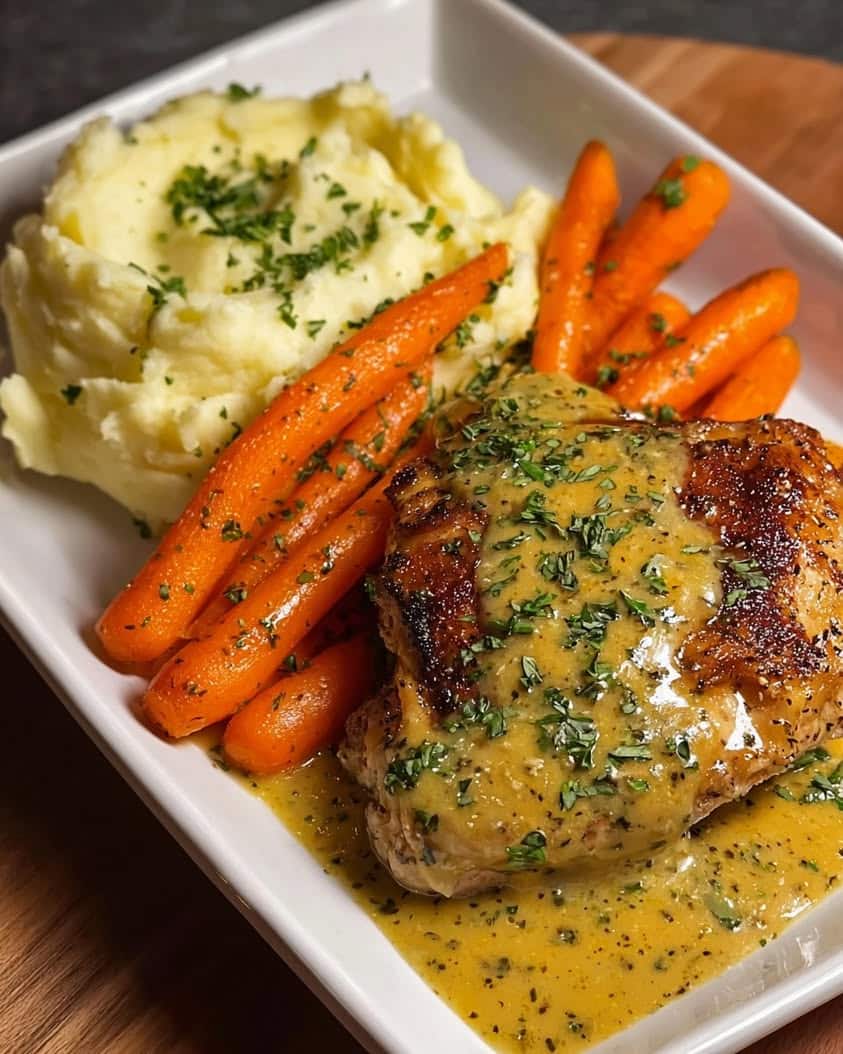
Herb-Crusted Chicken with Mustard Cream Sauce: A Gourmet Weeknight Dinner
Imagine a dinner that feels like a warm hug from the inside out. This recipe for Herb-Crusted Chicken with Mustard Cream Sauce delivers exactly that comforting, gourmet experience. Furthermore, it transforms simple ingredients into a restaurant-worthy plate with minimal fuss. The golden, aromatic crust on the chicken gives way to juicy meat, all smothered in a velvety, tangy sauce. Meanwhile, sweet roasted carrots and creamy mashed potatoes complete the picture of perfect comfort food.
This dish is the ultimate solution for busy weeknights when you crave something special. Importantly, it proves that a gourmet chicken dinner doesn’t require hours of labor or obscure ingredients. The process is straightforward, and the results are consistently impressive. Consequently, it’s a fantastic recipe to build confidence in the kitchen. Ultimately, it brings everyone to the table with smiles, ready to enjoy a meal that feels both nourishing and indulgent.
Quick Recipe Highlights
- Flavor Profile: This dish masterfully balances savory, herbal, and tangy notes. The crust offers a punch of garlic and dried herbs, while the sauce provides a creamy, sharp counterpoint from Dijon and whole-grain mustard. The natural sweetness of the roasted carrots ties everything together beautifully.
- Texture: You get a wonderful contrast in every bite. Expect a crisp, golden herb crust giving way to tender chicken. The sauce is luxuriously smooth, the carrots are caramelized yet firm, and the mashed potatoes are flawlessly creamy and fluffy.
- Aroma: As it cooks, your kitchen will fill with the irresistible scent of toasting garlic and herbs. The roasting carrots add a hint of earthy sweetness, creating an aroma that promises a deeply satisfying meal.
- Visual Appeal: The plate is a feast for the eyes with vibrant orange carrots, snowy white mashed potatoes, golden-brown chicken, and a pale, speckled mustard cream sauce drizzled over the top. It’s rustic elegance on a plate.
- Skill Level Needed: This is an accessible recipe for cooks of all levels. Basic techniques like pan-searing, making a simple pan sauce, and roasting vegetables are all you need. Clear instructions ensure success for beginners.
- Special Equipment: You only need standard kitchen tools: a large oven-safe skillet, a pot for potatoes, a sheet pan for carrots, and basic utensils. A potato masher or ricer is helpful for perfect mashed potatoes.
Recipe Overview
- Difficulty Level: We rate this recipe as “Easy” because it breaks down into simple, manageable steps. While there are multiple components, they can be prepared concurrently. The techniques involved—searing, deglazing, roasting—are fundamental. With a bit of organization, even a novice cook can achieve fantastic results.
- Category: This is a quintessential main course or dinner entree. It fits perfectly into categories like “Family Dinners,” “Date Night Meals,” and “Comfort Food Classics.” It’s substantial enough to be a standalone meal yet elegant enough for entertaining.
- Cuisine: The dish draws inspiration from rustic French and American bistro cuisine. The use of Dijon mustard, cream, and herbs is classically French. However, the straightforward preparation and homey presentation give it a universally appealing, modern American twist.
- Cost: This is a cost-effective way to enjoy a gourmet experience. Chicken breasts, potatoes, and carrots are budget-friendly staples. The herbs, mustard, and cream are pantry items that elevate the dish without breaking the bank. Overall, it’s a high-value meal.
- Season: This recipe shines in the fall and winter, offering warmth and comfort. However, its use of fresh, bright mustard and herbs makes it suitable for spring. It’s a versatile dish you can enjoy year-round with seasonal vegetable adjustments.
- Occasion: It’s incredibly versatile for occasions. Serve it for a quiet family Tuesday, a casual dinner party with friends, or even a special holiday meal like Easter or Thanksgiving. It’s universally crowd-pleasing and always feels like a celebration.
Why You’ll Love This Recipe
First and foremost, the taste and texture are utterly divine. Each component is designed to complement the others. The savory, crispy herb crust on the chicken provides the perfect base for the rich, tangy mustard cream sauce. Meanwhile, the sweet, caramelized carrots cut through the richness. Finally, the buttery mashed potatoes act as the ideal vehicle for soaking up every last drop of sauce. Every forkful is a harmonious blend of flavors and contrasting textures that keeps you coming back for more.
From a convenience standpoint, this recipe is a weeknight hero. It uses common ingredients you likely already have. The steps are logical and can be streamlined with a little multitasking. For instance, you can roast the carrots while the potatoes boil and the chicken cooks. Consequently, you get a complete, balanced meal on one plate without juggling multiple complicated recipes. It’s efficient cooking that yields maximum deliciousness.
Nutritionally, this meal offers a good balance of macronutrients. Chicken breast is an excellent source of lean protein. Carrots provide beta-carotene and fiber. Potatoes offer potassium and vitamin C, especially when you leave the skins on. Using a moderate amount of cream and butter in the sauce and potatoes adds richness without going overboard. You can easily adjust the fat content to suit your dietary needs without sacrificing flavor.
For social and entertaining value, this dish is a true winner. It looks impressive and tastes even better, making guests feel pampered. The fact that most of the work happens in the oven or on the stovetop means you can spend less time stressing and more time with your company. It’s a reliable recipe that consistently delivers, giving you the confidence to host without anxiety.
Finally, its cost-effectiveness and accessibility cannot be overstated. You create a restaurant-quality dinner for a fraction of the price of eating out. The ingredients are readily available at any grocery store. This recipe democratizes gourmet cooking, proving that you don’t need expensive cuts of meat or rare ingredients to make something spectacular. It’s accessible, affordable, and absolutely delicious.
Historical Background and Cultural Significance
The concept of crusting meat with herbs and breadcrumbs has ancient roots across many cultures, primarily as a method to add flavor, texture, and to stretch more expensive protein. In European culinary traditions, particularly in France and Italy, using dried herbs from one’s garden or pantry to create a “persillade” or herb crust was common. This technique not only preserved herbs but also created a flavorful barrier that helped keep the meat moist during cooking. The mustard cream sauce, or “sauce à la moutarde,” is a classic of French bistro cuisine, showcasing the country’s long history of mustard production in regions like Dijon.
Culturally, this dish represents the evolution of home cooking towards convenient gourmet. It takes the foundational techniques of French country cooking—pan-searing, deglazing, making a pan sauce—and simplifies them for the modern home cook. The combination of protein, starch, and vegetable on one plate is a very American presentation, reflecting the mid-20th century “meat and potatoes” dinner ideal, but elevated with European sauce-making finesse. It sits at the intersection of rustic tradition and contemporary ease.
The recipe has evolved significantly with the availability of ingredients. Historically, the herbs would have been strictly seasonal and locally dried. Today, we have consistent access to high-quality dried herbs year-round. Similarly, Dijon mustard, once a regional specialty, is now a global pantry staple. The use of chicken breast as the primary protein is also a modern preference, reflecting 20th-century trends towards leaner, white meat. Earlier versions might have featured rabbit, pork, or darker meat poultry.
Regional variations of this concept abound. In the American South, you might find a similar chicken dish with a cream gravy featuring black pepper. In Germany, the mustard sauce could be made with beer. A Provençal version would include herbes de Provence and perhaps olives in the sauce. The mashed potatoes could be swapped for polenta in Northern Italy or for buttery egg noodles in parts of Central Europe. This adaptability is a testament to the solid foundational formula of crusted protein + creamy sauce + starchy side.
Ingredient Deep Dive
Chicken Breasts: The chicken breast is a lean, versatile canvas. For centuries, chicken has been a global dietary staple due to its relatively quick rearing time. Nutritionally, it’s an excellent source of complete protein, B vitamins (especially niacin and B6), and minerals like selenium and phosphorus. When selecting, look for plump, evenly sized breasts with a pinkish hue and no gray spots. For storage, keep them in the coldest part of your refrigerator and use within 1-2 days of purchase, or freeze for longer storage. For substitution, boneless, skinless chicken thighs will work beautifully, offering more fat and flavor, though cooking time may need a slight increase.
Dijon and Whole-Grain Mustard: Mustard has a history dating back to ancient Roman times, where it was ground and mixed with grape must. Dijon mustard originated in 1856 when Jean Naigeon replaced verjuice with sour grape juice. It provides a smooth, sharp tang. Whole-grain mustard offers texture and a milder, more aromatic flavor. Nutritionally, mustard is low in calories and contains compounds like selenium and magnesium. Select mustards with simple ingredient lists. Store opened mustard in the refrigerator. For a substitution, if you only have one type, use it; the flavor profile will simply be less complex.
Heavy Cream: Cream is the backbone of countless classic sauces, valued for its ability to carry flavor and create a luxurious mouthfeel. It’s a source of fat-soluble vitamins like A and D. When making the sauce, ensure you use heavy cream or whipping cream (with at least 36% milk fat) to prevent curdling when heated. For storage, always keep it refrigerated and check the expiration date diligently. For a dairy-free adaptation, full-fat canned coconut cream is the best substitute, though it will impart a slight coconut flavor. For a lighter option, half-and-half can work, but you must heat it gently to avoid separation.
Potatoes: Potatoes, domesticated in the Andes over 7,000 years ago, are the world’s fourth-largest food crop. For mashed potatoes, starchy varieties like Russet or Yukon Gold are ideal. Russets yield a fluffy texture, while Yukon Golds offer a naturally buttery flavor and creamier consistency. They are a great source of vitamin C, potassium, and fiber, especially with the skin on. Choose firm potatoes without sprouts or green tinges. Store them in a cool, dark, well-ventilated place—not the refrigerator. For a lower-carb alternative, mashed cauliflower is a popular swap, though the texture and flavor will differ.
Carrots: Carrots are believed to have originated in Persia and were originally purple or yellow. The orange carrot we know today was developed in the Netherlands. They are famously rich in beta-carotene, which the body converts to vitamin A, essential for vision and immune function. They also provide fiber and vitamin K1. Select firm, smooth carrots with vibrant color and fresh, green tops if possible. Store them in the refrigerator’s crisper drawer, loosely wrapped in plastic. For a variation, parsnips, sweet potatoes, or beets can be roasted in the same way, adjusting cooking time as needed.
Common Mistakes to Avoid
- Overcrowding the Pan: When searing the herb-crusted chicken, give each piece plenty of space. If the pan is too crowded, the chicken will steam instead of sear. Consequently, you’ll end up with a pale, soggy crust rather than a golden-brown, crispy one. Use a large skillet and cook in batches if necessary.
- Not Getting the Pan Hot Enough: A properly preheated pan is non-negotiable for a good sear. Wait until the oil shimmers and a drop of water sizzles violently before adding the chicken. Otherwise, the crust will stick and tear, and the chicken will absorb oil instead of sealing.
- Moving the Chicken Too Soon: Patience is key. Once you place the chicken in the hot pan, resist the urge to move it for at least 3-4 minutes. This allows a proper crust to form, which will then release naturally from the pan. Premature flipping is a guaranteed way to ruin the crust.
- Boiling the Cream Sauce: After adding the cream and mustard to the pan, you must maintain a gentle simmer. A rolling boil will cause the cream to break, resulting in a greasy, grainy sauce. Keep the heat medium-low and stir frequently until the sauce just thickens.
- Overworking the Mashed Potatoes: Mashing potatoes too vigorously, especially with a food processor, releases excess starch. This leads to a gluey, gummy texture instead of light and fluffy. Mash just until smooth, and fold in the butter and cream gently.
- Underseasoning the Components: Season each element—the chicken crust, the sauce, the potatoes, and the carrots—thoughtfully and in stages. Potatoes, in particular, absorb a lot of salt. Tasting and adjusting at each step is the secret to a perfectly balanced final plate.
- Using Cold Dairy: Adding cold butter or cold cream directly to hot mashed potatoes can cool them down too quickly and make them harder to blend smoothly. For best results, use room-temperature or warmed butter and cream.
- Neglecting to Rest the Chicken: After cooking, let the chicken rest for 5 minutes before slicing. This allows the juices to redistribute throughout the meat. If you cut it immediately, all those flavorful juices will run out onto the cutting board, leaving you with dry chicken.
Essential Techniques
Creating a Herb Crust: The herb crust is crucial for flavor and texture. First, ensure your chicken is dry by patting it thoroughly with paper towels; moisture is the enemy of adhesion. Next, press the herb-breadcrumb mixture firmly onto the chicken to create an even, compact layer. This technique acts as a flavorful barrier, sealing in juices during cooking. A common pitfall is a patchy crust, which happens if you don’t apply enough pressure. The visual cue for success is a uniform, golden-brown coating that holds together when you flip the chicken.
Pan Searing and Deglazing: Pan searing uses high heat to create a flavorful browned crust (the Maillard reaction). The key is preheating your pan and not moving the chicken until it releases easily. After removing the chicken, you’ll see browned bits stuck to the pan—this is “fond,” and it’s packed with flavor. Deglazing involves adding liquid (like broth or wine) to the hot pan and scraping up these bits. This technique forms the flavor base for your sauce. The pitfall is using too much liquid at once; add it gradually while scraping. Success is evident when the fond dissolves completely into a rich, dark liquid.
Building a Cream Sauce: A pan sauce like the mustard cream sauce leverages the fond and the fat left in the pan. After deglazing, you typically reduce the liquid to concentrate flavor. Then, you add the cream, which melds with the reduced liquid and fat. The technique requires gentle heat to prevent the cream from separating. Constant stirring or whisking helps create an emulsion, yielding a smooth, cohesive sauce. The visual cue for doneness is a sauce that coats the back of a spoon—when you run your finger through it, the line should hold.
Roasting Vegetables: Roasting carrots caramelizes their natural sugars, intensifying flavor. The essential technique is ensuring the carrots are cut into uniform sizes so they cook evenly. Tossing them in oil and seasoning before spreading them in a single layer on the sheet pan is critical. Crowding will cause them to steam. The high, dry heat of the oven is what creates the desirable browned, slightly crispy edges. The perfect carrot should be tender enough to pierce easily with a fork but still have a bit of structural integrity, not mushy.
Pro Tips for Perfect Herb-Crusted Chicken
First, for the crispiest crust, use panko breadcrumbs instead of regular fine breadcrumbs. Panko has a lighter, flakier texture that creates an exceptionally crisp and airy coating that won’t get soggy.
Second, let your chicken breasts come to room temperature for about 15 minutes before cooking. This ensures they cook more evenly from edge to center, preventing a dry exterior and raw interior.
Third, use a meat mallet or rolling pin to gently pound the thicker end of the chicken breasts to an even thickness. This simple step guarantees uniform cooking, so every bite is perfectly done.
Fourth, after searing the chicken, finish it in a preheated oven. This method ensures the crust stays crispy while the chicken cooks through gently without burning the exterior.
Fifth, always taste your sauce before serving. Mustard brands vary in strength. You may need an extra pinch of salt, a squeeze of lemon for brightness, or another teaspoon of mustard to achieve the perfect balanced flavor.
Sixth, for ultra-creamy mashed potatoes, heat your milk or cream and butter before adding them to the drained potatoes. This helps the potatoes absorb the fat and liquid better, resulting in a smoother, hotter mash.
Seventh, add a teaspoon of honey or maple syrup to your carrots before roasting. This enhances their natural caramelization and creates beautiful, glossy, sweet edges that pair wonderfully with the savory chicken and sauce.
Eighth, garnish with freshness. A final sprinkle of chopped fresh parsley, chives, or thyme over the plated dish adds a pop of color and a burst of fresh aroma that elevates the entire presentation.
Variations and Adaptations
Regional Variations: For a French Provençal twist, use herbes de Provence in the crust and add a splash of white wine and a tablespoon of chopped olives to the cream sauce. An Italian version could feature a crust with Parmesan cheese and dried oregano, with the sauce made using a touch of white wine and finished with fresh basil.
Seasonal Adaptations: In spring, swap the carrots for asparagus or fresh peas. In summer, use zucchini or yellow squash. For a hearty winter version, use root vegetables like parsnips or turnips alongside the carrots. The method remains the same; just adjust roasting times based on vegetable density.
Dietary Modifications: For a gluten-free version, use gluten-free panko breadcrumbs or crushed gluten-free crackers for the crust. For dairy-free, substitute the butter in the potatoes with olive oil and use full-fat coconut cream in the sauce. The flavor will be different but still delicious.
Flavor Variations: Add a teaspoon of smoked paprika to the herb crust for a smoky depth. Stir a tablespoon of prepared horseradish into the cream sauce for a spicy kick. Incorporate a minced shallot into the pan when making the sauce for a more aromatic base.
Texture Modifications: Instead of mashed potatoes, serve the chicken over creamy polenta, buttery egg noodles, or a bed of wilted spinach or kale. For a lower-carb option, cauliflower mash or roasted spaghetti squash makes an excellent base for the chicken and sauce.
Presentation Alternatives: For a family-style presentation, slice the chicken and fan it over a large platter of mashed potatoes, surrounded by the roasted carrots, with the sauce drizzled over everything. For individual plating, use a ring mold for a neat tower of mashed potatoes.
Serving and Presentation Guide
Start with a warm plate to keep everything at the ideal temperature. Place a generous scoop of mashed potatoes slightly off-center. Use the back of a spoon to create a small well or swirl pattern on top of the potatoes—this will catch the sauce beautifully.
Next, arrange the roasted carrots leaning against or around the mound of potatoes. Their vibrant color provides a striking visual contrast. Then, slice the rested chicken breast on a bias (at an angle) and fan the slices over or beside the potatoes.
Finally, spoon the warm mustard cream sauce over the chicken and allow some to drizzle down onto the potatoes and plate. The sauce should be fluid but not runny. Garnish with a final sprinkle of the fresh herbs you used, or a twist of black pepper.
Traditional accompaniments include a simple green salad with a vinaigrette to cut the richness, or steamed green beans. For a modern touch, a side of sautéed bitter greens like Swiss chard or a quick-pickled vegetable salad adds brightness and complexity.
Temperature is critical. Serve immediately after plating. The hot sauce will slightly warm the chicken if it cooled during resting, and the hot components will keep the plate warm through the first few bites. Cold plates or delayed serving can cause the sauce to congeal and the meal to lose its appeal.
For portion control, one standard chicken breast half, a medium scoop of potatoes, and a handful of carrot pieces is a satisfying meal. For heartier appetites, you can increase the potato portion or add an extra piece of chicken. The beauty of this dish is its easy scalability.
Wine and Beverage Pairing
For wine pairings, you want something that can complement the richness of the cream and the tang of the mustard. A classic choice is a white Burgundy (Chardonnay) from France, which has enough body and acidity to stand up to the dish. An Oregon Pinot Noir is an excellent red option; its bright red fruit and earthy notes pair wonderfully with the herbs and chicken without overpowering it.
For non-alcoholic alternatives, consider a sparkling apple cider. Its effervescence and slight sweetness cleanse the palate from the rich sauce. Alternatively, a tart lemonade or a ginger beer provides a refreshing contrast. Herbal iced tea, like mint or verbena, is another sophisticated choice that won’t compete with the meal’s flavors.
While not traditional, a light roast coffee or an herbal tea like chamomile can be a lovely post-meal pairing. The warmth and subtle flavors can be a comforting end to the meal. Avoid strong, bitter coffees that might clash with the lingering creamy, tangy notes of the sauce.
Temperature is paramount. White wines and sparkling ciders should be served well-chilled, around 45-50°F. Red wines like Pinot Noir are best served slightly cooler than room temperature, around 55-60°F. Non-alcoholic sparkling drinks should be ice-cold to maximize their refreshing quality.
When serving, pour wine just before sitting down to eat. For non-alcoholic options, consider serving them in a wine glass to elevate the experience. Always offer water alongside any beverage to cleanse the palate and ensure your guests stay hydrated throughout the meal.
Storage and Shelf Life
Store all components separately for best results. Place cooled chicken, sauce, mashed potatoes, and carrots in airtight containers. The chicken and sauce can be stored together. Refrigerate everything promptly. Properly stored, the complete meal will last for 3-4 days in the refrigerator.
Temperature control is crucial. Your refrigerator should be at or below 40°F (4°C). Avoid leaving the cooked food at room temperature for more than two hours total, including cooling and serving time, to prevent bacterial growth. When reheating, ensure the internal temperature reaches 165°F.
Glass containers are ideal for storage as they don’t retain odors and are easy to clean. If using plastic, ensure it’s BPA-free and designated for food storage. For the sauce, a jar with a tight lid works perfectly. Label containers with the date to track freshness.
Signs of spoilage include an off or sour smell, a slimy texture on the chicken or vegetables, or mold growth. If the sauce has separated irreversibly or developed an unusual color, it’s best to discard it. When in doubt, follow the golden rule: when in doubt, throw it out.
To reheat, gently warm the chicken and sauce together in a covered skillet over low heat with a splash of broth or water to loosen the sauce. Reheat mashed potatoes in a pot with a little extra milk or butter, stirring frequently. Re-crisp the carrots in a 350°F oven for 5-10 minutes.
For freezing, the cooked chicken and sauce freeze reasonably well for up to 2 months. Thaw overnight in the refrigerator before reheating. Mashed potatoes can become grainy when frozen and thawed, and roasted carrots may become mushy, so freezing those components is not recommended.
Make Ahead Strategies
You can prep this meal over a 1-2 day timeline. The day before, peel and cut the carrots, store them in water in the fridge. Peel and cut the potatoes, submerge them in water to prevent browning. Measure out your dry ingredients for the herb crust and mix them in a bowl. This “mise en place” makes assembly day a breeze.
For storage between steps, keep pre-cut vegetables in airtight containers with water (for potatoes) or damp paper towels (for carrots). The herb mixture can sit at room temperature. The chicken can be patted dry, placed on a plate, covered, and refrigerated. Keep everything chilled until you’re ready to cook.
Assessing quality impact is key. Pre-cutting vegetables has minimal impact. Making the full herb crust ahead and applying it might make the breadcrumbs soggy, so it’s best to coat the chicken just before cooking. The sauce is best made fresh, but you can measure the cream and mustard ahead.
For assembly, have all your prepped ingredients lined up. Start the potatoes boiling, then get the carrots in the oven. While those cook, prepare and sear the chicken. Finally, make the sauce in the same pan. This orchestration ensures everything finishes hot and at the same time.
Reheating guidelines for make-ahead components: If you fully cook and refrigerate the entire meal, reheat gently as described in the storage section. For partially prepped items, simply continue from your stopping point, adjusting cook times slightly as the ingredients will be cold from the fridge.
For fresh element additions, always add a final garnish of fresh herbs after reheating to revive the aroma and appearance. If the sauce thickens too much in the fridge, whisk in a tablespoon of warm broth or cream when reheating to restore its silky consistency.
Scaling Instructions
To halve the recipe for two servings, simply divide all ingredient quantities by two. Use a medium skillet for the chicken. The roasting time for the carrots may be slightly shorter since the sheet pan will be less crowded, so check for doneness a few minutes early. The sauce will reduce more quickly in a smaller volume pan, so watch it closely.
For doubling or tripling to feed a crowd, multiply the ingredients consistently. You will need to cook the chicken in multiple batches to avoid overcrowding—keep the cooked batches warm on a baking sheet in a low oven (200°F). Use two sheet pans for the carrots, rotating them in the oven halfway through. For the potatoes, use a larger pot or cook in two batches.
Equipment adjustments are necessary when scaling up. Ensure you have a large enough pot for the increased volume of potatoes. You may need two skillets to sear chicken simultaneously, or plan for a longer cooking time with sequential batches. For very large groups, consider using the oven’s broiler to finish multiple chicken pieces at once after searing.
Timing modifications are minimal when scaling up, as the active cooking steps remain the same per batch. However, the prep time for chopping more vegetables will increase. Factor in extra time for searing multiple batches of chicken. The sauce can be made in a larger saucepan after all the chicken is cooked, using the accumulated fond from all batches.
Storage considerations for larger batches are important. If you have significant leftovers, cool them quickly by spreading them on a sheet pan before transferring to shallow containers for the fridge. This prevents the food from staying in the “danger zone” temperature range for too long, which is a bigger risk with large volumes of hot food.
Nutritional Deep Dive
This meal provides a balanced macronutrient profile. A typical serving offers approximately 35-40 grams of high-quality protein from the chicken, essential for muscle repair and satiety. The carbohydrates come primarily from the potatoes and carrots, providing sustained energy and fiber. The fats are a mix from the olive oil, butter, and cream, contributing to the luxurious mouthfeel and helping absorb fat-soluble vitamins from the vegetables.
Micronutrient analysis reveals a wealth of vitamins and minerals. The carrots are loaded with beta-carotene (vitamin A), crucial for vision and immune health. Potatoes provide a significant amount of vitamin C and potassium. Chicken breast is a good source of B vitamins, particularly B6 and niacin, which support energy metabolism. The herbs, though used in small amounts, contribute trace minerals and antioxidants.
The health benefits are multifaceted. The lean protein supports muscle health and promotes fullness. The fiber from the vegetables and potato skins aids digestion. The compounds in mustard seeds have anti-inflammatory properties. Using olive oil as the primary cooking fat provides heart-healthy monounsaturated fats. This is a nutrient-dense meal that fuels the body effectively.
For dietary considerations, this is naturally a gluten-free recipe if you ensure your breadcrumbs are certified gluten-free. It’s high in protein and can be modified to be lower in fat by using less butter and a lighter cream or milk in the sauce. Those on low-carb diets may choose to omit the potatoes and increase the carrot portion or add another non-starchy vegetable.
Portion analysis shows that one complete plate is a satisfying meal for most adults. The protein portion (one chicken breast half) is about 3-4 ounces cooked, aligning with standard dietary guidelines. The starch portion is roughly one medium potato’s worth of mash, and the vegetable portion is a generous serving of carrots. It’s a volumetrically satisfying plate.
For weight management, this meal is excellent because it is high in protein and fiber, both of which promote satiety. To reduce calories, you can use cooking spray instead of oil for the carrots, use less butter in the potatoes, and substitute half the cream in the sauce with low-sodium chicken broth. These tweaks lower the calorie density while maintaining great flavor.
Dietary Adaptations
Gluten-Free: This adaptation is straightforward. Simply replace the regular breadcrumbs with certified gluten-free panko breadcrumbs or crushed gluten-free crackers. Double-check that your Dijon mustard is gluten-free, as some brands may include wheat-based additives. All other ingredients are naturally gluten-free.
Dairy-Free: Substitute the butter in the mashed potatoes with extra virgin olive oil or a vegan butter alternative. For the sauce, replace the heavy cream with full-fat canned coconut cream. Be aware this will impart a subtle coconut flavor. You can also use a plain, unsweetened dairy-free creamer designed for cooking.
Vegan: This requires significant modification. Use thick slices of pressed, extra-firm tofu or large portobello mushroom caps in place of chicken. For the crust, use nutritional yeast with the herbs and breadcrumbs. Create the sauce with coconut cream, mustard, and a splash of vegetable broth. Serve with dairy-free mashed potatoes (using olive oil and unsweetened plant milk) and the roasted carrots.
Low-Carb/Keto: Omit the breadcrumbs from the herb crust and use a mixture of finely grated Parmesan cheese and crushed pork rinds or almond flour instead. Replace the mashed potatoes with mashed cauliflower. Ensure the carrots are used sparingly, as they are higher in carbs than other vegetables; consider adding more low-carb veggies like broccoli.
Paleo: Use almond flour or crushed nuts (like almonds or pecans) in place of breadcrumbs for the crust. Substitute the butter with ghee or coconut oil. For the sauce, use coconut cream. Replace the potatoes with mashed sweet potato or cauliflower. Ensure your mustard is free from non-Paleo additives like sugar or sulfites.
Low-FODMAP: This diet restricts certain carbohydrates. Use garlic-infused oil instead of fresh garlic in the herb crust to get the flavor without the FODMAPs. Ensure the mustard does not contain garlic or onion powder. The potatoes and carrots are low-FODMAP in moderate servings (stick to ½ cup mashed potato and a small serving of carrots per meal).
Troubleshooting Guide
Crust Falling Off: If the herb crust isn’t adhering, the chicken was likely too wet. Always pat chicken thoroughly dry with paper towels before applying the crust. Press the mixture on firmly. If it’s still an issue, try a light coating of Dijon mustard on the chicken first to act as a “glue” for the breadcrumbs.
Sauce is Too Thin: If your mustard cream sauce isn’t thickening, you may have added too much liquid or not reduced it enough. Continue simmering gently over low heat, stirring frequently, to allow further evaporation. Alternatively, make a quick slurry with a teaspoon of cornstarch and a tablespoon of cold water, whisk it in, and simmer for one more minute.
Sauce is Too Thick or Broken: A sauce that becomes too thick or greasy (broken) has likely been overheated. To fix a broken sauce, remove it from heat and vigorously whisk in a tablespoon of cold cream or broth. For a sauce that’s just too thick, whisk in additional warm broth, cream, or even a splash of water until it reaches the desired consistency.
Chicken is Dry: Dry chicken usually results from overcooking. Use an instant-read thermometer and remove the chicken from the heat when it reaches 160-162°F. The residual heat will carry it to the safe temperature of 165°F as it rests. Also, ensure you’re not using overly thin chicken breasts, which cook in a flash.
Mashed Potatoes are Gluey: Gluey potatoes are overworked. You’ve released too much starch. Unfortunately, this
Print
Herb-Crusted Chicken with Mustard Cream Sauce, Carrots & Mashed Potatoes
Description
A comforting and elegant dinner featuring tender herb-crusted chicken breasts, creamy mustard sauce, roasted carrots, and smooth mashed potatoes.
Ingredients
For the Crust:
- 4 boneless, skinless chicken breasts
- 1 cup breadcrumbs
- 2 tablespoons mixed dried herbs (such as thyme, rosemary, parsley)
- 1/2 cup Dijon mustard
- 1 cup heavy cream
- 4 large carrots, peeled and sliced
- 4 large potatoes, peeled and cubed
- 1/4 cup butter
- 1/4 cup milk
- 2 tablespoons olive oil
- Salt and pepper to taste
Instructions
1. Prepare the Crust:
- Preheat oven to 400°F (200°C). Season chicken breasts with salt and pepper, then coat evenly with breadcrumbs mixed with dried herbs.
- Heat olive oil in an oven-safe skillet over medium-high heat. Sear chicken for 3-4 minutes per side until golden, then transfer skillet to oven and bake for 15-20 minutes until cooked through.
- While chicken bakes, boil potatoes in salted water until tender, about 15 minutes. Drain, mash with butter and milk, and season with salt and pepper.
- In a separate pan, sauté carrots in olive oil over medium heat until tender and slightly caramelized, about 10 minutes.
- For the sauce, whisk Dijon mustard and heavy cream in a small saucepan over low heat until warmed and slightly thickened, about 5 minutes. Season with salt and pepper.
- Serve chicken topped with mustard cream sauce, alongside mashed potatoes and roasted carrots.
Notes
You can customize the seasonings to taste.

I’m Shaykee—born in Morocco, seasoned across continents. From airplane galleys to home kitchens, I share the flavors and stories that shaped my journey.