
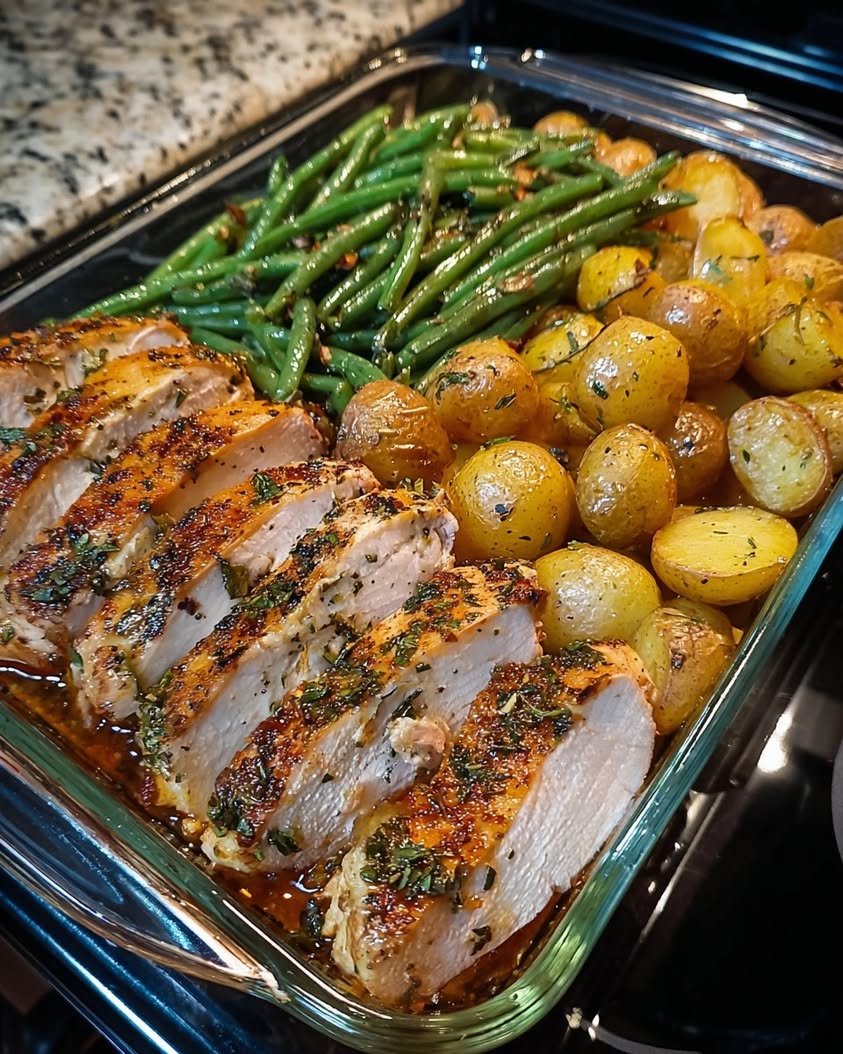
Herb-Roasted Chicken with Garlic Potatoes & Green Beans: A Complete, Flavor-Packed One-Pan Dinner
Imagine a dinner where succulent, crispy-skinned chicken shares a pan with golden potatoes and vibrant green beans, all infused with the aromatic magic of garlic and fresh herbs. This herb-roasted chicken with garlic potatoes and green beans is that dream meal, a complete, flavor-packed one-pan dinner ready in under an hour. Furthermore, it transforms simple, wholesome ingredients into a restaurant-worthy feast with minimal effort and maximum reward. The beauty lies in its simplicity; everything cooks together, allowing the chicken juices to mingle with the vegetables, creating a symphony of savory, comforting flavors.
This recipe is the ultimate answer to busy weeknights, yet it feels special enough for Sunday supper. The chicken emerges from the oven with skin so crisp it crackles, while the flesh underneath stays incredibly juicy. Simultaneously, the potatoes roast to a perfect tenderness with crispy edges, and the green beans become beautifully blistered and flavorful. Ultimately, this dish delivers a balanced, satisfying meal that pleases every palate at the table, proving that a truly great dinner doesn’t require a sink full of dishes.
Quick Recipe Highlights
- Flavor Profile: This dish offers a robust, savory experience. The chicken is deeply seasoned with rosemary, thyme, and garlic, while the potatoes soak up those herby, meaty pan juices. Additionally, the green beans add a bright, slightly sweet counterpoint that cuts through the richness perfectly.
- Texture: You get a wonderful contrast in every bite. Expect crispy, golden chicken skin giving way to tender, moist meat. The potatoes are fluffy inside with a crisp exterior, and the green beans maintain a pleasant snap, avoiding any sogginess.
- Aroma: As it roasts, your kitchen will fill with an irresistible fragrance. The primary notes are earthy rosemary, woody thyme, pungent roasted garlic, and the savory scent of chicken fat rendering. This aromatic blend is the hallmark of classic comfort food.
- Visual Appeal: The presentation is rustic and inviting. The chicken pieces turn a deep golden brown, nestled among creamy yellow potatoes and emerald green beans. It’s a colorful, hearty plate that looks abundant and lovingly prepared.
- Skill Level Needed: This is a beginner-friendly recipe. The techniques involve basic chopping, simple seasoning, and oven roasting. No advanced culinary skills are required, making it an excellent recipe for building kitchen confidence.
- Special Equipment: You only need a large, sturdy rimmed baking sheet or roasting pan. Parchment paper is highly recommended for easy cleanup. Otherwise, standard kitchen tools like a sharp knife, cutting board, and mixing bowls are all you require.
Recipe Overview
- Difficulty Level: We rate this recipe as “Easy” because it follows a straightforward, linear process. The prep work is simple chopping and tossing. Moreover, the cooking is hands-off oven time. There’s no tricky timing or complex techniques, just basic organization for a flawless result.
- Category: This dish squarely fits into the categories of Main Course, One-Pan Meal, and Family Dinner. It’s a protein-centric dish accompanied by starches and vegetables, providing a nutritionally complete plate. Consequently, it eliminates the need for separate side dishes.
- Cuisine: The flavor profile is rooted in rustic American and European home cooking. The combination of roasted chicken with rosemary, thyme, and garlic is a classic trope in French and Italian countryside cuisine, adapted here for a simple, all-in-one preparation method.
- Cost: This is a cost-effective meal. Chicken thighs are an affordable cut, and potatoes and green beans are inexpensive, especially in season. The fresh herbs and garlic are pantry staples that add immense flavor for just pennies per serving.
- Season: This recipe shines year-round but is particularly wonderful in fall and winter. The hearty, warming qualities are perfect for cooler weather. However, using fresh summer green beans and herbs can make it a fantastic warm-weather meal too.
- Occasion: It’s incredibly versatile. Serve it for a casual weeknight family dinner, a relaxed weekend lunch, or even for casual entertaining. The impressive presentation and crowd-pleasing flavors make it suitable for feeding guests without stress.
Why You’ll Love This Recipe
First and foremost, the taste and texture are utterly irresistible. The chicken skin achieves a crackling crispness that gives way to incredibly moist, flavorful meat. Each potato cube is a little parcel of joy—soft and fluffy inside, with a savory, crispy exterior kissed by chicken fat and herbs. The green beans, meanwhile, roast instead of boil, concentrating their sweetness and gaining a delightful blistered texture. Every component complements the others, creating a harmonious and deeply satisfying eating experience that feels both rustic and refined.
From a convenience standpoint, this recipe is a true weeknight hero. The “one-pan” method is its greatest asset, meaning minimal active cooking time and dramatically easier cleanup. You spend about 15 minutes on prep, then the oven does the rest of the work. This hands-off approach allows you to set the table, help with homework, or simply relax while a fantastic dinner cooks itself. It’s the perfect solution for those evenings when you want a wholesome, home-cooked meal without the lengthy process and pile of dishes.
Nutritionally, this meal offers a fantastic balance. Chicken thighs provide high-quality protein and essential nutrients like iron and zinc. Potatoes are an excellent source of potassium and vitamin C, especially when their skin is left on. Green beans contribute fiber, vitamins A, C, and K. Cooking everything together in one pan also means the vegetables benefit from the natural fats in the chicken, which helps your body absorb fat-soluble vitamins from the meal. It’s a nourishing, well-rounded plate.
For social and entertaining value, this dish is a winner. It’s easy to scale up for a crowd by simply using a second baking sheet. The presentation is family-style and inviting, encouraging people to dig in and share. The familiar, comforting flavors are universally appealing, making it a safe bet for picky eaters and foodies alike. Serving a complete meal from a single pan also keeps the host out of the kitchen, allowing more time to enjoy the company of guests.
Finally, its cost-effectiveness and accessibility are major benefits. The ingredients are humble, affordable, and easy to find at any grocery store. You don’t need expensive cuts of meat or exotic produce. This recipe demonstrates how to elevate everyday items into something extraordinary through simple technique and bold seasoning. It’s a testament to the idea that delicious, healthy eating doesn’t have to be complicated or expensive.
Historical Background and Cultural Significance
The concept of roasting meat with root vegetables is ancient, stemming from cooking over open fires. Every culture with a tradition of hearth cooking has some version of this practice. The specific combination of chicken, potatoes, and herbs, however, finds strong roots in the farmhouse traditions of Europe. In France, “poulet rôti” with potatoes cooked in the drippings is a Sunday staple. Similarly, in Italy, “pollo al forno” often includes potatoes and sometimes seasonal greens roasted alongside. This recipe is a direct descendant of those rustic, resourceful dishes designed to feed a family with what was available from the farm or garden.
Culturally, a roasted chicken dinner symbolizes comfort, family, and home. It’s a centerpiece meal often associated with gatherings, Sunday suppers, and holiday feasts. The act of sharing a whole bird or its parts signifies abundance and hospitality. Adding potatoes and vegetables to the same pan is a natural evolution of this tradition, born from efficiency and the desire to create a complete meal with minimal fuss. This method captures the essence of home cooking: maximizing flavor and nourishment while respecting time and ingredients.
The recipe has evolved significantly with modern kitchen technology. Historically, this would have been cooked in a heavy cast-iron pot in a hearth or a basic oven. The use of a rimmed baking sheet is a contemporary adaptation that promotes better air circulation, leading to crispier skin on the chicken and better roasting on the vegetables. The choice of chicken thighs over a whole bird reflects modern preferences for quicker cooking times and guaranteed juiciness. Additionally, the inclusion of green beans, a vegetable that roasts beautifully, adds a modern, healthy twist to the classic potato accompaniment.
Regional variations of this concept are endless. In the American South, you might find similar recipes using smoked paprika or a Cajun spice blend. Mediterranean versions could include lemon slices, olives, and oregano. A German interpretation might feature caraway seeds and serve with sauerkraut on the side. The beauty of the foundational technique—meat and vegetables roasting together—is its incredible adaptability. It provides a template that home cooks around the world have personalized with their local spices, herbs, and preferred vegetables, making it a truly global comfort food.
Ingredient Deep Dive
Chicken Thighs (Bone-In, Skin-On): This cut is the star for good reason. The bone helps conduct heat evenly, preventing the meat from drying out, while the skin renders fat that bastes the chicken and fries the vegetables. Culturally, dark meat is prized in many cuisines for its richer flavor and forgiving nature during cooking. Nutritionally, thighs contain more iron and zinc than breast meat. When selecting, look for plump thighs with evenly colored skin. For storage, keep them in the coldest part of your fridge and use within 1-2 days of purchase. If you must substitute, chicken legs (drumsticks) work well, but breast meat will dry out too quickly with this high-heat method.
Yukon Gold Potatoes: These potatoes are ideal for roasting. Their medium starch content and thin, delicate skin yield a creamy interior and a golden-brown exterior without falling apart. Historically, potatoes became a staple accompaniment to roasted meats after their introduction to Europe from the Americas. They are a fantastic source of vitamin C, potassium, and vitamin B6. Choose firm potatoes without sprouts or green tinges. Store them in a cool, dark, well-ventilated place—not the refrigerator. For substitutions, baby potatoes or red potatoes can be used whole or halved. Avoid very starchy potatoes like Russets, as they may become too mealy.
Fresh Green Beans: Also known as string beans, they add crucial color, texture, and freshness. Roasting intensifies their natural sweetness, a technique that became popular as home cooks moved beyond boiling. They are low in calories and rich in fiber, vitamin K, and silicon, which is important for bone health. Select beans that are bright green, crisp, and snap easily. Avoid any that are limp or have visible blemishes. Store them unwashed in a plastic bag in the refrigerator’s crisper drawer. For a variation, you could use asparagus spears or broccoli florets, adjusting the cooking time as needed.
Fresh Rosemary & Thyme: These woody herbs are classic partners for roasted poultry. Rosemary, with its piney fragrance, has been used since ancient times for culinary and medicinal purposes. Thyme offers a subtle, earthy complexity. Fresh herbs are essential here; their oils withstand the high heat better than dried herbs, which can burn and become bitter. Nutritionally, they provide antioxidants. Choose bunches with vibrant color and firm leaves, avoiding any that look wilted or blackened. Store them loosely wrapped in a damp paper towel in the fridge. In a pinch, you can substitute with dried, but use only one-third the amount and add them with the oil to prevent burning.
Garlic: Garlic is the flavor backbone. When roasted whole, its sharp pungency mellows into a sweet, nutty, spreadable paste that permeates the dish. Garlic has been cultivated for thousands of years and is foundational to countless global cuisines. It contains allicin, a compound with noted health benefits. Choose firm, plump heads with tight, papery skin. Avoid heads that are soft or sprouting. Store at room temperature in a dry, dark place. Do not substitute with garlic powder for the roasted cloves; the flavor and texture will not be the same. However, you could add a sprinkle of powder to the seasoning rub for extra depth.
Common Mistakes to Avoid
- Crowding the Pan: This is the most common error. If the chicken and vegetables are packed too tightly, they will steam instead of roast. Consequently, you’ll get soggy skin, limp green beans, and pale potatoes. Always use a large enough baking sheet to allow space between pieces for hot air to circulate.
- Using Skinless, Boneless Chicken: While convenient, these cuts will not work well here. The skin protects the meat and becomes deliciously crispy. The bone insulates the meat, keeping it juicy. Without them, you risk dry, overcooked chicken and miss out on the flavorful fat that cooks the vegetables.
- Not Drying the Chicken Skin: Moisture is the enemy of crispiness. Pat the chicken thighs thoroughly dry with paper towels before seasoning and adding oil. Any surface water will create steam, which prevents the skin from rendering and crisping up properly in the oven’s heat.
- Underseasoning: Potatoes and chicken need generous seasoning. Don’t be shy with the salt and pepper. Remember, some seasoning will drip into the pan, so you need to adequately coat each component. Season in layers for the best flavor penetration throughout the dish.
- Adding the Green Beans Too Early: Green beans cook much faster than potatoes and chicken. If you add them at the beginning, they will burn and become bitter. Always add them halfway through the cooking process so they roast perfectly without overcooking.
- Neglecting to Preheat the Oven: A properly preheated oven is non-negotiable for successful roasting. Starting in a hot oven ensures the chicken skin immediately begins to crisp and the potatoes start to brown. A cold oven will lead to uneven cooking and greasy, pale results.
- Skipping the Resting Time: Letting the chicken rest for 5-10 minutes after roasting is crucial. This allows the juices, which have been driven to the center by the heat, to redistribute throughout the meat. If you cut into it immediately, those precious juices will simply run out onto the plate.
- Using a Dark, Non-Stick Pan: Dark pans can cause the bottom of the potatoes to burn before they are cooked through. A light-colored, rimmed baking sheet is ideal. If you only have a dark pan, consider lowering the oven temperature by 25 degrees Fahrenheit and checking for doneness a bit earlier.
Essential Techniques
Patting Dry: This simple step is critical for achieving crispy chicken skin. Surface moisture creates steam, which inhibits browning and crisping. By thoroughly patting the chicken skin dry with paper towels, you remove this barrier. Consequently, the hot oven air can directly contact the skin and fat, causing the fat to render efficiently and the skin to puff and crisp into that perfect golden texture. The visual cue for success is skin that looks matte and dry before you add any oil.
High-Heat Roasting: Cooking at a high temperature (425°F) is the engine of this recipe. This technique quickly sears the exterior of the chicken, locking in juices and initiating the Maillard reaction—the chemical process responsible for deep, savory browning and complex flavors. For the potatoes, the high heat creates a crispy crust while the interior steams to tenderness. The key is ensuring your oven is fully preheated so the food is hit with intense, consistent heat from the moment it goes in. A common pitfall is opening the oven door frequently, which causes significant heat loss and disrupts this process.
Staggered Vegetable Addition: This technique manages different cooking times within a one-pan meal. Dense root vegetables like potatoes require a long time to become tender. More delicate vegetables like green beans cook quickly and would burn if added at the start. By adding the green beans halfway through, you allow both components to finish perfectly at the same time. Mastering this requires understanding the density and water content of your vegetables. The visual cue is adding the quick-cooking vegetables when the longer-cooking ones are about halfway to done and have started to brown.
Pro Tips for Perfect Herb-Roasted Chicken
First, let your chicken thighs sit at room temperature for 15-20 minutes before cooking. This takes the chill off, promoting more even cooking from edge to center and helping the skin render better.
Second, toss the potatoes in the oil and seasoning in a separate bowl before spreading them on the pan. This ensures every piece gets evenly coated, leading to uniform browning and flavor.
Third, after adding the green beans, give everything a gentle stir or shuffle with tongs. This helps the beans make contact with the hot pan and redistributes the potatoes for even browning on all sides.
Fourth, for extra-crispy skin, place the chicken thighs skin-side down in a cold, oven-safe skillet on the stovetop for 5-7 minutes to render some fat before transferring the skillet to the oven. This jump-starts the crisping process.
Fifth, use a digital meat thermometer to check for doneness. Insert it into the thickest part of a thigh, avoiding the bone. You’re aiming for 165°F. This guarantees perfect, safe results every single time.
Sixth, finish the dish with a final flourish. After resting, sprinkle the plated meal with a little flaky sea salt and a few fresh herb leaves for a burst of color and a final layer of fresh aroma.
Variations and Adaptations
For regional variations, the template is endlessly adaptable. A Mediterranean version could include lemon halves, Kalamata olives, and oregano. An American BBQ twist might involve a spice rub with smoked paprika and brown sugar on the chicken. For a French Provençal feel, add herbes de Provence and cherry tomatoes with the green beans. Each variation uses the same core technique but changes the flavor profile dramatically based on local spice cabinets and traditions.
Seasonal adaptations are easy and recommended. In spring, use new potatoes and asparagus. Summer welcomes zucchini, bell peppers, and cherry tomatoes. Fall is perfect for sweet potatoes, Brussels sprouts, or chunks of winter squash. In winter, stick with hearty roots like carrots, parsnips, and the classic potato. The cooking times may need slight adjustment for denser vegetables, but the method remains perfectly effective year-round.
Dietary modifications are straightforward. For a gluten-free meal, this recipe is naturally compliant—just ensure any pre-made seasoning blends are certified gluten-free. For dairy-free, it’s already perfect. To lower the fat content slightly, you can trim excess visible fat from the chicken thighs and use a lighter hand with the olive oil, though some fat is necessary for flavor and crisping.
Flavor variations can come from your spice drawer. Add a teaspoon of smoked paprika or chili powder to the potato seasoning. Incorporate grated Parmesan or lemon zest into the final toss. For an umami boost, drizzle a little balsamic glaze over everything after roasting. A spoonful of Dijon mustard mixed into the olive oil before coating the chicken adds wonderful depth and tang.
Serving and Presentation Guide
Plating this dish is part of its charm. For a family-style presentation, transfer everything directly from the baking sheet to a large, warm platter. Arrange the chicken pieces in the center, mound the potatoes around them, and scatter the green beans over the top. This rustic, abundant look encourages sharing. Alternatively, for individual plates, place a chicken thigh on each plate, then artfully spoon potatoes and beans alongside. Ensure some of the crispy potato pieces and roasted garlic cloves are visible for visual appeal.
Garnishing adds the final touch. A simple sprinkle of chopped fresh parsley or chives adds a pop of green and fresh flavor. A light drizzle of high-quality extra virgin olive oil just before serving enhances richness. For a bit of acidity, a squeeze of fresh lemon juice over the chicken and vegetables can brighten the entire dish. If you have them, a few edible flowers or microgreens make a stunning, restaurant-worthy garnish.
Traditional accompaniments are minimal since the meal is complete. A simple green salad with a vinaigrette dressing provides a fresh, acidic contrast to the rich, roasted flavors. A crusty baguette or dinner rolls are perfect for sopping up any delicious juices left on the plate. For a more substantial spread, consider adding a bowl of applesauce or a tangy cucumber salad.
Wine and Beverage Pairing
Wine pairings for this herbaceous, savory dish are delightful. A medium-bodied white wine like Chardonnay, especially one with a touch of oak, complements the richness of the chicken and the creamy potatoes. Alternatively, a dry Riesling offers a bright acidity that cuts through the fat beautifully. For red wine lovers, a lighter red like Pinot Noir or Grenache is excellent. Their fruity notes and soft tannins won’t overpower the meal but will stand up to the robust garlic and herb flavors.
Non-alcoholic alternatives can be just as sophisticated. A sparkling water with a twist of lemon or lime cleanses the palate between bites. For something more complex, try a tart cherry juice spritzer or a non-alcoholic ginger beer. The spice from the ginger beer pairs wonderfully with the savory, herby notes of the chicken and the sweetness of the roasted vegetables.
Temperature considerations are key for beverages. White wines and spritzers should be served well-chilled. Red wines should be served slightly below room temperature, around 60-65°F. Non-alcoholic options are typically best served cold. The contrast between a cool, refreshing drink and the warm, savory dinner is part of the pleasure.
Storage and Shelf Life
Proper storage is essential for maintaining quality. Allow the leftovers to cool completely before storing, but do not leave them at room temperature for more than two hours. Transfer the chicken, potatoes, and beans to separate airtight containers or layer them carefully in one large container. This prevents the potatoes from becoming soggy from the chicken’s residual moisture. Store in the refrigerator for up to 3-4 days.
For reheating, the oven or toaster oven is best to restore texture. Reheat at 375°F until warmed through. This will help re-crisp the chicken skin and potatoes. The microwave is a quick option but will steam everything, resulting in soft skin. If using the microwave, place a cup of water in the corner to provide steam and prevent the chicken from drying out too much.
Freezing is possible but with caveats. The cooked chicken thighs freeze reasonably well for up to 2 months. Thaw overnight in the refrigerator before reheating. However, the potatoes and green beans will suffer in texture after freezing and thawing; they become mushy and watery. If you plan to freeze, it’s best to freeze only the chicken and make fresh potatoes and beans when you reheat.
Make Ahead Strategies
You can significantly streamline dinner by prepping components ahead of time. The day before, chop the potatoes and store them submerged in cold water in the refrigerator. This prevents browning. Trim the green beans and keep them in a sealed bag or container. Pat the chicken dry, season it with salt and pepper, and store it on a plate, uncovered, in the fridge. This uncovered storage helps dry the skin further for ultimate crispiness. Mince the herbs and peel the garlic cloves, storing them separately.
On cooking day, simply drain and dry the potatoes, toss everything with oil and herbs, and roast. This advance prep cuts your active time to just 5-10 minutes before the dish goes in the oven. The quality impact is minimal if the potatoes are kept in water and the chicken is seasoned ahead; in fact, seasoning the chicken early can lead to more flavorful, seasoned meat throughout.
For reheating a fully made-ahead meal, let the cooked dish cool completely and store as directed. To reheat, spread everything on a baking sheet and warm in a 375°F oven for 10-15 minutes until hot. For the best texture, add a final fresh element after reheating, like a new sprinkle of chopped herbs or a squeeze of lemon juice to brighten the flavors that may have mellowed in storage.
Scaling Instructions
Halving the recipe is simple for smaller households. Use a standard quarter-sheet pan instead of a half-sheet pan. Reduce all ingredient quantities by half. The cooking time may be slightly shorter, perhaps by 5-7 minutes, so start checking for doneness early. The smaller volume of food means it will cook a bit faster, so keep a close eye on the chicken’s internal temperature and the vegetables’ tenderness.
Doubling or tripling for a crowd requires planning. Use multiple baking sheets, and do not overcrowd any single pan. It’s better to use two pans with space than one overstuffed pan. Rotate the pans from top to bottom and front to back halfway through cooking to ensure even browning, as oven hotspots become more apparent with multiple pans. The total cooking time may increase slightly due to the added mass in the oven, so rely on your meat thermometer and the visual doneness of the vegetables.
Equipment adjustments are necessary when scaling. For a double batch, ensure you have two large, rimmed baking sheets that can fit on separate oven racks. If tripling, you may need to cook in batches or use your oven’s convection setting if available, which circulates air better for multiple pans. Timing modifications are key; write down when each pan goes in if you’re staggering batches to ensure everything finishes hot and fresh for serving.
Nutritional Deep Dive
This meal provides a solid macro balance. A typical serving offers a high amount of protein from the chicken thighs, essential for muscle repair and satiety. The potatoes contribute complex carbohydrates for sustained energy, while the green beans add fiber for digestive health. The fats come primarily from the olive oil and the chicken skin, providing a mix of monounsaturated and saturated fats that aid in nutrient absorption and flavor. It’s a well-rounded plate that covers the major macronutrient groups effectively.
The micronutrient profile is impressive. Chicken thighs are rich in B vitamins, particularly B12 and niacin, which are crucial for energy metabolism. They also provide minerals like selenium and zinc. Potatoes, especially with their skin, are an excellent source of potassium, which helps regulate blood pressure, and vitamin C. Green beans contribute vitamin K for bone health, vitamin A for vision, and antioxidants like flavonoids. Together, they create a nutrient-dense meal supporting overall health.
For portion control and weight management, this recipe is inherently balanced. The combination of protein, fiber, and healthy fats promotes feelings of fullness, which can help prevent overeating. To make it even lighter, you can reduce the amount of olive oil slightly and remove the chicken skin after cooking, though you’ll sacrifice some flavor and texture. The key is that it’s a whole-food-based meal without processed ingredients, making it a wholesome choice for any eating plan.
Dietary Adaptations
For a gluten-free version, this recipe is naturally compliant as written. Simply double-check that any pre-mixed seasoning blends or stocks you might consider adding are certified gluten-free. The core ingredients—chicken, potatoes, green beans, herbs, oil—are all gluten-free staples.
For a dairy-free adaptation, no changes are needed. The recipe contains no dairy products. The richness comes from the olive oil and chicken fat, making it a perfect choice for those avoiding dairy. It’s also Whole30 compliant if you ensure your chicken has no added sugars or prohibited ingredients.
For a lower-carb or keto adaptation, replace the potatoes with lower-carb vegetables. Excellent choices include cauliflower florets, radishes, or turnips. They will roast beautifully alongside the chicken and green beans. The chicken thighs and their skin are ideal for a high-fat, moderate-protein keto approach. Adjust cooking times slightly for denser vegetable substitutes.
For a Paleo adaptation, this recipe is nearly perfect as is. Simply ensure you are using a high-quality olive oil and that your chicken is sourced from pastured or organic birds if following strict Paleo guidelines. The dish focuses on whole, unprocessed foods—meat, vegetables, and herbs—which is the cornerstone of the Paleo dietary framework.
Troubleshooting Guide
If your chicken skin isn’t crispy, the issue is likely excess moisture or insufficient heat. First, always pat the skin bone-dry before cooking. Second, ensure your oven is fully preheated to 425°F before the pan goes in. Third, avoid opening the oven door during the first 20 minutes of cooking, as this releases heat and steam. If the skin is still pale near the end, you can switch the oven to broil for the last 2-3 minutes, watching carefully to prevent burning.
If your potatoes are not tender inside, they may have been cut too large or the oven temperature was too low. Cut potatoes into uniform, 1-inch cubes for even cooking. Ensure your oven is calibrated correctly; an oven thermometer is a cheap and invaluable tool. If the potatoes are browning too quickly on the outside but are still hard inside, tent the pan loosely with foil to slow browning while the interiors cook through.
If your green beans are soggy or burnt, the timing was off. They should be added only in the last 15-20 minutes of cooking. If they are burning, your oven rack may be too high, placing them too close to the heating element. Move the rack to the center position. If they are soggy, they were likely added too early or crowded the pan, causing them to steam. Ensure there’s space around them for hot air circulation.
Recipe Success Stories
Community feedback on this recipe consistently highlights its reliability and crowd-pleasing nature. Many home cooks report it becoming a weekly staple because of its simplicity and consistent results. One reader shared that it was the first meal she felt confident serving to her new in-laws, and it was a huge success. Another mentioned that her children, who typically avoid vegetables, happily ate the green beans because they were “roasted and yummy like fries.” These stories underscore the recipe’s role as a bridge between simple cooking and impressive results.
Variation successes are frequently celebrated. A reader from California shared her version using sweet potatoes and sage, perfect for her Thanksgiving side dish. Another from Texas added a spicy Cajun rub to the chicken and served it with a cool ranch drizzle, creating a fun fusion dinner. A vegetarian adaptation using large portobello mushroom caps in place of chicken has also been popular in the community, proving the technique’s versatility beyond the original ingredients.
Photography tips from successful makers often focus on natural light. Shoot the finished dish on the baking sheet for a rustic, “straight from the oven” feel, garnished with a few extra herb sprigs. Overhead shots showcasing the colorful contrast between the golden chicken, potatoes, and green beans are particularly appealing. Many recommend taking the photo quickly after the resting period, while the steam is still gently rising, to convey warmth and freshness.
Frequently Asked Questions
Q: Can I use chicken breasts instead of thighs?
A: We don’t recommend it for this method. Chicken breasts are lean and cook faster. They will likely dry out during the extended roasting time needed for the potatoes. Bone-in, skin-on thighs stay juicier and their fat flavors the vegetables. If you must use breasts, add them to the pan later in the cooking process.
Q: Do I need to flip the chicken during cooking?
A: No, you should not flip the chicken. Place it skin-side up at the start and leave it. Flipping it would press the crispy skin against the pan, making it soggy, and would prevent even rendering and browning on the top side.
Q: My potatoes are sticking to the pan. How can I prevent this?
A: Lining your baking sheet with parchment paper is the best solution for easy release and cleanup. Alternatively, you can use a well-seasoned cast iron skillet or ensure your baking sheet is lightly coated with oil before adding the potatoes.
Q: Can I make this with frozen green beans?
A: It’s not ideal. Frozen green beans release a lot of water as they thaw in the oven, which will steam the other ingredients and prevent crisping. For the best texture, always use fresh green beans in this particular recipe.
Q: How do I know when the chicken is done without a thermometer?
A: The juices should run clear when the thickest part of the thigh is pierced with a knife, and the meat should no longer be pink. However, a digital meat thermometer is a small investment that guarantees perfect, safe results every time and is highly recommended.
Q: Can I prepare this dish ahead and cook it later?
A: You can do all the prep ahead (chopping, seasoning) and keep components separate in the fridge. However, for the best results, assemble and roast just before serving. Pre-assembling on the pan in the fridge can cause the potatoes to discolor and the chicken skin to become damp.
Q: What can I use instead of rosemary?
A: If you don’t like rosemary, other woody herbs like sage or marjoram work beautifully. You could also use an Italian herb blend. For a different direction, try a spice blend like herbes de Provence or even a little smoked paprika for warmth.
Q: Is it necessary to use fresh herbs?
A: Fresh herbs are highly recommended for their vibrant flavor and ability to withstand high heat without burning. If you must use dried, reduce the quantity to about one-third (so 1 tsp dried rosemary instead of 1 tbsp fresh) and add them with the oil to prevent them from burning in the dry heat.
Additional Resources
If you loved this complete, flavor-packed one-pan dinner, explore other recipes using similar techniques. A sheet-pan salmon with asparagus and baby potatoes follows the same efficient principle. For a vegetarian option, try a roasted cauliflower and chickpea sheet-pan meal with a tahini
Print
Herb-Roasted Chicken with Garlic Potatoes & Green Beans
Description
A comforting one-pan meal featuring juicy roasted chicken seasoned with fresh herbs, served alongside crispy garlic potatoes and tender green beans.
Ingredients
For the Crust:
- 1 whole chicken (about 4 lbs), patted dry
- 1.5 lbs baby potatoes, halved
- 1 lb fresh green beans, trimmed
- 4 cloves garlic, minced
- 2 tbsp fresh rosemary, chopped
- 2 tbsp fresh thyme, chopped
- 3 tbsp olive oil
- 1 lemon, sliced
- Salt and black pepper to taste
Instructions
1. Prepare the Crust:
- Preheat oven to 425°F (220°C). In a small bowl, mix olive oil, minced garlic, rosemary, thyme, salt, and pepper.
- Place chicken in a large roasting pan. Rub the herb mixture all over the chicken, including under the skin. Place lemon slices inside the cavity.
- Arrange potatoes and green beans around the chicken in the pan. Drizzle with any remaining herb mixture and toss to coat.
- Roast for 1 hour to 1 hour 15 minutes, until chicken juices run clear and potatoes are golden. Let chicken rest 10 minutes before carving.
Notes
You can customize the seasonings to taste.

I’m Shaykee—born in Morocco, seasoned across continents. From airplane galleys to home kitchens, I share the flavors and stories that shaped my journey.