
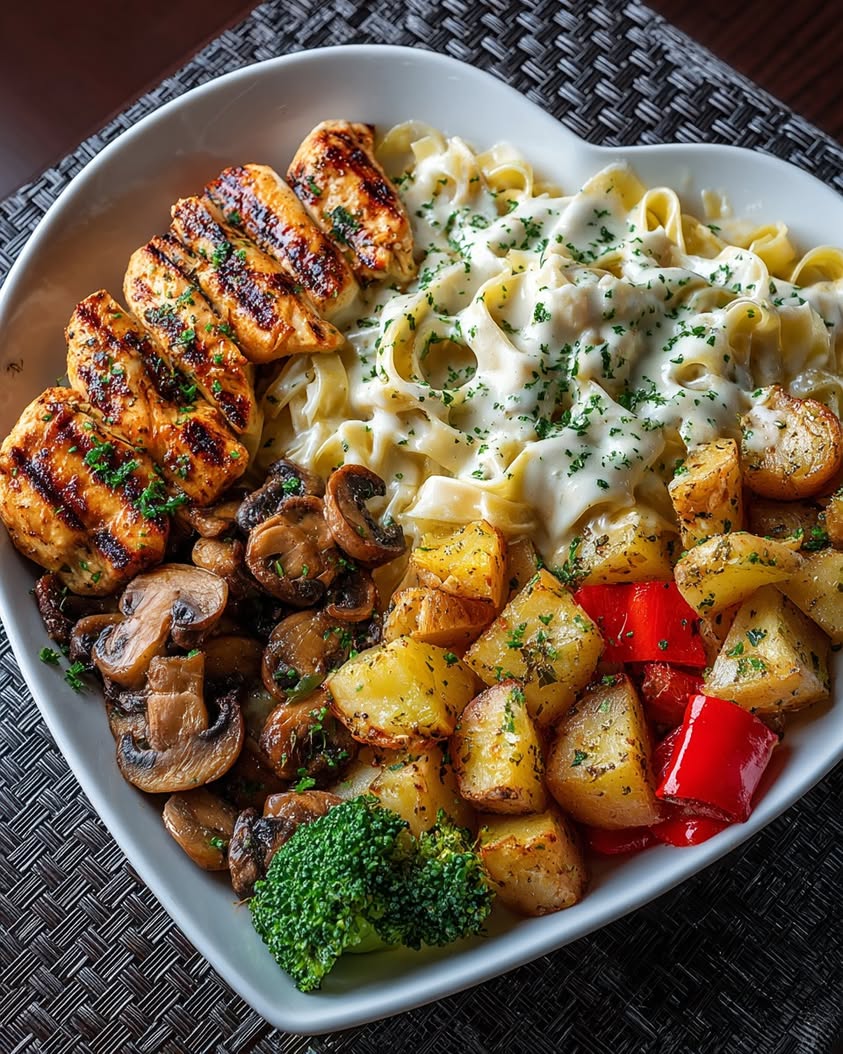
Creamy Chicken Pasta Bowl with Roasted Veggies & Potatoes: A One-Pan Comfort Food Classic
Imagine a dinner that delivers the ultimate comfort food experience with minimal cleanup. This creamy chicken pasta bowl with roasted veggies and potatoes is exactly that kind of magical meal. It combines tender, seasoned chicken, hearty roasted potatoes, and vibrant broccoli and mushrooms all tossed in a luxuriously creamy sauce. Ultimately, it all comes together in one pan for a satisfying dinner that feels both indulgent and wholesome.
The beauty of this recipe lies in its harmonious layers of flavor and texture. You get the savory depth from the roasted vegetables, the hearty bite of pasta, and the rich, velvety sauce that coats every component perfectly. This creamy chicken pasta bowl is a guaranteed crowd-pleaser, ideal for busy weeknights when you crave something special without spending hours in the kitchen. Furthermore, it’s a versatile blueprint you can adapt with whatever vegetables you have on hand.
This dish is a testament to how simple ingredients can create something extraordinary. The roasting process caramelizes the veggies and potatoes, adding a subtle sweetness that balances the creamy sauce. Meanwhile, the chicken stays juicy and flavorful, making every forkful a delightful mix. Consequently, this creamy chicken pasta bowl is more than just a recipe; it’s a reliable solution for delicious, comforting family dinners.
Quick Recipe Highlights
- Flavor Profile: This dish offers a masterful balance of savory, creamy, and earthy notes. The roasted vegetables add a caramelized sweetness, while the garlic and Parmesan cheese provide a sharp, umami depth that makes the creamy sauce incredibly flavorful.
- Texture: You experience a wonderful contrast in every bite. Expect tender chicken, al dente pasta, creamy sauce, and crispy-edged roasted potatoes and broccoli. This combination creates a truly satisfying mouthfeel that is never monotonous.
- Aroma: As it cooks, your kitchen will fill with the irresistible scent of roasting garlic and herbs, followed by the rich, savory aroma of the creamy sauce melding with the pasta and chicken. It’s a fragrance that promises a delicious meal.
- Visual Appeal: The final bowl is a colorful mosaic of green broccoli, golden-brown potatoes and chicken, and earthy mushrooms, all draped in a creamy white sauce. It’s a rustic yet beautiful presentation that looks as good as it tastes.
- Skill Level Needed: This is a beginner-friendly recipe. The steps are straightforward: chopping, roasting, and simmering a sauce. If you can operate a knife and a baking sheet, you can absolutely master this creamy chicken pasta bowl.
- Special Equipment: You primarily need a large baking sheet for roasting and a large skillet or pot for the pasta and sauce. A sturdy pair of tongs is helpful for tossing everything together at the end.
Recipe Overview
- Difficulty Level: We classify this creamy chicken pasta bowl as an easy recipe. The techniques involved—chopping vegetables, seasoning meat, and making a simple pan sauce—are fundamental. There are no advanced skills like tempering eggs or making a roux from scratch required. The process is linear and forgiving.
- Category: This recipe squarely fits into the main dish category for dinner. It’s a complete, balanced meal featuring protein, carbohydrates, and vegetables all in one bowl. Additionally, it can be considered a comfort food recipe and a one-pan meal, minimizing cleanup.
- Cuisine: While pasta is Italian in origin, this creamy chicken pasta bowl is a modern American fusion dish. It takes the Italian concept of a pasta bowl and incorporates a creamy, Parmesan-laced sauce and roasted vegetable techniques popular in contemporary home cooking. It’s a global comfort food staple.
- Cost: This is a very cost-effective meal. Chicken thighs or breasts, pasta, potatoes, broccoli, and mushrooms are all affordable, accessible ingredients. The cream and Parmesan cheese are the only slightly pricier components, but a little goes a long way. You can easily feed a family of four for less than the cost of takeout.
- Season: This creamy chicken pasta bowl is truly a year-round recipe. However, it shines in the fall and winter when its hearty, warming nature is most appreciated. You can also make it in spring and summer using seasonal vegetables like asparagus or zucchini instead of broccoli.
- Occasion: It’s perfect for casual weeknight family dinners, effortless weekend lunches, or even for feeding a small group of friends. Because it’s all in one bowl, it’s also an excellent option for potlucks or casual gatherings where you need a transportable, crowd-pleasing dish.
Why You’ll Love This Recipe
First and foremost, the taste and texture of this creamy chicken pasta bowl are utterly irresistible. Each component plays a role: the chicken provides savory protein, the roasted veggies offer sweetness and bite, the potatoes add heartiness, and the creamy sauce brings everything together in a luxurious embrace. The flavor is deeply satisfying, hitting notes of umami from the Parmesan, richness from the cream, and earthiness from the herbs. It’s the kind of meal that makes everyone at the table ask for seconds.
From a practical standpoint, the convenience of this recipe is a major win. Essentially, you are roasting your vegetables and protein on one pan while your pasta cooks separately. This parallel prep means your active time is minimal. Consequently, you get a impressive, home-cooked dinner on the table in about 40 minutes with very little hands-on effort. The one-pan roasting method also translates to easier cleanup, which is a huge benefit after a long day.
Nutritionally, this dish is a well-rounded meal. You are incorporating lean protein from the chicken, complex carbohydrates from the pasta and potatoes, and a full serving of vegetables with the broccoli and mushrooms. The cream sauce, while indulgent, is balanced by these other elements. You can easily adjust the ratios to include more veggies or use whole wheat pasta for added fiber. Therefore, it’s a meal that satisfies cravings while still providing substantive nutrition.
For social and entertaining value, this creamy chicken pasta bowl is a superstar. It’s easy to double or triple for a crowd, and its comforting, familiar flavors appeal to both adults and children. Serving it family-style in a large bowl encourages sharing and conversation. Moreover, because it’s not overly fussy, it allows the cook to spend time with guests instead of being stuck in the kitchen plating intricate courses.
Finally, the cost-effectiveness and accessibility of this recipe cannot be overstated. The ingredients are pantry staples and common grocery items, making it easy to whip up without a special trip to the store. You likely have many of the seasonings on hand already. Compared to ordering pizza or going out to eat, this homemade creamy chicken pasta bowl delivers far more food and flavor for a fraction of the price, making it a smart choice for any household budget.
Historical Background and Cultural Significance
The concept of combining pasta, protein, and vegetables in a creamy sauce has roots in several culinary traditions, but its modern form is a product of 20th-century home cooking. Italian-American cuisine popularized dishes like fettuccine Alfredo, which emphasizes a rich, cheesy cream sauce. Meanwhile, the casserole culture of mid-century America championed the one-dish meal, often featuring canned cream soups as a binder. This creamy chicken pasta bowl is a fresher, from-scratch evolution of those ideas, leveraging roasted vegetables for depth instead of processed ingredients.
Culturally, this dish represents the global fusion that defines contemporary eating. Pasta is Italian, the technique of roasting vegetables is used worldwide, and the creamy Parmesan sauce has French influences. It speaks to a modern desire for hearty, comforting food that doesn’t require strict adherence to tradition. This creamy chicken pasta bowl is a testament to home cooks adapting techniques and flavors from around the world to create something new and delicious for their families.
The evolution of this recipe is directly tied to the availability of ingredients and kitchen technology. The widespread availability of boneless, skinless chicken breasts made quick-cooking protein accessible. Similarly, the common presence of fresh broccoli and mushrooms in supermarkets year-round allowed for more vegetable-forward dishes. The recipe evolved from heavier, baked casseroles to quicker, stovetop-to-oven methods that preserve texture and freshness, resulting in the vibrant bowl we make today.
Regional variations of this concept abound. In the American South, you might find a version with a cream gravy and added peas. In the Midwest, it could be baked as a casserole with a breadcrumb topping. An Italian rendition might use a true Alfredo sauce (just butter and Parmesan) and skip the potatoes. The version presented here, with its focus on roasted veggies and a simple cream reduction, is a streamlined, weeknight-friendly take that prioritizes flavor and ease above all else.
Ingredient Deep Dive
Chicken breast is the lean protein anchor of this creamy chicken pasta bowl. Culturally, chicken is one of the most universally consumed meats, prized for its mild flavor and versatility. Nutritionally, it’s an excellent source of high-quality protein and essential B vitamins like niacin and B6, which support metabolism. For the best results, select plump, evenly-sized breasts for consistent cooking. You can substitute boneless, skinless chicken thighs for more flavor and juiciness, or use pre-cooked rotisserie chicken to save time.
Pasta, typically a short shape like penne or fusilli, provides the comforting carbohydrate base. Originating in Italy, pasta became a global staple due to its long shelf life and satisfying nature. It offers complex carbohydrates for sustained energy. Always cook pasta in well-salted water to season it from the inside out. For storage, keep dried pasta in a cool, dry pantry. Gluten-free pasta made from brown rice or chickpeas works perfectly as a substitution in this creamy chicken pasta bowl.
Broccoli brings a vibrant green color and crucial nutrients. This cruciferous vegetable has a long history dating back to the Roman Empire. It is packed with vitamins C and K, fiber, and potent antioxidants. Choose heads with tight, dark green florets and firm stalks. Yellowing indicates age. To store, keep it unwashed in the refrigerator’s crisper drawer. You can easily swap in cauliflower, asparagus, or green beans based on seasonality or preference in your creamy chicken pasta bowl.
Cremini mushrooms contribute a deep, earthy umami flavor. These are simply immature portobello mushrooms and are more flavorful than white button mushrooms. They have been foraged and cultivated for centuries across many cultures. They are a good source of B vitamins and selenium. Select mushrooms that are firm with dry caps. Avoid slimy specimens. Store them in a paper bag in the fridge. For a different flavor, try shiitake or oyster mushrooms in your creamy chicken pasta bowl.
Potatoes add heartiness and a wonderful textural contrast. A New World crop, potatoes became a European and global staple. They provide vitamin C, potassium, and resistant starch. Use Yukon Gold or red potatoes for their creamy texture and buttery flavor that roasts well. Store potatoes in a cool, dark, well-ventilated place away from onions. For a lower-carb option, you can increase the broccoli or add chunks of roasted turnip or celery root to your creamy chicken pasta bowl.
Heavy cream and Parmesan cheese are the soul of the sauce. Cream has been used for centuries to add richness. Parmesan, or Parmigiano-Reggiano, is a hard, aged cheese from Italy with a crystalline, salty punch. Together, they create a luxurious, cohesive sauce. For a lighter version, half-and-half can work, but the sauce will be thinner. For dairy-free, use full-fat coconut milk and nutritional yeast. Always grate your own Parmesan for the best flavor and melt in your creamy chicken pasta bowl.
Common Mistakes to Avoid
- Overcrowding the Baking Sheet: If you pile all the veggies and chicken onto one pan without space, they will steam instead of roast. This results in soggy, pale vegetables rather than achieving the desired caramelized, crispy edges. Always use a large enough sheet or roast in batches.
- Underseasoning the Roasting Vegetables: Vegetables need ample seasoning before they go into the oven. Potatoes and broccoli are particularly bland on their own. Toss them generously with salt, pepper, and oil. Remember, seasoning layers build the final flavor of your creamy chicken pasta bowl.
- Overcooking the Chicken: Chicken breast cooks quickly and can become dry and tough if left in the oven too long. Use a meat thermometer and pull it out when it reaches 165°F internally. Let it rest before slicing to retain its juices.
- Using Pre-Grated Parmesan Cheese: Pre-grated cheese often contains anti-caking agents like cellulose, which prevent it from melting smoothly into the sauce. This can lead to a grainy texture. For a silky sauce, always buy a block of Parmesan and grate it fresh.
- Adding the Cream to a Scorching Hot Pan: If you pour cold cream into a extremely hot, dry pan, it can seize or scorch. The best practice is to lower the heat, add a bit of butter or the pasta water first, then stir in the cream to gently warm it.
- Not Reserving Pasta Water: The starchy, salty pasta water is liquid gold for sauce-making. It helps emulsify the sauce, making it creamier and helping it cling to the pasta. Always scoop out a cup of water before draining your pasta for the creamy chicken pasta bowl.
- Boiling the Cream Sauce: Once you add the cream and Parmesan, you should only simmer the sauce gently. A rolling boil can cause the sauce to break, where the fat separates from the liquid, creating a greasy, curdled appearance.
- Mixing Everything Too Early: If you combine the roasted components with the pasta and sauce and let it sit for too long before serving, the pasta can continue to absorb the sauce and become mushy. For the best texture, combine everything just before you are ready to serve.
Essential Techniques
Roasting Vegetables is the cornerstone technique for building flavor in this creamy chicken pasta bowl. Roasting uses dry, high heat to caramelize the natural sugars in vegetables, concentrating their flavor and creating delicious browned edges. To master it, ensure your vegetables are cut to a uniform size for even cooking, are thoroughly dried after washing, and are coated in enough oil to promote browning. The common pitfall is overcrowding the pan, which leads to steaming. Visual cues for success are golden-brown spots and tender-crisp texture.
Creating a Simple Pan Sauce transforms the dish from separate components into a cohesive meal. The technique involves using the fond—the browned bits left in the skillet after cooking—as a flavor base. After sautéing garlic, you deglaze the pan with a bit of pasta water or broth, scraping up those bits. Then, you incorporate cream and cheese off the heat to create a velvety emulsion. The key is gentle heat to prevent curdling. Success is a smooth, glossy sauce that coats the back of a spoon.
Proper Pasta Cooking, or cooking “al dente,” is non-negotiable. Al dente means “to the tooth” in Italian, describing pasta that is tender but still offers slight resistance when bitten. This is crucial because the pasta will continue to cook slightly when tossed with the hot sauce and other ingredients. To achieve it, cook the pasta in a large pot of generously salted boiling water and start testing it a minute or two before the package’s suggested time. Perfect pasta should have a firm core.
Pro Tips for Perfect Creamy Chicken Pasta Bowl
For maximum flavor, season the chicken and vegetables at every stage. Don’t just rely on the sauce for salt. Season the raw chicken before roasting, and toss the chopped veggies with salt, pepper, and your dried herbs before they hit the pan. This builds layers of seasoning that permeate the entire dish.
Let the roasted chicken rest for 5-10 minutes before slicing. This allows the juices, which have been driven to the center by the heat, to redistribute throughout the meat. Slicing it immediately will cause all those flavorful juices to run out onto your cutting board, leaving the chicken dry.
Use the residual heat of the pasta pot to your advantage. After draining the pasta, immediately add it back to the warm, empty pot. Then, pour the cream sauce over it and toss. The retained heat from the pot helps the pasta absorb the sauce beautifully.
If your cream sauce seems too thick, don’t add more cream. Instead, use your reserved pasta water, a tablespoon at a time. The starch in the water will thin the sauce while simultaneously making it creamier and helping it stick to the pasta better.
For an extra flavor boost, add a splash of white wine or lemon juice to the skillet after sautéing the garlic, before adding the cream. Let it reduce for a minute. The acidity will cut through the richness of the sauce and brighten the entire creamy chicken pasta bowl.
Finish the dish with fresh herbs. While dried herbs are great for roasting, adding a handful of freshly chopped parsley, basil, or chives at the very end provides a pop of color and a burst of fresh flavor that elevates the dish from good to restaurant-quality.
Variations and Adaptations
For regional variations, consider a Southwest twist by using chili powder and cumin on the chicken and veggies, then stirring in roasted corn and black beans at the end. A Mediterranean version could feature oregano, lemon zest, kalamata olives, and feta cheese instead of Parmesan. An Italian-inspired take might skip the potatoes and use a classic Alfredo base of just butter, pasta water, and Parmesan.
Seasonal adaptations make this recipe a year-round favorite. In spring, use asparagus and fresh peas. Summer calls for zucchini, yellow squash, and cherry tomatoes. In autumn, swap in cubed butternut squash and Brussels sprouts. For winter, stick with the hearty potatoes and broccoli or use kale and mushrooms for a deeper flavor profile in your creamy chicken pasta bowl.
Dietary modifications are straightforward. For gluten-free, use your favorite GF pasta. For dairy-free, create a sauce with full-fat coconut milk, nutritional yeast, and a touch of miso paste for umami. To make it vegetarian, omit the chicken and add cannellini beans or chickpeas to the roasting pan for plant-based protein.
Flavor variations are endless. Add heat with red pepper flakes or a diced jalapeño. Incorporate smokiness with a teaspoon of smoked paprika on the roasting veggies. For a more herbal note, use fresh rosemary or thyme. Stir in a tablespoon of sun-dried tomato pesto into the cream sauce for a tangy, sweet depth.
Texture modifications can cater to different preferences. For a lighter sauce, use half-and-half or whole milk thickened with a cornstarch slurry. For extra creaminess, stir in a couple of tablespoons of cream cheese or mascarpone. If you prefer no pasta, serve the creamy chicken and veggie mixture over mashed potatoes, polenta, or rice.
Presentation alternatives can dress the dish up or down. For a family-style meal, toss everything in a large, warm serving bowl. For individual plating, use a pasta bowl and twirl the pasta with tongs for height. In a lunch container, layer the components separately to prevent sogginess, then mix before eating.
Serving and Presentation Guide
Plating techniques matter for visual appeal. For individual servings, use a shallow, wide pasta bowl. Start with a base of the creamy pasta, then artfully arrange slices of roasted chicken and clusters of the roasted vegetables and potatoes on top. This showcases each component rather than having everything mixed into a homogenous pile. Drizzle a little extra sauce over the top for gloss.
Garnishing ideas add the final touch of freshness and color. A generous sprinkle of freshly chopped parsley or basil is classic. For texture, add a few shavings of Parmesan cheese made with a vegetable peeler. A light dusting of freshly cracked black pepper or a pinch of red pepper flakes adds visual contrast and a hint of spice. A small lemon wedge on the side allows guests to add a bright note.
Traditional accompaniments for a rich pasta dish like this are simple. A crisp green salad with a sharp vinaigrette (like lemon or balsamic) cuts through the creaminess perfectly. A side of garlic bread or crusty baguette is ideal for sopping up any remaining sauce. For a lighter option, serve with steamed green beans or a simple tomato bruschetta.
Modern serving suggestions might include deconstructing the bowl. Serve the roasted components in one dish, the pasta in another, and the sauce in a small pitcher, allowing everyone to build their own perfect bite. This is especially fun for gatherings with varied dietary needs or preferences.
Temperature considerations are key. This creamy chicken pasta bowl is best served immediately while everything is hot and the sauce is fluid. Ensure your serving bowls are warmed to prevent the dish from cooling too quickly. If you must hold it, keep it covered in a warm oven, but note the pasta will continue to absorb sauce.
Portion control tips are helpful for balancing the meal. A good rule of thumb is that one serving is about 1.5 to 2 cups of the combined dish. Since it’s a complete meal, you don’t need huge portions. Using smaller bowls can naturally help with portion sizes while still making the meal feel abundant and satisfying.
Wine and Beverage Pairing
Wine pairings should complement the richness of the creamy sauce without overpowering the dish. A crisp, acidic white wine like Pinot Grigio or Sauvignon Blanc cuts through the creaminess beautifully. For a richer option, an unoaked Chardonnay has the body to match the sauce. If you prefer red, choose a light-bodied, low-tannin red like Pinot Noir, which won’t clash with the chicken and cream. Serve whites chilled and reds slightly below room temperature.
Non-alcoholic alternatives can be just as sophisticated. Sparkling water with a twist of lemon or lime cleanses the palate between bites. A tart cranberry spritzer (cranberry juice mixed with club soda) offers acidity to balance the richness. For a warmer option, a mild herbal tea like chamomile or lemon verbena can be soothing and complementary.
While not traditional, coffee or tea pairings can work if served after the meal. A medium-roast coffee with low acidity would be a better choice than a dark, bitter roast. For tea, a light oolong or a floral white tea would not compete with the lingering flavors of the creamy chicken pasta bowl. These are best enjoyed as a digestif rather than alongside the meal.
Temperature considerations for beverages are straightforward. Cold drinks should be properly chilled, and warm drinks should be hot but not scalding. The contrast between a cold, crisp beverage and the warm, creamy pasta is part of the enjoyable experience. Always offer water on the table as well to cleanse the palate.
Serving suggestions include offering a choice. When entertaining, you might set out a bottle of white and a bottle of red wine. For non-drinkers, have a carafe of infused water and sparkling options available. Presentation matters—use appropriate glassware to enhance the overall dining experience of your creamy chicken pasta bowl.
Storage and Shelf Life
Storage methods are crucial for food safety and quality. Allow any leftovers of your creamy chicken pasta bowl to cool to room temperature within two hours of cooking. Then, transfer them to an airtight container. Do not leave it sitting out for extended periods, as the dairy-based sauce is perishable. You can store the components separately if you prefer, keeping the sauce, pasta, and roasted items in different containers to better preserve texture.
Temperature requirements are non-negotiable. The refrigerator is the best short-term storage solution. Keep the container in the main body of the fridge, not in the door, where temperatures fluctuate more. The ideal fridge temperature is at or below 40°F (4°C). Properly stored, your creamy chicken pasta bowl will last for 3 to 4 days.
Container recommendations include glass or BPA-free plastic containers with tight-fitting lids. Glass is preferable as it doesn’t absorb odors and is easy to see through. If storing a large batch, consider dividing it into smaller, single-serving containers. This makes reheating easier and prevents you from repeatedly warming and cooling the entire batch.
Signs of spoilage to watch for include an off or sour smell, a significant change in texture (like excessive mushiness or separation of the sauce), or any visible mold. If the pasta develops a slimy film, it has gone bad. When in doubt, it is always safer to discard the leftovers rather than risk foodborne illness.
Reheating instructions are important for restoring texture. The best method is on the stovetop. Add the leftovers to a skillet with a splash of milk, broth, or water. Gently heat over medium-low, stirring frequently, until warmed through. This helps re-emulsify the sauce. You can also use a microwave, but heat in 30-second intervals, stirring between each, to avoid hot spots and further drying out the chicken.
Freezing guidelines come with a caveat. While you can freeze this creamy chicken pasta bowl, the texture of the cream sauce, pasta, and potatoes may change upon thawing. The sauce can separate and become grainy, and the pasta may become mushy. If you must freeze, do so for no longer than one month. Thaw overnight in the refrigerator before reheating gently on the stovetop, adding liquid as needed.
Make Ahead Strategies
A prep timeline can turn this into a 15-minute meal on a busy night. The day before, chop all your vegetables (broccoli, mushrooms, potatoes) and store them in separate airtight containers or bags in the fridge. You can also cube and season the chicken, storing it in its own container. This way, when it’s time to cook, you simply toss everything with oil and roast.
Storage between steps is simple. Pre-chopped veggies can be kept for up to 24 hours. Cooked components can also be prepared ahead. Roast the chicken and vegetables, cook the pasta, and make the sauce separately. Store each in the fridge. When ready to serve, gently reheat the sauce, warm the roasted components in the oven, and toss everything together with the pasta.
Quality impact assessment is important. Pre-cooked and reheated pasta will be softer. The roasted vegetables may lose a bit of their crisp edge but will retain flavor. The sauce may thicken in the fridge; simply thin it with a little milk or pasta water when reheating. Overall, the make-ahead version will still be delicious, though the texture will be slightly different from fresh.
Assembly tips for make-ahead meals: If you’ve pre-cooked everything, combine the components while they are all hot for the best integration. If the pasta is cold, run it under hot water for a moment to loosen it up before adding it to the warm sauce. This helps everything come together smoothly for your creamy chicken pasta bowl.
Reheating guidelines for pre-assembled dishes: If you’ve combined everything ahead of time and stored it, reheat it in a covered oven-safe dish at 350°F until bubbly, stirring once halfway through. You may need to add a splash of liquid to the dish before baking to prevent it from drying out. Covering with foil prevents excessive browning.
Fresh element additions can revive a make-ahead dish. Even if you prepared the main components ahead, add a final garnish of freshly grated Parmesan and chopped herbs right before serving. A squeeze of fresh lemon juice or a drizzle of high-quality olive oil at the end can also brighten flavors that may have muted during storage.
Scaling Instructions
Halving the recipe is straightforward for smaller households. Simply divide all ingredient quantities by two. Use a standard-sized baking sheet—the smaller volume of food will actually promote better roasting as there’s more space. Cooking times may be slightly reduced, so start checking for doneness 5 minutes earlier than the original recipe suggests. The sauce will come together much quicker in a smaller skillet.
Doubling or tripling the recipe for a crowd requires some adjustments. Use two large baking sheets, rotating them top-to-bottom halfway through roasting to ensure even cooking. You may need to cook the pasta in two separate pots or in batches to avoid sticking. For the sauce, make it in a large Dutch oven or pot instead of a skillet. Be careful not to overcrowd the pan when sautéing the garlic; do it in batches if needed.
Equipment adjustments are necessary when scaling. For larger batches, ensure you have a pot large enough to hold all the cooked pasta and sauce for the final toss. A very large mixing bowl or a clean kitchen sink can work in a pinch. For roasting, having multiple oven racks and baking sheets is essential. Consider using disposable aluminum pans for easy cleanup if you’re cooking for a very large group.
Timing modifications become important with scale. While prep time increases linearly, cooking time may not. The roasting time may increase by 5-10 minutes for a doubled batch because the oven is more crowded. Pasta cooking time remains the same per batch. Sauce-making time increases slightly. Build in extra buffer time when cooking for a crowd to ensure your creamy chicken pasta bowl is ready when your guests are.
Storage considerations change with volume. A large batch of leftovers will take longer to cool down, which is a food safety risk. To cool it quickly, divide the hot food into several shallow containers before refrigerating. This brings the temperature down faster and prevents bacterial growth. Clearly label containers with the date if you plan to freeze portions.
Nutritional Deep Dive
The macro breakdown of this creamy chicken pasta bowl provides a balanced mix. A typical serving offers a substantial amount of protein from the chicken (roughly 25-30 grams), which supports muscle repair and satiety. The carbohydrates from the pasta and potatoes (approximately 50-60 grams) deliver energy. The fats from the cream, oil, and cheese (around 20-25 grams) contribute to the rich mouthfeel and help absorb fat-soluble vitamins from the vegetables. This balance makes it a sustaining meal.
Micronutrient analysis reveals a wealth of vitamins and minerals. Broccoli is a powerhouse of Vitamin C and K. Mushrooms provide B vitamins and selenium. Potatoes offer potassium and Vitamin C. Chicken is rich in B6 and niacin. The dairy contributes calcium and Vitamin A. Together, this creamy chicken pasta bowl delivers a broad spectrum of nutrients essential for immune function, bone health, and energy metabolism.
Health benefits are tied to its whole-food ingredients. The dish provides high-quality protein for muscle maintenance. The fiber from the vegetables and whole-grain pasta (if used) supports digestive health. The antioxidants in broccoli and mushrooms combat oxidative stress. The potassium from potatoes can help regulate blood pressure. When consumed as part of a varied diet, this meal contributes positively to overall nutritional intake.
Dietary considerations are important for specific needs. For those monitoring sodium, reduce added salt and use low-sodium broth. For heart health, use a lighter cream or half-and-half and increase the vegetable ratio. The dish contains dairy and gluten as written, but modifications are easy (see Dietary Adaptations section). It is not suitable for a strict keto diet due to the pasta and potatoes, but a cauliflower-based version could be.
Portion analysis shows that a standard serving is quite filling due to the combination of protein, fiber, and fat. This can aid in weight management by preventing overeating and snacking later. To make it even more weight-conscious, increase the volume of non-starchy vegetables (broccoli, mushrooms) slightly and slightly reduce the portion of pasta and cream sauce, while keeping the chicken portion steady.
Weight management tips include being mindful of the sauce quantity. You can lightly coat the components rather than drowning them. Using a measured amount of oil for roasting (like a spray) can control added fat. Choosing a whole-grain pasta increases fiber, which promotes fullness. Ultimately, this creamy chicken pasta bowl can fit into a balanced diet when portion size is controlled and it’s paired with an active lifestyle.
Dietary Adaptations
For a gluten-free creamy chicken pasta bowl, the only change needed is the pasta. Choose a high-quality gluten-free pasta made from brown rice, corn, or a blend. Be sure to cook it according to package directions, as GF pasta often has a different texture and can become mushy if overcooked. Check that your chicken broth (if used) is certified gluten-free. All other ingredients are naturally gluten-free.
A dairy-free version requires reimagining the sauce. Replace the heavy cream with full-fat canned coconut milk for the best richness and texture. For the cheesy flavor, use a combination of nutritional yeast (for umami) and a sprinkle of dairy-free Parmesan-style cheese. You can also add a teaspoon of white miso paste for depth. Use olive oil or a dairy-free butter alternative for sautéing the garlic.
To make a vegan creamy pasta bowl, omit the chicken and use the dairy-free sauce adaptation above. For protein, add a can of drained and rinsed white beans or chickpeas to the roasting pan with the vegetables. You could also use seasoned, cubed extra-firm tofu. Ensure all other ingredients, like the pasta, are vegan (most dried pasta is, but check for egg).
A low-carb or keto adaptation involves significant changes. Replace the pasta with zucchini noodles (zoodles) or shirataki noodles. Omit the potatoes entirely or use a small amount of diced radish, which roasts and softens similarly. Use the full cream and cheese for the sauce, as fat is encouraged. This transforms the dish into a creamy chicken and vegetable skillet that fits strict carb limits.
For a Paleo version, use spaghetti squash or zucchini noodles instead of pasta. Omit the dairy by making a sauce from blended cashews soaked in water or using a coconut milk base. Ensure all seasonings are pure and without additives. Use ghee or avocado oil for cooking instead of regular butter or vegetable oil. This creates a completely grain-free and dairy-free meal.
A Low-FODMAP adaptation is possible for those with sensitivities. Use gluten-free pasta. Replace the garlic with garlic-infused oil (the fructans are not oil-soluble, so the flavor remains without the FODMAPs). Use only the green tops of green onions instead of regular onions. Limit the broccoli to a ½ cup serving per person, as it contains moderate FODMAPs in larger quantities. Omit the mushrooms or use a small amount of oyster mushrooms.

I’m Shaykee—born in Morocco, seasoned across continents. From airplane galleys to home kitchens, I share the flavors and stories that shaped my journey.