
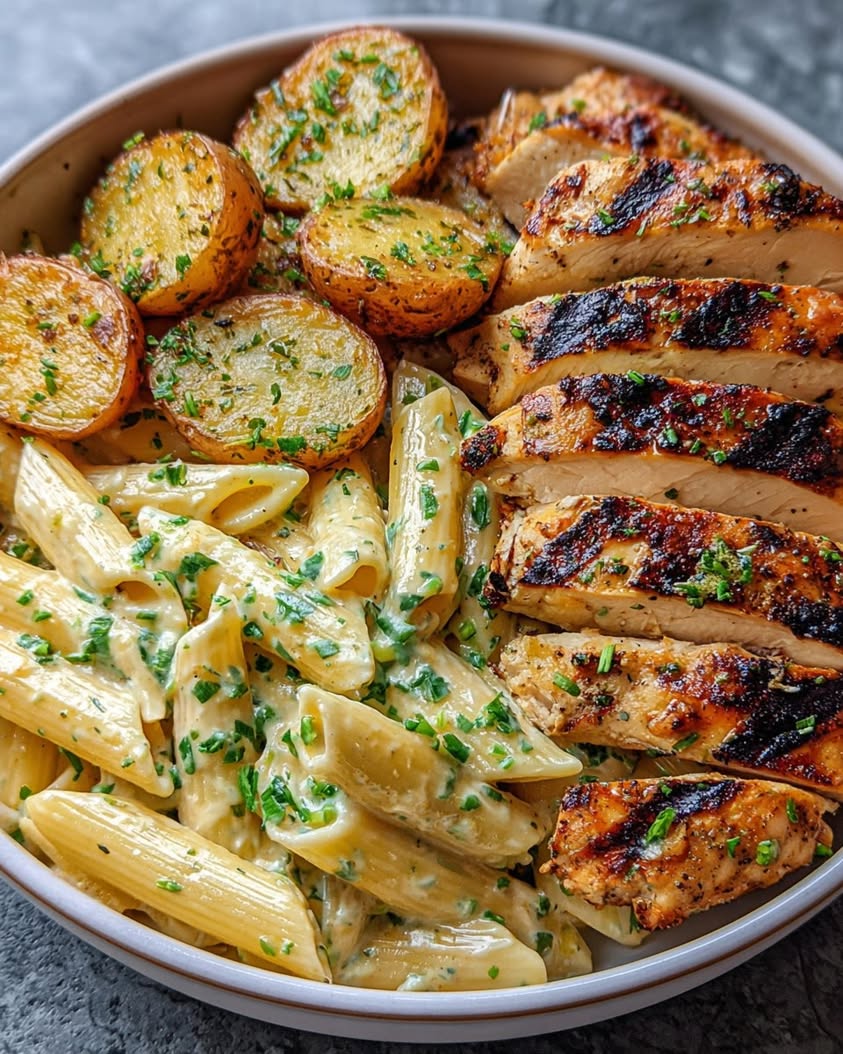
Creamy Herb Pasta Bowl with Grilled Chicken & Roasted Baby Potatoes: A Quick, Satisfying Dinner That’s Packed with Flavor and Ready in 30 Minutes!
Imagine a dinner that delivers restaurant-quality flavor without the fuss. This creamy herb pasta with grilled chicken & roasted baby potatoes is exactly that kind of meal. It combines tender, juicy chicken, perfectly al dente pasta, and crispy, golden potatoes all tossed in a luxuriously creamy herb sauce. Ultimately, it’s a complete, balanced bowl of comfort that feels indulgent yet comes together with straightforward, weeknight-friendly steps.
The magic of this recipe lies in its harmonious textures and bright, savory flavors. For instance, the roasted baby potatoes add a delightful, crispy contrast to the silky pasta sauce. Meanwhile, the fresh herbs like parsley and chives cut through the richness, creating a dish that is satisfying but never heavy. This creamy herb pasta with grilled chicken & roasted baby potatoes is a guaranteed crowd-pleaser, perfect for busy families or casual entertaining.
Furthermore, this dish is a fantastic template for creativity. You can easily swap the herbs based on what’s in your garden or use different pasta shapes. Essentially, it’s a reliable foundation for a delicious dinner any night of the week. The process is efficient, as you can roast the potatoes and grill the chicken simultaneously while the pasta cooks, making the 40-minute total time fly by.
Quick Recipe Highlights
- Flavor Profile: This dish boasts a rich, savory base from the creamy Parmesan sauce, beautifully balanced by the bright, fresh notes of parsley and chives. The grilled chicken adds a smoky, umami depth, while the roasted potatoes contribute a subtle, earthy sweetness.
- Texture: You get a wonderful play of textures in every bite. The pasta is tender, the sauce is velvety and clinging, the chicken is juicy and slightly charred, and the baby potatoes offer a crispy, golden exterior with a fluffy interior.
- Aroma: As it cooks, your kitchen will fill with the irresistible scent of garlic sizzling, herbs releasing their oils, chicken grilling, and potatoes roasting. The combined aroma is deeply comforting and appetizing.
- Visual Appeal: The presentation is vibrant and inviting. The creamy white sauce is flecked with green herbs, nestled with golden-brown chicken pieces and crispy roasted potatoes. It’s a colorful, complete meal in one bowl.
- Skill Level Needed: This is an accessible recipe for most home cooks. It requires basic skills like boiling pasta, pan-grilling chicken, and roasting vegetables. The sauce is simple, requiring just stirring and simmering.
- Special Equipment: You’ll need a large pot for pasta, a baking sheet for roasting the potatoes, and a large skillet or grill pan for the chicken. A good chef’s knife for chopping herbs and garlic is also essential.
Recipe Overview
- Difficulty Level: We rate this recipe as “Easy.” The techniques are fundamental—chopping, boiling, sautéing, and roasting. The steps are clearly sequenced to maximize efficiency, and there’s no advanced culinary skill required. Even a novice cook can achieve excellent results by following the instructions.
- Category: This dish fits perfectly into multiple categories: it’s a hearty main course, a reliable weeknight dinner, and excellent comfort food. It’s a complete protein-and-carb meal that satisfies hunger and pleases the palate.
- Cuisine: While not strictly traditional to one region, it draws inspiration from Italian-American cuisine (the creamy pasta) and general Western grill culture. It’s a modern, fusion-style dish designed for contemporary home cooking and flavor preferences.
- Cost: This is a moderately priced meal. Chicken breast, pasta, potatoes, and basic dairy are affordable staples. Fresh herbs and Parmesan cheese are the main splurges, but they make a significant impact. Overall, it’s far more cost-effective than ordering similar dishes for delivery.
- Season: This creamy herb pasta with grilled chicken & roasted baby potatoes is truly an all-season winner. It’s hearty enough for fall and winter, yet the fresh herbs make it feel light and appropriate for spring and summer evenings.
- Occasion: Ideal for busy weeknight family dinners, casual weekend meals, or even for meal prep. It’s also impressive enough to serve to guests for a relaxed dinner party, as it looks and tastes far more complex than it actually is.
Why You’ll Love This Recipe
First and foremost, the taste and texture combination is utterly irresistible. Each component brings something special: the creamy, garlicky sauce coats every strand of pasta, the chicken is seasoned and seared to perfection, and the roasted potatoes add a satisfying crunch. Consequently, every forkful is a delightful mix of creamy, tender, juicy, and crispy elements. The fresh herbs are not just a garnish; they are integral, providing a necessary pop of freshness that lifts the entire dish and prevents it from feeling too rich.
From a convenience standpoint, this recipe is a weeknight hero. The total time is just 40 minutes, and much of that is hands-off oven time for the potatoes. You can multitask efficiently—boil pasta, roast potatoes, and grill chicken all in parallel. Therefore, you get a complete, home-cooked meal on the table faster than you could get takeout. The cleanup is also manageable, especially if you use parchment paper on your baking sheet.
Nutritionally, this meal offers a good balance. It provides lean protein from the chicken breast, complex carbohydrates from the whole-wheat pasta option and potatoes, and fats from the cream and cheese for satiety. You can easily boost the veggie content by adding spinach to the sauce or serving it with a side salad. Ultimately, it’s a wholesome alternative to overly processed convenience foods.
For social and entertaining value, this dish is a winner. It’s universally appealing and feels special without requiring chef-level skills. You can easily double the recipe to feed a crowd. Presenting it in a large, family-style bowl encourages sharing and conversation. It’s the kind of meal that makes guests feel cared for and satisfied.
Finally, it’s cost-effective and accessible. The ingredients are common and can be found at any standard grocery store. You likely have many of them—like garlic, oil, and basic spices—already in your pantry. By cooking this at home, you save significantly compared to ordering a similar pasta dish at a restaurant, and you control the quality of every ingredient that goes into your meal.
Historical Background and Cultural Significance
Creamy pasta sauces have a rich, though debated, history in Italian cuisine. While many associate cream-based sauces with Northern Italy, particularly regions like Lombardy and Piedmont where dairy is plentiful, the specific combination with grilled chicken is a more modern, international adaptation. Historically, pasta was often served with simpler, tomato-based or oil-based sauces. The incorporation of cream created a richer, more luxurious category of dishes that gained worldwide popularity in the 20th century.
The cultural significance of a dish like this lies in its embodiment of “cucina casalinga” or home cooking. It represents a practical, satisfying approach to feeding a family. The addition of grilled chicken and roasted potatoes transforms a simple pasta course into a complete, protein-centered meal, reflecting contemporary dietary preferences that often focus on a central meat component alongside carbs and vegetables. This evolution shows how traditional foodways adapt to new lifestyles.
The recipe has evolved significantly from its possible origins. Early cream sauces might have used butter, flour, and milk (a béchamel) as a base. Modern versions, like this one, often simplify the process by using heavy cream or half-and-half for a quicker, foolproof sauce. The inclusion of fresh herbs as a primary flavor component, rather than just dried, is also a more recent trend aligned with the global emphasis on fresh, vibrant ingredients.
Regional variations are endless. In Italy, you might find “Pasta alla Valdostana” with fontina cheese and cream. In America, “Chicken Alfredo” is a ubiquitous cousin. This particular recipe, with its roasted potatoes, is a unique twist that adds a hearty, rustic element. It borrows from the tradition of serving roasted potatoes as a side and brilliantly integrates them directly into the main dish, creating a more cohesive and convenient eating experience.
Ingredient Deep Dive
Chicken Breast: A lean, versatile protein source central to many global cuisines. Chicken breast is prized for its mild flavor and ability to absorb marinades and seasonings. Nutritionally, it’s high in protein and low in fat, making it a diet-friendly choice. For best results, select plump, evenly sized breasts and pound them to an even thickness for consistent cooking. Store raw chicken in the coldest part of your fridge and use within 1-2 days, or freeze for longer storage. For substitution, chicken thighs offer more flavor and juiciness, or you can use turkey cutlets or even large shrimp.
Pasta (Fettuccine or similar): Pasta, with its origins in Italy, is a staple made from durum wheat semolina and water. It provides sustained energy through complex carbohydrates. The shape matters; long, flat pasta like fettuccine is ideal for clinging to creamy sauces. Look for bronze-die pasta for a rougher surface that holds sauce better. Store dried pasta in a cool, dry pantry indefinitely. Gluten-free pasta made from rice or legumes is a perfect substitute for dietary needs. Whole wheat pasta adds fiber and a nuttier flavor.
Baby Potatoes: These are simply young, small potatoes harvested before reaching full size. They have thin, tender skins and a creamy, waxy texture that holds its shape when roasted. They are a good source of vitamin C, potassium, and fiber. Choose firm potatoes without sprouts or green tinges. Store in a cool, dark, well-ventilated place—not the refrigerator. No need to peel! For a variation, try small Yukon Golds or fingerling potatoes. Their natural sweetness caramelizes beautifully in the oven.
Heavy Cream & Parmesan: Heavy cream (or whipping cream) is the foundation of the rich, velvety sauce. Parmesan cheese, specifically Parmigiano-Reggiano from Italy, adds a salty, nutty, umami punch that is irreplaceable. Together, they create a luxurious texture and deep flavor. For a lighter sauce, half-and-half can work but may not thicken as much. Always grate your own Parmesan from a block for superior melting and flavor; pre-grated often contains anti-caking agents. Store cream in the fridge and Parmesan wrapped tightly in the refrigerator.
Fresh Herbs (Parsley & Chives): These are the flavor brighteners. Flat-leaf (Italian) parsley has a clean, slightly peppery taste, while chives offer a mild, onion-like aroma. Historically used both medicinally and culinarily, fresh herbs are packed with antioxidants and vitamins. They should look vibrant and perky, not wilted. Store them stem-down in a glass of water in the fridge, covered loosely with a bag. In a pinch, you could use other soft herbs like basil, dill, or tarragon, though the flavor profile will shift.
Common Mistakes to Avoid
- Overcooking the Chicken: This is the top pitfall. Overcooked chicken breast becomes dry and tough. Use a meat thermometer and pull it off the heat at 165°F internally. Remember, it will continue to cook slightly while resting.
- Using Pre-Grated Parmesan Cheese: Pre-grated cheese contains cellulose to prevent clumping, which can make your sauce grainy and prevent it from melting smoothly. Always take the extra minute to grate a block of real Parmesan.
- Crowding the Baking Sheet with Potatoes: If the potatoes are piled on top of each other, they will steam instead of roast. Spread them in a single layer with space between to ensure they get crispy and golden brown.
- Not Salting the Pasta Water Enough: Your pasta water should taste like the sea. This is the primary opportunity to season the pasta itself. Undersalted water leads to bland pasta, no matter how flavorful your sauce is.
- Adding Cream to a Scorching Hot Pan: If your pan is too hot when you add the cream, it can separate or scorch. Let the garlic cook gently, then reduce the heat before adding the cream to simmer gently.
- Skipping the Rest Time for the Chicken: Slicing the chicken immediately after cooking causes all the precious juices to run out onto the cutting board. Let it rest for 5-10 minutes to allow the juices to redistribute throughout the meat.
- Overcooking the Pasta: Mushy pasta ruins the dish texture. Cook it to al dente—it should still have a slight bite. It will continue to cook slightly when tossed with the hot sauce.
- Using Dried Herbs in Place of Fresh: In this recipe, fresh herbs are non-negotiable for their bright flavor. Dried parsley or chives will not provide the same vibrant, finishing touch and can taste dusty.
Essential Techniques
Roasting Baby Potatoes: Roasting transforms potatoes by driving off moisture and caramelizing their natural sugars. The key is high heat (400-425°F), adequate oil for crispiness, and space on the pan. Toss them well to coat evenly. The visual cue for success is a golden-brown, crispy exterior that yields easily to a fork. The common pitfall is under-oiling or overcrowding, which leads to steamed, soggy potatoes.
Pan-Grilling Chicken Breast: This technique creates a flavorful, browned crust while keeping the interior juicy. Start with an even thickness by pounding the breasts. Pat them dry to ensure a good sear. Use a hot pan with a little oil. Don’t move the chicken too soon; let a crust form before flipping. The visual cue is a deep golden-brown color on each side. The internal temperature should reach 165°F. Resting the meat afterward is a non-negotiable step for juiciness.
Building a Cream Sauce: A simple cream sauce relies on gentle cooking and reduction. After sautéing garlic, add the cream and bring it just to a simmer—not a rolling boil. Let it cook gently until it thickens slightly and coats the back of a spoon. Adding cheese off the heat helps it melt smoothly without seizing. The pitfall is boiling too vigorously, which can cause the cream to separate or the sauce to become oily.
Tossing Pasta with Sauce: For the best flavor, always finish cooking your pasta in the sauce. Reserve some starchy pasta water before draining. Add the drained al dente pasta to the simmering sauce with a splash of pasta water. Toss vigorously over low heat. The starch in the water helps the sauce emulsify and cling to every strand of pasta, creating a cohesive dish rather than a pool of sauce with pasta on top.
Pro Tips for Perfect Creamy Herb Pasta with Grilled Chicken & Roasted Baby Potatoes
- Bring your cream to room temperature for 10-15 minutes before using it. Adding cold cream to a hot pan can sometimes cause it to curdle or seize up.
- Use the pasta cooking time as your kitchen timer. Start the potatoes and chicken so that all components finish around the same time as the pasta.
- Don’t rinse your pasta after draining. The starch left on the surface is crucial for helping the sauce stick to the noodles.
- Reserve at least a cup of the starchy pasta water. You may only need a few tablespoons, but it’s your secret weapon for adjusting the sauce consistency at the end.
- Season in layers. Salt the potato roasting oil, salt the pasta water, season the chicken, and season the sauce. This builds a deep, well-rounded flavor profile.
- If your sauce seems too thick after adding the cheese, thin it out with a small splash of the reserved pasta water, not regular water or more cream.
- Chop your fresh herbs just before adding them. This preserves their volatile oils and maximizes their fresh flavor and bright green color.
- For extra flavor, use the same skillet you cooked the chicken in to make the sauce. The browned bits (fond) left in the pan will add incredible depth to your creamy herb sauce.
Variations and Adaptations
Regional Variations: For a Tuscan twist, add a handful of sun-dried tomatoes and swap the parsley for fresh basil. A French-inspired version could use tarragon and a splash of white wine in the sauce. For a touch of the American South, use smoked paprika on the chicken and add sweet corn to the mix.
Seasonal Adaptations: In spring, add fresh peas and asparagus tips with the sauce. For summer, use cherry tomatoes and zucchini ribbons. In autumn, incorporate roasted butternut squash cubes and sage. Winter calls for heartier greens like kale or spinach stirred into the warm sauce.
Dietary Modifications: For a gluten-free meal, use your favorite GF pasta. To make it dairy-free, use a rich cashew cream or a store-bought vegan cream alternative with nutritional yeast instead of Parmesan. For a vegetarian version, omit the chicken and add cannellini beans or sautéed mushrooms for protein.
Flavor Variations: Add a teaspoon of Dijon mustard or a dash of lemon zest to the cream sauce for brightness. Incorporate different cheeses like sharp white cheddar, Gruyère, or Gorgonzola for a bold change. A pinch of red pepper flakes will add a welcome kick of heat.
Texture Modifications: For extra creaminess, stir in a tablespoon of cream cheese or mascarpone at the end. For more crunch, top with toasted pine nuts or breadcrumbs. If you prefer a smoother sauce, you can puree it briefly with an immersion blender after adding the herbs.
Presentation Alternatives: Serve it deconstructed for a fun family-style meal, with the pasta, chicken, potatoes, and sauce in separate bowls for everyone to build their own. For individual servings, use wide, shallow bowls and arrange the sliced chicken and potatoes artfully on top of the sauced pasta.
Serving and Presentation Guide
Plating Techniques: Use wide, shallow pasta bowls for the best presentation. Twirl a portion of the sauced pasta with tongs and place it in the center of the bowl. Arrange the sliced grilled chicken and roasted potatoes around or on top of the pasta. This showcases all the components beautifully and makes the dish look abundant and restaurant-quality.
Garnishing Ideas: Beyond the chopped herbs mixed in, finish with a final sprinkle of fresh parsley or chives. A light dusting of freshly grated Parmesan cheese adds visual appeal and flavor. A drizzle of high-quality extra virgin olive oil just before serving adds a lovely sheen and fruity note. A twist of black pepper is both classic and attractive.
Traditional Accompaniments: A simple green salad with a sharp vinaigrette (like lemon or balsamic) is the perfect side to cut through the richness of the creamy pasta. Crusty bread, such as a baguette or garlic bread, is ideal for sopping up any remaining sauce on the plate.
Modern Serving Suggestions: For a casual gathering, serve the entire recipe family-style in a large, beautiful serving bowl or platter with the chicken and potatoes arranged on top. Provide salad and bread on the side. This encourages sharing and creates a warm, communal dining experience.
Temperature Considerations: This dish is best served immediately while everything is hot. The sauce will thicken as it sits. If you must hold it, keep it covered in a warm oven (lowest setting) for no more than 15-20 minutes, but be aware the pasta may continue to soften.
Portion Control Tips: This recipe is designed to serve four hearty portions. If you’re serving it as part of a larger multi-course meal or for lighter appetites, it can easily stretch to serve five or six. Simply add an extra side salad or vegetable to round out the meal.
Wine and Beverage Pairing
Wine Pairings: The rich, creamy sauce and savory chicken call for a white wine with good acidity to cut through the fat. An unoaked Chardonnay, Pinot Grigio, or Sauvignon Blanc are excellent choices. If you prefer red, opt for a light-bodied, low-tannin red like a Pinot Noir or Beaujolais, served slightly chilled. The key is to avoid heavily oaked or high-tannin wines that could clash with the cream.
Non-Alcoholic Alternatives: Sparkling water with a squeeze of lemon or lime is always refreshing. For something more special, try a ginger beer or a craft lemonade. An herbal iced tea, like mint or peach, complements the fresh herbs in the dish beautifully without overpowering it.
Coffee/Tea Pairings: After the meal, a cup of espresso or a dark roast coffee can be a delightful palate cleanser. For tea, an Earl Grey with its citrusy bergamot notes or a gentle chamomile tea would make a soothing, digestif-style finish to the dining experience.
Temperature Considerations: White wines should be served well-chilled, around 45-50°F. Light reds like Pinot Noir are best served slightly below room temperature, around 55°F. Non-alcoholic sparkling drinks should be ice-cold to provide the most refreshing contrast to the warm, rich pasta.
Serving Suggestions: Always offer water on the table alongside any other beverages. If serving wine, consider pouring a small taste for guests to try with the first bite before filling glasses, allowing them to experience how the pairing works with the food.
Storage and Shelf Life
Storage Methods: Store leftovers in an airtight container in the refrigerator. It’s best to store the components separately if possible—pasta with sauce in one container, chicken and potatoes in another. This helps maintain better texture upon reheating. Combined, the dish will keep for 3-4 days.
Temperature Requirements: Refrigerate promptly within two hours of cooking. The danger zone for bacterial growth is between 40°F and 140°F, so getting the food cooled and into the fridge quickly is crucial for safety.
Container Recommendations: Use glass or BPA-free plastic containers with tight-fitting lids. For the saucy pasta, a container where it can lay in a relatively shallow layer will allow it to cool more evenly and reheat better.
Signs of Spoilage: Discard the food if you notice an off or sour smell, significant discoloration (especially a grey tinge to the chicken), or visible mold. If the sauce has separated irreversibly into a greasy, grainy mess, it’s also best to toss it.
Reheating Instructions: Reheat gently to prevent the sauce from breaking. The best method is on the stovetop over low heat with a splash of milk, water, or broth to loosen the sauce. Stir frequently. You can also use the microwave at 50% power, stirring every 30 seconds until heated through.
Freezing Guidelines: Freezing is not highly recommended for creamy pasta dishes, as the dairy-based sauce can separate and become grainy upon thawing and reheating. The potatoes may also become mealy. If you must freeze, expect a significant texture change and reheat very slowly on the stovetop with added liquid.
Make Ahead Strategies
Prep Timeline: You can prep several components 1-2 days in advance. Cube and season the potatoes; store them in a bag in the fridge. Trim and pound the chicken breasts; store them in a separate container. Chop the garlic and herbs; keep the herbs wrapped in a damp paper towel in a bag. Grate the Parmesan cheese.
Storage Between Steps: Keep all prepped ingredients in separate, clearly labeled containers in the refrigerator. Bringing the cream and prepped chicken to room temperature for 15 minutes before cooking will help with even cooking and sauce consistency.
Quality Impact Assessment: Pre-chopping garlic is fine, but fresh herbs will lose some vibrancy; chop them as close to serving as possible. Pre-cubed potatoes may oxidize slightly but will still roast well. The overall flavor of the finished dish will still be excellent with most components prepped ahead.
Assembly Tips: When ready to cook, simply roast the potatoes from their pre-cut state, cook the prepped chicken, and boil the pasta. Having everything measured and ready (mise en place) turns the active cooking time into a smooth, 25-minute process.
Reheating Guidelines: If you fully cook and combine the entire dish ahead, reheat it gently as described in the storage section. For best results, consider reheating the sauce and pasta together, then adding freshly reheated chicken and potatoes to maintain their optimal textures.
Fresh Element Additions: No matter how much you prep ahead, always add the final garnish of fresh herbs after reheating. This ensures a burst of fresh color and flavor that makes the dish taste newly made.
Scaling Instructions
Halving the Recipe: Halving is straightforward for a couple. Use a smaller baking sheet for the potatoes to ensure they still crisp up. A medium skillet will suffice for the chicken and sauce. Cooking times may be slightly reduced, especially for the chicken, so rely on visual cues and a meat thermometer.
Doubling or Tripling: For a crowd, you’ll need to roast the potatoes in batches or use multiple oven racks, rotating the sheets halfway through. Cook the chicken in batches to avoid steaming; keep cooked batches warm in a low oven. Use a very large pot for the pasta or cook it in two batches. Make the sauce in a large Dutch oven.
Equipment Adjustments: Scaling up requires larger or additional equipment: sheet pans, skillets, and a big pasta pot. For a very large group, consider using the oven’s broiler to finish the chicken after searing it in batches on the stovetop to save time.
Timing Modifications: When doubling, the prep time will increase linearly, but the cook time may not. The potatoes will still take about the same time if the oven is not overcrowded. The pasta water will take longer to boil. Factor in extra time for batch-cooking the chicken.
Storage Considerations: If making a large batch for leftovers, store components separately as mentioned earlier. This is even more important for large quantities to maintain quality for several days of reheating.
Nutritional Deep Dive
Macro Breakdown: A typical serving provides a balance of macronutrients: approximately 35-40 grams of protein from the chicken and cheese, 45-55 grams of carbohydrates from the pasta and potatoes, and 25-35 grams of fat, primarily from the cream, oil, and Parmesan. This combination offers sustained energy and satiety.
Micronutrient Analysis: The dish contributes calcium from the dairy, vitamin C from the potatoes and herbs, B vitamins from the chicken and whole grains (if using whole wheat pasta), and potassium from the potatoes. The fresh herbs also provide various antioxidants and phytonutrients.
Health Benefits: This is a balanced, whole-food meal that provides high-quality protein for muscle maintenance, complex carbs for energy, and fats for hormone health and nutrient absorption. Cooking at home allows you to control sodium and ingredient quality.
Dietary Considerations: As written, it contains gluten (pasta), dairy (cream/cheese), and is not suitable for vegetarians. However, it is nut-free. See the dedicated section below for specific adaptation ideas for various dietary needs.
Portion Analysis: One serving is a satisfying and complete meal. For those monitoring caloric intake, you can moderately reduce the portion of pasta or potatoes and increase the portion of chicken and non-starchy vegetables (like adding a side salad) to create a more protein-forward plate.
Weight Management Tips: To lighten the dish, use half-and-half instead of heavy cream, increase the ratio of chicken and vegetables to pasta, and be mindful of the oil used for roasting and sautéing. Using a measured amount of Parmesan rather than free-hand grating can also help control calories.
Dietary Adaptations
Gluten-Free: Substitute the regular pasta with a high-quality gluten-free pasta made from brown rice, corn, or a legume blend. Be sure to check that your chicken broth (if used) is also certified gluten-free. All other ingredients are naturally gluten-free.
Dairy-Free: Replace the heavy cream with full-fat canned coconut milk or a store-bought vegan heavy cream alternative. For the Parmesan, use a vegan Parmesan substitute or nutritional yeast for a cheesy, umami flavor. Use olive oil or vegan butter for sautéing.
Vegan: Omit the chicken. Add protein with canned white beans, chickpeas, or sautéed tempeh cubes. Use the dairy-free substitutions above for the cream and cheese. Ensure the pasta is egg-free. You can also add more vegetables like mushrooms, bell peppers, and spinach.
Low-Carb/Keto: Replace the pasta with zucchini noodles (zoodles) or shirataki noodles. The baby potatoes would need to be omitted or severely reduced; replace them with low-carb vegetables like cauliflower florets roasted with the same seasonings. Ensure the cream is full-fat and watch for added sugars in any broth used.
Paleo: Use zucchini noodles or spaghetti squash in place of pasta. Omit the dairy; create a creamy sauce using blended cashews or a coconut milk base. Ensure the chicken is organic/pasture-raised if following strict paleo guidelines. Potatoes are a grey area in paleo; some allow them, others do not.
Low-FODMAP: Use gluten-free pasta. Replace garlic with garlic-infused oil (discard the solids). Use only the green parts of chives. Ensure the cream is lactose-free if sensitive, or use a lactose-free cream alternative. Potatoes are low-FODMAP in moderate servings.
Troubleshooting Guide
Sauce is Too Thin: Let it simmer uncovered for a few more minutes to reduce and thicken. You can also create a quick slurry with a teaspoon of cornstarch and a tablespoon of cold water, then whisk it into the simmering sauce. Alternatively, adding more grated Parmesan will help thicken it.
Sauce is Too Thick: This is an easy fix. Simply whisk in a splash of the reserved pasta water, regular milk, or chicken broth until you reach your desired consistency. Add liquid gradually, as you can always add more but can’t take it out.
Sauce Breaks or Looks Grainy: If the sauce separates (fat pools on top), remove it from heat and vigorously whisk in a tablespoon of cold water or cream. An immersion blender can also help re-emulsify it. This often happens if the sauce gets too hot.
Chicken is Dry: Unfortunately, you can’t undo overcooked chicken. For future reference, use a thermometer. For this meal, slice it thinly and serve it with extra sauce to help compensate. The creamy sauce will add moisture back to each bite.
Potatoes Aren’t Crispy: They were likely overcrowded on the pan or under-oiled. For salvage, you can spread them on a fresh sheet and broil for 2-3 minutes, watching closely. Next time, ensure they are in a single layer with space and adequately coated in oil.
Dish Tastes Bland: Seasoning is likely the issue. Add salt and pepper gradually at the end. A squeeze of fresh lemon juice can brighten all the flavors. A pinch of red pepper flakes or a dash of your favorite hot sauce can also add dimension.
Recipe Success Stories
Community feedback on this creamy herb pasta with grilled chicken & roasted baby potatoes has been overwhelmingly positive. Many home cooks report that it has become a regular in their weekly rotation because it’s reliably delicious and feels like a treat. One reader mentioned her picky teenagers asked for seconds, which she considered the highest compliment. Another noted that the multitasking method saved her on a particularly hectic Wednesday night.
Variation successes are fun to hear about. A reader from California added artichoke hearts and kalamata olives for a Mediterranean twist and loved the result. Someone else used sweet potatoes instead of baby potatoes for a fall version and said the sweetness paired beautifully with the savory sauce. A parent pureed the sauce with steamed cauliflower to sneak in extra veggies for their kids, and it worked perfectly.
Adaptation stories for dietary needs have been inspiring. A follower with a dairy intolerance used oat milk and nutritional yeast and was thrilled with the creamy, cheesy result. Another, cooking for a gluten-free guest, used chickpea pasta and reported that it held up wonderfully. These stories highlight the recipe’s fantastic flexibility.
Reader suggestions have also improved the recipe. One tip was to add a splash of the starchy pasta water to the potatoes in the last minute of roasting to help the sauce cling to them—a brilliant idea. Another suggested finishing the dish with a drizzle of truffle oil for a special occasion, which we’ve since tried and loved.
Photography
Print
Creamy Herb Pasta Bowl with Grilled Chicken & Roasted Baby Potatoes
Description
A comforting and flavorful one-bowl meal featuring tender grilled chicken, creamy herb pasta, and crispy roasted baby potatoes.
Ingredients
For the Crust:
- 12 oz penne pasta
- 2 boneless, skinless chicken breasts
- 1 lb baby potatoes, halved
- 1 cup heavy cream
- 1/2 cup grated Parmesan cheese
- 2 tbsp olive oil
- 2 cloves garlic, minced
- 1 tbsp fresh parsley, chopped
- 1 tsp dried oregano
- Salt and black pepper to taste
Instructions
1. Prepare the Crust:
- Preheat oven to 400°F. Toss baby potatoes with 1 tbsp olive oil, salt, and pepper, then roast for 25-30 minutes until crispy.
- Cook penne pasta according to package instructions until al dente, then drain and set aside.
- Season chicken breasts with salt, pepper, and oregano. Grill over medium heat for 6-7 minutes per side until cooked through, then slice.
- In a saucepan, heat 1 tbsp olive oil over medium. Add garlic and cook for 1 minute, then stir in heavy cream and Parmesan until smooth and creamy.
- Combine pasta, creamy sauce, grilled chicken, and roasted potatoes in a large bowl. Garnish with fresh parsley before serving.
Notes
You can customize the seasonings to taste.

I’m Shaykee—born in Morocco, seasoned across continents. From airplane galleys to home kitchens, I share the flavors and stories that shaped my journey.