
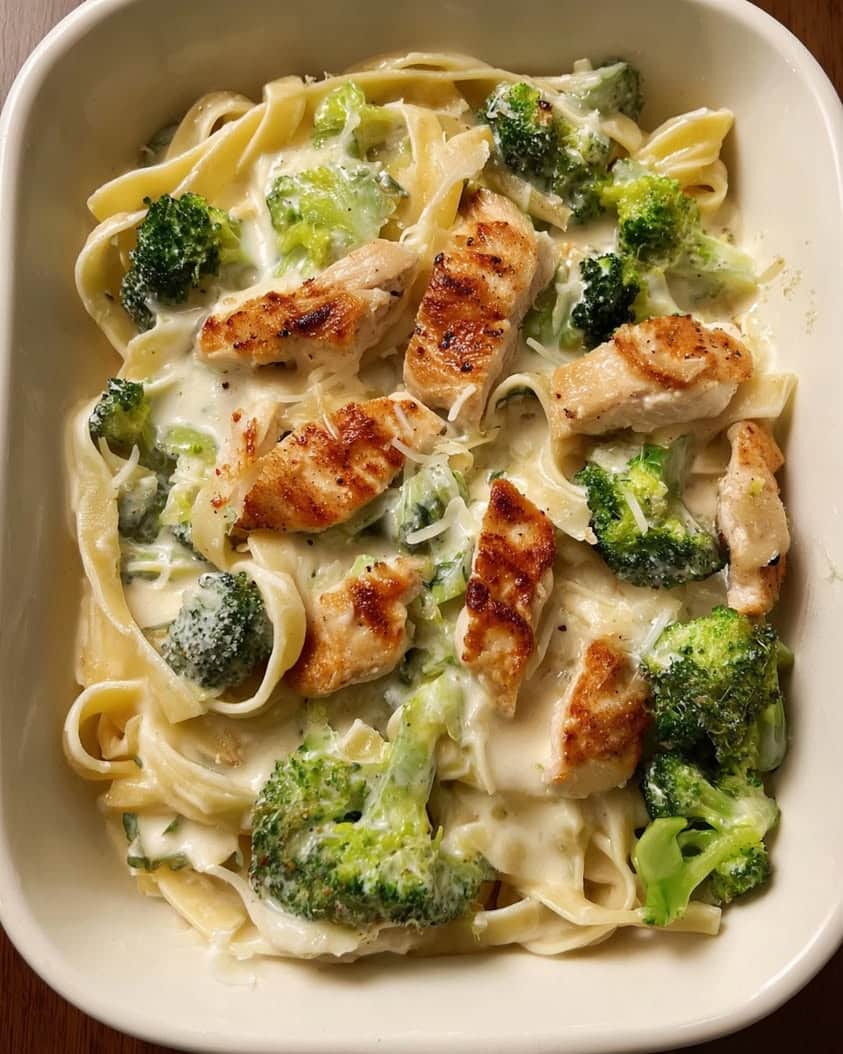
Creamy Garlic Chicken Alfredo with Broccoli: A Quick, One-Pan Dinner the Whole Family Will Love!
Imagine a steaming plate of perfectly cooked fettuccine noodles, each strand generously coated in a velvety, rich sauce. Tender pieces of seasoned chicken and crisp-tender broccoli florets are nestled throughout, creating a symphony of textures and flavors in every single bite. This Creamy Garlic Chicken Alfredo with Broccoli is the ultimate answer to your weeknight dinner dilemmas, offering restaurant-quality taste with straightforward, home-cooked simplicity.
Furthermore, this recipe masterfully balances indulgence with a touch of wholesome goodness. The classic, decadent Alfredo sauce gets a flavorful boost from aromatic garlic, while the addition of fresh broccoli introduces a vibrant color and a nutritious element that makes the meal feel complete. Ultimately, it is a comforting, satisfying dish that promises to gather everyone around the table with minimal fuss and maximum enjoyment.
Best of all, this Creamy Garlic Chicken Alfredo pasta comes together remarkably fast, often using just one pan for easy cleanup. From stovetop to table in about forty minutes, it delivers a hearty and impressive meal that feels special any night of the week. Whether you are cooking for a busy family or hosting a casual dinner with friends, this recipe is a guaranteed crowd-pleaser.
Quick Recipe Highlights
- Flavor Profile: This dish features a deeply savory and creamy base with the prominent, aromatic punch of fresh garlic. The Parmesan cheese adds a salty, nutty complexity, while the black pepper provides a gentle warmth. Meanwhile, the chicken and broccoli absorb the sauce, ensuring every component is flavorful.
- Texture: You will experience the silky-smooth mouthfeel of the luxurious Alfredo sauce clinging to al dente pasta. The chicken offers juicy, tender bites, and the broccoli provides a delightful, contrasting crunch that keeps the dish interesting from start to finish.
- Aroma: As it cooks, the kitchen fills with the irresistible, savory scent of garlic and onion softening in butter. This fragrance deepens with the addition of cream and Parmesan, creating a warm, cheesy, and utterly inviting aroma that signals a delicious meal is moments away.
- Visual Appeal: The presentation is beautiful, with the creamy white sauce enveloping the pasta. Vibrant green broccoli florets and golden-brown pieces of chicken create a colorful mosaic that is as pleasing to the eye as it is to the palate. A final sprinkle of parsley or extra cheese adds a professional finish.
- Skill Level Needed: This is a fantastic recipe for beginners and seasoned cooks alike. The techniques are fundamental, involving sautéing, simmering, and combining ingredients. With clear instructions and a forgiving nature, even a first-timer can achieve a spectacular result with confidence.
- Special Equipment: You need only a large skillet or sauté pan with high sides and a sturdy wooden spoon or spatula. A pot for boiling the pasta and a sharp knife for prepping the chicken and vegetables are the other essential tools. No fancy gadgets are required.
Recipe Overview
- Difficulty Level: We classify this Creamy Garlic Chicken Alfredo as an easy recipe. The steps are sequential and logical, primarily involving cooking individual components before combining them. There is no complex knife work or advanced culinary techniques, making it highly accessible for cooks of all skill levels looking for a reliable dinner solution.
- Category: This dish squarely fits into the main course category, providing a complete and balanced meal with protein, vegetables, and carbohydrates. It is also a quintessential comfort food and a perfect candidate for a quick weeknight dinner. Additionally, it can be dressed up for a casual date night or family gathering.
- Cuisine: The recipe is rooted in Italian-American cuisine, taking inspiration from the classic Fettuccine Alfredo of Rome. The addition of chicken and broccoli represents a popular American adaptation that transforms the pasta into a heartier, one-dish meal. It is a beloved staple in home kitchens across the United States.
- Cost: This is a moderately priced meal that delivers excellent value. Chicken breast and broccoli are affordable proteins and vegetables. While heavy cream and Parmesan cheese are the pricier components, a little goes a long way in creating the luxurious sauce. Overall, it is far more economical than ordering similar dishes at a restaurant.
- Season: This Creamy Garlic Chicken Alfredo is truly a year-round favorite. It provides cozy, hearty warmth during the fall and winter months. Conversely, its quick preparation makes it suitable for spring and summer evenings when you desire comfort food without spending hours over a hot stove.
- Occasion: It is incredibly versatile for various occasions. It is the ultimate busy weeknight savior, a surefire hit for family dinners, and impressive enough for hosting casual friends. It is also a fantastic meal prep option, as it reheats well for lunches throughout the week.
Why You’ll Love This Recipe
First and foremost, the taste and texture are utterly irresistible. This Creamy Garlic Chicken Alfredo pasta delivers a perfect harmony of rich, savory, and garlicky flavors in every forkful. The sauce is luxuriously smooth and clings to the pasta, while the tender chicken and crisp broccoli add satisfying contrasts. It is the kind of meal that makes everyone ask for seconds, and the leftovers are highly coveted. The comfort it provides is immediate and profound, hitting all the right notes for a truly satisfying dining experience.
From a convenience standpoint, this recipe is a weeknight hero. It utilizes a streamlined, one-pan method for the sauce, chicken, and broccoli, meaning fewer dishes to wash. The total active cooking time is minimal, and the process is straightforward without any complicated steps. You can have a restaurant-worthy meal on the table in the time it would take to decide on and pick up takeout. This efficiency makes it a reliable go-to recipe for those evenings when time and energy are in short supply.
Nutritionally, this dish offers a more balanced approach than traditional Alfredo. By incorporating lean chicken breast, you add a high-quality protein that helps keep you full. The broccoli introduces essential vitamins like Vitamin C and K, along with fiber, which adds nutritional value and textural interest. While indulgent, the meal feels more complete and wholesome. You can easily adjust the cream-to-broth ratio or use lower-fat dairy options to tailor it to your dietary preferences without sacrificing the creamy essence.
For social and entertaining value, this Creamy Garlic Chicken Alfredo is a guaranteed crowd-pleaser. It is universally appealing to both adults and children, making it perfect for family dinners. When you have guests, it looks impressive and tastes decadent, yet it allows you to spend most of your time with company rather than stuck in the kitchen. Doubling the recipe is simple for larger groups. It is a dish that fosters connection and conversation over a shared, comforting meal.
Finally, its cost-effectiveness and accessibility are major wins. The ingredients are common and easy to find at any grocery store. Creating this luxurious-tasting meal at home costs a fraction of what you would pay at an Italian restaurant. You control the quality of every component, from the freshness of the garlic to the brand of Parmesan. This accessibility ensures that a delicious, comforting dinner is never out of reach, regardless of your budget or shopping location.
Historical Background and Cultural Significance
The story of Alfredo sauce begins not in a grand restaurant, but in a small trattoria in Rome. In the early 20th century, restaurateur Alfredo Di Lelio created a simple dish of fettuccine tossed with abundant butter and Parmigiano-Reggiano cheese to help his wife regain her strength after childbirth. This rich, comforting combination became known as “Fettuccine Alfredo.” Its fame skyrocketed when American silent film stars Mary Pickford and Douglas Fairbanks visited his restaurant during their honeymoon and fell in love with the dish, bringing the recipe back to the United States.
In America, the recipe underwent a significant transformation, evolving into the creamy Alfredo sauce we know today. American palates and dairy practices favored the addition of heavy cream, which created a more stable, saucier consistency than the original emulsion of butter and pasta water. This adaptation made the dish more suitable for packaged pasta and home kitchens. The addition of proteins like chicken and vegetables like broccoli followed naturally, turning the side dish into a hearty, all-in-one main course that reflected the American desire for convenient, complete meals.
The cultural significance of Chicken Alfredo in the United States is immense. It became a staple on the menus of “Italian-American” restaurants, a cuisine category that adapted Old World recipes to New World ingredients and tastes. It symbolizes comfort, indulgence, and family dining. For many, it is a “special occasion” pasta from childhood or the first dish they attempted to cook from scratch. Its presence on countless chain restaurant menus has cemented its status as a beloved, if not entirely authentic, icon of Italian-American food culture.
Today, Creamy Garlic Chicken Alfredo with Broccoli represents the modern home cook’s version of this classic. It balances tradition with practical need, honoring the rich, cheesy foundation while incorporating elements for nutrition and ease. It is a testament to how recipes travel and adapt across cultures and generations. This version, ready in one pan, is a perfect example of how classic comfort food continues to evolve to fit contemporary lifestyles while maintaining its soul-satisfying appeal.
Ingredient Deep Dive
Starting with the chicken, boneless, skinless chicken breasts are the preferred choice for their lean protein and quick cooking time. Chicken has been a global staple for centuries, valued for its versatility and mild flavor that readily absorbs seasonings. Nutritionally, it is an excellent source of lean protein, essential for muscle repair and satiety. For the best results, look for plump, evenly sized breasts and pound them to an even thickness to ensure they cook uniformly. You can substitute with chicken thighs for a richer, more forgiving cut, or use pre-cooked rotisserie chicken to save time.
Fresh broccoli is the vibrant green star that adds nutrition and texture. Originally cultivated in Italy, broccoli belongs to the cabbage family and is packed with vitamins C and K, fiber, and antioxidants. It introduces a necessary freshness that cuts through the richness of the sauce. Select broccoli with tight, dark green florets and firm stalks, avoiding any with yellowing or soft spots. To store, keep it unwashed in a loose plastic bag in the refrigerator’s crisper drawer. For a variation, try using broccolini, asparagus, or spinach, adjusting the cooking time accordingly.
The heart of the sauce is a combination of heavy cream and Parmesan cheese. Heavy cream, with its high butterfat content, provides the luxurious, velvety base that defines a creamy Alfredo. Parmesan, specifically Parmigiano-Reggiano from Italy, brings a complex, salty, umami depth that is irreplaceable. Always grate your Parmesan from a block for the best melt and flavor; pre-grated cheese often contains anti-caking agents that can make sauces grainy. For a lighter version, you can use half-and-half, though the sauce will be less thick. Nutritional yeast or a high-quality vegan Parmesan can work for dairy-free adaptations.
Fresh garlic and onion form the aromatic foundation. Garlic, used for both culinary and medicinal purposes for millennia, provides the essential pungent, savory note that elevates the entire dish. Fresh is best—mince it finely to distribute its flavor evenly. The onion adds a subtle sweetness and depth as it softens. Using a yellow or white onion is standard. For the most flavorful result, cook them slowly in butter until very soft and fragrant but not browned. This step builds a critical flavor base that infuses the entire Creamy Garlic Chicken Alfredo pasta.
Finally, the fettuccine pasta is the classic vehicle for this sauce. Its long, flat shape provides ample surface area for the creamy sauce to cling to. The term “fettuccine” literally means “little ribbons” in Italian. For the best texture, cook the pasta in well-salted water until it is al dente, or firm to the bite. This ensures it holds its structure when mixed with the sauce. Reserve a cup of the starchy pasta water before draining; it is a magical tool for adjusting the sauce’s consistency at the end. You can easily use linguine, tagliatelle, or even penne for a different experience.
Common Mistakes to Avoid
- Overcooking the Chicken: Cooking chicken breast for too long is the fastest way to end up with dry, tough meat. Since it will continue to cook slightly in the hot sauce, remove it from the pan just as it reaches an internal temperature of 160°F. It will carry over to the safe 165°F while resting. This ensures every bite of your Creamy Garlic Chicken Alfredo is juicy.
- Using Pre-Grated Parmesan Cheese: Pre-grated Parmesan often contains cellulose to prevent clumping. This additive prevents the cheese from melting smoothly into the sauce, resulting in a grainy or gritty texture. For a perfectly silky sauce, always buy a block of real Parmigiano-Reggiano or a high-quality domestic Parmesan and grate it yourself just before using.
- Not Salting the Pasta Water Enough: The pasta water should taste like the sea. This is your only chance to season the pasta itself from the inside out. Undersalted pasta will taste bland, forcing you to over-salt the sauce later to compensate. Adequately salted water is a fundamental step for a well-seasoned final dish.
- Draining All the Pasta Water: Never pour all that precious, starchy pasta water down the drain. Before draining, scoop out at least one cup. The starchy water is a key ingredient for finishing the sauce, helping it emulsify and cling to the pasta beautifully. It can also thin a sauce that has become too thick without diluting the flavor.
- Adding Cheese to a Boiling Sauce: If you add grated Parmesan directly into a violently bubbling sauce, the high heat can cause the fats and proteins to separate, creating an oily, broken sauce. Always remove the pan from the heat or reduce it to very low before stirring in the cheese. Let the residual heat melt it gently for a smooth consistency.
- Overcooking the Garlic: Burnt garlic becomes bitter and can ruin the entire batch of sauce. Cook the minced garlic just until it becomes fragrant, which usually takes only 30-60 seconds. If you are sautéing onion first, add the garlic for the last minute of the onion’s cooking time to prevent it from taking on too much direct heat.
- Skipping the Broccoli Blanching Step: If you simply toss raw broccoli into the sauce, it may not cook through, or it will release too much water and dilute your creamy Alfredo. Briefly blanching the broccoli in the pasta water ensures it becomes perfectly tender-crisp and retains its vibrant green color, ready to be folded into the finished dish.
- Using the Wrong Pan: A small or shallow skillet will lead to overcrowding when browning the chicken, causing it to steam instead of sear. It also won’t have enough room to combine all the components later. Use a large, deep skillet or sauté pan to give everything ample space for proper cooking and easy tossing.
Essential Techniques
Properly cooking the chicken breast is crucial for a juicy result. Start by pounding the breasts to an even thickness; this ensures they cook at the same rate. Season them generously just before they hit the pan to draw out less moisture. Heat your oil or butter until it shimmers, then add the chicken. Do not move it for a few minutes to allow a golden-brown crust to form. This searing locks in juices. Finally, use a meat thermometer and pull the chicken at 160°F, as it will continue to cook while resting. The visual cue is firm yet springy flesh with clear juices.
Building the sauce foundation is about layering flavors. Begin by sautéing the onion in butter over medium heat until it is soft and translucent. This slow cooking sweetens the onion. Next, add the garlic and cook just until fragrant, about 30 seconds, to avoid bitterness. The key is to cook these aromatics gently without browning them too much. This process creates a flavorful base that will infuse the entire Creamy Garlic Alfredo sauce. If you rush this step, you miss out on foundational depth.
Creating the creamy Alfredo sauce requires attention to temperature. After adding the heavy cream to the aromatics, let it come to a gentle simmer. This heats it through and begins to thicken it slightly. The critical step comes next: always remove the pan from the heat before adding the grated Parmesan cheese. Stir constantly until the cheese is fully melted and incorporated. The residual heat is enough to melt the cheese without causing it to seize or the sauce to break. If the sauce seems too thick, stir in reserved pasta water a tablespoon at a time.
Mastering the final combine ties everything together. Add the cooked, al dente pasta directly from the pot into the sauce, using tongs. A bit of starchy water clinging to the pasta is beneficial. Toss vigorously to coat every strand. Then, fold in the cooked chicken and blanched broccoli. If the dish seems dry, add more reserved pasta water until the sauce loosens and coats everything luxuriously. This final toss should happen off the heat to keep the sauce smooth and prevent the broccoli from overcooking. The goal is a harmonious, well-integrated dish where every component is evenly sauced.
Pro Tips for Perfect Creamy Garlic Chicken Alfredo
For maximum flavor, season your chicken liberally with salt and pepper just before cooking, not hours in advance. This prevents the salt from drawing out all the moisture. Additionally, let the chicken rest for 5-10 minutes after cooking before slicing or cubing it. This allows the juices to redistribute throughout the meat, ensuring they end up in your mouth and not on your cutting board.
Grate your own Parmesan cheese from a block. The difference in flavor and melting quality compared to pre-grated is night and day. While you are at it, reserve a little extra grated cheese for sprinkling on top of each served plate. This adds a fresh, salty burst and a professional finish that makes the dish look and taste even more special.
Time your pasta perfectly. Start boiling the water just before you begin cooking the chicken. Aim to have the pasta reach al dente right as your sauce is finishing. You can then use tongs to transfer the pasta directly from the pot to the sauce pan, bringing along that essential starchy water. This seamless timing keeps everything hot and integrated.
Do not discard your pasta water. Before draining the pasta, carefully scoop out one to two cups of the cloudy, starchy liquid. This is your secret weapon for adjusting the sauce consistency at the end. If your sauce thickens too much upon standing or after adding the cheese, a splash of pasta water will thin it perfectly without making it watery.
Blanch your broccoli in the same pot of boiling pasta water. About two minutes before the pasta is done, add the broccoli florets to the boiling water. This cooks them to tender-crisp perfection and saves you from dirtying another pot. Simply remove the broccoli with a slotted spoon, then continue cooking the pasta to al dente.
Finish the dish with a final flourish. Right before serving, stir in a small pat of cold butter or a drizzle of extra virgin olive oil. This last-minute addition, called “monter au beurre” in French technique, gives the sauce an incredible shine and a velvety richness that elevates the entire Creamy Garlic Chicken Alfredo pasta to restaurant level.
Variations and Adaptations
For regional variations, look to different culinary traditions. A Tuscan-inspired version might include sun-dried tomatoes and spinach. For a Cajun twist, coat the chicken in blackened seasoning and add sliced bell peppers and onions. An Italian-American restaurant classic is to add peas and mushrooms along with the broccoli. You can even create a seafood Alfredo by substituting the chicken with shrimp or scallops, adding them at the very end of cooking to avoid overcooking.
Seasonal adaptations keep this dish exciting year-round. In spring, use asparagus tips and fresh peas. Summer calls for zucchini ribbons and cherry tomatoes added at the end. For fall, incorporate roasted butternut squash cubes and sage. In winter, hearty mushrooms and kale make excellent additions. The basic creamy garlic Alfredo sauce serves as a perfect canvas for showcasing the best produce each season has to offer.
Dietary modifications are straightforward. For a gluten-free Creamy Garlic Chicken Alfredo, use your favorite gluten-free pasta, such as those made from brown rice or corn. To make it dairy-free, use a rich plant-based cream alternative like cashew cream or canned coconut milk, and a high-quality vegan Parmesan. For a keto or low-carb version, serve the chicken, broccoli, and sauce over zucchini noodles (zoodles) or shirataki noodles instead of traditional pasta.
Flavor variations can personalize the dish to your taste. Add a pinch of red pepper flakes with the garlic for a subtle heat. Stir in a tablespoon of pesto at the end for an herbal, nutty dimension. For a smoky note, use grilled chicken instead of pan-seared. A squeeze of fresh lemon juice just before serving can brighten the entire dish and cut through the richness beautifully.
Texture modifications can cater to different preferences. For a thicker, cheesier sauce, add an extra quarter cup of grated Parmesan. For a lighter, more fluid sauce, use half heavy cream and half chicken broth. If you enjoy crunch, top the finished dish with toasted breadcrumbs or chopped walnuts. For ultimate creaminess, blend a portion of the cooked broccoli into the sauce before combining it with the pasta.
Presentation alternatives can make the meal feel new. Instead of tossing everything together, plate the pasta with sauce first, then artfully arrange the sliced chicken and broccoli on top. For individual servings, bake the combined dish in ramekins with a breadcrumb topping for a “Alfredo bake.” You can also use the chicken and broccoli Alfredo mixture as a filling for crepes or as a topping for baked potatoes.
Serving and Presentation Guide
Plating techniques matter for visual appeal. Use tongs to twist a nest of pasta into the center of a warm, shallow bowl. Arrange the slices of chicken and broccoli florets around and on top of the pasta, allowing some of the vibrant green to show. Avoid over-mixing on the plate, as a little separation of components looks more intentional and appetizing. Ensure each portion gets an equal amount of chicken, broccoli, and sauced pasta.
Garnishing adds the final professional touch. A light sprinkle of freshly grated Parmesan cheese is essential. Follow this with a crack of black pepper and a scattering of finely chopped fresh parsley or chives. For a touch of color and flavor, a light drizzle of high-quality extra virgin olive oil or a few microgreens on top can elevate the presentation from home-cooked to chef-inspired.
Traditional accompaniments are simple and complementary. A crisp, green side salad with a tangy vinaigrette is perfect for cutting through the richness of the Creamy Garlic Alfredo. Garlic bread or a warm, crusty baguette is classic for soaking up every last drop of sauce. For a vegetable side, roasted asparagus or a simple tomato bruschetta can balance the meal beautifully.
Modern serving suggestions might include deconstructed elements. Serve the creamy garlic sauce in a small pitcher alongside bowls of pasta, chicken, and broccoli, allowing guests to assemble their own plates. For a family-style feast, present the entire dish in a large, warm serving bowl at the center of the table with serving utensils, encouraging everyone to help themselves.
Temperature considerations are key for food safety and quality. Serve the dish immediately after combining. Pasta continues to absorb sauce as it sits, so prompt service ensures the perfect sauciness. Ensure your serving bowls are warmed to prevent the dish from cooling too quickly. If you must hold it for a few minutes, cover it loosely with foil to retain heat without steaming the broccoli into mush.
Portion control tips help manage this rich dish. A standard serving is about one cup of cooked pasta with a proportionate amount of chicken and broccoli. Using a kitchen scale to portion pasta (about 2 ounces dry per person) can prevent over-serving. Remember, it is a rich dish, so smaller portions are often satisfying, especially when paired with a salad or vegetable side.
Wine and Beverage Pairing
Wine pairings should complement the rich, creamy, and garlicky profile. A classic choice is a white wine with good acidity to cut through the fat, such as a Pinot Grigio or Sauvignon Blanc. These wines offer citrus and mineral notes that refresh the palate. For a richer option, a lightly oaked Chardonnay can match the creaminess of the sauce. If you prefer red, opt for a light-bodied, low-tannin red like Pinot Noir, which won’t clash with the dairy.
Non-alcoholic alternatives are just as important. Sparkling water with a squeeze of lemon or lime provides cleansing bubbles and acidity. For a more flavorful option, an herbal iced tea, like mint or lemon verbena, offers a refreshing contrast. A tart cranberry spritzer made with cranberry juice and club soda can also balance the richness beautifully. These drinks cleanse the palate between bites of the creamy Alfredo pasta.
While not traditional, certain coffee or tea pairings can work after the meal. A medium-roast coffee with low acidity can be a pleasant finish, especially if the meal includes a lot of garlic. An herbal digestif tea, such as peppermint or ginger, can aid digestion after a rich meal. Avoid strong, bitter coffees or teas that might overwhelm the lingering creamy flavors.
Temperature considerations for beverages are straightforward. White wines and non-alcoholic spritzers should be served well-chilled, around 45-50°F. Red wines like Pinot Noir should be slightly cooler than room temperature, around 55°F. Iced teas and sparkling waters are most refreshing when served cold with plenty of ice. The contrast between a cool drink and the warm pasta is part of the enjoyable experience.
Serving suggestions enhance the pairing. Pour wine into appropriate stemware to allow aromas to develop. For non-alcoholic drinks, use tall, attractive glasses. Always offer water alongside any other beverage to keep guests hydrated. When hosting, you might consider offering a choice of two beverages—one white wine and one sparkling non-alcoholic option—to cater to different preferences alongside your Creamy Garlic Chicken Alfredo.
Storage and Shelf Life
Proper storage methods are essential for food safety and quality. Allow the leftover Creamy Garlic Chicken Alfredo to cool to room temperature, but do not leave it out for more than two hours. Transfer it to an airtight container. To prevent the pasta from absorbing all the sauce and becoming dry, you can store a little extra sauce separately if you have it. Press a piece of plastic wrap directly onto the surface of the food before sealing the container lid to minimize exposure to air, which can cause discoloration and off-flavors.
Temperature requirements are non-negotiable. Refrigerate leftovers promptly. The dish will keep safely in the refrigerator for 3 to 4 days. Do not store it in the refrigerator door, as the temperature fluctuates too much. For longer storage, freezing is an option, though the texture of the cream sauce may change slightly upon thawing. If frozen, consume within 2 months for best quality.
Container recommendations can impact shelf life. Glass containers with tight-sealing lids are ideal because they do not absorb odors and allow you to see the contents. Alternatively, use BPA-free plastic containers designed for food storage. Divide large portions into smaller, single-serving containers. This makes reheating easier and prevents you from repeatedly warming and cooling the entire batch, which can degrade quality and safety.
Recognizing signs of spoilage is crucial. Before eating leftovers, look for any visible mold, which can appear as fuzzy spots. Smell the food; if it has a sour, off, or unpleasant odor, discard it immediately. The sauce may also separate significantly upon reheating, which is a textural issue but not necessarily a safety one. However, if you are in doubt about the leftovers’ safety, the best practice is always to throw them out.
Reheating instructions require care to restore creaminess. The best method is on the stovetop. Place the leftovers in a skillet or saucepan over low heat. Add a small splash of milk, cream, or broth to help loosen the sauce as it warms. Stir gently and frequently until heated through. Avoid boiling, as this can cause the sauce to separate. You can also reheat in the microwave using 50% power in 60-second intervals, stirring between each, and adding a teaspoon of liquid as needed.
Freezing guidelines come with caveats. The Creamy Alfredo sauce can separate and become grainy when frozen and thawed due to the dairy. For best results, freeze the dish without the pasta if possible. Cook and freeze the chicken, broccoli, and sauce separately, then cook fresh pasta when ready to serve. If freezing the complete dish, expect a change in texture and reheat it very slowly on the stovetop with added liquid, whisking to re-emulsify the sauce as much as possible.
Make Ahead Strategies
Creating a prep timeline can turn a weeknight meal into a 15-minute assembly. The day before, you can cube and season the chicken, storing it in a sealed container in the fridge. Wash and cut the broccoli florets. Grate the Parmesan cheese and store it in a separate container. Mince the garlic and onion; you can even sauté them lightly and cool them, storing them in the fridge to build your flavor base even faster on cooking day.
Storage between steps is about maintaining quality and safety. Keep prepped raw chicken on the bottom shelf of the refrigerator to prevent cross-contamination. Store pre-cut vegetables in sealed containers or bags. Cooked components, like blanched broccoli or seared chicken, should be cooled completely before being stored in airtight containers in the refrigerator for up to two days. Keep starchy pasta water in a sealed jar in the fridge; it will keep for a day or two.
Assessing the quality impact of make-ahead steps is important. Pre-cooking the chicken and broccoli is generally fine, though the chicken may dry out slightly upon reheating. Pre-mincing garlic is excellent, but its flavor can intensify over time. Pre-grating Parmesan is acceptable if stored properly, though freshly grated is always superior. The key is to add fresh elements at the end, like a final sprinkle of cheese and herbs, to brighten up the pre-assembled components.
Assembly tips for make-ahead meals focus on efficiency. When ready to cook, have all your prepped ingredients measured and within reach. Start by reheating your pre-cooked chicken and broccoli gently in the microwave or a separate pan. Cook your pasta fresh. Build your sauce in the main pan, then simply combine the hot pasta, warmed chicken and broccoli, and sauce for a quick, cohesive finish. This method preserves the texture of each component better than reheating the entire combined dish.
Reheating guidelines for fully assembled make-ahead dishes require patience. If you have combined and refrigerated the entire Creamy Garlic Chicken Alfredo, reheat it slowly in a covered skillet over low heat. Add a generous splash of liquid (milk, cream, or broth) at the start to create steam and prevent sticking. Stir frequently and gently to avoid breaking the pasta. Covering the pan helps distribute heat evenly without drying out the top layer.
Adding fresh elements after make-ahead prep is the secret to a vibrant final dish. Even if you used pre-grated cheese, grate a little extra fresh Parmesan for serving. Chop some fresh parsley or basil just before eating. A final drizzle of good olive oil or a squeeze of lemon juice can wake up all the pre-prepared flavors. These last-minute touches make the meal taste freshly made, not leftover.
Scaling Instructions
Halving the recipe is simple for smaller households. Use one chicken breast, about half a head of broccoli, and half a pound of pasta. Precisely halve all other sauce ingredients. The cooking times will remain roughly the same, though you may need a slightly smaller pan. Be mindful that sauces can reduce faster in a smaller volume, so keep an eye on the simmering cream and have your pasta water ready to adjust consistency. This scaling is perfect for a cozy dinner for two.
Doubling or tripling the recipe requires some adjustments. Use a very large Dutch oven or stockpot instead of a skillet to accommodate all the ingredients. You may need to brown the chicken in batches to avoid overcrowding and steaming. When making the sauce, allow extra time for the larger volume of cream to heat through and thicken slightly. You will also need a larger pot for boiling the increased amount of pasta. Consider blanching the broccoli in separate batches to maintain water temperature for the pasta.
Equipment adjustments are necessary when scaling. For larger batches, ensure you have a pot large enough to boil the pasta with plenty of water (at least 4 quarts per pound of pasta). A wide, heavy-bottomed pan is crucial for sauce-making to promote even evaporation and prevent scorching. Have multiple sets of tongs and a large colander ready. For very large groups, you might even consider dividing the sauce-making between two pans to maintain control over the consistency.
Timing modifications become important with scale. While prep time increases linearly, cooking time may not. Browning more chicken takes longer if done in batches. A larger volume of sauce will take longer to come to a simmer and thicken. Start your pasta water earlier in the process to ensure it is ready when the sauce is. The goal is to have all components—pasta, sauce, chicken, broccoli—finish at the same time, which requires careful orchestration for a crowd.
Storage considerations for scaled recipes are practical. If you are not serving the entire doubled batch immediately, only combine what you will eat right away. Store the cooked pasta, sauce, chicken, and broccoli separately in the refrigerator. This prevents the pasta from absorbing all the sauce overnight. When ready to serve the leftovers, reheat the components separately and combine them fresh with a splash of liquid to restore the creamy consistency of your Garlic Chicken Alfredo.
Nutritional Deep Dive
A macro breakdown of this dish reveals its satisfying nature. A typical serving provides a substantial amount of protein from the chicken and Parmesan, essential for muscle maintenance and satiety. The carbohydrates come primarily from the pasta, offering energy. The fats are significant, deriving from the heavy cream, butter, and cheese, which contribute to the luxurious mouthfeel and flavor. While it is an energy-dense meal, the inclusion of broccoli adds fiber, which can help
Print
Creamy Garlic Chicken Alfredo with Broccoli
Description
A rich and comforting pasta dish featuring tender chicken, fresh broccoli, and a creamy garlic Alfredo sauce.
Ingredients
For the Crust:
- 8 oz fettuccine pasta
- 2 boneless, skinless chicken breasts, cut into bite-sized pieces
- 2 cups broccoli florets
- 3 cloves garlic, minced
- 1 cup heavy cream
- 1/2 cup grated Parmesan cheese
- 2 tbsp unsalted butter
- 1 tbsp olive oil
- Salt and black pepper to taste
- Fresh parsley, chopped (for garnish)
Instructions
1. Prepare the Crust:
- Cook the fettuccine according to package directions until al dente. Drain and set aside.
- In a large skillet, heat olive oil over medium-high heat. Season chicken with salt and pepper, then cook until golden and cooked through, about 6-8 minutes. Remove chicken and set aside.
- In the same skillet, add butter and minced garlic. Sauté for 1 minute until fragrant. Pour in heavy cream and bring to a simmer.
- Stir in Parmesan cheese until melted and the sauce thickens slightly, about 3-4 minutes. Season with salt and pepper.
- Add broccoli florets to the sauce, cover, and cook for 4-5 minutes until tender-crisp. Return chicken to the skillet and stir to combine.
- Toss the cooked fettuccine with the creamy chicken and broccoli sauce until well coated. Garnish with fresh parsley before serving.
Notes
You can customize the seasonings to taste.

I’m Shaykee—born in Morocco, seasoned across continents. From airplane galleys to home kitchens, I share the flavors and stories that shaped my journey.