
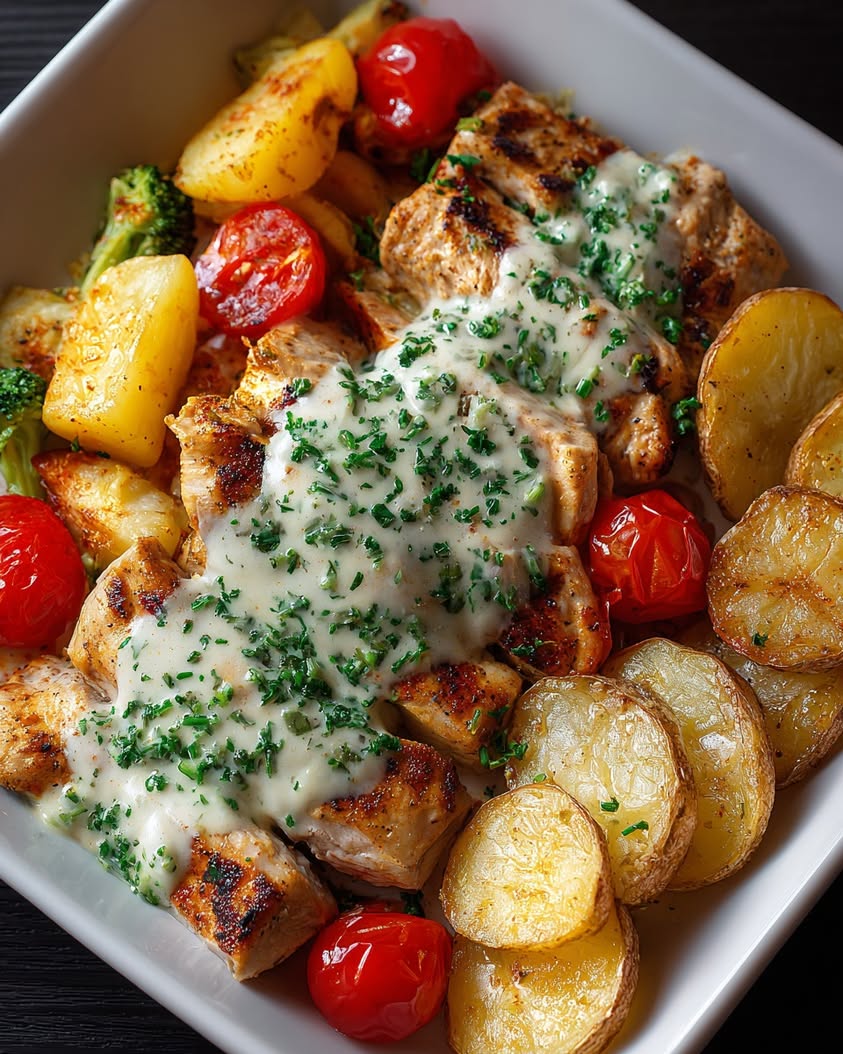
Creamy Herb Chicken with Roasted Veggies & Crispy Potatoes: An Easy, One-Pan Dinner That’s Packed with Flavor
Imagine a dinner that fills your kitchen with the irresistible aroma of garlic and herbs while promising minimal cleanup. This creamy herb chicken with crispy potatoes and roasted veggies delivers exactly that. It is a complete, satisfying meal that comes together on a single sheet pan. Consequently, you get juicy, tender chicken, vegetables caramelized to perfection, and potatoes with a delightful crunch, all bathed in a luxurious, creamy sauce.
This recipe is the ultimate solution for busy weeknights when you crave something comforting yet sophisticated. Moreover, it uses simple, wholesome ingredients you likely already have in your pantry. The magic happens in the oven, where everything roasts together, allowing the flavors to meld beautifully. Ultimately, you will have a vibrant, colorful plate that looks as impressive as it tastes, proving that a fantastic family meal does not require hours of labor or a sink full of dishes.
Quick Recipe Highlights
- Flavor Profile: This dish features savory, garlicky chicken with a bright, herbal cream sauce. The roasted vegetables add a natural sweetness, while the crispy potatoes provide a salty, earthy counterpoint that balances the entire plate perfectly.
- Texture: You will experience a wonderful contrast: juicy and tender chicken, soft and caramelized veggies, and delightfully crispy potato edges. The creamy sauce adds a smooth, velvety mouthfeel that ties every component together harmoniously.
- Aroma: As it bakes, the kitchen fills with the comforting scents of roasting garlic, fragrant herbs like thyme and rosemary, and the savory notes of chicken and potatoes. It is an aroma that instantly builds anticipation for a delicious meal.
- Visual Appeal: The final presentation boasts golden-brown chicken, vibrant orange carrots, deep green broccoli, and crispy, golden potatoes. Drizzled with a pale, creamy herb sauce, it is a feast for the eyes that promises a feast for the palate.
- Skill Level Needed: This is a beginner-friendly recipe designed for home cooks of all levels. It requires basic knife skills for chopping and the simple technique of arranging ingredients on a pan. The oven does most of the work, making it nearly foolproof.
- Special Equipment: You only need a large, rimmed baking sheet (a half-sheet pan is ideal) to ensure everything cooks evenly without overcrowding. Parchment paper or a silicone baking mat is highly recommended for easy cleanup and to prevent sticking.
Recipe Overview
- Difficulty Level: We rate this recipe as “Easy” because it involves straightforward preparation steps like chopping and seasoning. There is no complicated searing or sauce-making on the stovetop; instead, the oven manages the cooking process reliably. Even a novice cook can achieve excellent results by simply following the timing and arrangement instructions.
- Category: This dish falls squarely into the categories of easy dinner recipes, healthy family meals, and one-pan wonders. It is a balanced main course that includes protein, vegetables, and starch, eliminating the need for additional side dishes and simplifying your meal planning significantly.
- Cuisine: While not tied to a specific traditional cuisine, this creamy herb chicken draws inspiration from rustic American and European home cooking. It emphasizes hearty, comforting flavors and efficient, one-pan cooking methods that are beloved in households worldwide for their practicality and delicious results.
- Cost: This is a very cost-effective meal. Chicken thighs are typically an affordable protein, and potatoes, carrots, and broccoli are inexpensive, readily available vegetables. The cream and herb components require only small amounts of dairy and dried or fresh herbs, keeping the overall cost per serving quite low.
- Season: This recipe is truly versatile across all seasons. However, it shines particularly in the fall and winter when its hearty, warming nature is most appreciated. Conversely, you can adapt it with spring vegetables like asparagus or summer zucchini, making it a year-round staple in your recipe rotation.
- Occasion: Perfect for casual weeknight family dinners, it is also elegant enough for a simple weekend gathering with friends. Because everything cooks together on one pan, it is an excellent choice for stress-free entertaining where you can enjoy your company instead of being stuck at the stove.
Why You’ll Love This Creamy Herb Chicken Recipe
First and foremost, the taste and texture combination is utterly irresistible. Each forkful offers a symphony of flavors: the savory, umami-rich chicken, the sweet, caramelized vegetables, and the hearty, crispy potatoes. All these elements are unified by a creamy, garlic-herb sauce that is rich but not overly heavy. This balance ensures every bite is satisfying without being greasy, making it a comfort food you can feel good about eating regularly.
From a convenience standpoint, this one-pan dinner is a game-changer. You simply chop your ingredients, toss them with oil and seasonings, and arrange them on a single sheet pan. After that, the oven takes over, freeing you up to set the table, help with homework, or simply relax. Importantly, cleanup is a breeze with only one pan, some cutting boards, and a few utensils to wash. This efficiency makes it a practical solution for the busiest of evenings.
Nutritionally, this meal is a well-rounded powerhouse. Chicken thighs provide high-quality protein and essential B vitamins, while the colorful array of vegetables delivers fiber, vitamins A and C, and antioxidants. Cooking everything together in one pan also means the vegetables absorb the flavorful chicken juices, encouraging everyone to eat their veggies happily. You can easily adjust the oil or cream quantity to align with specific dietary goals without sacrificing flavor.
For social and entertaining value, this dish is a reliable star. It presents beautifully on a platter or can be served directly from the pan for a rustic, family-style meal. Because the active prep is minimal and the cooking is hands-off, you can be a present host rather than a frantic cook. Guests will be impressed by the complex flavors and beautiful presentation, never guessing how simple it was to prepare.
Finally, its cost-effectiveness and accessibility are major wins. The ingredients are pantry staples and affordable fresh produce, making it a budget-friendly choice for feeding a family or a crowd. You likely have most of the seasonings on hand already. Furthermore, the recipe is highly adaptable based on what vegetables are in season or on sale, ensuring it remains an economical and versatile option in your culinary repertoire.
Historical Background and Cultural Significance
The concept of roasting meat and vegetables together over a fire is one of humanity’s oldest cooking methods. This creamy herb chicken recipe is a modern, refined descendant of that ancient practice. Specifically, the technique of using a single pan or vessel for an entire meal evolved from campfire cooking and hearth-based cuisine, where efficiency and resourcefulness were paramount. Today’s sheet pan dinners directly channel this spirit of simplicity and wholesomeness.
Culturally, dishes that combine protein, starch, and vegetables in one pot or pan appear in countless traditions, from French *poulet rôti* with potatoes to New England boiled dinners. The American interpretation, often dubbed a “one-pan meal,” gained tremendous popularity in the mid-20 century alongside the rise of convenience cooking. However, this version elevates the concept with a creamy, deliberate sauce, moving it from mere convenience to deliberate, flavorful craft.
The recipe has evolved significantly with home cooking trends. Initially, one-pan meals might have relied on canned soups or processed ingredients for sauce. The contemporary shift toward fresh, whole foods inspired the creation of this from-scratch creamy herb sauce. Using fresh garlic, real cream, and dried or fresh herbs provides a depth of flavor and a cleaner ingredient list that aligns with modern dietary preferences, all while maintaining the classic ease of preparation.
Regional variations of this concept are endless. In the American South, you might find a version with Cajun seasoning and okra. A Mediterranean adaptation could feature lemon, oregano, and olives with chicken and potatoes. This particular recipe, with its creamy garlic and herb profile, has a vaguely French or Italian countryside feel. Ultimately, its true significance lies in its universal appeal as a reliable, delicious, and uncomplicated way to bring people together over a homemade meal.
Ingredient Deep Dive
Chicken Thighs: Chicken thighs are the preferred cut for this recipe due to their higher fat content, which keeps them incredibly juicy and flavorful during the longer roasting time. Historically, dark meat was often less prized than breast meat, but modern cuisine celebrates its superior flavor and forgiveness in cooking. Nutritionally, thighs provide iron, zinc, and B vitamins. For the best results, choose bone-in, skin-on thighs for maximum flavor and crispiness, though boneless will work in a pinch. Store them in the coldest part of your refrigerator and use within 1-2 days of purchase.
Potatoes: Potatoes have been a global dietary staple for centuries, valued for their versatility and energy-providing carbohydrates. Yukon Golds are ideal here because of their buttery flavor and creamy interior that contrasts beautifully with a crispy exterior. They are a good source of vitamin C, potassium, and fiber, especially when the skin is left on. Select firm potatoes without sprouts or green tinges. Store them in a cool, dark, well-ventilated place—not the refrigerator. For a substitution, try baby red potatoes or halved fingerlings.
Carrots & Broccoli: These vegetables add essential color, texture, and nutrition. Carrots, domesticated thousands of years ago, bring a sweet, earthy flavor and are packed with beta-carotene. Broccoli, a member of the cabbage family developed in Italy, offers a slight bitterness, crisp-tender texture, and is rich in vitamins C and K. Choose carrots that are firm and brightly colored, and broccoli with tight, dark green florets. Store both in the refrigerator’s crisper drawer. You can easily substitute with other hardy veggies like cauliflower, bell peppers, or Brussels sprouts.
Heavy Cream & Chicken Broth: This duo forms the base of the luxurious sauce. Heavy cream, a reduction of milk, has been used for centuries to add richness to sauces. The chicken broth provides a savory, umami depth. Together, they create a velvety texture that clings to the food. For best flavor, use a low-sodium broth to control salt levels. The cream should be fresh and not ultra-pasteurized if possible for the best texture. Dairy-free alternatives like full-fat coconut cream can be used, though the flavor profile will change.
Garlic & Dried Herbs: Garlic, with its ancient medicinal and culinary history, is non-negotiable for its pungent, aromatic base. Thyme and rosemary are classic, hardy herbs that withstand oven heat without losing their essence. They evoke the flavors of Provencal or Italian cooking. Using dried herbs is perfectly acceptable here as their flavor infuses well into the cream sauce during baking. For a brighter note, stir in fresh parsley or chives after baking. Always store dried herbs in a cool, dark place to preserve their potency.
Common Mistakes to Avoid
- Overcrowding the Pan: This is the most common error. If the pan is too crowded, the vegetables and potatoes will steam instead of roast, resulting in soggy, pale food instead of crispy, caramelized goodness. Always use a large enough pan and arrange ingredients in a single layer.
- Not Preheating the Oven: A properly preheated oven is crucial for immediate cooking and browning. If you put the pan in a cold oven, the ingredients will start to stew in their own juices, again leading to steaming rather than roasting and a lack of flavorful browning.
- Using the Wrong Cut of Chicken: Chicken breasts will dry out in the time it takes the potatoes to become crispy. Chicken thighs, with their higher fat content, stay moist and succulent. Stick with thighs for this specific recipe to ensure perfect results.
- Cutting Vegetables Inconsistently: If your potato chunks are huge and your broccoli florets are tiny, they will cook at wildly different rates. Aim for uniform, bite-sized pieces so everything finishes cooking at the same time for a harmonious texture.
- Skipping the Seasoning of Each Component: Do not just season the cream sauce. You must toss the potatoes and vegetables with oil, salt, and pepper separately before they go on the pan. This ensures every element is properly seasoned from the inside out.
- Neglecting to Pat the Chicken Dry: Moisture on the surface of the chicken skin prevents it from getting crispy. Always pat chicken thighs dry with a paper towel before seasoning them. This simple step makes a dramatic difference in texture.
- Stirring Everything Together: Resist the urge to stir the pan contents partway through. Roasting requires contact with the hot pan surface to develop browning and crispiness. Moving things around interrupts this process.
- Using a Dark Pan Without Adjusting: Dark-colored baking sheets absorb more heat and can cause the bottom of your food to burn faster. If using a dark pan, consider reducing the oven temperature by 25 degrees Fahrenheit and keeping a close eye on doneness.
Essential Techniques
Proper Pan Arrangement: This technique is vital for even cooking. You must place the potatoes and chicken on the pan first, as they require the longest cook time. The more delicate vegetables are added later to prevent overcooking. This staggered approach ensures every component is perfectly done. The key is to leave space between pieces to allow hot air to circulate. Master this by using a large pan and resisting the urge to pack everything in tightly.
Creating a Creamy Pan Sauce: The sauce is built directly on the baking sheet after removing the main ingredients. You scrape up the flavorful browned bits (fond) left from the chicken and vegetables, then whisk in the cream, broth, and herbs. The fond is packed with savory flavor and is the secret to a deeply delicious sauce. The technique involves deglazing the pan effectively. A common pitfall is not scraping thoroughly enough, leaving flavor behind. Success is visible when the sauce is smooth, slightly thickened, and has taken on a golden hue from the fond.
Achieving Crispy Potatoes: Crispy potatoes require high heat, adequate oil, and space. Tossing the potatoes in oil coats each starch granule, promoting browning. The high oven temperature quickly evaporates surface moisture, allowing the exterior to crisp. The single-layer arrangement is non-negotiable; piled potatoes will steam. The visual cue for success is a deep golden-brown color with a visibly textured, crispy surface that yields a satisfying crunch when bitten.
Pro Tips for Perfect Creamy Herb Chicken
First, let your chicken thighs sit at room temperature for about 15 minutes before cooking. This helps them cook more evenly, preventing a cold center while the outside overcooks.
For extra crispy potato edges, soak your cut potatoes in cold water for 20 minutes before drying and oiling them. This removes excess surface starch, which is the key to maximum crispiness.
Use an instant-read thermometer to check your chicken for doneness. Insert it into the thickest part of a thigh, avoiding the bone; it should read 165°F. This guarantees safety without guesswork.
If your vegetables are browning too quickly, tent the pan loosely with aluminum foil. This will slow down browning while allowing everything to continue cooking through gently.
After making the creamy sauce, let it bubble on the pan for a full minute. This brief cooking time helps it thicken slightly and allows the flavors of the herbs and garlic to meld completely.
For a glossy, restaurant-style finish, add a final pat of cold butter to the warm sauce and whisk until melted just before serving. This enriches the flavor and gives the sauce a beautiful sheen.
Season in layers. Season the chicken, season the veggies, and then season the sauce. This builds a more complex and well-rounded flavor profile than seasoning only once.
Allow the dish to rest for 5 minutes after adding the sauce back over the chicken and vegetables. This lets the sauce cling to the food better and allows the juices in the chicken to redistribute.
Variations and Adaptations
Regional Variations: For a Mediterranean twist, use lemon zest, oregano, and kalamata olives. A Cajun-inspired version would involve coating everything in Cajun seasoning and adding sliced andouille sausage to the pan. An Italian adaptation might include sun-dried tomatoes and basil in the cream sauce, served over a bed of polenta instead of potatoes.
Seasonal Adaptations: In spring, use asparagus tips, baby carrots, and new potatoes. Summer calls for zucchini, yellow squash, and cherry tomatoes. For a hearty winter meal, swap in cubed butternut squash, parsnips, and Brussels sprouts. Adjust roasting times slightly based on the density of the vegetables you choose.
Dietary Modifications: For a gluten-free meal, this recipe is naturally compliant—just ensure your chicken broth is certified gluten-free. To make it dairy-free, replace the heavy cream with full-fat coconut cream. For a lower-carb or keto version, increase the broccoli and substitute the potatoes with radishes or turnips, which roast beautifully.
Flavor Variations: Incorporate different herb profiles like tarragon and chives for a French feel, or smoked paprika and cumin for a Spanish flair. Add a tablespoon of Dijon mustard or a splash of white wine to the cream sauce for added complexity. A sprinkle of grated Parmesan cheese over the dish before the final bake adds a salty, umami punch.
Texture Modifications: If you prefer softer vegetables, add them at the same time as the potatoes. For extra-crispy chicken skin, start the chicken skin-side down in a hot skillet for 5 minutes before transferring it to the sheet pan to finish roasting. You can also parboil the potatoes for 5 minutes before roasting to ensure a fluffy interior.
Presentation Alternatives: Serve the creamy herb chicken and veggies over a bed of mashed potatoes, rice, or creamy polenta to soak up the extra sauce. For individual servings, divide components between smaller cast-iron skillets before roasting. You can also chop the cooked chicken and mix everything together for a hearty, deconstructed pot pie filling.
Serving and Presentation Guide
Plating Techniques: For family-style serving, present everything directly on the sheet pan or transfer to a large, warm platter. Arrange the chicken thighs in the center, surround them with the crispy potatoes, and scatter the roasted vegetables throughout. Drizzle the creamy herb sauce generously over the top, allowing it to pool invitingly around the ingredients.
Garnishing Ideas: Fresh herbs are the perfect final touch. A generous sprinkle of chopped fresh parsley, chives, or dill adds color and a burst of fresh flavor. A light grating of lemon zest over the top brightens the rich sauce. For a touch of texture and color, a few reserved, lightly roasted broccoli florets or a sprinkle of red pepper flakes can be beautiful.
Traditional Accompaniments: This is a complete meal on its own, but a simple side salad with a bright vinaigrette provides a refreshing contrast to the rich, creamy main. A crusty baguette or dinner rolls are excellent for sopping up every last drop of the delicious sauce left on the plate.
Modern Serving Suggestions: For a contemporary twist, serve the components in shallow bowls. Place a scoop of mashed cauliflower or quinoa at the bottom, top with the roasted veggies and potatoes, then place the chicken thigh on top. Spoon the sauce around the perimeter for an elegant, restaurant-worthy presentation.
Temperature Considerations: Serve this dish immediately after adding the sauce. The contrast between the hot, crispy components and the warm, creamy sauce is part of the experience. Warm your serving platter or individual plates beforehand to keep the food hot longer at the table.
Portion Control Tips: A standard serving is one chicken thigh per person, with a generous scoop of potatoes and vegetables. To make the meal stretch further or for lighter appetites, you can slice the chicken and fan it over the vegetables, creating the illusion of more. The vegetables are low in calories but high in volume, so encourage larger portions of them to balance the plate.
Wine and Beverage Pairing
Wine Pairings: The rich, creamy sauce and savory chicken call for a white wine with good acidity to cut through the richness. An unoaked Chardonnay, a French Chablis, or a Pinot Gris would be excellent choices. If you prefer red, opt for a light-bodied, low-tannin red like Pinot Noir or Gamay (Beaujolais), which won’t overpower the dish. The key is to avoid heavily oaked or high-alcohol wines that would clash with the herbs and cream.
Non-Alcoholic Alternatives: Sparkling water with a squeeze of lemon or lime provides a clean, palate-cleansing effervescence. For something more substantial, a tart cherry juice spritzer or a non-alcoholic ginger beer offers sweetness and spice that complement the savory notes. Iced herbal tea, such as lemon verbena or mint, is another refreshing option that won’t compete with the meal’s flavors.
Coffee/Tea Pairings: While not a typical pairing for the meal itself, a cup of herbal tea after dinner would be lovely. A chamomile or peppermint tea aids digestion. If serving this for a weekend brunch, a medium-roast coffee with low acidity would pair nicely, especially if the meal includes a hint of smokiness from paprika.
Temperature Considerations: White wines and sparkling non-alcoholic drinks should be served well-chilled, around 45-50°F. Red wines should be served slightly cooler than room temperature, around 55-60°F, to keep them refreshing. Iced beverages should be cold but not watered down; use large ice cubes to prevent rapid dilution.
Serving Suggestions: Always offer water on the table alongside any other beverage. For a dinner party, consider setting out both a white and a red wine option to cater to different preferences. Present non-alcoholic options in a carafe or nice pitcher to make them feel just as special as the alcoholic selections.
Storage and Shelf Life
Storage Methods: Allow the creamy herb chicken to cool completely before storing. Place the chicken, vegetables, potatoes, and any remaining sauce in an airtight container. It is best to store them together so the components continue to absorb flavor. Do not leave the dish at room temperature for more than two hours to prevent bacterial growth.
Temperature Requirements: Refrigerate leftovers promptly. The ideal refrigerator temperature is 40°F or below. Store the container in the main body of the refrigerator, not in the door, where temperatures fluctuate more. Properly stored, the leftovers will maintain quality for 3 to 4 days.
Container Recommendations: Glass containers with tight-sealing lids are ideal because they do not absorb odors and allow you to see the contents. Alternatively, use shallow containers to promote rapid, even cooling. If using plastic, ensure it is BPA-free and designated for food storage.
Signs of Spoilage: Discard the food if you detect an off or sour smell, a slimy texture on the chicken or vegetables, or if mold is visible. The creamy sauce may separate upon reheating, which is normal, but if it smells fermented or looks curdled beyond simple separation, it should not be consumed.
Reheating Instructions: For best results, reheat in the oven. Preheat to 350°F, place the leftovers in an oven-safe dish, add a splash of broth or water to prevent drying, and cover with foil. Heat for 15-20 minutes, or until warmed through. You can also reheat in a skillet over medium-low heat, stirring gently. Microwave reheating is possible but will soften the crispy potato texture.
Freezing Guidelines: Freezing is possible but not ideal for the vegetables and potatoes, as they can become mushy upon thawing. The cooked chicken and cream sauce freeze better separately. Place them in a freezer-safe bag or container, removing as much air as possible. They will keep for up to 2 months. Thaw overnight in the refrigerator before reheating gently on the stovetop.
Make Ahead Strategies
Prep Timeline: You can prepare components up to 24 hours in advance. Chop all vegetables and potatoes, and store them in separate airtight containers or resealable bags in the refrigerator. Season the chicken thighs and keep them on a plate, covered, in the fridge. Measure out your cream, broth, and dried herbs so they are ready to go.
Storage Between Steps: Keep the chopped veggies and potatoes dry; do not toss them with oil until you are ready to cook, as the oil can cause them to become soggy. The seasoned chicken can sit covered in the fridge, which actually helps the seasoning penetrate the meat more deeply.
Quality Impact Assessment: Pre-chopping has minimal impact on flavor and can even improve the chicken’s seasoning. The main concern is moisture loss from cut vegetables, so they are best used within a day. The overall time savings on a busy evening, however, far outweighs any negligible loss of crispness.
Assembly Tips: When ready to cook, simply take your prepped ingredients from the fridge. Toss the potatoes and vegetables with oil, salt, and pepper as directed. Arrange everything on the sheet pan with the chicken. The recipe then proceeds exactly as written, shaving 15 minutes off your active prep time.
Reheating Guidelines: This dish is best served fresh. However, if you must fully assemble and cook it ahead, follow the storage and reheating instructions above. Note that the potatoes will lose their crispiness, but the flavors will still be excellent.
Fresh Element Additions: If making ahead, always add fresh garnishes after reheating. Sprinkle with fresh chopped herbs or a squeeze of lemon juice just before serving to revive the bright, fresh notes that might have diminished during storage.
Scaling Instructions
Halving the Recipe: To serve two, simply halve all ingredient quantities. Use a quarter-sheet pan or a smaller baking dish to maintain proper spacing. Cooking times may be slightly reduced by 5-10 minutes; start checking for doneness early. The sauce can be halved easily, but ensure you still have enough liquid to deglaze the pan effectively.
Doubling or Tripling: For a crowd, double or triple the ingredients. The critical rule is to use multiple sheet pans. Do not pile everything onto one giant pan; overcrowding will lead to steaming. Rotate the pans in the oven (top to bottom, front to back) halfway through cooking to ensure even browning. You may need to extend the total cook time by 5-10 minutes.
Equipment Adjustments: Scaling up requires planning for pan availability and oven space. Ensure your oven can accommodate multiple pans with adequate air circulation between them. If using convection bake, reduce the temperature by 25°F as it cooks more efficiently and evenly, especially with multiple pans.
Timing Modifications: When cooking multiple pans, the total time may increase slightly due to the added volume of food in the oven lowering the ambient temperature. However, do not increase the time arbitrarily; rely on visual and temperature cues (165°F for chicken, fork-tender potatoes) to determine doneness.
Storage Considerations: Leftovers from a scaled-up batch will be more abundant. Plan for adequate storage containers and consider freezing portions of the cooked chicken and sauce separately for future quick meals, as previously discussed.
Nutritional Deep Dive
Macro Breakdown: A typical serving provides a balanced mix of macronutrients. The chicken thighs offer high-quality protein essential for muscle repair and satiety. The potatoes and carrots contribute complex carbohydrates for sustained energy. The heavy cream and olive oil provide healthy fats necessary for nutrient absorption and hormone function. This balance helps keep you full and satisfied for hours after eating.
Micronutrient Analysis: This meal is rich in essential vitamins and minerals. Broccoli and carrots deliver vitamins A (as beta-carotene), C, and K, along with potassium and fiber. Chicken provides B vitamins, particularly niacin and B6, which are crucial for energy metabolism. Potatoes are an excellent source of vitamin C and potassium, often overlooked. Garlic contains allicin, a compound with noted antioxidant properties.
Health Benefits: The combination of lean protein, fiber-rich vegetables, and healthy fats supports stable blood sugar levels. The antioxidants from the colorful vegetables combat oxidative stress. Furthermore, cooking at home allows you to control sodium and fat levels, making this a heart-healthier option than many processed or restaurant meals with similar flavor profiles.
Dietary Considerations: This recipe is naturally gluten-free. For those monitoring saturated fat, you can reduce the amount of cream or use half-and-half. The dish is not suitable for a strict vegan or dairy-free diet without significant modifications, but as outlined earlier, those adaptations are straightforward to implement.
Portion Analysis: One serving, as defined in the recipe, is a substantial and satisfying meal. For those with specific calorie goals, you can adjust portions slightly: increase the vegetable portion, use one smaller chicken thigh, or be mindful of the amount of sauce used. The vegetables are low in calorie density, meaning you can eat a large volume for relatively few calories.
Weight Management Tips: This dish supports weight management goals due to its high protein and fiber content, which promote fullness. To reduce calories further, remove the chicken skin before eating, though this sacrifices some flavor and crispiness. You can also increase the ratio of vegetables to potatoes on your plate, filling up on nutrient-dense, lower-calorie foods.
Dietary Adaptations
Gluten-Free: This recipe is naturally gluten-free as written. The only potential hidden source of gluten could be in the chicken broth if it contains additives. Therefore, always use a broth that is certified gluten-free. All other ingredients—fresh meat, vegetables, dairy, and herbs—are inherently gluten-free.
Dairy-Free: Replace the heavy cream with an equal amount of full-fat, unsweetened coconut cream from a can. This will provide a similar rich texture and a slight coconut flavor that pairs well with the herbs. Alternatively, a plain, unsweetened cashew cream can work. Be sure to use a dairy-free butter substitute or more olive oil if finishing the sauce with butter.
Vegan: For a vegan version, substitute the chicken with hearty vegetables like large portobello mushroom caps, extra-firm tofu blocks (pressed and cubed), or chickpeas. Use vegetable broth and a dairy-free cream as above. Increase the quantity of potatoes and vegetables to ensure the meal is filling. The roasting times will vary, so monitor the plant-based protein substitute closely.
Low-Carb/Keto: Omit the potatoes entirely. Increase the broccoli and add other low-carb vegetables like cauliflower, zucchini, and bell peppers. Ensure you use full-fat cream and broth. The sauce is already keto-friendly. This adaptation turns the dish into a high-fat, moderate-protein, very low-carb meal perfect for ketogenic diets.
Paleo: To make this Paleo-compliant, replace the heavy cream with coconut cream as in the dairy-free version. Use ghee or avocado oil instead of butter for finishing. Ensure the chicken broth has no sugar or non-Paleo additives. The potatoes are a gray area in strict Paleo; some allow them, while others substitute with cubed sweet potatoes or other root veggies.
Low-FODMAP: For a Low-FODMAP adaptation, use only the green tops of green onions instead of garlic, and ensure the chicken broth is garlic-free. Replace the broccoli with low-FODMAP vegetables like carrots, bell peppers, zucchini, and the potato portion is fine. Use lactose-free cream or a suitable alternative. Carefully check all seasoning blends for hidden garlic or onion powder.
Troubleshooting Guide
Texture Issues (Soggy Vegetables/Potatoes): This almost always results from overcrowding the pan. For a solution, ensure you are using a large enough pan and that pieces are in a single layer with space between them. If your vegetables are releasing a lot of water, they might be too wet before roasting; pat them dry after washing. Finally, make sure your oven is fully preheated to the correct temperature before the pan goes in.
Flavor Balance (Bland Dish): If the dish tastes bland, the likely culprit is underseasoning. Remember to season each component—the chicken, the potatoes, and the vegetables—independently with salt and pepper before they go on the pan. Additionally, ensure you are using enough garlic and dried herbs, and that your herbs are not old and stale. A final squeeze of lemon juice or a sprinkle of flaky sea salt at the end can often rescue a bland batch.
Temperature Problems (Chicken Undercooked/Overcooked): An instant-read thermometer is your best friend. If chicken is undercooked (below 165°F), return just the chicken to the oven on a separate small pan until it reaches temperature. If the chicken is overcooked and dry, it was likely left in too long or was a leaner cut like breast. In the future, stick with thighs and check temperature sooner. For the current meal, extra sauce can help mask dryness.
Equipment Challenges (Uneven Cooking): Home ovens often have hot spots. If one side of your pan is browning much faster, rotate the pan 180 degrees halfway through the cooking time. Using a light-colored, heavy-duty aluminum sheet pan promotes the
Print
Creamy Herb Chicken with Roasted Veggies & Crispy Potatoes
Description
A comforting one-pan meal featuring tender chicken in a creamy herb sauce, paired with roasted seasonal vegetables and crispy golden potatoes.
Ingredients
For the Crust:
- 4 boneless, skinless chicken breasts
- 1 lb baby potatoes, halved
- 2 cups mixed vegetables (such as carrots, bell peppers, and zucchini, chopped)
- 1 cup heavy cream
- 2 tbsp olive oil
- 2 cloves garlic, minced
- 1 tbsp fresh thyme, chopped
- 1 tbsp fresh rosemary, chopped
- Salt and black pepper to taste
- 1/2 cup chicken broth
- 1/4 cup grated Parmesan cheese
Instructions
1. Prepare the Crust:
- Preheat oven to 400°F (200°C). Toss potatoes and mixed vegetables with 1 tbsp olive oil, salt, and pepper, then spread on a baking sheet. Roast for 25-30 minutes until crispy and tender.
- Season chicken breasts with salt, pepper, and half of the herbs. Heat remaining olive oil in a large skillet over medium-high heat. Sear chicken for 5-6 minutes per side until golden, then set aside.
- In the same skillet, add garlic and sauté for 1 minute. Pour in chicken broth to deglaze, then stir in heavy cream, Parmesan, and remaining herbs. Simmer for 3-4 minutes until slightly thickened.
- Return chicken to the skillet, spooning sauce over it. Cook for another 2-3 minutes until heated through. Serve chicken and sauce alongside roasted veggies and potatoes.
Notes
You can customize the seasonings to taste.

I’m Shaykee—born in Morocco, seasoned across continents. From airplane galleys to home kitchens, I share the flavors and stories that shaped my journey.