
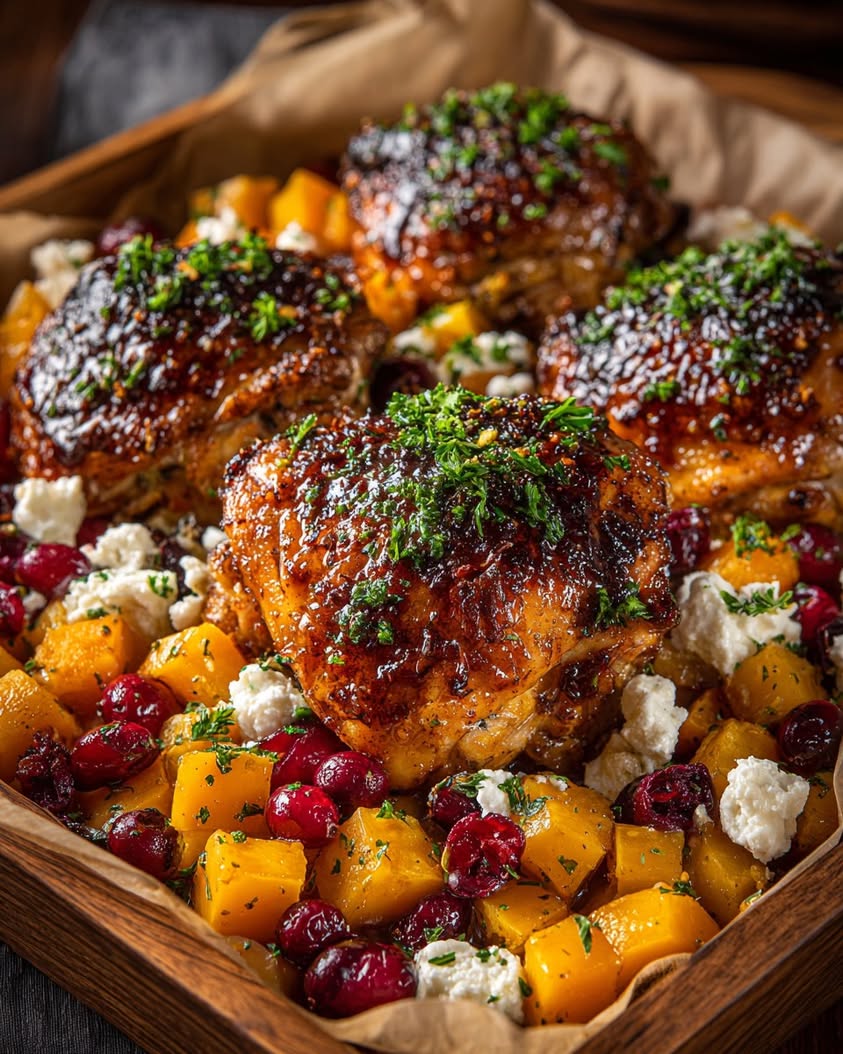
Maple-Garlic Chicken Thighs with Roasted Butternut, Cranberries & Feta: A Perfect Sweet & Savory Dinner!
Imagine a dinner that perfectly captures the essence of a cozy autumn evening. This recipe for maple-garlic chicken thighs with roasted butternut, cranberries, and feta delivers exactly that experience. Consequently, it brings together sweet, savory, and tangy flavors in one stunning sheet pan meal. Moreover, the aroma that fills your kitchen as the maple syrup caramelizes with garlic and herbs is simply irresistible. Ultimately, this dish promises a restaurant-quality meal with minimal effort and maximum flavor payoff.
This recipe is a celebration of seasonal ingredients, transforming simple components into something extraordinary. For instance, the natural sweetness of the butternut squash deepens as it roasts, creating a perfect base for the juicy chicken thighs. Meanwhile, the cranberries burst in the oven, releasing their tart juice to balance the rich maple glaze. Finally, a generous sprinkle of creamy, salty feta cheese ties everything together. As a result, every forkful offers a complex and satisfying harmony of textures and tastes.
Beyond its incredible flavor, this meal is a practical choice for busy weeknights. Essentially, you can prep the vegetables and marinate the chicken ahead of time. Then, when you are ready to cook, everything roasts together on a single pan. Therefore, cleanup is a breeze, leaving you more time to enjoy the meal with family or friends. This combination of ease, nutrition, and gourmet taste makes it a guaranteed crowd-pleaser for any occasion.
Quick Recipe Highlights
- Flavor Profile: This dish masterfully balances sweet maple and earthy garlic with the savory depth of roasted chicken. The tart pop of cranberries cuts through the richness, while the salty feta adds a final creamy, tangy note. Consequently, each bite is a complex and delightful experience.
- Texture: You will enjoy crispy, golden-brown chicken skin alongside tender, melt-in-your-mouth squash. The cranberries offer a juicy burst, and the feta provides delightful crumbles. Ultimately, this combination creates a wonderfully satisfying mouthfeel.
- Aroma: While roasting, the kitchen fills with the warm, sweet scent of maple and caramelizing squash. Furthermore, the savory notes of garlic and rosemary create an inviting, comforting fragrance. This aroma truly signals that a special meal is on its way.
- Visual Appeal: The presentation is stunning, featuring golden chicken, vibrant orange squash, and ruby-red cranberries. Finally, the white feta crumbles add a beautiful contrast, making the dish look as good as it tastes. It is perfect for holiday tables or Instagram-worthy dinners.
- Skill Level Needed: This is an accessible recipe for cooks of all levels. Basically, it requires simple chopping, a quick marinade, and basic oven roasting. Therefore, even beginner cooks can achieve impressive, delicious results with confidence.
- Special Equipment: You only need a reliable sheet pan, a sharp knife, and a small bowl for the glaze. A good pair of kitchen shears can help trim the chicken thighs easily. Otherwise, no fancy gadgets are required for this straightforward meal.
Recipe Overview
- Difficulty Level: We rate this recipe as “Easy” because it uses fundamental techniques like chopping vegetables and oven roasting. The process is linear and forgiving; for example, the chicken thighs are hard to overcook. Moreover, the one-pan method minimizes both active cooking time and cleanup. Essentially, it is designed for success on the first try.
- Category: This dish fits perfectly into the categories of Dinner, Main Course, and Sheet Pan Meals. It is also an excellent candidate for Weekly Meal Prep and Special Occasion dining. The balance of protein, vegetables, and fat makes it a complete, satisfying meal.
- Cuisine: While not tied to one specific tradition, it draws inspiration from modern American and Canadian farmhouse cooking. The use of maple syrup nods to North American culinary heritage. Additionally, the combination of sweet and savory with roasted elements is a hallmark of contemporary comfort food.
- Cost: This is a cost-effective meal, especially when butternut squash and cranberries are in season. Chicken thighs are typically more affordable than breasts, and a little feta goes a long way. Overall, you can expect to feed four people a gourmet meal for the price of a single restaurant entrée.
- Season: This recipe shines in the fall and winter months when butternut squash and cranberries are at their peak. The warm, roasted flavors are ideal for cooler weather. However, it can certainly be enjoyed year-round as a comforting dinner option.
- Occasion: It is versatile enough for a casual Tuesday night dinner yet elegant enough for a holiday gathering like Thanksgiving or Friendsgiving. Furthermore, it is an impressive option for dinner parties because most of the work happens in the oven.
Why You’ll Love This Recipe
First and foremost, the taste and texture appeal is off the charts. The chicken thighs become incredibly juicy and flavorful, with skin that crisps up in the maple-garlic glaze. Simultaneously, the butternut squash caramelizes, becoming sweet and tender. The cranberries provide essential bursts of tartness that prevent the dish from being too sweet. Finally, the feta adds a salty, creamy dimension that makes every bite exciting and complex. You will find yourself savoring each component and the way they combine on the plate.
Next, consider the convenience and preparation benefits. This is a true one-pan wonder, meaning you mix a simple glaze, arrange ingredients on a sheet pan, and let the oven do the work. Consequently, active cooking time is minimal, and cleanup is incredibly easy. The recipe is also forgiving; chicken thighs are less prone to drying out than breasts. Therefore, you can focus on other tasks or simply relax while a fantastic dinner cooks itself. It is the ultimate solution for busy weeknights without sacrificing quality.
From a nutritional standpoint, this meal offers a fantastic balance. Chicken thighs provide high-quality protein and essential nutrients like iron and zinc. Butternut squash is loaded with Vitamin A, fiber, and antioxidants. Cranberries are famous for their urinary tract health benefits and vitamin C content. Together, they create a meal that is both nourishing and deeply satisfying. You are feeding your body well while indulging in incredible flavors, which is a true win-win.
Furthermore, the social and entertaining value of this dish is high. It presents beautifully on a platter, making it ideal for sharing with guests. The familiar yet elevated flavors appeal to a wide range of palates, from kids to adults. Because it is mostly hands-off, you can spend time with your company instead of being stuck at the stove. Serving a meal that looks and tastes this impressive will undoubtedly make you feel like a culinary rockstar.
Finally, the cost-effectiveness and accessibility of the ingredients make this a recipe you can turn to again and again. Most components are pantry staples or easy to find at any grocery store. Using bone-in, skin-on chicken thighs is an economical choice that delivers superior flavor. Seasonal produce keeps costs down. Essentially, you get a restaurant-quality, nutrient-dense meal for a fraction of the price of eating out. It is a smart, delicious choice for any household budget.
Historical Background and Cultural Significance
The origin story of this dish is rooted in the practical, seasonal cooking of North America. Maple syrup harvesting is a tradition dating back centuries, pioneered by Indigenous peoples. Settlers adopted the practice, and maple became a cornerstone sweetener. Combining it with savory proteins like poultry is a natural progression in culinary evolution. The addition of winter squash and wild cranberries, both native to the continent, creates a truly regional dish. It represents a modern take on using local, preserved ingredients through the cold months.
Cultural importance stems from its embodiment of harvest season abundance. In the United States and Canada, meals featuring squash, cranberries, and maple evoke feelings of Thanksgiving and autumn gatherings. These ingredients symbolize the transition from summer’s lightness to winter’s heartier fare. The practice of roasting everything together on one pan also reflects a contemporary desire for simpler, more efficient cooking methods. Therefore, the recipe bridges traditional flavors with modern kitchen convenience.
The evolution of the recipe follows broader food trends. Historically, such ingredients might have been prepared separately or in a slow-cooked stew. The modern sheet-pan method capitalizes on current preferences for quick, easy meals with minimal cleanup. The inclusion of feta cheese adds a Mediterranean twist, showcasing today’s global pantry. This evolution demonstrates how classic flavor combinations can be updated to fit contemporary lifestyles while retaining their soul-warming essence.
Regional variations of this concept are plentiful. In the American South, you might find a similar glaze with a touch of bourbon or hot sauce. New England variations could include walnuts or pecans for added crunch. A vegetarian adaptation might substitute the chicken with hearty chickpeas or tofu. The core idea of sweet maple, roasted squash, and tart fruit is versatile. Cooks across different regions adapt it to include their local ingredients and cultural preferences, keeping the tradition alive and dynamic.
Ingredient Deep Dive
Let us start with chicken thighs. Culturally, dark meat chicken is prized in many global cuisines for its richer flavor and higher fat content. Nutritionally, thighs offer more iron and zinc than white meat. For selection, choose bone-in, skin-on thighs for the best flavor and juiciness; the bone and skin insulate the meat during roasting. Store them in the coldest part of your refrigerator and use within 1-2 days of purchase. For substitution, boneless thighs will work but may cook faster, while chicken breasts require careful monitoring to avoid dryness.
Pure maple syrup is the star sweetener. Its history is deeply tied to Indigenous cultures of northeastern North America. Real maple syrup contains antioxidants and minerals like manganese and zinc, unlike refined sugar. When selecting, always look for “100% pure maple syrup,” not pancake syrup which is corn syrup-based. Store it in the pantry after opening, or refrigerate to extend shelf life. For a substitution, honey can be used, but it will impart a different floral flavor and may burn at a lower temperature.
Butternut squash is a winter squash native to the Americas. It has been a staple food for thousands of years due to its excellent storage properties. It is incredibly rich in Vitamin A (as beta-carotene), Vitamin C, and fiber. Select squash that feel heavy for their size with a firm, unblemished rind. Store whole squash in a cool, dark place for months; once cut, wrap tightly and refrigerate. Acorn or delicata squash make good substitutes, though cooking times may vary slightly.
Fresh cranberries bring a vital tart contrast. They are one of only three fruits native to North America. They are famous for proanthocyanidins, which support urinary tract health, and are high in vitamin C. Choose berries that are firm, shiny, and bright red; avoid soft or brown ones. Refrigerate them in their original bag and rinse just before using. Frozen cranberries can be used without thawing. If unavailable, dried cranberries can be added in the last 5 minutes of roasting, though the texture will be different.
Feta cheese adds the final creamy, salty element. Traditionally, feta is a Greek brined cheese made from sheep’s or goat’s milk. It provides calcium and protein, and its strong flavor means a little goes a long way. For best quality, buy feta blocks in brine rather than pre-crumbled dry versions. Store it in its brine in the refrigerator. If you need a substitute, goat cheese crumbles or even a salty ricotta salata would work well, though the flavor profile will shift.
Common Mistakes to Avoid
- Overcrowding the Pan: If you pack the ingredients too tightly, they will steam instead of roast. This results in soggy chicken skin and mushy squash. Always ensure there is space between pieces for hot air to circulate properly.
- Using “Pancake Syrup”: Imitation syrup is just flavored corn syrup and will not provide the same depth of flavor or proper caramelization. It can also burn more easily. Invest in real, pure maple syrup for the best results.
- Not Patting the Chicken Dry: Moisture on the chicken skin prevents it from getting crispy. Always use paper towels to thoroughly dry the thighs before seasoning and placing them on the pan. This step is crucial for perfect texture.
- Skipping the Preheating Step: Putting food into a cold oven drastically changes the cooking process. Always preheat your oven fully so the ingredients start roasting immediately, ensuring proper browning and cooking times.
- Adding the Feta Too Early: If you sprinkle the feta at the beginning, it will melt completely and potentially burn. Always add delicate ingredients like cheese and fresh herbs at the end of cooking or just before serving.
- Neglecting to Season the Squash: The chicken gets a flavorful glaze, but the squash needs love too. Toss the squash cubes with oil, salt, and pepper separately to ensure they are seasoned evenly and taste great on their own.
- Using a Dark, Non-Stick Pan: Dark pans can cause the bottom of the food to burn before the top is done. A light-colored, rimmed baking sheet (sheet pan) is ideal for even roasting and browning.
- Not Letting the Chicken Rest: Slicing into the chicken immediately causes all the precious juices to run out. Let it rest for 5-10 minutes after roasting; this allows the juices to redistribute, keeping the meat moist.
Essential Techniques
Properly drying the chicken skin is a non-negotiable technique. This is important because water is the enemy of crispiness; wet skin will steam in the oven. To master it, use clean paper towels and press firmly on all sides of each thigh. A common pitfall is rushing this step or thinking a little moisture is okay. The visual cue for success is skin that looks matte and slightly tacky to the touch, not shiny or wet, before you add oil or glaze.
Creating an even roasting layer is another key technique. The goal is to allow hot air to circulate, promoting caramelization instead of steaming. To do this, arrange the chicken and squash in a single layer with a small gap between pieces. A common mistake is piling ingredients on top of each other to fit everything. Success is visible when you can see the pan surface between the food items. If your pan is too small, use two pans and rotate them in the oven.
Knowing when the chicken is perfectly done relies on using a meat thermometer. This is important for both safety and achieving juicy, tender meat. Insert the thermometer into the thickest part of a thigh, avoiding the bone. The target temperature is 165°F (74°C). A common pitfall is guessing based on color or time alone, which can lead to dry or undercooked chicken. The visual cue is golden-brown skin, and the thermometer provides the definitive proof of doneness.
Pro Tips for Perfect Maple-Garlic Chicken Thighs
First, score the skin of the chicken thighs lightly with a sharp knife. This helps render the fat more effectively and allows the maple glaze to penetrate slightly, resulting in crispier skin and more flavorful meat.
For deeper flavor, marinate the chicken thighs in the maple-garlic mixture for up to 4 hours in the refrigerator. This extra time allows the sweet and savory notes to infuse the meat thoroughly before roasting.
Toss the butternut squash in a tablespoon of the maple glaze separately. This ensures the squash gets its own coat of flavor and encourages beautiful caramelization on its edges as it roasts.
Add the cranberries about halfway through the cooking time. If they roast for the full duration, they can become too shriveled and bitter. Adding them later preserves their juicy pop and vibrant color.
Use a wire rack placed on top of the sheet pan for the chicken. This elevates the thighs, allowing heat to circulate underneath for all-around crispiness while the squash roasts on the pan below.
Finish the dish with a final drizzle of maple syrup and a sprinkle of fresh thyme or rosemary after it comes out of the oven. This boosts the aroma and adds a layer of fresh flavor that cooked herbs lose.
Let the roasted components rest for a few minutes before adding the feta. If the pan is piping hot, the cheese will melt instantly into a gooey puddle rather than maintaining its crumbly texture.
Save any pan juices and rendered fat after cooking. These drippings are packed with flavor and can be spooned over the plated dish or used as a base for a quick, rich gravy.
Variations and Adaptations
For regional variations, consider adding a Cajun twist with andouille sausage and a sprinkle of cayenne in the glaze. A Pacific Northwest version might include roasted hazelnuts and a blackberry-balsamic reduction instead of cranberries. These adaptations connect the core recipe to local ingredients and flavor profiles, showcasing its incredible versatility.
Seasonal adaptations are simple and effective. In spring, use asparagus and baby potatoes with a lemon-zest maple glaze. For summer, swap the squash for zucchini and bell peppers, and use fresh cherries instead of cranberries. This ensures you can enjoy the sweet-savory sheet pan format all year round with the best produce each season offers.
Dietary modifications are straightforward. For a gluten-free meal, ensure your maple syrup and other ingredients are certified GF. To make it dairy-free, omit the feta or use a vegan feta alternative. For a lower-carb option, reduce the maple syrup by half and substitute the squash with lower-carb vegetables like broccoli and cauliflower.
Flavor variations can take this dish around the world. Try an Asian-inspired version with soy sauce, ginger, and sesame oil in the glaze, garnished with green onions. A Mediterranean adaptation could use oregano, lemon, and kalamata olives, finishing with crumbled goat cheese. Experimenting with different herb and spice blends keeps the recipe exciting.
Texture modifications can cater to personal preference. For extra crunch, add pecans or walnuts in the last 5 minutes of roasting. If you prefer softer vegetables, cover the pan with foil for the first half of cooking to steam them slightly before uncovering to brown. These small changes can tailor the dish to your ideal mouthfeel.
Presentation alternatives include serving the components deconstructed on a large platter for a family-style meal. Alternatively, you can chop the roasted chicken and mix everything together for a hearty grain bowl served over quinoa or rice. For individual servings, plate a thigh atop a mound of squash and cranberries for an elegant restaurant-style presentation.
Serving and Presentation Guide
Plating techniques matter for visual appeal. For a family-style presentation, transfer everything to a large, warm platter. Arrange the chicken thighs in the center, mound the squash and cranberries around them, and let the feta crumble over the top. This invites guests to serve themselves and creates a beautiful, abundant centerpiece on the dinner table.
Garnishing ideas can elevate the dish simply. Fresh herbs like thyme sprigs or chopped parsley add a pop of green. A final drizzle of high-quality olive oil or a balsamic glaze adds shine and acidity. For a festive touch, a few pomegranate arils scattered over the top provide extra color and a similar tart crunch.
Traditional accompaniments include simple sides that do not compete with the main event. Creamy mashed potatoes, polenta, or wild rice pilaf are excellent for soaking up the delicious pan juices. A simple green salad with a bright vinaigrette helps cut through the richness of the meal and adds a fresh element.
Modern serving suggestions lean towards the bowl trend. Shred the chicken off the bone and toss it with the roasted vegetables. Serve this mixture over a bed of farro, quinoa, or massaged kale for a hearty grain bowl. Top with the feta and an extra squeeze of lemon for a complete, trendy meal.
Temperature considerations are key. Serve the dish hot from the oven, as the contrast between the warm, juicy chicken and the cool, creamy feta is part of the experience. Ensure your serving platter or plates are warmed to prevent the food from cooling down too quickly once plated.
Portion control tips are helpful for meal planning. One chicken thigh per person is standard, along with a generous cup of the squash mixture. If serving heartier appetites, you can add an extra thigh or increase the side of squash. The recipe scales easily to accommodate more guests or planned leftovers.
Wine and Beverage Pairing
Wine pairings should complement the sweet, savory, and tangy notes. A medium-bodied Pinot Noir is a classic choice; its red fruit flavors and earthy notes harmonize with the chicken and squash. Alternatively, an off-dry Riesling or Gewürztraminer works beautifully, as their slight sweetness mirrors the maple and their acidity balances the richness. For a richer option, an oaked Chardonnay can stand up to the creamy feta and caramelized flavors.
Non-alcoholic alternatives can be just as sophisticated. Sparkling apple cider provides effervescence and autumnal flavor that pairs naturally. A tart cranberry spritzer made with club soda and a splash of lime echoes the dish’s ingredients. For a warm option, a ginger-turmeric tea offers a spicy contrast that cleanses the palate between bites.
Coffee and tea pairings are excellent for a cozy dinner. A medium-roast coffee with notes of caramel or nut will complement the dish’s roasted elements without bitterness. For tea, a smoky Lapsang Souchong can match the savory depth, or a fruity hibiscus tea can play off the tart cranberries. Serve these after the meal as a digestif rather than alongside.
Temperature considerations for beverages are straightforward. White wines and sparkling drinks should be served well-chilled. Red wines are best at a cool room temperature, slightly below 65°F. Non-alcoholic spritzers should be ice-cold, while teas and coffees should be served hot to provide a comforting contrast to the warm meal.
Serving suggestions include offering a choice of beverages to cater to different preferences. Place a bottle of wine and a pitcher of a non-alcoholic option on the table. Encourage guests to take small sips between bites to reset their palate, enhancing their enjoyment of each flavor layer in the dish.
Storage and Shelf Life
Storage methods are simple but important for food safety. Allow the dish to cool completely before storing. Separate the chicken from the vegetable mixture if possible, as the veggies release moisture that can make the chicken skin soggy. Transfer the components to airtight containers. This separation helps maintain the best texture for leftovers.
Temperature requirements are non-negotiable. Refrigerate leftovers within two hours of cooking. The ideal refrigerator temperature is 40°F (4°C) or below. Do not leave the roasted dish at room temperature for extended periods, as this allows bacteria to grow rapidly. Always err on the side of caution with poultry.
Container recommendations include glass meal-prep containers with tight-fitting lids. Glass does not absorb odors and allows you to see the contents. If storing together, use a wide, shallow container to promote even cooling and prevent a large mass of food from staying warm in the center too long.
Signs of spoilage include an off or sour smell, a slimy texture on the chicken or vegetables, or visible mold. If any component shows these signs, discard the entire portion. Do not taste-test questionable leftovers. When in doubt, throw it out to avoid foodborne illness.
Reheating instructions are key to reviving the meal. For best results, reheat the chicken and vegetables separately in a 350°F oven until warmed through. This helps re-crisp the chicken skin. You can also use an air fryer for a few minutes. The microwave will work in a pinch but will make the skin soft.
Freezing guidelines: You can freeze the components for up to 3 months. However, note that the texture of the squash may become slightly mushy upon thawing. Freeze in airtight, freezer-safe bags or containers. Thaw overnight in the refrigerator before reheating. Add fresh feta after reheating, as frozen and thawed feta becomes crumbly and dry.
Make Ahead Strategies
Prep timeline can streamline your cooking day. Up to 24 hours in advance, peel and cube the butternut squash. Store it in an airtight container in the refrigerator. You can also make the maple-garlic glaze and coat the chicken thighs, then store them in a sealed bag or container in the fridge. This allows the flavors to marry and reduces active prep time to just assembling the pan.
Storage between steps is crucial for food safety. Keep prepped vegetables and marinated chicken on separate shelves in the refrigerator, with the chicken on the bottom shelf to prevent any potential drips. Always cover everything tightly with plastic wrap or lids. Bring the chicken to room temperature for about 15-20 minutes before roasting for more even cooking.
Quality impact assessment shows that make-ahead steps generally enhance this recipe. Marinating the chicken improves flavor penetration. Pre-cutting the squash saves time and causes no quality loss. The only element that must be done last-minute is adding the fresh cranberries and feta cheese to preserve their texture and appearance.
Assembly tips for the day of cooking are simple. Take your prepped ingredients from the fridge. Toss the squash with oil, salt, and pepper (and a bit of the glaze if desired). Arrange everything on the sheet pan as directed. Because the components are cold, you may need to add 3-5 extra minutes to the roasting time. Monitor for doneness with a thermometer.
Reheating guidelines for a fully made-ahead dish: If you cook the entire recipe ahead, let it cool and store as directed. To reheat, spread on a sheet pan and warm in a 375°F oven for 10-15 minutes. This method is far superior to microwaving, as it helps restore some crispiness to the chicken skin and re-caramelizes the edges of the squash.
Fresh element additions are the final touch. No matter how far ahead you prep, always add the feta cheese and any fresh herb garnish just before serving. This ensures the cheese remains crumbly and distinct, and the herbs provide a bright, aromatic finish that cooked herbs lose. This step takes seconds but makes a significant difference.
Scaling Instructions
Halving the recipe is straightforward for smaller households. Use 4 chicken thighs and half the amount of all other ingredients. Use a standard quarter sheet pan instead of a full-sized one to prevent the ingredients from spreading too thin and drying out. Cooking time may reduce by 5-7 minutes, so start checking for doneness early with your meat thermometer.
Doubling or tripling the recipe for a crowd requires planning. You will need multiple sheet pans. Do not overcrowd any single pan. Rotate the pans from top to bottom and front to back halfway through the cooking time for even roasting. You may also need to extend the cooking time by 5-10 minutes due to the increased volume in the oven lowering the ambient temperature slightly.
Equipment adjustments are necessary when scaling. For a double batch, using two standard half-sheet pans is ideal. Ensure your oven can accommodate both with enough space for air circulation. If you only have one oven, consider roasting in consecutive batches and keeping the first batch warm in a low oven (200°F) tented with foil.
Timing modifications are minimal but important. When doubling, the prep time will increase linearly, but the cook time will not double. It will only increase slightly as mentioned. Factor this into your meal planning. It is often efficient to prep all ingredients in one go before starting to assemble any of the pans.
Storage considerations for scaled-up recipes: If making a large batch for leftovers, store components separately as recommended. Label containers with the date. Having a large quantity means you can enjoy quick lunches or dinners throughout the week, making your meal prep efforts highly efficient.
Nutritional Deep Dive
Macro breakdown per serving is well-balanced. You can expect a generous amount of high-quality protein from the chicken thighs, which supports muscle maintenance and satiety. The butternut squash and maple syrup provide complex carbohydrates for sustained energy. The fats come from the chicken skin, olive oil, and feta, offering a mix of saturated and unsaturated fats. This balance helps keep you full and satisfied for hours.
Micronutrient analysis reveals a wealth of vitamins and minerals. Butternut squash is exceptionally high in Vitamin A (as beta-carotene), crucial for vision and immune function. Cranberries contribute Vitamin C and antioxidants. Chicken provides B vitamins, iron, and zinc. Feta adds calcium for bone health. Together, they create a nutrient-dense meal that supports overall wellness.
Health benefits extend beyond basic nutrition. The anti-inflammatory properties of the spices and garlic can support heart health. The fiber from the squash aids digestion. The compounds in cranberries are known for promoting urinary tract health. Choosing a meal rich in whole foods like this over processed options is a significant step toward a healthier diet.
Dietary considerations are mostly positive. The recipe is naturally gluten-free. It can be adapted for dairy-free needs by omitting the feta. For those monitoring sodium, you can reduce the salt in the seasoning and choose a lower-sodium feta. The dish is not suitable for a strict vegan or vegetarian diet as written, but the flavor profile can inspire plant-based adaptations.
Portion analysis shows one thigh with a cup of the squash mixture is a satisfying meal-sized portion. This provides adequate calories and nutrients for most adults. If you are very active, you might add a whole-grain side. For those with smaller appetites or for a lunch portion, a single thigh with a half-cup of vegetables may be sufficient.
Weight management tips include being mindful of the maple syrup quantity, as it is a concentrated sugar. You can reduce it by a tablespoon without sacrificing too much flavor. Leaving a bit of the chicken skin on the plate can reduce saturated fat intake. The high protein and fiber content naturally promote satiety, which can help prevent overeating later.
Dietary Adaptations
For a gluten-free version, this recipe is already nearly perfect. Simply double-check that your maple syrup is certified gluten-free, as cross-contamination is rare but possible. Ensure all other packaged ingredients like broth or pre-minced garlic do not contain hidden gluten. With those checks, you have a safe and delicious GF meal.
A dairy-free adaptation is simple. Omit the feta cheese entirely. For a similar creamy, tangy element, you can add a drizzle of tahini sauce or a sprinkle of nutritional yeast at the end. Alternatively, use a store-bought vegan feta alternative made from almonds or tofu. The dish will still be flavorful and satisfying without the dairy component.
Creating a vegan version requires more significant changes. Replace the chicken thighs with a plant-based protein like extra-firm tofu, tempeh, or large king oyster mushroom “scallops.” Marinate them in the maple-garlic glaze. Increase the quantity of butternut squash and add hearty chickpeas to the roasting pan for protein. Use a vegan feta or omit it altogether.
For a low-carb or keto adaptation, replace the butternut squash with lower-carb vegetables like cauliflower florets, broccoli, or Brussels sprouts. Reduce the maple syrup significantly, using just a tablespoon for the entire recipe, and consider adding a keto-friendly sweetener to the glaze. The chicken, fats, and cheese align well with a keto macronutrient profile.
A Paleo adaptation focuses on whole, unprocessed foods. Omit the feta cheese, as dairy is not Paleo. Ensure your maple syrup is 100% pure with no additives. The rest of the ingredients—chicken, squash, cranberries, garlic, herbs, and olive oil—are all Paleo-friendly. This makes for a compliant and nourishing meal that fits within the dietary framework.
Troubleshooting Guide
If your chicken skin is not crispy, the issue is likely excess moisture or overcrowding. For a solution, next time pat the chicken even drier and ensure space on the pan. You can also try starting the chicken skin-side down on a preheated pan for 10 minutes, then flipping. For salvaging this batch, pop the thighs under the broiler for 2-3 minutes, watching closely to crisp the skin without burning.
If the squash is undercooked or too hard, it was likely cut into unevenly large pieces. To fix it, remove the chicken to rest, cover the pan with foil, and return the squash to the oven for an additional 10-15 minutes until tender. For next time, aim for uniform 1-inch cubes to ensure even roasting alongside the chicken.
If the glaze is burning before the chicken is cooked, your oven temperature may be too high or your rack position incorrect. Immediately move the pan to a lower rack and tent the chicken loosely with foil to protect it. Next time, verify your oven temperature with a thermometer and consider reducing it by 25°F if this is a recurring issue.
If the dish tastes too sweet, the balance is off. Counteract it by adding more acid and salt. Squeeze fresh lemon juice over the finished dish and add an extra pinch of flaky sea salt. Serve with a side like a bitter greens salad to balance the palate. For next time, reduce the maple syrup by a tablespoon and increase the garlic and black pepper.
If the feta melts into a gooey mess, it was added while the food was too hot. Unfortunately, this cannot be reversed. For presentation, you can stir it in as a sauce. Next time, let the roasted components cool on the pan for 5 minutes before adding the cheese. Crumble the feta directly onto individual servings at the table for guaranteed perfect texture.
Recipe Success Stories
Community feedback on this recipe consistently highlights its reliability and wow factor. Many home cooks report it becoming a regular in their weekly rotation, especially during fall. Parents love that even picky eaters enjoy the sweet glaze and tender chicken. The most common compliment is how such simple ingredients transform into something that feels special and restaurant-quality. This feedback underscores the recipe’s well-designed balance and accessibility.
Variation successes from readers are inspiring. One cook added sliced apples to the roasting pan for an extra layer of autumn flavor. Another used sweet potatoes instead of
Print
Maple-Garlic Chicken Thighs with Roasted Butternut, Cranberries & Feta
Description
A savory-sweet sheet pan dinner featuring tender chicken thighs glazed in maple and garlic, paired with roasted butternut squash, tart cranberries, and crumbled feta.
Ingredients
For the Crust:
- 4 bone-in, skin-on chicken thighs
- 1 medium butternut squash, peeled and cubed
- 1/2 cup dried cranberries
- 1/2 cup crumbled feta cheese
- 3 tablespoons maple syrup
- 3 cloves garlic, minced
- 2 tablespoons olive oil
- 1 teaspoon dried thyme
- Salt and black pepper to taste
- Fresh parsley for garnish
Instructions
1. Prepare the Crust:
- Preheat oven to 400°F (200°C). Line a baking sheet with parchment paper.
- In a bowl, toss butternut squash with 1 tablespoon olive oil, salt, and pepper. Spread on the baking sheet.
- Pat chicken thighs dry and season with salt, pepper, and thyme. Place them skin-side up among the squash.
- In a small bowl, mix maple syrup, minced garlic, and remaining olive oil. Brush half over the chicken thighs.
- Roast for 25 minutes, then brush chicken with remaining glaze and sprinkle cranberries over the squash. Roast 10 more minutes until chicken is cooked through.
- Remove from oven, sprinkle with feta and parsley. Let rest 5 minutes before serving.
Notes
You can customize the seasonings to taste.

I’m Shaykee—born in Morocco, seasoned across continents. From airplane galleys to home kitchens, I share the flavors and stories that shaped my journey.