
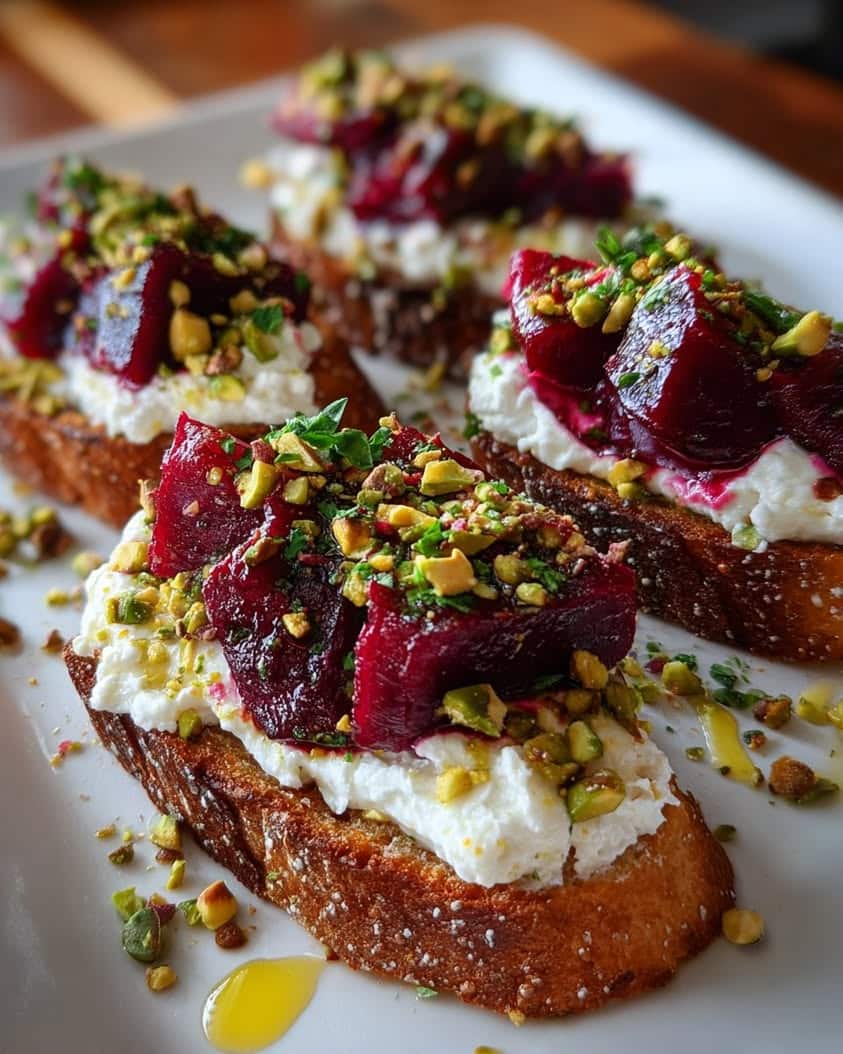
Holiday Beet and Burrata Crostini with Honey Pistachio Drizzle: A Festive & Elegant Appetizer
Searching for a stunning holiday appetizer that wows your guests without keeping you in the kitchen all day? This Holiday Beet and Burrata Crostini with Honey Pistachio Drizzle is your perfect answer. Moreover, it combines vibrant, earthy roasted beets with the luxurious creaminess of burrata cheese. Consequently, it creates a beautiful and delicious bite that looks as festive as it tastes. Ultimately, this recipe is the ideal centerpiece for your holiday entertaining spread.
Imagine a crisp, golden slice of baguette topped with jewel-toned roasted beet slices and a generous dollop of creamy, rich burrata. Finally, a sweet and nutty honey pistachio drizzle finishes the dish, adding crunch and a touch of floral sweetness. This festive appetizer is not only easy to assemble but also delivers an incredible balance of textures and flavors. Therefore, it is guaranteed to impress at any holiday gathering, from a casual cocktail party to an elegant Christmas dinner.
Quick Recipe Highlights
- Flavor Profile: This crostini features a beautiful harmony of sweet, earthy, and creamy notes. The natural sugars in the roasted beets caramelize, creating a deep sweetness that pairs perfectly with the mild, milky burrata. Meanwhile, the honey pistachio drizzle adds a final layer of nutty, floral flavor that ties everything together.
- Texture: You will experience a delightful contrast in every bite. The crostini base provides a satisfying crunch, while the roasted beet offers a tender, slightly firm texture. The burrata delivers an unforgettable creamy, luscious mouthfeel that melts away, and the chopped pistachios add a final, essential pop of crunch.
- Aroma: As the beets roast, your kitchen will fill with a warm, earthy, and subtly sweet fragrance. When you assemble the crostini, the aroma of toasted bread, fresh cheese, and the nutty, sweet honey drizzle creates an irresistible scent that promises a delicious experience.
- Visual Appeal: This dish is a feast for the eyes, boasting stunning holiday colors. The deep ruby red of the beets against the snowy white burrata creates a dramatic, festive contrast. Garnished with green pistachios and a golden drizzle, it looks like a carefully crafted holiday decoration that is almost too beautiful to eat.
- Skill Level Needed: This is an accessible recipe for cooks of all levels. The techniques are straightforward, involving simple roasting, toasting, and assembly. Importantly, no advanced culinary skills are required, making it a stress-free choice for holiday hosts who want to focus on their guests.
- Special Equipment: You need only basic kitchen tools. A baking sheet for roasting the beets and toasting the bread is essential. Additionally, a small bowl for mixing the drizzle and a sharp knife for slicing are all you require. No fancy gadgets are necessary for this elegant holiday appetizer.
Recipe Overview
- Difficulty Level: We classify this recipe as easy because it breaks down into simple, manageable steps. First, you roast the beets, which is mostly hands-off time. Then, you toast the bread and whip up the drizzle in minutes. Finally, assembly is quick and intuitive. Consequently, even a beginner can achieve impressive, professional-looking results with minimal effort.
- Category: This dish falls squarely into the appetizer or starter category, perfect for kicking off a festive meal. It also works wonderfully as part of a larger grazing board or as an elegant passed hors d’oeuvre at a cocktail party. Furthermore, its stunning presentation makes it a standout item on any holiday table.
- Cuisine: This recipe draws inspiration from modern Italian and Californian culinary traditions. The use of burrata and crostini is classically Italian. Meanwhile, the combination with roasted beets and a creative nut-based drizzle reflects a contemporary, farm-to-table approach common in modern American cuisine. It is a fusion that feels both timeless and fresh.
- Cost: This is a moderately priced appetizer that delivers luxury. Burrata is the primary splurge, but a little goes a long way. Beets, baguettes, honey, and pistachios are relatively affordable pantry staples. Overall, you can create an impressive platter for eight people without breaking the bank, making it a cost-effective choice for holiday entertaining.
- Season: This recipe shines brightest in the fall and winter months. Beets are at their peak sweetness during the cooler seasons. Moreover, the rich, comforting flavors and vibrant red color perfectly complement holiday themes from Thanksgiving through New Year’s Eve. It is a seasonal celebration on a cracker.
- Occasion: This crostini is tailor-made for special occasions. It is ideal for holiday parties, Christmas Eve gatherings, festive potlucks, or even as a special starter for a romantic winter dinner. Its elegance also makes it suitable for bridal showers, anniversary celebrations, or any event where you want to serve beautiful, thoughtful food.
Why You’ll Love This Recipe
You will adore the incredible taste and texture appeal of this holiday appetizer. Each component plays a crucial role in creating a symphony in your mouth. The earthy sweetness of the roasted beet is profound and satisfying. Then, the burrata provides a cool, creamy contrast that is utterly luxurious. The honey pistachio drizzle is the finishing maestro, adding a sticky sweetness and a necessary crunchy texture that prevents the bite from being too soft. Ultimately, it is a complex flavor profile that feels both sophisticated and comforting, a rare combination that keeps guests reaching for more.
Furthermore, the convenience and preparation benefits are a major win for any busy host. Significantly, most of the work is passive. You can roast the beets a day or two in advance. Similarly, you can toast the baguette slices ahead of time and store them in an airtight container. The honey pistachio drizzle comes together in two minutes and can sit at room temperature. Therefore, when party time arrives, you simply assemble, drizzle, and serve. This make-ahead strategy transforms a seemingly elaborate dish into one of the easiest items on your menu.
Additionally, this festive appetizer offers notable nutritional advantages amidst the indulgence of the season. Beets are packed with fiber, folate, and beneficial nitrates that support heart health. Pistachios provide healthy fats, protein, and antioxidants. Using a high-quality, whole-grain baguette adds complex carbohydrates and fiber. While burrata is rich, it also offers calcium and protein. Consequently, you can feel good about serving a beautiful bite that also delivers substantive nutrients to your guests.
Moreover, the social and entertaining value of this dish is exceptionally high. Its visual drama sparks conversation the moment you bring it to the table. Guests are always intrigued by the vibrant colors and elegant presentation. Because it is finger food, it encourages mingling and casual eating, which is the essence of a good party. It looks like you spent hours, yet the straightforward assembly allows you to be a present and relaxed host, enjoying the festivities alongside your friends and family.
Finally, this recipe is remarkably cost-effective and accessible. While burrata feels luxurious, one ball can generously top eight crostini, making it a reasonable expense. Beets, honey, and a baguette are inexpensive staples. Pistachios can be bought in small quantities from bulk bins. You do not need any special equipment or obscure ingredients. Essentially, you can create a show-stopping holiday appetizer with a quick trip to a standard grocery store, proving that impressive entertaining does not require a lavish budget.
Historical Background and Cultural Significance
The concept of crostini has deep roots in Italian culinary history, originating as a practical way to use stale bread. Traditionally, Italians would toast or grill old bread, rub it with garlic, and top it with whatever ingredients were on hand, from beans to tomatoes to cured meats. This practice of “cucina povera,” or poor kitchen, emphasized resourcefulness and flavor. Our modern holiday appetizer is a direct descendant of this tradition, elevating simple, accessible ingredients into something extraordinary. The addition of burrata, a newer cheese innovation, connects this history to contemporary tastes.
Culturally, beets hold significance across many European and Eastern European cuisines, often associated with winter sustenance and celebration. In Russian culture, for example, beet soup (borscht) is a cherished dish. Incorporating roasted beets into an Italian-inspired crostini represents a beautiful fusion of food traditions that celebrate winter’s bounty. This melding of cultures on a single toast is a testament to how modern global cuisine evolves, taking the best from various traditions to create new holiday classics.
The evolution of this specific recipe follows the broader trend of vegetable-forward, elegant appetizers in modern entertaining. Over the past decade, burrata has risen from relative obscurity to a star on restaurant menus and home tables alike. Its creamy, indulgent texture makes it a perfect vehicle for bold, earthy flavors like roasted beet. Meanwhile, the use of nuts and honey as a garnish reflects a growing appreciation for texture contrast and sweet-savory balance in starter courses. This dish is very much a product of current culinary preferences.
Regional variations of this concept are endless, showcasing its adaptable foundation. In the summer, you might see a version with heirloom tomatoes and basil instead of beets. A spring adaptation could feature roasted asparagus and pea shoots. Some regions might use local goat cheese instead of burrata, or walnuts instead of pistachios. This versatility is key to the recipe’s enduring appeal. It provides a perfect template that can be dressed for any season or local ingredient availability, while the holiday version with beets remains a seasonal favorite for its festive color and deep, warm flavors.
Ingredient Deep Dive
Let us start with the star: beets. These vibrant root vegetables have been cultivated since ancient times, prized by Romans for their sweetness and by Eastern Europeans for their hardiness. Nutritionally, they are a powerhouse of folate, manganese, potassium, and vitamin C. Their distinctive color comes from betalains, pigments with potent antioxidant and anti-inflammatory properties. When selecting beets, look for firm, smooth globes with vibrant greens attached if possible, a sign of freshness. Store them unwashed in the refrigerator’s crisper drawer. For a variation, golden beets offer a milder, equally beautiful option without the deep red color.
Next, burrata cheese is the luxurious heart of this holiday appetizer. Originating in the Apulia region of Italy in the early 20th century, burrata means “buttered” in Italian, a hint at its rich interior. It is a fresh cheese made from mozzarella and cream, with a solid outer shell that gives way to a soft, creamy center. It provides high-quality protein and calcium. Always seek out the freshest burrata possible, checking the sell-by date. For the best texture and flavor, let it come to room temperature for about 30 minutes before serving. If unavailable, fresh mozzarella or a creamy goat cheese can be a good substitute, though the textural experience will differ.
The baguette forms the essential crunchy base. A good, crusty artisan baguette provides structure and a neutral canvas that lets the toppings shine. Opt for a day-old loaf, as it slices more cleanly and toasts up with a better crunch. For a whole-grain boost, seek out a seeded or multigrain baguette. Gluten-free baguettes or even sturdy endive leaves work beautifully for dietary adaptations. The toasting step is non-negotiable, as it prevents sogginess and adds a nutty, caramelized flavor that is foundational to the dish’s success.
Finally, the honey pistachio drizzle is the flavor bridge. Honey, one of humanity’s oldest sweeteners, adds a floral sweetness that complements the earthiness of the beet. Meanwhile, pistachios, historically known as the “happy nut” in Iran and China, contribute healthy fats, protein, and a vibrant green color. Use a high-quality, raw honey for the best flavor. Toast the pistachios lightly to deepen their nuttiness before chopping. For substitutions, maple syrup can replace honey, and other nuts like walnuts or almonds would work, though pistachios offer the perfect color contrast and a slightly sweet, delicate flavor that is hard to beat.
Common Mistakes to Avoid
- Using Soggy Bread: Failing to toast the baguette slices adequately is a critical error. Untoasted bread will quickly become soggy and limp under the moist beet and creamy burrata, ruining the textural contrast. Always toast until deeply golden and crisp throughout.
- Overcrowding the Baking Sheet: When roasting the beets, give them space. Crowding the pan steams them instead of roasting, preventing the caramelization that develops their signature sweetness. Use a large enough sheet or roast in batches for the best results.
- Serving Cold Burrata: Burrata’s magic is in its creamy, luscious texture straight from the center. Serving it straight from the refrigerator makes it too firm and mutes its delicate flavor. Always let it sit at room temperature for 20-30 minutes before assembling your crostini.
- Neglecting to Season the Beets: Beets need seasoning just like any other vegetable. Tossing them with olive oil, salt, and pepper before roasting is essential. This simple step amplifies their natural flavor and ensures your holiday appetizer is seasoned from the bottom up.
- Making the Drizzle Too Thick: If your honey is very thick, the drizzle can become clumpy and difficult to pour. A quick fix is to warm the honey gently for a few seconds in the microwave or in a bowl of warm water to thin it slightly before mixing with the pistachios.
- Assembling Too Far in Advance: While components can be prepped ahead, fully assembled crostini will become soggy if left sitting. For the best texture, assemble no more than 30 minutes before serving. Keep components separate until the last moment for a perfect crisp bite.
- Not Peeling the Beets: The skin of roasted beets, while edible, can be tough and slightly bitter. Taking the time to rub off the skins after roasting (they slip off easily when cool enough to handle) ensures a perfectly tender, velvety texture in every bite.
- Using Low-Quality Olive Oil: Since the ingredients are few, each one’s quality shines through. Using a bland or old olive oil on the beets or bread will result in a flat flavor. A good, fruity extra-virgin olive oil makes a noticeable difference in this simple recipe.
Essential Techniques
Roasting beets to perfection is the first essential technique. Roasting, as opposed to boiling, concentrates the beets’ natural sugars through caramelization, resulting in a deeper, sweeter flavor. To master it, toss peeled and cubed beets uniformly in oil and seasonings, then spread them in a single layer on a parchment-lined sheet. Roast at a high heat (400°F is ideal) until they are tender when pierced with a fork and have slightly crispy edges. The common pitfall is under-roasting, which leaves them hard and lacking sweetness. Visual cues for success are a shrunken, slightly wrinkled appearance and intense, vibrant color.
Toasting crostini properly is the foundation of texture. This technique ensures your base is sturdy and flavorful, capable of holding moist toppings without becoming soggy. Brush baguette slices lightly with olive oil and arrange them on a baking sheet. Toast in a preheated oven or toaster oven until golden brown and crisp throughout, not just on the edges. The key is to watch them closely, as they can go from perfect to burnt quickly. Success is achieved when the slices are uniformly golden and make a hard, tapping sound when you knock them together. Avoid steaming them by ensuring they are in a single layer with space for air circulation.
Creating the honey pistachio drizzle is about balance and texture. The technique involves finely chopping the pistachios to ensure they distribute evenly and mix well with the honey. Stir them together until the nuts are fully coated. If the mixture is too thick to drizzle, a tiny splash of warm water can loosen it. The goal is a cohesive mixture that holds together but still flows off a spoon in ribbons. A common mistake is leaving the nuts too coarse, which can clog your drizzling tool. The perfect drizzle should add both flavor and visual appeal without overwhelming the other components.
Pro Tips for Perfect Holiday Beet and Burrata Crostini
First, wear disposable gloves when peeling and handling the roasted beets. This simple trick prevents your hands from being stained pink for days, making the prep process much cleaner and more pleasant.
Second, use a serrated knife to slice the baguette. A serrated edge grips the crust and saws through cleanly without squashing the soft interior, giving you neat, even slices that toast uniformly.
Third, add a whisper of flaky sea salt over the assembled crostini just before serving. The large, crunchy salt crystals provide a final burst of seasoning and an extra textural element that elevates the entire dish.
Fourth, if your beets release a lot of liquid after roasting, pat them gently with a paper towel before placing them on the toast. This prevents excess moisture from making the crostini soggy too quickly.
Fifth, for an extra flavor dimension, rub the warm, toasted baguette slices with a cut clove of garlic. This classic crostini move adds a subtle, aromatic background note that complements the other flavors beautifully.
Sixth, garnish with a few whole pistachios or delicate beet greens in addition to the drizzle. This adds height and visual interest, making your holiday appetizer platter look even more professional and abundant.
Variations and Adaptations
For regional variations, consider the ingredients local to your area. In the Mediterranean, you might add a sprinkle of za’atar or sumac to the beets. A French-inspired version could use a dollop of crème fraîche under the beet and a garnish of fresh tarragon. In the American South, a candied pecan and bourbon-honey drizzle would be spectacular. These twists honor the local palate while keeping the elegant structure of the original holiday appetizer intact.
Seasonal adaptations are wonderfully easy. In spring, substitute the beets for roasted asparagus spears and the pistachios for fresh peas. A summer version could feature ripe heirloom tomatoes and basil. For autumn, try roasted squash or sweet potato with a sage-infused honey. The burrata and crostini base remain constant, providing a versatile template for showcasing the best produce of any season.
Dietary modifications are straightforward. For a gluten-free option, use your favorite gluten-free baguette or even sturdy roasted potato rounds as the base. To make it vegan, replace the burrata with a high-quality vegan cashew cheese or a thick, garlicky white bean purée. A nut-free version can use toasted sunflower or pumpkin seeds in the drizzle. Each adaptation maintains the spirit of a beautiful, layered festive appetizer.
Serving and Presentation Guide
Plating techniques can transform this dish from simple to spectacular. For a casual gathering, arrange the crostini in a sunburst pattern on a large wooden board or slate platter. For a more formal seated dinner, consider plating two crostini per guest on individual small plates, perhaps with a microgreen salad on the side. The key is to ensure each piece is accessible and looks intentional, not crowded.
Garnishing is your final opportunity for flair. Beyond the drizzle, consider a light sprinkle of freshly cracked black pepper, edible flower petals like nasturtiums, or tiny beet green leaves. A few grains of coarse Maldon salt on each piece just before serving adds a delightful crunch and highlights the flavors. Remember, garnish should enhance, not overwhelm, the beautiful components you have already prepared.
Traditional accompaniments might include a simple green salad or a bowl of olives. For a modern twist, serve these crostini alongside other small bites like spiced nuts, cured meats, or marinated vegetables on a large grazing table. They also pair wonderfully with a sparkling wine or a citrus-forward cocktail. Always provide small plates and napkins, as the drizzle can be delightfully messy.
Wine and Beverage Pairing
Wine pairings for this crostini should balance its earthy sweetness and creamy richness. A dry rosé with good acidity cuts through the burrata beautifully and complements the beet’s earthiness. A light-bodied Pinot Noir, with its red fruit notes and low tannins, is another excellent choice that won’t overpower the dish. For white wine lovers, a crisp, mineral-driven Champagne or sparkling wine is always a celebratory and perfect match, its bubbles cleansing the palate between bites.
Non-alcoholic alternatives can be just as sophisticated. A sparkling elderflower cordial with soda water offers floral notes that echo the honey. A tart, homemade lemonade or a ginger beer provides a refreshing contrast to the rich cheese. For a warm option, a delicate herbal tea like chamomile or mint can be a surprising and pleasant pairing, especially for a daytime holiday gathering.
Storage and Shelf Life
Storage methods for components are key, as the assembled crostini do not keep well. Store roasted, cooled beets in an airtight container in the refrigerator for up to 4 days. Keep toasted baguette slices at room temperature in a paper bag or loosely covered container to maintain crispness; they are best used within 24 hours. The honey pistachio drizzle can sit at room temperature for a day or be refrigerated; if refrigerated, let it warm up to become drizzle-able again. Burrata must be kept refrigerated in its liquid and used by its expiration date.
Signs of spoilage are straightforward. Discard the beets if they develop an off smell, become slimy, or show mold. Burrata that smells sour, has separated, or developed an ammonia-like odor should not be used. The toasted bread will simply become stale, not dangerous. The honey drizzle is very stable due to honey’s natural preservative qualities. Always assemble with the freshest components for the best and safest eating experience.
Make Ahead Strategies
A practical prep timeline makes holiday hosting stress-free. Two days before your event, roast the beets, peel them, and refrigerate. The day before, slice and toast the baguette, storing it at room temperature. Also, make the honey pistachio drizzle and leave it covered on the counter. A few hours before guests arrive, take the burrata and beets out of the fridge to come to room temperature. This staggered approach ensures every element is at its peak when you quickly assemble your festive appetizer just before serving.
Quality impact is minimal with this make-ahead plan. Roasted beets actually improve in flavor as they sit. Toasted bread, if stored properly, retains its crunch. The honey and pistachio mixture only improves as the flavors meld. The only element that must be added at the last minute is the burrata itself, to preserve its perfect texture and temperature. This strategy guarantees you can deliver a flawless dish while enjoying your own party.
Scaling Instructions
Halving the recipe is simple for smaller gatherings. Use one medium beet, half a baguette, and four ounces of burrata. The honey pistachio drizzle can be halved precisely, but consider making the full amount and saving the extra for salads or yogurt. Equipment needs do not change, though you may use a smaller baking sheet. Timing remains the same for roasting and toasting. This scaling is perfect for an intimate dinner for four.
Doubling or tripling for a large crowd requires slight adjustments. Use multiple baking sheets for the beets, rotating them in the oven for even cooking. Toast the baguette slices in batches to ensure even browning. Consider setting up an assembly line for efficiency: a station for bread, then beets, then burrata, then drizzle. For very large parties, you can keep components warm (beets) and cool (burrata) in separate serving dishes and let guests assemble their own, which is a fun interactive element.
Nutritional Deep Dive
A macro breakdown of one crostini reveals a balanced bite. The baguette provides complex carbohydrates for energy. The burrata contributes protein and healthy fats, crucial for satiety. The beets add fiber and micronutrients, while the pistachios offer additional protein and fat. This combination means the appetizer is satisfying and nutrient-dense, not just an empty-calorie snack. It provides sustained energy, which is perfect for a long evening of holiday festivities.
Micronutrient analysis highlights the vitamin and mineral wealth. Beets are an excellent source of folate, essential for cell function, and manganese, important for bone health. Burrata provides calcium for strong bones and phosphorus for energy metabolism. Pistachios offer vitamin B6 and thiamine. Honey contains small amounts of antioxidants. Together, they create a holiday appetizer that supports overall wellness, a welcome addition to the seasonal table.
Dietary Adaptations
For a gluten-free adaptation, simply swap the baguette for a certified gluten-free artisan loaf or use slices of roasted sweet potato or large cucumber rounds as the base. Ensure all other ingredients, like the honey, are certified gluten-free if cross-contamination is a concern. The result is a celiac-friendly festive appetizer that everyone can enjoy.
A vegan version is easily achieved. Replace the burrata with a creamy vegan alternative, such as a cashew-based cheese or a thick, seasoned white bean spread. Use maple syrup or agave nectar instead of honey. The roasted beets and toasted base remain the same. This adaptation ensures the dish is inclusive, allowing all your guests to partake in the beautiful holiday appetizer.
Troubleshooting Guide
If your crostini become soggy, the issue is likely timing or bread preparation. Always ensure the bread is thoroughly toasted and completely cool before topping. If assembling in advance, keep the components separate until the last possible moment. If beets are very juicy, pat them dry. For already soggy crostini, you cannot salvage them, but this is a good lesson for next time to prioritize the crunch.
If the flavor balance seems off, assess each component. Are the beets seasoned enough? Does the burrata taste fresh? Is the honey drizzle too sweet? Often, a missing element is acidity. A very light drizzle of aged balsamic vinegar or a squeeze of lemon juice over the assembled crostini can brighten all the flavors and add a missing layer of complexity.
Recipe Success Stories
Community feedback on this holiday appetizer consistently highlights its visual impact and surprising ease. Many home cooks report that it has become their requested signature dish for potlucks. One reader shared that she uses pre-cooked vacuum-packed beets when time is extremely short, and while the flavor is less deep, it still yields a beautiful result in a pinch. Another suggested adding a thin layer of horseradish cream under the beet for a spicy kick, a variation that has now become a favorite in our own kitchen.
Frequently Asked Questions
Can I use canned or pre-cooked beets? Yes, for a major time save, you can. However, roasted beets have a superior, caramelized sweetness and firmer texture. If using pre-cooked, pat them very dry and consider warming them slightly with a touch of oil and seasoning to improve their flavor.
What can I use instead of burrata? Fresh mozzarella (bocconcini) is the closest substitute. A creamy goat cheese or even a rich ricotta would also work, though the texture and experience will be different. The goal is a soft, mild, creamy cheese.
How far in advance can I assemble these? We recommend no more than 30 minutes before serving to preserve the crispness of the toast. You can prep all components hours or days ahead and store them separately, then assemble quickly when needed.
Can I make this nut-free? Absolutely. Omit the pistachios from the drizzle and just use a simple honey drizzle. Alternatively, use toasted sunflower seeds or pumpkin seeds for a similar crunchy, nut-free garnish.
My honey is crystallized. Can I still use it? Yes. Gently warm the honey jar in a bowl of hot water or microwave it in short bursts (without the metal lid) until it becomes liquid again. Let it cool slightly before mixing with the pistachios.
Is there a way to prevent the beet juice from staining everything? Use disposable gloves when handling roasted beets. Work on a cutting board you don’t mind staining, or put down parchment paper. Immediately clean any drips with soap and water.
Can I serve these warm? You can serve the toasted bread and roasted beets warm or at room temperature. The burrata should be cool but not cold. The contrast of temperatures is actually quite pleasant. Avoid assembling with piping hot beets directly on cold burrata, as it can make the cheese too runny.
What’s the best way to slice the baguette? Use a serrated bread knife and aim for slices about 1/2-inch thick. Thinner slices may burn or become too fragile; thicker slices can be too bready and overwhelm the toppings.
Can I freeze any components? Freezing is not recommended for this recipe. The beets will become mushy, the bread will stale, and the burrata will separate. This is a fresh dish best made close to serving time.
How do I know when the beets are done roasting? They should be easily pierced through to the center with the tip of a sharp knife or a fork. They will also shrink slightly and the edges may caramelize. Total time will vary based on the size of your beet pieces.
Additional Resources
For related recipes, consider exploring other elegant crostini combinations like fig and prosciutto or pear and gorgonzola. If you love the beet and burrata pairing, a roasted beet salad with burrata, arugula, and a citrus vinaigrette is a natural next step. For more holiday appetizer inspiration, look for recipes involving phyllo cups, endive spoons, or other vehicles for beautiful, bite-sized presentations.
Technique guides that will help you master this and other dishes include tutorials on knife skills for even vegetable chopping, the principles of balancing sweet and savory flavors, and the art of simple food styling for stunning photography. Understanding these broader skills will make you more confident and creative in the kitchen, far beyond this single festive appetizer.
PrintHoliday Beet and Burrata Crostini with Honey Pistachio Drizzle
Description
A festive appetizer featuring roasted beets, creamy burrata, and a sweet-savory honey pistachio drizzle on crispy crostini.
Ingredients
For the Crust:
- 1 large beet, peeled and diced
- 1 tablespoon olive oil
- Salt and black pepper to taste
- 1 baguette, sliced into 1/2-inch pieces
- 8 ounces burrata cheese
- 1/4 cup shelled pistachios, chopped
- 2 tablespoons honey
- 1 teaspoon balsamic glaze
- Fresh thyme leaves for garnish
Instructions
1. Prepare the Crust:
- Preheat oven to 400°F. Toss diced beet with olive oil, salt, and pepper. Roast on a baking sheet for 25-30 minutes until tender. Let cool.
- Arrange baguette slices on a baking sheet. Toast in the oven for 8-10 minutes until crisp and golden.
- In a small bowl, mix chopped pistachios and honey. Set aside.
- Spread a spoonful of burrata on each crostini. Top with roasted beet pieces.
- Drizzle with honey pistachio mixture and balsamic glaze. Garnish with fresh thyme and serve immediately.
Notes
You can customize the seasonings to taste.

I’m Shaykee—born in Morocco, seasoned across continents. From airplane galleys to home kitchens, I share the flavors and stories that shaped my journey.