
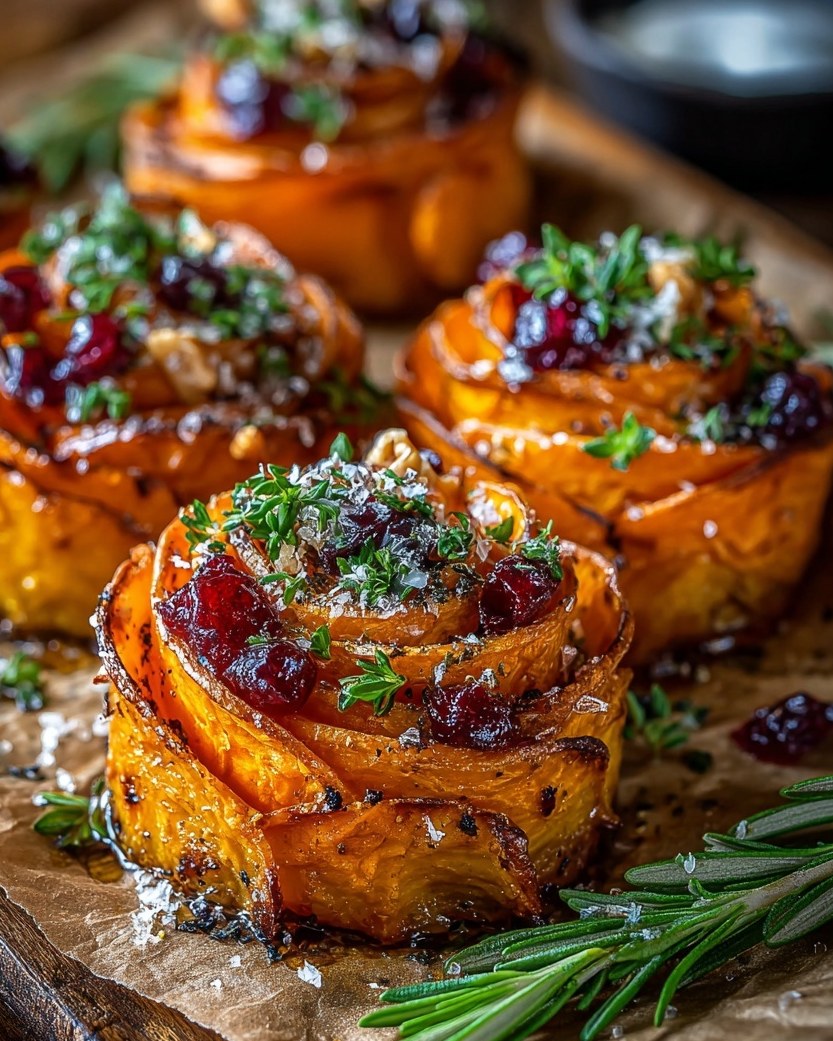
Cranberry-Glazed Sweet Potato Roses with Whipped Brie & Walnut Dust: A Stunning Holiday Appetizer
Imagine presenting a platter of edible, savory-sweet potato roses at your next holiday gathering. Each delicate, glistening petal offers a perfect bite of earthy sweet potato, tangy cranberry, and creamy, luxurious cheese. This recipe for cranberry-glazed sweet potato roses with whipped brie and walnut dust transforms humble root vegetables into a breathtaking centerpiece appetizer that will have your guests reaching for their cameras before their forks. Consequently, it combines stunning visual appeal with a sophisticated flavor profile that celebrates the best of the season.
Moreover, the process of creating these elegant, savory-sweet potato roses is a rewarding culinary project. While it requires some patience and a bit of knife work, the result is a truly show-stopping dish that looks far more complex than it actually is. The combination of the sweet, caramelized potato, the sharp and glossy cranberry glaze, the airy whipped brie, and the crunchy, earthy walnut dust creates a symphony of textures and tastes in every single bite. Ultimately, this dish is designed to impress, making it the perfect gourmet recipe for Thanksgiving, Christmas parties, or any special dinner where you want to elevate the appetizer course.
Quick Recipe Highlights
- Flavor Profile: This dish masterfully balances earthy sweetness from the roasted sweet potatoes with the bright, tart punch of a homemade cranberry glaze. Furthermore, the rich, slightly funky creaminess of the whipped brie provides a luxurious counterpoint, while the walnut dust adds a final note of toasty, savory depth.
- Texture: You experience a delightful contrast starting with the tender-yet-firm bite of the roasted sweet potato petals. Next, the sticky, glossy glaze coats the palate, followed by the cloud-like smoothness of the whipped brie. Finally, the fine, crunchy walnut dust offers a satisfying finish that ties all the elements together beautifully.
- Aroma: As these savory-sweet potato roses bake, your kitchen fills with the warm, comforting scent of roasting root vegetables and maple syrup. Subsequently, the cranberry glaze simmers, releasing a tangy, fruity fragrance. Upon serving, the nutty aroma of the toasted walnuts and the creamy scent of the brie complete the irresistible olfactory experience.
- Visual Appeal: The presentation is nothing short of spectacular. Each rose is a miniature work of art with its layered, spiraled petals glistening under a ruby-red cranberry glaze. The snowy white dollop of whipped brie and the sprinkle of rustic walnut dust create a stunning color contrast that is perfect for holiday photography and tablescapes.
- Skill Level Needed: This is an intermediate-level recipe due to the knife technique required for slicing the sweet potatoes thinly and evenly. However, with a sharp mandoline and careful attention to the assembly steps, even confident home cooks can achieve beautiful, elegant, savory-sweet potato roses. Patience is your most important tool here.
- Special Equipment: A mandoline slicer is highly recommended for achieving the paper-thin, uniform slices needed to create pliable petals. Additionally, you will need a quality muffin tin to help the roses hold their shape during baking, a small blender or food processor for the walnut dust, and a hand mixer or stand mixer to whip the brie to perfect lightness.
Recipe Overview
- Difficulty Level: We classify this recipe as intermediate primarily because of the precision needed in slicing and rolling the sweet potatoes. Creating those elegant, savory-sweet potato roses requires thin, consistent slices that can bend without breaking. Meanwhile, managing the multi-component preparation—glaze, cheese, garnish—adds a layer of coordination that goes beyond simple assembly. However, each step is clearly explained and absolutely achievable with focus.
- Category: This dish sits proudly in the appetizer or hors d’oeuvre category, designed to be a stunning first act for a holiday meal. It can also function beautifully as a passed bite at a cocktail party or a featured item on a festive grazing board. Furthermore, its rich flavors and beautiful presentation make it a standout choice for any special occasion spread.
- Cuisine: While not tied to a single traditional cuisine, this recipe is a modern fusion of American holiday flavors. It draws inspiration from classic Thanksgiving sides like sweet potato casserole and cranberry sauce, then reimagines them through a French-inspired technique with the whipped brie. Ultimately, it represents contemporary gourmet home cooking at its most creative and visually appealing.
- Cost: The cost is moderate, largely dependent on the price of brie cheese and fresh cranberries. Sweet potatoes and walnuts are typically affordable pantry staples. Notably, a single batch yields an impressive number of portions, making it a cost-effective centerpiece for entertaining compared to purchasing premium prepared appetizers.
- Season: This recipe is quintessentially autumnal and wintery, making it perfect for the holiday season from late October through December. Fresh cranberries are at their peak, and sweet potatoes are plentiful. The warm, comforting flavors are ideally suited to cooler weather gatherings, from Halloween parties to New Year’s Eve celebrations.
- Occasion: Think of any event where you want to make a memorable impression. It is perfect for Thanksgiving dinner, Christmas Eve appetizers, Friendsgiving potlucks, and festive dinner parties. Additionally, it makes a wonderful contribution to a holiday potluck where visual appeal is just as important as taste.
Why You’ll Love This Recipe
First and foremost, the taste and texture appeal is absolutely unparalleled. Each component of these elegant, savory-sweet potato roses plays a crucial role. You get the natural caramelized sweetness of the roasted potato, which is then cut through by the vibrant acidity of the cranberry glaze. Subsequently, the whipped brie introduces a luxurious, creamy element that mellows the tartness, while the walnut dust provides essential crunch and a toasty, savory finish. This harmonious balance ensures every bite is complex, satisfying, and deeply flavorful, making it far more interesting than a standard holiday appetizer.
Next, consider the convenience and preparation benefits. Although the assembly requires attention, much of the work can be done ahead of time. You can prepare the cranberry glaze and toast the walnuts days in advance. Furthermore, you can slice the sweet potatoes and even assemble the roses in the muffin tin ahead of your event, then simply bake them before serving. This make-ahead flexibility is a lifesaver during busy holiday entertaining, allowing you to create a stunning gourmet recipe without last-minute kitchen chaos.
Additionally, this dish offers notable nutritional advantages compared to many rich holiday appetizers. Sweet potatoes are packed with beta-carotene, fiber, and vitamins. Cranberries bring powerful antioxidants and vitamin C. Walnuts contribute healthy omega-3 fats and protein. Even the brie provides calcium and protein. Consequently, you are serving a beautiful dish that also delivers substantive nutritional value, allowing guests to indulge in something that feels special and decadent while still being made from wholesome, recognizable ingredients.
Moreover, the social and entertaining value of this recipe is through the roof. Presenting a platter of these cranberry-glazed sweet potato roses is a guaranteed conversation starter. Guests will be delighted by the artistry and effort, which translates to a memorable dining experience. It shows care and creativity, elevating the entire tone of your meal. This dish proves that you can create restaurant-quality, visually stunning food at home, boosting your confidence as a host and leaving a lasting impression on everyone at your table.
Finally, the cost-effectiveness and accessibility are significant perks. Creating a batch of these elegant appetizers at home costs a fraction of what you would pay for a similar plated dish at a catered event or upscale restaurant. The ingredients are readily available at most grocery stores, especially during the fall and winter months. By investing a bit of time, you achieve a level of sophistication and beauty that belies the relatively simple and affordable component list, making this gourmet recipe both impressive and practical for home cooks.
Historical Background and Cultural Significance
The origin story of this dish is a modern tale of culinary innovation rather than ancient tradition. It draws inspiration from several classic sources. The concept of vegetable “roses” likely evolved from techniques used in French and Asian cuisines to carve and slice vegetables decoratively. Meanwhile, the combination of sweet potato and cranberry is deeply rooted in American Thanksgiving tradition, a pairing that dates back to colonial times when native ingredients were celebrated. This recipe for elegant, savory-sweet potato roses is a contemporary fusion, marrying these historical flavor partnerships with a visually dramatic presentation technique that has gained popularity in the age of social media and food styling.
Understanding its cultural importance requires looking at the components separately. The sweet potato holds significant cultural weight across the American South and in many African diasporic food traditions. Cranberries are one of the few fruits native to North America, making them a symbol of the continent’s harvest. Brie cheese brings a touch of European luxury and cheesemaking heritage. Therefore, this dish culturally represents a blending of New World ingredients with Old World technique, creating something that feels both familiar and novel on a modern holiday table. It respects tradition while boldly innovating.
The evolution of the recipe follows trends in modern gastronomy that prioritize plant-forward dishes and stunning visual presentation. As home cooks have become more adventurous and influenced by cooking shows and online food communities, techniques once reserved for professional kitchens have migrated home. The specific method of creating vegetable roses using a muffin tin for structure is a clever hack that democratizes a beautiful plating style. Consequently, this recipe exemplifies how contemporary cooking adapts professional tricks for home use, allowing anyone to create food that is as beautiful as it is delicious.
Regarding regional variations, the core concept is wonderfully adaptable. In the South, one might add a hint of bourbon to the cranberry glaze or use pecans instead of walnuts. A Northeastern version could incorporate maple syrup from Vermont or New York. For a French twist, the brie could be replaced with a whipped goat cheese or a dollop of crème fraîche. The sweet potato roses themselves could be made with other root vegetables like butternut squash, parsnips, or even multicolored carrots for a different visual effect. This flexibility ensures the idea can be tailored to local tastes and available ingredients, making it a versatile template for seasonal cooking.
Ingredient Deep Dive
Let’s start with the star: sweet potatoes. Cultivated for thousands of years in Central and South America, sweet potatoes were a staple long before European contact. They are not actually related to white potatoes but are part of the morning glory family. Nutritionally, they are powerhouses of beta-carotene (which converts to vitamin A), vitamin C, manganese, and fiber. For this recipe, select medium-sized, firm sweet potatoes with smooth, unblemished skin. Avoid any that are soft or have sprouts. Store them in a cool, dark, well-ventilated place—not the refrigerator, as cold temperatures can alter their texture and flavor. For a substitution, garnet yams work perfectly, as they are often what is labeled as “sweet potato” in U.S. markets.
Next, the cranberry glaze. Cranberries are one of North America’s true native fruits, used by Indigenous peoples for food, dye, and medicine. They are famously high in vitamin C and unique antioxidants called proanthocyanidins, which support urinary tract health. For the glaze, use fresh or frozen cranberries; avoid canned cranberry sauce. Fresh berries should be firm, shiny, and deep red. Simmering them with maple syrup and orange juice creates a balance of tart and sweet with a beautiful glossy finish. If fresh are unavailable, frozen work excellently and do not need to be thawed. A potential substitution for a different flavor profile is a pomegranate or red currant reduction.
Now, examine the whipped brie. Brie is a soft, cow’s-milk cheese named after the French region from which it originated. It has a creamy, buttery texture and a mild, slightly earthy flavor that becomes more pronounced as it ages. Whipping room-temperature brie with a touch of cream transforms it into an airy, spreadable cloud that pairs beautifully with the hearty sweet potato. Nutritionally, it provides protein, calcium, and fat-soluble vitamins. Always choose a good-quality, ripe brie—the rind should be white and slightly velvety, and the cheese should give slightly when pressed. For those who dislike the rind, it can be trimmed off before whipping. A similar creamy cheese like Camembert or a double-cream cheese can be used as a substitute.
Finally, the walnut dust. Walnuts are among the oldest tree foods, with evidence of their consumption dating back thousands of years. They are an excellent source of plant-based omega-3 fatty acids (ALA), antioxidants, and minerals like manganese and copper. Toasting the walnuts is a non-negotiable step; it deepens their flavor and makes them crispier for grinding. For the best result, toast them in a dry pan over medium heat until fragrant, then let them cool completely before pulsing into a coarse dust in a food processor. Store unused walnuts in the freezer to prevent their oils from turning rancid. For a nut-free version or substitution, try toasted pumpkin seeds (pepitas) or a sprinkle of crispy fried sage.
Common Mistakes to Avoid
- Slicing the Sweet Potatoes Too Thick: This is the most common pitfall. Slices that are too thick will not bend to form the rose petals and will remain crunchy in the center after baking. Always use a mandoline for consistent, paper-thin slices, approximately 1/16-inch thick.
- Not Soaking the Slices: Skipping the soak in warm water is a mistake. This crucial step removes excess starch, making the slices pliable and easy to roll. It also helps them cook more evenly and achieve a tender texture.
- Overfilling the Muffin Cups: When assembling, it’s tempting to use too many slices to make a fuller rose. However, overfilling prevents heat from circulating properly, resulting in steamed, soggy centers instead of roasted, caramelized petals. Five to six slices per rose is typically ideal.
- Under-Whipping the Brie: If your brie is too cold, it will not whip properly and will remain dense. Ensure it is truly at room temperature. Similarly, under-whipping results in a heavy dollop that can overwhelm the delicate rose. Whip until it is noticeably light, airy, and holds a soft peak.
- Boiling the Cranberry Glaze: Cooking the cranberry mixture at a rolling boil can make the glaze bitter and cause it to reduce too quickly, becoming overly thick and sticky. Maintain a gentle simmer to preserve the bright, tart flavor and achieve a perfect, brushable consistency.
- Skipping the Walnut Toasting: Using raw walnuts for the dust misses a key flavor dimension. Toasting unlocks their essential oils and creates a deeper, nuttier aroma and taste that complements the sweet and creamy elements perfectly.
- Applying Glaze Too Early: Brushing the cranberry glaze onto the sweet potato roses at the start of baking will cause it to burn due to the sugar content. Always apply it during the last 10-15 minutes of cooking to achieve a shiny, caramelized finish without charring.
- Rushing the Assembly: Trying to assemble the roses too quickly can lead to frustration and broken slices. Work methodically, and remember that the warm water soak makes the slices cooperative. Patience here directly translates to a more beautiful final product.
Essential Techniques
Mandoline Slicing: Mastering the mandoline is critical for creating the petals for your elegant, savory-sweet potato roses. This technique ensures uniform, paper-thin slices that are flexible enough to roll. Always use the safety guard to protect your fingers. Position the sweet potato firmly and use a consistent, smooth motion. The importance lies in uniformity; slices of even thickness will cook at the same rate, creating a cohesive rose. A common pitfall is applying uneven pressure, which yields wedges instead of flat slices. The visual cue for success is a stack of translucent, flexible rounds that you can easily bend without snapping.
Vegetable Rose Assembly: This is the signature technique of the recipe. After soaking, pat five to six slices very dry and lay them out slightly overlapping in a line. Starting from one end, gently roll the line into a tight spiral; this forms the rose’s center. Then, carefully place the spiral, seam-side down, into a greased muffin cup. The surrounding cup will support the rose as it bakes, helping it hold its iconic shape. The importance is in creating a stable base and a visually layered effect. A common mistake is rolling too loosely, which causes the rose to splay open. Success is a compact, layered spiral that stands upright in the cup.
Reduction Glaze Making: Creating the cranberry glaze involves gently cooking fruit juice and sweetener until it thickens and becomes syrupy. The technique requires patience. Combine the cranberries, maple syrup, and orange juice in a saucepan and bring to a simmer, not a boil. As the cranberries pop and the liquid reduces, the natural pectin in the fruit will help it thicken. Stir occasionally to prevent sticking. This technique is important for concentrating flavor and creating a glossy, adhesive coating. The pitfall is rushing by using high heat, which can scorch the sugars. Success is a thickened, ruby-red sauce that coats the back of a spoon and leaves a clear trail when you run a finger through it.
Whipping Soft Cheese: Transforming solid brie into a light, fluffy cloud is a simple but essential technique. Start with room-temperature cheese, as cold brie will not incorporate air. Place the softened cheese (rind on or off, per your preference) in a mixing bowl with a small amount of heavy cream. Using a hand mixer or stand mixer with the paddle attachment, beat on medium-high speed. The goal is to incorporate air, increasing the volume and changing the texture from dense to airy. The importance is creating a garnish that is easy to dollop and melts luxuriously on the warm rose. The pitfall is under-whipping. Success is a noticeably lighter, spreadable cheese that holds a soft shape when scooped.
Pro Tips for Perfect Cranberry-Glazed Sweet Potato Roses
First, for easier slicing, choose sweet potatoes that are as straight and cylindrical as possible. Curved or knobby potatoes are much harder to slice evenly on a mandoline and will yield inconsistent petals. A uniform shape is your best friend for creating those elegant, savory-sweet potato roses.
Second, add a tablespoon of vinegar or lemon juice to the warm water soak. This slight acidity helps further break down the potato’s cell structure, making the slices even more pliable and less likely to crack when you roll them into the rose shape.
Third, use a pastry brush dedicated to savory glazes. When applying the cranberry glaze during the final minutes of baking, a silicone brush gives you the most control for getting the glossy mixture into the crevices between petals without disturbing the rose’s structure.
Fourth, let the baked roses rest in the muffin tin for 5-10 minutes after removing them from the oven. This allows them to set slightly, making them less fragile when you carefully remove them with a small offset spatula or fork to transfer to a serving platter.
Fifth, for the whipped brie, if you prefer a tangier flavor, try whipping in a teaspoon of finely grated lemon zest. This bright note cuts through the richness beautifully and adds another layer of complexity to this gourmet recipe.
Sixth, make extra walnut dust. It stores wonderfully in an airtight container and can be used as a garnish for soups, salads, or oatmeal, adding a nutritious and flavorful crunch to other dishes throughout your week.
Seventh, if your rose centers seem too dense after baking, you can use a small paring knife to gently loosen and fluff the inner petals before plating. This creates more surface area for catching the glaze and whipped cheese.
Eighth, for a truly stunning presentation, serve the roses on a bed of fresh rosemary sprigs or kale leaves. The dark green backdrop makes the vibrant orange and red colors of the cranberry-glazed sweet potato roses pop dramatically.
Variations and Adaptations
For regional variations, consider the local flavors of your area. In the South, add a teaspoon of bourbon and a pinch of smoked paprika to the cranberry glaze, and use toasted pecans for the dust. A Pacific Northwest adaptation might use hazelnuts and a drizzle of local blackberry syrup alongside the glaze. Meanwhile, a Northeastern version could rely purely on pure maple syrup for sweetness and garnish with crispy fried sage leaves instead of nuts.
Seasonal adaptations are straightforward and encouraged. In late fall, incorporate finely chopped fresh rosemary into the sweet potato soak for an aromatic herbaceous note. For a winter holiday version, add a pinch of warming spices like cinnamon or allspice to the cranberry glaze. If making these outside of cranberry season, a high-quality whole-berry cranberry sauce from a jar can be warmed and thinned with orange juice as a quick glaze substitute.
Dietary modifications are easily managed. For a vegan version, omit the whipped brie and create a creamy topping from soaked cashews blended with nutritional yeast, lemon juice, and salt. Use maple syrup or agave in the glaze. To make it gluten-free, simply ensure all packaged ingredients like maple syrup are certified GF—the recipe is naturally free of gluten-containing grains. For a dairy-free option, substitute the whipped brie with a dollop of thick, unsweetened coconut cream or a vegan cream cheese alternative.
Flavor variations can personalize the dish to your taste. Instead of orange juice in the glaze, try pomegranate juice for a deeper, richer tartness. Infuse the whipping cream for the brie with a sprig of thyme or a cracked black peppercorn for a savory twist. For a sweeter profile, sprinkle the assembled roses with a tiny amount of brown sugar before baking to enhance caramelization.
Texture modifications can cater to different preferences. For extra crunch, mix the walnut dust with panko breadcrumbs before toasting. For a smoother eating experience, you can puree the cranberry glaze after cooking and strain it to remove the skins, creating a sleek, seedless coating. If you prefer a more distinct cheese presence, skip whipping and simply place a small wedge of room-temperature brie in the center of each rose after baking, allowing it to melt slightly.
Presentation alternatives offer creative freedom. Instead of individual roses, you can arrange the overlapping sweet potato slices in a sunburst pattern in a greased pie dish or cast-iron skillet to create one large, impressive “blossom.” For a rustic family-style presentation, bake the sliced, soaked potatoes in a casserole dish, glaze, and top with dollops of brie and walnut dust, serving it with a spoon.
Serving and Presentation Guide
Plating techniques are key to showcasing your work. For individual servings, place each cranberry-glazed sweet potato rose slightly off-center on a small appetizer plate or a decorative spoon. Alternatively, arrange a cluster of roses on a large wooden board or slate platter for a dramatic, shareable centerpiece. Always leave a little space between each rose to maintain their individual beauty and prevent them from sticking together.
Garnishing ideas extend beyond the walnut dust. Immediately after adding the whipped brie, consider a final flourish. A single tiny cranberry, a small leaf of fresh thyme or rosemary, a delicate edible flower (like a pansy), or a few grains of flaky sea salt can elevate the presentation. The garnish should be minimal and intentional, complementing rather than hiding the rose.
Traditional accompaniments might include other elements of a holiday charcuterie or appetizer spread. These elegant, savory-sweet potato roses pair wonderfully with simple, crisp crackers, slices of prosciutto or serrano ham, and cornichons or other pickled vegetables. They provide a rich, vegetable-based anchor to a board that might otherwise be dominated by meats and cheeses.
Modern serving suggestions lean towards minimalism and contrast. Serve each rose on a round of black slate or a simple white porcelain plate to let the colors shine. For a cocktail party, you can serve them in the well of a Chinese soup spoon as a passed one-bite amuse-bouche. This makes for easy, elegant eating without the need for a plate or fork.
Temperature considerations are crucial. The roses are best served warm, not piping hot, which allows the flavors to settle and the whipped brie to soften without melting completely. The whipped brie should be at cool room temperature. This contrast between the warm rose and the cool, creamy cheese is part of the sensory delight. If preparing ahead, reheat the roses gently in a 300°F oven for 5-8 minutes before final assembly.
Portion control tips are simple. This recipe yields six substantial appetizer portions. For a larger party where many other foods are offered, you can carefully slice each baked rose in half crosswise with a sharp knife, creating twelve smaller, two-bite portions. This is an excellent way to stretch the recipe for a crowd while still allowing everyone to experience this stunning gourmet recipe.
Wine and Beverage Pairing
Wine pairings should complement the dish’s balance of sweetness, tartness, and creaminess. A dry or off-dry Riesling is a fantastic choice; its acidity matches the cranberry, and its stone fruit notes harmonize with the sweet potato. Alternatively, a sparkling wine like Crémant or Cava cuts through the richness of the brie with its bubbles and acidity. For red wine lovers, a light-bodied, low-tannin Pinot Noir with bright red fruit flavors won’t overpower the delicate sweet potato roses and will complement the earthiness of the walnuts.
Non-alcoholic alternatives can be just as thoughtful. A sparkling apple cider or a dry, non-alcoholic brut offers a festive effervescence. For a still option, a tart cranberry spritzer (unsweetened cranberry juice mixed with soda water and a citrus twist) echoes the glaze’s flavor. A warm mulled apple cider with cinnamon and orange also pairs beautifully with the autumnal notes in this elegant appetizer.
Coffee and tea pairings work well if serving these as part of a brunch or late-morning gathering. A medium-roast coffee with low acidity and notes of caramel or nut will complement the dish’s sweetness and earthiness. For tea, a smoky Lapsang Souchong can stand up to the robust flavors, while a creamy Earl Grey latte would mirror the richness of the whipped brie in a delightful way.
Temperature considerations for beverages are standard. Serve white wines, sparkling wines, and non-alcoholic spritzers well-chilled. Red wines should be served slightly below room temperature, around 60-65°F. Warm beverages like cider or tea should be served hot to provide a comforting contrast to the cool, creamy cheese component of the dish.
Serving suggestions for a full pairing experience are simple. Offer a small pour of your chosen beverage—about 3 to 4 ounces is perfect for an appetizer pairing. This allows guests to enjoy a complementary sip without filling up before the main course. Clearly label any non-alcoholic options so all guests can partake in the curated tasting experience.
Storage and Shelf Life
Storage methods depend on the component. Unbaked, assembled sweet potato roses can be covered tightly with plastic wrap and refrigerated in their muffin tin for up to 8 hours before baking. Baked and cooled roses (without glaze or toppings) can be stored in an airtight container in the refrigerator for up to 2 days. The cranberry glaze can be refrigerated separately in a jar for up to 5 days. Whipped brie is best used immediately but can be refrigerated for 1 day; it will firm up and lose its airy texture. Walnut dust can be stored at room temperature in an airtight container for up to a week.
Temperature requirements are straightforward. All components containing dairy or cooked fruit (glaze) must be refrigerated. The baked sweet potato roses themselves should be refrigerated if not consumed within 2 hours of baking. Do not leave the assembled dish with whipped brie at room temperature for more than one hour for food safety reasons.
Container recommendations include using shallow airtight containers for the baked roses to prevent crushing. For the glaze, a glass jar with a lid is ideal. Store the whipped brie in a bowl covered tightly with plastic wrap pressed directly onto the surface to prevent a skin from forming. Always allow the glaze to come to room temperature or be gently reheated before using, as it will thicken significantly when cold.
Signs of spoilage to watch for include an off or sour smell from any component, visible mold (especially on the cheese), or a significant change in texture, such as the sweet potato roses becoming slimy. The cranberry glaze may ferment if stored too long, developing bubbles or an alcoholic odor. When in doubt, it is safest to discard the item.
Reheating instructions are specific. To refresh baked roses, place them on a parchment-lined baking sheet in a 325°F oven for 8-10 minutes, just until warmed through. Avoid the microwave, as it will make them soggy. Reheat the cranberry glaze gently in a small saucepan over low heat, adding a teaspoon of water or orange juice if it has become too thick.
Freezing guidelines are limited. We do not recommend freezing the fully assembled dish or the whipped brie, as textures will suffer dramatically. You can freeze the cranberry glaze successfully for up to 2 months. The unbaked, assembled roses can potentially be frozen in their muffin tin, then transferred to a freezer bag, but the sweet potato texture may become watery upon thawing and baking, so it’s not the preferred method.
Make Ahead Strategies
Your prep timeline can be spread over two days for stress-free entertaining. On Day 1, prepare the cranberry glaze and let it cool before refrigerating. Toast the walnuts and process them into dust; store at room temperature. You can also slice the sweet potatoes, submerge them in water in an airtight container, and refrigerate them overnight—this actually helps them become more pliable. On Day 2 (the day of your event), assemble and bake the roses, whip the brie, and bring the glaze to a spreadable consistency.
Storage between steps is simple. Keep the sliced, water-soaked sweet potatoes submerged in the refrigerator. Store the cooled glaze in a jar. Keep the walnut dust in a sealed container. All these items are stable and will not lose quality when prepared a day in advance, streamlining your final assembly process significantly.
Assessing the quality impact of make-ahead steps is positive. The cranberry glaze’s flavor often improves after a day, allowing the flavors to meld. Soaking the sweet potatoes overnight can improve their flexibility. The only component that must be done close to serving is whipping the brie and the final baking of the roses. This strategic division of labor ensures peak freshness and texture in the final presentation of your elegant, savory-sweet potato roses.
Assembly tips for advance prep include assembling the roses in the muffin tin, then covering the entire tin tightly with plastic wrap before refrigerating. Do not glaze them ahead of baking. When ready to bake, you can put the tin directly from the refrigerator into a preheated oven; you may need to add 2-3 minutes to the baking time.
Reheating guidelines for components made ahead are covered above. The key is gentle, dry heat for the roses and gentle, moist heat for the glaze. Never microwave the roses, as it ruins their texture. Always add the whipped brie and walnut dust after the roses have been reheated and have cooled for a minute or two.
Fresh element additions are your final step. The whipped brie and walnut dust should always be applied just before serving. This preserves the cheese’s light texture and the nut’s crunch. If garnishing with a fresh herb or cranberry, add it at the very last second to keep it looking vibrant and fresh on the plate.
Scaling Instructions
Halving the recipe is straightforward if you’re cooking for a smaller group. Simply divide all ingredient quantities by two. Use a standard 6-cup muffin tin; you will yield 3 roses. The baking time may be slightly reduced by 2-3 minutes, so start checking for doneness early. All other techniques and steps remain identical. This is a great way to test the recipe or enjoy it as a special treat for a couple without excessive leftovers.
Doubling or tripling the recipe is perfect for large parties. Multiply all ingredients accordingly. You will need multiple muffin tins or to bake in batches. Importantly, ensure your oven racks are positioned to allow for proper air circulation—do not overcrowd the oven. Baking times may increase slightly when baking multiple tins at once. Consider recruiting a helper for the assembly stage, as rolling a large number of roses can be time-consuming. The cranberry glaze and walnut dust scale up easily in a larger saucepan or food processor.
Equipment adjustments are necessary when scaling. For a double batch, two standard muffin tins are ideal. If you only have one, you can bake in two consecutive batches; keep the second batch of unbaked roses covered in the refrigerator while the first bakes. For a triple batch, a 24-cup mini muffin tin can be used to make smaller, bite-sized roses, adjusting the baking time down to 20-25 minutes.
Timing modifications are minimal but important. When baking multiple trays, rotate them front-to-back and top-to-bottom halfway through the baking time to ensure even cooking and browning. The total active prep time will increase linearly with the batch size, so plan accordingly. The make-ahead strategies become even more valuable for large-scale production.
Storage considerations for scaled-up recipes are similar. You will simply have more components to store. Use larger containers for the glaze and consider dividing the whipped brie into two bowls if making a large quantity, as a single huge batch can be harder to whip evenly. Leftover baked roses store and reheat just as well in larger quantities.
Nutritional Deep Dive
A macro breakdown per serving (one rose with toppings) is estimated as follows: approximately 220-250 calories, with about 10g of fat (primarily from the brie and walnuts), 30g of carbohydrates (from the sweet potato and maple syrup, including about 4g of fiber), and 6g of protein
Print
Cranberry-Glazed Sweet Potato Roses with Whipped Brie & Walnut Dust
Description
Elegant, savory-sweet sweet potato roses baked with a tangy cranberry glaze, served with creamy whipped brie and crunchy walnut dust for a stunning holiday appetizer.
Ingredients
For the Crust:
- 2 large sweet potatoes, peeled and thinly sliced
- 1/4 cup olive oil
- 1 tsp salt
- 1/2 tsp black pepper
- 1/2 cup cranberry sauce
- 2 tbsp maple syrup
- 1 tbsp apple cider vinegar
- 8 oz brie cheese, rind removed
- 1/4 cup heavy cream
- 1/2 cup walnuts, finely chopped
- 1 tbsp fresh thyme leaves
Instructions
1. Prepare the Crust:
- Preheat oven to 375°F (190°C). Toss sweet potato slices with olive oil, salt, and pepper.
- Arrange slices in overlapping circles in muffin tins to form rose shapes. Bake for 25-30 minutes until tender.
- Whisk cranberry sauce, maple syrup, and vinegar in a saucepan over low heat until smooth. Brush over roses last 5 minutes of baking.
- Blend brie and heavy cream until fluffy. Toast walnuts in a dry pan until fragrant, then crush into dust.
- Serve roses topped with whipped brie, walnut dust, and thyme.
Notes
You can customize the seasonings to taste.

I’m Shaykee—born in Morocco, seasoned across continents. From airplane galleys to home kitchens, I share the flavors and stories that shaped my journey.