
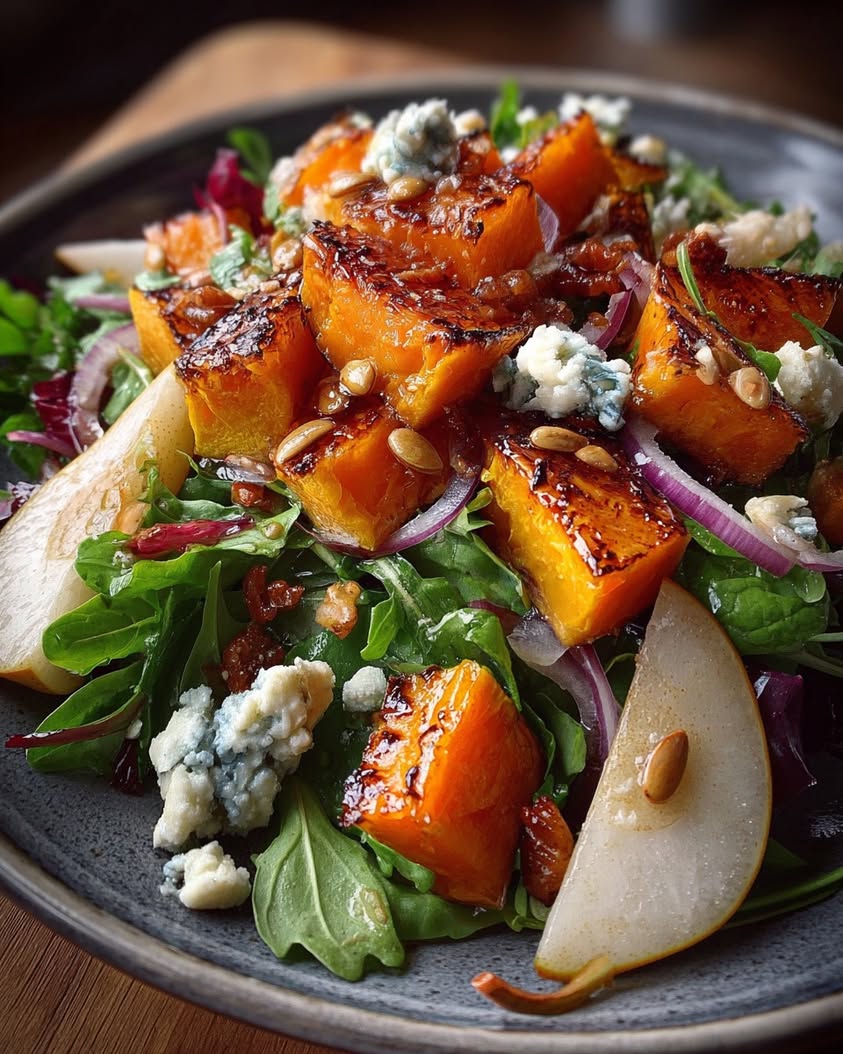
Caramelized Red Kuri Squash Salad: A Symphony of Autumn Flavors
Welcome to the ultimate guide for creating a stunning Caramelized Red Kuri Squash Salad with Blue Cheese, Pears & Honeyed Pumpkin Seeds. This recipe masterfully blends sweet, savory, and tangy notes into a single, show-stopping dish. Consequently, it is perfect for elevating your weeknight dinners or impressing guests at a festive gathering. Moreover, the combination of warm, caramelized squash with cool, crisp pears and creamy blue cheese creates a textural experience that is truly unforgettable. Ultimately, this salad celebrates the very best of fall produce in a beautiful and delicious way.
Imagine the deep, nutty sweetness of roasted Red Kuri squash, its edges perfectly crisped and caramelized. Then, picture that warmth contrasted with slices of juicy, ripe pear and the bold, tangy punch of quality blue cheese. Finally, a generous sprinkle of homemade honeyed pumpkin seeds adds a crucial layer of sweet crunch. This Caramelized Red Kuri Squash Salad is not just a side dish; it is a centerpiece. Therefore, it brings a restaurant-quality presentation and complex flavor profile to your home table with surprisingly simple techniques.
Furthermore, this recipe is designed for success. It breaks down each component, from selecting the perfect squash to achieving that ideal caramelization. Additionally, we will explore make-ahead strategies, dietary adaptations, and pro tips to ensure your salad is flawless every time. Whether you are a seasoned cook or a kitchen novice, this guide will equip you with everything needed to create this autumn masterpiece. So, gather your ingredients and prepare to make a Caramelized Red Kuri Squash Salad that will become a seasonal favorite.
Quick Recipe Highlights
- Flavor Profile: This Caramelized Red Kuri Squash Salad delivers a perfect balance. The natural sweetness of the squash and pears contrasts beautifully with the salty, funky blue cheese. Meanwhile, the honeyed seeds and a simple vinaigrette tie all the elements together harmoniously.
- Texture: Enjoy a fantastic textural journey. You get creamy squash, crisp pear, crunchy seeds, and tender greens in every bite. Consequently, this combination keeps the palate engaged and makes the salad satisfyingly substantial.
- Aroma: The roasting squash fills your kitchen with a warm, nutty, and sweet fragrance. Additionally, toasting the pumpkin seeds releases a toasty aroma, while the blue cheese adds a sharp, earthy note that completes the sensory experience.
- Visual Appeal: This dish is a feast for the eyes with its vibrant orange squash, green lettuce, white pear, and crumbled blue cheese. Ultimately, the colorful presentation makes it ideal for holiday tables or special dinners.
- Skill Level Needed: This is an accessible recipe for most home cooks. Basic knife skills for cutting squash and simple roasting techniques are the primary requirements. Therefore, even beginners can achieve impressive results.
- Special Equipment: You only need a sturdy baking sheet, a sharp chef’s knife, and a small skillet. A mandoline for slicing the pear is helpful but not essential. In other words, no fancy gadgets are required.
Recipe Overview
- Difficulty Level: We rate this Caramelized Red Kuri Squash Salad as “Easy.” The steps are straightforward: chop, roast, toast, and assemble. While caramelizing the squash requires attention, it is a simple, hands-off process in the oven. The most technical part is balancing the flavors in the final assembly, which is easily guided by taste.
- Category: This recipe falls squarely into the salad category, but it is a hearty, main-dish salad. It also works beautifully as a substantial side dish for autumn meals. Furthermore, it fits into healthy eating and seasonal cooking categories.
- Cuisine: This dish draws inspiration from modern American farm-to-table cuisine. It utilizes classic fall ingredients popular in European and North American cooking. The use of blue cheese nods to French traditions, while the squash is a staple of New World harvests.
- Cost: The cost is moderate, largely dependent on the price of blue cheese and out-of-season pears. Red Kuri squash is typically affordable in autumn. Using bulk pumpkin seeds and making your own dressing keeps costs down compared to restaurant versions.
- Season: This is the quintessential fall and early winter salad. Red Kuri squash and pears are at their peak sweetness during these months. The warm, roasted elements are particularly comforting as the weather turns cooler.
- Occasion: It is perfect for Thanksgiving, Friendsgiving, or a cozy weekend dinner party. It also makes an elegant yet simple weeknight meal. Moreover, it is impressive enough for holiday entertaining but simple enough for a family supper.
Why You’ll Love This Recipe
First and foremost, you will adore the incredible taste and texture of this Caramelized Red Kuri Squash Salad. The squash becomes intensely sweet and almost creamy inside while developing delightful crispy edges. Then, the juicy pear cuts through the richness, and the blue cheese provides a sharp, salty counterpoint that makes each bite exciting. The honeyed pumpkin seeds are the final touch, offering a caramelized crunch that ties every flavor together. Consequently, this salad is far from boring; it is a complex and satisfying dish that delights the senses.
Next, consider the convenience and preparation benefits. Although it looks elegant, the recipe involves simple, manageable steps. You can roast the squash and toast the seeds simultaneously on one tray. Meanwhile, the vinaigrette whisks together in seconds. This efficient use of time and oven space means you are not juggling multiple complicated tasks. Therefore, you can create a stunning meal without spending all day in the kitchen, making it perfect for busy cooks who still want to eat well.
Furthermore, this Caramelized Red Kuri Squash Salad packs a serious nutritional punch. Red Kuri squash is loaded with beta-carotene, vitamin A, and fiber. Pears add additional fiber and vitamin C. Pumpkin seeds are a great source of plant-based protein, magnesium, and healthy fats. Using a simple olive oil vinaigrette instead of a creamy dressing keeps it light and heart-healthy. Altogether, this salad is a powerhouse of vitamins, minerals, and antioxidants that support overall wellness.
Additionally, the social and entertaining value is immense. This salad is a guaranteed conversation starter at any potluck or dinner party. Its beautiful presentation shows care and thoughtfulness. Guests will be impressed by the professional-looking result, and you can confidently serve it alongside other holiday favorites. Because it is both visually stunning and deliciously unique, it elevates any meal from ordinary to extraordinary. Ultimately, it is a recipe that makes you look like a culinary star.
Finally, it is cost-effective and accessible. The core ingredients are humble vegetables and seeds. A small amount of flavorful blue cheese goes a long way, so you do not need to buy an expensive large piece. Seasonal squash and pears are affordable at farmers’ markets in the fall. Compared to ordering a similar salad at a restaurant, making this Caramelized Red Kuri Squash Salad at home saves significant money while allowing you to control the quality of every component.
Historical Background and Cultural Significance
The story of this Caramelized Red Kuri Squash Salad begins with its central ingredient. Red Kuri squash, also known as Hokkaido squash, originated in Japan. It is a variety of the species Cucurbita maxima, which includes other winter squashes like Hubbard and Kabocha. This squash was cultivated for its sweet, dense flesh and edible skin. Its journey to Western kitchens is part of a broader exchange of New World crops, as squashes are native to the Americas. Consequently, the use of Red Kuri in modern salads represents a beautiful fusion of global food traditions.
Culturally, the combination of fruit, cheese, and nuts in salads has deep roots in European cuisine. Think of the classic pear and walnut salad from France or the apple and cheddar combinations from Britain. This Caramelized Red Kuri Squash Salad follows that esteemed tradition of balancing sweet and savory, soft and crunchy. The act of roasting squash to concentrate its sugars is a timeless technique used across cultures to transform hardy vegetables into delectable dishes, especially in colder months when fresh produce was historically scarce.
The recipe has evolved significantly with modern cooking trends. The farm-to-table movement championed the use of seasonal, local produce in simple yet elegant preparations. This salad is a direct product of that philosophy. Furthermore, the increased interest in textural contrast and composed salads in fine dining trickled down to home kitchens. Today’s cooks seek out recipes that offer restaurant-quality presentation without excessive complexity. This Caramelized Red Kuri Squash Salad perfectly meets that demand, making gourmet techniques accessible to everyday cooks.
Regional variations of this concept abound. In the American South, you might find a similar salad with pecans and a bourbon vinaigrette. In the Mediterranean region, feta might replace blue cheese, and mint could be added. Some versions incorporate grains like farro or quinoa to make it even heartier. The core idea—sweet roasted squash paired with tangy cheese and fruit—is wonderfully adaptable. This particular version with Red Kuri squash, blue cheese, and pears has become a modern classic in its own right, celebrated for its perfect harmony of autumn flavors.
Ingredient Deep Dive
Let us start with the star: Red Kuri Squash. This Japanese variety is prized for its smooth, sweet flavor and fine texture, often compared to a cross between sweet potato and pumpkin. Unlike many winter squashes, its thin, edible skin eliminates tedious peeling. Nutritionally, it is a powerhouse of beta-carotene, which converts to vitamin A, crucial for vision and immunity. It also provides vitamin C, potassium, and fiber. Select squash that feels heavy for its size with a deep, consistent orange hue and no soft spots. Store whole squash in a cool, dark place for months. If unavailable, substitute with peeled butternut squash or kabocha.
Next, the Blue Cheese. This category includes varieties like Roquefort, Gorgonzola, and Stilton, each with a distinct sharpness and creaminess. Its bold flavor means a little goes a long way in this Caramelized Red Kuri Squash Salad. Blue cheese offers calcium and protein but is also high in sodium and saturated fat, so moderation is key. For the best experience, buy a small wedge from the cheese counter and crumble it yourself; pre-crumbled cheese often contains anti-caking agents that affect melt and texture. Store tightly wrapped in the fridge. For a milder taste, try a creamy Gorgonzola Dolce. For a dairy-free version, a aged almond cheese or a tahini-lemon drizzle can mimic the tang.
Now, consider the Pears. Choose ripe but firm varieties like Bosc or Anjou that hold their shape when sliced. Their juicy sweetness and slight granular texture provide a crucial contrast to the soft squash and sharp cheese. Pears are an excellent source of dietary fiber, particularly in the skin, and contain vitamin C and potassium. To test ripeness, gently press near the stem; it should yield slightly. Speed up ripening by placing pears in a paper bag. To prevent browning after slicing, toss them with a little lemon juice. If pears are out of season, crisp apple slices or even persimmon make wonderful seasonal substitutes.
Finally, the Honeyed Pumpkin Seeds. Pepitas, or hulled pumpkin seeds, are the foundation. Toasting them enhances their nutty flavor and crunchy texture. Honey adds a glossy, sweet coating that caramelizes as it cools. Pumpkin seeds are rich in magnesium, zinc, iron, and plant-based protein. For the best crunch, toast them in a dry pan until they just begin to pop before adding the honey. Use raw, unsalted seeds for maximum control over flavor. For a vegan version, substitute maple syrup or agave nectar for the honey. Store any extra seeds in an airtight container—they make a fantastic snack or salad topping for days.
Common Mistakes to Avoid
- Using Overly Soft Pears: Slicing pears that are too ripe results in a mushy, unappealing texture in your Caramelized Red Kuri Squash Salad. They will not provide the necessary crisp contrast. Always select pears that are firm to the touch at the stem end for the best bite.
- Crowding the Baking Sheet: Placing squash pieces too close together on the pan causes them to steam instead of caramelize. For perfect caramelization, ensure each piece has space around it. Use two sheets if necessary to avoid overlapping.
- Underseasoning the Squash: Winter squash needs ample seasoning before roasting. Do not be shy with salt and pepper. Proper seasoning enhances the natural sweetness and ensures the squash itself is flavorful, not just a bland vehicle for the dressing and cheese.
- Burning the Pumpkin Seeds: Honey burns quickly. The key is to toast the dry seeds first, then briefly coat them in honey off the direct heat, allowing the residual pan warmth to do the work. Stir constantly to prevent scorching.
- Adding Blue Cheese Too Early: If you crumble the blue cheese onto the warm squash or assemble the salad while components are hot, the cheese will melt into a messy paste. Always let the squash cool slightly before assembling to maintain distinct, crumbly cheese pieces.
- Skipping the Acid in the Dressing: The rich squash, sweet pears, and fatty cheese all need balance. A dressing without enough acid (vinegar or lemon juice) will taste flat and heavy. Always taste your vinaigrette and adjust the acid until it has a bright, clean flavor.
- Cutting Squash Pieces Unevenly: Inconsistent sizes lead to uneven cooking. Some pieces will be burnt while others are undercooked. Take time to cut the squash into uniform half-moons or cubes for consistent caramelization throughout the batch.
- Using Stale Pumpkin Seeds: Old seeds can have a rancid flavor that will ruin the topping. Always smell your raw pumpkin seeds before using. They should smell nutty and fresh, not bitter or paint-like.
Essential Techniques
Caramelizing Squash: This technique is vital for developing deep, concentrated flavor in your Caramelized Red Kuri Squash Salad. Caramelization occurs when the natural sugars in the squash brown at high heat. To master it, ensure your oven is fully preheated and use a light coating of oil to conduct heat. Do not move the squash pieces too often; let them sit undisturbed on the hot pan to form a golden-brown crust. The common pitfall is impatience—opening the oven too frequently lowers the temperature. Visual cues for success are crispy, browned edges and a fork-tender interior.
Toasting and Honey-Coating Seeds: This two-step process maximizes texture and flavor. First, toast raw pumpkin seeds in a dry skillet over medium heat until they puff slightly and become fragrant. This dry-toasting ensures a crisp base. Then, remove the pan from heat before adding honey. The residual heat is enough to warm the honey into a thin coating without burning it. Stir vigorously to coat each seed. Spreading them on parchment to cool prevents clumping. The pitfall is adding honey to a hot pan still on the burner, which guarantees burnt, bitter seeds. Success looks like individually glossy, golden seeds that are crisp when cool.
Composing the Salad: Assembly order matters for texture preservation. Start with a base of crisp greens. Then, add the warm (not hot) squash, which will slightly wilt the greens in a pleasant way. Next, arrange the pear slices and sprinkle the crumbled blue cheese. Finally, add the honeyed pumpkin seeds just before serving so they retain their crunch. The technique is about layering flavors and textures thoughtfully rather than tossing everything together haphazardly. This ensures each component is distinct yet harmonious in the final Caramelized Red Kuri Squash Salad.
Pro Tips for Perfect Caramelized Red Kuri Squash Salad
First, roast the squash on parchment paper for easy cleanup, but for maximum caramelization, a bare baking sheet or one lined with foil works better as it gets hotter. Secondly, let the roasted squash cool for 5-10 minutes before adding to the greens; this prevents wilting the lettuce into a soggy mess. Third, use a vegetable peeler to shave extra blue cheese over the top for an elegant, fine finish. Fourth, make the honeyed pumpkin seeds in a double batch—they are addictive and store well for other salads or snacks.
Fifth, if your pears are not perfectly ripe, try poaching the slices in a simple syrup with a vanilla bean for a few minutes to enhance their sweetness and tenderness. Sixth, add a handful of robust herbs like torn sage or thyme leaves to the squash in the last five minutes of roasting for an aromatic depth. Seventh, for the dressing, consider using apple cider vinegar to complement the autumn flavors, or a sherry vinegar for a more sophisticated, nutty acidity. Eighth, serve the salad on a large, chilled platter to keep everything crisp and fresh during dinner.
Variations and Adaptations
Regional Variations: Give this Caramelized Red Kuri Squash Salad a regional twist. For a Southern U.S. version, use candied pecans instead of pumpkin seeds and a bourbon-mustard vinaigrette. A Mediterranean adaptation could feature crumbled feta, toasted pine nuts, and a lemon-oregano dressing. For a Nordic feel, substitute a hard, aged goat cheese and garnish with lingonberry jam thinned with a little vinegar for the dressing.
Seasonal Adaptations: While perfect for fall, this salad adapts year-round. In winter, use roasted sweet potato or beet. For spring, try roasted asparagus and fresh peas with goat cheese. A summer version could feature grilled zucchini or peaches and a basil vinaigrette. The template of roasted vegetable, fresh fruit, cheese, and crunchy seed is endlessly versatile.
Dietary Modifications: For a vegan Caramelized Red Kuri Squash Salad, omit the blue cheese and use a creamy tahini-lemon dressing or crumbled vegan feta. Add a sprinkle of nutritional yeast for a cheesy flavor. For a nut-free version, ensure your pumpkin seeds are processed in a dedicated facility or substitute roasted sunflower seeds.
Flavor Variations: Experiment with different cheese profiles. Sharp white cheddar offers a cleaner tang, while a creamy goat cheese provides a milder acidity. For a sweeter profile, use dried cranberries or cherries instead of fresh pear. A pinch of smoked paprika or cayenne on the squash before roasting adds a warm, spicy kick.
Texture Modifications: To add more heft, incorporate a cooked grain like farro, wild rice, or quinoa directly into the salad. For extra creaminess, add slices of ripe avocado just before serving. For more crunch, include thinly sliced radicchio or fennel in the green base.
Presentation Alternatives: Serve the salad deconstructed on a large board for a casual, interactive meal. For individual portions, use a ring mold to create a tall, elegant stack on each plate. Alternatively, serve the components in separate bowls and let guests build their own perfect bite.
Serving and Presentation Guide
Plating is key for this visually stunning Caramelized Red Kuri Squash Salad. Start with a large, wide platter or shallow bowl to prevent overcrowding. Arrange a bed of crisp greens as the foundation. Then, artfully place the warm squash pieces, slightly overlapping. Fan the pear slices in small groupings around the platter. Scatter the blue cheese crumbles and honeyed pumpkin seeds evenly over the top, ensuring every serving will get some. Finally, drizzle the vinaigrette in a zigzag pattern just before bringing it to the table.
For garnishing, fresh herb sprigs like parsley, thyme, or microgreens add a touch of color and freshness. Edible flowers, such as nasturtiums or pansies, make it exceptionally festive for a holiday meal. A final flurry of freshly cracked black pepper or a light dusting of flaky sea salt over the cheese enhances both flavor and visual appeal.
Traditional accompaniments include a simple roast chicken or turkey, making it a perfect Thanksgiving side. It also pairs wonderfully with a hearty soup like mushroom or lentil for a lighter dinner. For a complete vegetarian feast, serve it alongside a savory bread pudding or a lentil loaf.
Modern serving suggestions might include presenting it as a main course topped with grilled halloumi or seared scallops. For a brunch option, add a poached egg on top, letting the yolk become a rich, additional dressing. Serve it family-style on a large wooden board for a rustic, shareable centerpiece.
Temperature considerations are crucial. The squash should be warm or at room temperature, not piping hot, to preserve the lettuce and cheese. The pears and greens should be cold for contrast. Assembling the salad just minutes before serving ensures optimal textures—the warm squash slightly wilts the greens, the cheese stays crumbly, and the seeds remain crunchy.
For portion control, this recipe yields four generous main-course servings or six to eight smaller side servings. If serving as a side among many other dishes, a little goes a long way due to its rich flavors. Remember, guests can always come back for seconds of this show-stopping Caramelized Red Kuri Squash Salad.
Wine and Beverage Pairing
Selecting the right wine enhances the complex flavors of this Caramelized Red Kuri Squash Salad. The sweetness of the squash and pears, combined with the salty blue cheese, calls for a wine with good acidity and some sweetness. A German Riesling (Kabinett or Spätlese) is a classic pairing; its bright acidity cuts through the richness, and its hint of sweetness mirrors the dish. Alternatively, a creamy, oak-aged Chardonnay can stand up to the bold cheese and complement the squash’s creaminess. For red wine lovers, a light-bodied, low-tannin Pinot Noir with red fruit notes works surprisingly well without overpowering the salad.
For non-alcoholic alternatives, consider a sparkling apple cider or a pear-infused sparkling water. The effervescence cleanses the palate between bites of rich cheese and squash. A tart cherry juice spritzer (mixed with club soda) provides a sweet-tart balance that mimics a good wine pairing. Iced herbal tea, like apple cinnamon or rooibos, served slightly sweetened, also complements the autumn flavors beautifully.
If serving this salad as part of a brunch or lunch, coffee and tea pairings are excellent. A medium-roast coffee with nutty or chocolate notes will not clash with the salad’s flavors. For tea, a black tea like Earl Grey or a spiced chai pairs wonderfully, as the bergamot or spices echo the complex notes in the dish. Serve these beverages hot to contrast the cool elements of the salad.
Always consider serving temperature. White wines and sparkling non-alcoholic drinks should be chilled but not ice-cold, as extreme cold mutes flavor. Red wine should be served slightly cooler than room temperature. Present beverages in appropriate glassware to elevate the entire dining experience alongside your beautiful Caramelized Red Kuri Squash Salad.
Storage and Shelf Life
Proper storage is essential for maintaining quality. Store leftover Caramelized Red Kuri Squash Salad components separately for best results. Place cooled roasted squash in an airtight container in the refrigerator for up to 4 days. Store sliced pears in a container with a squeeze of lemon juice to prevent browning. Keep blue cheese tightly wrapped in its original paper or wax paper, then in a sealed bag. Honeyed pumpkin seeds should be kept at room temperature in an airtight container to preserve crunch. The undressed greens can be stored in a salad spinner or a bag with a paper towel.
Assembled salad does not store well and will become soggy. If you must store leftovers, keep them in a shallow container for no more than a day, but expect the greens to wilt and the seeds to soften. The ideal strategy is to only assemble what you will eat immediately.
Signs of spoilage include an off or sour smell from the squash, slimy texture on the greens or pears, or mold on the cheese (beyond its intended blue veins). Discard any component that shows these signs. The honeyed seeds may become sticky or lose their crunch over time but are generally safe if kept dry.
Reheating instructions apply only to the squash. To restore its warmth and texture, reheat it in a 350°F oven for about 10 minutes or in a skillet over medium heat until warmed through. Avoid the microwave, as it can make the squash rubbery and steam it instead of re-crisping it.
Freezing is not recommended for the assembled salad or its fresh components. However, you can freeze plain roasted squash puree for future soups or mashes. The texture of thawed squash chunks will be too mushy for salad use.
Make Ahead Strategies
A smart prep timeline makes serving this Caramelized Red Kuri Squash Salad stress-free. Up to two days ahead, wash and thoroughly dry your salad greens; store them in the fridge in a salad spinner or a bag with a paper towel. The day before, roast the squash. Let it cool completely, then store it in the refrigerator. Also, make the honeyed pumpkin seeds and store them at room temperature. Prepare the vinaigrette and keep it in a jar in the fridge.
On the day of serving, take the squash out of the fridge an hour before assembling to take the chill off. Slice the pears just before assembly to prevent browning. Crumble the blue cheese. This staged approach means that when it is time to eat, you simply need to arrange the components on a platter and drizzle with dressing. The total active time drops to just minutes.
Assessing quality impact is important. Pre-roasted squash may soften slightly but will still be delicious. The seeds retain their crunch for days if sealed properly. The dressing may solidify in the fridge; simply let it warm up and shake vigorously before using. The only element that must be absolutely fresh is the sliced pear.
For assembly tips, build the salad in layers on the platter but wait to add the final dressing until the moment you serve. You can even arrange the greens, squash, and pears on the platter, cover loosely with a damp paper towel, and refrigerate for up to an hour before adding the cheese, seeds, and dressing.
Scaling Instructions
Halving this Caramelized Red Kuri Squash Salad recipe is straightforward for a smaller meal. Use half a small squash, one pear, and proportionally reduce all other ingredients. The roasting time for the squash may decrease slightly, so check for doneness 5 minutes early. Use a smaller baking sheet to ensure the squash still has room to caramelize properly. The honeyed seeds recipe halves easily in a small skillet.
Doubling or tripling the recipe is perfect for a crowd. Use multiple baking sheets, rotating them in the oven halfway through cooking to ensure even caramelization. You may need to roast the squash in batches. For the seeds, toast them in batches as well to avoid steaming; coat each batch with honey separately. Mix the dressing in a larger jar or bowl. Consider presenting the salad on two separate platters to maintain a beautiful, uncrowded presentation.
Equipment adjustments are minimal. For large batches, a commercial-sized sheet pan or roasting pan is helpful. A very large mixing bowl is useful for tossing greens with a portion of the dressing before plating. For small batches, a quarter-sheet pan or even a toaster oven can work for roasting the squash.
Timing modifications are key when scaling. While prep time increases linearly, oven space may limit cooking time. Factor in batch roasting. Assembly time will also increase, so enlist help for arranging the platters. When doubling, you might not need to double the dressing exactly; start with 1.5 times the recipe and adjust to taste, as overdressing can ruin the salad.
Nutritional Deep Dive
This Caramelized Red Kuri Squash Salad offers a balanced macronutrient profile. It provides healthy complex carbohydrates from the squash and pear, along with a significant amount of dietary fiber. The olive oil, blue cheese, and pumpkin seeds contribute healthy monounsaturated fats, saturated fats (from the cheese), and plant-based fats. The salad contains moderate protein from the cheese and seeds. It is not a high-protein meal on its own, making it ideal paired with a grilled protein source for a complete dinner.
The micronutrient analysis is impressive. Red Kuri squash is exceptionally high in vitamin A (from beta-carotene), vital for eye health and immunity. Pears contribute vitamin C and copper. Pumpkin seeds are a top source of magnesium, zinc, and iron. Blue cheese provides calcium and vitamin B12. The olive oil in the dressing is rich in vitamin E and polyphenols, potent antioxidants.
Overall health benefits include supporting digestive health through high fiber content, promoting heart health with unsaturated fats, and boosting the immune system with vitamins A and C. The combination of fiber, healthy fats, and protein also promotes satiety, helping to regulate appetite. The use of whole, unprocessed ingredients minimizes added sugars and unhealthy additives.
For dietary considerations, this salad is naturally gluten-free. It is vegetarian but not vegan due to the cheese and honey. For those monitoring sodium, be mindful of the blue cheese and added salt; you can reduce both. For weight management, this is a nutrient-dense, voluminous salad that can be very filling, helping to control overall calorie intake when enjoyed as a main course.
Dietary Adaptations
Gluten-Free: This Caramelized Red Kuri Squash Salad is naturally gluten-free. Simply ensure that any pre-packaged ingredients like pumpkin seeds or vinegar are certified gluten-free, as cross-contamination can sometimes occur during processing.
Dairy-Free/Vegan: Omit the blue cheese. For creaminess and tang, make a dressing from blended soaked cashews, lemon juice, nutritional yeast, and a pinch of salt. Alternatively, use a commercial vegan feta or a tahini-lemon drizzle. Replace honey with maple syrup or agave nectar for the seeds.
Low-Carb/Keto: Reduce or omit the pear, as it contains natural sugars. Increase the amount of blue cheese and pumpkin seeds for fat and protein. You can also add more non-starchy greens like arugula or spinach. Be cautious with the amount of honey used on the seeds, or use a keto-friendly sweetener.
Paleo: Omit the blue cheese. Use a dressing of olive oil, lemon juice, and mustard. Ensure the pumpkin seeds are sweetened with raw honey. The salad then consists of vegetables, fruit, seeds, and healthy fats, aligning with paleo guidelines.
Low-FODMAP: Replace the pear with up to ½ cup of sliced strawberries or orange segments, which are low-FODMAP in that serving size. Use a firm, low-FODMAP cheese like aged cheddar or feta instead of blue cheese. Limit the squash to a ½ cup serving per person to stay within Monash University guidelines.
Troubleshooting Guide
Squash is Soggy, Not Caramelized: This usually means the squash was too wet or crowded on the pan. Next time, pat the squash pieces dry after cutting, and ensure they are in a single layer with space between them. Also, verify your oven temperature with an independent thermometer; an oven running cool will steam food instead of roasting it.
Salad Dressing Tastes Flat or Too Sharp: A flat dressing needs more acid or salt. Add vinegar or lemon juice by the teaspoon until the flavor brightens. If it is too sharp, balance it with a pinch of sugar or a little more oil and honey. Always taste and adjust the dressing on a piece of lettuce before tossing the entire salad.
Pumpkin Seeds are Sticky or Clumped Together: This happens if the honey coating was too thick or the seeds were not spread out to cool quickly. To fix, re-spread them on a parchment-lined sheet and warm in a 250°F oven for 5-10 minutes to re-crisp, then separate while warm. For future batches, use less honey and spread seeds immediately.
Greens Wilted Immediately Upon Assembly: You likely added the squash while it was too hot. The squash should be warm, not scalding hot. Let it cool for at least 10 minutes after roasting. Alternatively, you can serve the squash on the side or at the bottom of the bowl with the greens piled on top to control wilting.
Blue Cheese Melts into a Mess: Cheese should be added at the very end, just before serving, and the squash should be no warmer than room temperature. If your kitchen is very warm, chill the crumbled cheese for 10 minutes before sprinkling it over the salad.
Recipe Success Stories
The community feedback for this Caramelized Red Kuri Squash Salad has been overwhelmingly positive. Many home cooks report it becoming their go-to fall entertaining dish, often receiving requests for the recipe from guests. One common theme is surprise at how simple it is to achieve such an impressive result. Readers love that it feels special without requiring exotic ingredients or days of preparation.
Variation successes abound. One reader substituted delicata squash (with its edible skin) and added cooked wild rice for a heartier main course, reporting it was a huge hit. Another used maple syrup instead of honey for a vegan version and added toasted walnuts, creating a delicious nuttier profile. A family with kids mixed the components into whole-wheat pasta with a little extra dressing for a kid-friendly pasta salad twist.
Photography tips from successful makers emphasize natural light. They suggest shooting the salad near a window to highlight the vibrant colors of the squash against the white cheese and green lettuce. Overhead shots on a rustic wooden table or dark slate platter make the colors pop. The key is to photograph immediately after the final drizzle of dressing, when everything looks freshest and most glistening.
I’m Shaykee—born in Morocco, seasoned across continents. From airplane galleys to home kitchens, I share the flavors and stories that shaped my journey.