
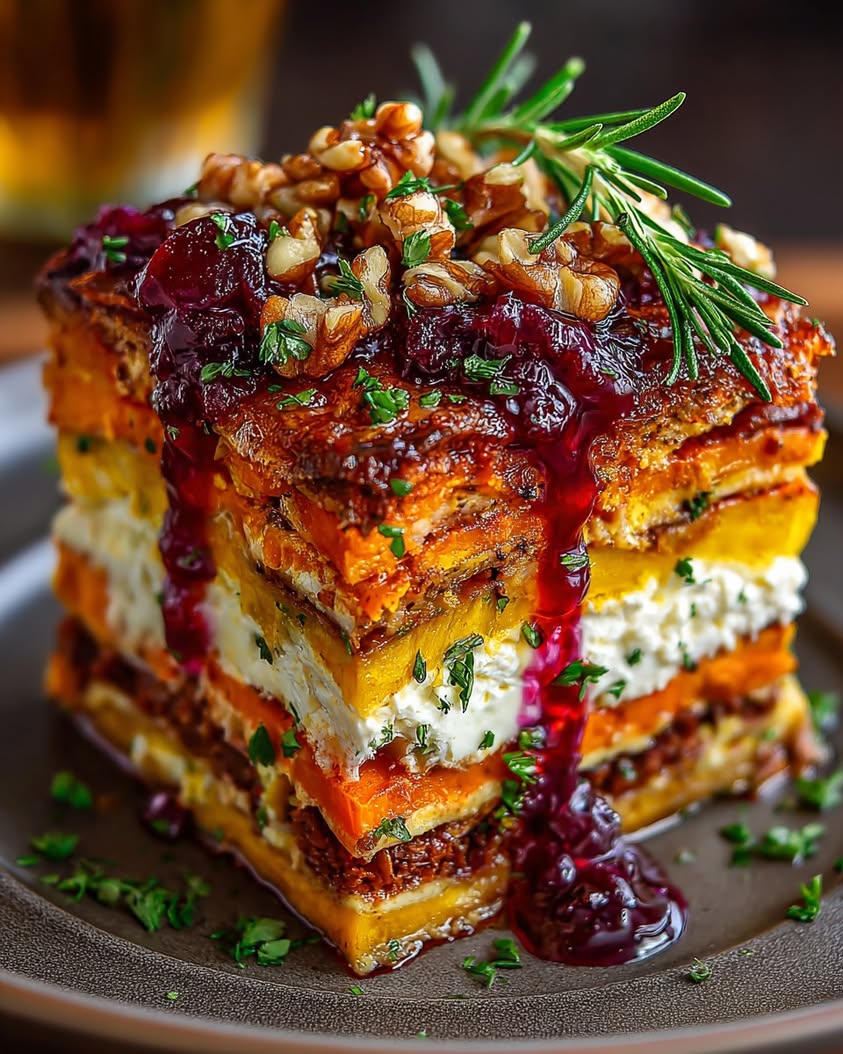
Savory-sweet veggie lasagna layers with a honey-cranberry glaze. A stunning, hearty holiday side dish!
Imagine a dish that captures the very essence of the holiday season in every single bite. This layered sweet potato, butternut squash, carrot lasagna with feta, walnuts, and cranberry-honey glaze does exactly that. Consequently, it transforms humble root vegetables and winter squash into a spectacular centerpiece worthy of your most festive table. Moreover, it masterfully balances earthy, savory, sweet, and tangy flavors in a beautiful, sliceable format that will have everyone asking for the recipe.
The beauty of this savory-sweet veggie lasagna layers with a honey-cranberry glaze lies in its thoughtful composition. Thinly sliced sweet potato and butternut squash stand in for traditional pasta, creating tender, flavorful layers that hold their shape. Meanwhile, a rich carrot puree acts as a velvety sauce, and crumbled feta provides a salty punch. Finally, a glossy cranberry-honey glaze and crunchy toasted walnuts finish the dish with festive flair and contrasting texture. This is not just a side dish; it’s a culinary celebration on a plate.
This recipe is perfect for anyone seeking a show-stopping vegetarian main course or a substantial holiday side dish that goes far beyond the ordinary. It’s a labor of love, but the process is meditative and the result is incredibly rewarding. Furthermore, the entire dish can be assembled ahead of time, making your holiday meal prep significantly less stressful. Ultimately, you’ll create a memorable, hearty dish that highlights the best produce of the season.
Quick Recipe Highlights
- Flavor Profile: This dish offers a complex symphony of tastes. You get the natural sweetness from the roasted root vegetables, a sharp saltiness from the feta cheese, and a bright, tangy-sweet finish from the cranberry-honey glaze. Additionally, the toasted walnuts contribute a deep, nutty richness that ties everything together beautifully.
- Texture: Each bite delivers a delightful contrast. The vegetable layers become meltingly tender yet hold their structure, while the carrot puree is luxuriously smooth. Conversely, the crumbled feta offers little pockets of creaminess, and the walnut topping provides an essential, satisfying crunch that elevates the entire eating experience.
- Aroma: As this lasagna bakes, your kitchen will fill with an irresistible fragrance. First, you’ll smell the earthy sweetness of roasting sweet potatoes and squash. Then, aromatic notes of thyme and rosemary will waft through the air. Finally, the finishing glaze of honey and cranberries adds a final layer of warm, fruity perfume that signals something special is coming to the table.
- Visual Appeal: This dish is a feast for the eyes with its stunning vertical layers of orange and yellow vegetables. When sliced, the cross-section reveals beautiful stripes, much like a traditional lasagna. The deep red glaze drizzled over the top and the rustic sprinkle of walnuts and fresh herbs create a picture-perfect presentation that looks both elegant and hearty.
- Skill Level Needed: This recipe is best suited for an intermediate home cook. It requires patience for slicing vegetables evenly, making a simple puree, and carefully assembling the layers. However, the techniques themselves—slicing, roasting, blending, and layering—are fundamental. With attention to detail, a confident beginner can certainly achieve excellent results.
- Special Equipment: A mandoline slicer is highly recommended to achieve uniformly thin slices of sweet potato and squash, which is crucial for even cooking. You will also need a good blender or food processor to create a perfectly smooth carrot puree. Finally, a sharp chef’s knife, a large baking dish, and parchment paper are essential for success.
Recipe Overview
- Difficulty Level: We classify this savory-sweet veggie lasagna as intermediate. The challenge lies not in complex techniques, but in the precision and assembly required. Slicing the vegetables thinly and uniformly is key, and layering them neatly takes a bit of time and care. However, each individual step is straightforward and manageable, making the overall process very achievable for a dedicated cook.
- Category: This versatile dish comfortably fits into multiple categories. Primarily, it serves as a spectacular vegetarian main course for holiday dinners or special occasions. Alternatively, it makes a hearty and substantial side dish alongside a roast turkey or ham. It’s also perfect for a festive potluck or a special weekend family meal.
- Cuisine: This recipe is a modern, vegetable-forward creation inspired by global flavors. It draws on the Italian concept of layering, utilizes Mediterranean ingredients like feta and walnuts, and incorporates a sweet-tart glaze common in American holiday cooking. Therefore, it’s a beautiful fusion dish that celebrates seasonal produce without being tied to one specific tradition.
- Cost: This is a reasonably economical dish, especially when root vegetables and squash are in season. Sweet potatoes, carrots, and butternut squash are typically inexpensive. The cost drivers are the feta cheese, fresh cranberries, and walnuts. Overall, you can create this impressive, feed-a-crowd dish for a fraction of the cost of a meat-centric centerpiece.
- Season: This recipe is quintessential fall and winter cooking. It features hearty, storage-friendly vegetables that are at their peak sweetness during the colder months. The warm spices and cranberry glaze directly evoke holiday flavors. While you could make it year-round, it truly shines as a seasonal celebration on your autumn or winter table.
- Occasion: This lasagna is designed for moments that call for something extraordinary. It’s ideal for Thanksgiving, Christmas, or a festive Friendsgiving gathering. Furthermore, it’s excellent for a special vegetarian dinner party or as the star of a cozy Sunday supper. Any time you want to impress with vibrant, comforting flavors, this is the dish to make.
Why You’ll Love This Recipe
First and foremost, the taste and texture appeal of this dish is utterly captivating. Each forkful delivers a harmonious blend of savory and sweet elements that dance on your palate. The tender, layered vegetables provide a hearty base, while the salty feta and crunchy walnuts introduce exciting contrasts. Meanwhile, the cranberry-honey glaze cuts through the richness with a burst of tangy brightness. This complex layering of flavors ensures that every bite is interesting and deeply satisfying, far surpassing any standard vegetable casserole.
From a convenience standpoint, this recipe offers significant preparation benefits despite its impressive appearance. Crucially, you can complete many components ahead of time. You can slice the vegetables, make the carrot puree, and even assemble the entire lasagna a day in advance. Consequently, on the day of your event, you simply need to bake it, allowing you to spend more time with your guests and less time stressing in the kitchen. This make-ahead flexibility is a game-changer for holiday entertaining.
Nutritionally, this savory-sweet veggie lasagna is a powerhouse. Sweet potatoes and butternut squash are loaded with beta-carotene, vitamin A, and fiber. Carrots contribute additional vitamins and antioxidants. Walnuts provide healthy fats and omega-3s, while feta offers protein and calcium. By using vegetables as the “pasta,” you create a dish that is naturally gluten-free and packed with nutrients. Therefore, you can feel good about serving a meal that is as nourishing as it is delicious.
For social and entertaining value, this dish is a true showstopper. Its stunning visual presentation guarantees it will be the center of attention at any potluck or dinner party. Moreover, it caters beautifully to diverse dietary needs, being vegetarian and gluten-free. It serves as a fantastic conversation starter, allowing you to share the story of how you created those beautiful layers. Ultimately, it demonstrates care and culinary skill, making your guests feel truly special.
Finally, this recipe is remarkably cost-effective and accessible. The primary ingredients are affordable, especially in season. You likely already have many of the pantry staples like olive oil, honey, and spices. Compared to preparing an expensive meat roast or seafood dish, this vegetable lasagna delivers incredible flavor and visual impact for a much lower cost. Additionally, the ingredients are readily available at any standard grocery store, making this impressive dish accessible to almost any home cook.
Historical Background and Cultural Significance
The origin story of this dish is a modern tale of culinary innovation and seasonal celebration. It doesn’t hail from a specific region but rather emerges from a contemporary desire to create centerpiece vegetarian dishes. Cooks began experimenting with vegetable slices as pasta substitutes, leading to the concept of “vegetable lasagna.” This particular recipe combines the American holiday tradition of sweet potato casserole and cranberry sauce with the Mediterranean flavors of feta and walnuts. Consequently, it represents a fusion of ideas focused on showcasing winter produce in an elegant, layered form.
Regarding cultural importance, this dish taps into several deep-seated food traditions. The act of layering food is central to Italian lasagna, a dish symbolizing abundance and family gathering. Using sweet potatoes and cranberries connects directly to North American Thanksgiving and harvest festivals, which celebrate bounty and gratitude. Meanwhile, incorporating feta cheese and walnuts nods to Eastern Mediterranean and Middle Eastern cuisines, where these ingredients are staples. Therefore, the recipe creates a new tradition that respectfully borrows from several old ones.
The evolution of the recipe follows broader food trends towards plant-based eating and vegetable-centric cuisine. As home cooks and chefs sought to move vegetables from the side of the plate to the center, techniques like thin-slicing and layering became popular. The addition of a sweet-tart glaze is a direct evolution from the classic sweet potato casserole with marshmallows, offering a more sophisticated, less cloying sweetness. Over time, these elements coalesced into the refined, balanced dish we have today, which celebrates vegetables without pretending to be something they’re not.
Regional variations of this concept are endless and encourage personalization. In the American South, you might find a version with pecans instead of walnuts and a bourbon-infused glaze. A Mediterranean variation could incorporate layers of spinach and use kefalotyri cheese instead of feta. For a Nordic twist, you could use parsnips and rutabaga with a lingonberry glaze. This adaptability is the recipe’s greatest strength; it provides a versatile template that can be tailored to local ingredients and tastes, ensuring its place in diverse culinary repertoires.
Ingredient Deep Dive
Sweet potatoes are the foundational layer of this lasagna, both in flavor and structure. Culturally, they have a long history in the Americas and are a staple in Southern U.S. and Caribbean cooking. Nutritionally, they are an excellent source of beta-carotene (which converts to vitamin A), vitamin C, manganese, and fiber. When selecting sweet potatoes, choose firm ones with smooth, unblemished skin. Store them in a cool, dark, well-ventilated place—not the refrigerator. For a substitution, you could use regular potatoes, though the flavor and color will be less vibrant.
Butternut squash contributes a delicate, nutty sweetness and beautiful orange hue. This winter squash is native to the Americas and is beloved for its versatility and long shelf life. It’s rich in vitamins A and C, potassium, and magnesium. Look for squash that feel heavy for their size with a firm, matte skin and a long, solid neck. Store whole squash in a cool, dark place for months. If you need a substitute, acorn squash or pumpkin would work, though their textures and moisture contents differ slightly.
Carrots form the velvety “sauce” layer in this unique lasagna. Historically cultivated for their aromatic leaves and seeds before the root was consumed, carrots are now a global kitchen staple. They are packed with beta-carotene, fiber, vitamin K1, and antioxidants. Choose firm, smooth carrots with bright color; avoid bendable or cracked ones. Refrigerate them in a plastic bag. For a twist, you could use roasted parsnips for the puree, which would offer a more earthy, peppery flavor profile.
Feta cheese provides the essential salty, tangy counterpoint to the sweet vegetables. This brined cheese has Protected Designation of Origin status in Greece, where it must be made from sheep’s milk or a sheep-goat blend. It offers protein, calcium, and probiotics. Look for feta stored in brine for the best flavor and texture. If you need a dairy-free version, a firm, salted tofu crumble or a vegan feta alternative can work. For a different cheese profile, ricotta salata or goat cheese would be delicious substitutes.
The cranberry-honey glaze is the crowning glory that defines this holiday side dish. Cranberries are one of North America’s native fruits, traditionally used by Indigenous peoples and now synonymous with Thanksgiving. They are famous for their high vitamin C content and proanthocyanidins, which support urinary tract health. Use fresh or frozen cranberries. Honey, a natural sweetener used for millennia, has antimicrobial properties. For a vegan glaze, maple syrup can replace honey. Orange juice or balsamic vinegar can add complexity to the glaze’s flavor.
Common Mistakes to Avoid
- Cutting Vegetables Too Thick: This is the most critical error. Overly thick slices will not soften properly during baking, resulting in a lasagna with crunchy, undercooked layers. Always use a mandoline for uniform, paper-thin slices, about 1/8-inch thick, to ensure they become tender and pliable.
- Skipping the Vegetable Roasting Step: Briefly roasting the sliced sweet potato and squash before assembly is not optional. This step drives off excess moisture, concentrates flavor, and starts the cooking process. If you skip it, you’ll release too much water into the lasagna, making it soggy instead of beautifully layered and firm.
- Using a Watery Carrot Puree: If your carrot puree is too loose, it will seep out and make the layers slide apart. To avoid this, ensure your cooked carrots are thoroughly drained and blend them while still warm. Add the olive oil gradually until you achieve a thick, spreadable consistency, not a runny sauce.
- Overloading the Feta Cheese: While feta adds wonderful saltiness, using too much can make the dish overly salty and mask the delicate sweetness of the vegetables. Stick to the measured amount and crumble it finely for even distribution. Remember, you can always add a little extra as a garnish after baking.
- Neglecting to Toast the Walnuts: Raw walnuts can have a slightly bitter flavor and lack the deep, aromatic crunch of toasted nuts. Always toast walnuts in a dry skillet or the oven until fragrant. This simple step exponentially improves their flavor and texture in the final dish.
- Applying the Glaze Too Early: Adding the cranberry-honey glaze before baking will cause it to burn and become bitter due to the sugar content. The glaze should always be warmed and drizzled over the fully baked and slightly cooled lasagna just before serving to maintain its vibrant flavor and glossy appearance.
- Not Letting it Rest Before Slicing: Cutting into the lasagna immediately after it comes out of the oven will cause it to fall apart. The layers need time to set as they cool slightly. Let it rest for at least 15-20 minutes; this allows the structure to firm up, enabling you to cut clean, beautiful slices.
- Using a Dull Knife for Slicing: A dull knife will crush and drag through the delicate vegetable layers instead of cutting cleanly. Use a very sharp chef’s knife or serrated knife to get through the crispy top and tender interior without mangling your beautiful presentation.
Essential Techniques
Mandoline Slicing is the most important technique for this savory-sweet veggie lasagna. Using a mandoline ensures every slice of sweet potato and butternut squash is perfectly uniform in thickness. This uniformity is non-negotiable for even cooking and stable layering. Always use the safety guard to protect your fingers. For mastery, practice on a single vegetable first to get a feel for the pressure and motion. The visual cue for success is a stack of translucent, paper-thin slices that are flexible but not tearing.
Creating a Thick Vegetable Puree is crucial for the binding “sauce” layer. The goal is a spreadable paste, not a soup. To achieve this, drain your boiled carrots extremely well and blend them while hot, as they puree more smoothly. Add olive oil slowly while the blender is running to emulsify it into the carrots. The pitfall is adding liquid too quickly. Success is evident when the puree holds its shape on a spoon and doesn’t drip, ensuring it stays put between the vegetable layers.
Layering with Intention builds the structural integrity of the dish. Start with a thin layer of carrot puree to prevent sticking. Then, shingle the vegetable slices tightly, slightly overlapping like roof tiles. This overlap is key; it creates a cohesive layer that bakes into a solid sheet. Press down gently after each layer to eliminate air pockets. The common mistake is laying slices haphazardly, which leads to gaps and instability. A successful layer looks neat, compact, and covers the entire surface area.
Blind Baking with Parchment and Weights is the secret to a firm, sliceable base. After assembling the first few layers, you cover the top with parchment paper and pie weights or dried beans. This weights the layers down during the initial bake, pressing them together and forcing out steam, which prevents a watery result. The technique is important because it compacts the structure. Remove the weights and parchment for the final bake to allow the top to brown and crisp beautifully.
Pro Tips for Perfect Savory-Sweet Veggie Lasagna
First, lightly oil and season your vegetable slices before the initial roast. Toss them in a bowl with a tablespoon of olive oil, salt, pepper, and your dried herbs. This ensures every layer is seasoned from within, not just on the surface, resulting in a more deeply flavorful final dish.
Second, let your carrot puree cool slightly before assembling. A scalding-hot puree will start to cook the bottom vegetable layers on contact, which can make them gummy. A warm puree is easier to spread evenly and sets up perfectly as the lasagna bakes.
Third, use the back of a spoon or a small offset spatula to spread the carrot puree. This gives you much more control than using a knife, allowing you to create a thin, even layer without disturbing the vegetable slices beneath it.
Fourth, rotate your baking dish halfway through the cooking time. Ovens often have hot spots, and rotating the dish ensures the lasagna browns and cooks evenly on all sides, preventing one corner from being overdone while another is undercooked.
Fifth, reserve a small handful of walnuts and feta for garnish. Sprinkling these fresh on top after adding the glaze adds a second layer of texture and visual appeal, making the dish look more professional and inviting.
Sixth, warm your serving plates. Placing a slice of hot lasagna on a cold plate will cause it to cool down too quickly. Warm your plates in the oven (on a low setting) or with hot water for a truly restaurant-quality serving experience.
Seventh, if your glaze is too thick after reducing, simply whisk in a teaspoon of warm water at a time until it reaches a drizzle-able consistency. Conversely, if it’s too thin, simmer it for a few more minutes to reduce and thicken.
Eighth, use any leftover vegetable slices. If you have extra roasted sweet potato or squash slices, don’t waste them. Toss them into a salad, add them to a grain bowl, or enjoy them as a cook’s snack—they’re delicious on their own.
Variations and Adaptations
For regional variations, consider the ingredients local to your area. A Southern U.S. version could use sweet potatoes, pecans, and a glaze with a splash of bourbon. A Mediterranean take might incorporate layers of sautéed spinach or chard and swap feta for halloumi. A Nordic adaptation could feature parsnips and rutabagas with a tart lingonberry glaze, showcasing a different palette of winter roots.
Seasonal adaptations keep this recipe exciting year-round. In spring, try thin slices of zucchini, yellow squash, and eggplant with a fresh herb puree. For summer, layers of roasted bell peppers, tomatoes, and basil pesto would be stunning. The autumn/winter version with squash and sweet potatoes is classic, but don’t be afraid to experiment with other hardy vegetables like celery root or golden beets.
Dietary modifications are straightforward. For a vegan version, omit the feta or use a commercial vegan feta, and substitute the honey in the glaze with maple syrup or agave. To make it nut-free, replace the walnuts with toasted pumpkin seeds (pepitas) or sunflower seeds for a similar crunch. For a lower-fat version, reduce the olive oil in the puree and use a light hand with the cheese.
Flavor variations can personalize the dish immensely. Add a layer of sautéed mushrooms or leeks for an earthy depth. Incorporate different herbs like sage or marjoram in place of thyme and rosemary. For a spicy kick, add a pinch of red pepper flakes to the carrot puree or a dash of cayenne to the vegetable roast.
Texture modifications can cater to different preferences. For a creamier interior, add a layer of ricotta cheese mixed with an egg and herbs between the vegetable strata. For extra crunch, sprinkle panko breadcrumbs mixed with Parmesan over the top for the last 10 minutes of baking. If you prefer a softer top, simply cover the dish with foil for the entire baking time.
Presentation alternatives offer creative freedom. Instead of a large rectangular lasagna, assemble individual portions in small ramekins or cast-iron skillets for a personalized touch. You could also create a “deconstructed” version, serving the roasted vegetable slices, carrot puree, crumbled feta, and glaze as separate components on a platter for guests to build their own stacks.
Serving and Presentation Guide
Plating techniques start with the slice. Use a sharp, thin-bladed knife to cut clean portions. Wipe the knife clean between slices for a neat appearance. Slide a flat spatula underneath the slice, supporting it from the bottom, and transfer it carefully to the center of a warm plate. Angle the slice slightly to show off the beautiful layered cross-section, which is the dish’s most impressive feature.
Garnishing ideas should enhance, not overwhelm. A final drizzle of the cranberry-honey glaze over and around the slice adds shine. Sprinkle the reserved toasted walnuts and feta crumbles on top. Fresh herb sprigs like thyme, rosemary, or even microgreens add a touch of color and freshness. A light dusting of smoked paprika or a twist of black pepper can provide a final flavor note and visual contrast.
Traditional accompaniments for this hearty holiday side dish include simple proteins that don’t compete for attention. A classic roast turkey, a glazed ham, or a herb-crusted pork loin are perfect partners. For a vegetarian feast, pair it with a lentil loaf or stuffed mushrooms. These mains complement the lasagna without duplicating its flavors or textures.
Modern serving suggestions might treat the lasagna as the main event. Serve it alongside a bright, bitter green salad dressed with a simple lemon vinaigrette to cut the richness. A side of garlicky sautéed greens like kale or Swiss chard would also be excellent. For a lighter meal, a cup of creamy tomato soup makes a comforting and colorful partner.
Temperature considerations are key. This dish is best served warm, not piping hot. Allowing it to rest and cool slightly firms up the structure and allows the flavors to meld. The glaze should be warm when drizzled so it flows easily. Serving on warmed plates maintains the ideal eating temperature from the first bite to the last.
Portion control tips are helpful given its richness. A single recipe yields eight generous servings as a main course or ten to twelve more modest portions as a side dish. Use a ruler or the lines on your baking dish as a guide for even slicing. Remember, this is a dense, satisfying dish; guests often need less than they think, especially with other items on the table.
Wine and Beverage Pairing
Wine pairings should complement the dish’s sweet, savory, and earthy notes. A medium-bodied white wine with good acidity, like an Oregon Pinot Gris or a French Viognier, can handle the sweetness and cut through the richness. For red wine lovers, a fruity, low-tannin option is best. A Beaujolais (Gamay) or a lighter-style Pinot Noir with bright red fruit flavors will harmonize beautifully without overpowering the vegetables. Avoid heavily oaked Chardonnays or bold, tannic reds like Cabernet Sauvignon, which can clash with the glaze and squash.
Non-alcoholic alternatives offer wonderful pairing opportunities. A sparkling apple cider provides effervescence and autumnal fruit notes that mirror the cranberry glaze. For a warmer option, a ginger-turmeric tea or a spiced apple tea complements the earthy spices in the lasagna. A tart cherry juice spritzer (mixed with sparkling water) can also echo the cranberry’s tangy flavor profile perfectly.
Coffee and tea pairings work well if serving this for a brunch or lunch. A medium-roast coffee with notes of caramel or nut would align with the toasted walnut and roasted vegetable flavors. For tea, consider a smoky Lapsang Souchong to contrast the sweetness, or a creamy Earl Grey to complement the rich, layered textures. Serve these beverages after the meal as a digestif rather than alongside.
Temperature considerations for beverages are standard. White wines and sparkling ciders should be chilled but not ice-cold, around 45-50°F, to allow their aromas to shine. Red wines should be served slightly cool, at about 55-60°F. Non-alcoholic sparkling drinks are best well-chilled. Warm teas and coffees should be served hot to provide a comforting contrast to the savory-sweet veggie lasagna.
Serving suggestions include offering a choice. When entertaining, set out both a white and a red wine option so guests can choose their preference. For non-alcoholic service, a large carafe of sparkling cider and a pot of spiced tea covers multiple bases. Always provide water on the table to cleanse the palate between bites of this flavorful and rich holiday side dish.
Storage and Shelf Life
Storage methods for leftovers are simple but important. Allow the lasagna to cool completely to room temperature, which should take no more than two hours to ensure food safety. Then, cover the baking dish tightly with plastic wrap or aluminum foil, or transfer individual slices to an airtight container. Properly stored, it will keep in the refrigerator for up to 4 days. The flavors often improve after a day, as they have more time to meld.
Temperature requirements are strict for food safety. Never leave the assembled or cooked lasagna at room temperature for more than two hours total. Refrigerate promptly at 40°F or below. When reheating, ensure the internal temperature reaches 165°F to eliminate any potential bacteria. Use a food thermometer to check, especially when reheating a thick portion from the refrigerator.
Container recommendations depend on the portion. For storing the whole dish, the original baking dish covered tightly is fine. For individual slices, stack them with a small piece of parchment paper between each slice in an airtight container to prevent them from sticking together. Glass containers are ideal as they don’t absorb odors and allow you to see the contents.
Signs of spoilage are easy to spot. Look for an off or sour smell, a significant change in texture (excessively mushy or slimy), or any visible mold growth, which may appear as fuzzy spots. If you see any of these signs, discard the entire portion immediately. When in doubt, remember the adage: when in doubt, throw it out.
Reheating instructions are crucial for restoring texture. The best method is to reheat individual slices in a 350°F oven, covered with foil, for 15-20 minutes until heated through. This method prevents further drying out. You can also use an air fryer for a crispier top. The microwave is a last resort, as it can make the layers soggy; if you must, use a low power setting and reheat in short bursts.
Freezing guidelines are possible but with caveats. You can freeze the fully baked and cooled lasagna for up to 2 months. Wrap the entire dish or individual slices tightly in plastic wrap, then in foil or place in a freezer-safe bag. Thaw overnight in the refrigerator before reheating. Note that the texture of the vegetables may become slightly softer after freezing and thawing, but the flavor will remain excellent.
Make Ahead Strategies
The prep timeline for this dish is very flexible, making it ideal for entertaining. You can roast and slice the sweet potatoes and squash up to 2 days in advance; store them layered with parchment paper in an airtight container in the fridge. The carrot puree can be made 3 days ahead and refrigerated. The cranberry glaze can be cooked and stored in a jar for up to a week. Finally, you can fully assemble the lasagna (without the final glaze and walnut topping) 1 day before baking. Cover tightly and refrigerate.
Storage between steps is straightforward. Keep prepped components in separate, labeled containers. Bring the carrot puree to a spreadable consistency by letting it sit at room temperature for 30 minutes or warming it slightly before assembling. If the vegetable slices seem dry after refrigeration, you can brush them very lightly with olive oil before layering.
Quality impact assessment of make-ahead steps is generally positive. In fact, letting the assembled lasagna rest overnight in the refrigerator allows the flavors to penetrate the vegetable layers more deeply, often improving the final taste. The only component that should always be added fresh is the walnut topping, to preserve its crunch. The glaze can be made ahead but is best warmed and applied just before serving.
Assembly tips for a make-ahead lasagna are key. When assembling a day ahead, press the layers down firmly before covering and refrigerating. The cold temperature will firm everything up. You may need to add 5-10 minutes to the baking time if putting a cold dish directly into the oven. Check for doneness by inserting a sharp knife into the center; it should slide in easily.
Reheating guidelines for a fully pre-baked dish are simple. If you’ve baked the lasagna ahead and want to reheat the whole thing, cover it with foil and warm in a 325°F oven for 25-35 minutes, until hot throughout. For individual slices, the oven or air fryer method described previously works best. Always add the fresh glaze and walnuts after reheating.
Fresh element additions are the final touch. No matter how much you prepare ahead, plan to toast the walnuts on the day of serving. Warm the pre-made glaze gently on the stovetop or in the microwave. Crumble the feta fresh. These last-minute steps ensure maximum flavor, texture, and visual appeal, making your pre-planning truly pay off.
Scaling Instructions
Halving the recipe is simple for smaller gatherings. Use an 8×8-inch baking dish. Precisely halve all ingredient quantities. The roasting and baking times may be slightly reduced—start checking for doneness about 10-15 minutes earlier than the original recipe suggests. The visual cue remains the same: the top should be golden brown and a knife should insert easily into the center. This scaling is perfect for a family of four or a cozy dinner for two with leftovers.
Doubling or tripling the recipe works well for large potlucks or events. Double or triple all ingredients. You will need to use multiple baking dishes; do not try to create a single, deeper lasagna, as the center will not cook properly. Roast the vegetables in batches to avoid steaming them in an overcrowded pan. Baking times may increase slightly for each full dish. Stagger the baking if oven space is limited, or consider using a convection oven setting for more even heat distribution.
Equipment adjustments are necessary when scaling. For a halved recipe, a smaller mandoline might be easier to handle, but any size works. For doubled recipes, ensure you have a large enough blender or food processor for the increased volume of carrot puree; you may need to blend in batches. Having multiple baking sheets for roasting the vegetables is essential to maintain proper airflow and browning when scaling up.
Timing modifications are mostly related to prep, not cooking. Scaling up will increase your hands-on prep time linearly—doubling the ingredients means roughly double the slicing and assembly time. The actual roasting and baking times per dish remain relatively constant. Factor in this extra prep time when planning your cooking schedule for a large event featuring this hearty holiday side dish.
Storage considerations change with scale. A single halved recipe yields leftovers that fit easily in standard refrigerator containers. For a doubled or tripled recipe, ensure you have enough airtight containers or space to cover and store the baking dishes themselves. If freezing, label each dish with the date and contents. Remember, you can also bake and freeze scaled-down portions in disposable aluminum pans for easy gift-giving or future meals.
Nutritional Deep Dive
The macro breakdown of this savory-sweet veggie lasagna is favorable for a balanced meal. A serving provides complex carbohydrates from the root vegetables, offering sustained energy. The olive oil and walnuts contribute healthy monounsaturated and polyunsaturated fats, including omega-3s from the walnuts. The feta cheese adds a moderate amount of protein and fat. This combination of macros helps keep you full and satisfied. It’s naturally lower in protein than a meat-based lasagna, so consider pairing it with a protein-rich side if needed.
Micronutrient analysis reveals a vitamin and mineral powerhouse. Sweet potatoes and butternut squash are exceptionally high in vitamin A (as beta-carotene), crucial for vision and immune function. They also provide vitamin C, potassium, and manganese. Carrots add more vitamin A and K1. Walnuts contribute magnesium, phosphorus, and copper. Feta offers calcium, phosphorus, and B vitamins. Together, they create a dish dense with essential nutrients that support overall health, particularly during the winter months.
Health benefits are extensive due to the whole-food, plant-forward ingredients. The high fiber content promotes digestive health and helps regulate blood sugar. The antioxidants (beta-carotene, vitamin C, polyphenols in cranberries) combat oxidative stress and inflammation. The healthy fats support heart and brain health. Consuming a diet rich in these colorful vegetables is linked to reduced risk of chronic diseases
Print
Layered Sweet Potato, Butternut Squash, Carrot Lasagna with Feta, Walnuts, and Cranberry-Honey Glaze
Description
A vibrant, vegetarian lasagna featuring layers of roasted sweet potato, butternut squash, and carrot, topped with crumbled feta, toasted walnuts, and a sweet-tart cranberry-honey glaze.
Ingredients
For the Crust:
- 2 medium sweet potatoes, thinly sliced
- 1 small butternut squash, peeled and thinly sliced
- 3 large carrots, thinly sliced
- 1 cup crumbled feta cheese
- 1/2 cup chopped walnuts, toasted
- 1 cup fresh cranberries
- 1/4 cup honey
- 2 tablespoons olive oil
- 1 teaspoon dried thyme
- 1 teaspoon garlic powder
- Salt and black pepper to taste
- 1/2 cup vegetable broth
- 9 no-boil lasagna noodles
Instructions
1. Prepare the Crust:
- Preheat oven to 375°F (190°C). Toss sweet potato, butternut squash, and carrot slices with olive oil, thyme, garlic powder, salt, and pepper. Roast on a baking sheet for 20 minutes until tender.
- In a saucepan, combine cranberries, honey, and vegetable broth. Simmer over medium heat for 10 minutes until cranberries burst and sauce thickens. Set aside.
- In a 9×13 inch baking dish, layer 3 lasagna noodles, half the roasted vegetables, and a third of the feta. Repeat with another layer of noodles, remaining vegetables, and another third of feta.
- Top with final 3 noodles, remaining feta, and toasted walnuts. Pour cranberry-honey glaze evenly over the top.
- Cover with foil and bake for 25 minutes. Remove foil and bake an additional 5 minutes until golden. Let rest 10 minutes before serving.
Notes
You can customize the seasonings to taste.

I’m Shaykee—born in Morocco, seasoned across continents. From airplane galleys to home kitchens, I share the flavors and stories that shaped my journey.
Looks amazing! I’m not seeing the carrot purée instructions or when to layer it in? I’m living in Malta so would likely substitute ricotta and then pomegranate molasses as the topper. Do you have some thoughts about this? Am bringing to a party, will make a test one to tweak it right. Seems like such a lovely dish. I also hope to buy some fresh lasagne noodles and plan to ask him to roll the noodles very thin. More layers I think.
Thanks for sharing your beautiful recipe! Super excited to try. Oh also! Could you explain at what layer I blind bake with pie weights?
How long do I do that?