
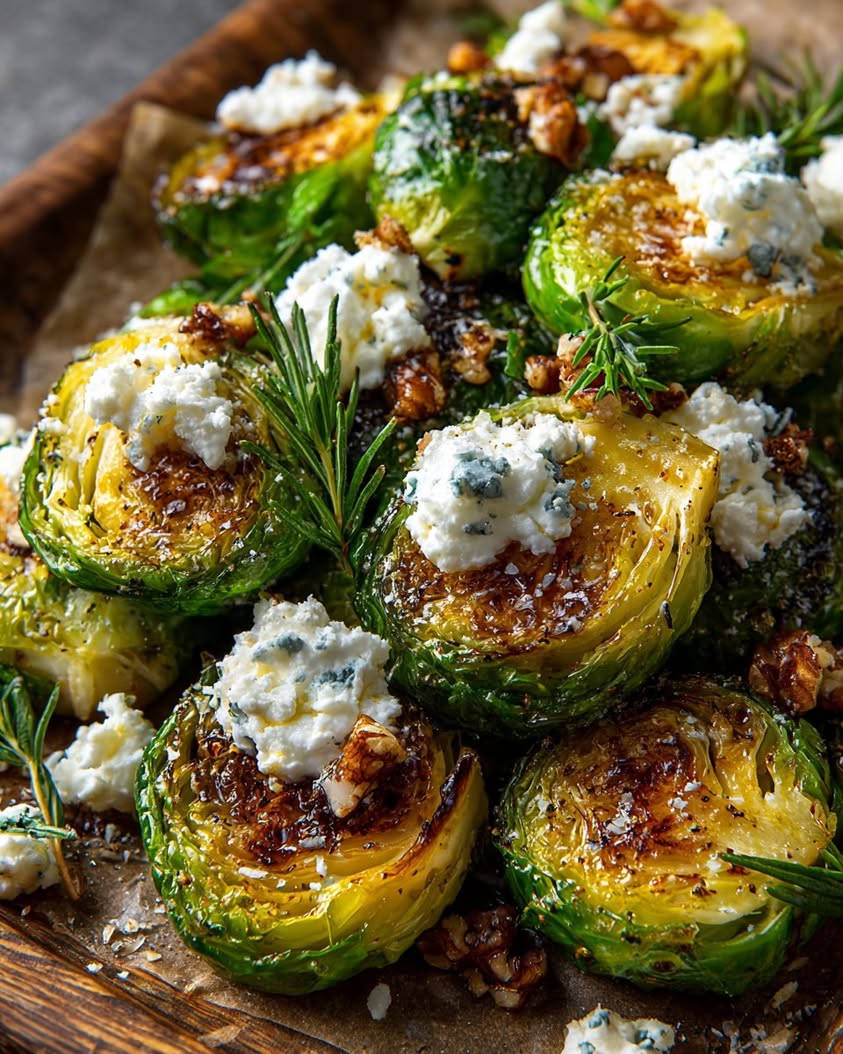
Crispy Maple-Roasted Brussels Sprouts Rings with Orange-Feta Cream: A Sweet, Savory, and Elegant Side Dish Perfect for Holidays!
Transform the humble Brussels sprout into a stunning, restaurant-worthy dish with this recipe for crispy maple-roasted Brussels sprouts rings served with a tangy orange-feta cream. This recipe elevates a classic roasted vegetable side dish into a true centerpiece. The combination of sweet maple syrup, savory roasted sprouts, and a bright, creamy orange-feta sauce creates a symphony of flavors that will impress even the most skeptical vegetable eaters. Ultimately, this dish proves that Brussels sprouts can be both beautiful and delicious.
Imagine tender, caramelized Brussels sprout rings with crispy, lacy edges, all glistening with a sweet and sticky maple glaze. Now picture them paired with a cool, tangy, and slightly salty cream sauce bursting with fresh orange zest. This is not your average side dish. It is a carefully crafted balance of textures and tastes designed to delight the senses. The visual appeal alone, with its golden-brown rings and vibrant orange-flecked cream, makes it perfect for a holiday table or a special dinner party. Consequently, it turns a simple vegetable into a conversation starter.
The magic of this recipe lies in its clever preparation. By slicing the sprouts into rings, you maximize the surface area for caramelization. This technique ensures every bite has a perfect mix of crispy exterior and tender interior. Meanwhile, the orange-feta cream provides a refreshing counterpoint to the rich, roasted flavors. This dish is a fantastic example of how a few quality ingredients and a smart technique can create something extraordinary. Therefore, get ready to change the way you think about Brussels sprouts forever.
Quick Recipe Highlights
- Flavor Profile: This dish masterfully balances sweet, savory, tangy, and salty notes. The maple syrup caramelizes into a rich, deep sweetness that complements the natural earthiness of the sprouts. Simultaneously, the orange-feta cream adds a bright, citrusy tang and a creamy, salty finish that cuts through the richness.
- Texture: You get a wonderful contrast in every bite. The outer edges of the maple-roasted Brussels sprouts rings become delightfully crispy and almost chip-like. Meanwhile, the inner layers remain tender and moist. The accompanying orange-feta cream is luxuriously smooth and velvety, providing a cooling contrast to the warm, crispy vegetables.
- Aroma: As the sprouts roast, your kitchen will fill with the warm, comforting scent of caramelizing maple syrup and toasted vegetables. The orange zest in the cream adds a fresh, uplifting citrus perfume that cuts through the richness. Together, they create an inviting, complex aroma that promises a delicious meal.
- Visual Appeal: The presentation is truly elegant. The golden-brown, circular sprouts rings look artistic and modern on the plate. Drizzled with the creamy white and orange-speckled sauce, the dish boasts beautiful color contrast. It looks sophisticated enough for a fine dining restaurant yet is surprisingly simple to make at home.
- Skill Level Needed: This is an accessible recipe for most home cooks. The primary skills involved are simple knife work for slicing and basic mixing for the sauce. There is no complicated technique, making it a great recipe for building confidence in the kitchen while producing impressive results.
- Special Equipment: You need only a few standard kitchen tools. A sharp chef’s knife or mandoline (for safety, use a guard) helps create uniform rings. Additionally, a good quality baking sheet is essential for achieving even caramelization. Otherwise, a mixing bowl and whisk for the cream are all you require.
Recipe Overview
- Difficulty Level: We classify this recipe as easy because it involves straightforward techniques like slicing, tossing, and roasting. The most challenging aspect is achieving the perfect level of caramelization without burning, which is easily managed with attentive oven timing. Furthermore, the sauce requires no cooking, just simple mixing. Overall, it is an approachable recipe with a high reward-to-effort ratio.
- Category: This dish fits perfectly into the side dish category, ideal for complementing a main protein like roast chicken, turkey, or pork. However, it is substantial enough to be a vegetarian main when served over a grain like farro or quinoa. It also works wonderfully as a standout appetizer or part of a holiday feast spread.
- Cuisine: While not tied to one specific tradition, the recipe draws inspiration from modern American and Mediterranean cuisines. The use of maple syrup is a nod to North American ingredients, while the feta cheese and olive oil anchor it in Mediterranean flavors. This fusion creates a uniquely contemporary and globally-inspired dish.
- Cost: This is a very cost-effective recipe, especially when Brussels sprouts are in season. The main ingredients are affordable vegetables and pantry staples. Feta cheese and pure maple syrup are the only potential splurges, but a little goes a long way. You can create an elegant, impressive dish for a fraction of the cost of a restaurant version.
- Season: This recipe shines brightest in the fall and winter months. Brussels sprouts are at their peak sweetness after a frost, making them ideal for roasting. The warm maple and cozy roasting process are perfect for colder weather. That said, with year-round sprout availability, it can be a hit at any spring or summer gathering as a sophisticated veggie option.
- Occasion: It is exceptionally suited for holidays like Thanksgiving, Christmas, and Easter, where an elevated side dish is required. It is also perfect for dinner parties, potlucks, or date nights at home. Essentially, any occasion where you want to serve something visually stunning and bursting with flavor is the right occasion for this recipe.
Why You’ll Love This Recipe
First and foremost, the taste and texture appeal is undeniable. The crispy maple-roasted Brussels sprouts rings offer a satisfying crunch that gives way to a tender, sweet interior. The orange-feta cream introduces a cool, tangy, and creamy element that perfectly balances the dish. Each forkful delivers a complex dance of sweet, savory, salty, and bright flavors that keeps you coming back for more. This is not a boring vegetable side; it is a destination dish that people will request again and again.
From a convenience standpoint, this recipe is a winner. The prep is relatively quick, and most of the cook time is hands-off roasting in the oven. You can easily prepare the sauce while the sprouts are cooking. This makes it an excellent choice for entertaining, as you are not stuck at the stove at the last minute. Moreover, the ingredients are simple and the steps are logical, reducing kitchen stress significantly. Therefore, you can spend more time with your guests and less time fussing over complicated techniques.
Nutritionally, this dish packs a powerful punch. Brussels sprouts are a cruciferous vegetable superstar, loaded with fiber, vitamins C and K, and antioxidants. Roasting them with a modest amount of maple syrup and olive oil is a healthy cooking method that enhances their natural sugars. The feta provides protein and calcium, while the olive oil offers heart-healthy fats. Consequently, you are serving a side dish that is as good for the body as it is for the palate.
The social and entertaining value of this recipe is incredibly high. Its beautiful presentation instantly elevates any meal, making you look like a culinary pro. It is a fantastic conversation starter, especially for guests who think they dislike Brussels sprouts. Serving a vegetable side this creative and delicious shows care and thoughtfulness. It can be the star of your holiday table, often upstaging the main course with its unique look and incredible flavor.
Finally, the cost-effectiveness and accessibility are major benefits. You do not need expensive or hard-to-find ingredients to create this elegant dish. Brussels sprouts, maple syrup, feta, an orange, and basic pantry items are all you need. Compared to ordering a similar dish at a restaurant, making it at home saves a substantial amount of money. This recipe proves that eating well does not require a big budget, just a little creativity and know-how in the kitchen.
Historical Background and Cultural Significance
The story of the Brussels sprout begins in ancient Rome, but the vegetable as we know it was likely cultivated in the 13th century near Brussels, Belgium, from which it gets its name. For centuries, it was a staple in Northern European winter diets due to its hardiness. However, its journey to global popularity, especially in the United States, was slow. Often boiled or steamed into submission, Brussels sprouts developed a notorious reputation for being bitter and unpleasant, a culinary injustice that lasted for generations.
The cultural importance of Brussels sprouts is deeply tied to holiday traditions, particularly in the United Kingdom and the United States. They became a standard, if sometimes dreaded, feature on Christmas and Thanksgiving tables. This tradition persisted not necessarily because of love for the vegetable, but because of its seasonal availability. The shift in cultural perception began in the late 20th and early 21st centuries, thanks to the widespread adoption of roasting as a preferred cooking method. Chefs and home cooks discovered that high-heat roasting caramelized the natural sugars, transforming the sprouts from bitter to sweet and complex.
The evolution of the recipe for crispy maple-roasted Brussels sprouts rings is a direct result of this modern culinary renaissance. The technique of slicing sprouts into rounds is a relatively recent innovation, popularized by food blogs and chefs seeking to maximize texture and presentation. Adding maple syrup taps into the North American love for sweet and savory pairings, while the orange-feta cream introduces Mediterranean influences. This recipe represents a fusion of old-world vegetable preparation with new-world flavors and techniques, symbolizing how global cuisine continues to evolve and improve upon tradition.
Regional variations of roasted Brussels sprouts are now endless. In the American South, you might find them with bacon and pecans. On the West Coast, a drizzle of balsamic reduction is common. The maple pairing has strong roots in New England and Canadian cuisine. The addition of a creamy, tangy sauce like the orange-feta cream shows how dips and condiments have become integral to vegetable presentation. This particular recipe sits at the intersection of these trends, offering a balanced, elegant, and universally appealing version that honors the sprout’s history while catapulting it firmly into modern gourmet territory.
Ingredient Deep Dive
Let us start with Brussels sprouts, the star of the show. This miniature cabbage is part of the Gemmifera Group of cabbages, bred specifically for its edible buds. Cultivated for over 800 years, it is rich in history and nutrition. They are an excellent source of vitamins C and K, fiber, and folate, and contain antioxidants with anti-inflammatory properties. When selecting sprouts, look for firm, bright green heads that are heavy for their size, with tightly packed leaves. Avoid any with yellowing leaves or a strong, sulfurous smell. Store them unwashed in a plastic bag in your refrigerator’s crisper drawer for up to a week. For a substitution, broccoli florets or cauliflower cut into flat slabs can be roasted in a similar way, though the cooking time may vary.
Pure maple syrup is the key to the dish’s signature caramelization and sweetness. This natural sweetener, made from the sap of sugar maple trees, is a product deeply rooted in North American, especially Canadian, heritage. Unlike refined sugar, it contains minerals like manganese and zinc and offers a more complex flavor profile with notes of vanilla and caramel. Always opt for “pure maple syrup” over “pancake syrup,” which is often just corn syrup with flavoring. Store it in a cool, dark pantry after opening. For a vegan alternative, agave nectar can work, though it has a milder flavor. Honey is a good substitute, but note it will impart its own distinct floral taste.
Feta cheese brings the essential salty, tangy punch to the cream sauce. This brined curd cheese has been made in Greece for thousands of years, traditionally from sheep’s milk or a sheep-goat milk blend. It is a good source of calcium and protein and, due to its strong flavor, a little goes a long way. For the best quality, seek out feta packed in brine, which keeps it moist and flavorful. Once opened, keep it submerged in its brine in the refrigerator. If you need a substitution, creamy goat cheese (chèvre) or a salty ricotta salata would be excellent alternatives, though the texture and tang level will differ slightly.
Fresh orange zest and juice provide the bright, aromatic lift that balances the dish. The zest, containing essential oils, is where the potent citrus fragrance lives, while the juice adds tangy liquid. Citrus has been used for centuries to cut through richness and add vibrancy to dishes. Oranges are famously high in vitamin C. Choose heavy, firm oranges with smooth, brightly colored skin for the best juice and zest yield. They can be stored at room temperature for a few days or in the fridge for longer. For a different citrus profile, lemon or grapefruit zest and juice can create a wonderful, though more tart, variation on the cream sauce.
Extra-virgin olive oil serves dual purposes: it helps the sprouts crisp up in the oven and enriches the cream sauce. This cornerstone of the Mediterranean diet, made from pressed olives, is celebrated for its heart-healthy monounsaturated fats and antioxidants. Use a good-quality oil for the sauce, as its flavor will be pronounced. A more neutral, high-heat oil like avocado oil can be used for roasting if preferred. Always store olive oil in a cool, dark place away from the stove to prevent it from turning rancid. Its fruity, peppery notes are irreplaceable, but in a pinch, a neutral vegetable oil will work for roasting.
Common Mistakes to Avoid
- Using a Dull Knife: Slippery Brussels sprouts can be dangerous to slice with a dull blade. Always use a sharp chef’s knife for control. Consider using a mandoline with a hand guard for perfectly even, safe rings.
- Crowding the Pan: If you pile the sprout rings on top of each other, they will steam instead of roast. Spread them in a single, even layer with space between pieces. This is crucial for achieving crispy edges.
- Neglecting to Preheat the Oven: A properly preheated oven is non-negotiable for immediate caramelization. Putting the sprouts into a cold oven will cause them to cook unevenly and become soggy before browning.
- Using Imitation Maple Syrup: “Pancake syrup” is often just flavored corn syrup and can burn easily or create an artificial taste. Invest in pure maple syrup for its superior flavor and caramelization properties.
- Over-mixing the Feta Cream: Vigorously whisking the feta can sometimes make the sauce grainy. Gently fold the ingredients together until just combined for the smoothest, creamiest texture.
- Skipping the Zest: The orange juice alone will not provide enough aromatic punch. The essential oils in the zest are vital for that bright, perfumed flavor that cuts through the richness of the dish.
- Not Tossing Midway: For even browning, you must toss or flip the sprouts about halfway through the roasting time. This ensures all sides get exposed to the direct heat of the pan.
- Forgetting to Season the Sauce: The sprouts get seasoned before roasting, but the cream sauce needs its own balance. Always taste the orange-feta cream and adjust with a pinch of salt or pepper as needed.
- Roasting at Too Low a Temperature: A high oven temperature (400°F or above) is necessary to quickly caramelize the maple syrup and crisp the sprouts. A lower temp will dry them out without creating that desirable browning.
- Serving Immediately Without Resting: Let the roasted sprouts sit for a minute or two after coming out of the oven. This allows them to crisp up further and makes them easier to handle.
Essential Techniques
Slicing into Rings: This technique is fundamental to the recipe’s success. Slicing the sprouts horizontally creates rings with maximum surface area, which leads to more crispy edges and faster, more even cooking. The key is to use a very sharp knife and a stable cutting surface. Trim a small piece off the stem end first to create a flat base, then slice vertically into rounds about 1/4-inch thick. The outer leaves will fall away; you can discard these or roast them separately as crispy chips. The visual cue for success is uniform, coin-shaped pieces.
High-Heat Roasting: Roasting at a high temperature (around 425°F) is the engine of flavor development. This technique causes the natural sugars in the sprouts and the maple syrup to caramelize, creating deep, complex flavors and a crispy texture. The high heat also quickly evaporates surface moisture, preventing sogginess. The common pitfall is burning, so watch closely in the final minutes. Success is visually obvious: the sprouts should be tender when pierced with a fork and have deep golden-brown, caramelized edges.
Creating an Emulsified Sauce: The orange-feta cream is a simple emulsified sauce. The goal is to smoothly combine the oil (olive oil) and water-based (orange juice, feta moisture) ingredients into a cohesive, creamy texture. The technique involves starting with the feta and liquids, then slowly drizzling in the olive oil while whisking constantly. This encourages the oil to disperse into tiny droplets suspended in the liquid. If you add the oil too quickly, the sauce may “break” or separate. A successful sauce will be smooth, slightly thickened, and homogenous.
Pro Tips for Perfect Maple-Roasted Brussels Sprouts Rings
First, for the crispiest rings, ensure your sprouts are completely dry after washing. Any excess water will create steam on the pan. Second, use a light-colored, heavy-duty baking sheet. Dark pans can cause the maple syrup to burn more quickly. Third, line your pan with parchment paper for easy cleanup and to prevent any stubborn sticking. Fourth, add a pinch of red pepper flakes to the maple-oil mixture before tossing for a subtle, warming heat that complements the sweetness. Fifth, let the orange-feta cream sit at room temperature for 10-15 minutes before serving. This allows the flavors to meld beautifully. Sixth, garnish the finished dish with extra orange zest and a sprinkle of crumbled feta for enhanced visual appeal and flavor bursts. Finally, serve the cream sauce on the side in a small bowl for dipping, or drizzle it artistically over the plated sprouts just before serving to maintain maximum crispiness.
Variations and Adaptations
For regional variations, consider adding crispy chopped bacon or pancetta to the roasting pan during the last 10 minutes of cook time. A Southern-inspired twist might include a sprinkle of toasted pecans. For a West Coast vibe, a final drizzle of aged balsamic glaze adds wonderful acidity. Seasonally, in summer, try adding fresh corn kernels to the pan, or in spring, toss in some asparagus tips. For dietary modifications, to make it vegan, use a plant-based feta alternative and substitute the maple syrup with agave. A dairy-free version can use a cashew cream base flavored with nutritional yeast and orange. For flavor variations, swap the orange for lemon or blood orange, or add fresh herbs like thyme or rosemary to the roasting oil. For texture, leave some sprouts whole for a mix of shapes, or add panko breadcrumbs in the last five minutes for extra crunch. Presentation alternatives include stacking the rings in a tower or serving them in individual ramekins with the cream pooled at the bottom.
Serving and Presentation Guide
Plating techniques can elevate this dish from home-cooked to restaurant-style. Consider arranging the crispy maple-roasted Brussels sprouts rings in a concentric circle on a large, white platter. Alternatively, create a rustic pile in the center of a serving dish. For individual servings, use a ring mold to create a neat cylinder of sprouts on each plate. Garnishing ideas are simple but effective: a final sprinkle of flaky sea salt, a few microgreens or fresh parsley leaves, extra orange zest, or a few reserved crumbles of feta cheese add color and texture. Traditional accompaniments include a holiday roast like turkey or ham, but it also pairs wonderfully with seared salmon or a simple roast chicken. Modern serving suggestions might include placing the platter on a bed of autumn leaves for a holiday centerpiece or serving it as a hearty vegetarian main over a lemony couscous. Serve the sprouts hot from the oven and the cream sauce at cool room temperature for the best textural contrast. For portion control, a good rule of thumb is about one cup of raw, sliced sprouts per person as a side dish.
Wine and Beverage Pairing
Choosing the right wine can enhance the sweet and savory notes of this dish. A crisp, unoaked white wine like a Sauvignon Blanc or Pinot Gris works beautifully. Their bright acidity mirrors the orange in the cream and cuts through the richness. For red wine lovers, a light-bodied Pinot Noir with its earthy notes complements the roasted vegetable flavors without overpowering them. For a non-alcoholic alternative, a sparkling water with a twist of orange or a tart cranberry spritzer provides refreshing contrast. If considering coffee or tea, a light roast coffee or an herbal citrus tea would be pleasant after the meal. Always serve white wines and sparkling beverages well-chilled, while reds should be slightly cool, not warm. The key is to choose beverages that offer acidity or brightness to balance the dish’s caramelized sweetness and creamy elements.
Storage and Shelf Life
Proper storage is key to maintaining quality. Store leftover crispy maple-roasted Brussels sprouts rings and orange-feta cream in separate airtight containers in the refrigerator. The sprouts will keep for up to 3 days, while the cream is best used within 2 days. The refrigerator temperature should be at or below 40°F. Glass containers are ideal as they do not absorb odors. Signs of spoilage for the sprouts include an off smell, excessive sogginess, or mold. The cream may separate or develop a sour smell. To reheat the sprouts, spread them on a baking sheet and warm in a 350°F oven for 5-10 minutes to re-crisp. Avoid the microwave, as it will make them soggy. The cream can be stirred and served cold. Freezing is not recommended for the roasted sprouts, as they will become mushy upon thawing. The cream sauce also does not freeze well due to the dairy content.
Make Ahead Strategies
You can efficiently prepare components of this dish ahead of time to streamline your cooking process. The prep timeline can start a day in advance. First, wash and thoroughly dry the Brussels sprouts. You can slice them into rings, place them in a single layer on paper towels, cover with more towels, and store in a large container in the fridge. The orange-feta cream can be fully mixed, covered, and refrigerated a day ahead. Storing components between steps like this saves crucial time before serving. The quality impact is minimal if the sliced sprouts are kept dry. When ready to cook, simply toss the pre-sliced sprouts with the oil and maple mixture and roast. For assembly, bring the cream to cool room temperature for about 20 minutes before serving to soften slightly and allow flavors to bloom. Reheating guidelines are simple: only reheat the sprouts in the oven to preserve texture. Add any fresh garnishes, like an extra zest of orange, just before serving to maximize their aromatic impact.
Scaling Instructions
This recipe scales beautifully for different group sizes. For halving the recipe, simply divide all ingredient quantities by two. Use a smaller baking sheet to keep the sprouts in a single layer. The cook time may decrease by a few minutes, so start checking for doneness around the 18-minute mark. For doubling or tripling, multiply the ingredients accordingly. You will likely need to use two or more baking sheets and roast them on separate oven racks. Rotate the pans top-to-bottom and front-to-back halfway through cooking for even browning. Equipment adjustments are key: do not overcrowd the pans, even if it means roasting in batches. Timing modifications are minimal for larger batches; just add a few extra minutes to account for a fuller oven. Storage considerations remain the same per portion, but you will have more leftovers, so ensure you have enough airtight containers.
Nutritional Deep Dive
This dish offers a robust nutritional profile. The macro breakdown per serving provides a balance of complex carbohydrates from the sprouts, healthy fats from the olive oil and feta, and a moderate amount of protein from the cheese. Micronutrient analysis reveals it is exceptionally high in Vitamin C (from both sprouts and orange) and Vitamin K, crucial for bone health and blood clotting. It is also a good source of fiber, folate, and calcium. The health benefits are significant, including support for immune function, digestive health, and inflammation reduction. For dietary considerations, it is naturally vegetarian and gluten-free. Portion analysis shows that a serving as a side dish is satisfying without being overly caloric. For weight management, the high fiber and water content of the sprouts promote satiety, helping to control overall calorie intake during a meal. Using a moderate hand with the maple syrup and olive oil keeps the dish healthful.
Dietary Adaptations
This recipe is naturally gluten-free, as none of the core ingredients contain gluten. Always check labels on pre-crumbled feta, as some anti-caking agents may contain gluten. For a dairy-free version, substitute the feta with a firm, tangy vegan cheese alternative or a base of blended cashews with lemon juice and salt to mimic the creaminess and tang. To make it vegan, use the dairy-free cheese option and replace the honey (if used as a maple sub) with agave nectar. For a low-carb or keto adaptation, reduce the amount of maple syrup significantly or use a sugar-free maple-flavored syrup, and be mindful of the carrot content in some sprouts. A Paleo version would omit the dairy; use a compliant fat like ghee for roasting and a coconut cream-based sauce flavored with orange. For a Low-FODMAP diet, this recipe can be tricky as Brussels sprouts are high in FODMAPs. A small serving might be tolerated, or substitute with roasted bell pepper strips. Always consult specific diet guidelines for exact portions and substitutions.
Troubleshooting Guide
If your sprouts are soggy, the likely culprit is overcrowding the pan or insufficient oven temperature. Ensure they are in a single layer and your oven is fully preheated. For sprouts that are burning before cooking through, your oven may run hot, or the maple syrup may be too close to the heat source. Try lowering the temperature by 25°F and placing the rack in the center of the oven. If the orange-feta cream is too thick, whisk in a teaspoon of orange juice or water at a time until it reaches a drizzle-able consistency. If it is too thin, add more crumbled feta or let it sit in the fridge to firm up. For equipment challenges like not having a mandoline, a very sharp knife and patience will work perfectly. If you lack a whisk for the sauce, a fork can mash and combine the ingredients adequately. For timing concerns, remember the sauce can be made first and set aside, allowing you to focus solely on roasting the sprouts to perfection.
Recipe Success Stories
The community feedback for this recipe has been overwhelmingly positive. Many home cooks report that it has become their go-to holiday side dish, often receiving requests for the recipe from guests. One common success story involves converting self-proclaimed Brussels sprout haters into fans after they try the crispy, sweet rings. Variation successes include adding toasted walnuts or swapping in pomegranate arils for a festive, colorful crunch. Reader suggestions have been invaluable, such as using the leftover cream as a dip for other vegetables or spreading it on sandwiches. Adaptation stories from vegan readers using plant-based feta have shown the recipe’s versatility. For photography tips, natural light is your best friend. Photograph the dish on a simple, neutral background to let the golden-brown rings and vibrant orange zest pop. A close-up shot showing the crispy texture next to the creamy sauce is always a winner.
Frequently Asked Questions
Q: Can I use balsamic vinegar instead of maple syrup?
A: Absolutely. Balsamic vinegar will create a more tangy, less sweet glaze. For best results, use a good quality balsamic and watch closely as it can burn faster than maple syrup due to its sugar content.
Q: My sprouts are bitter. What did I do wrong?
A: Bitterness often comes from overcooking or using very old sprouts. Roasting at high heat caramelizes sugars, reducing bitterness. Always choose fresh, firm, bright green sprouts for the sweetest flavor.
Q: Can I make the entire dish ahead of time and reheat it?
A: You can prep components ahead, but for best texture, roast the sprouts just before serving. Reheated sprouts lose their crispiness. The sauce can be made 1-2 days ahead and stored in the fridge.
Q: Is there a trick to slicing the sprouts evenly?
A> Yes. First, trim a small piece off the stem to create a flat base. Then, using a sharp knife, slice vertically from top to bottom. A mandoline with a guard ensures perfect, uniform thickness and safety.
Q: Can I use pre-crumbled feta?
A: You can, but block feta packed in brine tends to be creamier and more flavorful. Pre-crumbled feta often has anti-caking agents that can make the sauce slightly grainier.
Q: What can I serve with this as a main course for vegetarians?
A: This dish pairs wonderfully with a hearty grain like farro or quinoa, a lentil salad, or a vegetable tart. It can also be a fantastic topping for a creamy polenta.
Q: My sauce separated. Can I fix it?
A> Yes. A separated sauce often means the oil was added too quickly. Try whisking in a teaspoon of warm water or orange juice to re-emulsify it. If that fails, blend it briefly with an immersion blender.
Q: Are the loose leaves that fall off when slicing usable?
A: Definitely! Toss those loose leaves with a bit of oil and salt and roast them on the same pan. They become delicious, crispy Brussels sprout chips—a fantastic cook’s treat or garnish.
Q: Can I use frozen Brussels sprouts?
A: It is not recommended for this recipe. Frozen sprouts contain too much water, which will prevent them from getting crispy. They will steam and become soggy in the oven.
Q: How do I know when the sprouts are done roasting?
A: They are done when the edges are deeply browned and crispy, and the centers are tender when pierced with a fork. The maple syrup will look caramelized and sticky. This usually takes 20-25 minutes at 425°F.
Additional Resources
If you loved these crispy maple-roasted Brussels sprouts rings, explore other vegetable-centric recipes on our site. We have a fantastic guide to roasting every vegetable perfectly, detailing temperatures and times for everything from carrots to cauliflower. For more information on working with feta cheese, check out our ingredient spotlight on Mediterranean cheeses. If you are in the market for kitchen equipment, a high-quality half-sheet pan and a sharp chef’s knife are the two most valuable tools for this recipe. For seasonal variations, in summer try our grilled zucchini with mint pesto, or in spring, our roasted asparagus with lemon and parmesan. Mastering the technique of high-heat roasting will open up a world of simple, flavorful, and healthy vegetable dishes for your weekly rotation.
PrintMaple-Roasted Brussels Sprouts Rings with Orange-Feta Cream
Description
A vibrant and flavorful side dish featuring crispy Brussels sprouts rings roasted with maple syrup, served with a tangy orange-feta cream for dipping.
Ingredients
For the Crust:
- 1 lb Brussels sprouts, trimmed and sliced into rings
- 2 tbsp olive oil
- 2 tbsp pure maple syrup
- 1 tsp smoked paprika
- Salt and black pepper to taste
- 1/2 cup crumbled feta cheese
- 1/4 cup plain Greek yogurt
- Zest and juice of 1 orange
- 1 tbsp chopped fresh parsley
Instructions
1. Prepare the Crust:
- Preheat oven to 400°F (200°C). Line a baking sheet with parchment paper.
- In a bowl, toss Brussels sprouts rings with olive oil, maple syrup, smoked paprika, salt, and pepper until evenly coated. Spread in a single layer on the baking sheet.
- Roast for 20-25 minutes, flipping halfway, until crispy and caramelized.
- Meanwhile, in a small bowl, mix feta cheese, Greek yogurt, orange zest, orange juice, and parsley until smooth. Adjust seasoning if needed.
- Serve the roasted Brussels sprouts rings warm with the orange-feta cream on the side for dipping.
Notes
You can customize the seasonings to taste.

I’m Shaykee—born in Morocco, seasoned across continents. From airplane galleys to home kitchens, I share the flavors and stories that shaped my journey.