
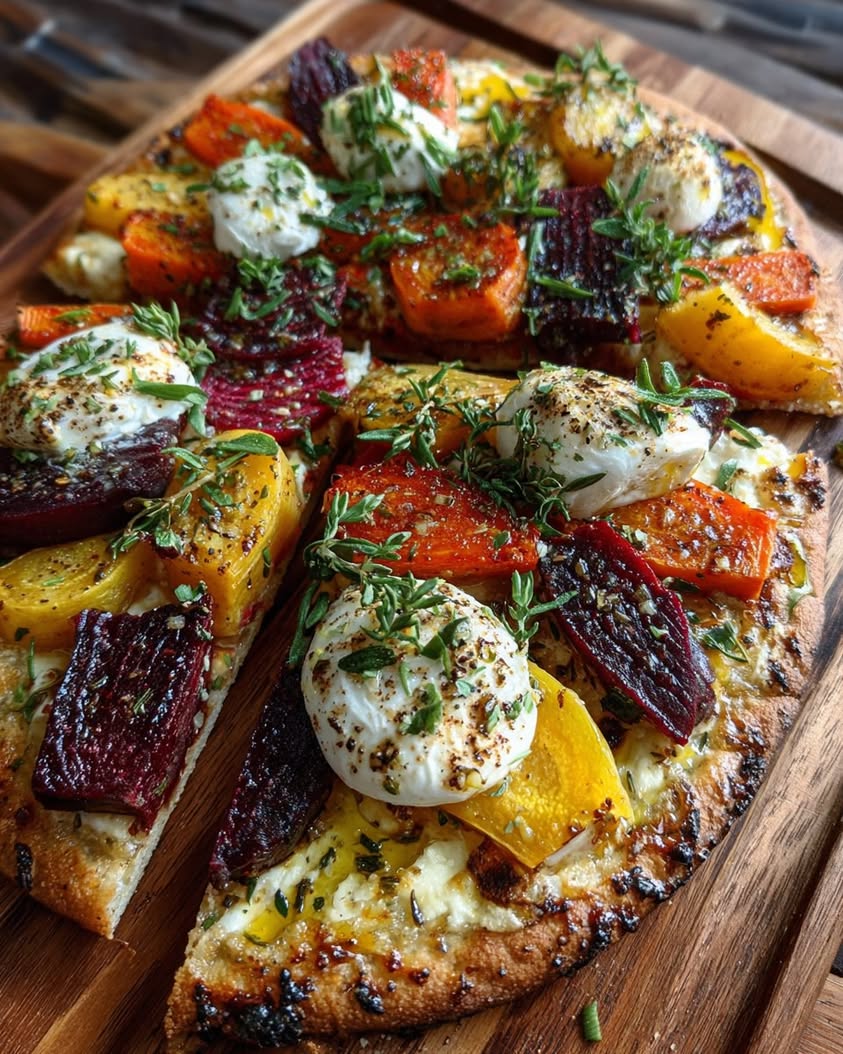
Roasted Carrot & Beet Flatbread with Brie & Honey Orange Drizzle: A Vibrant Vegetarian Masterpiece
Imagine the earthy sweetness of roasted carrots and beets, the luxurious melt of creamy brie, and the bright, floral kiss of a honey orange drizzle all atop a crisp flatbread. This roasted carrot and beet flatbread recipe is not just a meal; it’s a stunning centerpiece that celebrates the best of seasonal produce. Consequently, it transforms simple ingredients into an elegant dish that feels both rustic and refined. Whether you’re hosting a dinner party or simply elevating your weeknight dinner, this recipe delivers impressive flavor with surprisingly straightforward steps.
The magic of this roasted carrot and beet flatbread lies in its beautiful balance. Roasting the vegetables caramelizes their natural sugars, intensifying their flavor and creating a tender, almost jam-like texture. Meanwhile, the brie cheese melts into decadent pools that contrast perfectly with the crisp flatbread base. Finally, the honey orange drizzle adds a necessary pop of acidity and sweetness that ties every component together. Ultimately, this dish is a testament to how a few quality ingredients, treated with care, can create something truly spectacular.
Quick Recipe Highlights
- Flavor Profile: This flatbread masterfully balances sweet, savory, and tangy notes. The roasted carrots and beets provide a deep, caramelized sweetness, while the brie offers a rich, buttery savoriness. Moreover, the honey orange drizzle introduces a vibrant, citrusy brightness that cuts through the richness.
- Texture: You’ll experience a delightful contrast in every bite. The flatbread bakes to a perfectly crisp yet chewy base. Simultaneously, the roasted vegetables become tender and slightly jammy, and the brie melts into irresistibly gooey pockets.
- Aroma: As it bakes, your kitchen will fill with the warm, comforting scent of roasting root vegetables and melting cheese. Additionally, the fresh orange zest in the drizzle releases a bright, uplifting citrus fragrance that makes the dish smell as incredible as it tastes.
- Visual Appeal: This flatbread is a feast for the eyes with its stunning color palette. The vibrant orange carrots and deep ruby beets create a beautiful mosaic against the white brie and golden crust. Therefore, it’s a show-stopping appetizer or main course that garners compliments before the first bite.
- Skill Level Needed: This is an accessible recipe for most home cooks. It involves basic techniques like chopping, roasting, and assembling. Importantly, no advanced culinary skills are required, making it a fantastic choice for both beginners and experienced cooks looking for a beautiful, low-stress dish.
- Special Equipment: You only need standard kitchen tools. A baking sheet, a small bowl for the drizzle, and a sharp knife are essential. Furthermore, a mandoline can help slice the vegetables evenly, but a knife works perfectly fine.
Recipe Overview
- Difficulty Level: We rate this roasted carrot and beet flatbread as “Easy.” The steps are sequential and simple: prepare the vegetables, roast them, assemble, and bake. There’s no complex dough-making or tricky techniques. However, attention to vegetable slicing thickness ensures even roasting, which is the only minor skill involved.
- Category: This versatile dish fits multiple categories beautifully. It serves as an elegant vegetarian appetizer for sharing, a light lunch, or a satisfying meatless main course. It also works wonderfully as part of a brunch or picnic spread.
- Cuisine: This recipe draws inspiration from modern Californian and Mediterranean culinary traditions. It focuses on highlighting fresh, seasonal produce with simple preparations and high-quality ingredients like honey, olive oil, and fresh herbs, which are staples of Mediterranean cooking.
- Cost: This is a moderately priced recipe. Ingredients like carrots, beets, and an orange are very affordable. Brie cheese is the primary splurge, but a little goes a long way. Overall, you can create this restaurant-quality flatbread for a fraction of the cost of dining out.
- Season: This roasted carrot and beet flatbread shines in the fall and winter when root vegetables are at their peak sweetness and most abundant. Nevertheless, it’s a welcome burst of color and flavor any time of year, especially since carrots and beets are often available in grocery stores year-round.
- Occasion: It’s perfect for a wide range of events. Serve it as a stunning starter for a dinner party, as the main attraction for a girls’ night in, or as a special weekend family meal. It’s also impressive enough for holiday gatherings but simple enough for a cozy Friday night.
Why You’ll Love This Recipe
First and foremost, the taste and texture combination is utterly irresistible. The sweet, concentrated flavor of the roasted carrots and beets pairs magically with the rich, funky creaminess of the brie. Each component complements the others, creating a harmonious bite that is far greater than the sum of its parts. The final drizzle of honey and orange zest adds a necessary sparkle that prevents the dish from feeling too heavy. Ultimately, it’s a flavor journey that satisfies savory cravings while delighting your sweet tooth.
From a convenience standpoint, this roasted carrot and beet flatbread is a dream. The active prep time is minimal, involving mostly chopping and mixing. Once the vegetables are in the oven, you have time to prepare the drizzle and set the table. Additionally, you can use store-bought flatbread or naan for the base, eliminating the need to make dough from scratch. This makes it an ideal recipe for busy weeknights or last-minute entertaining when you want to serve something that looks and tastes like you spent all day in the kitchen.
Nutritionally, this dish is packed with benefits. Carrots and beets are nutritional powerhouses, loaded with fiber, vitamins, and antioxidants. Roasting them preserves most of their nutrients while making them more digestible. Using a whole-grain flatbread adds complex carbohydrates and extra fiber. While brie is a richer cheese, it provides protein and calcium. As a result, this flatbread is a balanced meal that fuels your body with good-for-you ingredients without sacrificing an ounce of flavor.
For social and entertaining value, this recipe is a true winner. It’s visually stunning, guaranteed to draw “oohs” and “aahs” when you bring it to the table. It’s also easy to slice and share, encouraging a communal dining experience. You can easily double or triple the recipe to feed a crowd. Furthermore, its vegetarian nature makes it inclusive for many guests, and it can be adapted for other dietary needs with minor tweaks, which we’ll cover later.
Finally, this roasted carrot and beet flatbread is cost-effective and accessible. The ingredients are not exotic or hard to find. You can likely purchase everything at a standard supermarket. Compared to ordering a similar artisanal flatbread at a restaurant, making it at home saves significant money. This allows you to enjoy gourmet, beautiful food regularly without straining your grocery budget. It’s a fantastic way to eat well and impress your family or guests without financial stress.
Historical Background and Cultural Significance
The concept of baking toppings on flatbread is ancient, with roots stretching back thousands of years across numerous cultures. From the simple focaccia of Italy to the lahmacun of the Middle East, flatbreads have served as edible plates, convenient vehicles for seasonal ingredients, and communal feast centerpieces. This roasted carrot and beet flatbread is a modern iteration of this timeless tradition. It reflects a contemporary culinary movement that prioritizes vegetable-forward dishes, artisanal presentation, and the fusion of global flavors, particularly from Mediterranean and Californian cuisines known for their bright, produce-centric plates.
Culturally, the use of roasted root vegetables speaks to agrarian traditions worldwide. For centuries, carrots and beets were staple storage crops, essential for surviving winter months. Roasting them over fire was a fundamental cooking technique to coax out sweetness and improve texture. Combining these humble, earthy vegetables with a luxurious cheese like brie represents a beautiful bridge between rustic peasant food and elegant dining. This blend of the simple and the sophisticated is a hallmark of modern “farm-to-table” cooking, which celebrates ingredient provenance and honest flavor.
The evolution of this specific recipe follows broader food trends. The rise of vegetarianism and flexitarian diets has spurred creativity with vegetables, moving them from the side of the plate to the starring role. The popularity of sharing plates and appetizer-style dining makes a beautiful flatbread an ideal communal dish. Additionally, the increased appreciation for contrasting flavors and textures—sweet with savory, creamy with crisp—is evident in the combination of honey, citrus, cheese, and roasted veggies. This recipe is a direct product of these evolving consumer tastes and culinary innovations.
Regional variations of this concept are endless. In the Middle East, you might find a flatbread topped with roasted eggplant and a tahini-yogurt sauce. In Italy, a pizza might feature roasted radicchio and taleggio cheese. Our version with carrots, beets, and an orange-honey drizzle has a distinctly sunny, West Coast vibe. You could easily adapt it with local ingredients: try roasted squash and goat cheese in the fall, or asparagus and ricotta in the spring. This adaptability is what keeps the flatbread tradition alive and exciting, allowing each cook to imprint their own seasonal and regional signature on the dish.
Ingredient Deep Dive
Carrots: Carrots have a long history, originally cultivated in Central Asia. They were initially prized for their aromatic leaves and seeds, with the purple and yellow roots being somewhat bitter. The sweet orange carrot we know today was developed by Dutch growers in the 17th century. Nutritionally, they are famous for beta-carotene, which the body converts to vitamin A, essential for vision and immune function. When selecting carrots, look for firm, smooth roots without cracks or major blemishes; vibrant green tops indicate freshness but are often removed for storage. Store them in the crisper drawer in a plastic bag. For a substitution, try parsnips or sweet potato, though cooking times may vary slightly.
Beets: Beets have been consumed since ancient times, with both the root and greens being used. They were initially cultivated for their leafy tops in the Mediterranean region. The vibrant red pigment, betalain, is a powerful antioxidant with anti-inflammatory properties. Beets are also a great source of folate and manganese. Choose beets that are firm, round, and heavy for their size with smooth skin. To prevent staining, you can wear gloves while peeling. Store beets unwashed in the refrigerator. Golden beets make a beautiful, less-staining alternative, and their flavor is slightly milder. Roasted butternut squash can also work in a pinch, offering a similar sweetness.
Brie Cheese: Brie is a soft, creamy French cheese named after the region from which it originated. It’s a mold-ripened cheese, with an edible white rind of Penicillium candidum. The interior should be soft and yielding when ripe. It provides protein, calcium, and vitamin B12. For this flatbread recipe, a good-quality, ripe brie is key. It should feel soft at room temperature. Avoid pre-sliced brie, as it often lacks flavor and texture. If you cannot find brie, Camembert is the closest substitute. For a stronger flavor, try a creamy blue cheese like Cambozola. For a dairy-free version, a high-quality vegan cream cheese or cashew-based spread can be used, though the melting characteristic will differ.
Flatbread: The base of this dish is wonderfully flexible. You can use store-bought naan, pita bread, or pre-made pizza crusts. For a homemade touch, many grocery stores sell fresh pizza dough that you can roll out. Look for options without added sugars or excessive preservatives. Whole wheat or multigrain versions add a nutty flavor and extra fiber. To store, keep packaged flatbreads in a cool, dry pantry or freeze them for longer storage. For a gluten-free version, many brands offer excellent gluten-free flatbreads or pizza crusts. The key is to choose a base that will get crisp in the oven without becoming too hard or cracker-like.
Honey Orange Drizzle: This simple sauce is the flavor catalyst. Use a good-quality, flavorful honey—local raw honey is ideal for its nuanced taste and potential health benefits. The orange zest is crucial, as it contains the fragrant essential oils that provide the brightest citrus punch. Freshly squeezed orange juice adds acidity and liquid. Olive oil helps emulsify the drizzle and adds a silky mouthfeel. A pinch of salt balances the sweetness. For a vegan version, substitute maple syrup or agave nectar for the honey. If you don’t have an orange, a lemon can be used, though the flavor will be more tart and less sweet. This drizzle can be made ahead and stored in the fridge.
Common Mistakes to Avoid
- Cutting Vegetables Unevenly: Slicing carrots and beets into different thicknesses leads to uneven roasting. Some pieces will be burnt while others remain undercooked. Consequently, always aim for uniform, ¼-inch thick rounds or half-moons to ensure they all roast at the same rate.
- Overcrowding the Baking Sheet: Piling the vegetables on top of each other steams them instead of roasting them. For proper caramelization, they need space. Therefore, use two sheets if necessary, or roast in batches to get those delicious, caramelized edges.
- Using Cold Brie: Spreading or tearing cold, hard brie is difficult and can tear the flatbread. Let the brie sit at room temperature for 15-20 minutes before assembling. This makes it easier to handle and promotes better, more even melting in the oven.
- Skipping the Drizzle: The honey orange drizzle is not just a garnish; it’s a vital component that adds acidity and brightness. Without it, the flatbread can taste one-dimensional and overly rich. Always take the two minutes to whisk it together.
- Underseasoning the Vegetables: Root vegetables need generous seasoning. Tossing them with just oil is a missed opportunity. Be sure to use enough salt and pepper before roasting to build layers of flavor from the very beginning.
- Using a Soggy Flatbread Base: If your store-bought flatbread seems moist or flexible, pre-toast it for 2-3 minutes before adding toppings. This creates a barrier against moisture from the veggies and cheese, ensuring a crisp final result.
- Overloading with Toppings: While it’s tempting to pile on the cheese and veggies, too much weight can make the center of the flatbread soggy. Apply toppings in a generous but single layer for the perfect balance of crisp base and flavorful topping.
- Not Letting it Rest Before Slicing: Slicing immediately after baking causes the cheese to ooze out uncontrollably. Let the flatbread rest for 3-5 minutes. This allows the cheese to set slightly and makes for much cleaner, more presentable slices.
Essential Techniques
Uniform Vegetable Slicing: Achieving even slices is the most important technique for this roasted carrot and beet flatbread. Consistent thickness guarantees that every piece of carrot and beet roasts in the same amount of time, leading to perfect caramelization without burnt edges or hard centers. Use a sharp chef’s knife and take your time. Alternatively, a mandoline slicer set to ¼-inch is a foolproof tool. The common pitfall is rushing this step. Visually, your slices should look like identical coins or half-moons before they hit the baking sheet.
High-Heat Roasting: Roasting at a high temperature (around 400°F to 425°F) is non-negotiable. This technique quickly caramelizes the natural sugars in the vegetables, creating deep flavor and a slightly crispy exterior while keeping the interior tender. The key is to preheat your oven fully so the vegetables start cooking immediately. A common mistake is roasting at too low a temperature, which steams the vegetables and makes them mushy. Success is visible: look for shrunken, slightly wrinkled vegetables with darkened, caramelized edges.
Assembling for Optimal Crispness: The order and method of assembly protect your flatbread from sogginess. Start with a par-baked or pre-toasted base to create a moisture barrier. Then, scatter the roasted vegetables evenly, followed by pieces of brie. Avoid placing cheese directly on large areas of bare bread, as it can create a greasy spot. The goal is an even distribution so every bite has a bit of everything. The visual cue for correct assembly is being able to see a little of the flatbread base peeking through between toppings.
Pro Tips for Perfect Roasted Carrot and Beet Flatbread
First, roast your beets on a separate piece of parchment paper or foil if you’re concerned about them staining the carrots. This keeps the vibrant colors distinct and allows you to easily remove the beets if they cook faster.
Second, add a teaspoon of fresh thyme leaves to the vegetables before roasting. The herbal, slightly floral note of thyme complements the earthiness of the roots and the creaminess of the brie beautifully.
Third, for an extra flavor dimension, brush the flatbread base very lightly with a garlic-infused olive oil before adding the other toppings. This simple step adds a subtle, aromatic background note.
Fourth, if your brie has a very thick rind, you can trim it off the pieces you plan to use. While the rind is edible, some find it too chewy when baked. Removing it results in a smoother, more luxurious melt.
Fifth, toast the flatbread directly on the oven rack for the last 2 minutes of baking. This ensures the bottom gets as crisp as the edges, preventing any potential sogginess from the toppings.
Sixth, garnish with fresh microgreens or arugula after baking. The peppery green flavor and fresh texture provide a wonderful contrast to the warm, rich toppings.
Seventh, use a pizza wheel or a very sharp chef’s knife to slice the finished flatbread. A sawing motion with a dull knife will drag the toppings and make a mess.
Eighth, double the honey orange drizzle recipe and save half. It’s fantastic as a salad dressing, a glaze for chicken or salmon, or a dip for fresh fruit.
Variations and Adaptations
For regional variations, take inspiration from global flavors. Create a Greek version with roasted zucchini, red onion, kalamata olives, and crumbled feta cheese, finished with a lemon-oregano drizzle. For a Middle Eastern twist, top the flatbread with roasted eggplant and red pepper, then add dollops of labneh and a drizzle of pomegranate molasses after baking. An Italian-inspired flatbread could feature roasted cherry tomatoes, caramelized onions, and torn fresh mozzarella with a balsamic glaze.
Seasonal adaptations make this recipe a year-round favorite. In spring, use roasted asparagus tips, fresh peas, and ricotta cheese with a mint-lemon drizzle. For summer, top with grilled corn, blistered cherry tomatoes, and goat cheese. In the heart of winter, try roasted sweet potato, caramelized shallots, and gorgonzola for a deeper, richer flavor profile. The basic formula—roasted veg + creamy cheese + bright sauce—is endlessly adaptable.
Dietary modifications are straightforward. For a gluten-free flatbread, use a certified gluten-free pizza crust or flatbread. To make it vegan, substitute the brie with a high-quality vegan cream cheese or cashew cheese and use maple syrup instead of honey in the drizzle. For a nuttier, dairy-free option, a thick smear of hummus makes an excellent base before adding the roasted vegetables. A keto or low-carb version can use a fathead dough base or a large portobello mushroom cap as the foundation.
Serving and Presentation Guide
Plating is key for this visually stunning dish. Transfer the whole baked flatbread to a large wooden cutting board or a simple, neutral-colored platter. This rustic presentation highlights the beautiful colors of the toppings. Slice it into wedges or squares directly on the board, leaving the pieces slightly connected so guests can serve themselves. Alternatively, pre-slice and fan the pieces out for easy grabbing. Always add the final drizzle and any fresh green garnishes after plating for maximum visual impact and freshness.
Garnishing adds the final touch of elegance. A small handful of fresh arugula or watercress tossed in a tiny bit of the honey orange dressing adds color and a peppery bite. Toasted walnuts or pecans scattered on top provide a delightful crunch. For a burst of color and acidity, a sprinkle of pomegranate arils in the fall or winter is spectacular. Finally, a few fresh thyme or oregano sprigs reinforce the herbal notes. Remember, garnishes should be edible and complement the flavor profile, not just sit there for looks.
Consider traditional and modern accompaniments. This flatbread is a complete meal on its own, but it pairs wonderfully with a simple, bitter green salad dressed with a lemony vinaigrette to cut through the richness. For a heartier spread, serve it alongside a bowl of tomato basil soup for dipping. As part of a party appetizer spread, it complements other finger foods like marinated olives, spiced nuts, and a creamy dip. For beverage pairings, see the next section for detailed suggestions.
Wine and Beverage Pairing
Choosing the right wine enhances the dining experience. The sweet earthiness of the vegetables and the rich creaminess of the brie call for wines with good acidity to cleanse the palate. A dry Riesling or a Grüner Veltliner is a fantastic choice, as their bright citrus and mineral notes mirror the honey orange drizzle. For red wine lovers, a light-bodied, low-tannin red like a Pinot Noir or a Gamay (Beaujolais) works beautifully; their red fruit flavors won’t overpower the dish. A dry rosé, especially one with a hint of herbal character, is another versatile and celebratory option that bridges the flavor gap perfectly.
For non-alcoholic alternatives, think about beverages that offer contrast or complement. A sparkling water with a twist of orange or lemon echoes the citrus in the drizzle and provides palate-cleansing bubbles. A tart cherry or pomegranate juice spritzer (mixed with sparkling water) can stand up to the robust flavors. For a warmer option, a ginger-lemon herbal tea has the brightness and spice to match the dish. Avoid overly sweet drinks, as they will compete with the natural sweetness of the roasted vegetables and honey.
Serving suggestions are simple but important. Serve white wines and rosés well-chilled, around 45-50°F. Red wines should be served slightly cooler than room temperature, around 55-60°F, to keep them refreshing. For non-alcoholic options, present them in elegant glassware with ice and garnish to make them feel special. Always ensure water is readily available on the table. Ultimately, the best pairing is one that you and your guests enjoy, so don’t be afraid to experiment with your favorite drinks alongside this versatile flatbread.
Storage and Shelf Life
Proper storage is essential for maintaining quality. This roasted carrot and beet flatbread is best enjoyed immediately after baking when the crust is crisp and the cheese is luxuriously melted. However, if you have leftovers, let them cool completely to room temperature. Then, transfer slices to an airtight container, separating layers with parchment paper to prevent sticking. Store in the refrigerator for up to 2 days. The vegetables and cheese will keep safely, but the flatbread base will inevitably soften from moisture.
Reheating requires a specific method to restore texture. Avoid the microwave, as it will make the flatbread soggy and the cheese rubbery. Instead, reheat slices in a preheated 375°F oven or toaster oven for 5-8 minutes, or until the cheese is bubbly and the edges are crisp. You can also use an air fryer at 350°F for 3-4 minutes. This method will not make it “like new,” but it will vastly improve the texture compared to microwave reheating. Note that the fresh drizzle flavor will diminish, so you may want to add a tiny fresh splash after reheating.
Freezing is not recommended for the fully assembled and baked flatbread. The moisture content of the vegetables and cheese causes the base to become extremely soggy upon thawing and reheating. However, you can successfully freeze the roasted vegetable mixture separately. After roasting and cooling, pack the carrots and beets in a freezer-safe bag or container for up to 2 months. Thaw in the refrigerator before using. This is an excellent make-ahead strategy for quickly assembling flatbreads on busy nights.
Make Ahead Strategies
A smart prep timeline makes entertaining effortless. You can roast the carrots and beets up to 2 days in advance. Simply store them cooled in an airtight container in the refrigerator. The honey orange drizzle can be made 3-4 days ahead and kept in a jar in the fridge. The flatbread base can be pre-toasted a day ahead and stored at room temperature in a bread bag. On the day of serving, all you need to do is assemble and bake. This breaks the work into manageable chunks and reduces last-minute kitchen stress significantly.
Understand the quality impact of each step. Pre-roasting the vegetables has minimal negative impact; they may soften slightly but their flavor remains excellent. The drizzle’s flavor may even improve as it melds. The only element that must be done last is the final bake. Assembling the flatbread too far in advance (more than 30 minutes before baking) can lead to a soggy base as the vegetables release moisture. Therefore, assemble just before you’re ready to bake for the crispiest possible result.
For reheating a fully made-ahead flatbread, follow the oven method described in the storage section. If you’ve pre-assembled and refrigerated it, you may need to add 1-2 minutes to the baking time since it’s starting from a cold state. Always add any fresh garnishes, like herbs or greens, after the reheating process is complete. This ensures they remain vibrant and crisp, providing that essential fresh contrast to the warm, baked ingredients.
Scaling Instructions
Halving the recipe is simple for a smaller meal. Use one medium carrot and one small beet. You can still roast them on the same sheet. Use a single small flatbread or naan, and about 2-3 ounces of brie. Whisk the drizzle ingredients in a small bowl, starting with half the amounts—you can always adjust to taste. The baking time may be slightly reduced, so start checking for doneness around the 8-minute mark. This is perfect for a romantic dinner for two.
Doubling or tripling for a crowd requires minor adjustments. You will need multiple baking sheets to roast the vegetables without overcrowding; rotate the sheets halfway through cooking for even browning. Use multiple flatbreads and bake them on separate racks, rotating them top to bottom halfway through. Consider baking in batches to ensure each flatbread gets adequate heat and emerges perfectly crisp. Mix the drizzle in a larger jar or pitcher for easy pouring. This scaling works beautifully for parties, as flatbreads can be baked in succession and served warm.
Consider equipment and timing when scaling up. Ensure your oven can accommodate multiple sheets or batches. You may need to extend the total roasting time slightly if baking multiple trays of vegetables. For assembly, set up a “flatbread station” with all your prepped toppings in bowls for efficient assembly line work. If serving a large group, bake one flatbread at a time to keep them coming out of the oven hot and fresh throughout the event. This keeps the first guests from eating cold flatbread while the last one bakes.
Nutritional Deep Dive
This roasted carrot and beet flatbread offers a balanced macro profile. One serving provides complex carbohydrates from the flatbread and vegetables for sustained energy. The brie cheese contributes protein and fat, which promote satiety. The olive oil in the roasting process and the drizzle adds heart-healthy monounsaturated fats. While not a low-calorie dish, it is nutrient-dense. The fiber from the vegetables and potential whole-grain flatbread aids digestion and helps moderate blood sugar response, making this a satisfying meal that won’t lead to a quick energy crash.
The micronutrient analysis is impressive. Carrots are famously rich in beta-carotene (vitamin A), essential for eye health and immune function. Beets provide folate, important for cell growth, and manganese, which supports bone health and metabolism. The orange in the drizzle adds a boost of vitamin C, which enhances iron absorption from the vegetables. Brie cheese offers calcium for bones and vitamin B12 for nerve function. Together, these ingredients create a dish that supports overall wellness with vitamins, minerals, and antioxidants.
For dietary considerations, this dish is naturally vegetarian. With the modifications outlined earlier, it can be adapted for gluten-free, vegan, and dairy-free diets. For those watching sodium, you can control the amount of salt added during roasting. For weight management, be mindful of portion size—one quarter of a standard flatbread is a satisfying serving when paired with a large salad. The combination of fiber, protein, and healthy fats helps keep you full, which can prevent overeating later. It’s a flavorful way to enjoy a balanced meal centered on vegetables.
Dietary Adaptations
For a gluten-free version, the simplest swap is the base. Choose a certified gluten-free flatbread, pizza crust, or even use a pre-baked gluten-free tortilla. Ensure all other ingredients, like pre-shredded cheese if used, are certified gluten-free, as cross-contamination can occur. The rest of the recipe remains unchanged, making this an easy adaptation for those with celiac disease or gluten sensitivity.
A dairy-free or vegan adaptation focuses on replacing the brie. Several brands make excellent vegan “creamy” cheese alternatives from cashews or coconut oil. Look for one that melts well. Alternatively, a thick layer of seasoned white bean puree or a dollop of vegan pesto can provide the creamy, rich element. For the honey orange drizzle, substitute maple syrup, agave nectar, or vegan “bee-free” honey. These swaps create a plant-based flatbread that’s still bursting with flavor and beautiful color.
For a lower-carb or keto adaptation, replace the flatbread base with a keto-friendly option. A popular choice is “fathead dough” made from almond flour and mozzarella. Another simple idea is to use large portobello mushroom caps as your base. Reduce the amount of carrot slightly, as they are higher in carbs than beets, and focus more on the beet topping. The brie and drizzle (using a sugar-free sweetener like monk fruit in place of honey) fit well within keto macros, making this a decadent yet low-carb meal.
Troubleshooting Guide
If your flatbread base is soggy, the culprit is usually excess moisture. Next time, pre-toast the bare flatbread for 2-3 minutes before adding toppings to create a protective barrier. Also, ensure your roasted vegetables have cooled completely before assembling; hot veggies release steam that softens the base. If it’s already soggy, you can try placing the sliced flatbread under the broiler for 1-2 minutes to re-crisp the bottom, watching carefully to prevent burning.
If the flavors taste flat or one-dimensional, you likely underseasoned during the roasting stage. Vegetables need generous salt before roasting to bring out their natural sweetness. Additionally, the honey orange drizzle might be lacking acidity. Try adding a tiny squeeze of fresh lemon juice to brighten it up. Finally, a garnish of fresh herbs or a sprinkle of flaky sea salt after baking can instantly elevate and balance the overall flavor profile.
If the cheese isn’t melting properly or is browning too much, check your oven temperature with an oven thermometer. An oven that runs cool will not melt the brie effectively. Conversely, if the cheese is browning before the base crisps, your oven might be too hot, or the rack is too high. Bake on a middle rack at the correct temperature. If the brie rind is preventing melt, consider trimming it off next time for a smoother result.
Frequently Asked Questions
Can I use pre-cooked or canned beets? We don’t recommend it. Pre-cooked beets are often too soft and watery, and they won’t caramelize. The roasting process is essential for concentrating the flavor and achieving the right texture. Canned beets have a completely different, often pickled, flavor profile that will clash with the other ingredients.
What can I use instead of brie cheese? Camembert is the closest substitute. Goat cheese (chèvre) crumbles beautifully and offers a tangy contrast. For a milder flavor, fresh mozzarella (torn into pieces) works well. For a stronger flavor, a creamy blue cheese like Gorgonzola Dolce is a delicious option. The key is to choose a cheese that melts nicely.
How do I prevent the beet juice from staining everything? Use a dedicated cutting board for beets, or place parchment paper on your board. Wearing disposable gloves is very helpful. Roasting the beets on a separate piece of parchment on the tray can also contain the juices. Cleaning stains quickly with lemon juice or a baking soda paste can help.
Can I make this recipe vegan? Absolutely. Use a vegan flatbread, substitute the brie with a high-quality vegan cream cheese or cashew-based spread, and replace the honey in the drizzle with maple syrup or agave nectar. The roasted vegetables are naturally vegan, so the adaptations are focused on the cheese and sweetener.
Is it necessary to peel the carrots and beets? For carrots, if they are organic and well-scrubbed, you can leave the peel on for extra fiber. For conventional carrots, peeling is recommended. Beets should always be peeled, as their skin is tough and earthy. Use a vegetable peeler for the easiest method.
My flatbread is burning on the bottom before the top is done. What happened? Your oven rack is likely too low, or your oven has
Print
Roasted Carrot & Beet Flatbread with Brie & Honey Orange Drizzle
Description
A vibrant and savory flatbread topped with roasted carrots and beets, creamy brie, and a sweet-tangy honey orange drizzle.
Ingredients
For the Crust:
- 1 large flatbread or naan
- 2 medium carrots, peeled and sliced into thin rounds
- 1 medium beet, peeled and sliced into thin rounds
- 4 oz brie cheese, sliced
- 2 tbsp olive oil
- 1 tsp dried thyme
- Salt and black pepper to taste
- 2 tbsp honey
- 1 tbsp fresh orange juice
- 1 tsp orange zest
- Fresh arugula for garnish (optional)
Instructions
1. Prepare the Crust:
- Preheat oven to 400°F (200°C). Toss carrot and beet slices with olive oil, thyme, salt, and pepper. Spread on a baking sheet and roast for 20-25 minutes until tender.
- Place flatbread on a baking sheet. Arrange roasted carrots and beets evenly over the flatbread, then top with slices of brie.
- Bake flatbread in the oven for 8-10 minutes until the cheese is melted and the edges are crisp.
- While baking, whisk together honey, orange juice, and orange zest in a small bowl to make the drizzle.
- Remove flatbread from oven, drizzle with honey orange mixture, and garnish with arugula if desired. Slice and serve warm.
Notes
You can customize the seasonings to taste.

I’m Shaykee—born in Morocco, seasoned across continents. From airplane galleys to home kitchens, I share the flavors and stories that shaped my journey.