
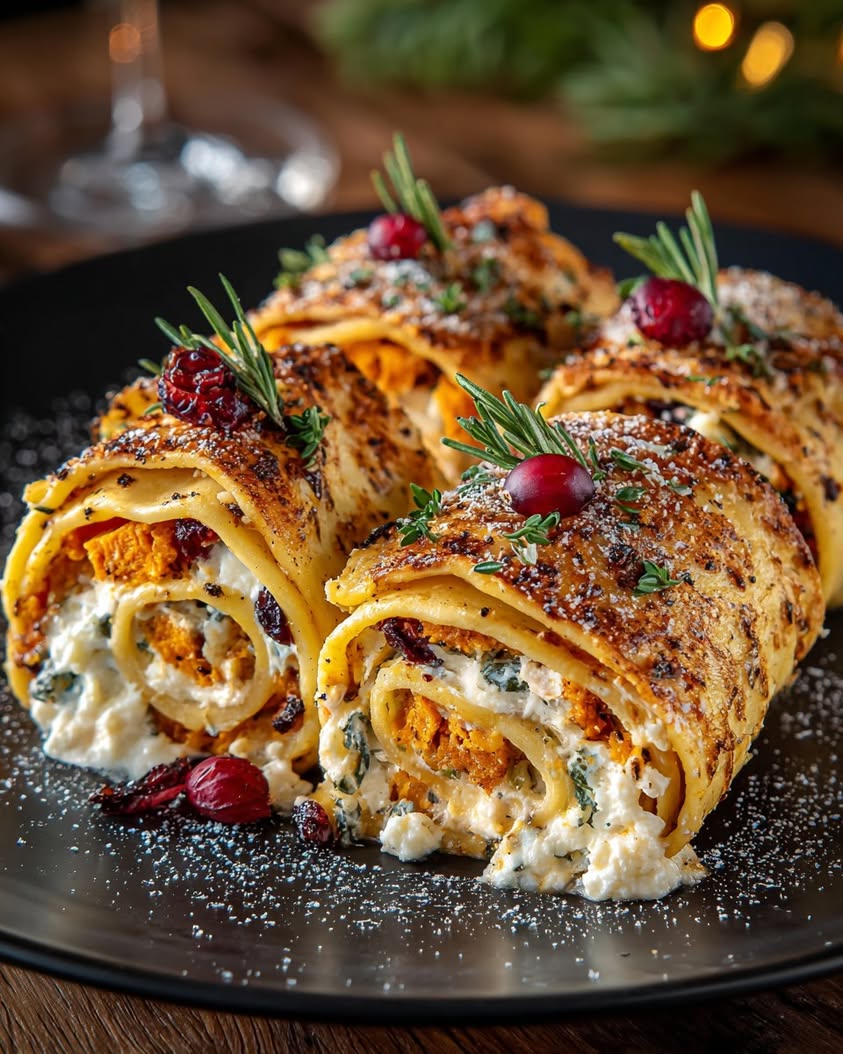
Cinnamon Roasted Sweet Potato & Cranberry Lasagna Rolls with Ricotta: A Savory-Sweet Holiday Masterpiece
Imagine the ultimate holiday side dish transformed into a stunning, elegant main course. These Cinnamon Roasted Sweet Potato & Cranberry Lasagna Rolls with Ricotta do exactly that. They capture the cozy, familiar flavors of a festive table and present them in a beautiful, roll-up package that is sure to impress. This recipe masterfully balances sweet and savory, creamy and tangy, all wrapped in tender pasta. It is a showstopping vegetarian centerpiece that brings warmth and sophistication to any seasonal gathering.
The process begins with roasting sweet potatoes until they are deeply caramelized and infused with warm cinnamon. Meanwhile, you will prepare a luxurious ricotta filling and a vibrant, tart cranberry sauce. Each component sings on its own, but when layered and rolled together, they create a symphony of textures and tastes. The final bake melds everything into a bubbly, golden-brown dish that fills your kitchen with an irresistible aroma. Essentially, this recipe is a love letter to holiday flavors, reimagined in a fun and visually appealing format.
Furthermore, this dish solves the common holiday dilemma of providing a satisfying vegetarian option that feels just as special as the roast. It is hearty enough to please meat-eaters, yet entirely plant-based in its core. The rolls are perfect for a festive dinner party, a cozy family supper, or even as a make-ahead dish for potlucks. With every bite, you get the creamy ricotta, the spiced sweet potato, the pop of cranberry, and the tender pasta. Ultimately, it is a celebration on a plate.
Quick Recipe Highlights
- Flavor Profile: This dish offers a beautiful harmony of sweet and savory notes. The cinnamon-roasted sweet potatoes provide a deep, earthy sweetness, while the ricotta adds a creamy, mild base. The cranberry sauce introduces a necessary tart and bright counterpoint, creating a perfectly balanced bite.
- Texture: You will experience a wonderful contrast in every mouthful. The lasagna noodle provides a tender yet firm structure. Inside, the filling is luxuriously creamy from the ricotta and smooth from the sweet potato. Finally, the cranberry topping adds delightful juicy bursts and a slight textural variation.
- Aroma: As this bakes, your kitchen will fill with the warm, comforting scent of cinnamon and roasted sweet potato. This is complemented by the subtle herbal notes of sage and the rich, toasty aroma of baking cheese and pasta. It is the quintessential smell of a holiday feast.
- Visual Appeal: These rolls are stunning on the table. The golden-brown tops of the pasta contrast beautifully with the vibrant red cranberry sauce peeking through. When sliced, the interior reveals pretty swirls of orange and white, making for a very impressive presentation.
- Skill Level Needed: This is an intermediate-level recipe. It involves several components like roasting, making a sauce, and carefully rolling filled pasta. However, each step is straightforward and well-explained. With a bit of patience and organization, a confident home cook can absolutely achieve fantastic results.
- Special Equipment: You will need basic kitchen tools: a baking sheet, a medium saucepan, a mixing bowl, and a 9×13 inch baking dish. A good chef’s knife, a vegetable peeler, and a potato masher or fork for the sweet potatoes are also essential. No particularly specialized equipment is required.
Recipe Overview
- Difficulty Level: We classify this recipe as intermediate. The reason is the multi-component preparation which requires coordination. You must roast vegetables, cook a simple sauce, prepare a cheese filling, and handle pasta for rolling. Each task is simple individually, but managing them together demands a moderate level of kitchen organization and timing. A beginner could succeed by preparing components in stages.
- Category: This dish brilliantly straddles categories. Primarily, it serves as a magnificent vegetarian main course for holiday dinners or special occasions. Additionally, it can function as a substantial side dish alongside a smaller protein. It also fits perfectly into the realm of comfort food and make-ahead meals for busy weeks.
- Cuisine: This is a modern fusion dish with Italian-American and general North American holiday influences. The concept of lasagna rolls originates from Italian pasta traditions. Meanwhile, the combination of sweet potato, cranberry, and cinnamon is deeply rooted in Thanksgiving and Christmas culinary customs across the United States and Canada. It is a creative blend of two beloved food heritages.
- Cost: The cost is moderately affordable, especially when sweet potatoes and cranberries are in season. Ricotta and lasagna noodles are budget-friendly pantry staples. The most significant cost may come from fresh herbs and high-quality cheese. Overall, you can expect to spend less per serving than you would on a meat-based centerpiece, making it a cost-effective showstopper.
- Season: This recipe is ideal for the fall and winter seasons, particularly from October through December. This is when sweet potatoes are at their peak sweetness and cranberries are freshly harvested. The warm spices and hearty nature of the dish perfectly combat cooler weather. However, it can certainly be enjoyed year-round as a special treat.
- Occasion: It is perfect for holiday feasts like Thanksgiving, Christmas, or Friendsgiving as the vegetarian centerpiece. It also shines at dinner parties, potlucks, and cozy family Sunday suppers. Because it can be assembled ahead, it is a fantastic choice for entertaining when you want to minimize last-minute work.
Why You’ll Love This Recipe
First and foremost, the taste and texture appeal is undeniable. Each bite delivers a complex yet harmonious experience. The creamy, rich ricotta filling is perfectly balanced by the earthy sweetness of cinnamon-roasted sweet potatoes. Then, the tart cranberry sauce cuts through the richness, preventing the dish from feeling too heavy. The al dente pasta holds it all together, providing a satisfying chew. This combination of sweet, savory, creamy, and tangy is incredibly addictive and far more interesting than a standard pasta bake.
Convenience is another major benefit, despite the intermediate skill label. You can roast the sweet potatoes and prepare the cranberry sauce well in advance. The ricotta mixture comes together in minutes. Consequently, when it is time to assemble, the process is swift and straightforward. The rolls themselves can be assembled a day ahead and simply baked before serving. This make-ahead flexibility is a game-changer for stress-free holiday entertaining or easy weeknight dinners.
From a nutritional standpoint, this dish offers substantial advantages. Sweet potatoes are a powerhouse of beta-carotene, fiber, and vitamins. Ricotta provides a good source of protein and calcium. Using whole wheat or high-fiber lasagna noodles can boost the fiber content even further. Compared to traditional meat lasagna, this version is lower in saturated fat while still being deeply satisfying. It is a hearty meal that fuels your body with quality nutrients.
The social and entertaining value of this dish is exceptionally high. It looks spectacular on a dinner table, sparking conversation and admiration. It caters beautifully to vegetarian guests without requiring you to prepare a separate, less impressive meal. Serving individual rolls makes portioning easy and elegant. It is a dish that says you cared enough to create something special, making any meal feel like a celebration.
Finally, it is cost-effective and accessible. The ingredients are not exotic or prohibitively expensive. Sweet potatoes, ricotta, and dried pasta are budget-friendly staples. Fresh cranberries are seasonal but affordable, and dried cranberries work as a substitute. You likely have many of the spices already in your pantry. This recipe delivers restaurant-quality presentation and flavor without the restaurant price tag, making gourmet holiday dining accessible to everyone.
Historical Background and Cultural Significance
The origin story of this dish is a modern tale of culinary fusion. Lasagna, in its layered form, dates back to ancient Greece and Rome, evolving into the beloved Italian baked pasta we know today. The concept of “lasagna rolls” or “manicotti” is a practical Italian-American innovation, making the pasta easier to serve individually. Meanwhile, the combination of sweet potatoes and cranberries is indelibly linked to North American harvest festivals and Thanksgiving, a holiday rooted in 17th-century pilgrim and Native American shared meals. This recipe creatively marries these two distinct culinary lineages into a single, cohesive dish.
Culturally, each component carries significant weight. Sweet potatoes have a long history in Central and South America, spreading across the globe. In the American South, they became a staple and a symbol of resourcefulness. Cranberries are one of North America’s few native fruits, used by Indigenous peoples for food, medicine, and dye. Their inclusion in Thanksgiving cemented their status as a holiday icon. By combining them with an Italian pasta format, this recipe reflects the melting-pot nature of modern American cuisine, where traditions blend to create new classics.
The evolution of this specific recipe follows contemporary food trends toward vegetable-centric meals and global flavor fusion. As vegetarian and flexitarian diets gained popularity, home cooks and chefs sought ways to make vegetables the star of the plate in celebratory ways. Transforming holiday side dish flavors into a main course pasta is a logical and delicious evolution. It represents a shift from meat being the mandatory centerpiece to vegetables being celebrated for their inherent versatility and flavor.
Regional variations of this concept are easy to imagine. In the South, you might find a version with pecans or a bourbon-spiked cranberry sauce. A Northeastern adaptation could incorporate maple syrup from Vermont. An Italian-inspired variation might use rosemary instead of sage and a tomato-based sauce instead of cranberry. The basic framework of a creamy filling rolled in pasta is wonderfully adaptable, allowing cooks to incorporate local ingredients and personal taste preferences, ensuring the recipe continues to evolve.
Ingredient Deep Dive
Sweet Potatoes are the hearty soul of this dish. Botanically distinct from yams, these tuberous roots originated in Central or South America over 5,000 years ago. Columbus brought them to Europe, and they became a crucial crop worldwide. Nutritionally, they are superb sources of beta-carotene (which converts to Vitamin A), Vitamin C, manganese, and fiber. Their natural sugars caramelize beautifully when roasted. For this recipe, choose firm sweet potatoes with smooth, unblemished skin. Store them in a cool, dark, well-ventilated place—not the refrigerator. For a quicker alternative, canned puree can work, but roasting fresh delivers superior depth of flavor.
Fresh Cranberries provide the essential tart contrast. These native North American berries grow on vines in sandy bogs, primarily in Massachusetts, Wisconsin, and the Pacific Northwest. They are harvested in the fall, making them a seasonal treasure. They are packed with Vitamin C, fiber, and unique phytonutrients like proanthocyanidins, known for supporting urinary tract health. Select berries that are firm, shiny, and deep red in color. They freeze beautifully for year-round use. If fresh are unavailable, you can use high-quality dried cranberries, but rehydrate them slightly in warm water or orange juice first to restore some juiciness.
Ricotta Cheese forms the creamy, mild base of the filling. This Italian whey cheese has been made for centuries as a way to use the byproducts of cheesemaking. Its name literally means “recooked.” It is lighter than many cheeses, offering a good amount of protein and calcium with moderate fat. For the best texture and flavor, seek out whole-milk ricotta from the dairy section, not the shelf-stable tubs. Draining it in a fine-mesh strainer for 30 minutes prevents a watery filling. For a dairy-free version, blended firm tofu or a store-bought vegan ricotta can be effective substitutes, though the flavor profile will shift.
Lasagna Noodles are the structural vehicle. These wide, flat pasta sheets originated in Naples, Italy. The dried version used here is a convenient modern invention. Opt for a good quality brand that holds its shape when boiled. For a nutritional boost, whole wheat or legume-based lasagna noodles work perfectly. The key technique is to boil them until just pliable (al dente) so they can be rolled without tearing. After boiling, lay them flat on a clean kitchen towel to prevent sticking. No-boil noodles are not recommended for this roll-up method, as they require more moisture to cook through.
Common Mistakes to Avoid
- Overcooking the Lasagna Noodles: Boiling the noodles until they are too soft is a critical error. They will become mushy and tear easily when you try to roll them. Always cook them to al dente, which means they should still have a slight firmness in the center. They will continue to cook during the baking process.
- Using Watery Ricotta: Not draining ricotta leads to a soggy filling that can make the rolls fall apart and create a watery sauce in the baking dish. To avoid this, place the ricotta in a fine-mesh strainer over a bowl for at least 30 minutes before mixing your filling. This simple step removes excess whey.
- Under-seasoning the Filling: The ricotta and sweet potato mixture needs ample seasoning to taste vibrant. Do not be shy with salt, pepper, and herbs. Taste the filling before assembling the rolls. Remember, it needs to season the entire bite of pasta and topping, so it should be flavorful on its own.
- Skipping the Roasting Step for Sweet Potatoes: While boiling or microwaving sweet potatoes is faster, roasting is non-negotiable for this recipe. Roasting concentrates their natural sugars and develops a deep, caramelized flavor that boiling simply cannot achieve. This depth is foundational to the dish’s complex taste profile.
- Overfilling the Rolls: It is tempting to add a generous amount of filling, but too much will cause it to spill out during rolling and baking. Use a moderate, even layer. A good rule is about 1/4 to 1/3 cup of filling per lasagna noodle, spread thinly to the edges.
- Not Letting the Rolls Rest After Baking: Pulling the dish from the oven and serving immediately can lead to a messy presentation. The filling is extremely hot and loose. Letting the baked rolls rest for 10-15 minutes allows them to set slightly, making them easier to portion and serve neatly.
- Using Canned Cranberry Sauce: The gelatinous, overly sweet canned sauce lacks the bright, fresh tartness this recipe needs. Homemade cranberry sauce takes mere minutes to prepare and allows you to control the sugar level and texture. The superior flavor payoff is worth the minimal extra effort.
- Forgetting to Grease the Baking Dish: Even with sauce on the bottom, the pasta can stick to the dish. Always lightly grease your baking dish with olive oil or cooking spray before adding the cranberry sauce and arranging the rolls. This ensures easy cleanup and intact servings.
Essential Techniques
Roasting the Sweet Potatoes is the first crucial technique. Roasting, as opposed to boiling, intensifies flavor through caramelization. To master it, cut the potatoes into uniform cubes so they cook evenly. Toss them thoroughly with oil, cinnamon, salt, and pepper to coat every surface. Spread them in a single layer on a parchment-lined baking sheet; crowding will steam them. Roast at a high heat (400°F or above) until the edges are browned and the centers are tender. The visual cue for success is crispy, caramelized edges and a fork-tender interior. The aroma will be sweet and deeply fragrant.
Preparing Al Dente Pasta for Rolling is a skill that applies to many stuffed pasta dishes. Bring a large pot of well-salted water to a rolling boil. Add the lasagna noodles one at a time to prevent sticking. Stir gently occasionally. Cook for 1-2 minutes less than the package instructions for al dente. The noodle should be pliable enough to bend without cracking but still offer slight resistance when bitten. Immediately transfer cooked noodles to a large bowl of ice water to halt cooking, then lay them flat on clean kitchen towels. This prevents them from sticking together and gives you a workable surface for filling.
Rolling the Filled Lasagna Noodles requires a gentle touch. Lay a noodle flat on your work surface. Spread the filling in an even layer, leaving a small border at one short end to seal the roll. Starting from the filled end, use your fingers to gently but firmly roll the noodle away from you. Do not roll too tightly, or the filling will squeeze out the ends. The goal is a snug, cylindrical roll. Place the roll seam-side down in the prepared baking dish. If a little filling escapes, simply tuck it back in or smooth it over the top; it will all bake together beautifully.
Pro Tips for Perfect Cinnamon Roasted Sweet Potato & Cranberry Lasagna Rolls
For an extra flavor boost, toast the cinnamon in a dry pan for 30 seconds before tossing it with the sweet potatoes. This simple step awakens the essential oils in the spice, resulting in a warmer, more aromatic depth in the final dish.
Add a pinch of nutmeg or allspice to the ricotta filling. These warm spices complement the cinnamon beautifully and add another layer of complexity that makes the rolls taste even more special and holiday-appropriate.
After boiling the noodles, pat them dry with paper towels before assembling. Removing excess surface water helps the filling adhere better to the pasta and prevents dilution of the flavors, ensuring a cleaner, more distinct taste in every layer.
Use a piping bag or a zip-top bag with the corner snipped off to apply the ricotta filling. This method allows for incredibly even, controlled distribution of the filling along the entire length of the noodle, leading to perfectly uniform rolls.
If your cranberry sauce seems too thick after cooking, stir in a tablespoon of orange juice or water. You want a spreadable, saucy consistency for the base of the pan, not a stiff jelly, to keep the bottom of the rolls moist during baking.
For a gorgeous golden-brown top, brush the exposed pasta surfaces of the rolls lightly with olive oil or melted butter before baking. This promotes even browning and adds a lovely sheen to the finished presentation.
Let the assembled, unbaked rolls sit at room temperature for 20 minutes before putting them in the oven. This takes the chill off the ingredients and promotes more even cooking from edge to center, preventing a cold middle.
Garnish with fresh herbs right before serving, not before baking. A sprinkle of chopped fresh sage, parsley, or thyme adds a pop of color and a burst of fresh aroma that complements the baked flavors perfectly.
Variations and Adaptations
For regional variations, consider a Southern twist by adding toasted pecans or walnuts to the ricotta filling and using a splash of bourbon in the cranberry sauce. A Mediterranean version could incorporate spinach into the ricotta, use nutmeg instead of cinnamon, and top with a light béchamel instead of cranberry sauce. These adaptations show how the basic framework can travel across culinary maps while maintaining its elegant structure.
Seasonal adaptations are simple and rewarding. In spring, try using roasted butternut squash and a lemon-herb ricotta with a fresh pea puree base. For summer, grilled zucchini and eggplant strips can replace the sweet potato, paired with a sun-dried tomato and basil ricotta and a fresh tomato sauce. This flexibility makes the recipe a year-round staple in your repertoire.
Dietary modifications are straightforward. For a gluten-free version, use your favorite gluten-free lasagna noodles—just handle them even more carefully as they can be brittle. To make it vegan, substitute the ricotta with a blend of firm tofu, nutritional yeast, lemon juice, and salt, and use a vegan cheese shred on top. For a nut-free version, simply omit any nut-based garnishes; seeds like pepitas make a great crunchy alternative.
Flavor variations can personalize the dish to your taste. Add a layer of sautéed kale or Swiss chard under the ricotta for a greens boost. Incorporate crumbled goat cheese or feta into the ricotta mixture for a tangier profile. For a savory twist, use a marinara sauce instead of cranberry and add Italian sausage (or plant-based crumbles) to the filling. The roll-up format is incredibly forgiving and adaptable.
Serving and Presentation Guide
Plating techniques can elevate this dish from homey to haute. For individual servings, use a wide, shallow bowl or plate. Place one or two rolls slightly off-center. Spoon a little extra warm cranberry sauce around the plate, not just on top. Use the back of a spoon to swipe the sauce for a professional touch. This creates a beautiful canvas of color and makes the plate look thoughtfully composed.
Garnishing is the final touch. A sprinkle of fresh, finely chopped sage or parsley adds vibrant green contrast. For texture and richness, a few crispy fried sage leaves or a light dusting of grated Parmesan or Pecorino Romano cheese works wonders. If you added nuts to the filling, a few extra toasted pieces scattered on top provide crunch and visual appeal. Always add fresh garnishes after baking and just before serving to preserve their color and texture.
Traditional accompaniments might include a simple green salad with a sharp vinaigrette to cut the richness, such as an arugula salad with lemon and shaved fennel. For a heartier holiday spread, serve alongside roasted Brussels sprouts, green bean almondine, or mashed potatoes. These sides complement the rolls without competing with their dominant sweet and savory flavors.
Modern serving suggestions lean towards balance. Consider starting the meal with a light butternut squash soup. Pair the rolls with a kale and quinoa salad with a citrus dressing for a complete, nutrient-dense meal. For a casual gathering, serve the rolls as the main event with a selection of artisan breads and a shared board of olives and marinated vegetables.
Wine and Beverage Pairing
Wine pairings should consider the dish’s sweet and savory duality. A slightly off-dry white wine like a Riesling or Gewürztraminer complements the sweet potatoes and cranberries beautifully without clashing. Their acidity cuts through the ricotta’s creaminess. For red wine lovers, a light-bodied, low-tannin red like a Pinot Noir or Beaujolais works well. The fruit-forward notes in these reds harmonize with the berry elements, while their subtle earthiness pairs with the roasted vegetables. Avoid heavily oaked or high-tannin reds, as they can conflict with the sweetness.
Non-alcoholic alternatives offer just as much pairing pleasure. Sparkling apple cider is a classic and festive choice, its bubbles and apple notes marrying perfectly with the fall flavors. A tart cranberry spritzer (cranberry juice mixed with club soda and a lime wedge) echoes the dish’s key ingredient. For a warmer option, a mulled cranberry punch or even a chai tea latte highlights the warm spices in the recipe.
Coffee and tea pairings are excellent for a brunch or lunch serving. A medium-roast coffee with notes of caramel or nut will complement the roasted sweet potatoes. For tea, a spiced chai or a cinnamon-orange herbal blend directly mirrors the spices in the dish. A classic Earl Grey with its bergamot notes can also provide a lovely, aromatic contrast to the richness of the cheese and pasta.
Storage and Shelf Life
Storage methods are crucial for maintaining quality. After baking, allow the dish to cool completely to room temperature. Cover the baking dish tightly with aluminum foil or transfer individual portions to airtight containers. Properly stored, the baked rolls will last in the refrigerator for 3-4 days. The cranberry sauce can cause the pasta to soften more over time, so the texture is best within the first 2 days of refrigeration.
Freezing guidelines are straightforward for make-ahead meals. You can freeze either unbaked or baked rolls. For unbaked, assemble the rolls in a freezer-safe dish, cover tightly with plastic wrap and then foil, and freeze for up to 2 months. Thaw overnight in the refrigerator before baking as directed, adding a few extra minutes to the bake time. Baked rolls can also be frozen, though the pasta may become slightly softer upon reheating.
Reheating instructions aim to restore texture without drying out the dish. The best method is to reheat in a 350°F oven. Cover the dish with foil and bake for 15-20 minutes, or until heated through. For a single serving, the microwave works in a pinch—use a lower power setting and cover with a damp paper towel to prevent the pasta from becoming tough. Always ensure the internal temperature reaches 165°F for food safety.
Make Ahead Strategies
Prep timeline can be spread over two days for stress-free entertaining. Day 1: Roast the sweet potatoes and prepare the cranberry sauce. Store them separately in airtight containers in the refrigerator. You can also mix the ricotta filling (without herbs) and refrigerate it. Day 2 (or several hours before serving): Cook the noodles, mix the herbs into the ricotta, assemble the rolls in the baking dish, cover, and refrigerate. Bake as directed, adding 5-10 minutes to the bake time since you are starting from cold.
Storage between steps is simple with proper planning. Cooked sweet potatoes and cranberry sauce keep well for 3 days refrigerated. The assembled, unbaked rolls can sit covered in the refrigerator for up to 24 hours before baking. Do not add the final cheese topping until you are ready to bake, as it can become gummy or dissolve during storage.
Quality impact assessment shows that make-ahead preparation has minimal negative effect. In fact, allowing the assembled rolls to rest in the refrigerator can help the flavors meld more deeply. The key is to ensure components are completely cool before assembling to prevent condensation, which could make the rolls soggy. The final baked product from a make-ahead assembly is often even more flavorful.
Scaling Instructions
Halving the recipe is easy for smaller households. Simply divide all ingredient quantities by two. Use an 8×8 inch baking dish instead of a 9×13. The roasting and cooking times for the components will remain roughly the same, but the final bake time for the assembled rolls may be reduced by 5-10 minutes since there is less mass to heat through. Keep a close eye on them for browning.
Doubling or tripling for a crowd requires minor adjustments. Double or triple all ingredients proportionally. You will likely need to roast the sweet potatoes in batches to avoid steaming. Use multiple baking dishes or one very large roasting pan. When boiling noodles, do so in batches to prevent sticking and ensure even cooking. The total bake time may increase slightly; rely on the visual cue of bubbly sauce and golden-brown tops rather than a strict timer.
Equipment adjustments are necessary when scaling. For a doubled recipe, ensure you have a large enough mixing bowl for the ricotta filling. You may need two baking dishes or a large, deep hotel pan. If using multiple dishes, rotate them halfway through baking for even cooking. Consider the capacity of your oven and whether you can fit multiple dishes with proper air circulation.
Nutritional Deep Dive
Macro breakdown per serving typically includes a balance of complex carbohydrates from the sweet potato and pasta, moderate protein from the ricotta cheese, and healthy fats from the olive oil and cheese. This balance provides sustained energy. Using whole wheat pasta increases the fiber content significantly, which aids in digestion and helps manage blood sugar spikes from the natural sugars in the dish.
Micronutrient analysis reveals a wealth of vitamins and minerals. Sweet potatoes are famously rich in Vitamin A (as beta-carotene), crucial for vision and immune health. They also provide Vitamin C and potassium. Ricotta contributes calcium and phosphorus for bone health. Cranberries add Vitamin C, Vitamin K, and manganese. Together, these ingredients create a nutrient-dense meal that supports overall wellness.
Health benefits extend beyond basic nutrition. The antioxidants in sweet potatoes (beta-carotene) and cranberries (proanthocyanidins) combat oxidative stress and inflammation. The fiber content promotes gut health and satiety. Choosing this vegetable-forward dish over a meat-heavy alternative can support heart health by reducing saturated fat intake. It is a satisfying way to eat a colorful, plant-rich meal.
Dietary Adaptations
For a gluten-free adaptation, the primary change is the pasta. Select a high-quality gluten-free lasagna noodle, such as those made from brown rice or quinoa. Be extra careful when boiling and handling, as they can be more fragile. Ensure all other packaged ingredients, like spices, are certified gluten-free. The rest of the recipe is naturally gluten-free.
A dairy-free or vegan version requires replacing the ricotta. A popular substitute is a blend of firm tofu, nutritional yeast, lemon juice, and salt pulsed in a food processor until it resembles ricotta’s texture. For the topping, use a vegan cheese shred or a sprinkle of nutritional yeast. The result is a plant-based roll that is still creamy and satisfying, aligning with vegan dietary principles.
For a lower-carb or keto adaptation, the pasta is the main challenge. Substitute lasagna noodles with thin slices of zucchini or eggplant, grilled or roasted until pliable. The sweet potato, while nutritious, is high in carbs, so you may reduce the quantity or substitute with a lower-carb squash like pumpkin or a small amount of roasted cauliflower puree mixed into the filling. Adjust the cranberry sauce to use a keto-friendly sweetener.
Troubleshooting Guide
If your rolls are falling apart, the issue is likely structural. First, ensure the noodles were cooked to al dente—overcooked noodles lack integrity. Second, make sure the ricotta was well-drained; excess moisture weakens the structure. Third, do not overfill the noodles. Finally, let the baked dish rest for a full 10-15 minutes before serving. This allows the filling to set, making the rolls much easier to handle and serve neatly.
If the flavor seems bland, you probably under-seasoned the filling. The ricotta and sweet potato mixture needs ample salt, pepper, and herbs to stand up to the pasta. Always taste your filling before assembling. Additionally, toasting your spices before adding them can unlock more flavor. A final sprinkle of flaky sea salt and a drizzle of good olive oil before serving can also elevate a finished dish that tastes flat.
If the dish is too dry, the cause is often overbaking or not enough sauce. Ensure you have enough cranberry sauce in the bottom of the pan to create steam during baking. You can also add a few tablespoons of vegetable broth or water to the dish before covering it with foil for the first part of baking. Covering the dish for the majority of the bake time traps moisture and prevents the pasta edges from drying out.
Recipe Success Stories
Community feedback on this recipe often highlights its versatility. Many home cooks report successfully making it for mixed-diet holiday tables, pleasing both vegetarians and meat-eaters alike. A common success story involves doubling the recipe for a large potluck and receiving numerous requests for the recipe. Others have shared beautiful photos of their golden-brown rolls, garnished with fresh herbs, proving its visual appeal is a universal win.
Variation successes are frequently shared. One reader added caramelized onions to the ricotta filling and raved about the extra depth of flavor. Another used butternut squash instead of sweet potato and loved the result. A family with nut allergies substituted toasted pumpkin seeds for a proposed walnut garnish with great success. These stories demonstrate how the recipe serves as a fantastic template for culinary creativity.
Reader suggestions have also improved the recipe over time. One savvy cook suggested adding a layer of baby spinach under the ricotta for extra greens, which has been adopted by many. Another recommended brushing the rolls with garlic-infused olive oil before baking for an extra savory note. This collaborative spirit shows how a great recipe evolves and becomes a community favorite.
Frequently Asked Questions
Q: Can I use no-boil lasagna noodles for this recipe?
A: We do not recommend no-boil noodles for this specific roll-up method. They are designed to absorb moisture from a very wet sauce in a layered lasagna. In this application, they may not soften properly and could remain too firm or become gummy. Traditional boiled noodles that you can handle are the best choice for pliable, rollable results.
Q: Can I make these rolls completely ahead and freeze them before baking?
A: Absolutely. Assemble the rolls in a freezer-safe baking dish. Wrap the entire dish very tightly with plastic wrap, then with aluminum foil. Freeze for up to 2 months. When ready to bake, thaw overnight in the refrigerator and then bake as directed, adding 10-15 minutes to the covered baking time since you are starting from a cold state.
Q: What can I use instead of fresh cranberries if they are out of season?
A: High-quality dried cranberries are a good substitute. Simmer 1 1/2 cups of dried cranberries with 1 cup of water or orange juice, a sweetener if desired, and a pinch of salt until the berries plump and the liquid thickens into a sauce-like consistency. This will mimic the texture and tart flavor of fresh sauce quite well.
Q: My sweet potato filling is too wet. How can I fix it?
A> If your roasted sweet potato cubes seem watery, spread them on a paper towel-lined plate to absorb excess moisture before mashing. You can also return the mashed sweet potato to a dry saucepan over low heat for a few minutes, stirring constantly, to evaporate some of the liquid before mixing it with the ricotta.
Q: Is there a way to make this recipe lighter or lower in calories?
A: Yes. Use part-skim ricotta instead of whole milk. Reduce the amount of olive oil used for roasting by using an oil spray. Consider using a lower-fat cheese for the topping or omitting it. You can also increase the ratio of vegetables to cheese in the filling for a higher-volume, lower-calorie bite.
Q: Can I add a protein like chicken or sausage to this dish?
A: Certainly. For a non-vegetarian version, you can add about 1 cup of cooked, crumbled Italian sausage or shredded rotisserie chicken to the ricotta filling. Ensure the meat is well-season
Print
Cinnamon Roasted Sweet Potato & Cranberry Lasagna Rolls with Ricotta
Description
A festive twist on lasagna rolls featuring cinnamon-roasted sweet potatoes, tart cranberries, and creamy ricotta, all rolled up in pasta sheets and baked until golden.
Ingredients
For the Crust:
- 8 lasagna noodles, cooked al dente
- 2 medium sweet potatoes, peeled and cubed
- 1 cup fresh or frozen cranberries
- 1 tablespoon olive oil
- 1 teaspoon ground cinnamon
- Salt and black pepper to taste
- 2 cups ricotta cheese
- 1 large egg
- 1/2 cup grated Parmesan cheese
- 2 cloves garlic, minced
- 1 cup marinara sauce
- 1/2 cup shredded mozzarella cheese
- Fresh parsley for garnish
Instructions
1. Prepare the Crust:
- Preheat oven to 400°F (200°C). Toss sweet potatoes and cranberries with olive oil, cinnamon, salt, and pepper. Spread on a baking sheet and roast for 20-25 minutes until tender. Let cool slightly, then mash roughly.
- In a bowl, mix ricotta, egg, Parmesan, garlic, salt, and pepper. Stir in the roasted sweet potato and cranberry mixture.
- Lay cooked lasagna noodles flat. Spread about 1/3 cup of the ricotta-sweet potato mixture evenly over each noodle. Roll up tightly from one end.
- Spread a thin layer of marinara sauce in a baking dish. Place rolls seam-side down in the dish. Top with remaining sauce and sprinkle with mozzarella.
- Cover with foil and bake at 375°F (190°C) for 20 minutes. Remove foil and bake another 10 minutes until cheese is bubbly. Garnish with parsley before serving.
Notes
You can customize the seasonings to taste.

I’m Shaykee—born in Morocco, seasoned across continents. From airplane galleys to home kitchens, I share the flavors and stories that shaped my journey.