
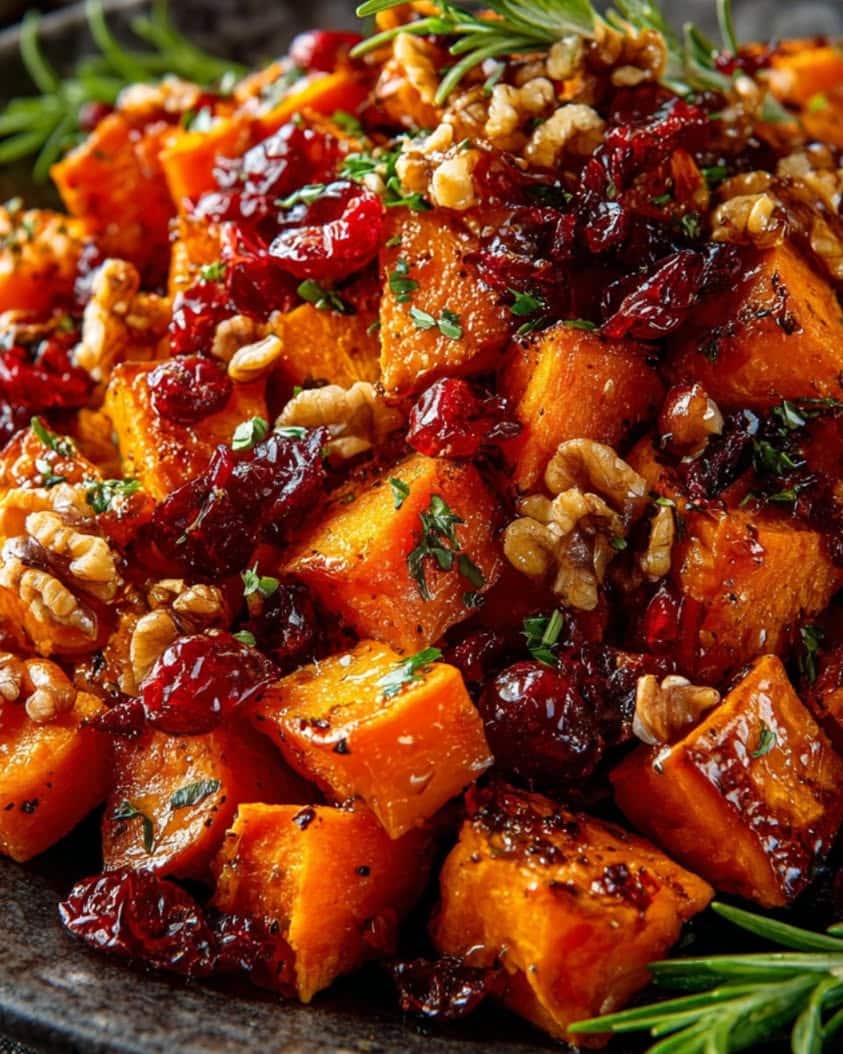
Maple Roasted Sweet Potatoes with Cranberries and Walnuts: A Sweet, Savory, and Easy Holiday Side Dish
Imagine a dish that perfectly captures the essence of the holiday season in every single bite. This recipe for maple roasted sweet potatoes with cranberries and walnuts does exactly that. It brings together the earthy sweetness of roasted sweet potatoes, the bright tart pop of cranberries, and the satisfying crunch of toasted walnuts. Ultimately, it is a symphony of flavors and textures that will have everyone asking for seconds.
Furthermore, this dish is incredibly simple to prepare, making it a stress-free addition to your busy holiday table. The process involves minimal hands-on time, allowing you to focus on other meal components or simply enjoy time with your guests. As the sweet potatoes roast, your kitchen will fill with an irresistible aroma of maple and warm spices, building anticipation for the delicious meal to come. This recipe is a guaranteed crowd-pleaser that looks as stunning as it tastes.
Consequently, whether you are hosting a large Thanksgiving feast or a cozy family dinner, these maple-glazed sweet potatoes fit the occasion perfectly. They offer a beautiful balance of sweet and savory notes that complement traditional holiday mains like turkey or ham beautifully. Additionally, the vibrant colors from the orange sweet potatoes and red cranberries create a festive presentation that enhances your entire table setting. This side dish is more than just food; it is a centerpiece of holiday warmth and comfort.
Quick Recipe Highlights
- Flavor Profile: This dish masterfully balances sweet, savory, and tart notes. The natural sweetness of the potatoes caramelizes with pure maple syrup, while a hint of savory from olive oil and salt creates depth. Finally, the tart cranberries cut through the richness, preventing the dish from becoming overly sweet.
- Texture: You will experience a wonderful contrast in every mouthful. The sweet potatoes become tender and creamy on the inside with beautifully caramelized, slightly crisp edges. Meanwhile, the walnuts add a essential crunchy element, and the cranberries offer a pleasant chewy burst, creating a truly satisfying eating experience.
- Aroma: As this dish roasts, it releases an incredible fragrance that embodies the holidays. The scent of caramelizing maple syrup mingles with the earthy sweetness of roasting root vegetables and the warm, toasty notes from the walnuts. This aromatic profile is unmistakably festive and comforting.
- Visual Appeal: The presentation is stunningly vibrant. The deep orange hue of the sweet potatoes glistens with a maple glaze, dotted with jewel-like red cranberries and the rustic brown of toasted walnuts. This colorful medley adds a festive and appetizing touch to any holiday plate.
- Skill Level Needed: This is a beginner-friendly recipe requiring only basic kitchen skills. You need to be comfortable with simple knife work for cubing potatoes and stirring ingredients together. No advanced techniques are required, making it accessible for cooks of all experience levels.
- Special Equipment: You only need a few standard kitchen tools. A large baking sheet, a sharp knife, a cutting board, and a mixing bowl are essential. Parchment paper or a silicone baking mat is highly recommended for easy cleanup and to prevent sticking.
Recipe Overview
- Difficulty Level: We classify this recipe as easy because it involves straightforward steps like chopping, tossing, and roasting. There is no intricate timing or complex techniques. Even a novice cook can achieve excellent results by simply following the clear instructions provided. The oven does most of the work.
- Category: This dish falls squarely into the side dish category, perfect for holidays and special dinners. It can also serve as a component of a hearty vegetarian bowl or a festive addition to a brunch spread. Its versatility makes it a valuable recipe to have in your repertoire year-round.
- Cuisine: While sweet potatoes are a global ingredient, this preparation leans into North American holiday traditions, particularly Thanksgiving and Christmas. The use of maple syrup, a classic North American product, and cranberries, native to the continent, roots this dish in a modern North American culinary context.
- Cost: This is a very cost-effective side dish. Sweet potatoes are an affordable root vegetable, especially in season. Dried cranberries and walnuts are pantry staples that can be bought in bulk. Pure maple syrup is the premium ingredient, but a little goes a long way to create immense flavor.
- Season: This recipe shines brightest in the fall and winter months. Sweet potatoes are at their peak in the autumn, and the warm, comforting flavors are ideal for cooler weather. Of course, it is a quintessential Thanksgiving and Christmas side dish that evokes the spirit of the season.
- Occasion: It is perfect for holiday feasts, potlucks, and family gatherings. Its make-ahead potential and crowd-pleasing nature make it ideal for entertaining. You can also prepare it for a special weekend dinner to bring a touch of holiday cheer to any day of the week.
Why You’ll Love This Recipe
First and foremost, the taste and texture appeal is undeniable. Each forkful delivers a complex and harmonious blend of flavors and sensations. You get the creamy, caramelized sweetness of the potato, immediately followed by the sharp, tangy punch of a cranberry, all grounded by the rich, crunchy walnut. This combination is incredibly moreish and satisfying, ensuring the dish disappears quickly from the table. It strikes a perfect balance that avoids being cloyingly sweet, making it appealing to both adults and children alike.
Next, consider the sheer convenience and preparation benefits. This recipe requires minimal active time. After a quick chop and toss, the oven takes over, freeing you to manage other dishes or socialize. The cleanup is equally simple, especially if you use parchment paper. Moreover, the ingredients are easy to find at any standard grocery store. You do not need to hunt for exotic items, which reduces stress during the busy holiday season. This simplicity is a major win for any home cook.
From a nutritional standpoint, this dish offers significant advantages. Sweet potatoes are a powerhouse of beta-carotene, vitamin A, and fiber. Walnuts contribute healthy fats, protein, and omega-3 fatty acids. Cranberries are famous for their antioxidant properties. While the maple syrup adds sweetness, it is a natural sweetener with some minerals. Consequently, you are serving a side dish that is not only delicious but also contributes valuable nutrients to your holiday meal, making indulgence feel a little more justified.
Furthermore, its social and entertaining value is exceptionally high. This is a universally loved side dish that complements a wide variety of mains, from roast turkey to baked ham to vegetarian entrees. Its vibrant, colorful presentation makes it a beautiful addition to a buffet or family-style table. Guests will admire its festive look and rave about its flavor. Bringing this dish to a potluck guarantees you will go home with an empty tray and numerous requests for the recipe.
Finally, the cost-effectiveness and accessibility are major perks. Compared to many elaborate holiday sides, this recipe uses affordable, whole ingredients. Sweet potatoes are inexpensive, and the other components are pantry staples for many. You can easily scale the recipe up or down based on your guest count without breaking the bank. This accessibility means you can enjoy a restaurant-quality, impressive side dish without the premium price tag, making holiday entertaining more manageable.
Historical Background and Cultural Significance
The story of this dish is intertwined with the history of its core ingredients in North America. Sweet potatoes have a long, global history, but their prominence in American cuisine, particularly in the South, is well-documented. Cranberries are one of the few fruits native to North America and were used by Indigenous peoples long before European arrival. Walnuts, specifically the Eastern black walnut, are also native to the continent. The combination of these native ingredients with maple syrup, another Indigenous innovation, creates a dish that feels deeply rooted in the land.
Culturally, this recipe has become a modern staple of Thanksgiving and Christmas celebrations. While classic candied yams or sweet potato casserole have long held a place on the holiday table, this roasted version represents a shift towards simpler, less processed preparations. It emphasizes the natural flavors of the ingredients with a lighter glaze, aligning with contemporary tastes that favor whole foods and balanced sweetness. It honors tradition while offering a fresh, updated take on a holiday classic.
The evolution of the recipe from candied or marshmallow-topped casseroles to this roasted medley reflects broader culinary trends. Home cooks increasingly seek dishes that are easier to prepare, healthier, and highlight ingredient integrity. Roasting vegetables to caramelize their natural sugars became a popular technique in home kitchens. Combining that technique with festive ingredients like cranberries and maple syrup was a natural and delicious progression. This version is less about heavy sweetness and more about nuanced, caramelized complexity.
Regional variations of this concept abound. In the South, you might find pecans substituted for walnuts and a touch of bourbon in the glaze. Some New England variations might include a sprinkle of rosemary or thyme for a savory herb note. Other adaptations might use different nuts like pepitas or almonds, or swap dried cherries for cranberries. The basic formula of roasted sweet potatoes with a sweet glaze, fruit, and nuts is wonderfully adaptable, allowing it to reflect local tastes and available ingredients across the country.
Ingredient Deep Dive
Sweet Potatoes: Botanically distinct from yams, sweet potatoes are native to Central and South America and have been cultivated for thousands of years. They are incredibly nutritious, packed with beta-carotene (which converts to Vitamin A), Vitamin C, manganese, and fiber. Their natural sweetness intensifies beautifully when roasted. For this recipe, choose firm sweet potatoes with smooth, unblemished skin. Look for varieties like Garnet or Jewel, which have moist, orange flesh perfect for roasting. Store them in a cool, dark, well-ventilated place—not the refrigerator, as cold temperatures can alter their texture and flavor.
Pure Maple Syrup: This is the sap of the sugar maple tree, boiled down to concentrate its sugars. Indigenous peoples of North America were the first to harvest and process maple sap. It contains antioxidants and minerals like manganese and zinc, unlike refined sugars. For the best flavor, always opt for 100% pure maple syrup, not pancake syrup which is primarily corn syrup and artificial flavor. Grade A Amber Color and Rich Taste is ideal for its robust flavor. Store it in the pantry before opening and in the refrigerator afterward to prevent fermentation.
Dried Cranberries: These are fresh cranberries that have been dehydrated, often with added sugar to balance their intense tartness. Cranberries are native to North American bogs and were used by Indigenous peoples for food, dye, and medicine. They are famous for their proanthocyanidins, which may help prevent urinary tract infections. For this recipe, you can use sweetened or unsweetened dried cranberries based on your preference. If you find them too dry, plump them in warm water or orange juice for 10 minutes before adding to the dish. Store any leftovers in an airtight container in a cool, dry place.
Walnuts: Walnuts are one of the oldest tree foods, cultivated for thousands of years. They are an excellent source of plant-based omega-3 fatty acids (alpha-linolenic acid), antioxidants, and protein. Toasting walnuts is a critical step as it deepens their flavor and enhances their crunch. You can buy raw walnut halves or pieces and toast them yourself in a dry skillet or the oven until fragrant. Store walnuts in an airtight container in the refrigerator or freezer due to their high oil content, which can cause them to become rancid at room temperature.
Olive Oil & Seasonings: A good quality olive oil helps coat the potatoes, promoting caramelization and preventing sticking. Its savory notes balance the sweetness. Sea salt or kosher salt is essential to elevate all the other flavors; without it, the dish can taste flat. Black pepper adds a subtle warmth, and a spice like cinnamon or a pinch of cayenne can introduce another layer of complexity. These supporting players are crucial for creating a well-rounded flavor profile that is not one-dimensionally sweet.
Common Mistakes to Avoid
- Overcrowding the Pan: Spreading the sweet potatoes in a single layer with space between them is non-negotiable. If the pan is too crowded, the potatoes will steam instead of roast, resulting in soft, mushy pieces without the desired caramelized edges. Always use a large enough baking sheet or roast in batches.
- Using “Pancake Syrup” Instead of Pure Maple Syrup: The artificial flavor of pancake syrup will dominate the dish and taste inauthentic. Pure maple syrup has a complex, woody sweetness that is integral to the recipe’s success. This substitution is the most common flavor killer.
- Skipping the Walnut Toasting Step: Raw walnuts can taste bitter and have a soft, sometimes rubbery texture. Toasting them awakens their oils, deepens their nutty flavor, and provides the essential crunchy contrast. It only takes a few minutes but makes a world of difference.
- Adding Cranberries Too Early: If you add dried cranberries at the beginning of roasting, they can burn and become unpleasantly bitter. They only need a few minutes in the oven to warm through and soften slightly, so always add them in the last 5-10 minutes.
- Not Cutting the Potatoes Uniformly: Inconsistent cube sizes lead to uneven cooking. Smaller pieces will burn before larger ones are tender. Aim for ¾-inch to 1-inch cubes for the best balance of creamy interior and caramelized exterior.
- Forgetting to Stir During Roasting: Stirring the potatoes once or twice during the cooking process ensures all sides get exposed to the hot pan and caramelize evenly. Otherwise, the bottom pieces may over-brown while the top ones steam.
- Underseasoning: Sweet vegetables still need salt to bring out their flavor. Do not be shy with the salt and pepper. Taste the mixture before roasting and adjust if necessary. The salt will balance the sweetness perfectly.
- Using a Dark-Colored or Non-Stick Pan Without Adjustment: Dark pans absorb more heat and can cause the edges to burn faster. If using one, consider reducing the oven temperature by 25 degrees Fahrenheit and checking for doneness a few minutes earlier.
Essential Techniques
Uniform Chopping: Achieving evenly sized sweet potato cubes is the foundation of this recipe. Consistent size ensures that every piece cooks at the same rate, resulting in a uniform texture throughout the dish. Use a sharp chef’s knife and take your time. First, slice the potato into even planks, then into batons, and finally into cubes. The goal is pieces that are about the same size so they finish roasting simultaneously, preventing some from being undercooked while others burn.
Dry Toasting Nuts: Toasting walnuts is a simple but transformative technique. Place raw walnut pieces in a single layer in a dry skillet over medium heat. Shake the pan or stir frequently for 3-5 minutes until they become fragrant and slightly darker. You can also toast them on a baking sheet in a 350°F oven for 8-10 minutes. The key is constant attention, as nuts can go from perfectly toasted to burnt in seconds. This process removes raw bitterness and maximizes crunch and flavor.
The Tossing Method: Thoroughly tossing the sweet potato cubes with oil, maple syrup, and seasonings is crucial. You want every surface lightly coated to promote even browning and flavor distribution. Do this in a large mixing bowl where you have plenty of room to fold and stir. Alternatively, you can combine everything directly on the baking sheet, but a bowl often leads to a more even coating. Ensure no dry spots remain on the potatoes before they go into the oven.
High-Heat Roasting: Roasting at 400°F (200°C) is ideal for sweet potatoes. This high heat encourages the Maillard reaction—the chemical process that creates browning and complex, savory flavors. It also caramelizes the natural sugars and the maple syrup coating, creating those delicious sticky, crisp edges. The high heat helps evaporate surface moisture quickly, leading to better texture rather than steaming. Do not be tempted to lower the temperature significantly, as it will affect the final texture and flavor development.
Pro Tips for Perfect Maple Roasted Sweet Potatoes
First, for extra caramelization, resist stirring for the first 15-20 minutes of roasting. This allows the potatoes to develop a good sear on one side before you turn them. Then, stir gently to expose new surfaces to the hot pan.
Second, if your sweet potatoes seem to be releasing a lot of liquid and not browning, your oven temperature may be off. Use an oven thermometer to verify it’s actually reaching 400°F. An accurate temperature is key for proper roasting.
Third, for a flavor boost, add a teaspoon of finely chopped fresh rosemary or thyme to the oil and maple syrup mixture before tossing. This introduces a subtle savory, aromatic element that complements the sweetness beautifully.
Fourth, to make this dish ahead, roast the sweet potatoes completely but leave out the cranberries and walnuts. Store the roasted potatoes separately. Just before serving, reheat the potatoes in the oven, then stir in the cranberries and walnuts to refresh their texture and flavor.
Fifth, if you prefer a looser glaze, whisk a tablespoon of orange juice or apple cider vinegar into the maple syrup and oil mixture before tossing. The acidity will brighten the overall flavor and create a saucier consistency.
Sixth, for the ultimate presentation, reserve a small handful of the toasted walnuts and whole cranberries to sprinkle over the top of the finished dish just before serving. This adds visual height and texture contrast.
Variations and Adaptations
Regional Variations: Embrace local flavors by swapping in regional ingredients. In the South, use pecans instead of walnuts and add a tablespoon of bourbon to the glaze. In the Southwest, try pepitas (pumpkin seeds) and a dash of chili powder or smoked paprika for a sweet and smoky twist. A New England version might include a sprinkle of dried sage.
Seasonal Adaptations: While perfect for fall and winter, you can adapt this for other seasons. In spring, use fresh asparagus tips and lemon zest added at the end. For summer, try adding fresh peaches in the last few minutes of roasting and use almonds instead of walnuts. The basic technique remains versatile.
Dietary Modifications: For a vegan version, ensure your maple syrup is vegan (most are) and that’s it—the recipe is naturally dairy-free and egg-free. For a nut-free version, substitute toasted sunflower seeds or pepitas for the walnuts. To reduce sugar, decrease the maple syrup by half and rely more on the potato’s natural sweetness.
Flavor Variations: Experiment with different spice profiles. Add a pinch of ground ginger, cardamom, or Chinese five-spice powder to the seasoning mix. For a savory edge, use balsamic glaze instead of maple syrup, and add fresh rosemary and garlic. The sweet potato cube is a fantastic canvas for both sweet and savory flavors.
Texture Modifications: If you love extra crunch, add the toasted walnuts only at the very end of serving to preserve their maximum crispness. For a softer texture, use raisins or chopped dried apricots instead of cranberries. You could also add cooked, crumbled bacon for a salty, meaty crunch.
Presentation Alternatives: Instead of a mixed medley, try layering. Place the roasted sweet potatoes on a platter, drizzle with extra maple syrup, then artfully scatter the cranberries and walnuts over the top. Alternatively, serve individual portions in small ramekins for a more formal presentation.
Serving and Presentation Guide
Plating this dish beautifully enhances its appeal. For a family-style presentation, transfer the warm mixture to a wide, shallow serving bowl or a decorative platter. Use a slotted spoon if there is excess liquid at the bottom of the roasting pan. Avoid piling it high in a deep bowl, as this can make the bottom pieces soggy and hide the colorful ingredients. A wide surface area showcases the vibrant colors and textures.
Garnishing adds the final touch of elegance. A light drizzle of high-quality maple syrup just before serving makes the dish glisten. A sprinkle of flaky sea salt, such as Maldon, adds both visual sparkle and a burst of saline flavor. Fresh herb sprigs like thyme, rosemary, or even flat-leaf parsley provide a fresh color contrast and hint at the flavors within.
Traditional accompaniments are classic holiday proteins. This side dish pairs magnificently with roast turkey, glazed ham, or herb-crusted pork loin. For a vegetarian holiday centerpiece, it complements a hearty lentil loaf, stuffed squash, or mushroom Wellington perfectly. Its sweet and savory profile bridges the gap between rich meats and lighter vegetable sides.
Modern serving suggestions extend beyond the holiday table. Serve it warm over a bed of baby spinach or arugula for a fantastic fall salad—the warm potatoes will slightly wilt the greens. Use it as a topping for a grain bowl with quinoa and a tahini dressing. It can even be served alongside breakfast or brunch items like scrambled eggs or quiche.
Temperature considerations are important. This dish is best served warm or at room temperature. If it sits out too long, the walnuts may lose their crunch. If you need to keep it warm before serving, place it in a low oven (200°F) on a warm setting, but cover it loosely with foil to prevent further drying. Add the walnuts at the last possible moment.
Portion control is easy with this hearty side. As a standard side dish alongside other offerings, a ½ cup to ¾ cup serving per person is typical. If it is one of only two or three sides, plan for about 1 cup per person. Remember, it is rich and flavorful, so a little goes a long way in satisfying the palate.
Wine and Beverage Pairing
Choosing the right wine can elevate this dish. The sweet and savory nature of the maple roasted sweet potatoes calls for wines with good acidity to cut through the richness. An off-dry Riesling or Gewürztraminer is a classic and excellent pairing—their slight sweetness mirrors the maple, while their bright acidity balances the dish. For red wine lovers, a light-bodied, low-tannin red like a Pinot Noir or Beaujolais works well, as it won’t clash with the sweetness.
Non-alcoholic alternatives offer wonderful pairing opportunities. Sparkling apple cider is a festive and perfect match, echoing the autumn fruit notes. A tart cranberry spritzer (made with unsweetened cranberry juice, soda water, and a squeeze of lime) complements the cranberries in the dish. For a warm option, try mulled apple cider with cinnamon and orange peel, which harmonizes with all the warm spices and flavors on the plate.
Coffee and tea can also be thoughtful pairings, especially for a holiday brunch or post-dinner setting. A medium-roast coffee with notes of caramel or nut will pick up on the toasted flavors in the dish. A cup of spiced chai tea, with its cinnamon, cardamom, and ginger notes, mirrors the warm spice profile you might have used in the recipe, creating a cohesive flavor experience.
Temperature is a key consideration for beverages. Chilled wines and sparkling drinks provide a refreshing contrast to the warm, roasted vegetables. Warm beverages like mulled cider or tea offer comforting synergy. Ultimately, consider the overall meal context and season—a crisp white wine might be perfect for Thanksgiving dinner, while hot cider feels right for a cozy Christmas Eve meal.
Serving suggestions are simple. Always serve wines at their proper temperature: whites and sparklings chilled, reds slightly cool. For non-alcoholic sparklers, serve them in a flute or coupe glass to feel celebratory. Present warm beverages in mugs to encourage guests to cradle and savor them alongside the comforting food.
Storage and Shelf Life
Proper storage is essential for maintaining quality. Allow the leftovers to cool completely to room temperature before storing, as trapping steam will create condensation and make the dish soggy. Transfer the cooled sweet potato mixture to an airtight container. For best texture, store the walnuts separately if possible, adding them fresh when you reheat.
Refrigerator storage is suitable for 3-4 days. The sweet potatoes and cranberries hold up well, though the walnuts will gradually soften. The maple glaze may solidify when cold but will liquefy again upon reheating. Always use a clean spoon to take portions from the container to prevent bacterial contamination from introducing moisture.
Freezing is possible but not ideal for optimal texture. The high water content in sweet potatoes can make them slightly grainy or watery upon thawing. If you must freeze, spread the cooled mixture (without walnuts) on a baking sheet to flash-freeze, then transfer to a freezer bag, pressing out all air. It will keep for up to 2 months. Thaw overnight in the refrigerator before reheating.
Recognizing signs of spoilage is important. Discard the dish if you notice an off or sour smell, significant mold growth (often fuzzy spots in white, green, or blue), or an excessively slimy texture. While the cranberries and syrup are preservatives to some degree, the fresh vegetable component will eventually spoil.
Reheating instructions are straightforward. The best method is in the oven. Spread the leftovers on a baking sheet and warm at 350°F for 10-15 minutes until heated through. This method helps re-crisp the edges. You can also reheat in a skillet over medium heat, stirring frequently. The microwave is the fastest option but will steam the potatoes, making them softer; use it at a reduced power setting and stir halfway through.
Make Ahead Strategies
Planning your prep timeline can save significant stress on the day of your event. You can peel and cube the sweet potatoes up to a day in advance. To prevent browning, store the raw cubes submerged in cold water in a covered container in the refrigerator. Drain and pat them very dry with towels before using, as excess water will inhibit browning.
You can also complete the seasoning mix ahead of time. Whisk together the olive oil, maple syrup, salt, pepper, and any dry spices in a small jar or container. Store this glaze at room temperature. When ready to cook, simply toss the dried sweet potato cubes with the pre-mixed glaze—this streamlines the process immensely.
For the best quality, roast the sweet potatoes fully up to 24 hours in advance. Let them cool, then store them covered in the refrigerator. The cranberries and walnuts should be stored separately at room temperature. About 30 minutes before serving, spread the cold sweet potatoes on a baking sheet and reheat in a 375°F oven for 10-15 minutes until hot. Then, stir in the cranberries and walnuts and heat for an additional 5 minutes to warm them through.
If you need to assemble the entire dish ahead, understand that the walnuts will soften. For a potluck where you cannot reheat, this may be acceptable. To mitigate this, you can pack the toasted walnuts in a separate small bag and sprinkle them on top just before serving to retain their crunch. The dish can sit at room temperature for up to 2 hours safely.
When reheating a fully assembled make-ahead dish, do so gently. Cover it with foil to prevent the nuts from burning and the cranberries from drying out. A low oven (300°F) for 15-20 minutes is safer than a high blast of heat. Check and stir once during reheating to ensure even warmth.
Scaling Instructions
Halving the recipe is simple for smaller gatherings. Precisely divide all ingredient quantities by two. Use a standard quarter-sheet pan or a smaller baking dish. The cook time may be slightly reduced by 5-10 minutes because there is less mass in the oven, so start checking for doneness around the 25-minute mark. The smaller batch will also caramelize a bit faster due to less steam generated.
Doubling or tripling the recipe for a crowd requires some adjustments. Double or triple all ingredients proportionally. The key is to use multiple baking sheets. Do not pile all the potatoes onto one sheet, as overcrowding will cause steaming. Rotate the sheets from top to bottom rack and stir the contents of each sheet halfway through cooking to ensure even roasting. Cooking time may increase slightly due to the larger volume in the oven.
Equipment adjustments are necessary when scaling. For a double batch, you will likely need two large rimmed baking sheets. Ensure your oven can accommodate both with proper air circulation—if they are too close together, the heat won’t circulate effectively. If tripling, you may need to roast in consecutive batches. Keep the first batch warm in a low oven while the second cooks.
Timing modifications are intuitive. While a single batch roasts in about 30-35 minutes, a double batch on two sheets may take 35-40 minutes. Always rely on visual and textural cues—tender potatoes with caramelized edges—rather than strictly on the clock. Use a timer as a guide, but be prepared to adjust based on what you see in your oven.
Nutritional Deep Dive
This dish provides a robust nutritional profile. A serving offers a significant amount of Vitamin A (from beta-carotene in the sweet potatoes), essential for vision and immune health. It also provides a good dose of dietary fiber, which aids digestion and promotes satiety. The walnuts contribute plant-based protein and healthy fats, specifically alpha-linolenic acid (ALA), a type of omega-3 fatty acid beneficial for heart health.
From a macronutrient perspective, the carbohydrates come primarily from the sweet potatoes and maple syrup, offering both complex and simple carbs for energy. The fats are mostly unsaturated and polyunsaturated from the olive oil and walnuts, which are heart-healthy. The protein content, while not high, is present from the walnuts. This balance makes it a sustaining side dish.
Health benefits are linked to its whole-food ingredients. The antioxidants in sweet potatoes (beta-carotene), cranberries (proanthocyanidins), and walnuts (polyphenols) combat oxidative stress. The fiber supports gut health and helps moderate blood sugar spikes despite the natural sugars. The healthy fats support brain function and help with the absorption of fat-soluble vitamins from the sweet potatoes.
For dietary considerations, this dish is naturally gluten-free and vegetarian. It can be made vegan by ensuring the maple syrup is processed without animal products. Those monitoring sugar intake should note the natural sugars from the potatoes and added syrup. Individuals with nut allergies must omit the walnuts or use a safe seed substitute.
Portion analysis is helpful for weight management. While nutrient-dense, the dish contains calories from oils, nuts, and syrup. Enjoying it as part of a balanced plate—with lean protein and other non-starchy vegetables—is ideal. A mindful portion of about ¾ cup allows you to enjoy the flavors and benefits without overconsuming calories, especially important during holiday meals with multiple courses.
Dietary Adaptations
Gluten-Free: This recipe is naturally gluten-free as written. No flour or gluten-containing ingredients are used. Always check labels on dried cranberries and maple syrup to ensure they are processed in a gluten-free facility if you have celiac disease or a severe sensitivity, as cross-contamination is possible.
Dairy-Free: The recipe contains no dairy products. It uses olive oil as the fat source, making it suitable for those avoiding lactose or casein. This is an excellent side dish for a dairy-free holiday table without any modifications needed.
Vegan: To ensure this dish is vegan, confirm your maple syrup is vegan. Some sugar companies use bone char in processing regular sugar, but this is less common with pure maple syrup. All other ingredients—sweet potatoes, olive oil, cranberries, walnuts—are plant-based. It’s a fantastic vegan centerpiece or side.
Low-Carb/Keto: This dish is not suitable for strict low-carb or keto diets due to the high carbohydrate content of sweet potatoes and maple syrup. For a keto-friendly alternative, roast low-carb vegetables like cubed radishes or turnips with a sugar-free maple-flavored syrup and add berries and nuts in very small, counted quantities.
Paleo: This recipe can be made Paleo with one simple check: ensure your dried cranberries are unsweetened and have no added oils or preservatives. Many commercial dried cranberries are sweetened with sugar. If you cannot find compliant cranberries, substitute with another dried fruit like unsweetened cherries or omit them. Pure maple syrup is generally considered Paleo-friendly in moderation.
Low-FODMAP: Sweet potatoes are low-FODMAP in servings of ½ cup (75g) per meal. Maple syrup is low-FODMAP in tablespoons of 2 tablespoons (50g). Walnuts are low-FODMAP in servings of 10 halves (30g). Dried cranberries can be high in fructose. To adapt, strictly limit portion size to stay within Monash University guidelines, or omit the cranberries and use a small amount of orange zest for flavor.
Troubleshooting Guide
Potatoes Are Soggy, Not Crisp: This is almost always due to overcrowding the pan or not using enough heat. Ensure the potatoes are in a single layer with space. Pat them completely dry before tossing with oil. Verify your oven temperature with a thermometer. Next time, try increasing the heat to 425°F for the last 10 minutes to drive off moisture and crisp the edges.
Dish Tastes Too Sweet: Balance is key. The solution is to increase the savory elements. Before serving, taste and add more salt and black pepper. A splash of apple cider vinegar or a squeeze of fresh lemon juice can work wonders to cut the sweetness. Adding more toasted walnuts also helps balance each bite with their savory, bitter notes.
Walnuts Burned During Toasting: Nuts toast quickly and require constant attention. Always use medium heat and shake the pan frequently. They will continue to cook from residual heat after being removed from the pan, so transfer them to a cool plate immediately once fragrant. If burned, it’s best to discard and start over, as burnt nuts impart a bitter flavor to the entire dish.
Cranberries Are Too Hard or Chewy A sweet and savory side dish featuring tender roasted sweet potatoes tossed in maple syrup, dried cranberries, and crunchy walnuts. You can customize the seasonings to taste.
PrintMaple Roasted Sweet Potatoes with Cranberries and Walnuts
Description
Ingredients
For the Crust:
Instructions
1. Prepare the Crust:
Notes

I’m Shaykee—born in Morocco, seasoned across continents. From airplane galleys to home kitchens, I share the flavors and stories that shaped my journey.