
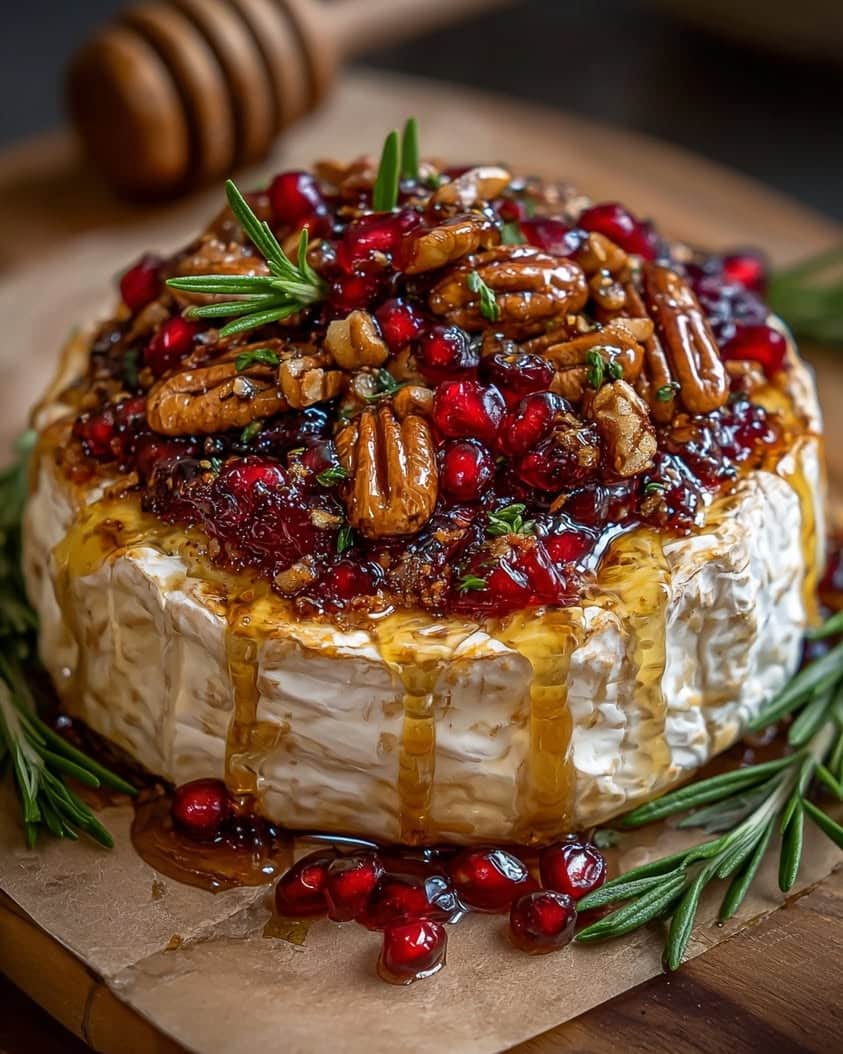
Baked Brie with Honey-Balsamic Cranberry Sauce: The Ultimate Holiday Appetizer
Imagine a warm, gooey wheel of brie cheese, its top delicately scored and baked until perfectly molten. Now, picture it crowned with a glossy, jewel-toned sauce of cranberries simmered with honey and balsamic vinegar. Finally, envision a generous sprinkle of toasted pecans and vibrant pomegranate arils adding the perfect crunch and burst of freshness. This is not just an appetizer; it is a centerpiece, a conversation starter, and the star of any holiday spread. This baked brie recipe masterfully balances rich, creamy, tangy, sweet, and crunchy elements in every single bite.
Furthermore, this dish delivers incredible elegance with surprisingly minimal effort. Essentially, you create a quick stovetop cranberry sauce while the brie bakes to oozy perfection. Consequently, you can have a stunning, restaurant-quality appetizer ready in about thirty-five minutes. This baked brie is the ultimate solution for hosts who want to impress their guests without being stuck in the kitchen all day. It is a guaranteed crowd-pleaser that looks as magnificent as it tastes.
Quick Recipe Highlights
- Flavor Profile: This baked brie features a beautiful harmony of flavors. The rich, buttery cheese contrasts with the sweet-tart cranberry sauce, while the honey adds floral sweetness and the balsamic vinegar contributes a complex, tangy depth. The pecans provide a toasty, savory note that grounds the entire dish.
- Texture: Expect a luxurious contrast of textures. The baked brie becomes wonderfully soft and spreadable, almost fondue-like. The cranberry sauce is lush and jammy, the pecans add a satisfying crunch, and the pomegranate arils offer a juicy, refreshing pop with every bite.
- Aroma: As it bakes, the kitchen fills with the nutty, earthy scent of melting cheese. Simultaneously, the simmering cranberry sauce releases festive aromas of tart fruit, sweet honey, and the sharp, sweet acidity of reducing balsamic vinegar, creating an irresistible holiday fragrance.
- Visual Appeal: This dish is a feast for the eyes. The deep red cranberry sauce cascades over the pale golden cheese like a luxurious blanket. The toasted brown pecans and ruby-red pomegranate seeds create a stunning confetti of color and texture that is inherently festive and photogenic.
- Skill Level Needed: This is a beginner-friendly recipe. The techniques are straightforward: simmering a simple sauce and baking cheese. Therefore, even novice cooks can achieve spectacular results. Attention to timing and not overbaking the brie are the only real skills required.
- Special Equipment: You need only basic kitchen tools. A small saucepan for the sauce, a baking dish or parchment-lined sheet pan for the brie, and a knife for scoring are sufficient. A good baking dish that can go from oven to table enhances the presentation beautifully.
Recipe Overview
- Difficulty Level: We rate this baked brie recipe as easy. The steps are simple and sequential with little room for error. Primarily, you combine ingredients in a pot and bake a single item. However, watching the brie closely in the final minutes is crucial to prevent it from bursting and losing its shape, which is the key to a perfect presentation.
- Category: This dish falls squarely into the appetizer or starter category. It is ideal for grazing, sharing, and kicking off a celebratory meal. Additionally, it can serve as a luxurious cheese course or even a decadent dessert option when paired with the right sweet wines and fruits.
- Cuisine: While brie cheese originates from France, this preparation is a modern American fusion. It combines a classic French cheese with cranberries, a native North American fruit, and uses ingredients like balsamic vinegar from Italy, creating a globally-inspired holiday staple popular in contemporary entertaining.
- Cost: This is a moderately priced appetizer. A wheel of good-quality brie is the main investment. Fresh cranberries, pomegranate, and pecans are seasonal but generally affordable. Overall, the cost per serving is reasonable considering the impressive visual impact and gourmet flavor profile it delivers.
- Season: This baked brie is quintessentially a fall and winter recipe. Cranberries and pomegranates are at their peak during the holiday season, making this dish perfect for Thanksgiving, Christmas, New Year’s Eve, and cozy winter gatherings. The warm, comforting nature of melted cheese suits colder weather perfectly.
- Occasion: It is tailor-made for festive occasions. Think holiday parties, potlucks, Friendsgiving, Christmas Eve gatherings, or even a romantic winter date night at home. Its ease of preparation also makes it excellent for last-minute guests or when you need an impressive dish without stress.
Why You’ll Love This Recipe
First and foremost, the taste and texture experience is unparalleled. Each component of this baked brie plays a vital role. The warm, runny cheese provides a creamy, luxurious base. Meanwhile, the honey-balsamic cranberry sauce cuts through the richness with its vibrant sweet-tart flavor. Subsequently, the pecans introduce a necessary crunchy contrast, and the pomegranate arils deliver a bright, juicy finish. Consequently, every scoop onto a cracker or slice of baguette offers a complete and satisfying bite that delights all the senses.
From a convenience standpoint, this recipe is a host’s dream. The preparation is remarkably simple and mostly hands-off. You can prepare the cranberry sauce ahead of time, and the brie itself requires only minutes of active prep. Therefore, you spend less time cooking and more time enjoying your company. Moreover, it bakes quickly, making it perfect for when guests arrive or as a last-minute addition to your menu. Essentially, it delivers maximum flavor and visual appeal with minimal kitchen time.
Interestingly, this baked brie also offers some nutritional advantages compared to other rich appetizers. Cranberries are packed with antioxidants and vitamin C. Pomegranates are another superfood rich in antioxidants and anti-inflammatory compounds. Pecans provide healthy fats, fiber, and minerals. While brie is indulgent, using it as a vehicle for these nutrient-dense toppings creates a more balanced bite. Of course, it is still a treat, but one with redeeming qualities.
The social and entertaining value of this dish cannot be overstated. A baked brie is inherently communal and interactive. Placing it in the center of a table encourages conversation and sharing. It becomes a focal point, breaking the ice and bringing people together. Furthermore, its stunning appearance makes you look like a culinary pro, boosting your confidence as a host. It is a dish that people remember and often request again, becoming a signature item for your holiday gatherings.
Finally, this recipe is cost-effective and accessible. You do not need rare or expensive ingredients. A single wheel of brie can generously serve a group, making it a budget-friendly choice for party food. The toppings, while festive, are not extravagant. Additionally, the recipe is forgiving and allows for substitutions based on what you have available. Ultimately, this accessibility ensures that anyone can create a show-stopping appetizer without special shopping trips or blowing their entertainment budget.
Historical Background and Cultural Significance
The story of baked brie as a popular appetizer is a relatively modern tale of culinary fusion. Brie cheese itself boasts ancient roots, hailing from the Île-de-France region and historically known as the “King of Cheeses.” For centuries, it was enjoyed at room temperature. However, the act of baking it whole is a more recent innovation, likely popularized in the latter half of the 20th century as entertaining and easy, impressive recipes gained traction in American home cooking. This method transforms the cheese’s texture, making it more communal and dip-like.
Culturally, baked brie has become synonymous with casual elegance and holiday cheer in North America. It represents a departure from formal cheese boards toward a warmer, more interactive food experience. The addition of sweet toppings like fruit preserves or nuts aligns with the American palate’s love for sweet and savory combinations. Consequently, it has secured a permanent place in the canon of party foods, especially during the winter holidays, symbolizing warmth, generosity, and celebration.
The evolution of the recipe specifically with cranberry sauce is a natural pairing rooted in seasonality. Cranberries, native to North America, have been a staple of Thanksgiving and Christmas dinners for generations. Combining the tart, seasonal berry with rich cheese was a logical and delicious progression. The addition of balsamic vinegar and honey reflects contemporary trends toward more complex, gastropub-style flavors in home cooking, elevating a simple baked cheese into a more sophisticated dish with layers of flavor.
Regional variations of baked brie are endless, showcasing local ingredients and tastes. In the Pacific Northwest, you might find baked brie topped with blackberry compote and hazelnuts. In the South, a version with pepper jelly and pecans is popular. Some European versions might use figs, apricots, or chestnut honey. This particular recipe with honey-balsamic cranberry sauce, pecans, and pomegranates is a beautiful representation of a modern American holiday classic, blending traditions and ingredients from different cultures into one cohesive and stunning dish.
Ingredient Deep Dive
Let us start with the star: the brie cheese. Originating from France, brie is a soft-ripened cheese with a creamy, edible rind. When baked, the interior transforms into a velvety, molten pool while the rind softens and holds its shape. Nutritionally, it provides protein, calcium, and fat-soluble vitamins. For the best results, choose a full, uncut wheel of good quality. Avoid pre-sliced or overly ripe brie that may leak excessively. Store it in the refrigerator and bring it to room temperature for about 30 minutes before baking for even melting.
Fresh cranberries are the backbone of the sauce. These native North American berries are notoriously tart, which is why they are almost always cooked with a sweetener. They are packed with vitamin C, fiber, and unique antioxidants called proanthocyanidins, known for supporting urinary tract health. Select firm, plump berries that are deep red in color; avoid soft or shriveled ones. You can freeze fresh cranberries for months. If fresh are unavailable, high-quality canned whole-berry cranberry sauce can be a substitute, though you should adjust added sweeteners.
Honey and balsamic vinegar form the flavor engine of the sauce. Honey provides natural sweetness and floral notes while helping to thicken the sauce as it reduces. Meanwhile, a good balsamic vinegar adds a tangy, complex acidity with hints of caramel and fruit. Together, they create a sophisticated sweet-and-sour glaze that elevates the cranberries beyond a simple jam. For the best flavor, use a pure, raw honey and a decent aged balsamic vinegar. The quality of these two ingredients significantly impacts the final taste of your baked brie topping.
Pecans and pomegranates provide the essential finishing textures. Pecans, native to North America, offer a buttery, rich crunch and are a source of healthy monounsaturated fats. Toasting them is non-negotiable; it unlocks their oils and intensifies their flavor dramatically. Pomegranate arils are the jewel-like seeds of the fruit, offering a burst of juicy, tangy sweetness and a stunning visual pop. They are rich in antioxidants and vitamin C. You can buy pre-seeded arils for convenience. For substitutions, walnuts can replace pecans, and dried cranberries or cherries can stand in for pomegranates in a pinch.
Common Mistakes to Avoid
- Overbaking the Brie: This is the most common error. Overbaked brie will collapse completely, oozing out into a flat, oily puddle. You want it soft and jiggly, not liquid. Bake just until the center feels very soft to a gentle touch, typically 15-20 minutes.
- Not Scoring the Top: Skipping the shallow cuts on the rind prevents the heat from penetrating evenly and can cause the top to burst unpredictably. Scoring helps control the expansion and allows the cheese to melt uniformly from the inside out.
- Using a Baking Dish That’s Too Small: The brie needs a little space around it. A dish that is too snug can cause melted cheese to spill over the sides messily. Use a dish or pan with at least an inch of clearance on all sides.
- Adding Toppings Before Baking: Never put the cranberry sauce, nuts, or pomegranates on before baking. The sauce will burn, the nuts will become soggy, and the pomegranates will wilt. All toppings should be added after the brie comes out of the oven.
- Not Toasting the Pecans: Raw pecans lack depth and can taste bland. Taking five minutes to toast them in a dry pan or the oven enhances their flavor and crunch exponentially, making a noticeable difference in the final dish.
- Overcooking the Cranberry Sauce: Cook the sauce just until the cranberries pop and the mixture thickens slightly. Overcooking can make it too thick and jam-like, causing it to sit on top of the brie instead of draping over it gracefully.
- Serving Straight from the Oven: Allow the baked brie to rest for 5-10 minutes after adding toppings. This lets the cheese set slightly, making it easier to scoop without being dangerously hot. It also allows the flavors to meld.
- Using Low-Quality Balsamic: A harsh, overly acidic vinegar will ruin the sauce’s balance. Invest in a moderately priced, aged balsamic vinegar for its smoother, sweeter, more complex flavor profile.
Essential Techniques
Scoring the brie is a simple but critical technique. Using a sharp paring knife, make shallow cuts about 1/4-inch deep in a crisscross or tic-tac-toe pattern across the top rind. This does two things. First, it allows steam to escape in a controlled manner, preventing a messy blowout. Second, it helps the heat penetrate more evenly into the center of the cheese, ensuring it melts uniformly. The key is to cut through the rind but not deep into the soft cheese beneath. Proper scoring is the secret to a beautiful, intact presentation.
Simmering the cranberry sauce correctly is another foundational skill. Combine the cranberries, honey, balsamic, and water in a saucepan over medium heat. As it heats, the cranberries will begin to pop and release their pectin, which naturally thickens the sauce. Stir occasionally to prevent sticking. You know it is done when most berries have burst, the liquid has reduced to a syrupy consistency, and the sauce coats the back of a spoon. Avoid rapid boiling, which can break down the fruit too much. This gentle simmer coaxes out the perfect jammy texture.
Toasting nuts is an easy technique that elevates their flavor immensely. Spread raw pecan halves in a single layer on a dry baking sheet. Place them in a preheated 350°F oven for 5-8 minutes, shaking the pan once halfway through. Alternatively, toast them in a dry skillet over medium heat, stirring frequently. Watch them closely, as they can burn quickly. They are done when they become fragrant and take on a slightly darker color. Toasting removes raw bitterness, enhances their natural oils, and provides a superior crunch for your baked brie topping.
Pro Tips for Perfect Baked Brie
Choose a brie wheel that is fully ripe but not bulging. A slight give when pressed gently indicates perfect ripeness for baking. An under-ripe brie will not melt as luxuriously.
Place the brie on a piece of parchment paper inside your baking dish. This makes cleanup incredibly easy if any cheese does happen to leak, and it allows you to transfer the brie to a serving platter seamlessly.
Let your baked brie rest for a full 10 minutes after adding the toppings. This resting period allows the molten cheese to thicken slightly, making it the ideal spreadable consistency and preventing messy, runny scoops.
For a more dramatic presentation, bake the brie in a small, shallow ceramic dish or a dedicated brie baker. These dishes are often attractive enough to go straight from the oven to the table as a serving vessel.
If your cranberry sauce seems too thin after cooling, you can simmer it for an extra minute or two to reduce further. Conversely, if it becomes too thick, stir in a teaspoon of warm water to loosen it.
For an extra flavor dimension, add a pinch of orange zest or a splash of orange liqueur like Grand Marnier to the cranberry sauce as it simmers. This bright citrus note complements the other flavors beautifully.
Warm your serving crackers or bread slightly. This keeps the baked brie warmer longer and provides a better textural contrast between the warm, soft cheese and the crisp vehicle.
Variations and Adaptations
For regional twists, consider the ingredients local to your area. In the Northeast, use maple syrup instead of honey and top with toasted walnuts. A Southern version might feature a spicy pepper jelly and candied pecans. On the West Coast, try a topping of fig jam, fresh rosemary, and toasted almonds. These adaptations make the baked brie feel personalized and connected to local flavors while maintaining the core concept of a sweet-savory cheese appetizer.
Seasonal adaptations are simple and keep the recipe exciting year-round. In spring, top with a strawberry-rhubarb compote and pistachios. For summer, use fresh peach or blackberry sauce with basil. Autumn is perfect for this cranberry version or one with spiced apple chutney. The basic technique of baking brie remains constant; only the fruit topping changes to reflect what is fresh and available, ensuring your appetizer is always seasonal and vibrant.
Dietary modifications are straightforward. For a gluten-free option, simply serve with gluten-free crackers or vegetable crudités. To make it nut-free, omit the pecans and use sunflower or pumpkin seeds for crunch. For a lower-sugar version, reduce the honey and lean into the natural tartness of the cranberries, perhaps adding a non-caloric sweetener. While a vegan baked brie is more complex, you could use a plant-based cheese wheel designed to melt, though results will vary by brand.
Flavor variations can cater to different palates. For a more savory profile, add a teaspoon of fresh thyme or rosemary to the cranberry sauce. For a deeper, warmer spice, include a pinch of cinnamon, nutmeg, or even a dash of cayenne pepper. Swap the balsamic for a red wine reduction for a different kind of acidity. You can also infuse the honey with herbs like lavender beforehand for a subtle floral note. The recipe is a fantastic canvas for creative flavor experimentation.
Serving and Presentation Guide
Plating is key for visual impact. Transfer the baked brie to a medium-sized wooden board, a slate cheese plate, or a colorful ceramic platter. Pour the warm cranberry sauce generously over the top, allowing it to drip appealingly down the sides. Immediately sprinkle the toasted pecans and pomegranate arils over the sauce so they adhere. This creates layers of color and texture that are instantly inviting. Place the dish in the center of your serving area with spreading tools and accompaniments arranged around it.
Choosing the right accompaniments is crucial. Offer a variety of textures and flavors for scooping. Thinly sliced and lightly toasted baguette is a classic choice. Also include an array of crackers: water crackers for neutrality, wheat crackers for nuttiness, and perhaps a sweet crispbread. For a fresh element, add apple and pear slices, which pair wonderfully with the cheese and cranberry. Finally, provide a small cheese knife for cutting and spreading, as well as several small spoons or spreaders for guests to use.
Consider temperature for the best experience. The baked brie should be served warm, not scalding hot. The crackers and bread can be at room temperature or slightly warmed. If using fruit slices like apples, a quick toss in lemon water will prevent browning. The goal is to have everything ready so that when the brie comes out of the oven and is topped, you can serve it immediately. A cold platter or board can cause the cheese to firm up too quickly, so use room-temperature serving ware.
Wine and Beverage Pairing
Wine pairings for this baked brie should complement its rich, sweet, and tangy profile. A sparkling wine like Champagne or Prosecco is excellent; the bubbles cut through the cheese’s richness beautifully. A slightly sweet white wine, such as a Riesling or Gewürztraminer, mirrors the honey and fruit notes in the topping. For red wine lovers, a lighter, fruit-forward Pinot Noir or Beaujolais works well without overpowering the dish. The key is to avoid heavily oaked or tannic wines that might clash with the brie’s creaminess and the sauce’s sweetness.
Non-alcoholic alternatives can be just as sophisticated. Sparkling apple cider or a dry non-alcoholic sparkling wine offers the same celebratory effervescence. A tart cranberry spritzer made with club soda and a dash of the reduced cranberry sauce syrup keeps the flavors cohesive. For a warm option, mulled apple cider with cinnamon and orange complements the holiday spices and warm cheese perfectly. Iced herbal teas, like hibiscus or pomegranate, also pair nicely by echoing the fruity, tart elements of the dish.
Storage and Shelf Life
Leftover baked brie is best stored carefully. Once completely cooled, cover the entire dish tightly with plastic wrap or transfer any remaining cheese and topping to separate airtight containers. Refrigerate for up to 2 days. The cheese will solidify when cold. The cranberry sauce may thicken further. Unfortunately, the pecans will lose their crunch, and the pomegranates may weep moisture, so these are best added fresh if you plan to save portions.
Reheating requires a gentle touch to restore the creamy texture without making the cheese oily. Place the leftover brie on an oven-safe dish and warm in a 300°F oven for 10-15 minutes, just until softened. Microwave reheating is not recommended, as it can make the cheese rubbery and separate. If the cranberry sauce is too thick after refrigeration, warm it gently in a saucepan with a teaspoon of water to loosen it before spooning it over the reheated cheese. Add fresh pecans and pomegranates after reheating.
Make Ahead Strategies
You can prepare nearly every component of this baked brie in advance, making party day effortless. The cranberry sauce can be made up to 5 days ahead and stored in the refrigerator. Simply reheat it gently on the stovetop or in the microwave before using. The pecans can be toasted 2-3 days in advance and stored at room temperature in an airtight container. The pomegranate arils can be seeded a day ahead and kept refrigerated. Even the brie can be scored and placed on its parchment-lined baking dish, covered, and refrigerated hours before you plan to bake.
On the day of serving, your workflow is streamlined. Bring the cranberry sauce to room temperature or warm it slightly. Take the pre-scored brie from the fridge about 30 minutes before baking to take the chill off. Then, simply bake the brie as directed. While it bakes, you can gently warm the sauce and have your toppings ready. This make-ahead approach ensures you spend minimal active time in the kitchen when your guests arrive, allowing you to be present and enjoy the gathering you worked so hard to host.
Scaling Instructions
Scaling this recipe for different group sizes is simple. For a smaller gathering, use a 8-ounce brie wheel and halve the sauce and topping ingredients. The baking time may reduce by about 5 minutes, so watch closely. For a larger crowd, you can bake two wheels side-by-side on a sheet pan, doubling all components. Alternatively, consider making multiple smaller individual baked bries in ramekins for a personalized touch; baking time for individuals will be shorter, around 10-12 minutes.
When doubling or tripling, use a larger baking sheet to ensure adequate air circulation around each cheese wheel. You may need to rotate the pan halfway through baking for even cooking. For the sauce, use a larger saucepan to prevent boil-overs as the cranberries pop. The key is to maintain the ratios: enough sauce to generously cover each wheel, and enough toppings for textural contrast on every serving. Scaling up does not change the fundamental techniques, just the volume of your utensils and attention to oven space.
Nutritional Deep Dive
This baked brie is an indulgent appetizer, and understanding its nutritional profile helps with mindful enjoyment. A serving provides a balance of macronutrients: fat from the cheese and nuts, carbohydrates from the fruit and honey, and protein from the cheese. The cranberries and pomegranates contribute significant micronutrients like vitamin C, vitamin K, and antioxidants. Pecans offer healthy monounsaturated fats, fiber, and minerals like manganese. While the dish is calorie-dense, it is meant to be shared in small portions as part of a larger meal.
For those monitoring intake, consider that the richness comes primarily from the brie. Using a lighter cracker option like crispbread or vegetable slices can reduce overall carbohydrate and calorie load per bite. The sauce’s sugar content comes from natural fruit sugars and honey. You can moderately reduce the honey if desired, though it will increase the tartness. Ultimately, this is a celebratory food. Its value lies in the joy of sharing and the sensory experience, not as a everyday health food, though it does include wholesome ingredients like fresh fruit and nuts.
Dietary Adaptations
For a gluten-free version, this baked brie is naturally gluten-free. The only concern is the serving accompaniments. Simply provide gluten-free crackers, bread, or vegetable crudités like endive leaves, cucumber rounds, or bell pepper strips. Ensure any pre-made cranberry sauce or other ingredients are certified gluten-free, though from-scratch using this recipe is safe.
A dairy-free adaptation is challenging but possible with modern products. Seek out a high-quality vegan cheese wheel designed to melt, often made from cashews or coconut oil. Be aware that melting behavior and flavor will differ from dairy brie. The cranberry sauce, nuts, and pomegranate toppings remain dairy-free. Test the vegan cheese option beforehand to ensure you are happy with the results for your guests.
Troubleshooting Guide
If your brie bursts and leaks excessively, it was likely overbaked or the rind was pierced too deeply during scoring. Next time, bake for less time and check earlier. For now, simply spoon the leaked cheese back over the top—it will still taste delicious. If the cheese is not melting in the center but the top is browning, your oven temperature may be too high. Lower the rack position and cover loosely with foil to prevent top browning while the center catches up.
If the cranberry sauce is too tart, stir in an extra tablespoon of honey after cooking. If it is too sweet, a small squeeze of fresh lemon juice can balance it. If the sauce is too thin, simmer it a few minutes longer to reduce. If it is too thick, stir in a teaspoon of warm water or orange juice at a time until it reaches a pourable consistency. Remember, it will thicken further as it cools on the hot cheese.
Recipe Success Stories
Readers and home cooks consistently rave about this baked brie’s reliability and “wow” factor. Many report it becoming their go-to holiday appetizer, requested by family year after year. Some have shared creative variations, like adding a sprinkle of crispy fried sage or a drizzle of truffle honey after baking. Others love using it for potlucks because it travels well in the baking dish and can be warmed at the host’s oven. The common thread in all success stories is how such a simple recipe yields such impressive, professional-looking results that make any cook feel accomplished.
Frequently Asked Questions
Can I use frozen cranberries? Absolutely. You do not need to thaw them first. Use them directly from the freezer, but you may need to add a minute or two to the simmering time for them to fully pop and release their juices.
Can I make this with a brie wedge instead of a wheel? Yes, but presentation and baking time will differ. Place the wedge with the rind-side down to form a base. Baking time may be slightly shorter, so check after 12 minutes.
What can I use instead of balsamic vinegar? A good substitute is red wine vinegar mixed with a tiny bit of brown sugar or maple syrup. Apple cider vinegar can also work in a pinch, though the flavor profile will be different.
How do I know when the brie is done baking? The brie is ready when the center feels very soft to a gentle touch and the whole wheel jiggles uniformly when you shake the pan slightly. The top rind may look puffed up.
Can I prepare this entirely ahead and reheat it? It is best baked fresh. However, you can bake it, let it cool, cover, and refrigerate. Reheat in a 300°F oven until warmed through. Add fresh toppings after reheating for best texture.
My brie is leaking a lot of white liquid. Is that okay? That is melted butterfat, which is normal for some brie varieties. It can be spooned back over the top or dabbed away with a paper towel if there is an excessive amount.
Can I use a different type of nut? Certainly. Walnuts, almonds, or hazelnuts would all be delicious. Just be sure to toast them first to maximize their flavor and crunch.
Is the rind edible? Yes, the rind on brie is completely edible and softens when baked. It is part of the traditional eating experience, though some guests may prefer to scoop from the center.
What’s the best way to slice a pomegranate? Score the skin into quarters, submerge in a bowl of water, and break it apart underwater. The arils will sink, and the white pith will float, making separation easy and mess-free.
Can I use dried cranberries instead of fresh? For the sauce, fresh or frozen are best. Dried cranberries will not provide the same jammy texture or tart pop. They can, however, be used as a garnish in place of pomegranates if chopped.
Additional Resources
If you loved this baked brie, explore other elegant yet easy appetizers on the site. A baked camembert with garlic and rosemary follows a similar principle with a savory twist. For more holiday cranberry inspiration, check out the spiced cranberry-orange relish or the cranberry-orange bread. To master cheese selection and pairing, our guide to building a holiday cheese board offers comprehensive tips. For those interested in the technique of fruit compotes, the basic berry compote recipe is a versatile foundation for many desserts and cheese pairings beyond just brie.
PrintBaked Brie with Honey-Balsamic Cranberry Sauce, Topped with Pecans and Pomegranates
Description
A festive and elegant appetizer featuring creamy baked brie topped with a sweet-tart cranberry sauce, crunchy pecans, and juicy pomegranate arils.
Ingredients
For the Crust:
- 1 (8 oz) wheel of brie cheese
- 1 cup fresh or frozen cranberries
- 1/4 cup honey
- 2 tablespoons balsamic vinegar
- 1/4 cup chopped pecans
- 1/4 cup pomegranate arils
- 1 tablespoon butter
- 1/4 teaspoon cinnamon
- Salt to taste
- Crackers or sliced baguette for serving
Instructions
1. Prepare the Crust:
- Preheat oven to 350°F (175°C). Place brie wheel on a parchment-lined baking sheet or in a small oven-safe dish.
- In a saucepan over medium heat, combine cranberries, honey, balsamic vinegar, butter, cinnamon, and a pinch of salt. Cook for 8-10 minutes until cranberries burst and sauce thickens slightly.
- Remove cranberry sauce from heat and stir in chopped pecans. Let cool for 5 minutes.
- Pour the cranberry-pecan sauce over the brie wheel, spreading evenly. Bake for 12-15 minutes until brie is soft and slightly melted.
- Remove from oven and immediately top with pomegranate arils. Serve warm with crackers or sliced baguette.
Notes
You can customize the seasonings to taste.

I’m Shaykee—born in Morocco, seasoned across continents. From airplane galleys to home kitchens, I share the flavors and stories that shaped my journey.