
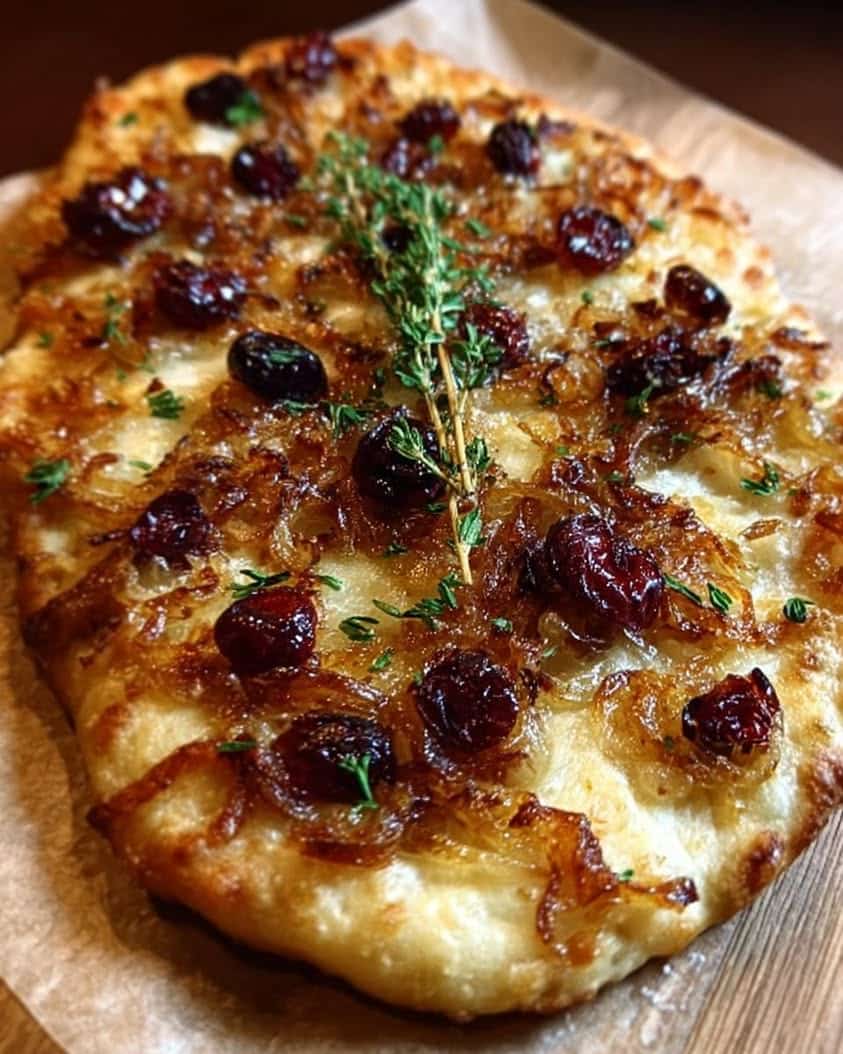
Rustic Caramelized Onion and Cranberry Flatbread with Gruyère Cheese: An Easy, Elegant Appetizer
Imagine the perfect bite: a crisp, golden flatbread base topped with deeply sweet caramelized onions, pops of tart cranberry, and a blanket of nutty, melted Gruyère cheese. This Rustic Caramelized Onion and Cranberry Flatbread with Gruyère Cheese is that bite, transformed into an entire appetizer that will steal the show at any gathering. Consequently, it masterfully balances rich, savory, and sweet flavors in every slice. Moreover, it looks incredibly impressive, yet the process is straightforward and forgiving for cooks of any level.
This flatbread recipe is your secret weapon for effortless entertaining. Whether you’re hosting a holiday party, a casual game night, or a sophisticated dinner soiree, this dish delivers on both flavor and presentation. The aroma alone, as the onions caramelize and the cheese bubbles in the oven, will have your guests eagerly awaiting the first slice. Ultimately, it’s a versatile canvas that feels gourmet but is built from simple, accessible ingredients.
Furthermore, the beauty of this rustic caramelized onion and cranberry flatbread lies in its contrast. The slow-cooked onions develop a profound, jammy sweetness that perfectly complements the bright, acidic burst of the cranberries. Meanwhile, the Gruyère cheese adds a creamy, slightly salty depth that ties everything together. This combination creates a complex flavor profile that is far greater than the sum of its parts, making it a memorable addition to your recipe repertoire.
Quick Recipe Highlights
- Flavor Profile: This flatbread recipe offers a sophisticated sweet and savory balance. The deep, umami-rich caramelized onions contrast beautifully with the sharp, tart cranberries. Finally, the nutty and creamy Gruyère cheese brings a salty, rich finish that harmonizes all the elements.
- Texture: You get a wonderful textural journey from the crisp, chewy flatbread crust to the soft, jammy onions. The cranberries provide a delightful juicy pop, while the melted cheese offers a smooth, stretchy layer. Altogether, it creates a satisfying and multi-dimensional eating experience.
- Aroma: The cooking process fills your kitchen with an irresistible fragrance. Initially, you’ll smell the sweet, pungent scent of onions slowly transforming. Then, the earthy, slightly sweet aroma of melting Gruyère takes over, promising a delicious outcome.
- Visual Appeal: This dish is a feast for the eyes with its stunning color palette. The golden-brown crust is topped with a tapestry of deep amber onions, vibrant red cranberries, and bubbly, golden cheese. It looks artisanally crafted, straight from a professional kitchen.
- Skill Level Needed: This is an accessible recipe designed for success. While caramelizing onions requires patience, it does not require advanced technique. Similarly, assembling and baking the flatbread is simple, making it perfect for beginner cooks and seasoned chefs alike.
- Special Equipment: You need only basic kitchen tools. A good skillet is essential for caramelizing the onions properly. Additionally, a baking sheet or pizza stone is needed for achieving a crisp flatbread crust. Otherwise, no specialty gadgets are required.
Recipe Overview
- Difficulty Level: We rate this rustic caramelized onion and cranberry flatbread as easy. The most involved step is caramelizing the onions, which is a passive cooking process requiring only occasional stirring. Subsequently, the assembly is merely spreading ingredients, and the baking is hands-off. Therefore, it’s a low-stress recipe with a high-reward result.
- Category: This dish fits beautifully into multiple categories. Primarily, it serves as a stellar appetizer or party snack. Alternatively, it can be a light main course when paired with a simple salad. It also works wonderfully as part of a festive brunch or holiday buffet spread.
- Cuisine: This flatbread recipe draws inspiration from French and Alpine culinary traditions, thanks to the use of Gruyère cheese. However, it incorporates the North American tradition of using cranberries, creating a delicious fusion. The concept of a topped flatbread is global, making it a universally appealing dish.
- Cost: The cost is moderate and depends on ingredient quality. Store-bought flatbread or pizza dough keeps costs low. Gruyère cheese is the premium ingredient, but a little goes a long way. Dried cranberries and onions are very affordable, making this a cost-effective showstopper.
- Season: This recipe shines brightest in the fall and winter months. Cranberries are a classic holiday ingredient, and the warm, comforting flavors suit cooler weather. However, it can certainly be enjoyed year-round as a special treat for any occasion.
- Occasion: It is exceptionally versatile for entertaining. It’s perfect for holiday gatherings like Thanksgiving, Christmas, or New Year’s Eve. Similarly, it’s great for wine nights, book club meetings, or as a fancy weekend treat for the family.
Why You’ll Love This Recipe
First and foremost, the taste and texture of this rustic caramelized onion and cranberry flatbread are utterly captivating. Each bite delivers a symphony of flavors: the profound sweetness of the onions, the sharp tang of the fruit, and the rich, salty cheese. The contrast between the crisp base and the tender toppings keeps your palate engaged. Ultimately, it feels like a gourmet restaurant appetizer you can proudly create at home.
From a convenience standpoint, this flatbread recipe is a dream for hosts. You can caramelize the onions ahead of time, streamlining the day-of preparation. The assembly takes mere minutes before baking. Consequently, you spend less time in the kitchen and more time with your guests, all while serving a hot, impressive dish that looks like you fussed for hours.
Nutritionally, this appetizer offers some benefits compared to heavier options. Onions provide antioxidants and prebiotic fiber. Cranberries are famous for their vitamin C and proanthocyanidins. Using a moderate amount of high-quality cheese adds protein and calcium. While it’s a treat, it incorporates whole-food ingredients that contribute more than just empty calories.
The social and entertaining value of this dish is incredibly high. It’s designed for sharing, encouraging conversation as people gather around to grab a slice. Its beautiful presentation makes it a natural centerpiece on a buffet table. Furthermore, its unique flavor combination is a conversation starter, ensuring your guests remember this particular dish long after the party ends.
Finally, this rustic caramelized onion and cranberry flatbread is cost-effective and accessible. It transforms humble ingredients like onions into something luxurious through the simple technique of caramelization. You don’t need expensive equipment or hard-to-find items. This approachability means anyone can recreate this elegant appetizer without breaking the bank, making special occasions feel even more special.
Historical Background and Cultural Significance
The origin story of flatbread is as old as civilization itself, with evidence of simple baked doughs dating back thousands of years across countless cultures. Our specific recipe, however, is a modern fusion. It combines the ancient tradition of flatbread with the French and Swiss technique of caramelizing onions and using Alpine cheeses like Gruyère. The addition of cranberries, a native North American fruit, introduces a New World twist, creating a contemporary classic perfect for modern palates and gatherings.
Culturally, flatbread serves as a universal vehicle for local flavors. In this case, the recipe nods to the Swiss and French tradition of onion tarts, like the Alsatian Flammkuchen or Swiss Zwiebelkuchen. These dishes celebrate the humble onion, transforming it through slow cooking. Incorporating cranberries ties it to American and Canadian harvest traditions, where the tart berry is a staple in fall and holiday cooking. This blend honors multiple culinary heritages on one delicious platform.
The evolution of this recipe follows the trend of gourmetizing simple, shareable foods. As home cooking and entertaining have become more sophisticated, there’s a desire for appetizers that are visually striking and flavor-forward. This rustic caramelized onion and cranberry flatbread meets that demand. It takes the familiar concept of pizza or topped bread and elevates it with intentional, complementary pairings, moving beyond basic tomato sauce and mozzarella to something more nuanced and seasonal.
Regional variations of this concept are endless. In Provence, one might find a flatbread with caramelized onions, olives, and goat cheese. In the Pacific Northwest, local chefs might use huckleberries instead of cranberries. The beauty of this flatbread recipe is its adaptability. You can honor your own local ingredients and culinary traditions by using the basic template of a crisp base, a sweet-savory jam, a tart element, and a melting cheese, creating a personalized version that reflects your own kitchen’s culture.
Ingredient Deep Dive
Yellow Onions are the foundational flavor of this dish. Historically, onions have been a culinary staple for millennia, valued for their storage longevity and ability to add depth. Nutritionally, they are rich in vitamin C, B vitamins, and potent antioxidants like quercetin. For selection, choose firm, heavy onions with dry, papery skins and no soft spots. Store them in a cool, dark, well-ventilated place. If substituting, sweet onions like Vidalias will caramelize faster but are excellent, while red onions offer a sharper bite and lovely color.
Dried Cranberries provide the essential tart counterpoint. Culturally, cranberries are one of North America’s few native fruits, used by Indigenous peoples for food, dye, and medicine. They are packed with vitamin C, fiber, and unique phytonutrients that support urinary tract health. Select unsweetened or lightly sweetened dried cranberries to better control the sugar content. Store them in an airtight container in a cool pantry. For substitutions, try dried cherries for a deeper sweetness, chopped dried apricots for a different tartness, or even fresh pomegranate arils for a juicy burst.
Gruyère Cheese is the rich, binding element. This cheese hails from Switzerland, with a history protected by appellation laws. It’s known for its complex, nutty, and slightly salty flavor that melts beautifully. It provides a good source of protein, calcium, and phosphorus. When buying Gruyère, look for a firm texture and avoid any with excessive moisture or ammonia smells. Store it wrapped in parchment paper inside a loose plastic bag in the cheese drawer. Substitutions include Comté (very similar), Emmental, or a good-quality Swiss cheese. For a stronger punch, aged Gouda or Fontina works well.
The Flatbread Base acts as the canvas. Using a pre-made naan, pizza dough, or flatbread is a huge time-saver, a practice embraced in modern home cooking for convenience. A whole-wheat or multigrain base adds fiber and nutrients. Select a base that is pliable but not too thick, ensuring it crisps up nicely. Store according to package directions until ready to use. For a homemade touch, simple pizza dough or even puff pastry makes a fantastic, flaky alternative. The key is a base that can support the toppings without becoming soggy.
Common Mistakes to Avoid
- Rushing the Caramelization: The most common error is cooking the onions over too high a heat. This leads to burning and bitter flavors instead of sweet, deep caramelization. Patience is key; let them cook low and slow for the full 20-25 minutes until they are a uniform golden-brown jam.
- Using a Dull Knife: Slicing onions with a dull knife crushes cell walls, releasing more of the irritating compounds that make you cry. Always use a sharp chef’s knife for clean cuts, which also helps them cook more evenly.
- Overcrowding the Pan: If you pile too many onions into a small skillet, they will steam instead of caramelize. Use a wide pan to allow for even evaporation and browning, giving the onions space to develop flavor.
- Skimping on the Fat: Using too little oil or butter for the onions can cause sticking and uneven cooking. The fat is necessary to conduct heat and contribute to the rich, silky texture of the finished caramelized onions.
- Using Fresh Cranberries Without Adjustment: This recipe calls for dried cranberries. If you substitute fresh, they contain much more water and will release liquid, potentially making the flatbread soggy. If using fresh, consider chopping and sautéing them briefly first to reduce moisture.
- Overloading the Flatbread: Piling on too many toppings seems generous but can weigh down the crust, preventing it from crisping. It can also lead to a greasy result if the cheese can’t properly melt and integrate. A moderate, even layer is best.
- Neglecting to Preheat the Oven: Placing the flatbread in a cold or under-heated oven will result in a pale, limp crust. Always ensure your oven is fully preheated to the specified temperature for optimal heat transfer and browning.
- Slicing Too Soon: Cutting into the flatbread immediately after baking causes the molten cheese to run off and the structure to collapse. Let it rest on the cutting board for 3-5 minutes to allow the cheese to set slightly, ensuring neat slices.
- Using Pre-Shredded Cheese: Pre-shredded cheese contains anti-caking agents like cellulose that can prevent smooth melting. For the creamiest, most cohesive layer of cheese, always buy a block of Gruyère and shred it yourself just before using.
- Not Tasting as You Go: Seasoning is crucial. Forgetting to taste your caramelized onions before assembling means you might miss the chance to balance their sweetness with a pinch more salt or a dash of acid, which elevates the entire dish.
Essential Techniques
Caramelizing Onions is the soul of this flatbread recipe. This process breaks down the onions’ natural sugars through slow, gentle heat, transforming their sharp bite into a deep, savory-sweet jam. To master it, slice onions uniformly, cook them in ample fat over medium-low heat, and stir only occasionally to allow browning. A common pitfall is raising the heat to speed things up, which leads to burning. Success is visual: look for a deep, golden-brown color throughout and a texture that is soft, reduced, and jam-like, not stringy or pale.
Shredding Your Own Cheese is a small step with a big impact. Pre-shredded cheese is coated to prevent clumping, but these coatings inhibit the smooth, even melt you desire. For perfect melting, start with a cold block of cheese and use the large holes of a box grater. The key is to do this just before assembly to prevent drying. The visual cue for success is a uniform, bubbly, golden melt without any oily separation or clumpy, unmelted shreds on your finished flatbread.
Assembling for Optimal Bake requires strategy. The goal is a crisp crust with perfectly melted toppings. To achieve this, ensure your flatbread base is at room temperature. Then, spread the caramelized onions in a thin, even layer, leaving a small border. Scatter the cranberries and cheese evenly over the onions. An even distribution prevents some areas from being barren while others are overloaded and soggy. The perfect bake results in a crust that is crisp and golden on the edges, with toppings that are hot and bubbling uniformly.
Pro Tips for Perfect Rustic Caramelized Onion and Cranberry Flatbread
Add a pinch of sugar to the onions as they cook. This isn’t to make them sweet, but to kickstart the Maillard reaction and promote even, beautiful browning, especially if your onions aren’t super fresh.
Deglaze the onion pan with a splash of balsamic vinegar or red wine after caramelizing. This lifts the flavorful browned bits (fond) from the pan and adds a wonderful layer of acidity that balances the sweetness.
For an extra flavor boost, mix a teaspoon of fresh thyme leaves into your caramelized onions once they’re off the heat. The herbal note complements the onions and cranberries beautifully.
If your flatbread base seems particularly thick or doughy, pre-bake it for 3-4 minutes before adding toppings. This guarantees a crisp bottom and prevents a soggy center.
For a gorgeous finish and added flavor, drizzle the baked flatbread with a little high-quality olive oil or a balsamic glaze just before serving. It adds shine and a professional touch.
Let the flatbread cool on a wire rack for a minute after baking. This allows air to circulate underneath, preventing steam from softening the crust you worked so hard to achieve.
For a more complex cheese flavor, use a blend of Gruyère and a small amount of a sharper cheese, like Parmesan or Asiago. The Gruyère provides the melt, while the other adds a salty, umami punch.
Always use a pizza cutter or a large, sharp chef’s knife to slice your flatbread. A dull knife will drag the toppings and crush the crispy crust, ruining your beautiful presentation.
Variations and Adaptations
For regional variations, consider an Italian-inspired version with caramelized onions, chopped figs, gorgonzola cheese, and a drizzle of honey. A Mediterranean twist could feature caramelized onions, Kalamata olives, sun-dried tomatoes, and feta cheese. These adaptations show how the core template of sweet onion, tart fruit, and rich cheese can travel across culinary borders while maintaining its essential appeal.
Seasonal adaptations are simple and rewarding. In spring, use caramelized leeks and asparagus tips with goat cheese. For summer, try caramelized sweet Vidalia onions with fresh blueberries and creamy Havarti. This flexibility makes the rustic caramelized onion and cranberry flatbread a year-round favorite, simply by swapping in produce at its peak.
Dietary modifications are straightforward. For a gluten-free version, use a certified gluten-free flatbread or pizza crust. To make it dairy-free, substitute the Gruyère with a high-quality vegan melty cheese alternative or a rich cashew cream. For a vegan adaptation, use plant-based butter for the onions and a vegan cheese, ensuring every guest can enjoy a slice.
Flavor variations can personalize the dish immensely. Add cooked, crumbled bacon or pancetta for a smoky, salty element. Incorporate a layer of whole-grain mustard beneath the onions for tang. Sprinkle with toasted walnuts or pecans after baking for crunch. A swirl of fig jam or a sprinkle of fresh rosemary can also create entirely new, delicious profiles on this versatile flatbread.
Serving and Presentation Guide
Plating techniques matter for visual impact. Transfer the whole baked flatbread to a large, clean wooden cutting board or a simple slate platter. This rustic presentation complements the dish’s name and feel. Slice it into uneven, rustic strips or triangles rather than perfect squares for a homemade, artisanal look. The goal is to make it look inviting and abundant, encouraging guests to help themselves.
Garnishing adds the final touch of freshness and color. A scattering of microgreens, arugula, or fresh parsley on top after baking introduces a green element that contrasts the warm tones. Alternatively, a light dusting of flaky sea salt or a few cracks of black pepper just before serving enhances flavors and adds sophistication. A final drizzle of a reduced balsamic glaze in zig-zags across the top looks professional and tastes amazing.
For traditional accompaniments, serve this flatbread as part of a larger appetizer spread. It pairs wonderfully with a simple green salad dressed with a sharp vinaigrette to cut the richness. A bowl of marinated olives, some cured meats, or a selection of nuts would round out a perfect European-style aperitivo hour. The flatbread is the star, but these sides support it beautifully.
Modern serving suggestions might include slicing it into smaller, bite-sized pieces for a cocktail party. Serve it alongside a seasonal soup, like butternut squash or tomato basil, for a light lunch. For a fun interactive twist, set out small bowls of extra toppings like fresh herbs, extra cranberries, or different cheeses and let guests customize their slice after the initial bake.
Wine and Beverage Pairing
Wine pairings should complement the sweet, savory, and tangy notes. A dry Riesling or Gewürztraminer is excellent, as their slight sweetness and acidity mirror the cranberries and cut through the cheese. For red wine lovers, a lighter Pinot Noir with its red fruit notes and low tannins won’t overpower the dish. A dry Rosé, especially one with some body, is a versatile and festive choice that bridges all the flavors beautifully.
Non-alcoholic alternatives can be just as thoughtful. A sparkling apple cider provides sweetness and bubbles that cleanse the palate. For a more complex option, try a tart cranberry spritzer made with unsweetened cranberry juice, soda water, and a lime wedge. Iced herbal tea, like hibiscus or peppermint, offers refreshing contrast to the rich flatbread.
Coffee and tea pairings work well if serving this for brunch or a late-morning gathering. A medium-roast coffee with low acidity won’t clash with the tangy cranberries. A pot of Earl Grey tea, with its bergamot citrus notes, can surprisingly highlight the sweet elements of the onions and fruit. Ultimately, the goal is to choose beverages that refresh the palate between bites.
Storage and Shelf Life
Storage methods for leftovers are simple but important. Allow the flatbread to cool completely to room temperature. Then, wrap slices or the remaining portion tightly in plastic wrap or aluminum foil. For best results, place the wrapped flatbread in an airtight container. This prevents it from absorbing other refrigerator odors and helps retain texture. Properly stored, it will keep in the refrigerator for up to 3 days.
Reheating instructions are crucial for restoring texture. Avoid the microwave, as it will make the crust soggy. Instead, reheat slices in a preheated 375°F oven or toaster oven for 5-8 minutes until the cheese is bubbly and the edges re-crisp. You can also use an air fryer for a few minutes for a quick, effective reheat. This method brings it closest to its freshly baked state.
Freezing guidelines are possible with some texture trade-offs. Freeze fully cooled slices on a parchment-lined baking sheet until solid, then transfer to a freezer bag. It will keep for up to 2 months. Reheat from frozen in a 375°F oven for 10-15 minutes. Note that the cranberries may become a bit chewier and the crust slightly less crisp, but the flavor will remain excellent.
Make Ahead Strategies
The prep timeline for this flatbread recipe is very accommodating. You can caramelize the onions up to 5 days in advance. Simply let them cool, store them in an airtight container in the refrigerator, and bring them to room temperature before using. You can also shred the cheese a day ahead and keep it wrapped in the fridge. This advance work turns the final assembly into a 10-minute task before baking.
Storage between steps is straightforward. If you’ve pre-cooked onions and pre-shredded cheese, keep them in separate containers. Do not assemble the flatbread until just before you plan to bake it. A pre-assembled flatbread will become soggy as the toppings moisten the crust. The key to make-ahead success is keeping the components separate until the final moment.
Quality impact assessment is positive. The caramelized onions actually benefit from a rest in the fridge, allowing their flavors to meld and deepen. The cheese may dry out slightly if shredded too far ahead, but it will still melt fine. The flatbread base itself is best used fresh, but pre-baking it for a few minutes as a make-ahead step can ensure ultimate crispiness.
Scaling Instructions
Halving the recipe is easy for a smaller household. Use one medium onion, half the amounts of cranberries and cheese, and one piece of flatbread. The caramelization time for the onions may be slightly shorter due to the smaller volume. Baking time will remain roughly the same, as a single flatbread still needs to heat through and crisp up. This is a perfect weeknight treat for two.
Doubling or tripling for a crowd requires minor adjustments. Use multiple skillets or cook the onions in batches to avoid steaming; do not overcrowd one large pan. You will likely need to bake the flatbreads in batches or on multiple oven racks. Rotate the baking sheets halfway through cooking to ensure even browning. The assembly line approach works well: set up a station with all your toppings and assemble several quickly before baking.
Equipment adjustments are necessary when scaling up. Ensure you have enough baking sheets; if you don’t, parchment-lined sheets of heavy-duty aluminum foil can work in a pinch. A large commercial-style baking sheet that fits your oven can hold two smaller flatbreads side-by-side. The key is to maintain good air circulation around each flatbread for proper crisping, so avoid letting them touch on the pan.
Nutritional Deep Dive
The macro breakdown of this flatbread provides a balance of carbohydrates, fats, and protein. The crust is the primary carb source, while the cheese and oil contribute healthy fats and saturated fat. The Gruyère cheese offers a good amount of protein. This combination means the dish is satisfying and can serve as a substantial appetizer or light meal, providing sustained energy rather than a simple sugar rush.
Micronutrient analysis reveals several benefits. Onions provide vitamin C, B6, and folate. Cranberries are renowned for their vitamin C and manganese content, as well as unique plant compounds. Gruyère cheese is an excellent source of calcium and phosphorus, crucial for bone health. Using a whole-grain flatbread base would further increase the fiber, B vitamin, and mineral content of the dish.
Health benefits are tied to its whole-food ingredients. The antioxidants in onions and cranberries support cellular health and may reduce inflammation. The calcium from cheese supports bone density. The fiber from the onions and potential whole grains aids digestion. While it is a treat with fat and calories, it is made from recognizable ingredients that contribute positively to your diet in moderation.
Dietary Adaptations
For a gluten-free version, simply choose a certified gluten-free flatbread, pizza crust, or even use polenta as a base. Many stores carry excellent GF naan or crust options. Ensure all other ingredients, like dried cranberries, are certified gluten-free, as cross-contamination can occur during processing. The method remains identical, resulting in a safe and delicious option for those with celiac disease or gluten sensitivity.
A dairy-free adaptation is easily achieved. Use a high-quality vegan butter or olive oil to caramelize the onions. Substitute the Gruyère with a brand of vegan cheese that melts well, such as those based on cashews or coconut oil. Nutritional yeast can be sprinkled on top for an extra cheesy flavor. The caramelized onions and cranberries provide so much flavor that the dish remains fantastic even without dairy.
For a vegan version, combine the dairy-free adaptations above. Also, check that your dried cranberries are not processed with animal-derived sugar (some sugars use bone char). Use a plant-based flatbread. To add richness, consider a drizzle of vegan pesto or a sprinkle of toasted pine nuts after baking. This ensures the dish is entirely plant-based while maintaining its sophisticated flavor profile.
Low-carb and keto adaptations require a significant base change. Replace the traditional flatbread with a fat-head dough made from almond flour and cheese, or a simple low-carb tortilla baked until crisp. Reduce the amount of onions slightly, as they contain natural sugars, and ensure the dried cranberries are sugar-free or use a very small amount. The high-fat content from the cheese and adjusted base can fit into a keto macro plan.
Troubleshooting Guide
If your flatbread crust is soggy, the primary culprit is excess moisture. This can come from under-caramelized onions (too watery), too many toppings, or a lack of preheating. Next time, ensure onions are cooked until jammy, use a lighter hand with toppings, and pre-bake the naked crust for 3-4 minutes. For a salvage, you can often re-crisp a slice in a hot skillet on the stove for a minute.
When flavor balance seems off, assess each component. If it’s too sweet, you may have over-caramelized the onions or used sweetened cranberries; add a pinch of flaky salt after baking. If it’s too bland, the onions or overall dish likely needed more salt during cooking. A post-bake drizzle of balsamic reduction or a sprinkle of fresh thyme can often rescue and elevate a flatbread that tastes flat.
For cheese that isn’t melting properly, the issue is usually the cheese itself. Pre-shredded cheese contains anti-caking agents that hinder melting. Always shred your own from a block. If the cheese is browning too quickly before the crust is done, your oven rack may be too high. Move it to the middle position, and you can tent the flatbread loosely with foil if the top browns excessively.
Recipe Success Stories
Community feedback on this rustic caramelized onion and cranberry flatbread has been overwhelmingly positive. Many home cooks report it becoming their go-to appetizer for holidays, surprising even the most discerning foodie relatives. Several have mentioned that the process of caramelizing the onions, once learned, has become a cherished, meditative kitchen ritual they now use in other dishes, from soups to sandwiches.
Variation successes are fun to hear about. One reader used brie instead of Gruyère and added sliced pears for an elegant fall version. Another, hosting a large party, made mini versions on pita rounds for easy single-serving portions. A creative cook added a layer of leftover Thanksgiving turkey and gravy for a “leftover flatbread” the day after the holiday, which was declared a brilliant new tradition.
Reader suggestions have also improved the recipe. One tip was to add a very thin layer of whole-grain mustard under the onions for extra depth, which we now often recommend. Another suggested sprinkling the top with chopped fresh rosemary before baking for an aromatic herbal note. These shared ideas show how a great recipe becomes a living, evolving tradition in home kitchens.
Frequently Asked Questions
Can I use fresh cranberries instead of dried? Yes, but you must adjust. Fresh cranberries contain much more water. Chop them and sauté briefly in the onion pan after removing the onions to cook off some moisture and soften them. Otherwise, they may make the flatbread soggy and be too tart.
What’s the best substitute for Gruyère cheese? Excellent substitutes include Comté, Emmental, Jarlsberg, or Fontina for a similar melt and flavor. For a stronger taste, try aged Gouda or a mild blue cheese. For a different profile, white cheddar or Monterey Jack also work well.
How do I know when the onions are properly caramelized? They are done when they are uniformly a deep golden-brown color, have reduced in volume by about two-thirds, and have a soft, jam-like consistency. They should taste sweet, not sharp or bitter. This process cannot be rushed.
Can I make this completely ahead and freeze it? You can freeze it after baking. Cool completely, wrap tightly, and freeze for up to 2 months. Reheat from frozen in a 375°F oven. For best quality, components are better made ahead and assembled fresh, but freezing the finished product works.
My flatbread isn’t getting crispy. What did I do wrong? Common reasons include: not preheating the oven, using a soggy topping (like under-cooked onions), overloading with toppings, or not baking directly on the oven rack or a hot baking sheet. Ensure your oven is hot and your toppings are not too wet.
Is there a way to make this recipe vegetarian? This recipe is naturally vegetarian as written. Simply ensure any pre-made flatbread or dough you use does not contain lard or other animal fats if you are strict.
Can I use a different type of onion? Absolutely. Yellow onions are standard for their balance of sweetness and pungency. Sweet onions (Vidalia, Walla Walla) will caramelize faster and be milder. Red onions will offer a sharper bite and beautiful color. Shallots are a luxurious, finer-textured option.
What should I serve with this flatbread? It pairs wonderfully with a simple arugula salad with lemon vinaigrette, a bowl of tomato soup, or as part of a larger antipasto platter with cured meats, olives, and nuts. It’s also perfect on its own with a glass of wine.
How thin should I slice the onions? Aim for slices about 1/8-inch thick. A uniform thickness ensures they cook evenly. If slices are too thick, they’ll take forever to soften; if too thin, they can burn easily. A mandoline can help but is not necessary.
Can I cook the onions in an air fryer? Caramelizing onions requires constant moisture evaporation and occasional stirring, which an air fryer’s circulating air doesn’t facilitate well. The stovetop is the best and most controlled method for achieving perfect caramelization.
Additional Resources
For related recipes, explore other flatbread or tart ideas that use similar techniques. A Caramelized Onion and Goat Cheese Tart or a Roasted Butternut Squash and Sage Flatbread would be excellent next projects. These recipes build on the skills you’ve learned here, like working with a dough base and balancing savory-sweet flavors, expanding your entertaining menu with confidence.
Technique guides can elevate all your cooking. Deepen your knowledge by reading about the Maillard reaction, the science behind browning that makes caramelized onions and a golden crust so delicious. Learning proper knife skills will make prepping onions faster and safer. Understanding how different cheeses melt can help you choose the right one for any recipe beyond this flatbread.
For ingredient information, consider visiting a local cheese shop to learn more about Gruyère and its Alpine cousins. Explore farmers markets in the fall to find fresh cranberries and perhaps try making your own
Print
Rustic Caramelized Onion and Cranberry Flatbread with Gruyère Cheese
Description
A savory-sweet flatbread with rich caramelized onions, tart dried cranberries, and melted Gruyère cheese on a crispy crust.
Ingredients
For the Crust:
- 1 large pizza dough or flatbread crust
- 2 large yellow onions, thinly sliced
- 2 tablespoons olive oil
- 1 tablespoon balsamic vinegar
- 1/2 cup dried cranberries
- 1 1/2 cups shredded Gruyère cheese
- 1 teaspoon fresh thyme leaves
- Salt and black pepper to taste
- 1 tablespoon honey (optional)
Instructions
1. Prepare the Crust:
- Preheat oven to 425°F (220°C). Place pizza dough or flatbread on a baking sheet.
- Heat olive oil in a skillet over medium heat. Add onions and cook, stirring occasionally, until caramelized and golden brown, about 15-20 minutes. Stir in balsamic vinegar and season with salt and pepper.
- Spread caramelized onions evenly over the flatbread crust. Sprinkle with shredded Gruyère cheese and dried cranberries.
- Bake in preheated oven for 10-12 minutes, until cheese is melted and crust is golden.
- Remove from oven, drizzle with honey if desired, and garnish with fresh thyme. Slice and serve warm.
Notes
You can customize the seasonings to taste.

I’m Shaykee—born in Morocco, seasoned across continents. From airplane galleys to home kitchens, I share the flavors and stories that shaped my journey.